Global Bacterial Vaccines Market
Market Size in USD Billion
CAGR :
% 
 USD
26.97 Billion
USD
50.66 Billion
2025
2033
USD
26.97 Billion
USD
50.66 Billion
2025
2033
 Forecast Period Forecast Period |
2026 –2033 |
 Market Size (Base Year) Market Size (Base Year) |
USD 26.97 Billion |
 Market Size (Forecast Year) Market Size (Forecast Year) |
USD 50.66 Billion |
 CAGR CAGR |
% |
| Major Markets Players |
|
Bacterial Vaccines Market Size
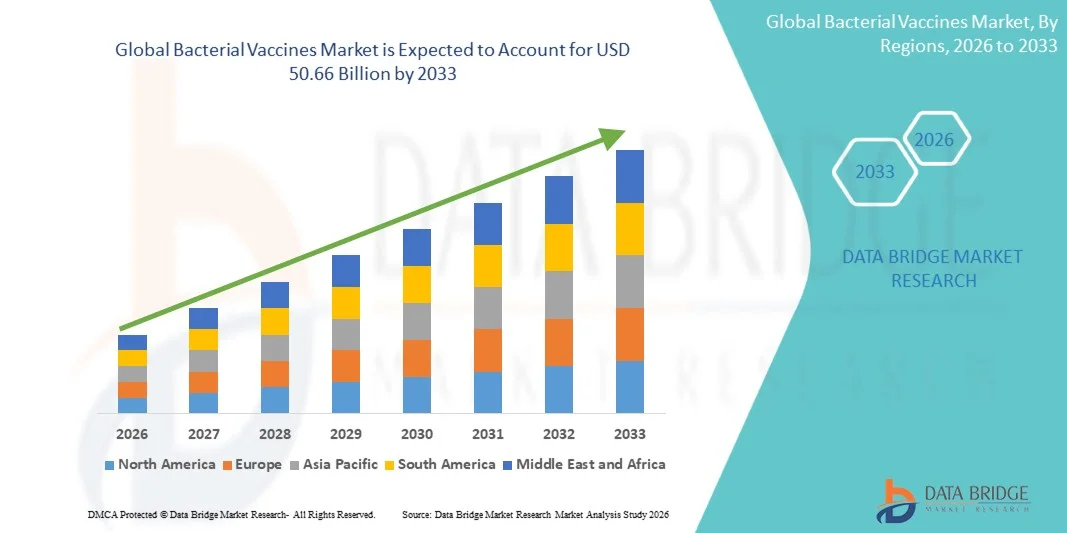
- The global Bacterial Vaccines market size was valued at USD 26.97 billion in 2025 and is expected to reach USD 50.66 billion by 2033, at a CAGR of 8.20% during the forecast period
- The market growth is largely fueled by the increasing prevalence of bacterial infectious diseases worldwide, along with growing awareness about vaccination programs and preventive healthcare measures in both developed and emerging regions. Advances in vaccine development technologies, including conjugate and recombinant vaccines, are further supporting market expansion
- Furthermore, rising demand for safe, effective, and easy-to-administer bacterial vaccines is positioning them as essential tools in public health and clinical settings. These factors are collectively accelerating the uptake of bacterial vaccines, thereby significantly boosting growth in the global bacterial vaccines market
Bacterial Vaccines Market Analysis
- Bacterial vaccines, designed to prevent infections caused by pathogenic bacteria such as Streptococcus pneumoniae, Neisseria meningitidis, and Haemophilus influenzae, are becoming increasingly vital in modern healthcare due to their ability to reduce disease burden, hospitalizations, and mortality rates across all age groups
- The escalating demand for bacterial vaccines is primarily fueled by rising awareness of vaccine-preventable bacterial infections, growing government immunization programs, increasing healthcare expenditure, and a preference for preventive healthcare measures among populations globally
- North America dominated the bacterial vaccines market with approximately 40.97% of total revenue in 2025, driven by strong public immunization programs, high healthcare expenditure, well‑established vaccination infrastructure, and significant R&D investments by pharmaceutical companies. The U.S. remains the largest single national market globally
- Asia‑Pacific is expected to be the fastest‑growing region in the bacterial vaccines market during the forecast period, supported by increasing government initiatives for vaccination, expansion of healthcare services, growing awareness of vaccine‑preventable diseases, and rising demand in populous countries such as India and China
- The parenteral segment dominated the largest market revenue share of 78% in 2025, driven by frequent use in hospital and clinical settings, broad applicability for various bacterial vaccines, and high patient adherence
Report Scope and Bacterial Vaccines Market Segmentation
|
Attributes |
Bacterial Vaccines Key Market Insights |
|
Segments Covered |
|
|
Countries Covered |
North America
Europe
Asia-Pacific
Middle East and Africa
South America
|
|
Key Market Players |
• Pfizer (U.S.) |
|
Market Opportunities |
|
|
Value Added Data Infosets |
In addition to the insights on market scenarios such as market value, growth rate, segmentation, geographical coverage, and major players, the market reports curated by the Data Bridge Market Research also include in-depth expert analysis, patient epidemiology, pipeline analysis, pricing analysis, and regulatory framework. |
Bacterial Vaccines Market Trends
“Enhanced Focus on Preventive Immunization and Vaccine Accessibility”
- A significant and accelerating trend in the global bacterial vaccines market is the increasing focus on preventive immunization against bacterial infections such as tuberculosis, pneumococcal infections, pertussis, and meningococcal diseases. This shift is being driven by rising awareness among healthcare providers and patients about the health and economic benefits of early vaccination
- For instance, in 2025, several public health initiatives in North America and Europe promoted pneumococcal and meningococcal vaccinations for vulnerable populations such as infants, elderly adults, and immunocompromised patients, resulting in measurable growth in vaccine adoption. Similarly, national programs in India and Brazil are expanding access to typhoid and tuberculosis vaccines in rural regions
- Pharmaceutical companies are increasingly developing combination vaccines and improved formulations to simplify immunization schedules. For instance, diphtheria-tetanus-pertussis (DTaP) combination vaccines are gaining traction in pediatric programs, reducing the number of required doses while enhancing protection
- The growing availability of adult and high-risk group vaccination programs is also shaping market trends. Countries like Japan and Germany are targeting elderly populations and healthcare workers for pneumococcal and pertussis vaccines, expanding the demographic base beyond traditional pediatric programs
- Integration of bacterial vaccines with public health surveillance and disease reporting systems is enabling more targeted immunization campaigns. For instance, Europe’s ECDC and the CDC in the U.S. use epidemiological data to prioritize vaccination drives in regions with higher incidences of bacterial infections
- Public awareness campaigns emphasizing the importance of vaccination and timely immunization are fueling demand in both urban and rural areas. Educational programs highlighting the risks of untreated bacterial infections, such as pneumonia or meningitis, are contributing to higher acceptance and coverage rates globally
Bacterial Vaccines Market Dynamics
Driver
“Rising Incidence of Bacterial Infections and Expanding Immunization Programs”
- The increasing prevalence of bacterial infections globally is a key driver of the Bacterial Vaccines market. Illnesses such as pneumonia, tuberculosis, and meningococcal disease continue to affect millions, particularly children under five and elderly populations, prompting proactive vaccination efforts
- For instance, WHO reports indicate that childhood immunization programs against bacterial infections have significantly reduced mortality in developing regions, encouraging governments and healthcare organizations to invest further in vaccine availability
- Rising healthcare expenditure and improved access to medical services are supporting broader adoption of bacterial vaccines. Countries with strong healthcare infrastructure, such as the U.S., Germany, and Japan, see high vaccination rates due to easy access to clinics, pharmacies, and hospital-based immunization programs
- Government initiatives and public health campaigns promoting routine immunization are contributing to market growth. For example, subsidized or free vaccines in Europe and North America are increasing coverage among low-income populations
- Technological advancements in vaccine development—including longer shelf-life formulations, improved stability, and combination vaccines—are enabling wider distribution and increasing acceptance among healthcare providers and patients
- The growing focus on preventive healthcare and the increasing awareness of vaccination benefits among populations in Asia-Pacific, Latin America, and Africa are further driving global demand for bacterial vaccines
Restraint/Challenge
“Concerns Regarding Cybersecurity and High Initial Costs”
- Despite strong demand, high costs of vaccines can limit adoption, particularly in low-income regions. Premium-priced combination vaccines may remain inaccessible to large population segments, restricting overall market penetration
- Distribution challenges, such as maintaining cold-chain requirements and ensuring availability in remote or underserved areas, continue to be significant barriers to market expansion
- For instance, in 2024, several rural regions in sub-Saharan Africa experienced shortages of meningococcal vaccines due to transportation and storage limitations, delaying immunization campaigns
- Vaccine hesitancy, fueled by misinformation, lack of awareness, or cultural beliefs, can negatively impact adoption even when vaccines are widely available
- Regulatory complexities and variations in national immunization schedules pose challenges for global vaccine manufacturers seeking uniform market strategies
- Inconsistent insurance coverage, reimbursement policies, and procurement practices in some countries can also hinder widespread adoption of bacterial vaccines
- Overcoming these challenges requires investments in affordable manufacturing, robust supply chains, public education campaigns, and healthcare infrastructure improvements to ensure equitable access to bacterial vaccines globally
Bacterial Vaccines Market Scope
The market is segmented on the basis of type, route of administration, end-users, and distribution channel.
• By Type
On the basis of type, the Bacterial Vaccines market is segmented into live attenuated vaccines, inactivated/killed vaccines, subunit/conjugate, toxoid vaccines/inactivated toxin, and others. The live attenuated vaccines segment dominated the largest market revenue share of 41.5% in 2025, driven by their strong immunogenicity, long-lasting protection, and widespread use in pediatric and adult vaccination programs. Hospitals, specialty clinics, and homecare providers widely administer live attenuated vaccines. High patient compliance and global immunization initiatives reinforce adoption. Brand recognition and established efficacy strengthen market leadership. Combination vaccines increase convenience and reduce healthcare visits. Regulatory approvals and government immunization programs support penetration. Emerging markets are witnessing increasing adoption. Physician recommendation and public health campaigns improve awareness. Availability in multiple formulations enhances versatility. Patient adherence is high. Research and development continuously optimize formulations to ensure safety.
The inactivated/killed vaccines segment is expected to witness the fastest CAGR of 10.8% from 2026 to 2033, fueled by increasing demand for safer options in immunocompromised patients and broader population coverage. Hospitals and specialty clinics expand adoption. E-commerce and online pharmacy penetration improve accessibility. Public awareness campaigns and physician recommendations accelerate uptake. Combination therapies improve protection. Patient preference for safer vaccines supports faster growth. Emerging markets show strong uptake. Government immunization programs encourage adoption. Convenience, efficacy, and multiple administration options reinforce use. Physician trust sustains credibility. Continuous R&D enhances formulation stability and shelf life.
• By Route of Administration
On the basis of route of administration, the market is segmented into oral, parenteral, and others. The parenteral segment dominated the largest market revenue share of 78% in 2025, driven by frequent use in hospital and clinical settings, broad applicability for various bacterial vaccines, and high patient adherence. Hospitals and specialty clinics regularly administer injections. Physician trust, regulatory approvals, and standardized immunization protocols reinforce dominance. Combination vaccines improve efficiency. Brand recognition and public awareness programs strengthen adoption. Emerging markets show increasing parenteral vaccination. Safety and efficacy considerations drive preference. Digital campaigns enhance awareness. OTC and prescription integration improves accessibility.
The oral segment is expected to witness the fastest CAGR of 11.2% from 2026 to 2033, fueled by convenience, growing use in mass immunization campaigns, and patient preference for needle-free administration. Hospitals, specialty clinics, and homecare providers expand use. Emerging markets show strong uptake. Digital awareness campaigns boost adoption. Patient adherence and comfort drive faster growth. E-commerce and online pharmacy availability improve access. Combination oral vaccines enhance convenience. Lifestyle and travel vaccination trends reinforce adoption. Physician recommendations and public programs strengthen uptake. Safety and stability improvements accelerate adoption.
• By End-Users
On the basis of end-users, the market is segmented into hospitals, homecare, specialty clinics, and others. The hospitals segment dominated the largest market revenue share of 47% in 2025, driven by high patient inflow, institutional immunization programs, and physician-administered vaccines. Specialty clinics and homecare support outpatient and self-administration. Public health programs and government initiatives reinforce adoption. Brand recognition and physician trust strengthen dominance. Emerging markets show strong hospital-driven vaccination. Combination therapies improve efficiency. Marketing campaigns and awareness programs increase visibility. Patient adherence is high. Digital tools for vaccination scheduling support convenience. Hospital stocking ensures supply consistency. Insurance coverage facilitates accessibility.
The homecare segment is expected to witness the fastest CAGR of 12.5% from 2026 to 2033, fueled by increasing patient preference for at-home vaccinations, e-commerce and online pharmacy penetration, convenience, and digital healthcare platforms. Hospitals and specialty clinics show steady adoption. Awareness campaigns and patient education improve uptake. Emerging markets contribute to strong growth. Combination therapies and needle-free options reinforce preference. Lifestyle trends and accessibility accelerate adoption. Digital scheduling platforms enhance compliance. OTC and prescription availability support adoption.
• By Distribution Channel
On the basis of distribution channel, the market is segmented into hospital pharmacy, online pharmacy, and retail pharmacy. The hospital pharmacy segment dominated the largest market revenue share of 45% in 2025, driven by institutional stocking, prescription-based demand, and integration into vaccination programs. Specialty clinics and homecare rely on hospital pharmacy supply. Physician trust, regulatory approvals, and brand recognition reinforce dominance. Emerging markets show increasing hospital pharmacy adoption. Marketing and awareness campaigns improve visibility.
The online pharmacy segment is expected to witness the fastest CAGR of 12.3% from 2026 to 2033, driven by e-commerce penetration, doorstep delivery, digital marketing, and patient convenience. Retail and hospital pharmacies show steady growth. Consumer awareness, smartphone adoption, and online consultations accelerate adoption. Emerging markets show strong uptake. Convenience and accessibility sustain faster growth. Marketing campaigns strengthen visibility. Increasing trust in online purchases further drives adoption. Expansion of digital healthcare platforms supports long-term growth.
Bacterial Vaccines Market Regional Analysis
- North America dominated the bacterial vaccines market, capturing approximately 40.97% of total revenue in 2025, driven by strong public immunization programs, high healthcare expenditure, well‑established vaccination infrastructure, and significant R&D investments by pharmaceutical companies
- High awareness of vaccine-preventable diseases, widespread access to healthcare facilities, and proactive government vaccination campaigns are supporting robust market growth in the region. For instance, the U.S. childhood immunization program consistently achieves high coverage for vaccines against pneumococcal disease, meningococcal infections, and tuberculosis, encouraging further market expansion
- The U.S. remains the largest single national market globally, driven by strong clinical adoption of innovative bacterial vaccines, active disease surveillance programs, and the presence of leading vaccine manufacturers such as Pfizer, Merck, and Sanofi. In addition, favorable reimbursement policies, insurance coverage, and well-organized supply chains facilitate timely vaccine delivery and high adoption rates among both pediatric and adult populations
U.S. Bacterial Vaccines Market Insight
The U.S. bacterial vaccines market accounted for the dominant share within North America in 2025, supported by robust public immunization initiatives, high patient awareness of bacterial infections, and widespread availability of advanced vaccines. The country’s strong healthcare infrastructure, including hospitals, clinics, and pharmacy-based immunization programs, ensures convenient access to vaccines. Furthermore, government-funded programs such as the Vaccines for Children (VFC) program enhance accessibility among underprivileged populations, contributing to sustained market growth.
Europe Bacterial Vaccines Market Insight
The Europe bacterial vaccines market is projected to expand at a substantial CAGR throughout the forecast period, driven by stringent immunization regulations and rising public health awareness. Growing urbanization and better healthcare access are facilitating higher vaccination coverage in countries such as Germany, France, and Italy. Public health campaigns and subsidized vaccines increase uptake, particularly for at-risk groups including infants, elderly, and immunocompromised populations.
U.K. Bacterial Vaccines Market Insight
The U.K. bacterial vaccines market is expected to grow steadily, fueled by the National Health Service’s (NHS) organized immunization programs and growing awareness of bacterial infections. Increasing government initiatives to combat diseases like pneumococcal and meningococcal infections, combined with campaigns targeting childhood and adult vaccinations, are boosting market adoption.
Germany Bacterial Vaccines Market Insight
Germany’s bacterial vaccines market is projected to expand at a considerable CAGR, driven by a strong focus on preventive healthcare and technological advancement in vaccine development. National immunization schedules, along with widespread access to healthcare facilities, are ensuring high vaccination rates. In addition, public education and awareness programs are promoting proactive vaccination across different population groups.
Asia-Pacific Bacterial Vaccines Market Insight
The Asia-Pacific bacterial vaccines market is expected to grow at the fastest CAGR during 2026–2033, supported by increasing government initiatives for vaccination, expansion of healthcare services, rising awareness of vaccine-preventable diseases, and growing demand in populous countries such as India and China. Rising healthcare expenditure and expanding access to immunization programs are driving adoption among both urban and rural populations.
Japan Bacterial Vaccines Market Insight
Japan’s bacterial vaccines market is gaining momentum due to a combination of high healthcare standards, a strong emphasis on preventive medicine, and well-established vaccination programs. Public awareness campaigns and government-supported immunization initiatives for infants, elderly, and at-risk adults are contributing to market expansion.
China Bacterial Vaccines Market Insight
China bacterial vaccines market accounted for the largest revenue share in the Asia-Pacific region in 2025, driven by rapid urbanization, rising middle-class population, increasing government support for vaccination programs, and strong domestic vaccine manufacturing capabilities. National immunization initiatives and public awareness campaigns are expanding access to vaccines across rural and urban areas, fostering significant market growth.
Bacterial Vaccines Market Share
The Bacterial Vaccines industry is primarily led by well-established companies, including:
• Pfizer (U.S.)
• GlaxoSmithKline (U.K.)
• Sanofi (France)
• Johnson & Johnson (U.S.)
• Bayer (Germany)
• Novartis (Switzerland)
• Abbott Laboratories (U.S.)
• Mylan (U.S.)
• Cipla (India)
• Sun Pharma (India)
• HRA Pharma (France)
• Glenmark Pharmaceuticals (India)
• Fresenius Kabi (Germany)
• Beiersdorf (Germany)
• Shire Pharmaceuticals (Ireland)
• Amgen (U.S.)
• Lupin Pharmaceuticals (India)
• Dr. Reddy’s Laboratories (India)
• Hoffmann-La Roche (Switzerland)
• AbbVie (U.S.)
Latest Developments in Global Bacterial Vaccines Market
- In April 2023, the U.S. Food and Drug Administration (FDA) granted approval for Pfizer’s Prevnar 20 (20‑valent pneumococcal conjugate vaccine) to prevent invasive pneumococcal disease caused by multiple serotypes of Streptococcus pneumoniae in infants, children, and adults, expanding protection beyond previous pneumococcal vaccines and addressing broader bacterial disease prevention
- In May 2023, Bavarian Nordic A/S completed the acquisition of travel vaccine assets including Vivotif (typhoid) and Vaxchora (cholera) from Emergent BioSolutions, strengthening its portfolio of commercial bacterial vaccines and expanding its reach in global travel and enteric disease prevention markets
- In June 2024, Merck & Co., Inc. received U.S. FDA approval for CAPVAXIVE™ (Pneumococcal 21‑valent Conjugate Vaccine) for active immunization against invasive pneumococcal disease and pneumococcal pneumonia in adults 18 years and older, marking a key milestone in adult bacterial vaccine offerings with extended serotype coverage
- In January 2025, the Committee for Medicinal Products for Human Use (CHMP) of the European Medicines Agency (EMA) adopted a positive opinion recommending marketing authorization for CAPVAXIVE in the EU, poised to expand regional access to the vaccine pending final authorization and reflect regulatory momentum behind advanced bacterial vaccines
- In June 2025, GSK plc announced a licensing agreement for its Shigella vaccine candidate altSonflex1‑2‑3 with Bharat Biotech International Limited, facilitating further development and potential distribution of a preventive vaccine against Shigella — a major cause of bacterial diarrhoeal disease in low‑ and middle‑income countries
- In July 2025, CAPVAXIVE was under review for additional worldwide regulatory approvals, with filings ongoing in key regions including Japan and anticipated marketing authorizations beyond the U.S., Canada, and Australia — underscoring global expansion efforts for next‑generation pneumococcal vaccines
SKU-
Get online access to the report on the World's First Market Intelligence Cloud

- Interactive Data Analysis Dashboard
- Company Analysis Dashboard for high growth potential opportunities
- Research Analyst Access for customization & queries
- Competitor Analysis with Interactive dashboard
- Latest News, Updates & Trend analysis
- Harness the Power of Benchmark Analysis for Comprehensive Competitor Tracking
Research Methodology
Data collection and base year analysis are done using data collection modules with large sample sizes. The stage includes obtaining market information or related data through various sources and strategies. It includes examining and planning all the data acquired from the past in advance. It likewise envelops the examination of information inconsistencies seen across different information sources. The market data is analysed and estimated using market statistical and coherent models. Also, market share analysis and key trend analysis are the major success factors in the market report. To know more, please request an analyst call or drop down your inquiry.
The key research methodology used by DBMR research team is data triangulation which involves data mining, analysis of the impact of data variables on the market and primary (industry expert) validation. Data models include Vendor Positioning Grid, Market Time Line Analysis, Market Overview and Guide, Company Positioning Grid, Patent Analysis, Pricing Analysis, Company Market Share Analysis, Standards of Measurement, Global versus Regional and Vendor Share Analysis. To know more about the research methodology, drop in an inquiry to speak to our industry experts.
Customization Available
Data Bridge Market Research is a leader in advanced formative research. We take pride in servicing our existing and new customers with data and analysis that match and suits their goal. The report can be customized to include price trend analysis of target brands understanding the market for additional countries (ask for the list of countries), clinical trial results data, literature review, refurbished market and product base analysis. Market analysis of target competitors can be analyzed from technology-based analysis to market portfolio strategies. We can add as many competitors that you require data about in the format and data style you are looking for. Our team of analysts can also provide you data in crude raw excel files pivot tables (Fact book) or can assist you in creating presentations from the data sets available in the report.