



Middle East and Africa Identity Verification and Authentication Market Segmentation, By Component (Solution and Services), Type (Non-Biometrics and Biometrics), Deployment Mode (On-Premise and Cloud), Organization Size (Large Enterprises and SMEs), Application (Access Control and User Monitoring, KYC, KYB, and Onboarding, Identity Fraud Compliance, and Forensics), Vertical (BFSI, Government and Defense, Energy and Utilities, Retail and E-commerce, I.T. and Telecom, Healthcare, Gaming, and Others) - Industry Trends and Forecast to 2033
Was ist der Nahe Osten und Afrika Identity Verification and Authentication Market Size and Growth Rate
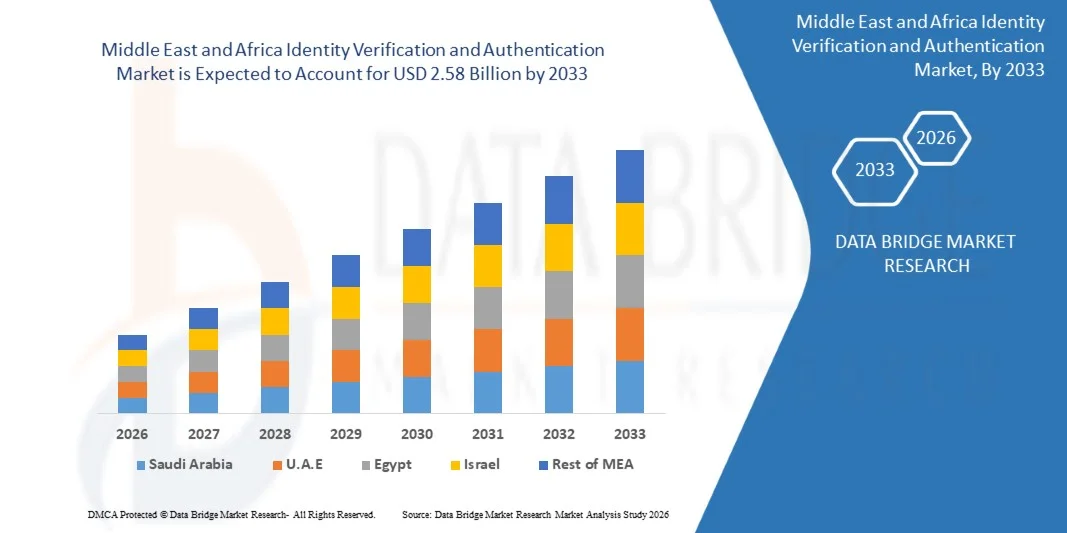
- Wie pro Data Bridge Market Research Analysis wurde die Identitätsprüfung und Authentisierung des Nahen Ostens und Afrikas auf dem Markt bewertet1,02 Mrd. USD in 2025und wird voraussichtlich erreichen2,58 Milliarden USD bis 2033, beiCAGR von 12,20%während des Prognosezeitraums
- Der Identifikations- und Authentifizierungsmarkt konzentriert sich auf vielfältige Anwendungen, darunter Kreditkartenbetrugsprävention, Bankbetrug, Telefon- oder Dienstbetrugsbekämpfung sowie die Bekämpfung von Beschäftigung oder Steuerbetrug. Diese Anträge tragen gemeinsam zur Verbesserung der Sicherheitsmaßnahmen bei und schützen vor betrügerischen Aktivitäten in verschiedenen Sektoren und Branchen
Marktgröße und Prognose
- Globaler Marktwert (2025):1,02 Mrd. USD
- Voraussichtlicher Marktwert (2033):2,58 Mrd. USD
- Wettervorhersage CAGR (2026–2033):12.20%
Was sind die großen Takeaways der Identitätsprüfung und des Authentication Market
- Mit einer erhöhten Digitalisierung besteht ein wachsender Bedarf an Online-Transaktionen und zum Schutz personenbezogener Daten. Identitätsverifikations- und Authentifizierungslösungen spielen eine zentrale Rolle bei der Gewährleistung der Integrität digitaler Identitäten, die der steigenden Nachfrage nach robusten Sicherheitsmaßnahmen in einer zunehmend vernetzten und digitalen Welt gerecht wird. Die expandierende globale digitale Landschaft fungiert als Schlüsseltreiber für den Identity Verification and Authentication and Authentication Market
- Südafrika dominierte den Middle East & Africa Identity Verification and Authentication Markt mit dem größten Umsatzanteil von 39,6% im Jahr 2025, unterstützt durch die starke Präsenz von digitalen Banking-Plattformen, zunehmende Übernahme von Online-Finanzdienstleistungen und steigende Nachfrage nach einer sicheren Identitäts-Authentifizierung über Unternehmen und Behörden
- U.A.E zeigt die schnellste Wachstumsrate von 11,52% in der Region Naher Osten & Afrika, angetrieben durch schnelle digitale Transformationsinitiativen, starke staatliche Unterstützung für intelligente Stadtprojekte und steigende Nachfrage nach sicheren digitalen Identitäts-Authentifizierungslösungen
- Das Segment Kreditkartenbetrug dominierte den Markt im Jahr 2024, was den größten Umsatzanteil von 29,6% ausmachte, was durch das wachsende Volumen an digitalen Transaktionen und erhöhte Vorfälle von Karten-nicht-präsenten (CNP) Betrug verursacht wurde.
Bericht Umfang und Identität Verifizierung und Authentifizierung Marktsegmentierung
|
Attribute |
Identity Verification and Authentication Key Market Insights |
|
Verdeckte Segmente |
|
|
Überarbeitete Länder |
Naher Osten und Afrika
|
|
Key Market Players |
|
|
Marktmöglichkeiten |
|
|
Daten Infos zum Wert hinzugefügt |
Neben den Erkenntnissen über Marktszenarien wie Marktwert, Wachstumsrate, Segmentierung, geographische Erfassung und wichtige Akteure umfassen die Marktberichte, die von der Data Bridge Market Research kuratiert wurden, auch eingehende Expertenanalyse, Preisanalyse, Markenanteilsanalyse, Verbraucherumfrage, Demographieanalyse, Supply Chain Analyse, Wertschöpfungskettenanalyse, Rohstoff-/Verbrauchsübersicht, Herstellerauswahlkriterien, PESTLE Analyse, Porter Analysis und regulatorische Rahmenbedingungen. |
Was ist der Haupttrend im Identity Verification and Authentication Market
„Verbesserte Konvenience durch KI- und Sprachintegration„
- Ein führender Trend im Identitäts- und Authentifizierungsmarkt ist die zunehmende Integration von künstlicher Intelligenz (KI) und Spracherkennungstechnologien zur Verbesserung der Nutzererfahrung, Automatisierung und Betriebseffizienz. KI-gestützte Lösungen unterstützen nun fortschrittliche Betrugserkennung und Echtzeit-Identitätsprüfungen mit minimaler menschlicher Intervention
- Zum Beispiel nutzen Unternehmen wie Jumio und Onfido KI, um IDs und Gesichtsbiometrien zu überprüfen, die eine nahezu instante Identitätsauthentifizierung bieten und manuelle Überprüfungsprozesse minimieren. Voice-Biometrie gewinnen auch Zugkraft, insbesondere im Banken- und Telekommunikationssektor, für benutzerfreundliche und sichere Logins
- AI-Algorithmen analysieren nun Verhaltensmuster, markieren Anomalien für zusätzliche Überprüfung und verbessern so Betrugsprävention Fähigkeiten. Voice-enabled-Lösungen werden zunehmend in digitale Workflows eingebettet, um in Callcentern und mobilen Banking-Anwendungen eine kostenlose Verifikation zu ermöglichen
- Diese AI-led-Transformation ermöglicht auch dynamisches Risikoscoring basierend auf Echtzeit-Kontextdaten wie Geräte-ID, Standort und Nutzerverhalten, so dass Systeme sich an potenzielle Bedrohungen effektiver anpassen können
- So werden beispielsweise Experian und LexisNexis Risk Solutions in kontextbasierten Datenanalysen und maschineller lernbasierter Betrugsdetektion vorangetrieben, wodurch Kunden eine verbesserte Genauigkeit und operative Skalierbarkeit bieten
- Diese Umstellung auf intelligente und intuitive Identity Verification- und Authentication-Lösungen wird neu definiert, wie Unternehmen den Zugang sichern und Betrug reduzieren, ihnen dabei helfen, steigende regulatorische und Nutzererwartungen in einer digitalen Welt zu erfüllen
Was sind die wichtigsten Treiber der Identitätsprüfung und Authentication Markt
- Der Anstieg der digitalen Transformationsinitiativen im Banken-, Finanz-, Gesundheits- und E-Commerce-Bereich treibt die Nachfrage nach sicheren und nahtlosen Identitätsverifikations- und Authentifizierungsprozessen an Bord und authentifizieren die Nutzer remote
- So hat Trulioo im März 2024 in seiner globalen Plattform erweiterte Fähigkeiten zur automatisierten Dokumentenprüfung und zur biometrischen Authentifizierung eingeführt, um Unternehmen zu unterstützen, die in mehreren Regionen tätig sind.
- Erhöhung der regulatorischen Compliance-Anforderungen, wie KYC (Know Your Customer), AML (Anti-Money Laundering) und DSGVO, drängen Unternehmen auf standardisierte und auditierbare Identitätsprüfungs- und Authentifizierungsmechanismen, um rechtliche und finanzielle Sanktionen zu vermeiden
- Der Anstieg der Online-Betrugs-, Identitätsdiebstahl- und Kontoübernahmevorfälle ist auch zwingend, dass Unternehmen fortschrittliche Verifikationstools bereitstellen, die Biometrie, Dokumenten-Scannen und Liveness-Erkennung verwenden.
- Darüber hinaus hat der Anstieg der Fernarbeit und des digitalen Bankings die Notwendigkeit einer vertrauenswürdigen Identitätsprüfung während der Onboarding- und Kontowiederherstellung gefördert. Organisationen wenden sich an Cloud-basierte Plattformen, die Echtzeit-Verifikation und Skalierbarkeit bieten
- Die zunehmende Übernahme mobiler Verifikationen, wie z.B. Selfie-basierter Face Matching- und NFC-fähige Dokumentenscans, erhöht die Nutzererfahrung und beschleunigt die Markterweiterung in Sektoren
Welcher Faktor hebt das Wachstum des Identity Verification and Authentication Market hervor
- Eine der größten Herausforderungen ist die wachsende Sorge um Datenschutz, Sicherheitsverletzungen und ethische Bedenken im Zusammenhang mit der biometrischen Datenerhebung und -speicherung. Missbrauch oder Leckage sensibler Daten wie Gesichtssscans oder nationaler IDs können zu Verlusten von Vertrauen und rechtlichen Verbindlichkeiten führen
- So lösten beispielsweise hochkarätige Verstöße wie der biometrische Datenvorfall von 2023 IDEMIA Debatten über Datenmissbrauch aus und forderten eine strengere staatliche Kontrolle über biometrische Authentifizierungspraktiken.
- Darüber hinaus schafft Mangel an Standardisierung in Identity Verification and Authentication Prozessen über Geographien operative und Compliance Barrieren für Unternehmen, die in mehreren Regionen tätig sind. Variationen in akzeptablen ID-Typen, Dokumentationen und biometrischen Formaten erschweren grenzüberschreitende Implementierungen
- Die hohen Kosten für fortschrittliche Verifikationslösungen mit KI- und biometrischen Merkmalen dienen auch als Abschreckung für kleine und mittlere Unternehmen, insbesondere in Schwellenländern mit begrenzten Tech-Budgets
- Lösungen von Unternehmen wie Signicat oder Innovatrics können unternehmenseigene Merkmale bieten, ihre Umsetzungskosten und Infrastrukturanforderungen beschränken jedoch häufig die Zugänglichkeit für größere Unternehmen
- Um diese Barrieren zu überwinden, müssen die Anbieter in die Privatsphäre-erste Architektur investieren, flexible Preismodelle anbieten und sicherstellen, dass Lösungen mit globalen Standards wie ISO/IEC 30107 für biometrische Überprüfung und PSD2 für die finanzielle Authentifizierung übereinstimmen.
Wie wird der Identity Verification and Authentication Market segmentiert
Der Markt wird auf der GrundlageAnwendung, Komponente, Typ, Einsatzart, Organisationsgröße und vertikal.
- Anwendung
Auf der Grundlage der Anmeldung wird der Identitätsprüfungs- und Authentifizierungsmarkt in Kreditkartenbetrug, Bankbetrug, Telefon- oder Versorgungsbetrug, Beschäftigung oder Steuerbetrug und andere segmentiert. Das Segment Kreditkartenbetrug dominierte den Markt im Jahr 2024, was den größten Umsatzanteil von 29,6% ausmachte, was durch das wachsende Volumen an digitalen Transaktionen und erhöhte Vorfälle von Karten-nicht-präsenten (CNP) Betrug verursacht wurde. Finanzinstitute und Zahlungsdienstleister übernehmen fortschrittliche Verifikationstools wie Verhaltensanalytik und biometrische Authentifizierung, um betrügerische Kreditkartennutzung und sichere Online-Zahlungen zu bekämpfen.
Das beschäftigungs- oder steuerbezogene Betrugssegment wird von 2025 bis 2032 mit dem schnellsten CAGR bezeugt, das durch zunehmende Fälle von Identitätsverweigerung in Steueranmeldungen und Auftragsanmeldungen verursacht wird. Regierungsbehörden und Unternehmen investieren in robuste ID-Verifikationssysteme, um Anmeldeinformationen zu validieren, Payroll-Betrug zu verhindern und regulatorische Compliance zu gewährleisten, insbesondere in fernen oder gig-basierten Einstellungsumgebungen.
- Von der Komponente
Auf Basis der Komponente wird der Markt zu Lösungen und Dienstleistungen segmentiert. Das Solutions-Segment hielt 2024 aufgrund der weit verbreiteten Bereitstellung von Identity Verification and Authentication-Plattformen, biometrischen Tools, Dokumenten-Authentifizierungssystemen und Risikoanalysesoftware in allen Branchen den größten Umsatzanteil von 64,1%. Diese Lösungen ermöglichen eine automatisierte Überprüfung, eine Verbesserung der Betrugserkennung und eine Verringerung manueller Fehler bei Identitätskontrollen.
Das Dienstleistungssegment wird in der Prognosezeit aufgrund steigender Nachfrage nach Beratungs-, Integrations- und Support-Services voraussichtlich am schnellsten CAGR wachsen. Da Unternehmen kundenspezifische und skalierbare ID-Authentifizierungs-Frames implementieren wollen, spielen Dienstleister eine entscheidende Rolle bei der Bereitstellung, Optimierung und Aufrechterhaltung sicherer Identitätssysteme.
- Typ
Auf der Grundlage des Typs wird der Identitätsverifikations- und Authentifizierungsmarkt in nicht-biometrische und biometrische Bifurciert. Das Segment Biometrie dominierte den Markt im Jahr 2024 mit dem höchsten Marktanteil von 57,4%, angetrieben durch die wachsende Popularität von Gesichtserkennung, Fingerabdruck-Scanning und iris-basierten Identifikationsmethoden. Biometrics bieten eine hohe Genauigkeit und Nicht-Replikationsfähigkeit, so dass sie ideal für die Sicherung sensibler Finanz- und Gesundheitsdaten.
Das Non-Biometrics-Segment soll ein stetiges Wachstum verzeichnen, insbesondere bei Anwendungen, die passwortbasierte oder dokumentarische Verifikationsverfahren erfordern, die kostengünstiger und für risikoarme Szenarien oder Regionen mit eingeschränktem Zugang zur biometrischen Infrastruktur geeignet sind.
- Durch Einsatzart
Auf Basis des Einsatztyps wird der Markt in On-Premise und Cloud segmentiert. Das Cloud-Segment hielt 2024 den größten Umsatzanteil von 61,3 %, der durch die Notwendigkeit flexibler, skalierbarer und Remote Identity Verification and Authentication Lösungen getrieben wurde. Cloud-basierte Systeme ermöglichen Echtzeit-Updates, eine nahtlose Integration mit bestehenden Plattformen und unterstützen mobile erste Nutzererlebnisse, die in Sektoren wie Fintech, E-Commerce und Remote-Personalmanagement kritisch sind.
Das On-Premise-Segment wird erwartet, dass moderates Wachstum zu beobachten ist, insbesondere bei Organisationen mit strengen Datenschutzvorschriften oder hohen Anpassungsbedürfnissen, wie Regierungseinrichtungen und Großbanken.
- Durch Organisation Größe
Auf der Grundlage der Organisationsgröße wird der Markt in kleine und mittlere Unternehmen (KMU) und große Unternehmen segmentiert. Das große Unternehmensegment eroberte 2024 den größten Marktanteil von 66,8%, aufgrund der höheren Budgets, der komplexen Sicherheitsinfrastrukturen und der stärkeren Exposition gegenüber Betrugsrisiken. Diese Organisationen sind Frühanwender von fortschrittlichen ID-Verifikationslösungen, um Kundendaten zu schützen, Vorschriften zu erfüllen und Rufschäden zu mindern.
Das KMU-Segment ist darauf ausgerichtet, die schnellste CAGR über den Prognosezeitraum zu erfassen, unterstützt durch die Erhöhung von Cyber-Bedrohungen, regulatorischen Drücken und die zunehmende Erreichbarkeit von Identitäts-Authentifizierungstechnologien für kleine Unternehmen.
- Von Vertical
Auf der Grundlage der Vertikalen wird der Markt in BFSI, Regierung und Verteidigung, Energie und Versorgungsunternehmen, Einzelhandel und E-Commerce, IT und Telekommunikation, Gesundheits- und Lebenswissenschaften, Bildung, Gaming und Glücksspiel, und andere. Das BFSI-Segment entfiel auf den größten Umsatzanteil von 28.5% im Jahr 2024, getrieben von strengen Know Your Customer (KYC) und Anti-Money Laundering (AML) Mandaten. Finanzinstitute übernehmen zunehmend AI-getriebene und biometrische ID-Verifikationstools, um die Kundenan Bord- und Transaktionssicherheit zu verbessern.
Das Retail- und E-Commerce-Segment soll das schnellste Wachstum erleben, das durch die Notwendigkeit, den Rückschlagbetrug zu reduzieren, die Benutzerüberprüfung zu optimieren und sichere Checkout-Prozesse zu ermöglichen. Der Anstieg des mobilen Geschäfts- und grenzüberschreitenden Online-Shoppings erfordert zudem eine robuste Identitätsauthentifizierung über Kundenreisen.
Welche Region hält den größten Teil des Identity Verification and Authentication Market
- Südafrika dominierte den Middle East & Africa Identitätsverifikations- und Authentifizierungsmarkt mit dem größten Umsatzanteil von 39,6% im Jahr 2025, unterstützt durch die starke Präsenz von digitalen Bankenplattformen, die zunehmende Übernahme von Online-Finanzdienstleistungen und die steigende Nachfrage nach einer sicheren Identitätsauthentifizierung in Unternehmen und Behörden. Das Land verfügt über ein gut ausgebautes digitales Ökosystem mit zunehmender Internetdurchdringung, erweiterten Fintech-Innovationen und zunehmendem Einsatz von biometrischen und AI-basierten Identity Verification and Authentication Technologien. Finanzinstitute, E-Commerce-Plattformen und Telekommunikationsunternehmen implementieren zunehmend Identity Verification- und Authentication-Lösungen, um Kunden an Bord von Prozessen zu verbessern, Betrug zu verhindern und regulatorische Compliance in großen Wirtschaftszentren wie Johannesburg, Kapstadt und Durban sicherzustellen
- Die zunehmende Bereitstellung von Cloud-basierten Identity Verification and Authentication-Plattformen, biometrischen Authentifizierungstechnologien und AI-getriebenen Betrugsdetektionssystemen verbessert Sicherheit und operative Effizienz für Organisationen. Die zunehmende Nutzung von digitalen Zahlungen, mobilen Banking und Online-Service-Plattformen ermutigt Unternehmen, fortschrittliche Identity Verification and Authentication Lösungen zu übernehmen, um den Datenschutz zu stärken, das Kundenvertrauen zu verbessern und sichere digitale Transaktionen über mehrere digitale Kanäle hinweg sicherzustellen
- In Südafrika stärken der expandierende Fintech-Sektor, eine starke Telekommunikationsinfrastruktur und der zunehmende Fokus auf Cybersicherheit und digitale Identitätsmanagementstrategien die Führungsposition des Landes im Nahen Osten und Afrika Identity Verification and Authentication Market
U.A.E Identity Verification and Authentication Market Insight
U.A.E zeigt die schnellste Wachstumsrate von 11,52% in der Region Middle East & Africa, die von schnellen digitalen Transformationsinitiativen, einer starken staatlichen Unterstützung für Smart City-Projekte und einer zunehmenden Nachfrage nach sicheren digitalen Identitäts-Authentifizierungslösungen angetrieben wird. Die fortschrittliche digitale Infrastruktur des Landes, die hohe Smartphone-Durchdringung und den Ausbau der Online-Banking- und E-Commerce-Sektoren beschleunigen die Einführung von Identity Verification and Authentication-Plattformen. Unternehmen und Behörden setzen zunehmend biometrische Authentifizierungs-, Digital-ID-Verifikations- und AI-powered-Betrug-Detektionslösungen ein, um eine sichere Kundenverifikation und regulatorische Compliance auf digitalen Plattformen zu gewährleisten.
Nigeria Identity Verification and Authentication Market Insight
In Nigeria wächst der Identitätsverifikations- und Authentifizierungsmarkt stetig, unterstützt durch rasantes Wachstum im mobilen Bankwesen, erweiterte Fintech-Ökosysteme und zunehmende Einführung digitaler Zahlungsplattformen. Das Land verfügt über eine der am schnellsten wachsenden digitalen Volkswirtschaften in Afrika und schafft eine erhebliche Nachfrage nach sicheren Identitäts-Authentifizierungslösungen. Die zunehmende Smartphone-Nutzung, staatliche Initiativen für nationale digitale Identitätsprogramme und die Erweiterung von Online-Finanzdienstleistungen stimulieren weiterhin die Nachfrage nach Identity Verification and Authentication Lösungen in wichtigen kommerziellen Zentren wie Lagos und Abuja.
Welche sind die Top-Unternehmen im Identity Verification and Authentication Market
Die Identifikations- und Authentifizierungsindustrie wird in erster Linie von etablierten Unternehmen geleitet, darunter:
- Experian Information Solutions, Inc. (USA)
- G.B. Group plc („GBG“) (U.K.)
- Equifax, Inc. (USA)
- Mitek Systems, Inc. (USA)
- Thales (Frankreich)
- LexisNexis Risk Solutions (USA)
- Onfido (USA)
- Trulioo (Kanada)
- Acuant, Inc. (USA)
- IDEMIA (Frankreich)
- Jumio (USA)
- TransUnion LLC. (USA)
- Au10tix (Insel)
- IDologie (US)
- Innovats (Slowakei)
- Angewandtes Anerkennungskorps. (Kanada)
- Signicat (Norwegen)
- IDfy (Indien)
Was sind die jüngsten Entwicklungen im Nahen Osten und Afrika Identity Verification and Authentication Market
- Im Juni 2023 erwarb die US-amerikanische Technologiefirma Socure den Identity Verification and Authentication Service Berbix für 70 Mio. $ und markierte damit den Erwerb. Dieser strategische Schritt integriert Berbixs Echtzeit-ID-Verifikations- und Betrugserkennungsfunktionen mit dem umfassenden Ansatz von Socure, der Verbesserung von Sicherheits- und Compliance-Maßnahmen in verschiedenen Branchen durch eine Synergie von Know-how und Ressourcen
- Im November 2021 startete Experian seinen Work Report-Digital-Verifikationsservice, der es Nutzern ermöglicht, die digitale Payroll-Datenfreigabe zu akzeptieren. Der Dienst stellt eine Verbindung zu den Lohndaten des Arbeitgebers her, indem er das Brutto- und Nettoeinkommen des Kunden schnell validiert, zusammen mit dem Beschäftigungsstatus und der Dauer, dem Abbau und der Verbesserung der Verifizierungsverfahren für verschiedene Zwecke
- Im Dezember 2020 kooperierte Trulioo mit Credit Sesame, einem Online-Banking-Dienstleister. Diese Partnerschaft ermöglichte es Credit Sesam, die Kundendaten mithilfe der biometrischen Identifikationsplattform von Trulioo Global Gateway zu verbessern. Die Integration fortschrittlicher biometrischer Technologien trägt zu erhöhten Sicherheitsmaßnahmen und verbesserten Nutzeridentifikationsprozessen für die Online-Banking-Dienste von Credit Sesame bei
- Im Juni 2020 arbeitete GBG mit CredoLab zusammen, um das digitale und AI-getriebene Risikomanagement der GBG zu nutzen. Diese Partnerschaft zielte darauf ab, die Kreditwürdigkeit von Individuen in Indonesien schnell und zuverlässig zu bewerten, die sowohl die unbankierten als auch unterbankierten Populationen umfassen. Die Integration fortschrittlicher Technologien verbessert die Effizienz und Inklusivität von Kreditbewertungen in der Region
SKU-
Erhalten Sie Online-Zugriff auf den Bericht zur weltweit ersten Market Intelligence Cloud

- Interaktives Datenanalyse-Dashboard
- Unternehmensanalyse-Dashboard für Chancen mit hohem Wachstumspotenzial
- Zugriff für Research-Analysten für Anpassungen und Abfragen
- Konkurrenzanalyse mit interaktivem Dashboard
- Aktuelle Nachrichten, Updates und Trendanalyse
- Nutzen Sie die Leistungsfähigkeit der Benchmark-Analyse für eine umfassende Konkurrenzverfolgung
Forschungsmethodik
Die Datenerfassung und Basisjahresanalyse werden mithilfe von Datenerfassungsmodulen mit großen Stichprobengrößen durchgeführt. Die Phase umfasst das Erhalten von Marktinformationen oder verwandten Daten aus verschiedenen Quellen und Strategien. Sie umfasst die Prüfung und Planung aller aus der Vergangenheit im Voraus erfassten Daten. Sie umfasst auch die Prüfung von Informationsinkonsistenzen, die in verschiedenen Informationsquellen auftreten. Die Marktdaten werden mithilfe von marktstatistischen und kohärenten Modellen analysiert und geschätzt. Darüber hinaus sind Marktanteilsanalyse und Schlüsseltrendanalyse die wichtigsten Erfolgsfaktoren im Marktbericht. Um mehr zu erfahren, fordern Sie bitte einen Analystenanruf an oder geben Sie Ihre Anfrage ein.
Die wichtigste Forschungsmethodik, die vom DBMR-Forschungsteam verwendet wird, ist die Datentriangulation, die Data Mining, die Analyse der Auswirkungen von Datenvariablen auf den Markt und die primäre (Branchenexperten-)Validierung umfasst. Zu den Datenmodellen gehören ein Lieferantenpositionierungsraster, eine Marktzeitlinienanalyse, ein Marktüberblick und -leitfaden, ein Firmenpositionierungsraster, eine Patentanalyse, eine Preisanalyse, eine Firmenmarktanteilsanalyse, Messstandards, eine globale versus eine regionale und Lieferantenanteilsanalyse. Um mehr über die Forschungsmethodik zu erfahren, senden Sie eine Anfrage an unsere Branchenexperten.
Anpassung möglich
Data Bridge Market Research ist ein führendes Unternehmen in der fortgeschrittenen formativen Forschung. Wir sind stolz darauf, unseren bestehenden und neuen Kunden Daten und Analysen zu bieten, die zu ihren Zielen passen. Der Bericht kann angepasst werden, um Preistrendanalysen von Zielmarken, Marktverständnis für zusätzliche Länder (fordern Sie die Länderliste an), Daten zu klinischen Studienergebnissen, Literaturübersicht, Analysen des Marktes für aufgearbeitete Produkte und Produktbasis einzuschließen. Marktanalysen von Zielkonkurrenten können von technologiebasierten Analysen bis hin zu Marktportfoliostrategien analysiert werden. Wir können so viele Wettbewerber hinzufügen, wie Sie Daten in dem von Ihnen gewünschten Format und Datenstil benötigen. Unser Analystenteam kann Ihnen auch Daten in groben Excel-Rohdateien und Pivot-Tabellen (Fact Book) bereitstellen oder Sie bei der Erstellung von Präsentationen aus den im Bericht verfügbaren Datensätzen unterstützen.











