



Global Cheese Culture Market Segmentation, By Product (Cheddar, Continental, Pasta Filata/Mozzarella, Cottage, Propionic, Soft, Grana, and White Brined), Type (Mesophilic Culture, Thermophilic Culture, Starter Culture, Non Starter Culture, and Probiotics), Category (Fresh Cheese, Soft Cheese, and Hard Cheese), Cultures (Ripening, Protective Cultures, and Kosher), Application (Strains and Cultures Compounding), Sales Channel (Specialty Store, Direct Store, Third Party Online, and Other Sales Channel) - Industry Trends and Forecast to 2033
ما هو حجم ومعدل النمو في سوق ثقافة الجبن العالمي؟
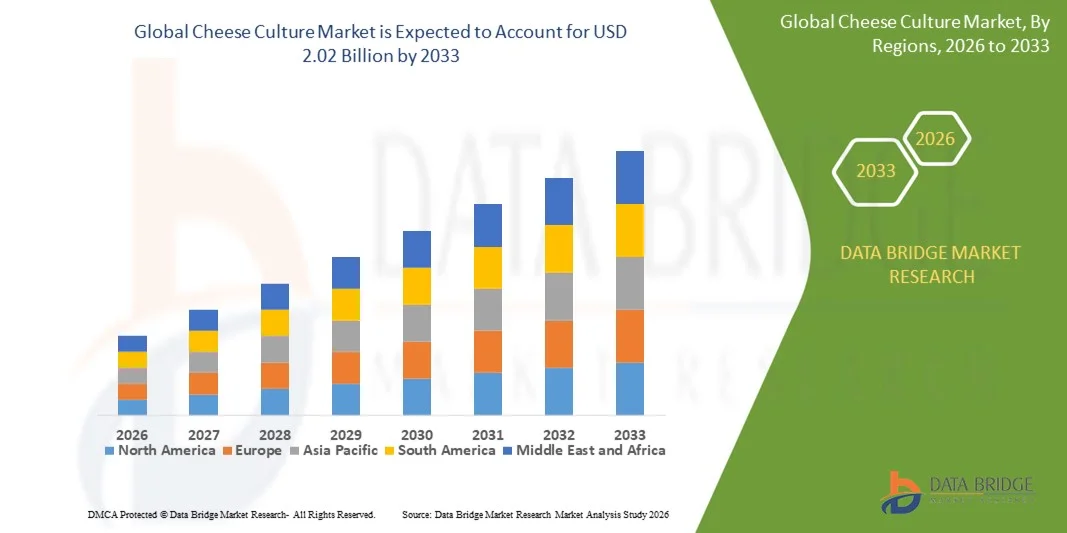
- تم تقدير حجم سوق ثقافة الجبن العالمي بقيمة1.27 مليار دولار أمريكي في عام 2025ومن المتوقع أن يتم ذلك2-02 مليار دولار من دولارات الولايات المتحدة الأمريكية, ما(أ) النسبة المئويةخلال الفترة التي
- ويشكل الاستهلاك المتزايد من الأغذية الجاهزة للأكل والمنتجات الغذائية الخفيفة المغذية، ولا سيما بين السكان العاملين، عاملاً رئيسياً يسهم في نمو السوق.
- :: من المقدر أن يسهم في نمو سوق زراعة الجبن، زيادة الوعي لدى العملاء الذين يراعون الصحة بشأن مختلف الوظائف والفوائد الصحية القصيرة والطويلة الأجل للرفاهية العامة لثقافة الجبن، حيث تساعد البكتيريا الجيدة المعروفة باسم البروبيوتيكيات في استعادة صحة الأمعاء، ولديها أنزيمات هضمية مختلفة، في إعادة تأهيل صحة الأمعاء.
ما هي أهم عمليات النقل في سوق الجبن الثقافي؟
- ومن المتوقع أن يؤدي سهولة توافر ثقافات الجبن في شكل سلس ومتسق على حد سواء إلى زيادة الطلب على سوق زراعة الجبن.
- ومع ذلك، فإن الجبنة مصدر رئيسي للدهون المشبعة التي تزيد من الضرر LDL colesterol، مما يزيد من احتمالات أمراض القلب التي من المتوقع أن تكون بمثابة تقييد، في حين أن من المتوقع أن يشكل اللاكتوز الدخيل المتسامح بين الناس في جميع أنحاء العالم تحديا لنمو سوق زراعة الجبنة.
- تهيمن أمريكا الشمالية على سوق ثقافة الجبن بحصة من الإيرادات بلغت 41.23 في المائة في عام 2025، مدفوعاً بارتفاع استهلاك الجبن، والبنية الأساسية المتقدمة لتجهيز الألبان، والوجود القوي لمصنعي الجبن الصناعي في جميع أنحاء الولايات المتحدة وكندا
- ومن المتوقع أن تسجل منطقة آسيا والمحيط الهادئ أسرع معدل للجوع في الناتج المحلي الإجمالي، حيث بلغ 7.42 في المائة من عام 2026 إلى عام 2033، مدفوعاً بارتفاع سريع في استهلاك الجبن، وتوسع غربية النظم الغذائية، وتوسيع نطاق سلاسل الخدمات الغذائية، وتزايد القدرة على تجهيز الألبان عبر الصين والهند واليابان وكوريا الجنوبية وجنوب شرق آسيا.
- وسيطر قطاع المعكرونة فيلاتا/موززاريلا على السوق بحصة بلغت 31.6 في المائة في عام 2025، مدفوعة باستخدامه الواسع النطاق في البيتزا والأغذية السريعة والوجبات الجاهزة للأكل عالمياً.
التقرير عن النطاق وثقافة الجبن
|
الصفات الأولى |
ازكاقات |
|
المُسَجَّل |
|
|
البلدان |
أمريكا الشمالية
أوروبا
منطقة آسيا والمحيط الهادئ
الشرق الأوسط وأفريقيا
جنوب أمريكا الجنوبية
|
|
& مفتاح |
|
|
ما |
|
|
جاري |
وبالإضافة إلى الرؤى المتعلقة بسيناريوهات السوق مثل القيمة السوقية، ومعدل النمو، والتجزئة، والتغطية الجغرافية، والجهات الفاعلة الرئيسية، فإن تقارير السوق التي تُعدها بحوث سوق جسر البيانات تشمل أيضاً تحليلاً متعمقاً للخبراء، وتحليلاً للتسعير، وتحليلاً لحصص العلامات التجارية، واستقصاءات للمستهلكين، وتحليلاً ديمغرافياً، وتحليلاً لسلسلة التوريد، وتحليلاً لسلاسل القيمة، واستعراضاً عاماً للمواد الخام/الأصناف الاستهلاكية، ومعايير اختيار البائعين، وتحليلاً للعلامات التجارية، وتحليلاً للمستهلكين، وتحليلاً لسلسلة التوريد، وتحليلاً لسلاسل القيمة، واستعراضاً عاماً للمواد الخام/الأصناف الاستهلاكية، ومعايير اختيار البائعين، وتحليلاً للنقاط التجارية، وتحليلاً للبورتر، وإطاراً تنظيمياً. |
ما هو الاتجاه الرئيسي في سوق ثقافة الجبن؟
الطلب المتصاعد على ثقافات التسميات المتخصصة والنظيفة
- يشهد سوق الجبنة الثقافية تزايد اعتماد الثقافات الأولية المتخصصة والزراعات الإضافية المصممة لتعزيز النكهة والمنسوجات ومراقبة النضوج والاتساق بين الإنتاج الصناعي وإنتاج الجبن الحرفي
- تقوم جهات التصنيع على نحو متزايد بتطوير ثقافات خاصة بالسل، ومكيفة حسب المنطقة، ومركّزة على التطبيقات لدعم أنواع متنوعة من الجبن، مثل الشيدار، والموزاريلا، والفيتا، والبرميزان، والجبن التخصصي.
- والأفضلية الاستهلاكية المتزايدة لمنتجات المنتجات النظيفة والعلامات النقية والطبيعية ومنتجات الألبان الأقل تجهيزاً والمجهزة تجهيزاً بأدنى حد من منتجات الألبان هي التي تدفع الطلب على الثقافات ذات المواد المضافة المنخفضة والمستحضرات غير المعدلة وراثياً
- على سبيل المثال، تقوم شركات مثل Chr. Hansan و DSM-Firmenich و Lalimand و BIOPROX بتوسيع نطاق حافظات من المنتجات الميزوفية، والحرارة، وثقافات الجبنة البرووغرافية لتلبية الاحتياجات المتطورة من التذوق والوظيفة.
- ويعجل زيادة التركيز على تحسين النسيج، وتمديد فترة صلاحية الجرف، وكفاءة التخمر باعتماد خلائط ثقافية متقدمة
- مع ارتفاع استهلاك الجبنة العالمي واشتداد تفاضل المنتجات واتسامها بأهمية حاسمة، تظهر ثقافات الجبن كعامل ابتكار أساسي في تجهيز الألبان.
ما هي المحركات الرئيسية لسوق ثقافة الجبن؟
- الطلب العالمي المتزايد على الجبن ومنتجات الألبان المخمر، مدعوما بالتوسع الحضري، والنظم الغذائية الغربية، والاستهلاك المتزايد للبروتينات
- على سبيل المثال، في الفترة 2024-2025، أدخلت شركات مثل DSM-Firmenich وChr.Jhensen ثقافات معززة تمكن من التخمير الأسرع، والحصائل المتسقة، وتطوير النكهة بشكل أفضل.
- :: زيادة التوسع في تصنيع الجبن الصناعي، ومطاعم الخدمة السريعة، والمنتجات الغذائية الجاهزة للأكل، وزيادة اعتماد ثقافة واسعة النطاق
- ويؤدي تزايد الشعبية بالحرفيات والتخصص والجُبن الممتاز إلى دفع الطلب على سلالات ثقافية مصممة حسب الطلب ومحددة حسب المنطقة
- زيادة التركيز على سلامة الأغذية، والاتساق في الدفعات، وكفاءة الإنتاج، تشجع مجهزي الألبان على اعتماد ثقافات موحدة عالية الأداء
- ومن المتوقع أن تشهد سوق ثقافات الجبن، التي يدعمها الابتكار في مجال العلوم الجرثومية وتكنولوجيا التخمير، نموا مطردا طويل الأجل
ما هو العامل الذي يتحدى نمو سوق ثقافة الجبن؟
- التكاليف المرتفعة لسلالات الثقافة المتخصصة والمتسلة الملكية تحد من الاعتماد لدى منتجي الجبن الصغير الحجم والجبن الحرفي
- فعلى سبيل المثال، كثيراً ما تتطلب الثقافات التي تتيح حياة جرف ممتدة أو النضج المعجل أو النضج المعجل استثماراً أعلى مقدماً وظروف تخزين خاضعة للمراقبة
- زيادة حساسية الثقافات لدرجة الحرارة والمناولة والتخزين
- تتفاوت متطلبات الموافقة التنظيمية والامتثال لعلامات الامتثال للثقات الجرثومية فيما بين المناطق، مما يزيد من التعقيد من وقت إلى سوق
- يمكن للخبرة التقنية المحدودة في أوساط صغار المنتجين فيما يتعلق باختيار الثقافة والتعظيم أن تؤثر على نتائج الأداء
- وعلى الرغم من هذه التحديات، من المتوقع أن تؤدي الجهود الجارية في تحقيق الاستفادة المثلى من التكاليف والدعم التقني وتوحيد الثقافة إلى تحسين إمكانية الوصول إلى ثقافات الجبن واعتمادها على الصعيد العالمي.
كيف يتم تنظيم سوق ثقافة الجبن؟
وتقسم السوق على أساسنوع، نوع، فئة، ثقافة، تطبيق، قناة البيع.
- )
وعلى أساس المنتج، فإن سوق ثقافة الجبن تنقسم إلى شيدار، قارة، معكرونة فيلاتا/موززاريلا، كوخ، بروبونيك، لين، غرانا، وجبن أبيض معبأة. وكان قطاع المعكرونة فيلاتا/موززاريلا يهيمن على السوق بحصة 31.6% في عام 2025، مدفوعاً باستخدامه الواسع النطاق في البيتزا، والأغذية السريعة، والوجبات الجاهزة للأكل على الصعيد العالمي. وقد أدى الطلب المتزايد من سلاسل QSR وصناع الأغذية المجمدة إلى زيادة كبيرة في استهلاك الثقافة لإنتاج المزاريلا. وتركز الثقافات المستخدمة في هذا الجزء على القابلية للتمدد، والسلوك الذائب، والملمس المتسق.
ومن المتوقع أن ينمو قطاع جبن الجرانا في أسرع مستوياته من عام 2026 إلى عام 2033، وذلك بدعم من زيادة استهلاك الجبنة العتيقة مثل برميسان وغرادا باديانو. إن دورات النضج الأطول ومتطلبات الجودة الصارمة تشكل قوة دافعة للطلب على ثقافات النضج المتقدمة التي تعزز تطوير النكهات، واستقرار الغلة، وكفاءة النمو.
- نوع
وعلى أساس النوع، تنقسم السوق إلى الثقافة المتوسطة، والثقافة الحرارية، والثقافة الأولية، والثقافة غير الأولية، والثقافة غير الرائجة، والبروبات الحيوية. وكانت شريحة الثقافة البادئة تهيمن على السوق بحصة بلغت 42.3% في عام 2025، حيث تشكل الثقافات البادئة الأساس لتخمير الجبن من خلال التحكم في التحمض، وتكوين النسيج، واتساق النكهة. وهي تستخدم على نطاق واسع عبر الإنتاج الصناعي وإنتاج الجبن الحرفي بسبب الموثوقية والأداء الموحد.
ومن المتوقع أن ينمو الجزء الخاص بالبروبات الحيوية في أسرع وقت ممكن من عام 2026 إلى عام 2033، مدفوعاً بزيادة اهتمام المستهلكين بالأغذية الوظيفية ومنتجات الألبان التي تعزز صحة الأم. ومن المتوقع أن يؤدي إدماج السلالات البروبيوتيكية في الجبن إلى تحقيق فوائد صحية مع الحفاظ في الوقت نفسه على التذوق وحياة الترف، الأمر الذي يجعلها أكثر جاذبية لعلامات الجبن التي تركز على الجودة والصحة.
- المجموع
وعلى أساس التصنيف، يتم تقسيم سوق ثقافة الجبن إلى جبن طازج، وجبن لين، وجبن صلب. وكان قطاع الجبن الطازج أكبر حصة سوقية بلغت 38.9% في عام 2025، ويرجع ذلك إلى ارتفاع استهلاك منتجات مثل الجبن المقدد، والجبن الكريم، والريكوتا. والواقع أن دورات التخمير القصيرة، وارتفاع أحجام الإنتاج، والطلب المتزايد على منتجات الألبان الطازجة ذات البروتين العالي تدعم الطلب الثقافي في هذا القطاع.
ومن المتوقع أن يشهد قطاع الجبن الصلب أسرع نمو من عام 2026 إلى عام 2033، مدفوعاً بزيادة شعبية الجبن المسن والجبن الممتاز. ويتطلب إنتاج الجبن الصلب تركيبات ثقافية دقيقة للنضج المتحكم فيه، وعمق النكهة، وتطوير النسيج، مما يزيد الطلب على الثقافات المتقدمة والمحددة بالسلالات.
- :
وعلى أساس الثقافات، ينقسم السوق إلى ثقافات ناضجة، وثقافات حامية، وثقافات كوشر. وكانت شريحة الثقافات الناضجة تهيمن على السوق بحصة قدرها 45.1% في عام 2025، حيث تلعب هذه الثقافات دوراً حاسماً في تطوير النكهة، والرائحة، والنسيج أثناء نضوج الجبن. وهي تستخدم على نطاق واسع في الجبن شبه الصلب والصلب حيث الشيخوخة ضرورية.
ومن المتوقع أن ينمو قطاع الثقافات الحمائية في أسرع مراحله من عام 2026 إلى عام 2033، مدفوعاً بزيادة التركيز على الحفظ الطبيعي وإنتاج الجبن النظيف. ذلك أن ثقافات الحماية تكبح تلف الكائنات الحية والعوامل المسببة للأمراض، وتساعد المصنعين على تمديد فترة الحياة إلى ما لا يقل عن الحد من الاعتماد على المواد الحافظة الكيميائية.
- ألف -
وعلى أساس التطبيق، يتم تقسيم سوق ثقافة الجبنة إلى سلالات وثقافات مُعَقَّدة. وكانت الثقافات التي تُعَقِّد القطاع تهيمن على السوق بحصة وظيفية بنسبة 100% في عام 2025، حيث تمكن عمليات التجميع من تكييف سلالات متعددة لتحقيق السلوك المخمِّر المرغوب فيه، ونبذات النكهة، والنتائج البنيوية. وتعتمد معالجات الألبان بشكل متزايد على الثقافات المركبة لتلبية متطلبات التفاضل في المنتجات واتساق الدفعات.
ومن المتوقع أيضاً أن ينمو الجزء نفسه نمواً مطرداً عند مستوى مرتفع من معدل نمو الناتج المحلي الإجمالي من عام 2026 إلى عام 2033، مدعوماً بالطلب المتزايد على حلول ثقافية مصممة حسب الطلب تشمل منتجي الجبن الصناعي والحرفي والجبن المتخصص.
- Name
وعلى أساس قنوات البيع، يتم تقسيم السوق إلى مخازن متخصصة، ومخازن مباشرة، وقنوات خارجية على شبكة الإنترنت، وقنوات بيع أخرى. وكان قطاع المتاجر المباشرة يهيمن على السوق بحصة بلغت 41.7% في عام 2025، مدفوعة بعقود توريد طويلة الأجل بين صناع الثقافة ومجهزي الألبان الكبار. والواقع أن المبيعات المباشرة تضمن الدعم التقني، والتوريد المتسق، والحلول الثقافية المكيفة.
ومن المتوقع أن ينمو الجزء الخاص بالطرف الثالث على شبكة الإنترنت في أسرع وقت ممكن من عام 2026 إلى عام 2033، وهو الجزء الذي يغذيه ارتفاع مستوى الاعتماد بين صغار صناع الجبن الحرفي والمنزلي. والواقع أن زيادة توافر الثقافات من خلال منصات التجارة الإلكترونية وشبكات التوزيع العالمية تعمل على توسيع نطاق الوصول والوصول إلى الأسواق.
ما هي المنطقة التي تملك أكبر حصة من سوق ثقافة الجبن؟
- كانت أمريكا الشمالية تهيمن على سوق ثقافة الجبن بحصة من الإيرادات بلغت 41.23% في عام 2025، مدفوعة بارتفاع استهلاك الجبن، والبنية الأساسية المتقدمة لتجهيز الألبان، والوجود القوي لمصنعي الجبن الصناعي في جميع أنحاء الولايات المتحدة وكندا.
- يقوم منتجو الثقافة الرائدة باستمرار بإدخال سلالات متقدمة لتحسين تطوير النكهة، ومراقبة النسيج، وتحسين المردود، وتحقيق الاستخدام الأمثل، وتمديد عمر الرفف، وتعزيز القيادة التكنولوجية في أمريكا الشمالية
- كما أن وجود نظم إيكولوجية قوية للبحث والتطوير، وارتفاع الطلب الاستهلاكي على منتجات الجبن الطبيعي والنظيف، واستمرار الاستثمارات في ابتكارات الألبان، يزيد من تعزيز هيمنة السوق في المنطقة
سوق الولايات المتحدة الأمريكية للثقافة
إن الولايات المتحدة هي أكبر مساهم في أمريكا الشمالية، بدعم من الاستهلاك المرتفع لموزاريلا، والشاندر، والجبن المتخصص، إلى جانب صناعة تجهيز الألبان الراسخة. إن الطلب المتزايد من جانب مطاعم الخدمة السريعة، وشركات تصنيع الأغذية المعبأة، وعلامات جبن بالتجزئة، يزيد من تبني البادئة المكيفة، والمواعيد، والثقافات الحمائية. والوجود القوي للموردين العالميين في مجال الثقافة، واللوجستيات المتقدمة لسلسلة التبريد، والابتكار المستمر في مجال المنتجات الأولية والنظيفة من الجبنة يدفع نمو الأسواق إلى الأمام.
كندا Bhes Cost Core Core Core Ensib
إن كندا تساهم بشكل كبير في النمو الإقليمي، مدفوعاً بالطلب المطرد على الجبن الطبيعي والجبن المتخصص، والتعاونيات القوية في مجال الألبان، ونظم إنتاج الحليب المنظمة. إن زيادة التركيز على اتساق الجودة، وإطالة عمر الأرفف، والتجهيز المستدام للألبان تدعم تبني ثقافات الجبن المتقدمة. كما تعمل أنظمة السلامة الغذائية وبرامج الإبداع المدعومة من الحكومة على زيادة تعزيز التوسع في الأسواق.
سوق منطقة آسيا والمحيط الهادئ للثقافة
ومن المتوقع أن تسجل منطقة آسيا والمحيط الهادئ أسرع معدلات نمو الناتج المحلي الإجمالي من عام 2026 إلى عام 2033، وذلك بسبب الارتفاع السريع في استهلاك الجبن، وتوسع النظام الغذائي، وتوسيع سلاسل الخدمات الغذائية، وتزايد القدرة على تجهيز منتجات الألبان في مختلف أنحاء الصين والهند واليابان وكوريا الجنوبية وجنوب آسيا. والواقع أن زيادة تبني الموزاريلا والجبن المجهز في البيتزا ومنتجات المخبز والأغذية الجاهزة للأكل تعمل على تغذية الطلب على الثقافات الأولية والحرارة. كما يعمل التوسع في مرافق تصنيع الجبن المحلي، وارتفاع الدخل المتاح، وزيادة الوعي بالمنتجات الألبانية الوظيفية والبروبيوتيكية على تسريع نمو السوق في مختلف أنحاء المنطقة.
الصين سوق الثقافة الصينية
إن الصين هي أكبر مساهم في منطقة آسيا والمحيط الهادئ بسبب النمو السريع في استهلاك الأغذية المجهزة، والتوسع في إنتاج الجبن المحلي، والاستثمار القوي في البنية الأساسية الحديثة لصناعة الألبان. والواقع أن زيادة استخدام الثقافات من أجل الموازاريلا، والجبن الكريم، وتطبيقات الجبن المجهز تعمل على دفع تبني الأسواق.
اليابان
وتُظهِر اليابان نمواً مطرداً مدعوماً بالطلب على أفضل أنواع الجبن، والنوعية العالية، ومعايير صارمة لسلامة الأغذية. والواقع أن الخبرة المتقدمة في التخمير وتفضيل النكهة المتسقة من النكهة يقودان إلى تبني ثقافات متخصصة وناضجة.
الهند
لقد بدأت الهند في الظهور باعتبارها سوقاً عالية النمو، مدفوعة بالتوسع السريع في سلاسل البيتزا، وتطبيقات المخبز، ومنتجات الجبن المعبأة. وتتسارع وتيرة تبني الاستثمارات المتزايدة في تجهيز منتجات الألبان والطلب المتزايد على الثقافات الأولية التي تتسم بكفاءة التكاليف.
شركة كوريا الجنوبية
وتسهم كوريا الجنوبية بقوة بسبب زيادة استهلاك الجبن المجهز والجبن على النمط الغربي، والنمو في الأغذية الملائمة، والتركيز القوي على جودة الأغذية وسلامتها. إن الطلب المتزايد على منتجات الجبن الوظيفية والبروبيوتيكية يدعم التوسع المستمر في الأسواق.
من هي الشركات الكبرى في سوق "تشيز للثقافة"؟
وتقود صناعة الجبن أساسا شركات راسخة، من بينها:
- الصحة)الولايات المتحدة الأمريكية(
- A/S (الدانمرك)
- (الولايات المتحدة الأمريكية)
- شركة نيو انكلترا للإمدادات)الولايات المتحدة الأمريكية(
- فريق الخبراء المعني)ألمانيا(
- د.م (هولندا)
- (أ) شركة Inc.)الولايات المتحدة الأمريكية(
- بي بي(فرنسا)
- أهليت (الدانمرك)
- Lallimand Inc. (كندا)
- (الولايات المتحدة الأمريكية)
- LTD (المملكة المتحدة)
- بيينا سناكز (الولايات المتحدة الأمريكية)
- (الولايات المتحدة الأمريكية)
- KKPM تحليل تحليلي (الولايات المتحدة الأمريكية)
- منافور (الهند)
- سيمنس (ألمانيا)
- بيني إمبكس (الهند)
SKU-
احصل على إمكانية الوصول عبر الإنترنت إلى التقرير الخاص بأول سحابة استخبارات سوقية في العالم

- لوحة معلومات تحليل البيانات التفاعلية
- لوحة معلومات تحليل الشركة للفرص ذات إمكانات النمو العالية
- إمكانية وصول محلل الأبحاث للتخصيص والاستعلامات
- تحليل المنافسين باستخدام لوحة معلومات تفاعلية
- آخر الأخبار والتحديثات وتحليل الاتجاهات
- استغل قوة تحليل المعايير لتتبع المنافسين بشكل شامل
منهجية البحث
يتم جمع البيانات وتحليل سنة الأساس باستخدام وحدات جمع البيانات ذات أحجام العينات الكبيرة. تتضمن المرحلة الحصول على معلومات السوق أو البيانات ذات الصلة من خلال مصادر واستراتيجيات مختلفة. تتضمن فحص وتخطيط جميع البيانات المكتسبة من الماضي مسبقًا. كما تتضمن فحص التناقضات في المعلومات التي شوهدت عبر مصادر المعلومات المختلفة. يتم تحليل بيانات السوق وتقديرها باستخدام نماذج إحصائية ومتماسكة للسوق. كما أن تحليل حصة السوق وتحليل الاتجاهات الرئيسية هي عوامل النجاح الرئيسية في تقرير السوق. لمعرفة المزيد، يرجى طلب مكالمة محلل أو إرسال استفسارك.
منهجية البحث الرئيسية التي يستخدمها فريق بحث DBMR هي التثليث البيانات والتي تتضمن استخراج البيانات وتحليل تأثير متغيرات البيانات على السوق والتحقق الأولي (من قبل خبراء الصناعة). تتضمن نماذج البيانات شبكة تحديد موقف البائعين، وتحليل خط زمني للسوق، ونظرة عامة على السوق ودليل، وشبكة تحديد موقف الشركة، وتحليل براءات الاختراع، وتحليل التسعير، وتحليل حصة الشركة في السوق، ومعايير القياس، وتحليل حصة البائعين على المستوى العالمي مقابل الإقليمي. لمعرفة المزيد عن منهجية البحث، أرسل استفسارًا للتحدث إلى خبراء الصناعة لدينا.
التخصيص متاح
تعد Data Bridge Market Research رائدة في مجال البحوث التكوينية المتقدمة. ونحن نفخر بخدمة عملائنا الحاليين والجدد بالبيانات والتحليلات التي تتطابق مع هدفهم. ويمكن تخصيص التقرير ليشمل تحليل اتجاه الأسعار للعلامات التجارية المستهدفة وفهم السوق في بلدان إضافية (اطلب قائمة البلدان)، وبيانات نتائج التجارب السريرية، ومراجعة الأدبيات، وتحليل السوق المجدد وقاعدة المنتج. ويمكن تحليل تحليل السوق للمنافسين المستهدفين من التحليل القائم على التكنولوجيا إلى استراتيجيات محفظة السوق. ويمكننا إضافة عدد كبير من المنافسين الذين تحتاج إلى بيانات عنهم بالتنسيق وأسلوب البيانات الذي تبحث عنه. ويمكن لفريق المحللين لدينا أيضًا تزويدك بالبيانات في ملفات Excel الخام أو جداول البيانات المحورية (كتاب الحقائق) أو مساعدتك في إنشاء عروض تقديمية من مجموعات البيانات المتوفرة في التقرير.











