



Global Smart Orthopedic Implants Market Segmentation, Product Type (Hip Reconstruction, Knee Reconstruction, Shoulder Implants, Spinal Implants, and Trauma Implants), Material (Bone Cement, Metal, Cobalt, Alloy, and Titanium), End User (Hospitals, Specialty Centers, Orthopedics Clinics, and Ambulatory Surgical Centers) - Industry Trends and Forecast to 2033
ما هو حجم ومعدل النمو في سوق الزرع العالمى الذكية؟
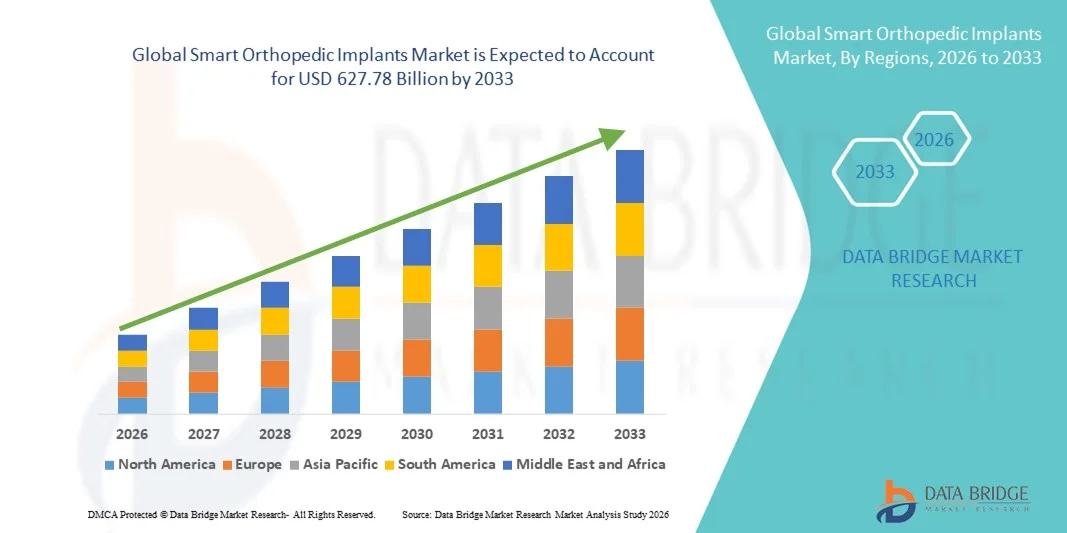
- وفقاً لتحليل بحث سوق جسر البيانات، تم تقدير حجم السوق العالمية لزراعة مزروعات التزيق المتأنّي على أساس375.08 مليار دولار من دولارات الولايات المتحدة في عام 2025ومن المتوقع أن يتم ذلك627.78 مليار, ما(أ)خلال الفترة التي
- ومما يغذي نمو السوق إلى حد كبير تزايد انتشار اضطرابات تقويم العظام، وارتفاع عدد المسنين، وأوجه التقدم التكنولوجي السريع في المواد المزروعة ونظم التكامل الرقمي، مما يؤدي إلى تعزيز اعتماد زرع الأعضاء المتأنية عبر المستشفيات والمراكز المتخصصة في تقويم الأعضاء.
- فضلاً عن ذلك، فإن الطلب المتزايد على العمليات الجراحية الغازية إلى أدنى حد ممكن، والرصد في الوقت الحقيقي بعد العملية، وتحسين نتائج العلاج الخاص بالمريضين على وجه التحديد، يعمل على تأسيس عمليات زرع متأنية متمرسة في العظام باعتبارها حلاً متقدماً في مجال الرعاية المتمرنة الحديثة. وهذه العوامل المتقاربة تعمل على التعجيل باستيعاب الحلول الذكية لزرع الأعضاء، وبالتالي تعزيز نمو الصناعة إلى حد كبير.
سوق الحجم و توقّر
- القيمة السوقية (2025):375.08
- القيمة السوقية المتوقعة (2033):627.78
- التنبؤ التوقّر6.65%
ما هي أهم عمليات الإستحواذ على سوق الخضروات الذكية؟
- وأصبحت الزرعات الذكية المتمرنة التي تدمج أجهزة الاستشعار المتقدمة والإلكترونيات الدقيقة والوصل اللاسلكي في أجهزة الاستبدال المشترك وأجهزة التثبيت التي تسبب صدمات، عناصر حيوية بشكل متزايد في الرعاية الجراحية الحديثة نظرا لقدرتها على التمكين من رصد الأداء في الوقت الحقيقي، وتحسين تقييم طول العمر الزرعي، وإدارة ما بعد الجراحة باستخدام البيانات في جميع المستشفيات ومراكز تقويم العظام المتخصصة.
- ويغذي الطلب المتزايد على الغرسات المتبلة المتمرنة المتمرنة أساساً ارتفاع معدل انتشار التهاب الأوستاتrthrtitis واضطرابات العظام الانحلالية، وزيادة عدد المسنين، وتزايد تفضيل الإجراءات التي تنطوي على الحد الأدنى من التوسع، والتوسع في اعتماد تكنولوجيات الصحة الرقمية التي تعزز الدقة الجراحية ونتائج المرضى الطويلة الأجل.
- كانت أميركا الشمالية هي المهيمنة على سوق زرع الأعضاء المتشددة التي كانت أكبر حصة من الإيرادات تبلغ 44.6% في عام 2025، والتي تميزت بالهياكل الأساسية المتقدمة للرعاية الصحية، وارتفاع الإنفاق على الرعاية الصحية، والوجود القوي لصناع الأجهزة الطبية الرئيسيين، والاعتماد المبكر للحلول المتكاملة رقمياً في تقويم العظام. ولا تزال الولايات المتحدة تشهد نمواً كبيراً في إجراءات الاستبدال المشتركة الذكية، مدعومة بأطر سداد مواتية وابتكار تكنولوجي سريع.
- ومن المتوقع أن تكون منطقة آسيا والمحيط الهادئ أسرع المناطق نمواً في السوق الذكية لزروع الأعضاء المتقويات المتقويات خلال الفترة المتوقعة، وذلك بسبب زيادة الاستثمارات في الرعاية الصحية، وارتفاع أحجام العمليات الجراحية المتقوية، وتوسيع نطاق السياحة الطبية، وزيادة الوعي فيما يتعلق بتكنولوجيات الغرس المتقدمة عبر بلدان مثل الصين والهند واليابان وكوريا الجنوبية.
- وكان قطاع التيتانيوم أكبر حصة من إيرادات السوق بلغت 38.9 في المائة في عام 2025، مدفوعة بميزاته الفائقة في التوافق الأحيائي ومقاومة التآكل.
التقرير عن النطاق والأسعار
|
الصفات الأولى |
سوق مفاتيح السوق |
|
المُسَجَّل |
|
|
البلدان |
أمريكا الشمالية
أوروبا
منطقة آسيا والمحيط الهادئ
الشرق الأوسط وأفريقيا
جنوب أمريكا الجنوبية
|
|
& مفتاح |
|
|
ما |
|
|
جاري |
وبالإضافة إلى الرؤى المتعلقة بسيناريوهات السوق مثل القيمة السوقية، ومعدل النمو، والتجزئة، والتغطية الجغرافية، واللاعبين الرئيسيين، فإن تقارير السوق التي تُقيِّمها بحوث سوق جسر البيانات تشمل أيضاً تحليلاً متعمقاً للخبراء، وعلم وبائيات المرضى، وتحليل خطوط الأنابيب، وتحليل الأسعار، والإطار التنظيمي. |
ما هو الاتجاه الرئيسي في سوق الزراعات الذكية؟
عن طريق أجهزة الاستشعار الموثقة والرصد الحقيقي
- ومن الاتجاهات الهامة والمتسارعة في السوق العالمية لزرع الأعضاء الاصطناعية المتمرسة دمج أجهزة الاستشعار المدمجة والوصلات اللاسلكية داخل عمليات الزرع للتمكين من رصد صحة المرضى وأداء الزرع في الوقت الحقيقي. وتسمح هذه النظم المتقدمة بالتتبع المستمر لبارامترات مثل توزيع الأحمال، وتغيير درجات الحرارة، واستقرار الزرع، والتقدم في عملية الزرع.
- على سبيل المثال، تشتمل بعض النماذج الأولية للركبة الذكية والورك المزروع على أجهزة استشعار دقيقة تنقل بيانات الأداء بعد العملية إلى الأطباء، مما يسمح بالكشف المبكر عن مخاطر الزرع، أو عدم الاتساق، أو الإصابة. وهذا يعزز عملية اتخاذ القرار السريري ويقلل من احتمالات المراجعة الجراحية.
- ويتيح إدماج منصات الرصد القائمة على أساس البلوتوث والمرتبطة بالسحاب والمرتبطة بالسحاب للأخصائيين في تقويم العظام تقييم التقدم المحرز في مجال التأهيل عن بعد واستراتيجيات العلاج الشخصية.
- إن التركيز المتزايد على العمليات الجراحية التي تؤدي إلى الحد الأدنى من الاجتياح غير المباشر والإجراءات المتشددة القائمة على الدقة في تقويم العظام يزيد من تسارع الطلب على الزرع المتقدم تكنولوجياً والقادر على توفير رؤى أداء عملية. وتتبنى المستشفيات ومراكز تقويم العظام المتخصصة تدريجياً مثل هذه النظم الذكية لتعزيز معدلات النجاح الإجرائي.
- إن هذا التحول نحو الحلول المتينة المترابطه والمبنية على البيانات هو إعادة تحديد معايير الرعاية بعد الجراحة وتعزيز التعاون بين المرضى ومقدمي الرعاية الصحية. ونتيجة لهذا، يستثمر المصنعون بشكل كبير في البحث والتطوير لتطوير الجيل القادم من الزرع المتمرن الذكي المتمرن مع تعزيز القدرة على البقاء، والموازنة البيولوجية، وقدرات الرصد المتكامل.
سوق المنتجات
سائق
ارتفاع معدل انتشار اضطرابات العظام في أمراض العظام وزيادة عدد السكان المسنين
- ويعد الانتشار المتزايد للاضطرابات العُصَرَة مثل التهابات العظام مثل Osteothyoarthrtis، وRhyumatwed frrtis، وهشاشة العظام، وإصابات الصدمة، وإصابات الصدمات، أحد العوامل الرئيسية الدافعة التي تحفز الطلب على عمليات التزروع المتمرِّدة الذكية في جميع أنحاء العالم
- إن الزيادة السريعة في أعداد المسنين الذين يتزايد عددهم بسرعة، والذين هم أكثر عرضة لظروف التكسُّر في العظام والاضطرابات المرتبطة بالاضطرابات المشتركة، تزيد بشكل كبير من حجم عمليات الاستبدال المشترك وعمليات إعادة البناء المشتركة.
- وعلى سبيل المثال، فإن ارتفاع حالات إجراءات استبدال الركبة والورك على الصعيد العالمي يشجع مقدمي الرعاية الصحية على اعتماد نظم مزروعة متقدمة توفر قدرة محسنة على الاستمرار وقدرات معززة للرصد بعد العملية
- وبالإضافة إلى ذلك، تسهم زيادة الإصابات المتصلة بالرياضات وحالات حوادث الطرق في زيادة الطلب على الغرس المتقدم تكنولوجياً بما يكفل استقراراً هيكلياً أفضل والانتعاش السريع
- المبادرات الحكومية الرامية إلى تحسين الهياكل الأساسية للرعاية الصحية الصحية، وزيادة الإنفاق على الرعاية الصحية، وزيادة وعي المرضى بشأن خيارات العلاج المتقدّمة، تزيد من دعم توسيع الأسواق عبر كل من الاقتصادات المتقدمة والاقتصادات الناشئة
التعرّض/التحديي
الشواغل المتعلقة بأمن الفضاء الحاسوبي والتكاليف الباهظة
- ولا تزال التكلفة المرتفعة المرتبطة بزرع مزروعات متبلَّغة ومتطورة تكنولوجياً تكنولوجياً وتكنولوجياً وتبلور تحديات كبيرة أمام عملية الاعتماد على نطاق واسع، لا سيما في المناطق النامية ذات التغطية المحدودة بالسداد ونظم الرعاية الصحية المقيدة الميزانية
- وتنطوي الغرسات الذكية المدمجة مع أجهزة الاستشعار المدمجة، ووحدات نقل البيانات اللاسلكية، والمواد المتطورة القابلة للتوافق البيولوجي، على تكاليف أعلى في مجالات البحث والتصنيع والتحقق بالمقارنة مع عمليات الترسيب التقليدية، مما يؤدي إلى تسعير أعلى
- وعلى سبيل المثال، يمكن أن تكلف عمليات زرع الركبة أو الورك المصممتين لتوفير رصد الأداء بعد العملية الجراحية تكلفة أكبر بكثير من عمليات الزرع التقليدية، مما يجعل المستشفيات والمرضى في الأسواق الحساسة من حيث التكلفة يترددون في اعتماد هذه الحلول المتقدمة دون دعم واضح لسداد التكاليف.
- كما أن عمليات الموافقة التنظيمية المعقدة والصرامة على المنتجات المركبة (الجهاز الطبي زائداً المكوِّن الرقمي) تزيد من زيادة مصروفات الانتقال من وقت إلى سوق ومن تكاليف الامتثال.
- وبالإضافة إلى ذلك، قد تؤدي الشواغل المتعلقة باستمرارية الأجهزة الطويلة الأجل، وأمن الفضاء الحاسوبي للبيانات الطبية المنقولة، والتكامل مع الهياكل الأساسية لتكنولوجيا المعلومات في المستشفيات إلى إبطاء قرارات الشراء بين مقدمي خدمات الرعاية الصحية
- والتغلب على هذه التحديات من خلال تحقيق الاستفادة المثلى من التكاليف، وتوسيع أطر سداد التكاليف، والمواءمة التنظيمية، وتعزيز التدابير الأمنية المتعلقة بالبيانات، سيكون أمرا أساسيا لكفالة الاعتماد المستدام والواسع النطاق لزرع الأعضاء المتزروعة الذكية على الصعيد العالمي
كيف يتم تنظيم سوق النباتات ذات الأعضاء الصناعية الذكية؟
وتقسم السوق على أساس نوع المنتج، والمواد، والمستعمل النهائي.
- حسب النوع
وعلى أساس نوع المنتج، فإن سوق زراعة الكركند العالمية الذكية تجزئة إلى إعادة بناء وإعادة بناء الكثبان، وزراعة الركبة، وزرع الركبتين، وزراعة الركبتين، وزراعة الصدمات، ويسيطر قطاع إعادة بناء الكُني على أكبر حصة من إيرادات السوق قدرها 34.7 في المائة في عام 2025، وذلك بسبب تزايد الانتشار العالمي لالتهاب العظام واضطرابات التناسل المشتركة، ويسهم تزايد عدد المسنين إسهاما كبيرا في زيادة إجراءات استبدال الركبة على نطاق العالم. ويتيح التقدم التكنولوجي، مثل عمليات الزرع بواسطة أجهزة الاستشعار، رصد الأداء المشترك في الوقت الحقيقي بعد الجراحة. ويزيد ارتفاع معدلات السمنة من خطر تدهور الركبة المشتركة، ودعم أحجام الإجراءات. ويعزز تحسين التقنيات الجراحية والعمليات الجراحية التي تتم بمساعدة الروبوتية من دقة الزرع ونتائجه. وزيادة الوعي فيما يتعلق بالاستبدال المشترك المبكر يحسن معدلات قبول المرضى. كما تدعم سياسات السداد المحتملة في المناطق المتقدمة النمو التوسع في الأسواق. ويؤدي الابتكار المستمر في إجراءات إعادة بناء الركبة إلى الحد الأدنى من التوسع إلى الحد من وقت الانتعاش. وتؤدي زيادة الإصابات المتصلة بالرياضة إلى زيادة حفز الطلب. وزيادة توسيع المستشفيات المتخصصة بالتقويم على الصعيد العالمي تعزز عمليات الشراء. وزيادة الإنفاق على الرعاية الصحية في الاقتصادات الناشئة تدعم إمكانية الوصول. وتدعم سياسات السداد المحتملة أيضاًاًاًاً
ومن المتوقع أن يشهد قطاع الزراعة العرضية أسرع نسبة لـ 9.4 في المائة من عام 2026 إلى عام 2033، الذي يغذيه تزايد حالات الاضطرابات الشوكية مثل مرض القرع الديكي ومرض القحط الشوكي. وتسهم أنماط الحياة الساكنة والحالة السيئة إلى حد كبير في المضاعفات الشوكية. وتكتسب زراعة الشوك الشوكي المجهزة بأجهزة استثارة لتتبع التعافي بعد الجراحة. وتعزز زيادة اعتماد العمليات الجراحية ذات الحد الأدنى من الازدحام القطاعي. ويعزز التكامل التكنولوجي الذي يمكِّن من إعادة التأهيل القائم على البيانات نتائج المرضى. ويدعم تزايد عدد السكان المسنين على الصعيد العالمي زيادة دفع الطلب الإجرائي. ويؤدي التوسع في المراكز العصبية المتقدمة إلى تعزيز الاعتماد. كما أن زيادة الوعي بالتدخل المبكر من أجل حالات التشوه الشوكية تدعم النمو. كما أن تطوير الهياكل الأساسية للرعاية الصحية في آسيا والمحيط الهادئ وأمريكا اللاتينية يعجل الطلب. ويعزز ارتفاع الاستثمارات البحثية في المواد الذكية المتوافقة مع الحياة من ابتكار المنتجات. وتؤدي معدلات النجاح الأعلى في إجراءات الاندماج الشوكي إلى زيادة ثقة المرضى. كما أن عمليات الموافقة على المنتجات المستمرة والتجارب السريرية تزيد من تعزيز زخم القطاع.
- المجموع
وعلى أساس المواد، فإن سوق النباتات العالمية المتكيفة مع النظام العالمي يتجزأ من سوق الأسمنت، والمعادن، وكوبلت ألوف، والتيتانيوم. وكان قطاع التيتانيوم يملك أكبر حصة من إيرادات السوق بنسبة 38.9% في عام 2025، مدفوعة بميزاته الفائقة في التوافق البيولوجي ومقاومة التآكل. وزرع التيتانيوم هو وزن خفيف ولكنه مع ذلك طويل الأمد، الأمر الذي يجعلها مثالية لتطبيقات تقويم العظام الحاملة للحمل. وتؤدي هذه المادة إلى تعزيز الاندماج العظمي بشكل أفضل، وتعزيز استقرار الزرع وطول العمر. ويدعم التفضيل المتزايد للمواد المزرعية الطويلة الأمد اعتماده على نطاق واسع. كما أن التقدم التكنولوجي في زراعة التيتانيوم ذات الطابع الثلاثي الأبعاد يزيد من تعزيز الطلب. ويعزز توافق التيتانيوم مع التكامل الذكي للحساس من ملاءمته للجيل المقبل من الزرع. وتسهم زيادة إجراءات الاستبدال المشتركة على الصعيد العالمي في نمو الحجم. كما تساهم زيادة إجراءات الاستبدال المشتركة على الصعيد العالمي في زيادة الحجم. كما تعمل المادة على خفض التفاعلات مقارنة بالمعادن الأخرى. ويدعم التوسع في البحوث التمثيلية تطوير سبائك التيتانيوم المتقدمة. كما أن عمليات الموافقة التنظيمية غير المرغوب فيها تزيد من تشجيع الاعتماد. وزيادة وعي المريض فيما يتعلق بالتركات الجيدةة في مجال المواد.
ومن المتوقع أن يسجل قطاع السُبلة الكوبالتية أسرع نسبة سجلها في سجلها من 8.7 في المائة من 2026 إلى 2033، وذلك بسبب قوته الاستثنائية ومقاومة إجراءات تقويمية عالية التوتر. وتعد السبائك الكوبولية مناسبة بشكل خاص لزرع الركبة والورك التي تتطلب قابلية الثبات الميكانيكي على المدى الطويل. فزيادة الطلب على عمليات المراجعة الجراحية تدعم نمو المواد. ويعزز مقاومة السبيكة للإجهاد والكسر من عمر الزرع. وتؤدي زيادة البحوث في تركيبات السبائك المتقدمة إلى تحسين خصائص الأداء. والتوسع في إجراءات إعادة البناء المشتركة المعقدة يزيد من الاستخدام. ويدعم الطلب المتزايد على عمليات الزرع عالية الأداء في علاج الإصابات الرياضية الاعتماد. وتحسين تكنولوجيات التصنيع يعزز الدقة والموثوقية. وتشهد الأسواق الناشئة قبولاً متزايداً لعمليات الزرع القائمة على السبائك المتينة. وتزيد زيادة تفضيل الجراحين للمواد القوية ميكانيكياً من النمو. فالتجارب السريرية المستمرة التي تقيّم تركيبات السبائك المحسنة تدعم التوسع. وزيادة الإنفاق على الرعاية الصحية عالمياً يزيد من إسهامه في التسارع في القطاع.
- هذا
وعلى أساس المستخدم النهائي، فإن سوق الزرع العالمي في العظام الذكية مقسم إلى مستشفيات ومراكز متخصصة وعيادات تقويمية ومراكز علاجية إسعافية، وأكبر حصة من إيرادات السوق تبلغ 45.3 في المائة في عام 2025، ويقودها الحجم الكبير من عمليات الاستبدال المشترك المعقدة والعمليات الجراحية الشوكية التي تجرى في المستشفيات، والمستشفيات مزودة بالهياكل الأساسية الجراحية المتقدمة والنظم المدعومة بالروبوتات. ويزيد توافر جراحي العظام المهرة من تعزيز الهيمنة. ويدعم تدفق المرضى المتزايد لحالات الصدمات وحالات الطوارئ الحجم الإجرائي. وإدماج نظم رصد الزرع الذكي أكثر جدوى في بيئات المستشفيات. وتشجع أطر السداد المحتملة العمليات الجراحية في المستشفيات. ويسهم توسيع المستشفيات المتعددة التخصصات على الصعيد العالمي في نمو المشتريات. وتؤدي زيادة الاستثمارات في مجال الرعاية الصحية الحكومية إلى تعزيز الهياكل الأساسية في المستشفيات. ويعزز الوصول إلى مرافق الرعاية اللاحقة للعمليات من النتائج التي يحققها المرضى. وزيادة السياحة الطبية في الدول المتقدمة النمو من زيادة تعزيز إجراءات المستشفيات. ويحسن استخدام التكنولوجيا المستمرة دعم اعتماد الزرع بواسطة أجهزة الاستشعار. ويؤدي وجود وحدات البحوث والاختبار السريري إلى زيادة تعزيز قيادة القطاع.
ومن المتوقع أن يشهد الجزء الخاص بالمراكز الجراحية الإسعافية أسرع عدد من المراكز الجراحية، حيث بلغ 10.1 في المائة من 2026 إلى 2033، مدفوعاً بالتفضيل المتزايد للإجراءات الفعالة من حيث التكلفة والإجراءات الجراحية الأقل حدة. وتوفر المراكز الجراحية المستقلة فترات إقامة أقصر في المستشفيات وخفض التكاليف الجراحية. وتزيد زيادة اعتماد عمليات الاستبدال المشتركة في اليوم نفسه من سرعة النمو. وتؤدي أوجه التقدم التكنولوجي إلى تمكين الرصد الذكي للزرع حتى في أوساط المرضى الخارجيين. ويدعم ارتفاع تفضيل المرضى للتعافي الأسرع إجراءات العلاج المبكر. ويعزز التوسع في مرافق الرعاية الصحية الخاصة على الصعيد العالمي الهياكل الأساسية. وتعزز نماذج السداد المحتملة للعمليات الجراحية للمرضى الخارجيين من الاعتماد. ويتزايد تفضيل الجراحين للخدمات التعويضية من أجل الإجراءات الاختيارية. ويتزايد تفضيل الجراحين للخدمات التعويضية من أجل الإجراءات الاختيارية. ويقلل خطر الإصابة بالمقارنة مع الإقامة في المستشفيات التقليدية تجتذب المرضى. ويسهم تزايد خصخصة الرعاية الصحية في الاقتصادات الناشئة في توسع القطاعات. كما يساهم استمرار التحسن في التخدير والكفاءة الجراحية في زيادة دعم النمو. ويؤدي زيادة الوعي بشأن المرضى الخارجيين في مجال الرعاية الجراحية إلى تدفق المرضى.
ما هي المنطقة التي تملك أكبر حصة من سوق الزرع الصناعي الصناعي الذكي؟
- وسيطرت أمريكا الشمالية على سوق التزروعات الجراحية الذكية بأكبر حصة من الإيرادات بلغت 44.6 في المائة في عام 2025.
- وتستفيد المنطقة من شبكات المستشفيات الراسخة، وزيادة أحجام عمليات الاستبدال المشتركة، والدمج السريع لتكنولوجيات الزرع التي تعتمد على الاستشعار والتي تحركها البيانات.
- كما تلقى قيادة المنطقة المزيد من الدعم من خلال أطر سداد التكاليف المواتية، وقدرات البحث السريري القوية، والابتكار التكنولوجي المستمر في المواد المزروعة ونظم الرصد المدمجة. ولا يزال الطلب المتزايد على إجراءات تقويم العظام القائمة على الدقة، وتحسين تتبع النتائج بعد العمليات، يعزز التوسع في السوق عبر المستشفيات والمراكز المتخصصة في تقويم العظام.
سوق الولايات المتحدة الأمريكية
وفي الولايات المتحدة، استحوذت سوق الزرع المقوي المقوي الذكي على أكبر حصة من الدخل في أمريكا الشمالية في عام 2025، ومن المتوقع أن تنمو في إطار سجل سجل النمو العالمي الجدير بالذكر خلال الفترة المتوقعة. ويحرك النمو ارتفاع معدل انتشار التهاب العظام واضطرابات العضلات والعضلات، وارتفاع عدد المسنين، والطلب القوي على إجراءات الاستبدال المشتركة المتقدمة. ولا يزال البلد يشهد تبنياً كبيراً لزراعة الركبة والورك الذكية المدمجة مع قدرات رصد الأداء. وبالإضافة إلى ذلك، فإن سياسات السداد الداعمة، والاستثمارات القوية في البحث والتطوير، ووجود جهات فاعلة رئيسية في الصناعة يعجل من الابتكار وتسويق الجيل القادم من الحلول العطرية الذكية في الولايات المتحدة.
أوروبا: أوروبا: أوروبا
ومن المتوقع أن تتوسع سوق أوربا لزراعة الأعضاء الاصطناعية الذكية في ظل سجل كبير من النمو العالمي خلال الفترة المتوقعة، وذلك في المقام الأول بسبب زيادة الإجراءات الجراحية المتشددة، وتزايد عدد المسنين، وزيادة التركيز على النهج العلاجية المتقدمة تكنولوجياً والحد الأدنى من التوسع. وتدعم المعايير التنظيمية القوية والتركيز على الأجهزة الطبية العالية الجودة تبني زرع عظام مدمجة رقمياً في مختلف أنحاء المنطقة. وتشهد المنطقة طلباً متسقاً في مختلف المستشفيات العامة، والعيادات المتخصصة الخاصة، والمراكز الطبية الأكاديمية، مع دمج تكنولوجيات الزرع الذكية في كل من إجراءات الاستبدال الأولية وإجراءات الاستبدال المشتركة.
المملكة المتحدة لبريطانيا العظمى
ومن المتوقع أن تنمو سوق زراعة الأعضاء الاصطناعية الذكية في المملكة المتحدة نمواً مطرداً خلال الفترة المتوقعة، مدعومة بزيادة حالات الاضطرابات المشتركة الانكماشية وإطار قوي للرعاية الصحية العامة. ومن المتوقع أن يؤدي تركيز البلاد على التشخيص المبكر، والعلاجات الدقيقة القائمة على تقويم العظام، وتحسين الرصد بعد العملية الجراحية إلى تشجيع تبني تكنولوجيات الزرع المتقدمة. والواقع أن مبادرات التحديث المستمر للرعاية الصحية والتعاون في مجال البحوث من شأنهما أن يزيدا من تحفيز نمو السوق.
ألمانيا (بملايين)
ومن المتوقع أن تتوسع سوق الزرع الجراحي الذكية في ألمانيا في ظل سجل كبير من النمو العالمي خلال الفترة المتوقعة، والذي يغذيه الطلب المتزايد على الزرع العالي الأداء وقاعدة تصنيع الأجهزة الطبية القوية في البلاد. ومن المتوقع أن يؤدي تركيز ألمانيا على الدقة الهندسية، والابتكار الإكلينيكي، والبنية الأساسية الجراحية المتقدمة إلى تشجيع تبني الجيل القادم من الزرعات الذكية للعظام، وخاصة في إجراءات استبدال الورك والركبة.
سوق البلدان النامية
ومن المتوقع أن تنمو سوق الزراعة الجراحية الذكية في آسيا والمحيط الهادئ بأسرع ما يمكن خلال الفترة المتوقعة، وذلك بفضل زيادة الاستثمارات في الرعاية الصحية، وارتفاع أحجام الجراحات المتقوية، وتوسيع نطاق السياحة الطبية، وزيادة الوعي بالتكنولوجيات المتقدمة في الزراعة في مختلف بلدان مثل الصين والهند واليابان وكوريا الجنوبية. والواقع أن التحسينات السريعة في البنية الأساسية للرعاية الصحية وزيادة إمكانية الحصول على الرعاية المتخصصة في تقويم العظام تعمل على زيادة دعم النمو الإقليمي. ومع تحديث أنظمة الرعاية الصحية وارتفاع الدخول المتاحة، يتزايد اختيار المرضى للزرع المتقدم تكنولوجياً والذي يوفر قدرة معززة على الاستمرار ونتائج سريرية أفضل.
سوق المنتجات الزراعية الذكية
إن سوق التزروعات الجراحية الذكية في اليابان آخذة في اكتساب الزخم بسبب سرعة شيخوخة سكان البلاد وارتفاع معدلات انتشار الاضطرابات الانكماشية في العظام. إن القدرات التكنولوجية القوية، والبنية الأساسية المتقدمة في المستشفيات، والتبني المبكر للتكنولوجيات الطبية المبتكرة، تدعم التوسع المطرد في السوق. والطلب على زرعات طويلة الأمد وعالية الدقة مدمجة مع قدرات الرصد بارز بشكل خاص في السوق اليابانية.
شركة SAST SAT
الواقع أن سوق زراعة العظام المتأنية في الصين كانت تشكل أكبر حصة من الإيرادات في آسيا والمحيط الهادئ في عام 2025، ويرجع ذلك إلى ارتفاع أحجام الإجراءات المتشددة، والتوسع في عدد سكان الطبقة المتوسطة، والاستثمارات الحكومية القوية في البنية الأساسية للرعاية الصحية. والواقع أن زيادة السياحة الطبية، وتحسين فرص الحصول على الرعاية الجراحية المتقدمة، وتنامي وجود الشركات المصنعة المحلية والدولية للزرع، تشكل عوامل رئيسية تدفع نمو السوق. والواقع أن التحديث المستمر للمستشفيات وزيادة الوعي فيما يتصل بتكنولوجيات الاستبدال المشتركة المتقدمة تعملان على زيادة التعجيل بعملية الاعتماد في مختلف أنحاء البلاد.
من هي الشركات الكبرى في سوق المنتجات الزراعية الذكية؟
وتتولى شركات راسخة أساساً قيادة صناعة نباتات العظام الذكية، ومن بينها:
- شركة زيمر بيوميت هادجلز، Inc.)الولايات المتحدة الأمريكية(
- شركة سترايكر (الولايات المتحدة الأمريكية)
- & & & & & & لا & & لا)بالك كـك كـوك(
- Medtronic Plc (أيرلندا)
- شركة Globus Medical Inc.)الولايات المتحدة الأمريكية(
- (الولايات المتحدة)
- شركة Exactch, Inc. (الولايات المتحدة)
- مؤسسة ماكروهات)الصين(
- بـاء - بــارون ميلسونسن)ألمانيا(
- Arthrnex, Inc. (الولايات المتحدة)
- مجموعة رايت الطبية (الولايات المتحدة الأمريكية)
- (الولايات المتحدة)
- ليما كوربورات س. ب. أ. (إيطاليا)
- JJO Glogal, Inc. (الولايات المتحدة)
- مجموعة كورن (المملكة المتحدة)
- علوم الحياة (الولايات المتحدة الأمريكية)
- نظم الزرع (ألمانيا)
- دراجي (فرنسا)
- (الولايات المتحدة الأمريكية)
ما هي التطورات الأخيرة في السوق العالمية لزراعة النباتات ذات الأوعية الدموية الذكية؟
- في أغسطس/آب 2021، تلقى زيمر بيوميت الشخصية التي ينتمي إليها زيمر بيوميت تصنيف De Novo، الأمر الذي جعله واحداً من أوائل أنظمة استبدال الركبة التي تعتمد على الاستشعار والتي يسمح باستخدامها في السرير في الولايات المتحدة. وقد سمح هذا المعلم التنظيمي لعملية الزرع بنقل البيانات الميكانيكية الحيوية في الوقت الحقيقي إلى أجهزة خارجية لرصد تعافي المرضى والأداء المشترك، الأمر الذي يشكل تقدماً رئيسياً في تكنولوجيا الزرع المتمرن المرتبطة.
- وفي نيسان/أبريل 2022، دخلت الروبوتات الإلكترونية في تعاون مع شركة Ampplowe Durgical لتطوير حل جراحي آلي للركبة يهدف إلى تعزيز الدقة والنتائج في إجراءات الغرس المتأنية للعظام.
- وفي آذار/مارس 2024، تلقت شركة إنتيليرود سبين تصريحاً من هيئة التنمية الحرجية بشأن نظامها لزرع الإنصهار الشوكي الذي يتضمن أجهزة استشعار مدمجة قادرة على قياس الحمولة والضغط عبر أجزاء الفقرات من أجل تحقيق النتائج المثلى بعد العملية الجراحية.
- في مارس/آذار 2025، وسع زيمر بيوميت نطاق حافظته الذكية من تقويم العظام بإطلاق نظام Pania IQ 30 مم Stem، وهو امتداد جديد مجهز بأجهزة الاستشعار لحلول الركبة الذكية المصممة لاستيعاب مجموعة أوسع من تشريح المرضى وتعزيز جمع البيانات لخطط التعافي الشخصية. وقد عزز هذا الإصدار قيادة الشركة في تكنولوجيات الزرع القائمة على الاستشعار ووسع نطاق التطبيق السريري.
- في حزيران/يونيه 2025، شاركت شركة NanoHeve Medical LLC مع شركة DirectSync Surgic Curgical إلى المشاركة في تطوير مشروع Hipve Sofnst Titenium الشوكي، وزرع عمليات الاندماج بين الجسمين مع أجهزة استشعار متكاملة للفطيرة الكهربية وقدرات الرصد عن بعد، مع الجمع بين الهياكل المتقدمة ذات الطابع الثلاثي الأبعاد مع تكنولوجيا الاستشعار الذكية للتمكين من تحفيز العظام وتحسين جمع البيانات من أجل الرعاية الخاصة بالمريض.
SKU-
احصل على إمكانية الوصول عبر الإنترنت إلى التقرير الخاص بأول سحابة استخبارات سوقية في العالم

- لوحة معلومات تحليل البيانات التفاعلية
- لوحة معلومات تحليل الشركة للفرص ذات إمكانات النمو العالية
- إمكانية وصول محلل الأبحاث للتخصيص والاستعلامات
- تحليل المنافسين باستخدام لوحة معلومات تفاعلية
- آخر الأخبار والتحديثات وتحليل الاتجاهات
- استغل قوة تحليل المعايير لتتبع المنافسين بشكل شامل
منهجية البحث
يتم جمع البيانات وتحليل سنة الأساس باستخدام وحدات جمع البيانات ذات أحجام العينات الكبيرة. تتضمن المرحلة الحصول على معلومات السوق أو البيانات ذات الصلة من خلال مصادر واستراتيجيات مختلفة. تتضمن فحص وتخطيط جميع البيانات المكتسبة من الماضي مسبقًا. كما تتضمن فحص التناقضات في المعلومات التي شوهدت عبر مصادر المعلومات المختلفة. يتم تحليل بيانات السوق وتقديرها باستخدام نماذج إحصائية ومتماسكة للسوق. كما أن تحليل حصة السوق وتحليل الاتجاهات الرئيسية هي عوامل النجاح الرئيسية في تقرير السوق. لمعرفة المزيد، يرجى طلب مكالمة محلل أو إرسال استفسارك.
منهجية البحث الرئيسية التي يستخدمها فريق بحث DBMR هي التثليث البيانات والتي تتضمن استخراج البيانات وتحليل تأثير متغيرات البيانات على السوق والتحقق الأولي (من قبل خبراء الصناعة). تتضمن نماذج البيانات شبكة تحديد موقف البائعين، وتحليل خط زمني للسوق، ونظرة عامة على السوق ودليل، وشبكة تحديد موقف الشركة، وتحليل براءات الاختراع، وتحليل التسعير، وتحليل حصة الشركة في السوق، ومعايير القياس، وتحليل حصة البائعين على المستوى العالمي مقابل الإقليمي. لمعرفة المزيد عن منهجية البحث، أرسل استفسارًا للتحدث إلى خبراء الصناعة لدينا.
التخصيص متاح
تعد Data Bridge Market Research رائدة في مجال البحوث التكوينية المتقدمة. ونحن نفخر بخدمة عملائنا الحاليين والجدد بالبيانات والتحليلات التي تتطابق مع هدفهم. ويمكن تخصيص التقرير ليشمل تحليل اتجاه الأسعار للعلامات التجارية المستهدفة وفهم السوق في بلدان إضافية (اطلب قائمة البلدان)، وبيانات نتائج التجارب السريرية، ومراجعة الأدبيات، وتحليل السوق المجدد وقاعدة المنتج. ويمكن تحليل تحليل السوق للمنافسين المستهدفين من التحليل القائم على التكنولوجيا إلى استراتيجيات محفظة السوق. ويمكننا إضافة عدد كبير من المنافسين الذين تحتاج إلى بيانات عنهم بالتنسيق وأسلوب البيانات الذي تبحث عنه. ويمكن لفريق المحللين لدينا أيضًا تزويدك بالبيانات في ملفات Excel الخام أو جداول البيانات المحورية (كتاب الحقائق) أو مساعدتك في إنشاء عروض تقديمية من مجموعات البيانات المتوفرة في التقرير.











