



Global Voice Assistant Market Segmentation, By Technology (Speech recognition, Natural Language Processing, Text to Speech Recognition, and Voice Recognition), Hardware (Set-top Box, Smartphone & Tablets, and Smart Speakers), Application (Messenger Bots, Websites, and Contact Centers), End-User (Individual User, SMEs, and Large Enterprises) - Industry Trends and Forecast to 2033
ما هو حجم ومعدل النمو في سوق الأصوات العالمية؟
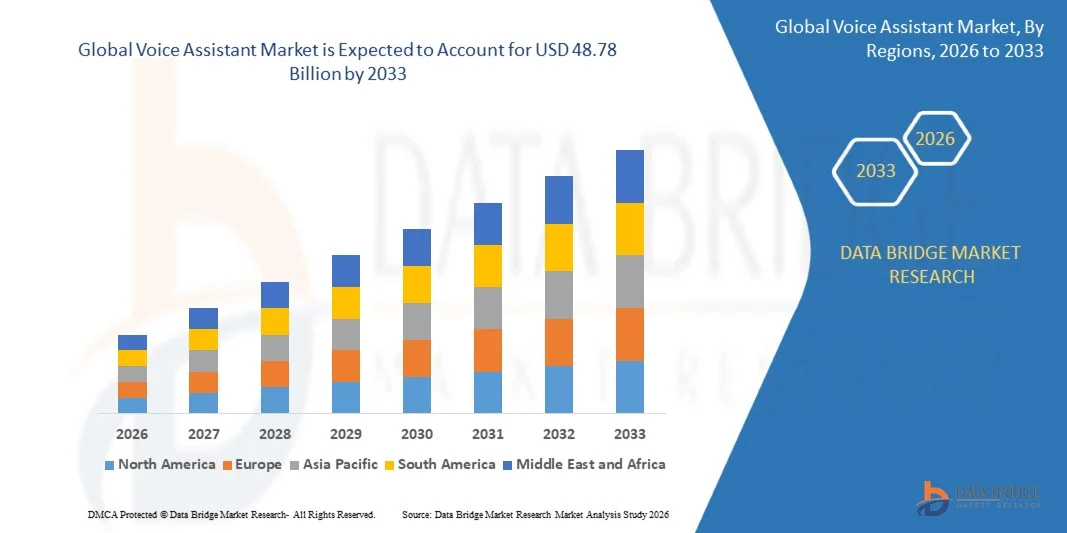
- وفقاً لتحليلات بحوث سوق بيانات جسر جسر البيانات، قدر حجم سوق الأصوات العالمية المساعدة بقيمة7.84 مليار دولار في عام 2025ومن المتوقع أن يتم ذلك48.78 مليار دولار, ما(أ) نسبة مئوية تبلغ 25.6.6 في المائةخلال الفترة التي
- وتعمل التشغيل الآلي السريع في قطاعات الصناعة التحويلية كواحد من العوامل الرئيسية التي تدفع نمو سوق مساعدي الصوت.المازجيتكنولوجيات الهياكل الأساسية الأخرى التي تعجل نمو السوق
سوق الحجم و توقّر
- قيمة السوق العالمية (25):7.84 بليون
- القيمة السوقية المتوقعة (2033):48 في المائة
- التنبؤات المتوقعة لـ CAGR (2026-2033):25.66%
ما هي "الرائدات المُتَحَلِّين" من سوق الأصوات المساعدة؟
- :: زيادة اعتماد مساعد صوت عند تقديم استجابات أفضل عن طريق الحوارات مما يتيح تعزيز خبرة العملاء، والاعتماد الكبير من جانب الناس على منصة العمل عن بعد لأداء مهامهم يزيد من التأثير على السوق
- وعلاوة على ذلك، فإن الشركات التجارية التي تستفيد من منصات وسائط الإعلام الاجتماعية باعتبارها قناة تسويقية رئيسية، ونشر القناة العالمية وتقدمها في نظامي ن.ل.ل، والنظام الإيكولوجي في منطقة آسيا والمحيط الهادئ تؤثر تأثيراً إيجابياً على سوق المساعدة الصوتية. وعلاوة على ذلك، فإن شعبية الأجهزة المترابطة وأفضليات المنازل الذكية توفر فرصاً مربحة للجهات الفاعلة في السوق.
- وسيطر أمريكا الشمالية على سوق مساعد الصوت بحصة من الإيرادات بنسبة 41.8 في المائة في عام 2025، مدفوعاً بالوجود القوي لشركات التكنولوجيا الرائدة، والاستخدام الواسع النطاق للأجهزة الذكية، والتقدم السريع في الاستخبارات الاصطناعيةحوسبةعبر الولايات المتحدة وكندا
- ومن المتوقع أن تسجل منطقة آسيا والمحيط الهادئ أسرع معدلات نمو في الناتج المحلي الإجمالي حيث بلغت 957.7 في المائة في الفترة من 2026 إلى 2033، مدفوعاً بالنمو السريع في اعتماد الهواتف الذكية، وتوسيع نطاق النفاذ إلى الإنترنت، وزيادة إدماج تكنولوجيات الصوت التي تعمل بموجات غير محددة عبر الإلكترونيات الاستهلاكية والمنصات الرقمية في الصين واليابان والهند وكوريا الجنوبية وجنوب شرق آسيا.
- غلب جزء الاعتراف بالخطاب على السوق بحصة قدرها 41.6 في المائة في عام 2025، لأنه يشكل الطبقة التأسيسية التي تمكن المساعدين الصوتيين من تحويل اللغة المنطوقة بدقة إلى نص مقروء آليا
التقرير المتعلق بالنطاق والصوت
|
الصفات الأولى |
مساعد صوت صوت |
|
المُسَجَّل |
|
|
البلدان |
أمريكا الشمالية
أوروبا
منطقة آسيا والمحيط الهادئ
الشرق الأوسط وأفريقيا
جنوب أمريكا الجنوبية
|
|
& مفتاح |
|
|
ما |
|
|
جاري |
|
ما هو الاتجاه الرئيسي في سوق الأصوات المساعدة؟
"الإدماج السريع للاستخبارات الحوارية في مساعدي صوت"
- وتشهد سوق المساعدة الصوتية اعتماد قوي لنظم المحادثة التي تقودها منظمة العفو الدولية والتي توفر فهماً لغوياً طبيعياً، واستجابات سياقية، وتفاعلات شخصية بين المستعملين عبر الهواتف الذكية والمتحدثين الذكية والمركبات والأجهزة المنزلية الذكية.
- يقوم مقدمو التكنولوجيا بدمج النماذج اللغوية الكبيرة، ومحركات التعرف على النطق، وتجهيز اللغات الطبيعية في الوقت الحقيقي من أجل تعزيز الدقة والوعي بالسياق وقدرات الاتصال المتعدد اللغات
- :: الطلب المتزايد على التفاعل دون تصافح،البيت المستقروتتسارع وتيرة اعتماد خدمات التشغيل الآلي والخدمات الرقمية التي تعمل بالصوت والصوت في جميع نظم الإلكترونيات الاستهلاكية، والرعاية الصحية، ونظم المعلومات عن السيارات، ومنصات المؤسسات
- فعلى سبيل المثال، تقوم شركات مثل الأمازون، وغوغل، وأبل، وميكروسوفت بتعزيز مساعدي صوتها من خلال تعزيز قدراتها في مجال التجانس البينية، وتحسين الذاكرة السياقية، وتعميق التكامل مع خدمات السحاب والأجهزة المرتبطة بها.
- :: زيادة استخدام الواجهات الصوتية في المركبات، والملبوسات، والخدمات المصرفية، وأدوات إنتاجية المؤسسات، مما يوسع نطاق المساعدين الصوتيين أكثر من نطاق الناطقين بذكاء المستهلكين
- ومع توسع التقدم التكنولوجي الذي تحرزه منظمة العفو الدولية والنظم الإيكولوجية المرتبطة بها، سيظل المساعدون الصوتيون محورياً في التفاعل البدائي بين الإنسان والآلات والخبرات الرقمية الجيل المقبل
ما هو المحرك الرئيسي لسوق الأصوات المساعدة؟
- تزايد الطلب على التفاعل الرقمي دون أي أيادي وعلى التشغيل الآلي المنزلي الذكية هو زيادة اعتماد مساعدي الصوت عبر الهواتف الذكية والمتكلمين الذكية والتليفزيونات الذكية والأجهزة المرتبطة بها
- ففي عام 2025، على سبيل المثال، أدخلت شركات تكنولوجية رائدة مثل الأمازون وأبل وغوغل في عام 2025 تحسينات متقدمة في مجال الجينات الوصفية - معهد المعلومات الإدارية الدولية ووسعت نطاق توافق الأجهزة لتحسين دقة الاعتراف الصوتي والاستجابات السياقية
- النمو السريع في النظم الإيكولوجية لمعيار تكنولوجيا تكنولوجيا المعلومات والاتصالات، والمركبات المرتبطة، والأجهزة القابلة للبلى، والحلول الذكية للرعاية الصحية، هي التي تنشئ تطبيقات جديدة للوصلات البينية القائمة على الصوت عبر أمريكا الشمالية وأوروبا وآسيا والمحيط الهادئ
- وقد أدى التقدم في خوارزميات الاعتراف بالنطق، والهياكل الأساسية للحوسبة السحابية، وتجهيز نظام قياس الانجازات البينية الدقيقة إلى تحسن كبير في سرعة الاستجابة، والدقة، وكفاءة تجهيز البيانات
- :: زيادة استخدام خدمة العملاء المكفوفين بصوت الصوت، والتجارة الصوتية، وأدوات إنتاجية المؤسسات، وتوسيع نطاق الاعتماد التجاري للمساعدين الصوتيين عبر بيئات التجزئة والمصارف والشركات
- وبدعم من الاستثمارات الجارية في بحوث منظمة العفو الدولية، والنظم الإيكولوجية للأجهزة الذكية، ومبادرات التحول الرقمي، يُتوقع أن تشهد سوق مساعد الصوت نموا قويا طويل الأجل
ما هو العامل الذي يتحدى نمو سوق مساعدي الأصوات؟
- ولا تزال الشواغل المتعلقة بالخصوصية الخاصة وأمن البيانات فيما يتصل بالسجلات الصوتية، وتخزين بيانات المستعملين، وقدرات الاستماع المستمرة، والشواغل المتعلقة بأمن البيانات والمتصلة بالصوتيات، وحفظ بيانات المستعملين، وقدرات الاستماع المستمر، تشكل تحدياً رئيسياً أمام عملية الاعتماد الواسعة الانتشار
- فعلى سبيل المثال، خلال الفترة 2024-2025، زاد التدقيق التنظيمي وأطر حماية البيانات المتطورة في مناطق مثل أوروبا وأمريكا الشمالية من متطلبات الامتثال بالنسبة للشركات التي تنشئ منصات تابعة لمبادرة العفو الدولية تعمل بالصوت
- لا يزال التفاوت في دقة الاعتراف بالخطاب عبر اللهجات واللغات والبيئات الصُعْبية في دقة الاعتراف بالخطاب عبر اللهت واللغات والبيئات الصُعْبِيْ لا يحد من الأداء المتسق في بعض التطبيقات في العالم الحقيقي
- ويثير الوعي المحدود للمستهلكين بشأن الضوابط الأمنية للمساعدين الصوتيين وممارسات إدارة البيانات والممارسات الأمنية المتعلقة بإدارة البيانات أيضا شواغل بشأن الثقة في الأسواق الناشئة واعتمادها
- المنافسة من بينيات قائمة على اللمس، ونظم الدردشة، ونظام التشغيلالتطبيقات المحمولة:: خلق تداخل تكنولوجي وتقلل من الحاجة إلى تفاعل الصوت أولاً أولاً في بعض حالات الاستخدام
- وللتغلب على هذه التحديات، تركز الشركات على معالجة هذه التحديات على أساس الأجهزة، وتشفير أقوى، ونماذج متعددة اللغات، ونماذج متعددة اللغات، ومُعَدَّة الذكاء المُعَدَّل، وأطر شفافة للخصوصيات من أجل تعزيز ثقة المستعملين وتوسيع نطاق الاعتماد العالمي لمساعدي الصوت
كيف يتم ترتيب سوق الأصوات المساعدة؟
وتقسم السوق على أساسالتكنولوجيا، والمعدات، والتطبيق، والمستعمل النهائي.
• باستخدام التكنولوجيا
وعلى أساس التكنولوجيا، يتم تقسيم سوق مساعدي الصوت إلى اعتراف بالخطاب،تجهيزات اللغات الطبيعيةوقد أدى التحسن السريع في خوارزميات التعلم العميق، والنمذجة الصوتية، وقواعد بيانات الخطاب المتعددة اللغات إلى تحسين كبير في الدقة وقدرات التجهيز في الوقت الحقيقي، وتنتشر التكنولوجيا على نطاق واسع عبر الهواتف الذكية والمتحدثين الذكية ونظم المعلومات عن السيارات ومنصات صوت المؤسسات، وما زالت قدرتها على دعم التفاعل بدون أيادي، والبحث عن الصوت، والعمليات القائمة على القيادة تؤدي إلى تبني واسع النطاق عبر أجهزة المستهلكين والمشاريع.
ومن المتوقع أن ينمو الجزء الخاص بالتجهيز اللغوي الطبيعي في أسرع وقت ممكن من عام 2026 إلى عام 2033، مدفوعاً بتزايد الطلب على المحادثة التي تراعي السياق، وإشراك العملاء بقيادة الذكاء الصناعي، وإدماج النماذج الجينية التي تستخدمها منظمة العفو الدولية في المساعدين الصوتيين. ويمكِّن هذا القطاع المساعدين من فهم القصد، والسياق، والمشاعر، مما يجعل التفاعلات أكثر إنسانية، مثل كفاءة الخدمات الرقمية.
• بالعتاد
وعلى أساس المعدات، تُقسم سوق مساعدي الأصوات إلى صناديق مُطَوَّرة، وموازين ومخططات، ومتحدثين أذكياء، ويهيمن قطاع الهواتف الذكية والجداول على السوق بحصة قدرها 52.3 في المائة في عام 2025، ويرجع ذلك أساساً إلى الاختراق العالمي الهائل للهواتف الذكية وإدماج المساعدين الصوتيين مثل المساعدين الرقميين المتنقلين. وتوفر الهواتف الذكية منبراً مناسباً للبحث الصوتي، والملاحة، والتراسل، والتحكم الذكي في المنزل، والتجارة الرقمية. وقد أدى التقدم المستمر في المجهزين النقالين، وقدرات الأجهزة، والحوسبة الطرفية إلى زيادة تعزيز تجهيز النطق في الوقت الحقيقي والتفاعل الصوتي. وإضافة إلى ذلك، فإن زيادة اعتماد الخدمات القائمة على الصوت في التطبيقات المتنقلة والنظم الإيكولوجية الرقمية لا تزال تعزز هيمنة هذا القطاع.
ومن المتوقع أن ينمو جزء المتحدثين الأذكياء في أسرع وقت ممكن من عام 2026 إلى عام 2033، مدفوعاً بتزايد تبني النظم الإيكولوجية المنزلية الذكية، والأجهزة المرتبطة، والتشغيل الآلي المنزلي المتحكم فيه بالصوت. والواقع أن الطلب المتزايد على المستهلكين لمراقبة الأجهزة الخالية من الأيدي، وإدارة الترفيه، والمساعدين المنزليين المتكاملين يعجل بنشر الناطقين الأذكياء على المستوى العالمي.
• الطلب
وعلى أساس التطبيق، تُقسم سوق مساعدي الأصوات إلى أسواق للرسول، والمواقع الشبكية، ومراكز الاتصال، وسيطر قطاع المواقع الشبكية على السوق بحصة قدرها 38.7 في المائة في عام 2025، حيث تقوم المنظمات على نحو متزايد بإدماج أدوات البحث والملاحة القائمة على الصوت لتحسين مشاركة المستخدمين وإمكانية الوصول إليها. ويتيح المساعدون الصوتيون المدمجون في المواقع الشبكية للمستعملين التفاعل مع المنصات الرقمية من خلال أوامر الحوار، مما يمكّن من استرجاع المعلومات على نحو أسرع وتحسين خبرة العملاء. وتعتمد منصات التجارة الإلكترونية، وبوابات السفر، والمواقع الشبكية القائمة على الخدمات، على نطاق واسع، التفاعل القائم على الصوت لتبسيط عمليات التصفح، واكتشاف المنتجات، واستعلامات الخدمات. ويؤدي الطلب المتزايد على الوصلات البينية الحوارية وتصفح الأصوات القادرة على زيادة تعزيز دور المساعدين الصوتيين عبر المنصات الرقمية.
ومن المتوقع أن ينمو الجزء الخاص بمراكز الاتصال في أسرع وقت ممكن من عام 2026 إلى عام 2033، وذلك بدعم من زيادة اعتماد وكلاء افتراضيين يعملون بمبادرة من منظمة العفو الدولية، ونظم دعم العملاء الآلية، وأدوات التحليل القائمة على الصوت. وتعمل المؤسسات على نحو متزايد على نشر مساعدين صوتيين لأتمتة عمليات التفتيش الروتينية، وخفض التكاليف التشغيلية، وتحسين كفاءة خدمة العملاء.
• بواسطة المستخدم النهائي
وعلى أساس المستخدم النهائي، تُقسم سوق مساعدي الصوت إلى فرادى المستخدمين، والمشاريع الصغيرة والمتوسطة الحجم، والشركات الكبيرة. وكان قطاع المستعملين الفردي يهيمن على السوق بحصة بلغت 57.8% في عام 2025، مدفوعاً باعتماد المستهلك الواسع النطاق لمساعدي الصوت عبر الهواتف الذكية، والمتكلمين الذكيين، والأجهزة القابلة لللبس، والأجهزة المنزلية المرتبطة بها. ويعتمد المستهلكون بشكل متزايد على المساعدين الصوتيين لأداء المهام اليومية مثل وضع الجداول الزمنية، والتحكم في الأجهزة الذكية، والوصول إلى المعلومات، وإجراء عمليات البحث القائمة على الصوت. إن زيادة الربط الرقمي، وتنامي تبني المنازل التي تعتمد على تكنولوجيا المعلومات، وتحسين دقة التعرف على الصوت، تعمل على زيادة تسريع الاستخدام بين المستهلكين الأفراد في مختلف أنحاء العالم.
ومن المتوقع أن ينمو قطاع المؤسسات الكبرى في أسرع وقت ممكن من عام 2026 إلى عام 2033، حيث تعمل المنظمات بشكل متزايد على إدماج المساعدين الصوتيين في برامجيات المؤسسات، ونظم دعم العملاء، وأدوات الإنتاجية في مكان العمل. وتعمل المؤسسات على الاستفادة من الحلول التي تعتمد على الذكاء الصناعي المجهزة بالصوت في مجالات التشغيل الآلي لتدفق العمل، وإشراك العملاء، واسترجاع البيانات، والتعاون الداخلي، الأمر الذي يدفع إلى التوسع السريع في تبني المساعد الصوتي عبر بيئات الشركات.
أي منطقة تمتلك أكبر حصة من سوق مساعدي الأصوات؟
- كانت أمريكا الشمالية هي المهيمنة على سوق مساعد الصوت بحصة من الإيرادات قدرها 41.8% في عام 2025، مدفوعة بالوجود القوي لشركات التكنولوجيا الرائدة، واعتماد الأجهزة الذكية على نطاق واسع، وإحراز تقدم سريع في الاستخبارات الصناعية والحوسبة السحابية عبر الولايات المتحدة وكندا. ولا يزال ارتفاع معدل اختراق الهواتف الذكية والمتحدثين الذكيين والمركبات المرتبطة، ونظم التشغيل الآلي المنزلية المهيأة بواسطة تكنولوجيا المعلومات والاتصالات، يعمل على تسريع الطلب على الوصلات البينية الرقمية المجهزة بالصوت عبر بيئات المستهلكين والمؤسسات.
- إن شركات التكنولوجيا الكبرى في المنطقة تعمل بشكل مستمر على تعزيز مساعدي الصوت بقدرات الحوارية، والتجهيز المتعدد اللغات، والتكامل الأعمق مع النظم الإيكولوجية السحابية، وتعزيز قيادة أميركا الشمالية في الإبداع وتطوير المنتجات. كما تعمل الاستثمارات المتنامية في مجال علم الحوسبة، والحوسبة البرمجية، والمساعدين الافتراضيين الذكيين على زيادة توسيع نطاق التطبيق عبر منصات الرعاية الصحية، والعربات، والتجزئة، وإنتاجية المشاريع.
- كما أن الهياكل الأساسية الرقمية القوية، وارتفاع مستوى اعتماد المستهلكين للتكنولوجيات الذكية، والاستثمارات المستمرة في بحوث منظمة العفو الدولية وابتكار البرمجيات، تزيد من تعزيز المركز المهيمن للمنطقة في سوق مساعدي الأصوات العالمية
(النظرة إلى السوق)
تمثل الولايات المتحدة أكبر مساهم في أمريكا الشمالية، بدعم من ابتكار تكنولوجي قوي، واعتماد نظم إيكولوجية منزلية ذكية، ووجود شركات تكنولوجية كبرى تقوم بتطوير منصات متقدمة لمساعدي الصوت. ويتكامل المساعدون الصوتيون على نطاق واسع عبر الهواتف الذكية، والمتحدثين الذكيين، والأجهزة القابلة لللبس، والسيارات المرتبطة، والتطبيقات المؤسسية. كما يعمل التطوير السريع للمساعدين الرقميين الذين تعمل الوكالة الدولية للطاقة، ونماذج معهد الذكاء الصناعي، والمنصات الصوتية القائمة على السحب على زيادة توسيع فرص السوق. وتتزايد المؤسسات عبر قطاعات مثل البيع بالتجزئة، والرعاية الصحية، والأعمال المصرفية، والاتصالات السلكية واللاسلكية في نشر المساعدين الصوتيين لدعم العملاء الآليين، وإدارة تدفق العمل، والمشاركة الرقمية. ولا تزال النظم الإيكولوجية الصاعدة الناشئة، والاستثمارات البحثية المهمة التي تقوم بها منظمة العفو الدولية، والتوسع في النظم الإيكولوجية للأجهزة الذكية، تعمل على تسريع وتيرة تبني مساعدي الصوت في مختلف أنحاء البلاد.
كندا صوت مساعد
تساهم كندا بثبات في النمو الإقليمي، مدفوعاً بتوسيع نطاق تبني الأجهزة المنزلية الذكية، والخدمات الرقمية القائمة على الذكاء، والتطبيقات القائمة على الصوت في المؤسسات. وتستثمر شركات التكنولوجيا ومؤسسات البحوث بنشاط في الاستخبارات الصناعية، وتجهيز اللغات الطبيعية، والابتكارات في التعرف على النطق. ويتزايد استخدام مساعدي الصوت عبر منصات خدمة العملاء، والأجهزة الذكية، وحلول الرعاية الصحية، والمركبات المرتبطة. كما تساهم الجامعات ومراكز البحوث التابعة لمنظمة العفو الدولية في كندا في التقدم في مجال معالجة النطق المتعدد اللغات وتكنولوجيات المحادثات. والمبادرات الحكومية الداعمة للابتكار الرقمي، وبرامج تطوير وكالات الاستخبارات المالية، والاستثمارات المتنامية في البنية الأساسية الذكية في زيادة تشجيع تبني التكنولوجيات التي تعمل بالصوت عبر صناعات متعددة.
السوق البديلة لصوت آسيا والمحيط الهادئ
ومن المتوقع أن تسجل منطقة آسيا والمحيط الهادئ أسرع معدلات النمو في الناتج المحلي الإجمالي حيث بلغت 957.7% في الفترة من 2026 إلى 2033، وذلك بسبب النمو السريع في تبني الهواتف الذكية، وتوسيع نطاق النفاذ إلى الإنترنت، وزيادة التكامل بين تكنولوجيات الصوت التي تعمل بها منظمة العفو الدولية عبر الإلكترونيات الاستهلاكية والمنصات الرقمية في الصين واليابان والهند وكوريا الجنوبية وجنوب شرق آسيا. والواقع أن التوسع السريع في الأنظمة الإيكولوجية المنزلية الذكية، ومنصات التجارة الإلكترونية، والخدمات الرقمية يعجل بنشر الوصلات البينية القائمة على الصوت عبر تطبيقات متعددة. كما تدعم القاعدة القوية لتصنيع الإلكترونيات في المنطقة وزيادة الاستثمارات في ابتكارات منظمة العفو الدولية أيضاً التطوير الواسع النطاق للمنتجات التي تعمل بالصوت مثل المتحدثين الأذكياء، والأجهزة المرتبطة، والتطبيقات المحمولة التي تعمل بالصوت. كما تساهم زيادة الطلب على مساعدي الصوت المتعددي اللغات القادرين على دعم اللغات الإقليمية في زيادة نمو الأسواق القوي عبر آسيا والمحيط الهادئ.
الصين صوت مساعد
إن الصين تمثل أكبر سوق في آسيا والمحيط الهادئ، مدعومة باختراق الهواتف الذكية على نطاق واسع، والتطوير السريع لتكنولوجيات الاستخبارات الاصطناعية، والنظم الإيكولوجية المحلية القوية للتكنولوجيا. وتستثمر شركات التكنولوجيا الصينية الكبرى بنشاط في التعرف على النطق، وتجهيز اللغات الطبيعية، ومنصات الحوار التي تقودها منظمة العفو الدولية. ويدمج المساعدون الصوتيون على نطاق واسع في الهواتف الذكية، والأجهزة المنزلية الذكية، ونظم المعلومات عن السيارات، ومنصات الدفع الرقمية. كما تعمل المبادرات الحكومية الداعمة للابتكار وتنمية المدن الذكية التابعة لمنظمة العفو الدولية على زيادة تعزيز التوسع في الأسواق. ولا يزال النمو السريع في الأجهزة الذكية والخدمات الرقمية التي تعمل بالصوت يعجل من اعتماد تكنولوجيات مساعد الصوت عبر تطبيقات المستهلكين والمؤسسات على السواء.
اليابان صوت مساعد
إن اليابان تظهر نمواً مطرداً في سوق مساعدي الأصوات، بدعم من صناعتها المتقدمة في مجال الإلكترونيات الاستهلاكية، وابتكار الروبوتات، والبنية الأساسية القوية في مجال الاتصالات السلكية واللاسلكية. وتتزايد الشركات اليابانية في دمج المساعدين الصوتيين في الأجهزة المنزلية الذكية، ونظم المعلومات عن السيارات، ومنصات التشغيل الصناعي الآلي. كما يعمل الطلب المتزايد على أجهزة التحكم المجاني، والأجهزة المجهزة بالصوت، والروبوتات الخدمية التي تعمل بالوسائل الآلية على زيادة توسيع نطاق استخدام تكنولوجيات الصوت عبر الأسر والشركات. والواقع أن الإبداع التكنولوجي المستمر، والتركيز القوي على هندسة الدقة، والطلب الاستهلاكي المرتفع على الخدمات الرقمية المتقدمة، يدعم النمو الطويل الأجل لمساعدي الصوت في السوق اليابانية.
الهند صوت مساعد
لقد بدأت الهند في الظهور باعتبارها مركزاً رئيسياً للنمو من أجل تبني مساعد الصوت، مدفوعاً بالتوسع السريع في الهواتف الذكية، وزيادة إمكانية الوصول إلى الإنترنت، والطلب القوي على الخدمات اللغوية الإقليمية الرقمية. ويتزايد استخدام مساعدي الصوت للبحث عن الصوت، والمدفوعات الرقمية، والملاحة عبر التجارة الإلكترونية، والتحكم المنزلي الذكي. وقد أدى توافر واجهات الصوت بلغات هندية متعددة إلى تحسين كبير في إمكانية الوصول إلى قاعدة سكانية كبيرة. كما أدى نمو مبادرات التحول الرقمي، وتوسيع نطاق النظم الإيكولوجية الناشئة، وبرامج البنية الأساسية الرقمية المدعومة من الحكومات إلى زيادة تسريع وتيرة تطوير واعتماد تكنولوجيات الصوت التي تعمل بالاستعانة بالوكالة في مختلف أنحاء البلاد.
صوت كوريا الجنوبية
إن كوريا الجنوبية تساهم بشكل كبير في السوق الإقليمية بسبب البنية الأساسية المتقدمة للاتصالات، واختراق الهواتف الذكية العالية، وقوة قطاع تصنيع الإلكترونيات الاستهلاكية. فالمساعدون الصوتيون مندمجون على نطاق واسع عبر الهواتف الذكية، والأجهزة المنزلية المرتبطة، وأنظمة المعلومات عن السيارات، والأجهزة القابلة لللبس. وتدعم التطورات السريعة التي تشهدها البلاد في مجالات الاتصال بين 5G، والاستخبارات الاصطناعية، والنظم البيئية المنزلية الذكية التفاعلات التي تعمل بالصوت عبر منصات متعددة. ولا تزال الابتكارات التكنولوجية القوية، والنظم الإيكولوجية الرقمية المتنامية، وزيادة الطلب على الأجهزة الاستهلاكية الذكية، تدفع النمو المطرد في سوق الأصوات المساعدة في كوريا الجنوبية.
أي الشركات الكبرى في سوق الأصوات؟
وتقود صناعة المساعدة الصوتية في المقام الأول شركات راسخة، من بينها:
- (الولايات المتحدة الأمريكية)
- ل. (إسبانيا)
- الأمازون، Inc. (الولايات المتحدة)
- شركة Apple Inc. (الولايات المتحدة الأمريكية)
- IFLEITEk Co. Ltd. (الصين)
- شركة بايدو المحدودة (الصين)
- ب. ف. (هولندا)
- (الولايات المتحدة الأمريكية)
- فيسبوك، Inc. (الولايات المتحدة الأمريكية)
- (الولايات المتحدة الأمريكية)
- IBM (الولايات المتحدة)
- لومين فوكس (الولايات المتحدة الأمريكية)
- ماسيوس تكنولوجيا (الولايات المتحدة الأمريكية)
- شركة Microscort (U.S.
- مُودال Inc. (الولايات المتحدة الأمريكية)
- شركة Nortex Holdings Inc. (الولايات المتحدة)
- (الولايات المتحدة)
- سيمففوكس غمبH (ألمانيا)
- شركة ريثيون للتكنولوجيات التكنولوجية (الولايات المتحدة الأمريكية)
- Inc. (الولايات المتحدة)
- شركة تكنولوجيات الصوت (سويسرا)
- (الولايات المتحدة الأمريكية)
ما هي التطورات الأخيرة في سوق الأصوات العالمية؟
- وفي تشرين الثاني/نوفمبر 2022، أدخلت شركة Sony Group Corporation مساعدا صوتيا جديدا لدعم العملاء في الهند من خلال التعاون مع Wilw.ai، وأطلقت عميلا افتراضيا متعدد اللغات يعمل على نطاق واسع ويسمى ”إيشا“ مصمما للتفاعل مع العملاء في البنغالي والهندي والانكليزية، والرد على استفسارات الخدمات، والتصعيد السلس للمسائل المعقدة إلى وكلاء الدعم البشري عند الاقتضاء، وتعزيز قدرات سوني على إشراك العملاء الرقميين في السوق الهندية.
SKU-
احصل على إمكانية الوصول عبر الإنترنت إلى التقرير الخاص بأول سحابة استخبارات سوقية في العالم

- لوحة معلومات تحليل البيانات التفاعلية
- لوحة معلومات تحليل الشركة للفرص ذات إمكانات النمو العالية
- إمكانية وصول محلل الأبحاث للتخصيص والاستعلامات
- تحليل المنافسين باستخدام لوحة معلومات تفاعلية
- آخر الأخبار والتحديثات وتحليل الاتجاهات
- استغل قوة تحليل المعايير لتتبع المنافسين بشكل شامل
منهجية البحث
يتم جمع البيانات وتحليل سنة الأساس باستخدام وحدات جمع البيانات ذات أحجام العينات الكبيرة. تتضمن المرحلة الحصول على معلومات السوق أو البيانات ذات الصلة من خلال مصادر واستراتيجيات مختلفة. تتضمن فحص وتخطيط جميع البيانات المكتسبة من الماضي مسبقًا. كما تتضمن فحص التناقضات في المعلومات التي شوهدت عبر مصادر المعلومات المختلفة. يتم تحليل بيانات السوق وتقديرها باستخدام نماذج إحصائية ومتماسكة للسوق. كما أن تحليل حصة السوق وتحليل الاتجاهات الرئيسية هي عوامل النجاح الرئيسية في تقرير السوق. لمعرفة المزيد، يرجى طلب مكالمة محلل أو إرسال استفسارك.
منهجية البحث الرئيسية التي يستخدمها فريق بحث DBMR هي التثليث البيانات والتي تتضمن استخراج البيانات وتحليل تأثير متغيرات البيانات على السوق والتحقق الأولي (من قبل خبراء الصناعة). تتضمن نماذج البيانات شبكة تحديد موقف البائعين، وتحليل خط زمني للسوق، ونظرة عامة على السوق ودليل، وشبكة تحديد موقف الشركة، وتحليل براءات الاختراع، وتحليل التسعير، وتحليل حصة الشركة في السوق، ومعايير القياس، وتحليل حصة البائعين على المستوى العالمي مقابل الإقليمي. لمعرفة المزيد عن منهجية البحث، أرسل استفسارًا للتحدث إلى خبراء الصناعة لدينا.
التخصيص متاح
تعد Data Bridge Market Research رائدة في مجال البحوث التكوينية المتقدمة. ونحن نفخر بخدمة عملائنا الحاليين والجدد بالبيانات والتحليلات التي تتطابق مع هدفهم. ويمكن تخصيص التقرير ليشمل تحليل اتجاه الأسعار للعلامات التجارية المستهدفة وفهم السوق في بلدان إضافية (اطلب قائمة البلدان)، وبيانات نتائج التجارب السريرية، ومراجعة الأدبيات، وتحليل السوق المجدد وقاعدة المنتج. ويمكن تحليل تحليل السوق للمنافسين المستهدفين من التحليل القائم على التكنولوجيا إلى استراتيجيات محفظة السوق. ويمكننا إضافة عدد كبير من المنافسين الذين تحتاج إلى بيانات عنهم بالتنسيق وأسلوب البيانات الذي تبحث عنه. ويمكن لفريق المحللين لدينا أيضًا تزويدك بالبيانات في ملفات Excel الخام أو جداول البيانات المحورية (كتاب الحقائق) أو مساعدتك في إنشاء عروض تقديمية من مجموعات البيانات المتوفرة في التقرير.











