



Global Cloud-basierte Quantum Computing Market Segmentation, By Solution (Software und Services), Technologie (Trapped Ions, Quantum Annealing, supraleitende Qubits, and Others), Anwendung (Optimierung, Simulation und Modellierung, Sampling, and Others), Vertical (Aerospace & Defense, BFSI, Healthcare, Automotive, Energy & Power, Chemical, Government, and Others) - Branchentrends und Prognose
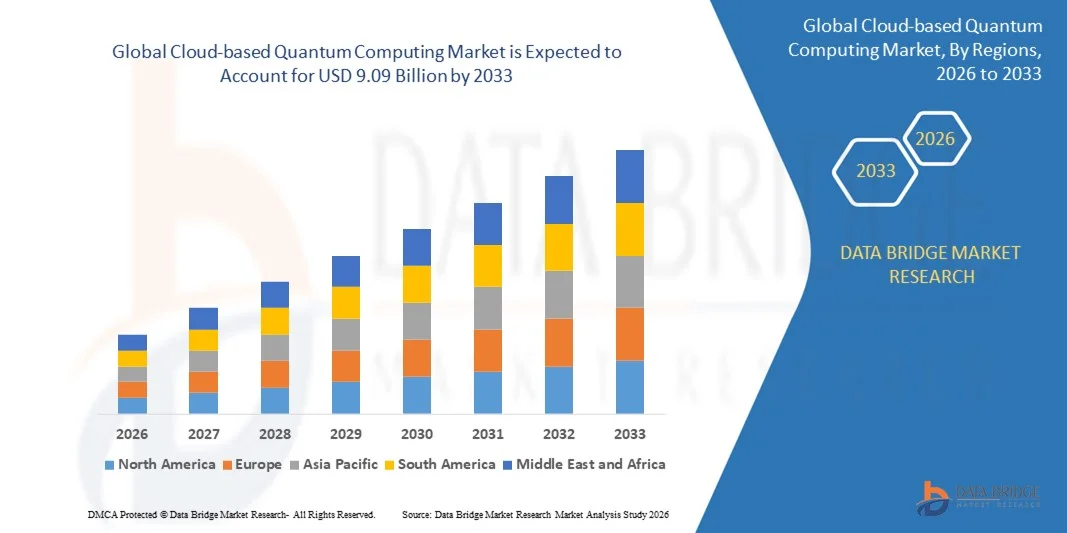
Cloud-basierte Quantum Computing Marktgröße
- Die globale Cloud-basierte Quantenrechner-Marktgröße wurde bei1,12 Mrd. USD im Jahr 2025und wird voraussichtlich erreichen9,09 Milliarden USD bis 2033, beiCAGR von 29,81%während des Prognosezeitraums
- Das Marktwachstum wird größtenteils durch schnelle Fortschritte bei der Quantenhardware, der Cloud-Infrastruktur und den Quanten-as-a-Service-Plattformen, die Quanten-Computing für Unternehmen, Forschungseinrichtungen und Entwickler ohne die Notwendigkeit vor Ort Hardware-Investitionen leichter zugänglich machen
- Darüber hinaus beschleunigt die zunehmende Nachfrage nach der Lösung komplexer Optimierungs-, Simulations- und Rechenprobleme in Branchen wie BFSI, Healthcare und Energy die Einführung von Cloud-basierten Quantenrechnern und unterstützt so die Gesamtmarkterweiterung deutlich.
Cloud-basierte Quantum Computing Market Analysis
- Cloud-basiertes Quanten-Computing, das den Fernzugriff auf Quantenprozessoren über Cloud-Plattformen ermöglicht, tritt aufgrund seiner Fähigkeit, Probleme über die praktischen Grenzen klassischer Systeme hinweg zu bewältigen, als kritische Technologie für das Computing der nächsten Generation auf.
- Die zunehmende Einführung von Cloud-basierten Quantenlösungen wird in erster Linie von starken FuE-Investitionen, steigenden Unternehmensexperimenten, staatlichen Quanteninitiativen und der Flexibilität der Integration von Quanten Computing mit bestehenden klassischen Cloud-Umgebungen angetrieben.
- Nordamerika dominierte den Cloud-basierten Quantenrechnermarkt mit einem Anteil26,2% im Jahr 2025, aufgrund starker Investitionen in die Quantenforschung, frühen Kommerzialisierung von Quanten-Cloud-Plattformen und das Vorhandensein von großen Technologieanbietern
- Asia-Pacific wird voraussichtlich die am schnellsten wachsende Region im Cloud-basierten Quanten-Computing-Markt während des Prognosezeitraums sein, da Investitionen in fortschrittliche Rechentechnologien und schnelle digitale Transformation
- Das Software-Segment dominierte den Markt mit einem Marktanteil von 52,4% im Jahr 2025, aufgrund der zunehmenden Einführung von Quantensoftware-Plattformen, Entwicklungs-Kits und Cloud-accessiblen Quantenprogrammierungsumgebungen. Unternehmen und Forschungseinrichtungen investieren in erster Linie in Software, um Quantenalgorithmen zu entwerfen, zu testen und zu simulieren, ohne physische Quantenhardware zu besitzen. Die Verfügbarkeit von Quanten-as-a-Service-Plattformen von führenden Anbietern hat die Software-Adoption über akademische und kommerzielle Nutzer weiter gestärkt. Kontinuierliche Fortschritte bei der Quantenentwicklung und Integration mit der klassischen Cloud-Infrastruktur unterstützen auch die anhaltende Dominanz dieses Segments
Report Scope und Cloud-basierte Quantum Computing Market Segmentation
| Attribute | Cloud-basierte Quantum Computing Key Market Insights |
| Verdeckte Segmente |
|
| Überarbeitete Länder | Nordamerika
Europa
Asien-Pazifik
Naher Osten und Afrika
Südamerika
|
| Key Market Players |
|
| Marktmöglichkeiten |
|
| Daten Infos zum Wert hinzugefügt | Neben den Markteinblicken wie Marktwert, Wachstumsrate, Marktsegmente, geographischer Erfassung, Marktteilnehmer und Marktszenario umfasst der vom Data Bridge Market Research Team kuratierte Marktbericht eine tiefgreifende Expertenanalyse, Import/Export-Analyse, Preisanalyse, Produktionsverbrauchsanalyse und pestle-Analyse. |
Cloud-basierte Quantum Computing Market Trends
Erhöhung der Akzeptanz von Quantum-as-a-Service-Plattformen
- Ein prominenter Trend im Cloud-basierten Quantenrechnermarkt ist die zunehmende Übernahme von Quanten-as-a-Service-Plattformen, die von der Notwendigkeit angetrieben werden, skalierbaren und kostengünstigen Zugang zu Quantenkapazitäten zu bieten, ohne direktes Eigentum an Quantenhardware zu benötigen. Cloud-basierte Liefermodelle ermöglichen Unternehmen, Forschungseinrichtungen und Entwicklern, mit Quantenalgorithmen zu experimentieren und bestehende Cloud-Infrastruktur zu nutzen.
- Amazon Web Services bietet zum Beispiel Amazon Braket, der verwalteten Zugriff auf Quantengeräte von Anbietern wie IonQ, Rigetti und D-Wave bietet, so dass Nutzer über eine einheitliche Cloud-Schnittstelle Quanten-Workloads testen und ausführen können. Dieser Ansatz senkt die Zugangshindernisse und beschleunigt die Übernahme von Händen über akademische und kommerzielle Nutzer
- Wichtige Technologieunternehmen integrieren Quantendienste in breitere Cloud-Ökosysteme und ermöglichen hybride quantenklassische Workflows, die die Usability und Flexibilität verbessern. Plattformen von IBM und Microsoft ermöglichen es Entwicklern, klassische Computing-Ressourcen mit Quantenprozessoren zu kombinieren, praktische Experimente zu verstärken und eine frühe Phase der Bereitstellung
- Die wachsende Verfügbarkeit von mehreren Quantenhardware-Technologien durch Cloud-Plattformen erweitert die Nutzerauswahl und Anwendungsvielfalt. Der Zugang zu supraleitenden Qubits, gefangenen Ionen und Quantennealern durch Cloud-Umgebungen unterstützt eine breitere Exploration von Anwendungsfällen
- Forschungsorganisationen und Universitäten setzen zunehmend auf den Cloud-basierten Quantenzugang zur Unterstützung von Bildungs-, Ausbildungs- und Kooperationsinitiativen. Dieser Trend hilft dabei, qualifizierte Quantenkräfte aufzubauen und Innovationen in globalen Forschungsnetzwerken zu fördern
- Die zunehmende Übernahme von Quanten-as-a-Service-Plattformen verstärkt Cloud-basierte Quanten-Computing als bevorzugten Weg für die frühe Kommerzialisierung. Dieser Trend bildet ein skalierbares Ökosystem, das Experimente, Zusammenarbeit und schrittweisen Übergang zu unternehmenseigenen Quantenlösungen unterstützt
Cloud-basierte Quantum Computing Market Dynamics
Fahrer
steigende Nachfrage nach komplexen Berechnungen
- Die Nachfrage nach Cloud-basierten Quantenrechnern wird stark durch die Notwendigkeit, hochkomplexe Rechenprobleme zu lösen, die für klassische Rechensysteme ineffizient oder unpraktisch sind. Branchen wie Finanzen, Gesundheitswesen, Chemikalien und Logistik erfordern zunehmend fortschrittliche Rechenmethoden, um die Herausforderungen der Optimierung, Simulation und Modellierung zu bewältigen
- So arbeitet IBM mit Finanzinstituten und Forschungsorganisationen zusammen, um Quantenalgorithmen zur Portfoliooptimierung und Risikoanalyse über seine IBM Quantum Cloud-Plattform anzuwenden. Diese Anwendungen zeigen das Potenzial von Quantenrechnern, um die Entscheidungsfindung in datenintensiven Umgebungen zu verbessern
- In den Life Sciences erforschen Organisationen Quanten-Computing auf molekulare Interaktionen und beschleunigen Drogen-Entdeckungsprozesse. Cloud-basierter Zugriff ermöglicht es Pharmaunternehmen und Forschungseinrichtungen, mit Quantensimulationen zu experimentieren, ohne in proprietäre Quantenhardware zu investieren
- Die zunehmende Komplexität von Supply-Chain-Netzwerken und Energiesystemen treibt Interesse an über die Cloud gelieferten Quantenoptimierungslösungen. Unternehmen suchen nach rechnerischen Vorteilen, um die Effizienz zu verbessern, Kosten zu senken und Großvariablen zu verwalten
- Dieser steigende Bedarf an fortschrittlicher Berechnung verstärkt das Cloud-basierte Quanten Computing als strategische Technologie. Die Fähigkeit, Quantenleistung auf Nachfrage durch Cloud-Plattformen zuzugreifen, unterstützt direkt nachhaltiges Marktwachstum
Zurückhaltung/Challenge
Begrenzte Quantenkompetenz
- Der Cloud-basierte Quanten-Computing-Markt stellt aufgrund der begrenzten Verfügbarkeit von Fachkräften mit Know-how in Quantenalgorithmen, Hardware und Softwareentwicklung eine große Herausforderung dar. Quantum Computing erfordert spezialisiertes Wissen, das Physik, Mathematik und Informatik kombiniert, die weit verbreitete Adoption einschränkt
- So zeigen Unternehmen wie Microsoft und IBM trotz Cloud-basierter Quantenplattformen weiterhin den Mangel an qualifizierten Quantenentwicklern als zentrale Barriere für die Unternehmensumsetzung. Organisationen kämpfen oft darum, theoretische Quantenfähigkeiten in praktische Anwendungsfälle zu übersetzen
- Die Komplexität der Quantenprogrammierungssprachen und -rahmen erhöht die Lernkurve für Entwickler, die von klassischen Computing-Hintergründen wechseln. Dies verlangsamt das Experimentieren und reduziert das Tempo des kommerziellen Einsatzes
- Bildungs- und Ausbildungsinitiativen erweitern sich, die aktuelle Talentpipeline bleibt jedoch nicht ausreichend, um den wachsenden Marktbedarf zu decken. Unternehmen verlassen sich oft stark auf akademische Partnerschaften oder externe Berater, um Qualifikationslücken zu überwinden
- Diese Herausforderung setzt trotz wachsender technologischer Bereitschaft weiterhin das Tempo der Adoption ein. Die Bewältigung der Quantenfähigkeitslücke bleibt für die Entriegelung des vollen Potenzials von Cloud-basierten Quanten-Computing in allen Branchen entscheidend
Cloud-basierte Quantum Computing Market Scope
Der Markt ist auf der Grundlage von Lösung, Technologie, Anwendung und vertikal segmentiert.
- Durch Lösung
Auf Basis der Lösung wird der Cloud-basierte Quantenrechnermarkt in Software und Services segmentiert. Das Software-Segment dominierte den Markt mit dem größten Umsatzanteil von 52,4% im Jahr 2025, angetrieben durch die zunehmende Übernahme von Quantensoftware-Plattformen, Entwicklungs-Kits und Cloud-accessible Quantenprogrammierungsumgebungen. Unternehmen und Forschungseinrichtungen investieren in erster Linie in Software, um Quantenalgorithmen zu entwerfen, zu testen und zu simulieren, ohne physische Quantenhardware zu besitzen. Die Verfügbarkeit von Quanten-as-a-Service-Plattformen von führenden Anbietern hat die Software-Adoption über akademische und kommerzielle Nutzer weiter gestärkt. Kontinuierliche Fortschritte bei der Quantenentwicklung und Integration mit der klassischen Cloud-Infrastruktur unterstützen auch die anhaltende Dominanz dieses Segments.
Das Dienstleistungssegment wird voraussichtlich das schnellste Wachstum von 2026 bis 2033 beobachten, das durch steigende Nachfrage nach Beratungs-, Systemintegration, Schulungen und verwalteten Quantendiensten getrieben wird. Organisationen, die eine frühzeitige Quantenakzeption eingehen, verlassen sich zunehmend auf Dienstleister, um Geschicklichkeitslücken zu überwinden und Anwendungsfälle zu optimieren. Die steigenden Unternehmensexperimente und Pilotprojekte sollen die Nachfrage nach spezialisierten Quantendiensten beschleunigen.
- Von der Technik
Auf Basis der Technologie wird der Cloud-basierte Quantenrechner-Markt in gefangene Ionen, Quantenglühung, supraleitende Qubits und andere segmentiert. Das supraleitende Segment qubits hielt 2025 den größten Marktanteil, unterstützt durch starke Investitionen von großen Cloud- und Technologieunternehmen und seine Skalierbarkeitsvorteile. Diese Technologie profitiert von schnelleren Gate-Operationen und Kompatibilität mit bestehenden Halbleiterfertigungsprozessen und ermöglicht eine schnelle Kommerzialisierung. Seine Verfügbarkeit durch Cloud-Plattformen hat es Unternehmen und Forschern weit zugänglich gemacht.
Das eingeschlossene Ionensegment wird voraussichtlich die schnellste Wachstumsrate über den Prognosezeitraum registrieren, die durch seine hohen Qubitkohärenzzeiten und eine überlegene Genauigkeit bei komplexen Quantenrechnern bedingt ist. Steigende Forschungsschwerpunkte und erfolgreiche Demonstrationen der Fehlerreduktion sind die Ermutigung von Cloud-Anbietern, Trap-ion-Angebote zu erweitern. Diese Faktoren stellen gefangene Ionen als Schlüsseltechnologie in Cloud-basierten Quantenökosystemen dar.
- Anwendung
Auf Basis der Anwendung wird der Markt in Optimierung, Simulation und Modellierung, Probenahme und andere segmentiert. Das Optimierungssegment dominierte den Markt im Jahr 2025, angetrieben von seiner starken Relevanz in den Bereichen Logistik, Finanzen, Fertigung und Energienutzung. Cloud-basierte Quantenoptimierung ermöglicht Organisationen, komplexe kombinatorische Probleme zu lösen, die für klassische Systeme schwierig sind. Frühe kommerzielle Piloten und Proof-Concept-Projekte haben sich größtenteils auf Optimierungs-Workloads konzentriert.
Das Segment Simulation und Modellierung wird mit dem schnellsten Wachstum von 2026 bis 2033 bezeugt, das durch den zunehmenden Einsatz in der Materialwissenschaft, der Medikamentenentdeckung und der chemischen Modellierung gefördert wird. Quantensimulationen bieten erhebliche Vorteile bei der exakten Modellierung molekularer und atomarer Wechselwirkungen. Die wachsende Zusammenarbeit zwischen Cloud-Anbietern und Forschungseinrichtungen beschleunigt die Annahme von Simulations-orientierten Quantenanwendungen.
- Von Vertical
Auf der Basis der Vertikalen wird der Cloud-basierte Quantenrechner-Markt in Luft- und Raumfahrt & Verteidigung, BFSI, Healthcare, Automotive, Energy & Power, Chemical, Regierung und andere segmentiert. Das BFSI-Segment entfiel auf den größten Umsatzanteil im Jahr 2025, der durch frühzeitige Übernahme von Quanten-Computing zur Portfoliooptimierung, Risikoanalyse und Betrugserkennung getrieben wurde. Finanzinstitute nutzen den Cloud-basierten Zugang zu Experimenten mit Quantenalgorithmen und minimieren Infrastrukturinvestitionen. Starke FuE-Ausgaben und Partnerschaften mit Quantentechnologie-Anbietern unterstützen diese Dominanz.
Das Healthcare-Segment wird voraussichtlich während der Prognosezeit das schnellste Wachstum erleben, das durch steigendes Interesse an quantenfähigem Medikamentenfund, Genomik und personalisierter Medizin verursacht wird. Cloud-basierte Quantenplattformen ermöglichen Gesundheitsorganisationen, fortschrittliche Simulationen durchzuführen, ohne Quantenhardware zu besitzen. Die zunehmende Fokussierung auf die Reduzierung der Drogenentwicklungszeiten und die Verbesserung der Diagnosegenauigkeit beschleunigt die Annahme in dieser Vertikalen.
Cloud-basierte Quantum Computing Market Regionale Analyse
- Nordamerika dominierte den Cloud-basierten Quanten-Computing-Markt mit dem größten Umsatzanteil von 26,2% im Jahr 2025, angetrieben durch starke Investitionen in Quantenforschung, frühzeitige Kommerzialisierung von Quanten-Cloud-Plattformen, und das Vorhandensein von großen Technologieanbietern
- Unternehmen und Forschungseinrichtungen in der Region nutzen aktiv Cloud-basierte Quanten-Computing für Experimente, Algorithmenentwicklung und Nachweis-of-concept-Bereitstellungen in verschiedenen Branchen
- Diese Dominanz wird weiter unterstützt durch robuste digitale Infrastruktur, hohe FuE-Ausgaben, staatliche unterstützte Quanteninitiativen und starke Zusammenarbeit zwischen Wissenschaft und privaten Akteuren und positioniert Nordamerika als weltweit führender Anbieter von Cloud-basierten Quantenadoptionen
US Cloud-basierte Quantum Computing Market Insight
Der US-Cloud-basierte Quanten-Computing-Markt erfasste 2025 den größten Umsatzanteil innerhalb Nordamerikas, der durch die starke Präsenz führender Cloud-Dienstleister und Quanten-Hardware-Entwickler getrieben wurde. Organisationen über BFSI, Luft- und Raumfahrt und Gesundheitswesen greifen zunehmend auf Quantenfähigkeiten über Cloud-Plattformen zu, um Innovationen zu beschleunigen und gleichzeitig hohe Infrastrukturkosten zu vermeiden. Wesentliche Bundesfinanzierung, nationale Quantenprogramme und aktive Beteiligung von Universitäten und Startups treibt die Markterweiterung weiter voran.
Europa Cloud-basierte Quantum Computing Market Insight
Der in Europa Cloud-basierte Quanten-Computing-Markt wird während des Prognosezeitraums mit einem stetigen CAGR wachsen, der von koordinierten regionalen Initiativen und zunehmendem Fokus auf technologische Souveränität angetrieben wird. Starke Betonung auf kollaborative Forschung, öffentlich-private Partnerschaften und grenzüberschreitende Quantenprojekte unterstützt die Cloud-basierte Adoption. Europäische Unternehmen integrieren nach und nach Quantenrechner in Optimierungs-, Simulations- und Industrieforschungsabläufe.
U.K. Cloud-basierte Quantum Computing Market Insight
Der US-Cloud-basierte Quantenrechner-Markt wird voraussichtlich im Prognosezeitraum bei einem bemerkenswerten CAGR wachsen, unterstützt von staatlichen Quantenprogrammen und einer starken akademischen Forschungsbasis. Der Fokus des Landes auf die Kommerzialisierung von Quantentechnologien durch den Cloud-Zugang ermöglicht eine breitere Unternehmensexperimentation. Die zunehmende Zusammenarbeit zwischen Startups, Universitäten und Cloud-Anbietern verstärkt das Marktwachstum.
Deutschland Cloud-basierte Quantum Computing Market Insight
Der Deutschland Cloud-basierte Quantenrechner-Markt wird mit einem beträchtlichen CAGR ausbauen, der durch starke industrielle Nachfrage und Führung in der fortgeschrittenen Fertigung und in der Technik getrieben wird. Deutsche Unternehmen erforschen Cloud-basierte Quantenlösungen für Optimierung, Materialwissenschaft und chemische Simulationen. Unterstützung der staatlichen Finanzierung und Betonung der angewandten Forschung beschleunigen die Annahme in den Bereichen Industrie und Forschung.
Asien-Pazifik Cloud-basierte Quantum Computing Market Insight
Der Asien-Pazifik-Cloud-basierte Quanten-Computing-Markt ist bereit, während der Prognosezeit mit dem schnellsten CAGR zu wachsen, der durch steigende Investitionen in fortschrittliche Rechentechnologien und schnelle digitale Transformation angetrieben wird. Regierungen und Unternehmen in der ganzen Region konzentrieren sich zunehmend auf Cloud zugängliche Quantenplattformen, um nationale Fähigkeiten aufzubauen. Die Erweiterung der Forschungsökosysteme und die wachsende Zusammenarbeit mit globalen Cloud-Anbietern beschleunigen die Übernahme über APAC.
Japan Cloud-basierte Quantum Computing Market Insight
Der japanische Cloud-basierte Quantenrechner-Markt gewinnt an Dynamik, da er sich stark auf High-Performance-Computing- und Next-Generation-Technologien konzentriert. Japanische Organisationen übernehmen zunehmend Cloud-basierte Quantenzugriffe für die Forschung in der Materialwissenschaft, Optimierung und industriellen Anwendungen. Regierungsgestützte Initiativen und enge Zusammenarbeit in der Industrie-Akadämie unterstützen weiterhin das Marktwachstum.
China Cloud-basiertes Quantum Computing Market Insight
Der China Cloud-basierte Quanten-Computing-Markt entfiel 2025 auf den größten Umsatzanteil im asiatisch-pazifischen Raum, der durch erhebliche staatliche Investitionen und schnelle Fortschritte in der Quantenforschung getrieben wurde. Der Fokus des Landes auf Cloud-Plattformen ermöglicht einen breiteren Zugang zu Quantenkapazitäten in Unternehmen und Forschungseinrichtungen. Starke inländische Technologie-Spieler und nationale Strategien, die auf die Führung in Quantentechnologien abzielen, sind wichtige Faktoren, die das Marktwachstum fördern.
Cloud-basierte Quantum Computing Market Share
Die Cloud-basierte Quantenrechnerindustrie wird in erster Linie von etablierten Unternehmen geleitet, darunter:
- Baidu, Inc.
- Rigetti & Co, LLC (USA)
- Fujitsu Limited (Japan)
- Quantum Computing Inc. (USA)
- Pasqal S.A. (Frankreich)
- Amazon Web Services, Inc. (USA)
- Xanadu Quantum Technologies Inc. (Kanada)
- Atos SE (Frankreich)
- IonQ, Inc. (USA)
- Alibaba Group Holding Limited (China)
- QC Ware Corp. (USA)
- Oxford Quantum Circuits Ltd (USA)
- International Business Machines Corporation (USA)
- QuEra Computing Inc. (USA)
- D-Wave Quantum Inc. (Kanada)
- Microsoft Corporation (USA)
- Zapata Computing, Inc. (USA)
- Quantinuum Ltd. (U.K.)
- Alphabet Inc. (USA)
- PsiQuantum Corp. (USA)
Neueste Entwicklungen im globalen Cloud-basierten Quantum Computing Market
- Im Februar 2025 kündigte Google mit seinem Willow-Quantenchip signifikante Fortschritte an, indem er logische Fehlerquoten unter physikalischen Fehlerraten reduzierte und eine kritische Schwelle für den Aufbau von fehlertoleranten Quantensystemen markierte. Diese Errungenschaft befasst sich mit einer der größten Barrieren für skalierbare Quantenrechner und erhöht das Marktvertrauen in die Machbarkeit langfristiger kommerzieller Quanteneinsätze. Infolgedessen werden Cloud-basierte Quantenrechner-Plattformen erwartet, um verstärkte Unternehmensexperimente und stärkere staatliche und akademische Investitionen zu sehen
- Im Januar 2025 hat NVIDIA 750 Millionen USD an PsiQuantum gebunden, um die Entwicklung von großflächigen photonischen Quanten-Hardware-Produktionslinien zu beschleunigen. Diese Investition unterstützt den Übergang von Quanten-Computing von Labor-Skala-Systemen zur industriellen Produktion, was für eine breitere Cloud-Bereitstellung unerlässlich ist. Die Bewegung stärkt das gesamte Cloud-basierte Quanten-Ökosystem, indem eine zukünftige Versorgung skalierbarer, energieeffizienter Quantenprozessoren gewährleistet wird
- Im Dezember 2024 fertigte IonQ seinen Erwerb von ID Quantique in Höhe von 250 Mio. USD an und brachte Quanten-Schlüsselverteilungsfunktionen in sein Cloud-basiertes Quantenangebot. Diese Entwicklung verbessert die Datensicherheit und das Vertrauen in Cloud-ausgelieferte Quantendienste, insbesondere für Regierungs-, Verteidigungs- und Finanzanwendungen. Durch die Integration quantensicherer Kommunikationstechnologien verbessert IonQ seine Wettbewerbsposition in sicheren Cloud-Quantenlösungen
- Im November 2023, Amazon Braket eingeführt Braket Direct, so dass Benutzer dedizierte Quanten-Hardware Kapazität reservieren und direkt mit Quantenexperten interagieren. Diese Initiative senkt Barrieren für fortgeschrittene Quantenforschung, indem sie vorhersehbaren Zugriff und frühzeitige Exposition gegenüber Geräten der nächsten Generation, wie zum Beispiel dem Forte Trapeded-IonQ-System, bietet. Das Programm soll Innovationen beschleunigen, Experimentierzeitlinien reduzieren und die Rolle von AWS im Cloud-basierten Quantenrechnermarkt stärken
- Im April 2023 kündigte Moderna eine strategische Zusammenarbeit mit IBM an, um den kombinierten Einsatz von Quanten-Computing und künstlicher Intelligenz für die mRNA Forschung und Entwicklung zu erforschen. Diese Partnerschaft zeigt die wachsende Relevanz des Cloud-basierten Quanten Computings in der pharmazeutischen Innovation, indem komplexe molekulare Simulationen und Optimierungsaufgaben ermöglicht werden. Die Zusammenarbeit unterstreicht, wie Quantentechnologien potenziell die Suchzyklen von Medikamenten verkürzen und die Forschungseffizienz im Bereich Life Sciences verbessern können.
SKU-
Erhalten Sie Online-Zugriff auf den Bericht zur weltweit ersten Market Intelligence Cloud

- Interaktives Datenanalyse-Dashboard
- Unternehmensanalyse-Dashboard für Chancen mit hohem Wachstumspotenzial
- Zugriff für Research-Analysten für Anpassungen und Abfragen
- Konkurrenzanalyse mit interaktivem Dashboard
- Aktuelle Nachrichten, Updates und Trendanalyse
- Nutzen Sie die Leistungsfähigkeit der Benchmark-Analyse für eine umfassende Konkurrenzverfolgung
Forschungsmethodik
Die Datenerfassung und Basisjahresanalyse werden mithilfe von Datenerfassungsmodulen mit großen Stichprobengrößen durchgeführt. Die Phase umfasst das Erhalten von Marktinformationen oder verwandten Daten aus verschiedenen Quellen und Strategien. Sie umfasst die Prüfung und Planung aller aus der Vergangenheit im Voraus erfassten Daten. Sie umfasst auch die Prüfung von Informationsinkonsistenzen, die in verschiedenen Informationsquellen auftreten. Die Marktdaten werden mithilfe von marktstatistischen und kohärenten Modellen analysiert und geschätzt. Darüber hinaus sind Marktanteilsanalyse und Schlüsseltrendanalyse die wichtigsten Erfolgsfaktoren im Marktbericht. Um mehr zu erfahren, fordern Sie bitte einen Analystenanruf an oder geben Sie Ihre Anfrage ein.
Die wichtigste Forschungsmethodik, die vom DBMR-Forschungsteam verwendet wird, ist die Datentriangulation, die Data Mining, die Analyse der Auswirkungen von Datenvariablen auf den Markt und die primäre (Branchenexperten-)Validierung umfasst. Zu den Datenmodellen gehören ein Lieferantenpositionierungsraster, eine Marktzeitlinienanalyse, ein Marktüberblick und -leitfaden, ein Firmenpositionierungsraster, eine Patentanalyse, eine Preisanalyse, eine Firmenmarktanteilsanalyse, Messstandards, eine globale versus eine regionale und Lieferantenanteilsanalyse. Um mehr über die Forschungsmethodik zu erfahren, senden Sie eine Anfrage an unsere Branchenexperten.
Anpassung möglich
Data Bridge Market Research ist ein führendes Unternehmen in der fortgeschrittenen formativen Forschung. Wir sind stolz darauf, unseren bestehenden und neuen Kunden Daten und Analysen zu bieten, die zu ihren Zielen passen. Der Bericht kann angepasst werden, um Preistrendanalysen von Zielmarken, Marktverständnis für zusätzliche Länder (fordern Sie die Länderliste an), Daten zu klinischen Studienergebnissen, Literaturübersicht, Analysen des Marktes für aufgearbeitete Produkte und Produktbasis einzuschließen. Marktanalysen von Zielkonkurrenten können von technologiebasierten Analysen bis hin zu Marktportfoliostrategien analysiert werden. Wir können so viele Wettbewerber hinzufügen, wie Sie Daten in dem von Ihnen gewünschten Format und Datenstil benötigen. Unser Analystenteam kann Ihnen auch Daten in groben Excel-Rohdateien und Pivot-Tabellen (Fact Book) bereitstellen oder Sie bei der Erstellung von Präsentationen aus den im Bericht verfügbaren Datensätzen unterstützen.











