


Segmentierung des globalen Marktes für Tierarzneimittel in der Landwirtschaft nach Produkttyp (Antiinfektiva, Antiparasitika, Antiphlogistika, Anästhetika, Analgetika, Hormone und verwandte Produkte sowie Sonstige), Tierart (Nutztiere und Pferde), Verabreichungsweg (oral, parenteral, topisch und Sonstige) und Vertriebskanal (Tierkliniken, Tierarztpraxen, Apotheken und Drogerien sowie Sonstige) – Branchentrends und Prognose bis 2033
Was ist die Größe und Wachstumsrate des Tiermarktes
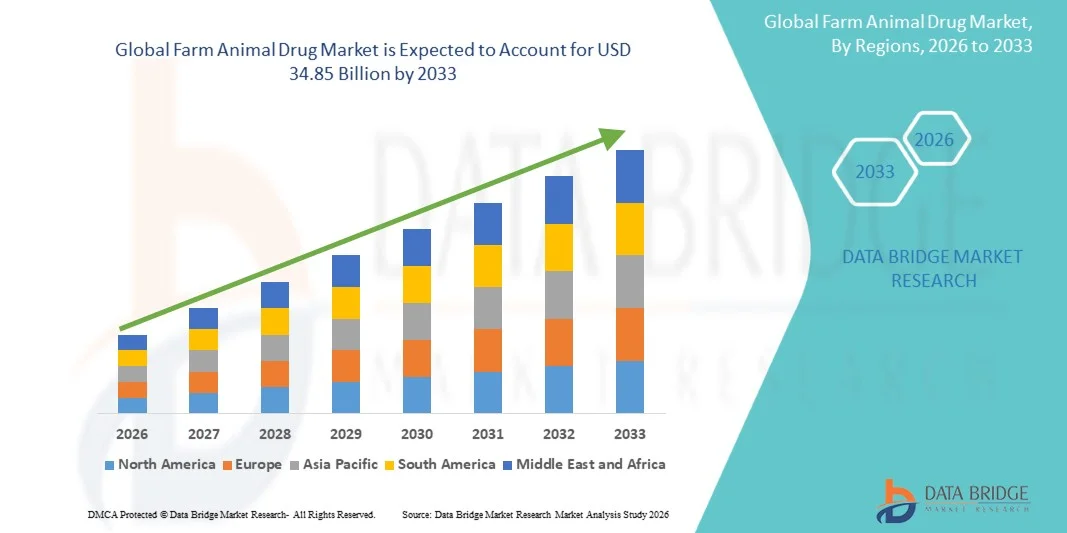
- Wie pro Data Bridge Market Research Analysis Die weltweite Größe des landwirtschaftlichen Tierarzneimittelmarktes wurde geschätzt20,90 Mrd. USD in 2025und wird voraussichtlich erreichen34,85 Milliarden USD bis 2033, beiCAGR von 6,60%während des Prognosezeitraums
- Das Marktwachstum wird größtenteils von der steigenden Nachfrage nach Tierprodukten, der steigenden Annahme von präventiven Gesundheitspraktiken für Nutztiere und technologischen Fortschritten in Tierarzneimitteln angetrieben.
- Darüber hinaus wird das Bewusstsein für die Tiergesundheit, die staatlichen Initiativen zur Förderung der Viehproduktivität und die Notwendigkeit der KontrolleInfektionskrankheitenbei Nutztieren wird die Nachfrage nach landwirtschaftlichen Tierarzneimitteln gefördert. Diese Faktoren beschleunigen die Einführung von Tierarzneimitteln kollektiv, wodurch das Wachstum der Industrie deutlich erhöht wird
Marktgröße und Prognose
- Globaler Marktwert (2025):20,90 Mrd. USD
- Voraussichtlicher Marktwert (2033):34,85 Mrd. USD
- Wettervorhersage CAGR (2026–2033):6.60%
Tierarzneimittelmarktanalyse
- Tierarzneimittel, einschließlich Antiinfektiva, Parasiten,entzündungshemmendÄsthetik,Analgesen,Hormone und andere verwandte Produkte sind entscheidend für die Erhaltung der Tiergesundheit, die Verbesserung der Produktivität und die Sicherstellung der Biosicherheit in modernen Tierhaltungspraktiken
- Die steigende Nachfrage nach landwirtschaftlichen Tierarzneimitteln wird in erster Linie durch das Wachstum der Viehbestände, die zunehmende Annahme vorbeugender Gesundheitspraktiken und das Bewusstsein für das Krankheitsmanagement und den Tierschutz unter den Landwirten getrieben.
- Nordamerika dominierte den landwirtschaftlichen Tierarzneimarkt mit dem größten Umsatzanteil von 39,8% im Jahr 2025, unterstützt durch fortgeschrittene Veterinärinfrastruktur, hohe Einführung innovativer Tiergesundheitslösungen und starke regulatorische Rahmenbedingungen für die Tiergesundheit, wobei die USA eine erhebliche Nachfrage nach Antiinfektiven und Parasiten bei Geflügel und Rindern beobachten.
- Asia-Pacific wird voraussichtlich die am schnellsten wachsende Region auf dem Agrarmarkt für Tierarzneimittel während der Prognosezeit durch steigenden Fleischverbrauch, Ausweitung der Viehzucht und zunehmende Regierungsinitiativen zur Unterstützung von Tiergesundheitsprogrammen sein
- Antiinfektives Segment dominierte den landwirtschaftlichen Tierarzneimarkt mit einem Marktanteil von 42,9 % im Jahr 2025, der von seiner kritischen Rolle bei der Prävention und Behandlung von bakteriellen Infektionen und der Unterstützung der Gesamtproduktivität der Viehhaltung angetrieben wurde
Bericht Scope und Tiermarktsegmentierung
|
Attribute |
Farm Tier Drogen Schlüssel Markt Insights |
|
Verdeckte Segmente |
|
|
Überarbeitete Länder |
Nordamerika
Europa
Asien-Pazifik
Naher Osten und Afrika
Südamerika
|
|
Key Market Players |
|
|
Marktmöglichkeiten |
|
|
Daten Infos zum Wert hinzugefügt |
Neben den Erkenntnissen über Marktszenarien wie Marktwert, Wachstumsrate, Segmentierung, geographische Erfassung und wichtige Akteure umfassen die Marktberichte, die von der Data Bridge Market Research kuratiert werden, auch eingehende Expertenanalysen, Patientenepidemiologie, Pipelineanalyse, Preisanalyse und regulatorische Rahmenbedingungen. |
Was ist der Haupttrend im Tiermarkt
„Annahme der AnnahmePräzise Viehzuchtund Digital Health Monitoring“
- Ein bedeutender und beschleunigter Trend im globalen Tierarzneimittelmarkt ist die Integration von Präzisions-Bauernhof-Werkzeugen und digitalen Gesundheitsüberwachungssystemen, die eine gezieltere und effizientere Verabreichung von Tierarzneimitteln ermöglichen
- So überwachen z.B. intelligente Kragen und Ohr-Tags, die mit Sensoren ausgestattet sind, Tierlebens-, Aktivitäts- und Krankheitssymptome, die es Tierärzten ermöglichen, Antiinfektiva oder Parasiten nur bei Bedarf zu verabreichen, um die Drogenübernutzung zu reduzieren
- Digitale Plattformen werden zunehmend genutzt, um die Gesundheitsdaten von Herden zu verfolgen, die Impfungspläne zu optimieren und Vorhersagen für Krankheitsausbrüche zu liefern, den gesamten Tierschutz und die Produktivität zu verbessern
- Die Kombination von Farmmanagement-Software und Tierarzneimittelverwaltung schafft ein datengetriebenes Ökosystem, das die Entscheidungsfindung verbessert und die Kosten für den undiskriminierten Drogenkonsum reduziert
- Dieser Trend zur technisierten, präzisen Tiergesundheit setzt die Erwartungen der Landwirte in Bezug auf das Tiergesundheitsmanagement um, was Unternehmen wie Zoetis dazu veranlasst, mit Herdenmanagement-Plattformen integrierte vernetzte Arzneimittelversorgungssysteme zu entwickeln.
- Die Nachfrage nach landwirtschaftlichen Tierarzneimitteln, die mittels digitaler und präziser Werkzeuge überwacht, optimiert und verwaltet werden können, wächst weltweit rasant, da die Hersteller die Effizienz, die Gesundheitsergebnisse und die Einhaltung der Vorschriften zunehmend priorisieren.
- KI-getriebene Vorhersageanalysen helfen bei der Vorhersage von Krankheitsausbrüchen und zur Optimierung von Drogenkonsumplänen, verbessern die Effizienz und Wirtschaftlichkeit der landwirtschaftlichen Tiergesundheit
Landwirtschaftliche Drogenmarktdynamik
Fahrer
„Erhöhte Nachfrage aufgrund wachsender Viehproduktion und Tiergesundheitsbewusstsein“
- Die steigende globale Nachfrage nach Fleisch, Milch und anderen tierischen Erzeugnissen, verbunden mit wachsendem Bewusstsein für die vorbeugende Tiergesundheit, ist ein wichtiger Treiber für den landwirtschaftlichen Tierarzneimittelmarkt
- So startete Boehringer Ingelheim im März 2025 eine erweiterte Reihe von Antiinfektiven und Parasiticides für Geflügel und Schweine, die auf die Verbesserung der Immunität und der Gesamtproduktivität der Herde abzielen und die Rolle der präventiven Pflege hervorheben.
- Die zunehmende Häufigkeit von Infektions- und parasitären Krankheiten in der Tierhaltung ermutigt die Landwirte, umfassende Drogenregime, einschließlich Impfstoffe und Parasizide, zur Erhaltung der Gesundheit der Herde und zur Verringerung der wirtschaftlichen Verluste zu verabschieden.
- Regierungsprogramme zur Förderung von Tiergesundheitsnormen, Veterinärdiensten und regulatorischen Richtlinien für Tierarzneimittel erhöhen die Nachfrage nach landwirtschaftlichen Tierarzneimitteln weiter
- Verbesserte Fokussierung auf Lebensmittelsicherheit, Tierschutz und nachhaltige Tierhaltungspraktiken treibt die Einführung moderner Tierarzneimittel voran, um sowohl das Verbrauchervertrauen als auch die Produktivität zu verbessern
- Die Bequemlichkeit von gebrauchsfertigen Formulierungen, leicht zu verabreichenden oralen oder injizierbaren Medikamenten und die breitere Verfügbarkeit durch veterinärrechtliche Netzwerke sind wesentliche Faktoren, die das Marktwachstum in entwickelten und Entwicklungsregionen fördern
- Wachsende Partnerschaften zwischen Pharmaunternehmen und Futtermittelproduzenten führen zu integrierten Lösungen für das Herdengesundheitsmanagement und erweitern den Zugang zu landwirtschaftlichen Tierarzneimitteln
- Die Verbesserung der Verbraucherpräferenz für ethisch und nachhaltig hergestellte Tierprodukte ist die Förderung der Verwendung von präventiven Tierarzneimitteln und natürlichen Alternativen, die Schaffung neuer Wachstumsmöglichkeiten
Zurückhaltung/Challenge
„Antimikrobielle Widerstands- und Regulatorische Compliance-Hürden“
- Die zunehmende Besorgnis der antimikrobiellen Resistenz (AMR) aufgrund des Über- oder Missbrauchs von Antibiotika in der Tierhaltung ist eine bedeutende Herausforderung für das Marktwachstum
- Zum Beispiel haben Berichte von multidrug-resistenten Bakterienstämmen bei Geflügel und Rindern einige Hersteller über übermäßigen antiinfektiven Gebrauch vorsichtig gemacht, die Markterweiterung für konventionelle Antibiotika begrenzt
- Strenge Vorschriften über Arzneimittelrückstände in tierischen Erzeugnissen, Entnahmezeiten und veterinärrechtlichen Vorschriften stellen die Compliance-Herausforderungen für Hersteller und Landwirte gleichermaßen dar
- Die Bewältigung dieser Herausforderungen durch alternative Therapien, strengere Vorschriften und die Entwicklung rückstandsfreier oder natürlicher Drogenoptionen ist entscheidend für die Aufrechterhaltung von Marktvertrauen und Nachhaltigkeit.
- Hohe Kosten im Zusammenhang mit neuartigen Arzneimittelformulierungen, Impfstoffen oder bioaktiven Futtermittelzusatzstoffen können auch als Adoptionsschranken dienen, insbesondere für Kleinbauern in Schwellenländern
- Die Überwindung dieser Hürden durch Sensibilisierungsprogramme, regulatorische Unterstützung und Innovation in sicheren und wirksamen Tierarzneimitteln ist für langfristiges Marktwachstum unerlässlich
- Ein begrenzter Zugang zu Veterinärdiensten und geschultem Personal in ländlichen Regionen kann die ordnungsgemäße Drogenverwaltung verzögern, was die Marktdurchdringung betrifft.
- Widerstand von Landwirten, neuere, teurere Arzneimittelformulierungen zu verabschieden, ohne nachweisbare kurzfristige ROI kann die weit verbreitete Einführung fortgeschrittener Tierarzneimittel behindern
Markt für Tierarzneimittel
Der Markt wird auf der Grundlage von Produkttyp, Tiertyp, Verabreichungsweg und Verteilungskanal segmentiert.
- Nach Produkttyp
Auf der Grundlage des Produkttyps wird der Tierarzneimittelmarkt in Antiinfektiva, Parasiticides, Antiinflammatorien, Anästhetik, Analgetika, Hormone und verwandte Produkte und andere segmentiert. Das antiinfektive Segment dominierte den Markt mit dem größten Marktanteil von 42,9% im Jahr 2025, angetrieben durch die wesentliche Rolle von Antibiotika und verwandten Medikamenten bei der Prävention und Behandlungbakterielle Infektionenin Vieh und Geflügel. Landwirte priorisieren Antiinfektiva aufgrund ihrer nachgewiesenen Wirksamkeit bei der Reduzierung der Sterblichkeit und der Verbesserung der Produktivität über große Herden. Antiinfektiva sind weit verbreitet über mehrere Tierarten, so dass sie ein Eckpfeiler der veterinärmedizinischen Versorgung. Die regulierende Unterstützung bei der Prävention von Krankheiten und der verbesserten Biosicherheit bei der Landwirtschaft ist auch die Annahme von Antiinfektiva. Die etablierten Pharmaunternehmen innovativ mit breitgefächerten Formulierungen, um die Bedürfnisse der Landwirte effizient zu erfüllen. Der Markt sieht eine anhaltende Nachfrage aufgrund anhaltender Krankheitsausbrüche und die Bedeutung der Erhaltung der Gesundheit der Herde.
Das Segment Parasiticides wird erwartet, dass die schnellste Wachstumsrate von 2026 bis 2033 zu beobachten ist, die durch das zunehmende Bewusstsein für Parasitenkontrolle und präventive Gesundheitspraktiken in der Tier- und Pferdepopulation gefördert wird. Parasiticides sprechen ein breites Spektrum interner und externer Parasiten an, die die Produktivität und das Wohlergehen der Tiere erheblich beeinflussen können. Die zunehmende globale Viehpopulation und der Ausbau intensiver landwirtschaftlicher Systeme führen zu einer höheren Nutzung. Verbesserte Formulierungen, die eine einfachere Verabreichung und längere Wirksamkeitszeiten bieten, verbessern die Adoption. Veterinäre Kampagnen und landwirtschaftliche Bildungsprogramme unterstützen das Wachstum des Marktes weiter. Darüber hinaus wirken parasitäre Infektionen direkt auf die Lebensmittelsicherheit und die wirtschaftlichen Ergebnisse und machen Parasiten zu einem rasant wachsenden Fokus im Bereich der Tierarzneimittel.
- Nach Tierart
Auf der Grundlage der Tierart wird der landwirtschaftliche Tierarzneimittelmarkt zu Nutztieren und Äquiden segmentiert. Das Viehbestandssegment dominierte den Markt mit dem größten Umsatzanteil im Jahr 2025, aufgrund des schiere Volumens von Rindern, Geflügel, Schweinen und kleinen Wiederkäuern, die regelmäßige Drogeneingriffe zur Krankheitsprävention und Wachstumsoptimierung erfordern. Viehzüchter investieren stark in präventive Medikamente, einschließlich Impfstoffe, Antiinfektiva und Parasiticides, um wirtschaftliche Verluste durch Krankheitsausbrüche zu reduzieren. Die staatlichen Programme zur Förderung der Tiergesundheit und der Lebensmittelsicherheit erhöhen die Nachfrage in diesem Segment weiter. Das Segment profitiert von einer umfangreichen veterinärrechtlichen Unterstützung, der Verfügbarkeit spezialisierter Produkte und der laufenden Forschung im Bereich der Tiergesundheit. Die etablierten Tierarzneimittel konzentrieren sich vor allem auf das Vieh aufgrund der hohen Volumen- und wiederkehrenden Nachfrage. Antiinfektiva und antiparasitische Medikamente bleiben die am häufigsten verwendeten Produkttypen in diesem Segment.
Das Equin-Segment wird erwartet, dass das schnellste Wachstum während der Prognoseperiode, angetrieben durch die Erhöhung der Investitionen in Pferdezucht, Rennsport und Erholung Reitsportaktivitäten. Equine Gesundheitsmanagement erfordert spezialisierte Medikamente wie Anti-Entzünder, Analgetika und Impfstoffe, eine Nische, aber hochwertigen Markt zu schaffen. Sensibilisierung für den Tierschutz und die äquide Leistungsoptimierung Kraftstoffe Annahme. Fortgeschrittene Veterinärpraktiken und spezialisierte Pferdekliniken tragen zum Wachstum dieses Segments bei. Zudem beschleunigt das Wachstum des Pferdesports und des Freizeitpferdbesitzes in aufstrebenden Märkten die Nachfrage nach hochwertigen Tierarzneimitteln.
- Durch die Route der Verwaltung
Auf der Grundlage des Verabreichungsweges wird der landwirtschaftliche Tierarzneimittelmarkt in mündliche, parenterale, topische und andere segmentiert. Das orale Segment dominierte den Markt mit dem größten Umsatzanteil im Jahr 2025, aufgrund seiner einfachen Verwaltung in großen Herden, Eignung für vorbeugende Behandlungen und Kompatibilität mit Futter- oder Wasserliefersystemen. Mundmedikamente, einschließlich Antiinfektiva und Parasiticide, ermöglichen Massenmedikamente effizient und reduzieren Stress bei Tieren im Vergleich zu Injektionen. Landwirte bevorzugen orale Verabreichung für Routine-Krankheit Prävention und Wachstumsmanagement. Technologische Verbesserungen in der Palatabilität und Stabilität unterstützen die Annahme. Das Segment profitiert auch von etablierten Lieferketten und Formulierungen, die eine konsequente Dosierung ermöglichen. Regulatorische Zulassungen für den oralen Drogenkonsum bei der Nutztierhaltung erhöhen das Vertrauen und die Adoptionsraten.
Das elterliche Segment soll das schnellste Wachstum von 2026 bis 2033 bezeugen, das von der Nachfrage nach Impfstoffen, Biologen und gezielten therapeutischen Interventionen, die Injektionen erfordern, getrieben wird. Die parenterale Verabreichung sorgt für eine präzise Dosierung und schnelle Bioverfügbarkeit, kritisch für die Behandlung von Infektionen und akuten Bedingungen. Tierärzte bevorzugen diesen Weg für hochwertige Tiere und bei Krankheitsausbrüchen. Innovationen in nadelfreien Injektionsgeräten und Kombinationsimpfstoffen erhöhen die Adoption weiter. Parenteral Formulierungen werden zunehmend in präventive Kräutergesundheitsprogramme integriert. Die Sensibilisierung für das Veterinärwesen und die staatliche Unterstützung für Impfungskampagnen tragen ebenfalls zum Segmentwachstum bei.
- Durch den Verteilerkanal
Auf der Grundlage des Vertriebskanals wird der landwirtschaftliche Tierarzneimittelmarkt in Tierkliniken, Tierkliniken, Apotheken und Apotheken und andere segmentiert. Das Segment Tierkliniken dominierte den Markt mit dem größten Umsatzanteil im Jahr 2025, aufgrund der Verfügbarkeit von spezialisierten Behandlungen, professioneller Überwachung und hochwertigen Dienstleistungen für Nutztiere und Pferde. Krankenhäuser dienen als zentrale Punkte für die Massenimpfung, die Behandlung von komplexen Krankheiten und die Lieferung von injizierbaren oder spezialisierten Medikamenten. Das Segment profitiert von Vertrauen und etablierten Beziehungen zu Landwirten und Großviehbetrieben. Die klinikbasierte Verteilung gewährleistet die Einhaltung regulatorischer Standards und der ordnungsgemäßen Arzneimittelverwaltung. Darüber hinaus bieten veterinärmedizinische Krankenhäuser oft integrierte Herd-Gesundheitsmanagement-Dienste, die den Wiederverkauf antreiben.
Das Segment Pharmazeutika und Pharmazeutika wird erwartet, dass das schnellste Wachstum während der Vorausschätzungsperiode beobachtet wird, was durch den leichteren Zugang für Kleinbauern und landwirtschaftliche Nutztiere, die überzählige Tierarzneimittel suchen, erleichtert wird. Diese Outlets bieten Komfort, Verfügbarkeit von wichtigen Produkten und eine breite Palette von präventiven und therapeutischen Medikamenten. Das Wachstum von Online-Veterinär-Apotheken und E-Commerce-Plattformen unterstützt dieses Segment weiter. Bildungskampagnen zur sicheren Verwendung von Tierarzneimitteln tragen ebenfalls zur Annahme bei. Die zunehmende ländliche Viehpopulation und der begrenzte Zugang zu Tierärzten in abgelegenen Gebieten treiben die Nachfrage durch Apotheken und Apotheken.
Regionale Analyse des Tierarzneimittelmarktes
- Nordamerika dominierte den Agrarmarkt für Tierarzneimittel mit dem größten Umsatzanteil von 39,8% im Jahr 2025, unterstützt durch fortgeschrittene Veterinärinfrastruktur, hohe Einführung innovativer Tiergesundheitslösungen und starke regulatorische Rahmenbedingungen für die Tiergesundheit
- Landwirte in der Region priorisieren die Gesundheit und die Produktivität von Tieren durch regelmäßige Verwendung von Antiinfektiva, Parasiten und Impfstoffen, unterstützt durch den Zugang zu Veterinärdiensten und modernen Arzneimittelzubereitungen
- Diese weitverbreitete Annahme wird durch staatliche Initiativen zur Förderung des Tierschutzes und der Lebensmittelsicherheit, ein hohes Bewusstsein bei den Tierhaltungsproduzenten und ein Schwerpunkt auf der Verringerung von krankheitsbedingten wirtschaftlichen Verlusten, die Schaffung von landwirtschaftlichen Tierarzneimitteln als wesentlicher Bestandteil der Tierhaltung in Großbetrieben und Gewerbebetrieben verstärkt.
US Farm Animal Drug Market Insight
Der US-amerikanische Agrarmarkt für Tierarzneimittel eroberte 2025 den größten Umsatzanteil von 82 % in Nordamerika, der von der etablierten Viehwirtschaft des Landes und der hohen Übernahme von präventiver veterinärmedizinischer Versorgung betrieben wurde. Farmer werden zunehmend die Gesundheit der Herde durch den Einsatz von Antiinfektiva, Parasiticides und Impfstoffen priorisieren, um Krankheitsausbrüche zu reduzieren und die Produktivität zu verbessern. Der wachsende Fokus auf Lebensmittelsicherheit, Tierschutz und regulatorische Compliance stärkt den Markt weiter. Darüber hinaus tragen steigende Investitionen in die Tiertechnologie, die Veterinärinfrastruktur und das Gesundheitsmanagement der Herde maßgeblich zur Expansion des Marktes bei.
Europa Farm Tier Drogenmarkt Insight
Der europäische Markt für landwirtschaftliche Tierarzneimittel soll sich während der gesamten Vorausschätzungsperiode in einem beträchtlichen CAGR ausweiten, vor allem durch strenge Tiergesundheitsvorschriften und die Notwendigkeit, Tierkrankheiten zu verhindern. Die Zunahme der intensiven Viehzucht, verbunden mit wachsendem Bewusstsein für präventive Gesundheitspraktiken, fördert die Einführung von Tierarzneimitteln. Die europäischen Landwirte übernehmen auch moderne Veterinärlösungen, um Produktivität und Lebensmittelsicherheit zu gewährleisten. Die Region erlebt ein beträchtliches Wachstum in den Bereichen Geflügel, Schweine und Rinder, wobei Tierarzneimittel zunehmend in Herdengesundheitsmanagementprogramme integriert werden.
U.K. Farm Animal Drug Market Insight
Der US-amerikanische Agrarmarkt für Tierarzneimittel wird voraussichtlich während der Vorausschätzungsperiode mit einer bemerkenswerten CAGR wachsen, die durch ein zunehmendes Bewusstsein für Tierschutz und die zunehmende Akzeptanz der präventiven Veterinärversorgung getrieben wird. Was die Ausbrüche der Tierseuchen betrifft, so ermutigen die Landwirte, Antiinfektiva, Parasizide und Impfstoffe strenger zu verwenden. Der starke regulatorische Rahmen des Vereinigten Königreichs und die Unterstützung nachhaltiger Tierhaltungspraktiken sowie wachsender Veterinärdienste sollen das Marktwachstum weiter fördern. Darüber hinaus übernehmen sowohl Gewerbebetriebe als auch Kleinviehhalter zunehmend moderne Arzneimittellösungen zur Bekämpfung von Krankheiten und zur Steigerung der Produktivität.
Deutschland Tiermarkt Insight
Der deutsche Agrarmarkt für Tierarzneimittel soll sich während der Vorausschätzungsperiode bei einem beträchtlichen CAGR ausweiten, der durch strenge Vorschriften über die Tiergesundheit und das wachsende Bewusstsein für nachhaltiges Viehmanagement gefördert wird. Deutschlands fortgeschrittene Veterinärinfrastruktur und Schwerpunkt auf Innovation fördern die Einführung von Tierarzneimitteln, insbesondere Impfstoffen, Antiinfektiva und Antiparasitika. Auch die Integration von Herdenmanagement-Software mit veterinärmedizinischen Behandlungen wird immer häufiger. Landwirte suchen nach Lösungen, die Produktivität, Lebensmittelsicherheit und die Einhaltung der EU-Verordnungen gewährleisten, was die Nachfrage nach modernen Tierarzneimitteln treibt.
Asia-Pazifische Farm Tier Drogenmarkt Insight
Der asiatisch-pazifische Agrarmarkt für Tierarzneimittel wird während der Prognosezeit von 2026 bis 2033 mit dem schnellsten CAGR von 25% wachsen, der durch die Steigerung der Viehproduktion, die steigende Nachfrage nach Fleisch und Milchprodukten und die technologischen Fortschritte in Ländern wie China, Indien und Japan angetrieben wird. Die zunehmende Übernahme der präventiven Tiergesundheit durch staatliche Initiativen zur Förderung der Tiergesundheit und der Biosicherheit in der Region treibt das Marktwachstum voran. Darüber hinaus, da APAC als Fertigungsstandort für Tierarzneimittel auftritt, erweitern sich die Erreichbarkeit und Zugänglichkeit von Tierarzneimitteln auf eine breitere Farmerbasis.
Japan Farm Tier Drogenmarkt Insight
Der japanische Markt für landwirtschaftliche Tierarzneimittel gewinnt an Dynamik, da der Fokus des Landes auf hochwertige Tierhaltung, fortgeschrittene Veterinärinfrastruktur und die Einführung präventiver Gesundheitspraktiken liegt. Der japanische Markt legt einen erheblichen Schwerpunkt auf die Biosicherheit und den Tierschutz, und die Annahme von Impfstoffen und Antiinfektiva wird von groß angelegten Geflügel- und Schweinebetrieben angetrieben. Die Integration von Herdenmanagementsystemen mit Drogenverwaltungspraktiken treibt Wachstum voran. Darüber hinaus dürfte die alternde landwirtschaftliche Bevölkerung Japans die Nachfrage nach effizienteren, leicht zu verabreichenden und sicheren Tierarzneimitteln sowohl in kommerziellen als auch in Kleinviehbetrieben anregen.
Indien Bauernhof Tier Drug Market Insight
Der indische Tierarzneimarkt entfiel 2025 auf den größten Marktanteil im asiatisch-pazifischen Raum, der der wachsenden Viehpopulation, der steigenden Nachfrage nach Fleisch und Milch sowie der raschen Übernahme von Tierarzneimitteln zuzuschreiben war. Indien ist einer der größten Märkte für präventive Tiergesundheit, und landwirtschaftliche Tierarzneimittel werden bei kommerziellen und Kleinbauern immer beliebter. Die Regierungsinitiativen zur Förderung der Tiergesundheit, die Förderung der organisierten Milch- und Geflügelhaltung sowie die Verfügbarkeit erschwinglicher Arzneimitteloptionen, neben der starken Inlandsproduktion, sind wichtige Faktoren, die den Markt in Indien fördern.
Welche sind die Top-Unternehmen im Tiermarkt
Die Farm Animal Drug Industrie wird in erster Linie von etablierten Unternehmen geleitet, darunter:
- Zoetis Services LLC (USA)
- Elanco Tiergesundheit (USA)
- Ceva Santé Animale (Frankreich)
- Vetoquinol (Frankreich)
- Merck Tiergesundheit (US)
- Boehringer Ingelheim (Deutschland)
- Viren(Frankreich)
- Dechra Pharmaceuticals plc (USA)
- Phibro Animal Health Corporation (USA)
- Norbrook Laboratories Ltd. (U.K.)
- Neogen Corporation (USA)
- Huvepharma Inc (USA)
- Ouro Fino Saúde Tier Participações SA (Brasilien)
- Laboratorios Hipra S.A. (Spanien)
- Laboratorios Calier S.A. (Spanien)
- Laboratorios Syva S.A. (Spanien)
- Jurox Pty Ltd (Australien)
- Kyoritsu Seiyaku Corporation (Japan)
- SeQuent Scientific Limited (Indien)
- Zydus Animal Health and Investments Limited (Indien)
Was sind die jüngsten Entwicklungen auf dem Tiermarkt
- Im Januar 2026 berichtete die Europäische Arzneimittel-Agentur (EMA) über ihre wichtigsten 2025 Empfehlungen, wobei darauf hingewiesen wurde, dass 30 Tierarzneimittel einschließlich 16 Impfstoffe für die Zulassung empfohlen wurden, die höchste Zahl in Folgejahren, was eine starke Innovationsdynamik bei Tierarzneimitteln anzeigt.
- Im Dezember 2025 erhielt EXZOLTTM CATTLE‐CA1 (fluralaner topal Lösung) eine bedingte FDA-Zulassung zur Vorbeugung und Behandlung von New World-Schneckenlarven in Rindern, die eine neuartige Parasizid-Option für Viehhersteller bietet, die auffällige Schädlinge bedroht sind
- Im August 2025 genehmigte die US-Abteilung für Gesundheits- und Humandienste die Zulassung von Notfall-Einsatz-Zulassungen (EUAs) für Tierarzneimittel zur Bekämpfung von Schneckenbefall (enthalten keine bestätigten US-Fälle), wodurch Tierärzte zugelassene oder ausländische Arzneimittel proaktiv zum Schutz der Tiergesundheit einsetzen können
- Im Juli 2025 verboten die Regierung Indiens 18 Antibiotika, 18 Antivirale und ein Anti-Protozoan-Droge für den Tiereinsatz in bestimmten Tieren, um die Lebensmittelsicherheit zu verbessern und antimikrobielle Resistenz zu kurbieren, was eine große regulatorische Verschiebung darstellt, die Auswirkungen auf die Tierarzneimittelnutzungspraktiken in der Landwirtschaft hat.
- Im April 2025 genehmigte die US-Food and Drug Administration neue Tierarzneimittel für den Tiereinsatz, darunter Zoetiss Simparica TRIO® für Rinder (Reduktion von Ammoniakemissionen und Verbesserung der Futtermitteleffizienz) und Flunine‐STM für Schweinerespirationserkrankungenkontrolle, die signifikante neue Arzneimitteleinträge in der Tiergesundheit
SKU-
Erhalten Sie Online-Zugriff auf den Bericht zur weltweit ersten Market Intelligence Cloud
- Interaktives Datenanalyse-Dashboard
- Unternehmensanalyse-Dashboard für Chancen mit hohem Wachstumspotenzial
- Zugriff für Research-Analysten für Anpassungen und Abfragen
- Konkurrenzanalyse mit interaktivem Dashboard
- Aktuelle Nachrichten, Updates und Trendanalyse
- Nutzen Sie die Leistungsfähigkeit der Benchmark-Analyse für eine umfassende Konkurrenzverfolgung
Forschungsmethodik
Die Datenerfassung und Basisjahresanalyse werden mithilfe von Datenerfassungsmodulen mit großen Stichprobengrößen durchgeführt. Die Phase umfasst das Erhalten von Marktinformationen oder verwandten Daten aus verschiedenen Quellen und Strategien. Sie umfasst die Prüfung und Planung aller aus der Vergangenheit im Voraus erfassten Daten. Sie umfasst auch die Prüfung von Informationsinkonsistenzen, die in verschiedenen Informationsquellen auftreten. Die Marktdaten werden mithilfe von marktstatistischen und kohärenten Modellen analysiert und geschätzt. Darüber hinaus sind Marktanteilsanalyse und Schlüsseltrendanalyse die wichtigsten Erfolgsfaktoren im Marktbericht. Um mehr zu erfahren, fordern Sie bitte einen Analystenanruf an oder geben Sie Ihre Anfrage ein.
Die wichtigste Forschungsmethodik, die vom DBMR-Forschungsteam verwendet wird, ist die Datentriangulation, die Data Mining, die Analyse der Auswirkungen von Datenvariablen auf den Markt und die primäre (Branchenexperten-)Validierung umfasst. Zu den Datenmodellen gehören ein Lieferantenpositionierungsraster, eine Marktzeitlinienanalyse, ein Marktüberblick und -leitfaden, ein Firmenpositionierungsraster, eine Patentanalyse, eine Preisanalyse, eine Firmenmarktanteilsanalyse, Messstandards, eine globale versus eine regionale und Lieferantenanteilsanalyse. Um mehr über die Forschungsmethodik zu erfahren, senden Sie eine Anfrage an unsere Branchenexperten.
Anpassung möglich
Data Bridge Market Research ist ein führendes Unternehmen in der fortgeschrittenen formativen Forschung. Wir sind stolz darauf, unseren bestehenden und neuen Kunden Daten und Analysen zu bieten, die zu ihren Zielen passen. Der Bericht kann angepasst werden, um Preistrendanalysen von Zielmarken, Marktverständnis für zusätzliche Länder (fordern Sie die Länderliste an), Daten zu klinischen Studienergebnissen, Literaturübersicht, Analysen des Marktes für aufgearbeitete Produkte und Produktbasis einzuschließen. Marktanalysen von Zielkonkurrenten können von technologiebasierten Analysen bis hin zu Marktportfoliostrategien analysiert werden. Wir können so viele Wettbewerber hinzufügen, wie Sie Daten in dem von Ihnen gewünschten Format und Datenstil benötigen. Unser Analystenteam kann Ihnen auch Daten in groben Excel-Rohdateien und Pivot-Tabellen (Fact Book) bereitstellen oder Sie bei der Erstellung von Präsentationen aus den im Bericht verfügbaren Datensätzen unterstützen.











