



Global Organic Baby WCries Marktsegmentierung, Nach Produkt (Skin Care, Badeprodukte, Windeln,WischblätterHaarpflege, and Others), Distribution Channel (Supermärkte und Hypermärkte, Specialty Stores, Online und andere), Formulierung (Liquid, Cream, Gel), Endbenutzer (Infants and Kleinkinds) - Branchentrends und Prognose bis 2032
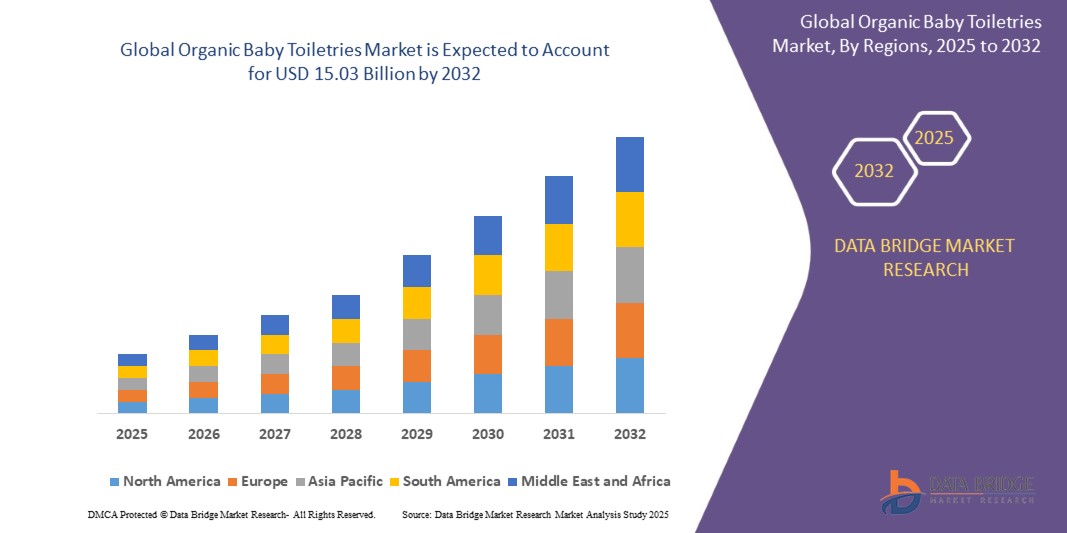
Bio Baby-Toilettenmarkt Größe
- Der globale Bio-Baby-Toilettenmarkt wurde auf8.00 Milliarden USD in 2024und wird voraussichtlich erreichen15,03 Milliarden USD bis 2032
- Während der Prognosezeit von 2025 bis 2032 wird der Markt voraussichtlich zu einemCAGR von 8,20%,vor allem durch das elterliche Bewusstsein für natürliche und chemisch-freie Produkte
- Dieses Wachstum wird von steigenden Sorgen über die Empfindlichkeit der Säuglingshaut und der wachsenden Präferenz für nachhaltige und umweltfreundliche Alternativen getrieben.
Bio Baby-Toiletten Marktanalyse
- DieBio Baby Pflegeprodukte Markthat aufgrund der zunehmendenElternbewusstseinund die steigende Nachfrage nachnatürliche Hautpflegelösungensicherstellen,Sicherheit und Ernährungfür Säuglinge. Moderne Innovationen wiepflanzliche Formulierungenundbiologisch abbaubare Verpackung, haben organische Babypflege zugänglicher gemacht, Markterweiterung in verschiedenen Regionen
- Die Nachfrage nachBio Baby Pflegeproduktewird von der wachsendenPräferenz für chemisch-freie Produkte, steigende FälleSäuglingshautempfindlichkeit, und die ExpansionÖko-bewusste Elterntrendsweltweit
- Nordamerika dominiert den Markt, vor allem aufgrund hoher Verbraucherausgaben fürPremium Babypflegeprodukte, die Anwesenheit der führendenBio Hautpflege Marken, und zunehmende Unterstützungnachhaltige Produktinnovationen
- Zum Beispiel inUS, die Nachfrage nach Bio-Baby-Pflegeproduktenhat zugenommen, und der Einzelhandel meldete einen stetigen Umsatzanstieg in Premium- und Massenmarktsegmenten. Die Region treibt die Innovation weiter voran, mit Herstellernhypoallergene Formelnundvegan zertifizierte Babyhautpflegesich entwickelnde Verbrauchererwartungen erfüllen
- Global, dieBio-Baby-Pflegeteilzählt zu den am schnellsten wachsenden Kategorien inBabypflege, mit Vorschüssen wiewasserlose Formulierungen, Probiotikum-infundierte Hautpflege, undwiederverwertbare VerpackungLösungeneine entscheidende Rolle bei der Markterweiterung spielen
Report Scope und Organic Baby Toilettenmarkt Segmentierung
| Attribute | Bio Baby-Toiletten Schlüsselmarkt Einblicke |
| Verdeckte Segmente |
|
| Überarbeitete Länder | Nordamerika
Europa
Asien-Pazifik
Naher Osten und Afrika
Südamerika
|
| Key Market Players |
|
| Marktmöglichkeiten |
|
| Daten Infos zum Wert hinzugefügt | Neben den Erkenntnissen über Marktszenarien wie Marktwert, Wachstumsrate, Segmentierung, geographische Erfassung und wichtige Akteure umfassen die Marktberichte, die von der Data Bridge Market Research kuratiert wurden, auch eingehende Expertenanalyse, Preisanalyse, Markenanteilsanalyse, Verbraucherumfrage, Demographieanalyse, Supply Chain Analyse, Wertschöpfungskettenanalyse, Rohstoff-/Verbrauchsübersicht, Herstellerauswahlkriterien, PESTLE Analyse, Porter Analysis und regulatorische Rahmenbedingungen. |
Bio Baby-Toilettenmarkt Trends
„Werbung der Nachfrage nach natürlichen und funktionalen Babypflegeprodukten“
- Eine der wichtigsten Trends in der globalenBio Baby Pflegeprodukte Marktist die wachsende Präferenznatürliche und multifunktionale Hautpflegelösungen, getrieben durch zunehmendes elterliches Bewusstsein und die Verschiebung in Richtungchemisch-freie Formulierungen
- Diese Innovationen umfassenpflanzliche Inhaltsstoffeundbiologisch abbaubare Verpackung, GewährleistungSicherheit, Nachhaltigkeit und verbesserte Ernährungfür Säuglingshaut während der Verpflegung für umweltfreundliche Verbraucher
- Zum Beispiel viele führendeBaby Pflege Markenwerden gestartetMehrzweck-Produkte für organische Hautpflege, wie Feuchtigkeitscremes mit Sonnenschutz undprobiotisch infundierte Babylotionen, adressieren verschiedene Hautbelange mit einer einzigen Formulierung
- Hersteller integrieren auchwasserlose Formulierungenundwiederverwertbare Verpackungslösungen, Verringerung der Umweltauswirkungen und Verbesserung der Produkt Langlebigkeit und Usability
- Dieser Trend verwandelt dieBabypflege-Industrie, organische Pflegeprodukte mehr machenzugänglich, nachhaltig und bevorzugt von modernen Eltern weltweit
Bio Baby-Toilettenmarkt Dynamik
Fahrer
„Erhöhte Elternvorliebe für chemisch-freie Babyprodukte“
- AnbauSensitivität der Babyhautund der potenzielle Schaden, der durch synthetische Zutaten verursacht wurde, haben Eltern vorziehen lassenBio- und natürliche Babyartikel
- Die Nachfrage nachungiftig, hypoallergen und dermatologisch getestetBabypflege-Produkte steigen, wie Verbraucher suchensanfte und effektive Formulierungendie das Wohlbefinden von Kindern gewährleisten
- Stellkörper tragenchemisch-freie Babyprodukte, treiben Marken zu entwickelnumweltfreundliche und pflanzenbasierte Alternativendie sich mit zunehmenden Sicherheitsstandards ausrichten
Zum Beispiel
- Im März 2024,Das Baby von Johnsonerweitert seine organische Hautpflege-Linie mitpflanzenbasierte Lotionen und reißfreie Shampoos, die steigende Nachfrage nach sanften Formulierungen zu erfüllen
- Im November 2023,Die Moms Co.eingeführt werden,zertifizierte organische Babywäsche und Lotion, Catering für Eltern, dienatürliche, toxinfreie Hautpflegefür Säuglinge
- Im Juli 2023,Mustelahatumweltfreundliches Reinigungsgel, mitbiologisch abbaubare Inhaltsstoffe, Verstärkung der Verschiebung in Richtungnachhaltige Babypflegelösungen.
- mitEltern priorisieren Sicherheit und Nachhaltigkeit, dieBio Baby Pflegeprodukte Marktwird erwartet, dass kontinuierliches Wachstum beobachtet wird und weitere Innovationen innatürliche und chemischfreie Babyprodukte
Möglichkeit
„Expandierende Einzelhandels- und E-Commerce-Präsenz für Bio-Baby-Toiletten“
- Die zunehmende VerfügbarkeitBio Baby PflegeproduktedurchOnline-Marktplätze, Spezialgeschäfte und große Einzelhandelskettenerhebliche Wachstumschancen schaffen
- Marken nutzenDirekt-zu-Verbraucher (DTC) Modelle, Abo-Services und digitale Marketingstrategien zur Verbesserung der Kundennähe und Markentreue
- Der Aufstiegnachhaltige Verpackung und nachfüllbare Produktlinienzieht ökobewusste Verbraucher weiter an, treiben Markterweiterung
Für das Gericht
- Im Februar 2024,Honest Companymit großen Einzelhändlern wieWalmart und Zieldie in-store Präsenz seinerBio Baby Pflegebereich, Verbesserung der Zugänglichkeit
- Im September 2023,Erde Mama BioseineE-Commerce-Plattform, die direkte Verkäufe seinerpflanzenbasierte Babyartikelund Abo-basierte Rabatte anbieten
- Im Juni 2023,Das Babyeingeführt werden,exklusiver Online-Bündelvertrag, Förderung seinervegane und Experten-zertifizierte Babypflegeproduktezu digitalen Erstverbrauchern
- Mitzunehmender Einfluss von E-Commerce und Einzelhandelserweiterung, dieBio Baby Pflegeprodukte Marktist darauf ausgerichtet, nachhaltiges Wachstum zu erlebenverbesserte Zugänglichkeit, Verbraucherfreundlichkeit und digitale Engagementstrategien
Zurückhaltung/Challenge
„Hochproduktionskosten und Preisempfindlichkeit bei Verbrauchern“
- VerwendungPremium Bio Zutaten, umweltfreundliche Verpackungen und nachhaltige Produktionsmethoden erhöhen deutlichProduktionskosten, machenBio Baby Pflegeprodukteteurer als herkömmliche Alternativen
- Preisempfindlichkeit bleibt eine Herausforderung, wie viele Verbraucher, vor allem inPreisbewusste Märkte, zögern Sie, eine Prämie fürnatürliche Babypflegeproduktetrotz ihrer Vorteile
- Beschränktes Verbraucherbewusstsein undMissverständnisse über Bio-Zertifizierungenweitere langsame Annahme, die Marken stark inBildung und Marketing
Für das Gericht
- Im Januar 2024,Babyganerhatteseine Preisstrategie zu überarbeitennach dem Widerstand von haushaltsbewussten Verbrauchern, Einführung kleinerer, erschwinglicher Packgrößen
- Im Oktober 2023,Burt’s Bees Babyerweitert seine Produktlinie mit einemmittleres Sortiment an Bio-Hautpflege, Catering zu einem breiteren Publikum ohne Kompromisse bei der Inhaltsqualität
- Im Mai 2023,Mamaearthins Leben gerufenBildungskampagnedie Vorteile vonBio Baby Pflegeprodukte, die Verbraucherskeptik ansprechen und Prämienpreise rechtfertigen
- mitKosten für die Begrenzung der Massenentlassung, Unternehmen müssen ausgleichenErschwinglichkeit und Nachhaltigkeit, GewährleistungBio Baby Pflegeproduktebleiben zugänglich und erhaltenProduktqualität und ethische Beschaffung
Bio Baby Toiletten Markt Scope
Der Markt wird auf Basis von Produkt, Vertriebskanal, Formulierungen und Endverbraucher segmentiert.
| Segment | Subsegmentation |
| Nach Produkt |
|
| Durch den Verteilerkanal |
|
| Durch Formulierungen |
|
| Mit dem Endbenutzer |
|
Bio Baby-Toilettenmarkt Regionale Analyse
“Nordamerika ist die Dominante Region im Bio-Baby-Toilettenmarkt”
- Nordamerikaden größten Marktanteil in der globalenBio Baby-ToilettenMarkt, getrieben durch zunehmendes Bewusstseinnatürliche Inhaltsstoffe, steigende Nachfrage nachchemisch-freie Formulierungen, und eine wachsende Präferenz fürumweltfreundliche Babyprodukte
- DieUS.führt die Region aufgrund eines starken Verbraucherinteresses anOrganische Hautpflege, ein etabliertes Netz vonSpezial-Baby-Shops, und wachsende Investitionen innachhaltige Fertigung
- Die Verfügbarkeithypoallergene Formulierungen, einschließlichPflanzliche Tücherundbiologisch abbaubare Windeln, hat den Markt weiter ausgebaut
- Darüber hinaus werden zunehmende Bedenken gegenüberHautempfindlichkeit, steigende Verkäufe durchE-Commerce-Plattformen, und wachsender EinflussBerühmtheitszusagenzum Wachstum desBio Baby-ToilettenMarkt in Nordamerika
„Asia-Pacific wird zur Registrierung der Höchsten Wachstumsrate“
- Asien-Pazifikwird projiziert, um die höchsteCAGRin derBio Baby-ToilettenMarkt, getrieben durch zunehmendes BewusstseinBaby Hautpflege, steigende Nachfrage nachchemisch-freie Babyprodukte, und eine wachsende Präferenz fürnachhaltige Verpackung
- Länder wieChina, Japan und Indiendurch starkes Interesse der Verbraucher anorganische Formulierungen, Ausbau des Einzelhandels und Einfluss desTrends der sozialen Medien
- Das rasche WachstumE-Commerce-Plattformen, verbunden mit kontinuierlichen Innovationen inpflanzliche Inhaltsstoffe, wird die Markterweiterung weiter beschleunigen
- Darüber hinaus fördern staatliche InitiativenGesundheit von KindernInvestitionen innatürliche Produktentwicklung, und zunehmende Annahmehypoallergene Babypflegemittelzur raschen Entwicklung derBio Baby-ToilettenMarktAsien-Pazifik
Die Marktkonkurrenzlandschaft bietet Details von Wettbewerbern. Details enthalten sind Unternehmensübersicht, Unternehmensfinanzen, Umsatzerzeugnis, Marktpotenzial, Investitionen in Forschung und Entwicklung, neue Marktinitiativen, globale Präsenz, Produktionsstandorte und Anlagen, Produktionskapazitäten, Unternehmensstärken und Schwächen, Produktstart, Produktbreite und Breite, Anwendungs Dominanz. Die oben genannten Datenpunkte beziehen sich nur auf den Marktfokus der Unternehmen.
Die großen Marktführer im Markt sind:
- Earth Mama (USA)
- California Baby (USA)
- Nature’s Baby Organics (USA)
- The Honest Company, Inc. (USA)
- Grüne Menschen (U.K.)
- Ayablu Incorporated (USA)
- LittleTwig (USA)
- ERBAVIVA (US)
- Babyganics (USA)
- Charlie Banana (Hong Kong)
- 7. Generation Inc. (USA)
- Burt's Bees (USA)
- Avalon Natural Products, Inc. (USA)
- Procter und Gamble (USA)
- Weleda (Schweiz)
- Kenvue Brands LLC (USA)
- Baumwolle Babys, Inc. (USA)
- CeraVe (USA)
- Kokosnuss-Hedgehog (U.K.)
- Laboratoires Expanscience (Frankreich)
Neueste Entwicklungen im globalen Bio-Baby-Toilettenmarkt
- Im November 2024,Die gute Glamm-Gruppeden vollen Erwerb vonDie Moms Co., deren Mehrheitsbeteiligung ursprünglich im Jahr 2021 erworben wurde. Dies markiert den kompletten Ausstieg der Gründer und Investoren des Unternehmens, obwohl die finanziellen Details der Transaktion unverschlossen bleiben
- Im August 2024,Nala’s Babygestartetin Sainsbury’s, brachte seine dermatologen-genehmigten, pädiatrischen-genehmigten, grausam-frei, vegan und voll recycelbare Baby-Hautpflege-Bereich an den Händler. Die Marke wächst schnell ihre Präsenz in den großen US-Handelsketten
- Im Januar 2024,PureBornerweitert inEuropa, Stärkung seiner Präsenz durch eine Partnerschaft mit dem Schweizer Distributor Laboratoire Naturel. Das Unternehmen, bekannt für seine hypoallergenen Windeln mit bis zu 43% Bio-Bambus, stellte eine engagierte europäische Website mit landesspezifischen Portalen für nahtlose Produktverfügbarkeit
- Im Oktober 2023,Birke Babeeingeführtdie Birch Baby Kollektion, mit drei natürlichen, veganen und duftfreien Säuglingspflegeprodukten aus Bio-Zutaten. Darüber hinaus werden 1% der Verkäufe aus diesem Bereich die David Suzuki Foundation unterstützen und das Engagement der Marke für Nachhaltigkeit stärken
- Im August 2023,Terragestartet seinePremium-Pflanzenwindeln und Tücher in den USA und Kanada, bietet 85% pflanzliche Materialien mit 360-Grad-Absorption und über 12 Stunden Nässeschutz
SKU-
Erhalten Sie Online-Zugriff auf den Bericht zur weltweit ersten Market Intelligence Cloud

- Interaktives Datenanalyse-Dashboard
- Unternehmensanalyse-Dashboard für Chancen mit hohem Wachstumspotenzial
- Zugriff für Research-Analysten für Anpassungen und Abfragen
- Konkurrenzanalyse mit interaktivem Dashboard
- Aktuelle Nachrichten, Updates und Trendanalyse
- Nutzen Sie die Leistungsfähigkeit der Benchmark-Analyse für eine umfassende Konkurrenzverfolgung
Forschungsmethodik
Die Datenerfassung und Basisjahresanalyse werden mithilfe von Datenerfassungsmodulen mit großen Stichprobengrößen durchgeführt. Die Phase umfasst das Erhalten von Marktinformationen oder verwandten Daten aus verschiedenen Quellen und Strategien. Sie umfasst die Prüfung und Planung aller aus der Vergangenheit im Voraus erfassten Daten. Sie umfasst auch die Prüfung von Informationsinkonsistenzen, die in verschiedenen Informationsquellen auftreten. Die Marktdaten werden mithilfe von marktstatistischen und kohärenten Modellen analysiert und geschätzt. Darüber hinaus sind Marktanteilsanalyse und Schlüsseltrendanalyse die wichtigsten Erfolgsfaktoren im Marktbericht. Um mehr zu erfahren, fordern Sie bitte einen Analystenanruf an oder geben Sie Ihre Anfrage ein.
Die wichtigste Forschungsmethodik, die vom DBMR-Forschungsteam verwendet wird, ist die Datentriangulation, die Data Mining, die Analyse der Auswirkungen von Datenvariablen auf den Markt und die primäre (Branchenexperten-)Validierung umfasst. Zu den Datenmodellen gehören ein Lieferantenpositionierungsraster, eine Marktzeitlinienanalyse, ein Marktüberblick und -leitfaden, ein Firmenpositionierungsraster, eine Patentanalyse, eine Preisanalyse, eine Firmenmarktanteilsanalyse, Messstandards, eine globale versus eine regionale und Lieferantenanteilsanalyse. Um mehr über die Forschungsmethodik zu erfahren, senden Sie eine Anfrage an unsere Branchenexperten.
Anpassung möglich
Data Bridge Market Research ist ein führendes Unternehmen in der fortgeschrittenen formativen Forschung. Wir sind stolz darauf, unseren bestehenden und neuen Kunden Daten und Analysen zu bieten, die zu ihren Zielen passen. Der Bericht kann angepasst werden, um Preistrendanalysen von Zielmarken, Marktverständnis für zusätzliche Länder (fordern Sie die Länderliste an), Daten zu klinischen Studienergebnissen, Literaturübersicht, Analysen des Marktes für aufgearbeitete Produkte und Produktbasis einzuschließen. Marktanalysen von Zielkonkurrenten können von technologiebasierten Analysen bis hin zu Marktportfoliostrategien analysiert werden. Wir können so viele Wettbewerber hinzufügen, wie Sie Daten in dem von Ihnen gewünschten Format und Datenstil benötigen. Unser Analystenteam kann Ihnen auch Daten in groben Excel-Rohdateien und Pivot-Tabellen (Fact Book) bereitstellen oder Sie bei der Erstellung von Präsentationen aus den im Bericht verfügbaren Datensätzen unterstützen.











