


Global Heating, Ventilation, and Air Conditioning (HVAC) Control Systems at Workplace Market Segmentation, By System (Temperature and Integrated Controls), Component (Sensors, Controllers & Controlled Devices), Implementation Type (New Construction and Retrofit), Application (Residential, Commercial, and Industrial)- Industry Trends and Forecast to 2033
¿Cuáles son los sistemas de control de calefacción, ventilación y aire acondicionado en el mercado de trabajo tamaño y tasa de crecimiento
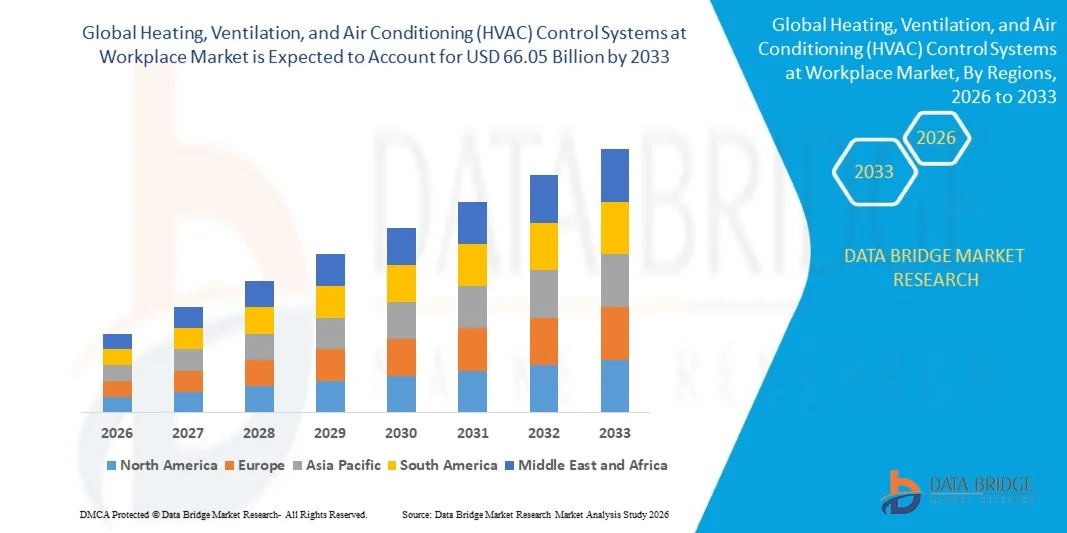
- Según el análisis del mercado de datos, los sistemas de control de calefacción, ventilación y aire acondicionado en el mercado de trabajo valoraron el tamaño del mercado de trabajoUSD 25.20 billion in 2025y se espera que alcanceUS 66.05 billion by 2033, aCAGR of 12.80%durante el período previsto
- El crecimiento del mercado se ve impulsado en gran medida por la creciente adopción de tecnologías inteligentes de construcción y sistemas de HVAC eficientes desde el punto de vista energético
- Centrarse en la comodidad en el lugar de trabajo, la calidad del aire interior y el cumplimiento regulatorio de la conservación de la energía
Tamaño del mercado
- Valor mundial del mercado (2025): USD 25.20 Billion
- Valor de mercado esperado (2033): 66,05 dólares
- Predicción de CAGR (2026–2033): 12.80%
Sistemas de control de calefacción, ventilación y aire acondicionado (HVAC) en Workplace Market Analysis
- IntegraciónIoTyAIen los sistemas HVAC está mejorando la eficiencia operacional, el mantenimiento predictivo y la vigilancia en tiempo real
- Aumentar la conciencia sobre el ahorro de costos energéticos y la reducción de la huella de carbono está impulsando la adopción de sistemas de control avanzados
- América del Norte dominaba los sistemas de control de calefacción, ventilación y aire acondicionado en el mercado laboral con la mayor cuota de ingresos en 2025, impulsados por el aumento de la demanda de soluciones eficientes en la energía, la automatización inteligente de edificios y la mejora de la comodidad en el lugar de trabajo
- Se espera que la región de Asia y el Pacífico sea testigo de la mayor tasa de crecimiento de los sistemas mundiales de calefacción, ventilación y aire acondicionado en el lugar de trabajo mercado, impulsado por la ampliación de las actividades de construcción, iniciativas gubernamentales que promueven edificios inteligentes y verdes, y la adopción creciente de sistemas de control HVAC habilitados por IoT
- El segmento de controles integrados mantuvo la mayor cuota de ingresos del mercado en 2025, impulsada por la creciente adopción de edificios inteligentes y la infraestructura eficiente energética. Los controles integrados proporcionan una gestión centralizada, una programación automatizada y un seguimiento en tiempo real, por lo que son una opción preferida para los lugares de trabajo comerciales e industriales. Estos sistemas permiten a los administradores de las instalaciones optimizar el uso de la energía, reducir los costos operacionales y mejorar el rendimiento general de los edificios. Además, la integración con los sistemas de gestión de edificios y las plataformas habilitadas para IoT está mejorando la eficiencia operacional y la capacidad de mantenimiento predictivo
¿Cómo se aumentan los sistemas de control de calefacción, ventilación y aire acondicionado en el mercado de trabajo
|
Atributos |
Sistemas de control de calefacción, ventilación y aire acondicionado (HVAC) en el mercado de trabajo |
|
Segmentos cubiertos |
|
|
Países cubiertos |
América del Norte
Europa
Asia y el Pacífico
Oriente Medio y África
América del Sur
|
|
Principales jugadores del mercado |
|
|
Oportunidades de mercado |
• Integración de IoT y Smart Building Technologies |
|
Valor añadido Data Infosets |
Además de las ideas sobre escenarios de mercado, como el valor de mercado, la tasa de crecimiento, la segmentación, la cobertura geográfica y los principales actores, los informes de mercado comisariados por el Data Bridge Market Research también incluyen análisis profundos de expertos, producción y capacidad geográficamente representados por empresas, diseños de redes de distribuidores y socios, análisis detallados y actualizados de tendencias de precios y análisis del déficit de la cadena de suministro y la demanda. |
¿Cuál es la tendencia clave en los sistemas de control de calefacción, ventilación y aire acondicionado en el mercado de trabajo
“Rising Adoption Of Smart And Energy-Efficient HVAC Solutions”
• El énfasis cada vez mayor en la eficiencia energética y las prácticas de construcción sostenible está conformando significativamente los sistemas de control HVAC en el mercado laboral, ya que las organizaciones prefieren cada vez más sistemas que optimicen el consumo energético, reduzcan los costos operativos y mejoren la calidad ambiental interior. Los sistemas Smart HVAC están ganando fuerza debido a su capacidad de ofrecer control climático automatizado, monitoreo en tiempo real y mantenimiento predictivo, fortaleciendo la adopción en los lugares de trabajo comerciales e industriales
• Aumentar la conciencia sobre el confort en el trabajo, la productividad de los empleados y la calidad del aire interior ha acelerado la demanda de sistemas avanzados de control HVAC. Los directores de las instalaciones y los encargados de adoptar decisiones institucionales están buscando activamente sistemas que proporcionen un seguimiento centralizado, una programación inteligente y una integración perfecta con los sistemas de gestión de edificios, lo que lleva a los fabricantes a innovar con soluciones habilitadas para IoT y impulsadas por AI.
• Las tendencias de sostenibilidad y cumplimiento regulatorio influyen en las decisiones de compra, con organizaciones que hacen hincapié en operaciones ecológicas, certificaciones energéticas e incentivos gubernamentales. Estos factores están ayudando a las marcas a diferenciar sus ofertas de HVAC en un mercado competitivo y construir la confianza de los clientes, al tiempo que impulsa la adopción de LEED, BREEAM y otras certificaciones de eficiencia energética
• Por ejemplo, en 2024, Johnson Controls en Estados Unidos y Siemens en Alemania amplió sus carteras de productos HVAC incorporando sistemas de control inteligente y soluciones habilitadas por IoT. Estos lanzamientos fueron introducidos en respuesta a la creciente demanda de soluciones automatizadas y eficientes en el lugar de trabajo, con distribución en edificios comerciales, instalaciones industriales y proyectos de oficina inteligentes
• Si bien la demanda de sistemas de control HVAC está creciendo, la expansión sostenida del mercado depende de la continuidad de las capacidades de integración y el mantenimiento de soluciones rentables. Los fabricantes también se centran en mejorar la interoperabilidad del sistema, la gestión basada en la nube y soluciones escalables para equilibrar la eficiencia, el costo y la sostenibilidad para una adopción más amplia
Sistemas de control de calefacción, ventilación y aire acondicionado (HVAC) en la dinámica del mercado de trabajo
Conductor
“Preferencia de crecimiento para sistemas HVAC inteligentes y eficientes en energía”
• Aumentar la demanda corporativa e industrial para el control climático automatizado y eficiente de la energía es un factor importante para los sistemas de control HVAC en el mercado laboral. Las empresas están reemplazando cada vez más las configuraciones convencionales de HVAC con alternativas inteligentes para optimizar el uso energético, reducir costos y cumplir con las normas de sostenibilidad. Esta tendencia también está impulsando la investigación en soluciones impulsadas por IoT y AI, apoyando la diversificación de productos
• Ampliar la adopción en oficinas comerciales, plantas industriales y edificios institucionales influye en el crecimiento del mercado. Los sistemas de control HVAC ayudan a mantener la temperatura, la humedad y la calidad del aire al minimizar el consumo de energía, permitiendo a las organizaciones cumplir con los requisitos regulatorios y mejorar la comodidad de los empleados. El cambio global hacia edificios verdes e infraestructura eficiente energética refuerza aún más esta tendencia
• Las empresas de gestión y automatización de edificios promueven activamente soluciones de sistemas de control HVAC mediante la innovación de productos, campañas de marketing y certificaciones industriales. Estos esfuerzos están respaldados por el aumento de la conciencia sobre el bienestar en el lugar de trabajo, el ahorro energético y la sostenibilidad ambiental, y también fomentan la colaboración entre los proveedores de tecnología y los usuarios finales para mejorar el desempeño de los sistemas
• Por ejemplo, en 2023, Honeywell en EE.UU. y Schneider Electric en Francia reportó una mayor incorporación de controles inteligentes de HVAC en proyectos comerciales e industriales. Esta expansión siguió una mayor demanda de sistemas eficientes en energía, habilitados para IoT y gestionados por la nube, impulsando negocios repetidos y diferenciación. Ambas compañías destacaron ahorros energéticos, mantenimiento predictivo y gestión de la calidad del aire en campañas de marketing para fortalecer la confianza del cliente
• Aunque las crecientes tendencias inteligentes de construcción y eficiencia energética apoyan el crecimiento, la adopción más amplia depende de la interoperabilidad del sistema, la optimización de costos y la implementación escalable. La inversión en integración en la nube, análisis avanzados y gestión basada en la inteligencia artificial será fundamental para satisfacer la demanda mundial y mantener una ventaja competitiva
Restraint/Challenge
“Alta inversión inicial y conciencia limitada en mercados emergentes”
• El costo relativamente mayor de los sistemas HVAC inteligentes y automatizados en comparación con las configuraciones tradicionales sigue siendo un reto clave, limitando la adopción entre las organizaciones sensibles a los precios. Los costos más altos del equipo, la complejidad de la instalación y las necesidades de integración contribuyen a elevar el gasto de capital. Además, la conciencia fluctuante de los beneficios de la eficiencia energética puede afectar la absorción en las regiones en desarrollo
• La conciencia empresarial y del administrador de instalaciones sigue siendo desigual, especialmente en los mercados emergentes donde la adopción inteligente de edificios sigue evolucionando. La comprensión limitada de las características de control avanzado restringe la adopción en ciertos sectores, lo que lleva a una mayor reducción cuando las iniciativas educativas en la automatización HVAC son mínimas
• Los desafíos de cadena de suministro, técnicos y de mantenimiento también impactan el crecimiento del mercado, ya que los sistemas avanzados de HVAC requieren instaladores certificados, experiencia técnica y adherencia a estándares de calidad estrictos. Las complejidades logísticas y las cuestiones relativas a la interoperabilidad del sistema pueden aumentar los costos operacionales. Las organizaciones deben invertir en la capacitación, los contratos de mantenimiento y el apoyo fiable para asegurar el desempeño del sistema
• Por ejemplo, en 2024, las empresas de la India y el Brasil que implementan sistemas comerciales de HVAC como Johnson Controls y Siemens reportaron un aumento más lento debido a mayores costos iniciales y poca conciencia de los beneficios de control inteligente en comparación con las configuraciones convencionales. La integración de los sistemas heredados y el cumplimiento de la certificación fueron obstáculos adicionales
• Superar estos desafíos requerirá soluciones rentables, campañas de sensibilización focalizadas y redes de apoyo técnico ampliadas. La colaboración con los integradores de sistemas, consultores y órganos reguladores puede ayudar a desbloquear el potencial de crecimiento a largo plazo de los sistemas mundiales de control HVAC en el mercado laboral. Además, el desarrollo de soluciones asequibles, escalables y energéticamente eficientes será esencial para la adopción generalizada
Sistemas de control de calefacción, ventilación y aire acondicionado en el mercado de trabajo
Los sistemas mundiales de control de calefacción, ventilación y aire acondicionado en el mercado laboral se segmentan sobre la base del sistema, componente, tipo de aplicación y aplicación.
• Por Sistema
Sobre la base del sistema, el mercado de sistemas de control HVAC se segmenta en controles de temperatura y controles integrados. El segmento de controles integrados mantuvo la mayor cuota de ingresos del mercado en 2025, impulsada por la creciente adopción de edificios inteligentes y la infraestructura eficiente energética. Los controles integrados proporcionan una gestión centralizada, una programación automatizada y un seguimiento en tiempo real, por lo que son una opción preferida para los lugares de trabajo comerciales e industriales. Estos sistemas permiten a los administradores de las instalaciones optimizar el uso de la energía, reducir los costos operacionales y mejorar el rendimiento general de los edificios. Además, la integración con los sistemas de gestión de edificios y las plataformas habilitadas para IoT está mejorando la eficiencia operacional y la capacidad de mantenimiento predictivo.
Se espera que el segmento de control de temperatura sea testigo de la tasa de crecimiento más rápida de 2026 a 2033, impulsada por su facilidad de instalación, rentabilidad y capacidad para optimizar la comodidad en zonas individuales. Los sistemas de control de temperatura son especialmente populares en los proyectos de ajuste y las instalaciones más pequeñas, ofreciendo una gestión climática precisa con un mínimo desperdicio de energía. El enfoque cada vez mayor en la comodidad de los ocupantes, junto con el aumento de la conciencia sobre la conservación de la energía, es fomentar la adopción en oficinas, escuelas y establecimientos comerciales.
• Por componente
Sobre la base del componente, el mercado se segmenta en sensores, controladores y dispositivos controlados. Los sensores representaron la mayor cuota de ingresos del mercado en 2025 debido a su papel crítico en la obtención de datos en tiempo real y la automatización del sistema. Estos dispositivos monitorizan la temperatura, la humedad, el flujo de aire y la ocupación, proporcionando información práctica para la optimización de la energía y la eficiencia operacional. El despliegue generalizado de sensores inteligentes también es compatible con el mantenimiento predictivo, la reducción del tiempo de inactividad y la mejora de la longevidad del sistema.
Se espera que los controladores presenciarán el crecimiento más rápido durante el 2026–2033, impulsado por la creciente integración de IoT, analíticas basadas en IA y plataformas de gestión adaptadas a las nubes. Los controladores actúan como el cerebro de los sistemas HVAC, facilitando respuestas automatizadas a las cambiantes condiciones ambientales y preferencias de los usuarios. Con la creciente adopción de lugares de trabajo inteligentes y ecosistemas de construcción conectados, los controladores son esenciales para garantizar una comunicación perfecta entre sensores, dispositivos controlados e interfaces de usuario.
• Por tipo de implementación
Sobre la base del tipo de implementación, el mercado se segmenta en nuevas construcciones y retrofit. El nuevo segmento de construcción dominaba en 2025 debido al aumento de proyectos de oficina inteligente, edificios comerciales e instalaciones industriales que incorporaban sistemas HVAC en la etapa de diseño. Los desarrolladores están adoptando cada vez más sistemas eficientes en la energía para cumplir con las certificaciones de edificios verdes y los mandatos reglamentarios. La integración temprana garantiza un diseño de sistema optimizado, menores costos de instalación y ahorro energético a largo plazo.
Se espera que el segmento de reacondicionamiento sea testigo del crecimiento más rápido de 2026 a 2033, alimentado por el aumento de las mejoras de la infraestructura existente para mejorar la eficiencia energética, la calidad del aire interior y las capacidades de automatización de edificios. Los sistemas HVAC envejecidos en instalaciones comerciales e industriales están siendo reemplazados por controles avanzados para reducir el consumo de energía, reducir las emisiones y mejorar la comodidad del ocupante. Los incentivos gubernamentales y las iniciativas de conservación de la energía también impulsan el mercado de la adaptación.
• Por aplicación
Sobre la base de la aplicación, el mercado se segmenta en residencial, comercial e industrial. El segmento comercial mantuvo la mayor cuota de ingresos del mercado en 2025, impulsada por la demanda de control climático automatizado, cumplimiento regulatorio y mayor eficiencia energética en oficinas, centros comerciales y edificios institucionales. Las empresas están priorizando cada vez más las soluciones de gestión de la energía para reducir los gastos operacionales y cumplir los objetivos de sostenibilidad.
Se espera que el segmento industrial sea testigo del crecimiento más rápido entre el 2026 y el 2033, impulsado por la ampliación de las instalaciones industriales, los requisitos de optimización de procesos y el aumento de la conciencia sobre las operaciones eficientes energéticamente y la comodidad de los empleados en los entornos de fabricación y producción. Se están adoptando sistemas avanzados de control HVAC para mantener condiciones ambientales precisas, proteger el equipo sensible y apoyar la productividad de la fuerza laboral. El aumento de la industrialización y las inversiones en tecnologías de fabricación inteligente están acelerando aún más el crecimiento del mercado en este segmento.
Sistemas de control de calefacción, ventilación y aire acondicionado en el mercado de trabajo Análisis regional
- América del Norte dominaba los sistemas de control de calefacción, ventilación y aire acondicionado en el mercado laboral con la mayor cuota de ingresos en 2025, impulsados por el aumento de la demanda de soluciones eficientes en la energía, la automatización inteligente de edificios y la mejora de la comodidad en el lugar de trabajo
- Las organizaciones de toda la región se centran en optimizar la calidad del aire interior, la regulación de la temperatura y la gestión de la energía para mejorar la productividad de los empleados y reducir los costos operacionales
- La alta conciencia de la sostenibilidad ambiental, los incentivos gubernamentales y los avances tecnológicos están reforzando la aplicación generalizada de soluciones avanzadas de control HVAC en los lugares de trabajo comerciales, industriales y residenciales
U.S. HVAC Control Systems at Workplace Market Insight
El mercado de sistemas de control U.S. HVAC representó la mayor parte de América del Norte en 2025, alimentada por el rápido despliegue de edificios inteligentes, infraestructura eficiente de energía, y el creciente énfasis en la salud y comodidad ocupacional. Las empresas e instituciones están priorizando cada vez más las soluciones automatizadas de HVAC para reducir los costos de consumo y mantenimiento de energía y mejorar la comodidad de los ocupantes. La integración de los controles basados en la nube, la analítica predictiva y la optimización impulsada por AI en los sistemas HVAC favorece el crecimiento del mercado. Además, las normas gubernamentales de apoyo y las iniciativas de construcción ecológica, como la certificación LEED, contribuyen significativamente a la expansión del mercado.
Sistemas de control de HVAC de Europa en el mercado de trabajo
Se espera que el mercado europeo de sistemas de control HVAC sea testigo del crecimiento más rápido de 2026 a 2033, impulsado por normas estrictas de eficiencia energética y la adopción creciente de tecnologías inteligentes de construcción. La necesidad de reducir las huellas de carbono y gestionar el consumo energético en las instalaciones comerciales e industriales está motivando a las organizaciones a mejorar las soluciones integradas de HVAC. Las empresas europeas están invirtiendo cada vez más en sistemas de control automatizados con monitoreo en tiempo real, acceso remoto y características de mantenimiento predictivos. Además, el enfoque de la región en los sistemas de construcción sostenible y gestión de edificios digitales está acelerando la adopción de soluciones avanzadas de HVAC.
U.K. HVAC Control Systems at Workplace Market Insight
Se espera que el mercado de sistemas de control U.K. HVAC crezca rápidamente de 2026 a 2033, impulsado por el aumento de la conciencia sobre la eficiencia energética, el confort en el lugar de trabajo y las iniciativas gubernamentales que promueven prácticas de construcción sostenibles. Las empresas están adoptando cada vez más soluciones integradas y HVAC habilitadas para IoT para optimizar la temperatura, el flujo de aire y el uso de energía en locales comerciales e industriales. La tendencia creciente de las oficinas inteligentes y la adaptación de los edificios existentes con sistemas de control automatizados está apoyando la expansión del mercado. Además, los avances en sensores, controladores y plataformas de gestión basadas en la nube están mejorando la eficiencia y fiabilidad del sistema.
Alemania HVAC Control Systems en Workplace Market Insight
Se prevé que el mercado de sistemas de control del HVAC de Alemania experimente un fuerte crecimiento de 2026 a 2033, alimentado por normas estrictas de eficiencia energética, aumento de la industrialización e innovaciones tecnológicas en la automatización de edificios. Las empresas alemanas están priorizando soluciones inteligentes de HVAC para reducir costos energéticos y cumplir con los requisitos de cumplimiento ambiental. El mercado cuenta con el apoyo de una amplia adopción de mantenimiento predictivo, controles basados en sensores y optimización de sistemas habilitados para IA. Además, la integración con fuentes de energía renovables y redes inteligentes de construcción refuerza la demanda de sistemas avanzados de control HVAC tanto en los sectores comercial como industrial.
Sistemas de control de HVAC en el mercado de trabajo
Se espera que el mercado de sistemas de control de HVAC de Asia y el Pacífico crezca a un ritmo más rápido de 2026 a 2033, impulsado por la rápida urbanización, el crecimiento industrial y la construcción creciente de oficinas inteligentes y complejos comerciales en países como China, Japón y la India. Sensibilizar la conservación de la energía y la necesidad de mantener la calidad del aire interior y la comodidad ocupante están motivando la adopción de soluciones inteligentes de HVAC. La región está presenciando inversiones en sistemas de control integrados, habilitados por IoT, basados en la nube, que permiten monitorear en tiempo real, mantener predictivos y gestionar de forma remota. Las iniciativas gubernamentales para promover edificios verdes y la infraestructura eficiente energética también están acelerando el crecimiento del mercado.
Japón HVAC sistemas de control en el mercado de trabajo
Se prevé que el mercado de sistemas de control de la HVAC de Japón será testigo de un crecimiento significativo entre 2026 y 2033 debido al avance tecnológico, la urbanización y un fuerte énfasis en la eficiencia energética del país. Las empresas y los establecimientos comerciales están adoptando cada vez más sistemas HVAC automatizados e integrados para mejorar la comodidad interior, reducir los costos operacionales y optimizar el consumo de energía. El despliegue de sensores habilitados por IoT, plataformas de gestión de la nube y sistemas de control predictivos está impulsando la expansión del mercado. Además, el enfoque de Japón en las oficinas inteligentes y las iniciativas de construcción sostenible apoya la adopción generalizada de soluciones avanzadas de HVAC en instalaciones comerciales e industriales.
China Sistemas de control HVAC en el mercado de trabajo
El mercado de sistemas de control China HVAC representó la mayor cuota de mercado de Asia y el Pacífico en 2025, impulsada por la rápida urbanización, la expansión industrial y la creciente adopción de tecnologías inteligentes de construcción. El aumento de la demanda de entornos de trabajo eficientes y automatizados en la energía está motivando a las organizaciones a implementar sistemas inteligentes de control HVAC. La integración con los sistemas de gestión de edificios, la vigilancia en tiempo real y las soluciones de mantenimiento predictivas están impulsando aún más el crecimiento del mercado. Además, las iniciativas gubernamentales que apoyan la conservación de la energía, los edificios verdes y el desarrollo de la infraestructura digital son factores clave que contribuyen a la expansión de los sistemas de control HVAC en China.
Sistemas de control de calefacción, ventilación y aire acondicionado (HVAC) en el mercado de trabajo Compartir
Los Sistemas de Control de Calefacción, Ventilación y Aire Acondicionado (HVAC) en la industria del lugar de trabajo están dirigidos principalmente por empresas bien establecidas, incluyendo:
•Honeywell International Inc (U.S.)
Controles Johnson (U.S.)
•Schneider Electric (Francia)
• Siemens (Alemania)
•Carrier Global Corporation (Estados Unidos)
• Emerson Electric (Estados Unidos)
• Trane Technologies Plc (Irlanda)
• Lennox (U.S.)
• Controles Delta (Canadá)
• Controles de tecnología (Canadá)
• Controles KMC (U.S.)
Industrias Daikin (Japón)
• LG Electronics (Corea del Sur)
• Jackson Systems (U.S.)
• Electrónica OJ (Dinamarca)
SKU-
Obtenga acceso en línea al informe sobre la primera nube de inteligencia de mercado del mundo

- Panel de análisis de datos interactivo
- Panel de análisis de empresas para oportunidades con alto potencial de crecimiento
- Acceso de analista de investigación para personalización y consultas
- Análisis de la competencia con panel interactivo
- Últimas noticias, actualizaciones y análisis de tendencias
- Aproveche el poder del análisis de referencia para un seguimiento integral de la competencia
Metodología de investigación
La recopilación de datos y el análisis del año base se realizan utilizando módulos de recopilación de datos con muestras de gran tamaño. La etapa incluye la obtención de información de mercado o datos relacionados a través de varias fuentes y estrategias. Incluye el examen y la planificación de todos los datos adquiridos del pasado con antelación. Asimismo, abarca el examen de las inconsistencias de información observadas en diferentes fuentes de información. Los datos de mercado se analizan y estiman utilizando modelos estadísticos y coherentes de mercado. Además, el análisis de la participación de mercado y el análisis de tendencias clave son los principales factores de éxito en el informe de mercado. Para obtener más información, solicite una llamada de un analista o envíe su consulta.
La metodología de investigación clave utilizada por el equipo de investigación de DBMR es la triangulación de datos, que implica la extracción de datos, el análisis del impacto de las variables de datos en el mercado y la validación primaria (experto en la industria). Los modelos de datos incluyen cuadrícula de posicionamiento de proveedores, análisis de línea de tiempo de mercado, descripción general y guía del mercado, cuadrícula de posicionamiento de la empresa, análisis de patentes, análisis de precios, análisis de participación de mercado de la empresa, estándares de medición, análisis global versus regional y de participación de proveedores. Para obtener más información sobre la metodología de investigación, envíe una consulta para hablar con nuestros expertos de la industria.
Personalización disponible
Data Bridge Market Research es líder en investigación formativa avanzada. Nos enorgullecemos de brindar servicios a nuestros clientes existentes y nuevos con datos y análisis que coinciden y se adaptan a sus objetivos. El informe se puede personalizar para incluir análisis de tendencias de precios de marcas objetivo, comprensión del mercado de países adicionales (solicite la lista de países), datos de resultados de ensayos clínicos, revisión de literatura, análisis de mercado renovado y base de productos. El análisis de mercado de competidores objetivo se puede analizar desde análisis basados en tecnología hasta estrategias de cartera de mercado. Podemos agregar tantos competidores sobre los que necesite datos en el formato y estilo de datos que esté buscando. Nuestro equipo de analistas también puede proporcionarle datos en archivos de Excel sin procesar, tablas dinámicas (libro de datos) o puede ayudarlo a crear presentaciones a partir de los conjuntos de datos disponibles en el informe.











