



Global Social Commerce Market Segmentation, By Business Model (B2C, B2B y C2C), Product Type (Personal & Beauty Care, Apparel, Accesorios, Home Products, Health Supplements, Food & Beverage y Others), and Platform/Sales Channel (Video Commerce, Social Network-led Commerce, Social Reselling, Group Buying, and Product Review Platforms) - Industry Trends and Forecast to 20
¿Cuál es la tasa de tamaño y crecimiento del mercado de comercio social
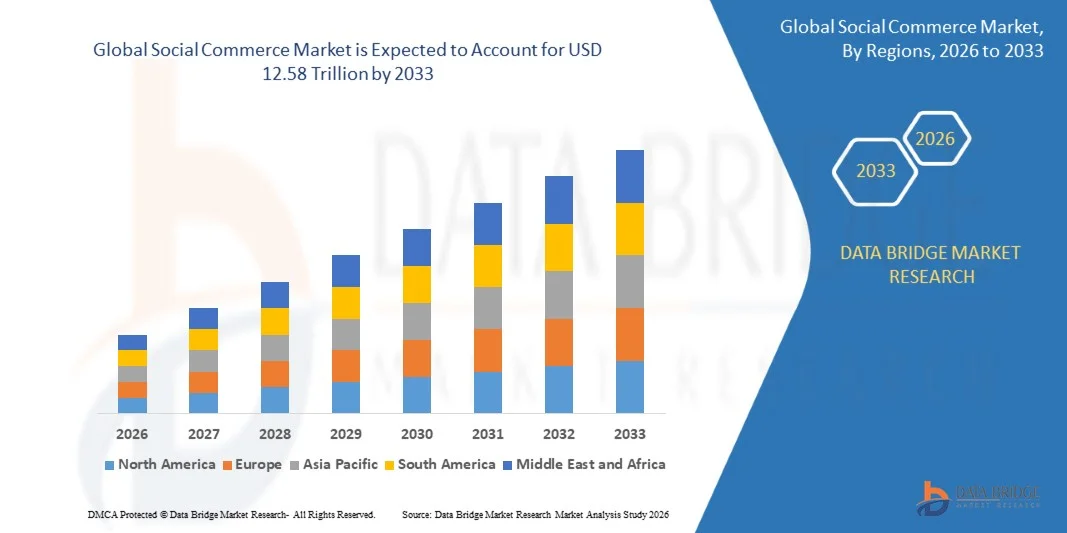
- Según Data Bridge Market Research Analysis El tamaño del mercado mundial del comercio social se valoró enUSD 1,55 billones en 2025y se espera que alcanceUSD 12.58 trillion by 2033, aCAGR of 29.84%durante el período previsto
- El crecimiento del mercado se alimenta en gran medida por la rápida expansión de las plataformas de redes sociales, el aumento de la penetración de los teléfonos inteligentes y los avances continuos enPago digitaltecnologías, que impulsan una mayor integración de las características comerciales en entornos de redes sociales
- Además, el aumento de la preferencia de los consumidores por las experiencias comerciales interactivas, personalizadas y convenientes, junto con la creciente influencia de los creadores y las recomendaciones de los pares, está acelerando la adopción de plataformas de comercio social, fortaleciendo considerablemente el crecimiento general del mercado
Tamaño del mercado
- Valor mundial del mercado (2025): USD 1.55 Trillion
- Valor de mercado esperado (2033): USD 12.58 Trillion
- Predicción de CAGR (2026–2033): 29.84%
¿Cuáles son los principales Takeaways of Social Commerce Market
- El comercio social, que integra el descubrimiento, el compromiso y la compra de productos directamente dentro de las plataformas de redes sociales, se está convirtiendo en un componente crítico de las estrategias digitales modernas de retail debido a su capacidad de combinar entretenimiento, interacción comunitaria y transacciones sin costuras
- La creciente demanda de comercio social se ve impulsada principalmente por la alta participación de los usuarios en las plataformas sociales, la eficacia de la comercialización dirigida por influencers y basada en video, y la creciente confianza en la compra en aplicaciones, que en conjunto están remodelando el comportamiento de compra de consumidores y acelerando la expansión del mercado
- Asia-Pacífico dominaba el mercado del comercio social con una participación del 72,1% en 2025, debido a la alta penetración de las redes sociales, la rápida adopción de teléfonos inteligentes y una fuerte cultura de la primera compra móvil
- Se espera que América del Norte sea la región de mayor crecimiento en el mercado del comercio social durante el período de pronóstico debido a la rápida innovación en las características comerciales sociales y fuertes inversiones de marca en el marketing de influencers
- El segmento B2C dominó el mercado con una cuota de mercado del 59,3% en 2025, debido a la fuerte presencia de marcas y minoristas que venden directamente a los consumidores a través de plataformas de redes sociales. Empresas aprovechan el marketing de influencers, las funciones de checkout integradas y la publicidad personalizada para impulsar tasas de conversión más altas y compras de impulso. La comodidad de las experiencias comerciales de extremo a extremo dentro de las aplicaciones sociales refuerza aún más el dominio B2C
Informe Scope and Social Commerce Market Segmentation
|
Atributos |
Social Commerce Key Market Insights |
|
Segmentos cubiertos |
|
|
Países cubiertos |
América del Norte
Europa
Asia y el Pacífico
Oriente Medio y África
América del Sur
|
|
Principales jugadores del mercado |
|
|
Oportunidades de mercado |
|
|
Valor añadido Data Infosets |
Además de las ideas del mercado, como el valor de mercado, la tasa de crecimiento, los segmentos de mercado, la cobertura geográfica, los jugadores de mercado y el escenario de mercado, el informe del mercado comisariado por el equipo de Investigación del Mercado de Datos del Puente incluye análisis profundo de expertos, análisis de importaciones/exportaciones, análisis de precios, análisis de consumo de producción y análisis de plagas. |
¿Cuál es la tendencia clave en el mercado de comercio social
“El crecimiento de las compras en línea de vídeo y en vivo”
- Una tendencia prominente en el mercado del comercio social es el rápido crecimiento de formatos comerciales dirigidos por vídeo y corrientes en vivo, impulsados por el aumento de la preferencia del consumidor por experiencias de compra interactivas, en tiempo real y basadas en contenidos en plataformas de redes sociales. Estos formatos combinan entretenimiento, descubrimiento de productos y compra instantánea, aumentando significativamente el compromiso de los usuarios y las tasas de conversión
- Por ejemplo, plataformas como TikTok Shop y Douyin han permitido a las marcas y creadores llevar a cabo sesiones de venta en directo donde los productos se demuestran y compran al instante, dando como resultado valores de orden promedio más altos y comportamientos de compra de impulsos más fuertes. Este enfoque ha fortalecido el papel de los creadores como principales creadores de ventas dentro del ecosistema del comercio social
- El comercio dirigido por video está ganando tracción ya que los vídeos cortos y el contenido en vivo permiten a las marcas mostrar el uso de productos, la calidad y los beneficios más eficazmente que los listados estáticos. Esta narración visual aumenta la confianza y reduce la vacilación de compra, especialmente en categorías como moda, belleza y productos de estilo de vida
- Las principales plataformas sociales están invirtiendo fuertemente en herramientas de comercio en vivo, características de monetización de creadores y capacidades de checkout en aplicación para apoyar esta tendencia. Estas inversiones están acelerando el cambio del comercio electrónico tradicional hacia viajes de compras sociales inmersivos
- La creciente influencia de los influencers y microcreadores refuerza aún más la adopción del comercio dirigido por vídeo, ya que los consumidores dependen cada vez más de las recomendaciones dirigidas por pares y del contenido auténtico. Esta dinámica está reorganizando cómo las marcas asignan presupuestos de marketing hacia estrategias de comercio social
- La expansión sostenida de las compras de video y corriente en vivo está posicionando las plataformas de comercio social como canales de venta al por menor de granos, fortaleciendo su papel en la conducción del descubrimiento, el compromiso y las ventas directas en entornos de comercio digital
Dinámicas del Mercado de Comercio Social
Conductor
“Rising Social Media Penetration and Mobile-First Consumer Behavior”
- El mercado del comercio social está fuertemente impulsado por la penetración generalizada de las plataformas de redes sociales y el rápido cambio hacia el primer comportamiento de consumo móvil en los mercados globales. El aumento del uso diario de las aplicaciones sociales ha creado un entorno natural para integrar las compras en interacciones digitales rutinarias
- Por ejemplo, Meta Platforms, Inc. tiene características de compra incrustadas en Instagram y Facebook, permitiendo a las marcas llegar directamente a los usuarios a través de feeds, historias y carretes. Estas integraciones han mejorado la visibilidad del producto y acortado el camino del descubrimiento a la compra
- La creciente disponibilidad de teléfonos inteligentes asequibles e Internet móvil ha ampliado el acceso al comercio social, especialmente en las economías emergentes. Los consumidores prefieren cada vez más completar las transacciones dentro de las aplicaciones que ya utilizan, mejorando las tasas de comodidad y adopción
- Las interfaces móviles soportan características como el checkout de un clic, las carteras digitales y las recomendaciones personalizadas, que mejoran la experiencia del usuario y fomentan las compras de repetición. Estas capacidades están impulsando mayores volúmenes de transacciones en plataformas sociales
- El aumento continuo del uso de las redes sociales combinado con el comportamiento comercial centrado en móviles está reforzando el comercio social como motor de crecimiento central dentro del paisaje minorista digital más amplio
Restraint/Challenge
“Data Privacy Concerns and Trust Issues in Social Transactions”
- El mercado del comercio social se enfrenta a problemas relacionados con las preocupaciones en materia de privacidad de datos y la confianza de los consumidores en la realización de transacciones directamente en las plataformas sociales. El manejo de datos personales, información de pago y publicidad dirigida ha aumentado el escrutinio regulatorio y del usuario
- Por ejemplo, Meta Platforms, Inc. ha prestado atención reglamentaria permanente en varias regiones en relación con las prácticas de protección de datos, lo que ha llevado a las plataformas a mejorar la transparencia y las medidas de cumplimiento. Este escrutinio aumenta la complejidad operacional y los efectos de la credibilidad de la plataforma
- Los consumidores siguen siendo cautelosos al compartir información financiera sobre las aplicaciones sociales, en particular en los mercados con mayor conciencia de los riesgos de uso indebido de datos y de seguridad cibernética. Esta vacilación puede retardar la adopción entre segmentos de usuarios conscientes de la privacidad
- Asegurar el procesamiento seguro de pagos, la prevención del fraude y políticas transparentes de uso de datos requiere una inversión continua en tecnología y marcos de cumplimiento. Estos requisitos aumentan los costos de las plataformas y comerciantes que operan en ecosistemas de comercio social
- Se espera que las preocupaciones actuales en materia de privacidad y confianza influyan en el diseño de plataformas, el compromiso regulatorio y la adopción de consumidores, dando forma a la evolución a largo plazo del mercado del comercio social
Social Commerce Market Scope
El mercado se segmenta sobre la base de modelo de negocio, tipo de producto y plataforma o canal de ventas.
• Por modelo de negocio
Sobre la base del modelo de negocio, el mercado del comercio social se segmenta en B2C, B2B y C2C. El segmento B2C dominaba el mercado con la mayor cuota de ingresos del 59,3% en 2025, impulsada por la fuerte presencia de marcas y minoristas que se venden directamente a los consumidores a través de plataformas de redes sociales. Empresas aprovechan el marketing de influencers, las funciones de checkout integradas y la publicidad personalizada para impulsar tasas de conversión más altas y compras de impulso. La comodidad de las experiencias comerciales de extremo a extremo dentro de las aplicaciones sociales refuerza aún más el dominio B2C.
Se prevé que el segmento C2C sea testigo de la tasa de crecimiento más rápida de 2026 a 2033, alimentada por el rápido aumento de los modelos de venta entre pares y ventas sociales. Los vendedores individuales utilizan cada vez más plataformas sociales para monetizar redes personales, vender en vivo y confiar en la comunidad. Las barreras de entrada bajas y la inversión inicial mínima fomentan una mayor participación, acelerando el crecimiento en los mercados emergentes y desarrollados.
• Por tipo de producto
Sobre la base del tipo de producto, el mercado del comercio social se centra en la atención personal " de belleza, ropa, accesorios, productos caseros, suplementos de salud, alimentos " bebidas y otros. El segmento personal de atención de belleza dominaba el mercado en 2025, apoyado por un alto atractivo visual, frecuentes lanzamientos de productos y una fuerte demanda impulsada por influencers. Los videos, tutoriales y exámenes de forma corta juegan un papel crítico en la configuración de decisiones de compra y la conducción de ventas de repetición. Los márgenes altos y la narración de marca contribuyen aún más al liderazgo de segmentos.
Se espera que el segmento de prendas de vestir registre el crecimiento más rápido de 2026 a 2033, impulsado por el aumento de la adopción del comercio en vivo y la presentación de productos en tiempo real. Los consumidores se benefician de la orientación de tamaño, consejos de estilo y comentarios instantáneos durante las sesiones en vivo, mejorando la confianza en las compras de prendas de vestir en línea. Los ciclos rápidos de tendencia y la validación social aceleran el comportamiento de compra, apoyando el crecimiento sostenido.
• Por Plataforma / Canal de Ventas
Sobre la base de la plataforma y el canal de ventas, el mercado del comercio social se centra en el comercio de vídeo, el comercio impulsado por redes sociales, el revender social, la compra de grupos y las plataformas de examen de productos. El comercio dirigido por redes sociales mantuvo la mayor cuota de ingresos del mercado en 2025 debido a la profunda integración de las características comerciales dentro de las plataformas de redes sociales ampliamente utilizadas. Los escaparates directos, los pagos en aplicación y el descubrimiento de productos impulsados por algoritmo aumentan el compromiso del usuario y la frecuencia de compra. Las sólidas percepciones de datos permiten promociones específicas, reforzando el dominio.
Se proyecta que el segmento de comercio de vídeo sea testigo de la CAGR más rápida de 2026 a 2033, impulsada por la creciente preferencia del consumidor por experiencias comerciales interactivas e inmersivas. Transmisión en vivo y videos cortos permiten demostraciones de productos en tiempo real e interacción instantánea del comprador, aumentando las tasas de confianza y conversión. La creciente economía creadora y la mejora de la infraestructura de transmisión aceleran aún más la adopción en todas las regiones.
Social Commerce Market Regional Analysis
- Asia-Pacífico dominaba el mercado del comercio social con la mayor cuota de ingresos del 72,1% en 2025, impulsada por la alta penetración de las redes sociales, la rápida adopción de teléfonos inteligentes y una fuerte cultura de la primera compra móvil
- La gran población joven de la región, la ampliación de la infraestructura de pago digital, y el uso generalizado de modelos de venta impulsados por influencers y corrientes vivas están acelerando el crecimiento del mercado
- Aumentar la accesibilidad a Internet, la innovación de plataformas y aumentar la confianza en los ecosistemas comerciales sociales en las economías emergentes están apoyando la expansión sostenida
China Social Commerce Market Insight
China ocupó la mayor parte del mercado de comercio social de Asia y el Pacífico en 2025, debido a su ecosistema de redes sociales altamente desarrollado y a la pronta adopción del comercio en directo. La fuerte integración de las características comerciales dentro de las plataformas sociales, la amplia economía creadora y la aceptación generalizada de las compras en la aplicación son factores clave del crecimiento. Las altas tasas de compromiso y los pagos digitales impecables siguen fortaleciendo la posición de liderazgo de China.
India Social Commerce Market Insight
La India está presenciando el crecimiento más rápido de la región de Asia y el Pacífico, alimentado por la penetración rápida de los teléfonos inteligentes, los datos móviles asequibles y el aumento de la participación de pequeños vendedores e influencers. La creciente adopción de modelos de reventa social y el contenido vernácula se está expandiendo más allá de las ciudades de metro. El aumento de la confianza en los pagos digitales y la fuerte participación de los usuarios en las plataformas sociales están impulsando el impulso del mercado.
Europe Social Commerce Market Insight
El mercado del comercio social europeo se está expandiendo constantemente, apoyado por la creciente adopción de características comerciales de redes sociales y el aumento de la colaboración entre marcas y creadores de contenidos. Los consumidores muestran preferencia creciente por experiencias comerciales personalizadas y basadas en la comunidad. Las normas sólidas de protección de datos y el énfasis en las transacciones digitales seguras están conformando estrategias de plataforma en toda la región.
Alemania Mercado de Comercio Social Insight
El mercado de comercio social de Alemania está impulsado por la alta penetración en Internet, la fuerte madurez del comercio electrónico y el creciente uso de plataformas sociales para el descubrimiento de productos. Las marcas se centran en la calidad, la transparencia y los exámenes de confianza para involucrar a los consumidores. La integración de las redes sociales con los sistemas de venta en línea establecidos está apoyando el crecimiento gradual pero coherente.
U.K. Social Commerce Market Insight
El mercado de Estados Unidos se beneficia de una base de consumidores digitalmente sólida, el uso generalizado de las redes sociales y la fuerte influencia del marketing dirigido por creadores. El crecimiento está respaldado por la adopción cada vez mayor de la promoción de productos basados en vídeo y la integración de la verificación sin problemas. La alta participación de los consumidores y la confianza en los canales digitales de venta minorista siguen fortaleciendo la presencia del mercado.
North America Social Commerce Market Insight
North America se proyecta crecer en la CAGR más rápida de 2026 a 2033, impulsada por la rápida innovación en las características comerciales sociales y fuertes inversiones de marca en el marketing de influencers. Los altos ingresos desechables, la infraestructura digital avanzada y la creciente aceptación de la compra en la aplicación son factores clave. La expansión del comercio de vídeo y los formatos de compras en vivo está impulsando aún más la adopción.
US Social Commerce Market Insight
EE.UU. representó la mayor parte del mercado de comercio social de América del Norte en 2025, con el apoyo de un paisaje de redes sociales maduro y una fuerte participación de marcas globales. Herramientas de publicidad avanzadas, personalización basada en datos y uso generalizado de influencers aumentan las tasas de conversión. Las actualizaciones continuas de la plataforma y el alto compromiso del consumidor solidifican el papel principal de Estados Unidos en la región.
Que región posee la mayor parte de la Mercado de Comercio Social
La industria del comercio social está dirigida principalmente por empresas bien establecidas, incluyendo:
- Snap, Inc. (U.S.)
- Xiaohongshu (China)
- Etsy, Inc. (U.S.)
- Roposo (India)
- WeChat / Weixin (China)
- Poshmark, Inc. (U.S.)
- Trell Shop (India)
- Meta Platforms, Inc. (U.S.)
- Yunji Sharing Technology Co., Ltd. (China)
- Pinterest, Inc. (U.S.)
- TikTok / Douyin (China)
- Fashnear Technologies Private Limited (India)
- Taobao (China)
- Twitter, Inc. (U.S.)
- Pinduoduo Inc. (China)
Novedades en el mercado mundial de comercio social
- En mayo de 2025, Alibaba se asoció con Xiaohongshu para fortalecer la integración del comercio social en China, permitiendo la redirección directa de las recomendaciones de productos impulsados por contenido a las compras en Taobao y Tmall. Este desarrollo mejoró considerablemente la participación de los usuarios y la eficiencia de la conversión, como se refleja en tasas más elevadas y una mayor interacción, reforzando el papel de las plataformas dirigidas por contenidos en el crecimiento de las transacciones dentro del ecosistema del comercio social
- En mayo de 2025, Pinterest, Inc. introdujo etiquetado de contenido generado por AI para mejorar la transparencia y la confianza de los usuarios en su plataforma. Al identificar claramente las imágenes modificadas por AI a través de etiquetas visuales y sistemas avanzados de detección, la compañía mejoró la credibilidad de los contenidos, lo que se espera influir positivamente en la confianza de los usuarios, la confianza de los anunciantes y el compromiso a largo plazo dentro de entornos de descubrimiento social y comercio impulsados
- En abril de 2025, TikTok amplió su función Shop en mercados europeos adicionales, aprovechando un fuerte rendimiento en el Reino Unido y el Sudeste de Asia. Esta expansión apoya la estrategia de TikTok para escalar la compra en aplicaciones y el comercio en vivo, permitiendo a las marcas alcanzar audiencias más amplias y acelerar el crecimiento de ventas impulsado por plataformas en el comercio social en rápida expansión de Europa
- En febrero de 2025, Alibaba anunció una alianza estratégica con Apple para integrar su modelo Qwen AI en los servicios de iPhone en China, con el objetivo de mejorar la personalización y la precisión de recomendación en las experiencias comerciales digitales. Este movimiento fortalece las capacidades de comercio social impulsadas por AI, permitiendo un contenido más adaptado, descubrimiento de productos y mayores tasas de conversión en el ecosistema de Alibaba
- En noviembre de 2023, Meta Platforms, Inc. introdujo la cuenta que une entre Facebook, Instagram y Amazon para agilizar las experiencias comerciales en aplicación. Al permitir a los usuarios completar las compras de Amazon directamente dentro de las plataformas de Meta, esta integración redujo la fricción de compra, mejoró las tasas de conversión de anuncios, y fortaleció el papel de las plataformas sociales como canales de comercio de granos completos
SKU-
Obtenga acceso en línea al informe sobre la primera nube de inteligencia de mercado del mundo

- Panel de análisis de datos interactivo
- Panel de análisis de empresas para oportunidades con alto potencial de crecimiento
- Acceso de analista de investigación para personalización y consultas
- Análisis de la competencia con panel interactivo
- Últimas noticias, actualizaciones y análisis de tendencias
- Aproveche el poder del análisis de referencia para un seguimiento integral de la competencia
Metodología de investigación
La recopilación de datos y el análisis del año base se realizan utilizando módulos de recopilación de datos con muestras de gran tamaño. La etapa incluye la obtención de información de mercado o datos relacionados a través de varias fuentes y estrategias. Incluye el examen y la planificación de todos los datos adquiridos del pasado con antelación. Asimismo, abarca el examen de las inconsistencias de información observadas en diferentes fuentes de información. Los datos de mercado se analizan y estiman utilizando modelos estadísticos y coherentes de mercado. Además, el análisis de la participación de mercado y el análisis de tendencias clave son los principales factores de éxito en el informe de mercado. Para obtener más información, solicite una llamada de un analista o envíe su consulta.
La metodología de investigación clave utilizada por el equipo de investigación de DBMR es la triangulación de datos, que implica la extracción de datos, el análisis del impacto de las variables de datos en el mercado y la validación primaria (experto en la industria). Los modelos de datos incluyen cuadrícula de posicionamiento de proveedores, análisis de línea de tiempo de mercado, descripción general y guía del mercado, cuadrícula de posicionamiento de la empresa, análisis de patentes, análisis de precios, análisis de participación de mercado de la empresa, estándares de medición, análisis global versus regional y de participación de proveedores. Para obtener más información sobre la metodología de investigación, envíe una consulta para hablar con nuestros expertos de la industria.
Personalización disponible
Data Bridge Market Research es líder en investigación formativa avanzada. Nos enorgullecemos de brindar servicios a nuestros clientes existentes y nuevos con datos y análisis que coinciden y se adaptan a sus objetivos. El informe se puede personalizar para incluir análisis de tendencias de precios de marcas objetivo, comprensión del mercado de países adicionales (solicite la lista de países), datos de resultados de ensayos clínicos, revisión de literatura, análisis de mercado renovado y base de productos. El análisis de mercado de competidores objetivo se puede analizar desde análisis basados en tecnología hasta estrategias de cartera de mercado. Podemos agregar tantos competidores sobre los que necesite datos en el formato y estilo de datos que esté buscando. Nuestro equipo de analistas también puede proporcionarle datos en archivos de Excel sin procesar, tablas dinámicas (libro de datos) o puede ayudarlo a crear presentaciones a partir de los conjuntos de datos disponibles en el informe.











