



Global Bladder Cancer Therapeutics Market Segmentation, By Type (Transitional Cell Bladder Cancer, Superficial Bladder Cancer, Invasive Bladder Cancer, Squamous Cell Bladder Cancer, and Others), End-Users (Hospitals, Specialty Clinics, and Others), Treatment (Surgery, Chemotherapy, Immunotherapy Radiation Therapy, and Others), Major Tests (Cytoscopy, Biopsy, Urinalysis, Urine Cytology, and Bladder Ultrasound) - Industry Trends and Forecast to 2032
Bladder Cancer Therapeutics Market Size
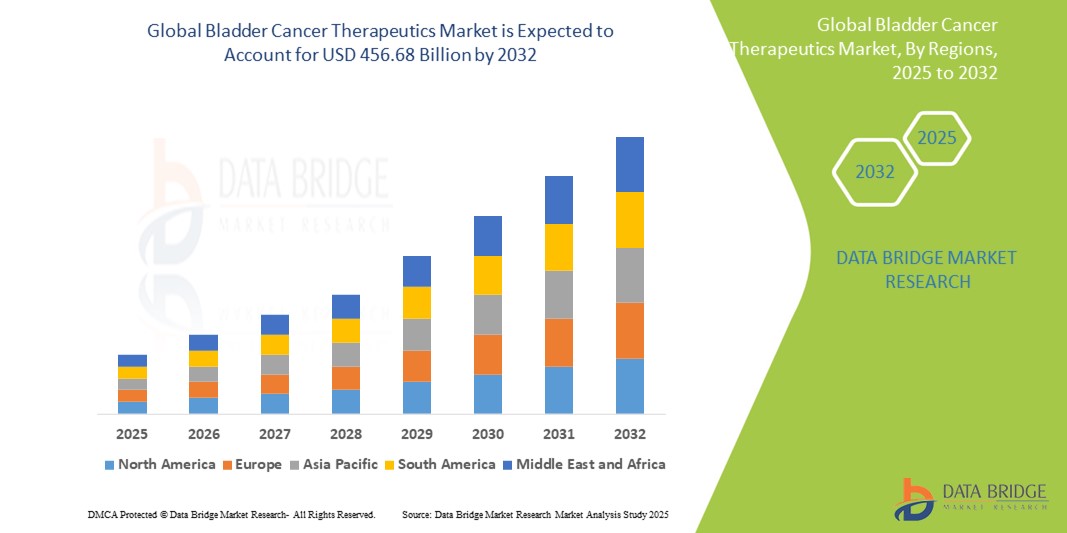
- The global bladder cancer therapeutics market size was valued at USD 296.44 billion in 2024 and is expected to reach USD 456.68 billion by 2032, at a CAGR of 5.55% during the forecast period
- The market growth is largely fueled by the rising incidence of bladder cancer globally, coupled with increasing awareness and early diagnosis initiatives that are driving demand for effective therapeutic solutions. Advances in immunotherapy, targeted therapy, and chemotherapy regimens are transforming treatment paradigms, leading to better patient outcomes and expanded treatment options
- Furthermore, growing investments in oncology research, favorable reimbursement policies, and the emergence of combination therapies are establishing bladder cancer therapeutics as a key focus area within the broader cancer treatment landscape. These converging factors are accelerating the adoption of Bladder Cancer Therapeutics solutions, thereby significantly boosting the industry's growth
Bladder Cancer Therapeutics Market Analysis
- Bladder cancer therapeutics, encompassing a range of treatment modalities such as chemotherapy, immunotherapy, targeted therapy, and surgery, are increasingly vital components in the oncology landscape due to rising incidence rates, advancements in precision medicine, and growing awareness of early diagnosis and treatment options
- The escalating demand for bladder cancer therapies is primarily fueled by the aging global population, increasing prevalence of bladder cancer, expanding healthcare infrastructure in emerging economies, and the ongoing development of novel therapeutics such as immune checkpoint inhibitors and antibody-drug conjugates
- North America dominated the bladder cancer therapeutics market with the largest revenue share of 40.8% in 2024, characterized by strong healthcare infrastructure, early adoption of innovative treatments, and the presence of leading pharmaceutical companies
- Asia-Pacific is expected to be the fastest-growing region with a CAGR of 9.6% in the bladder cancer therapeutics market during the forecast period due to rising cancer awareness, growing access to healthcare services, increasing investments in oncology research, and favourable government initiatives promoting early cancer diagnosis and treatment accessibility
- Transitional cell bladder cancer segment dominated the bladder cancer therapeutics market with a market share of 64.3% in 2024, attributed to its high prevalence among diagnosed cases, early detection potential, and strong responsiveness to multiple therapeutic approaches including surgery, chemotherapy, and immunotherapy
Report Scope and Bladder Cancer Therapeutics Market Segmentation
|
Attributes |
Bladder Cancer Therapeutics Key Market Insights |
|
Segments Covered |
|
|
Countries Covered |
North America
Europe
Asia-Pacific
Middle East and Africa
South America
|
|
Key Market Players |
|
|
Market Opportunities |
|
|
Value Added Data Infosets |
In addition to the insights on market scenarios such as market value, growth rate, segmentation, geographical coverage, and major players, the market reports curated by the Data Bridge Market Research also include in-depth expert analysis, pricing analysis, brand share analysis, consumer survey, demography analysis, supply chain analysis, value chain analysis, raw material/consumables overview, vendor selection criteria, PESTLE Analysis, Porter Analysis, and regulatory framework. |
Bladder Cancer Therapeutics Market Trends
“Advancements in Precision Oncology and Personalized Medicine”
- A significant and accelerating trend in the global bladder cancer therapeutics market is the rapid advancement of precision oncology and the growing application of personalized medicine approaches. This shift is fundamentally enhancing treatment effectiveness by targeting therapies based on individual tumor profiles and genetic markers
- For instance, the development of immune checkpoint inhibitors such as Atezolizumab and Nivolumab has transformed the treatment landscape for advanced or metastatic bladder cancer, offering targeted immune response modulation with better outcomes in certain patient populations
- Precision medicine enables healthcare providers to select therapies tailored to specific biomolecular alterations, reducing trial-and-error prescribing and minimizing adverse effects. Companion diagnostics are increasingly used to identify suitable candidates for immunotherapies, further streamlining treatment strategies
- The integration of genomic profiling and liquid biopsies is facilitating earlier detection of disease progression and treatment resistance, enabling timely therapeutic adjustments. Innovations such as next-generation sequencing (NGS) are becoming more accessible and cost-effective, expanding their role in clinical decision-making
- This move towards data-driven and biomarker-specific therapies is reshaping the expectations for bladder cancer treatment, pushing pharmaceutical companies to invest in targeted drug development and collaborative clinical trials
- The growing emphasis on individualized care is driving demand for therapies that offer higher efficacy and lower toxicity, particularly in high-risk and elderly populations. As a result, the bladder cancer therapeutics market is witnessing increased investment in research and development pipelines focused on novel biologics and small molecule inhibitors
Bladder Cancer Therapeutics Market Dynamics
Driver
“Growing Need Due to Rising Cancer Prevalence and Advancements in Oncology”
- The increasing global incidence of bladder cancer, coupled with rising awareness of early diagnosis and available treatment options, is a significant driver for the growing demand in the Bladder Cancer Therapeutics Market
- For instance, in April 2024, F. Hoffmann-La Roche Ltd announced promising Phase III trial results for its immunotherapy candidate in treating non-muscle invasive bladder cancer (NMIBC), reinforcing the pipeline's strength and the market’s long-term growth potential. Such developments by key players are expected to accelerate innovation and market expansion during the forecast period.
- As healthcare systems place greater emphasis on cancer control strategies, patients and providers are increasingly seeking advanced therapies that offer improved survival outcomes with fewer side effects compared to conventional treatments
- Furthermore, the rise in personalized medicine and the growing adoption of molecular diagnostics are making targeted and immunotherapeutic agents central to treatment plans. These therapies can be tailored to a patient's genetic profile, improving effectiveness and reducing unnecessary toxicity
- The convenience and efficiency of novel treatment delivery methods—such as intravesical therapy, minimally invasive procedures, and home-based oral medications—are driving adoption across diverse patient demographics. In addition, the increased availability of combination therapies and biosimilars is expanding access while helping to manage treatment costs
Restraint/Challenge
“High Treatment Costs and Access Disparities”
- One of the key challenges facing the bladder cancer therapeutics market is the high cost associated with advanced therapies such as immunotherapy and targeted treatments. These expenses can be a significant burden for healthcare systems and patients, particularly in low- and middle-income countries where reimbursement coverage may be limited
- For instance, treatments such as Atezolizumab or Nivolumab, while highly effective, can cost tens of thousands of dollars annually, creating access gaps for uninsured or underinsured populations
- Addressing these affordability concerns requires strategic actions such as government subsidies, broader insurance coverage, and partnerships between public health institutions and pharmaceutical companies to ensure equitable treatment access
- Moreover, there are disparities in the availability of cutting-edge diagnostic tools and clinical infrastructure across regions, which can hinder early diagnosis and limit the administration of optimal therapeutic regimens
- While technological innovations and biosimilar development are gradually helping reduce treatment costs, sustained efforts are needed to enhance healthcare equity, improve early detection capabilities, and expand infrastructure—especially in underserved regions—to fully unlock market potential
Bladder Cancer Therapeutics Market Scope
The market is segmented on the basis of type, end user, treatment and major tests.
• By Type
On the basis of type, the bladder cancer therapeutics market is segmented into transitional cell bladder cancer, superficial bladder cancer, invasive bladder cancer, squamous cell bladder cancer, and others. The transitional cell bladder Cancer segment held the largest market revenue share of 64.3% in 2024, driven by its high prevalence, early detection potential, and responsiveness to a range of therapies.
The invasive bladder cancer segment is expected to register the fastest CAGR of 6.9% from 2025 to 2032, as advanced cases continue to rise and require intensive multimodal treatment approaches.
• By End-Users
On the basis of end-users, the bladder cancer therapeutics market is segmented into hospitals, specialty clinics, and others. The hospitals segment accounted for the highest revenue share of 58.1% in 2024, attributed to their advanced infrastructure, skilled oncologists, and ability to deliver comprehensive care.
The specialty clinics segment is projected to grow at the fastest CAGR of 7.3% from 2025 to 2032, due to a rising preference for specialized, outpatient cancer care centers offering faster services and lower costs.
• By Treatment
On the basis of treatment, the bladder cancer therapeutics market is segmented into surgery, chemotherapy, immunotherapy, radiation therapy, and others. The chemotherapy segment dominated with a market share of 38.4% in 2024, being a mainstay treatment across all stages of bladder cancer.
The immunotherapy segment is expected to grow at the highest CAGR of 8.1% from 2025 to 2032, fueled by the success of checkpoint inhibitors and growing clinical trial investments.
• By Major Tests
On the basis of major tests, the bladder cancer therapeutics market is segmented into cystoscopy, biopsy, urinalysis, urine cytology, and bladder ultrasound. The cystoscopy segment held the largest share at 45.9% in 2024, as it remains the gold standard for diagnosis, tumor detection, and post-treatment surveillance.
The urine cytology segment is expected to exhibit the fastest CAGR of 7.6% from 2025 to 2032, due to its non-invasive nature and growing role in recurrence monitoring and follow-up care.
Bladder Cancer Therapeutics Market Regional Analysis
- North America dominated the bladder cancer therapeutics market with the largest revenue share of 40.8% in 2024, driven by the high prevalence of bladder cancer, early adoption of advanced treatment modalities, and strong healthcare infrastructure
- Patients and healthcare providers in the region benefit from access to cutting-edge therapies such as immunotherapy, targeted drugs, and minimally invasive surgeries, supported by favorable reimbursement frameworks
- The region’s growth is further supported by a robust pharmaceutical R&D ecosystem, increasing cancer awareness campaigns, and the presence of major global companies actively investing in bladder cancer treatment innovations
U.S. Bladder Cancer Therapeutics Market Insight
The U.S. bladder cancer therapeutics market accounted for 81.3% of North America’s market revenue in 2024, owing to its advanced oncology infrastructure, high healthcare spending, and strong pipeline of FDA-approved treatments. The increasing incidence of both muscle-invasive and non-muscle invasive bladder cancer is prompting higher demand for innovative therapies, including checkpoint inhibitors and combination treatments. Supportive clinical trial activity, rapid adoption of personalized medicine, and high patient awareness further accelerate market expansion in the U.S.
Europe Bladder Cancer Therapeutics Market Insight
The Europe bladder cancer therapeutics market is projected to grow at a CAGR of 7.2% from 2025 to 2032, fueled by government support for cancer screening programs and improved healthcare access across the region. The increasing implementation of precision medicine initiatives and cross-border collaborations for oncology R&D are enhancing treatment accessibility. The demand is rising across both public and private healthcare sectors, supported by early diagnosis, centralized cancer care units, and growing adoption of immunotherapy in clinical practice.
U.K. Bladder Cancer Therapeutics Market Insight
The U.K. bladder cancer therapeutics market is anticipated to grow at a CAGR of 7.8% during the forecast period, driven by a growing focus on early detection and expanding access to advanced treatment options. National cancer strategies, NHS-led clinical trials, and increasing investments in oncology infrastructure are creating a conducive environment for market growth. In addition, digital pathology and AI-driven diagnostic support are being gradually integrated into bladder cancer management.
Germany Bladder Cancer Therapeutics Market Insight
The Germany bladder cancer therapeutics market is expected to expand at a CAGR of 6.9% from 2025 to 2032, fueled by the country’s strong commitment to innovative cancer care and precision medicine. With its technologically advanced healthcare system and high treatment standards, Germany is witnessing increasing use of immuno-oncology drugs, especially in high-risk bladder cancer cases. The country also benefits from a high rate of bladder cancer screening and active clinical research in uro-oncology.
Asia-Pacific Bladder Cancer Therapeutics Market Insight
The Asia-Pacific bladder cancer therapeutics market is poised to grow at the fastest CAGR of 9.6% from 2025 to 2032, driven by rising cancer incidence, improving healthcare infrastructure, and increasing government efforts to modernize oncology treatment. Countries such as China, Japan, and India are witnessing rapid advancements in diagnostics, with greater availability of both branded and biosimilar therapeutic options. Public-private partnerships, a growing middle-class population, and increased insurance penetration are helping make bladder cancer treatment more accessible.
Japan Bladder Cancer Therapeutics Market Insight
The Japan bladder cancer therapeutics market is gaining momentum and is expected to grow at a CAGR of 8.1%, fueled by the country’s strong focus on medical innovation and high demand for advanced therapies in its aging population. The adoption of minimally invasive surgical techniques and immune checkpoint inhibitors is steadily rising, supported by favorable clinical guidelines and reimbursement policies. Japan also leads in integrating genomic profiling in cancer care, enabling more effective and personalized treatment strategies.
China Bladder Cancer Therapeutics Market Insight
The China bladder cancer therapeutics market accounted for the largest market share in Asia-Pacific at 42.7% in 2024, driven by its rapidly expanding healthcare infrastructure and increasing government investments in oncology. The country’s large patient population, rising healthcare awareness, and growing uptake of both domestic and imported therapeutic products are accelerating market growth. Local biopharma innovation, combined with supportive regulatory reforms, is enhancing access to bladder cancer diagnostics and treatments across urban and semi-urban regions.
Bladder Cancer Therapeutics Market Share
The bladder cancer therapeutics industry is primarily led by well-established companies, including:
- AstraZeneca (U.K.)
- Bristol-Myers Squibb Company (U.S.)
- Lilly (U.S.)
- F. Hoffmann-La Roche Ltd (Switzerland)
- GSK plc (U.K.)
- Novartis AG (Switzerland)
- Pfizer Inc. (U.S.)
- Sanofi (France)
- Endo, Inc. (Ireland)
- Johnson & Johnson Services, Inc. (U.S.)
- UroGen Pharma (U.S.)
- Ferring B.V. (Switzerland)
- Relmada Therapeutics, Inc. (U.S.)
Latest Developments in Global Bladder Cancer Therapeutics Market
- In April 2025, UroGen Pharma announced encouraging Phase 1 dose-escalation results for UGN‑301 (zalifrelimab) in patients with non-muscle invasive bladder cancer (NMIBC), showing 46% of Ta/T1 patients and 33% of CIS patients remained recurrence-free or achieved a complete response at 12 weeks; 60% of Ta/T1 patients on the 300 mg dose were still disease-free at 15 months
- In February 2025, Astellas Pharma reported that China’s NMPA approved enfortumab vedotin (PADCEV) in combination with pembrolizumab as a first-line treatment for advanced or metastatic urothelial carcinoma, representing the first non–platinum-based regimen in this setting and expanding treatment alternatives for patients in China
- In December 2022, Ferring Pharmaceuticals received U.S. FDA approval for Adstiladrin (nadofaragene firadenovec-vncg), the first intravesical gene therapy for high-risk, BCG-unresponsive non-muscle invasive bladder cancer (NMIBC). Over half (51%) of CIS±Ta/T1 patients achieved a complete response at 3 months, with 46% remaining disease-free at 12 months
- In March 2025, Relmada Therapeutics announced licensing of NDV‑01, a Phase 2 bladder cancer candidate from Trigone Pharma. This new compound will be added to Relmada’s portfolio to support ongoing clinical evaluations in bladder cancer indications, reinforcing development pipelines for advanced therapies
SKU-
Accédez en ligne au rapport sur le premier cloud mondial de veille économique

- Tableau de bord d'analyse de données interactif
- Tableau de bord d'analyse d'entreprise pour les opportunités à fort potentiel de croissance
- Accès d'analyste de recherche pour la personnalisation et les requêtes
- Analyse de la concurrence avec tableau de bord interactif
- Dernières actualités, mises à jour et analyse des tendances
- Exploitez la puissance de l'analyse comparative pour un suivi complet de la concurrence
Méthodologie de recherche
La collecte de données et l'analyse de l'année de base sont effectuées à l'aide de modules de collecte de données avec des échantillons de grande taille. L'étape consiste à obtenir des informations sur le marché ou des données connexes via diverses sources et stratégies. Elle comprend l'examen et la planification à l'avance de toutes les données acquises dans le passé. Elle englobe également l'examen des incohérences d'informations observées dans différentes sources d'informations. Les données de marché sont analysées et estimées à l'aide de modèles statistiques et cohérents de marché. De plus, l'analyse des parts de marché et l'analyse des tendances clés sont les principaux facteurs de succès du rapport de marché. Pour en savoir plus, veuillez demander un appel d'analyste ou déposer votre demande.
La méthodologie de recherche clé utilisée par l'équipe de recherche DBMR est la triangulation des données qui implique l'exploration de données, l'analyse de l'impact des variables de données sur le marché et la validation primaire (expert du secteur). Les modèles de données incluent la grille de positionnement des fournisseurs, l'analyse de la chronologie du marché, l'aperçu et le guide du marché, la grille de positionnement des entreprises, l'analyse des brevets, l'analyse des prix, l'analyse des parts de marché des entreprises, les normes de mesure, l'analyse globale par rapport à l'analyse régionale et des parts des fournisseurs. Pour en savoir plus sur la méthodologie de recherche, envoyez une demande pour parler à nos experts du secteur.
Personnalisation disponible
Data Bridge Market Research est un leader de la recherche formative avancée. Nous sommes fiers de fournir à nos clients existants et nouveaux des données et des analyses qui correspondent à leurs objectifs. Le rapport peut être personnalisé pour inclure une analyse des tendances des prix des marques cibles, une compréhension du marché pour d'autres pays (demandez la liste des pays), des données sur les résultats des essais cliniques, une revue de la littérature, une analyse du marché des produits remis à neuf et de la base de produits. L'analyse du marché des concurrents cibles peut être analysée à partir d'une analyse basée sur la technologie jusqu'à des stratégies de portefeuille de marché. Nous pouvons ajouter autant de concurrents que vous le souhaitez, dans le format et le style de données que vous recherchez. Notre équipe d'analystes peut également vous fournir des données sous forme de fichiers Excel bruts, de tableaux croisés dynamiques (Fact book) ou peut vous aider à créer des présentations à partir des ensembles de données disponibles dans le rapport.











