Global Dumping Syndrome Market Segmentation, By Treatment (Medication, Surgery, and Others), Diagnosis (Gastric Emptying Test, Glucose Tolerance Test, Upper GI Series, Upper GI Endoscopy, and Others), Phase (Early Dumping Phase and Late Dumping Phase), Symptoms (Bloating, Weakness, Dizziness, Hunger, Confusion, Rapid Heart Rate, Sweating, Fatigue, Shaking, and Others), Dosage (Tablet, Injection, and Others), Route of Administration (Oral, Intravenous, and Others), End-Users (Clinic, Hospital, and Others), Distribution Channel (Hospital Pharmacy, Retail Pharmacy, and Online Pharmacy) – Industry Trends and Forecast to 2032
Dumping Syndrome Market Analysis
The dumping syndrome market is experiencing notable advancements in both treatment methods and technology. Recent innovations focus on minimally invasive approaches, such as endoscopic interventions and advanced laparoscopic techniques, which offer faster recovery times and less post-surgical complications. Technology advancements in diagnostic tools, such as high-resolution ultrasound and robotic-assisted surgery, are enhancing precision in treatment planning and improving patient outcomes.
Emerging therapies, including continuous glucose monitoring and advanced nutritional supplements, are gaining traction in managing symptoms. These innovations aim to regulate blood sugar levels and enhance nutritional absorption in patients with dumping syndrome. In addition, the development of targeted drug therapies, such as octreotide and GLP-1 agonists, is proving effective in mitigating postprandial symptoms.
As for growth, the dumping syndrome market is expanding due to a higher prevalence of gastrointestinal disorders, particularly following gastric surgeries such as gastric bypass. Increased awareness, improved diagnosis, and advancements in surgical techniques are contributing to market growth. With a growing emphasis on personalized care and novel treatment options, the market is expected to continue evolving and offering new opportunities for both patients and healthcare providers.
Dumping Syndrome Market Size
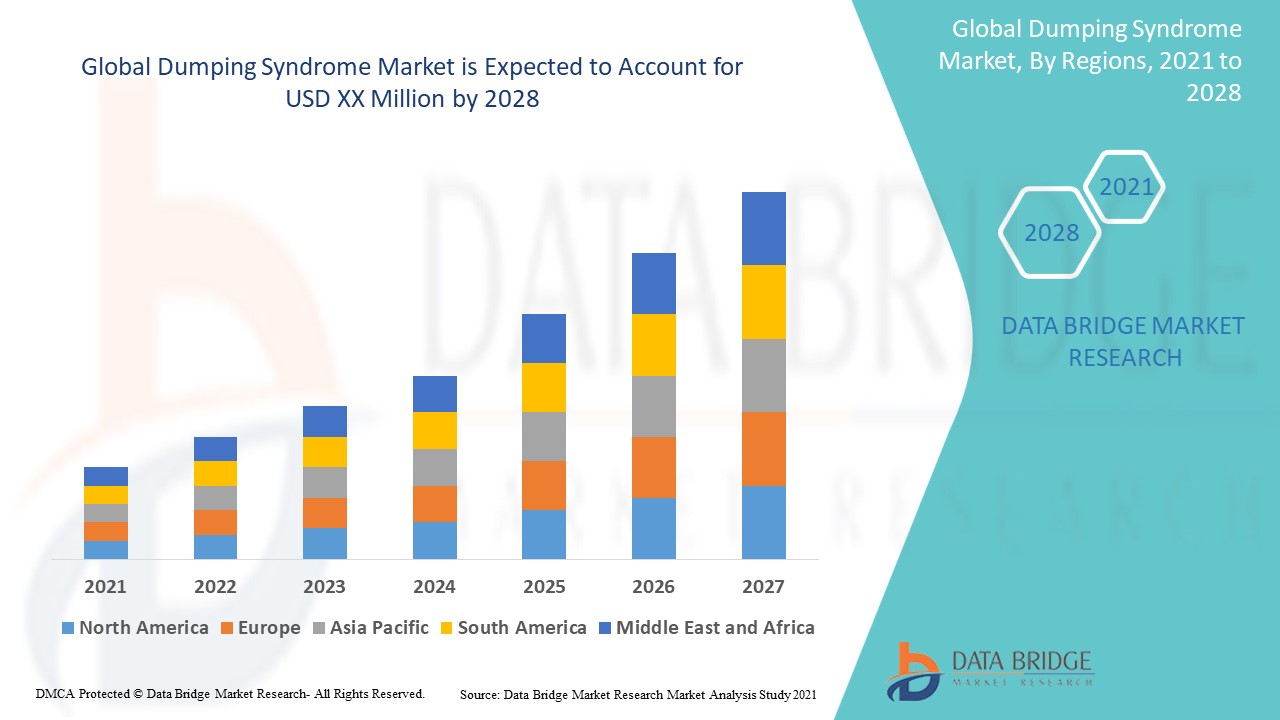
The global dumping syndrome market size was valued at USD 1.57 billion in 2024 and is projected to reach USD 2.32 billion by 2032, with a CAGR of 4.98% during the forecast period of 2025 to 2032. In addition to the insights on market scenarios such as market value, growth rate, segmentation, geographical coverage, and major players, the market reports curated by the Data Bridge Market Research also include depth expert analysis, patient epidemiology, pipeline analysis, pricing analysis, and regulatory framework.
Dumping Syndrome Market Trends
“Growth in Demand for Nutritional Therapies”
One key trend helping the growth of the dumping syndrome market is the increasing demand for nutritional therapies. As the condition is linked to the rapid movement of food into the small intestine, patients often face malnutrition and electrolyte imbalances. Nutritional therapies, including specialized diets and intravenous nutrient solutions, have become a crucial part of managing symptoms. For instance, the use of low-carbohydrate, high-protein diets and meal scheduling is gaining traction to alleviate symptoms such as diarrhea and abdominal cramps. Companies are also developing innovative nutritional supplements tailored to improve digestion and nutrient absorption, contributing to the expansion of this market.
Report Scope and Dumping Syndrome Market Segmentation
|
Attributes |
Dumping Syndrome Key Market Insights |
|
Segments Covered |
|
|
Countries Covered |
U.S., Canada and Mexico in North America, Germany, France, U.K., Netherlands, Switzerland, Belgium, Russia, Italy, Spain, Turkey, Rest of Europe in Europe, China, Japan, India, South Korea, Singapore, Malaysia, Australia, Thailand, Indonesia, Philippines, Rest of Asia-Pacific (APAC) in the Asia-Pacific (APAC), Saudi Arabia, U.A.E, South Africa, Egypt, Israel, Rest of Middle East and Africa (MEA) as a part of Middle East and Africa (MEA), Brazil, Argentina and Rest of South America as part of South America |
|
Key Market Players |
Takeda Pharmaceutical Company Limited (Japan), Pfizer Inc. (U.S.), Novartis AG (Switzerland), Johnson & Johnson (U.S.), GSK plc (U.K.), AstraZeneca plc (U.K.), Sanofi S.A. (France), Eli Lilly and Company (U.S.), Merck & Co., Inc. (U.S.), Bristol-Myers Squibb Company (U.S.), AbbVie Inc. (U.S.), Amgen Inc. (U.S.), Bayer AG (Germany), Roche Holding AG (Switzerland), Teva Pharmaceutical Industries Ltd. (Israel), Novo Nordisk A/S (Denmark), Shire plc (Ireland), Sun Pharmaceutical Industries Ltd. (India), and Mylan N.V. (Netherlands) |
|
Market Opportunities |
|
|
Value Added Data Infosets |
In addition to the insights on market scenarios such as market value, growth rate, segmentation, geographical coverage, and major players, the market reports curated by the Data Bridge Market Research also include depth expert analysis, patient epidemiology, pipeline analysis, pricing analysis, and regulatory framework. |
Dumping Syndrome Market Definition
Dumping syndrome is a condition that occurs when food, especially sugar, moves too quickly from the stomach to the small intestine. It commonly happens after stomach surgery, such as gastric bypass or gastrectomy. Symptoms include nausea, vomiting, diarrhea, dizziness, rapid heartbeat, and sweating. These symptoms are caused by the sudden influx of food into the small intestine, leading to an overload of digestive enzymes and hormonal changes. Dumping syndrome can be managed through dietary changes, such as eating smaller, more frequent meals, avoiding high-sugar foods, and consuming more protein and fiber to slow digestion.
Dumping Syndrome Market Dynamics
Drivers
- Increased Prevalence of Gastric Surgeries
The increased prevalence of gastric surgeries plays a significant role in driving the dumping syndrome market. Gastric surgeries, particularly gastric bypass and gastrectomy, are common treatments for obesity and other related conditions. These procedures often lead to the development of dumping syndrome, where undigested food moves too quickly through the small intestine. The rise in obesity rates globally has resulted in a higher number of patients opting for bariatric surgeries, consequently increasing cases of dumping syndrome. For instance, a 2019 study reported that up to 50% of gastric bypass patients experienced symptoms of dumping syndrome, leading to a greater need for effective treatment and management options. This trend accelerates market demand for both pharmaceutical and surgical interventions.
- Rising Number of Patients Seeking Minimally Invasive Treatment
The rising number of patients seeking minimally invasive treatment options is a significant driver in the dumping syndrome market. As individuals become more health-conscious and prefer less invasive methods, there is an increasing demand for treatments that offer quicker recovery times, fewer complications, and reduced hospital stays. Minimally invasive therapies, such as endoscopic procedures and advanced laparoscopic surgeries, are gaining popularity for treating conditions such as dumping syndrome. This trend encourages healthcare providers and researchers to invest in the development of innovative, non-invasive treatment options. Consequently, the growth in patient preference for these therapies is driving the market, leading to an expansion in available treatment options and improving overall patient outcomes.
Opportunities
- Growing Focus on Personalized Medicine
The growing trend toward personalized medicine presents a significant opportunity in the dumping syndrome market. Personalized treatments, which are tailored to an individual’s genetic makeup, health status, and lifestyle, enable more effective management of dumping syndrome. This approach allows for the development of targeted therapies, such as specific medications or nutritional strategies, that cater to the unique needs of each patient. As awareness and demand for personalized care increase, there is a growing need for customized solutions in the management of dumping syndrome. This creates new opportunities for pharmaceutical companies and healthcare providers to innovate and expand their offerings, ensuring better outcomes and patient satisfaction.
- Chronic Diseases Linked to Dumping Syndrome
The rising prevalence of chronic diseases such as diabetes creates significant opportunities in the dumping syndrome market. Diabetes, particularly when coupled with weight-loss surgeries, can mimic or complicate the symptoms of dumping syndrome, leading to challenges in diagnosis and treatment. As diabetes rates continue to climb globally, the demand for effective treatments for both conditions increases. This dual health concern creates an opportunity for the development of specialized treatment options and diagnostic tools that address both diabetes and dumping syndrome. In addition, healthcare providers are looking for integrated solutions to manage these co-occurring conditions, further driving market growth and fostering innovation in therapeutic approaches.
Restraints/Challenges
- High Treatment Costs
High treatment costs pose a significant challenge for the dumping syndrome market. Surgical procedures, such as gastrectomy, and long-term medical management for severe cases can be financially burdensome, particularly in developing countries. The expensive nature of these treatments limits accessibility for patients, particularly those without adequate insurance or financial resources. As a result, many patients may forgo or delay necessary treatment, leading to a potential worsening of their condition. This financial barrier reduces overall patient population seeking care, thus hindering the market growth. The inability to afford treatment not only impacts individuals but also slows down the demand for new therapeutic solutions in the market.
- Side Effects of Existing Treatments
Existing treatments for dumping syndrome, such as medications to control symptoms, often come with side effects such as nausea, fatigue, dizziness, or even worsening gastrointestinal issues. These adverse effects can significantly impact a patient's quality of life, leading to hesitancy in continuing treatment. As a result, many patients may discontinue their medication or seek alternative therapies, reducing patient compliance. This non-adherence to prescribed treatments limits the market's potential for growth, as pharmaceutical companies may face difficulties in gaining traction with their products. The persistence of side effects deters both healthcare providers and patients from embracing current treatment options, further hindering the overall adoption of therapies in the market.
This market report provides details of new recent developments, trade regulations, import-export analysis, production analysis, value chain optimization, market share, impact of domestic and localized market players, analyses opportunities in terms of emerging revenue pockets, changes in market regulations, strategic market growth analysis, market size, category market growths, application niches and dominance, product approvals, product launches, geographic expansions, technological innovations in the market. To gain more info on the market contact Data Bridge Market Research for an Analyst Brief, our team will help you take an informed market decision to achieve market growth.
Dumping Syndrome Market Scope
The market is segmented on the basis of treatment, diagnosis, phases, symptoms, dosage, route of administration, end-users and distribution channel. The growth amongst these segments will help you analyze meagre growth segments in the industries and provide the users with a valuable market overview and market insights to help them make strategic decisions for identifying core market applications.
Treatment
- Medication
- Surgery
- Others
Diagnosis
- Gastric Emptying Test
- Glucose Tolerance Test
- Upper GI Series
- Upper GI Endoscopy
- Others
Phase
- Early Dumping Phase
- Late Dumping Phase
Symptoms
- Bloating
- Weakness
- Dizziness
- Hunger
- Confusion
- Rapid Heart Rate
- Sweating
- Fatigue
- Shaking
- Others
Dosage
- Tablet
- Injection
- Others
Route of Administration
- Oral
- Intravenous
- Others
End-Users
- Clinic
- Hospital
- Others
Distribution Channel
- Hospital Pharmacy
- Retail Pharmacy
- Online Pharmacy
Dumping Syndrome Market Regional Analysis
The market is analysed and market size insights and trends are provided by country, treatment, diagnosis, phases, symptoms, dosage, route of administration, end-users and distribution channel as referenced above.
The countries covered in the market report are U.S., Canada, Mexico in North America, Germany, Sweden, Poland, Denmark, Italy, U.K., France, Spain, Netherland, Belgium, Switzerland, Turkey, Russia, Rest of Europe in Europe, Japan, China, India, South Korea, New Zealand, Vietnam, Australia, Singapore, Malaysia, Thailand, Indonesia, Philippines, Rest of Asia-Pacific (APAC) in Asia-Pacific (APAC), Brazil, Argentina, Rest of South America as a part of South America, U.A.E, Saudi Arabia, Oman, Qatar, Kuwait, South Africa, Rest of Middle East and Africa (MEA) as a part of Middle East and Africa (MEA)
North America is expected to dominate the dumping syndrome market due to the rising awareness about diseases, health related problems arising due to presence of major key players, rise in the patient population with upper GI diseases, increasing research and development activities and well-developed healthcare infrastructure in this region.
Asia-Pacific is expected to grow during the forecast period due to the rising investment in the healthcare sector, huge patient population and growing demand for new treatment options for gastrointestinal diseases.
The country section of the report also provides individual market impacting factors and changes in regulation in the market domestically that impacts the current and future trends of the market. Data points such as down-stream and upstream value chain analysis, technical trends and porter's five forces analysis, case studies are some of the pointers used to forecast the market scenario for individual countries. Also, the presence and availability of global brands and their challenges faced due to large or scarce competition from local and domestic brands, impact of domestic tariffs and trade routes are considered while providing forecast analysis of the country data.
Dumping Syndrome Market Share
The market competitive landscape provides details by competitor. Details included are company overview, company financials, revenue generated, market potential, investment in research and development, new market initiatives, global presence, production sites and facilities, production capacities, company strengths and weaknesses, product launch, product width and breadth, application dominance. The above data points provided are only related to the companies' focus related to market.
Dumping Syndrome Market Leaders Operating in the Market Are:
- Takeda Pharmaceutical Company Limited (Japan)
- Pfizer Inc. (U.S.)
- Novartis AG (Switzerland)
- Johnson & Johnson (U.S.)
- GSK plc (U.K.)
- AstraZeneca plc (U.K.)
- Sanofi S.A. (France)
- Eli Lilly and Company (U.S.)
- Merck & Co., Inc. (U.S.)
- Bristol-Myers Squibb Company (U.S.)
- AbbVie Inc. (U.S.)
- Amgen Inc. (U.S.)
- Bayer AG (Germany)
- Roche Holding AG (Switzerland)
- Teva Pharmaceutical Industries Ltd. (Israel)
- Novo Nordisk A/S (Denmark)
- Shire plc (Ireland)
- Sun Pharmaceutical Industries Ltd. (India)
- Mylan N.V. (Netherlands)
SKU-
Accédez en ligne au rapport sur le premier cloud mondial de veille économique
- Tableau de bord d'analyse de données interactif
- Tableau de bord d'analyse d'entreprise pour les opportunités à fort potentiel de croissance
- Accès d'analyste de recherche pour la personnalisation et les requêtes
- Analyse de la concurrence avec tableau de bord interactif
- Dernières actualités, mises à jour et analyse des tendances
- Exploitez la puissance de l'analyse comparative pour un suivi complet de la concurrence
Méthodologie de recherche
La collecte de données et l'analyse de l'année de base sont effectuées à l'aide de modules de collecte de données avec des échantillons de grande taille. L'étape consiste à obtenir des informations sur le marché ou des données connexes via diverses sources et stratégies. Elle comprend l'examen et la planification à l'avance de toutes les données acquises dans le passé. Elle englobe également l'examen des incohérences d'informations observées dans différentes sources d'informations. Les données de marché sont analysées et estimées à l'aide de modèles statistiques et cohérents de marché. De plus, l'analyse des parts de marché et l'analyse des tendances clés sont les principaux facteurs de succès du rapport de marché. Pour en savoir plus, veuillez demander un appel d'analyste ou déposer votre demande.
La méthodologie de recherche clé utilisée par l'équipe de recherche DBMR est la triangulation des données qui implique l'exploration de données, l'analyse de l'impact des variables de données sur le marché et la validation primaire (expert du secteur). Les modèles de données incluent la grille de positionnement des fournisseurs, l'analyse de la chronologie du marché, l'aperçu et le guide du marché, la grille de positionnement des entreprises, l'analyse des brevets, l'analyse des prix, l'analyse des parts de marché des entreprises, les normes de mesure, l'analyse globale par rapport à l'analyse régionale et des parts des fournisseurs. Pour en savoir plus sur la méthodologie de recherche, envoyez une demande pour parler à nos experts du secteur.
Personnalisation disponible
Data Bridge Market Research est un leader de la recherche formative avancée. Nous sommes fiers de fournir à nos clients existants et nouveaux des données et des analyses qui correspondent à leurs objectifs. Le rapport peut être personnalisé pour inclure une analyse des tendances des prix des marques cibles, une compréhension du marché pour d'autres pays (demandez la liste des pays), des données sur les résultats des essais cliniques, une revue de la littérature, une analyse du marché des produits remis à neuf et de la base de produits. L'analyse du marché des concurrents cibles peut être analysée à partir d'une analyse basée sur la technologie jusqu'à des stratégies de portefeuille de marché. Nous pouvons ajouter autant de concurrents que vous le souhaitez, dans le format et le style de données que vous recherchez. Notre équipe d'analystes peut également vous fournir des données sous forme de fichiers Excel bruts, de tableaux croisés dynamiques (Fact book) ou peut vous aider à créer des présentations à partir des ensembles de données disponibles dans le rapport.