


Global Pediatric Electronic Medical Records (EMR) Software Market Segmentation, By Product Type (Cloud Based and On Premises), Applications (Large Enterprise, Small and Medium-sized Enterprises, and Others), End Users (Hospitals, Diagnostic Centers, and Others), Components (Software Services Consulting and Hardware) - Industry Trends and Forecast to 2032
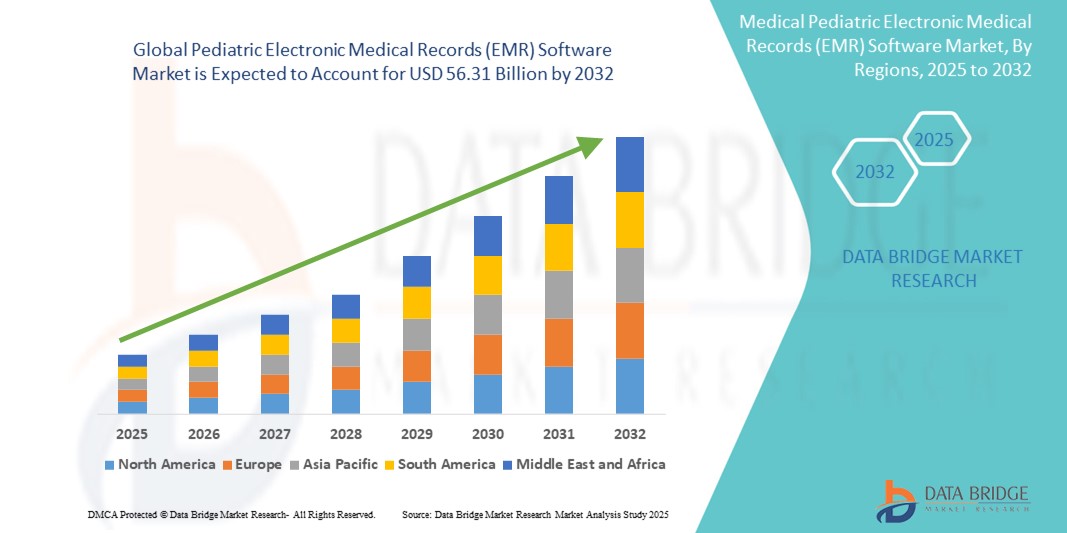
Pediatric Electronic Medical Records (EMR) Software Market Size
- The global pediatric electronic medical records (EMR) software market size was valued at USD 34.02 billion in 2024 and is expected to reach USD 56.31 billion by 2032, at a CAGR of 6.50% during the forecast period
- The market growth is largely fueled by the increasing emphasis on child-specific healthcare documentation, the rising pediatric patient population, and the growing need for tailored EMR systems that meet pediatric-specific requirements such as immunization tracking and growth charting
- Furthermore, the expanding implementation of digital health solutions, government incentives for EMR adoption, and the integration of AI and telemedicine capabilities into pediatric EMR platforms are driving their demand in clinics and hospitals
Pediatric Electronic Medical Records (EMR) Software Market Analysis
- Pediatric EMR software, designed specifically to address the clinical workflows and documentation needs unique to child and adolescent care, is becoming an essential tool in pediatric healthcare settings due to its features such as vaccination tracking, age-based dosage calculation, and growth chart monitoring
- The accelerating demand for pediatric EMR systems is primarily fueled by the digital transformation in healthcare, growing pediatric patient volumes, and rising expectations for accurate, efficient, and personalized healthcare delivery for children
- North America dominated the pediatric electronic medical records (EMR) software market with the largest revenue share of 40.5% in 2024, driven by the presence of advanced healthcare infrastructure, high EMR adoption rates, supportive government policies such as the HITECH Act in the U.S., and the integration of telehealth and AI-driven functionalities tailored for pediatric use
- Asia-Pacific is expected to be the fastest growing region in the pediatric electronic medical records (EMR) software market during the forecast period due to expanding healthcare access, increased government spending on pediatric care, and the gradual digitization of hospitals and clinics
- The cloud-based segment dominated the pediatric electronic medical records (EMR) software market with a market share of 60.5% in 2024, owing to its scalability, cost-efficiency, and increased preference among small to mid-sized pediatric practices seeking flexible and remotely accessible EMR solutions
Report Scope and Pediatric Electronic Medical Records (EMR) Software Market Segmentation
|
Attributes |
Pediatric Electronic Medical Records (EMR) Software Key Market Insights |
|
Segments Covered |
|
|
Countries Covered |
North America
Europe
Asia-Pacific
Middle East and Africa
South America
|
|
Key Market Players |
|
|
Market Opportunities |
|
|
Value Added Data Infosets |
In addition to the insights on market scenarios such as market value, growth rate, segmentation, geographical coverage, and major players, the market reports curated by the Data Bridge Market Research also include in-depth expert analysis, pricing analysis, brand share analysis, consumer survey, demography analysis, supply chain analysis, value chain analysis, raw material/consumables overview, vendor selection criteria, PESTLE Analysis, Porter Analysis, and regulatory framework. |
Pediatric Electronic Medical Records (EMR) Software Market Trends
“Increased AI Integration and Personalized Pediatric Care”
- A significant and accelerating trend in the global pediatric EMR software market is the integration of artificial intelligence (AI) and advanced analytics to enhance pediatric care delivery and optimize clinical decision-making. AI is transforming EMR platforms by enabling predictive analytics for early disease detection, automating growth tracking, and delivering real-time alerts based on pediatric-specific parameters
- For instance, EMR systems such as PCC EHR and eClinicalWorks are incorporating AI tools that assist pediatricians by flagging abnormal growth trends, automating vaccine schedule reminders, and supporting diagnosis through intelligent symptom correlation
- AI-powered voice dictation is also gaining popularity, reducing the documentation burden on pediatricians by allowing them to enter notes using natural language. This enables clinicians to spend more time on patient care and less on administrative tasks
- In addition, pediatric EMR platforms are increasingly offering integration with telehealth services, wearable devices, and parental apps, creating a comprehensive digital care environment that improves accessibility and outcomes for children
- As personalization and real-time responsiveness become expected features, EMR vendors are focused on developing more intuitive, user-friendly, and pediatric-specific platforms. This trend is setting new standards for clinical efficiency, patient engagement, and data-driven pediatric care
- The rising demand for intelligent, integrated, and age-appropriate health IT solutions is reshaping the expectations of pediatric healthcare providers, driving innovation and competition among EMR vendors to deliver smarter, more responsive solutions
Pediatric Electronic Medical Records (EMR) Software Market Dynamics
Driver
“Rising Need for Specialized Pediatric Documentation and Compliance”
- The increasing demand for specialized EMR systems that cater to pediatric healthcare needs is a primary driver of market growth. Pediatric care involves unique requirements such as weight-based medication dosing, vaccination scheduling, and growth monitoring, which standard EMR platforms often do not accommodate
- For instance, governments and regulatory bodies in regions such as North America and Europe are encouraging EMR adoption through funding initiatives and mandates aimed at improving pediatric healthcare documentation and safety. For example, programs under the HITECH Act in the U.S. have significantly advanced EMR adoption in pediatric practices.
- In addition, the growing pediatric population worldwide and the rising burden of chronic conditions in children such as asthma, diabetes, and obesity are fueling demand for advanced EMR platforms that support longitudinal tracking and early interventions.
- The trend toward digitalization in healthcare infrastructure, particularly in emerging markets, is also propelling the expansion of cloud-based pediatric EMR platforms that are cost-effective, scalable, and accessible in remote or underserved areas
- With enhanced clinical workflows, improved patient safety, and regulatory compliance, pediatric-specific EMRs are becoming indispensable tools for modern healthcare delivery in pediatric settings
Restraint/Challenge
“Data Security Concerns and Integration Complexities”
- Despite the benefits, pediatric EMR adoption faces challenges related to data privacy, system interoperability, and usability. Pediatric EMRs store sensitive health data of minors, making security breaches particularly concerning for parents and providers asuch as
- For instance, ensuring compliance with strict healthcare data protection regulations such as HIPAA (U.S.) and GDPR (EU) is complex and often requires continuous investment in secure infrastructure and staff training
- Another significant barrier is the complexity of integrating pediatric EMR systems with other healthcare IT systems such as laboratory information systems, telehealth platforms, and e-prescription services. Smaller practices with limited IT resources often face difficulties in achieving seamless data exchange and interoperability.
- Furthermore, the initial setup costs and learning curve for pediatric EMR systems, especially in low-resource settings, can be a deterrent. Some pediatricians also express concerns about user-friendliness and workflow interruptions caused by poorly designed interfaces.
- Addressing these challenges through robust cybersecurity protocols, standardized data exchange frameworks and intuitive, pediatric-focused system designs will be crucial for encouraging broader adoption and ensuring the long-term success of pediatric EMR solutions
Pediatric Electronic Medical Records (EMR) Software Market Scope
The market is segmented on the basis of product type, application, end user, and component.
- By Product Type
On the basis of product type, the pediatric electronic medical records (EMR) software market is segmented into cloud-based and on-premises. The cloud-based segment dominated the market with the largest market revenue share of around 60.5% in 2024, driven by its scalability, remote accessibility, and cost-effectiveness. Cloud-based solutions allow pediatric clinics and hospitals to access patient records from any device with internet connectivity, improving workflow efficiency and data availability. These platforms are particularly attractive for small and mid-sized pediatric practices, which benefit from lower upfront costs and minimal IT maintenance requirements.
The on-premises segment is anticipated to grow steadily during forecast period, especially among large hospitals and institutions that prioritize direct control over data, system customization, and compliance with strict security policies. While more resource-intensive, on-premises deployments offer higher data ownership and are often favored in regions with regulatory constraints on cloud usage.
- By Application
On the basis of application, the pediatric electronic medical records (EMR) software market is segmented into large enterprises, small and medium-sized enterprises (SMEs), and others. The large enterprises segment held the largest market share in 2024 at 60%, attributed to the extensive implementation of digital healthcare infrastructure across multi-specialty hospitals and healthcare chains. These organizations require robust EMR systems with advanced analytics, telehealth capabilities, and interoperability with other hospital systems.
The SMEs segment is expected to witness the fastest growth from 2025 to 2032, fueled by increased government support, growing awareness, and the availability of budget-friendly, cloud-based EMR solutions tailored to the needs of small pediatric practices. This segment benefits from lightweight, user-friendly EMR platforms that require minimal training and IT infrastructure.
- By End User
On the basis of end user, the pediatric electronic medical records (EMR) software market is segmented into hospitals, diagnostic centers, and others. The hospitals segment dominated the market with the largest revenue share of about 50% in 2024, owing to the rising need for integrated patient management systems that facilitate continuous pediatric care, track immunization records, and manage chronic pediatric conditions. Hospitals also benefit from centralized data sharing and comprehensive clinical workflow management through EMRs.
The diagnostic centers segment is growing at fastest rate during forecast period, due to the increasing volume of pediatric tests and lab diagnostics that require digital record keeping and coordination with pediatricians
- By Component
On the basis of components, the pediatric electronic medical records (EMR) software market is segmented into software services, consulting, and hardware. The software services segment led the market in 2024 with a revenue share driven by growing demand for software licensing, customization, upgrades, and support services. As pediatric EMR platforms become more feature-rich and AI-integrated, ongoing service and maintenance remain crucial for effective system performance.
The consulting segment is projected to grow significantly during forecast period, supported by increased investments in healthcare digital transformation strategies, especially in North America and Europe. Healthcare facilities are relying on consulting providers to optimize EMR implementation, training, and compliance.
Pediatric Electronic Medical Records (EMR) Software Market Regional Analysis
- North America dominated the pediatric electronic medical records (EMR) software market with the largest revenue share of 40.5% in 2024, driven by the presence of advanced healthcare infrastructure, high EMR adoption rates, supportive government policies such as the HITECH Act in the U.S., and the integration of telehealth and AI-driven functionalities tailored for pediatric use
- Providers in the region prioritize pediatric-specific EMR systems for their ability to support features such as vaccination tracking, growth charting, and age-based dosage adjustments, ensuring higher quality pediatric care
- The strong presence of key health IT vendors, high digital literacy among healthcare professionals, and increasing demand for integrated care and telehealth services further contribute to market growth. The region’s continued investment in healthcare innovation and regulatory compliance establishes pediatric EMRs as an essential tool in modern child healthcare delivery
U.S. Pediatric Electronic Medical Records (EMR) Software Market Insight
The U.S. pediatric electronic medical records (EMR) software market captured the largest revenue share in North America in 2024, driven by robust healthcare IT infrastructure, favorable government incentives such as the HITECH Act, and a strong focus on pediatric-specific care quality. The widespread adoption of digital health records in pediatric practices, combined with the integration of AI, telehealth, and mobile health apps, is accelerating EMR usage. Moreover, increasing demand for customized pediatric features such as immunization scheduling and growth monitoring continues to push innovation and market expansion across the country.
Europe Pediatric Electronic Medical Records (EMR) Software Market Insight
The Europe pediatric electronic medical records (EMR) software market is projected to grow at a substantial CAGR during the forecast period, supported by strong government policies promoting digital healthcare and a growing emphasis on data-driven pediatric care. The region is witnessing an increase in pediatric chronic conditions and a focus on early intervention strategies, driving demand for EMRs with advanced analytical capabilities. In addition, healthcare digitization initiatives across countries such as Germany, France, and the Nordics are supporting EMR adoption in both public and private pediatric healthcare institutions.
U.K. Pediatric Electronic Medical Records (EMR) Software Market Insight
The U.K. pediatric electronic medical records (EMR) software market is expected to grow at a noteworthy CAGR over the forecast period, driven by national-level investments in NHS digitalization programs and growing awareness of pediatric health monitoring. Pediatric clinics and general practices are increasingly adopting EMRs for improved compliance, reporting, and patient engagement. The focus on integrated child health records, especially in managing vaccination histories and developmental milestones, supports the expansion of pediatric EMR solutions across both primary and secondary care settings.
Germany Pediatric Electronic Medical Records (EMR) Software Market Insight
The Germany pediatric electronic medical records (EMR) software market is anticipated to expand at a considerable CAGR during the forecast period, fueled by regulatory mandates for electronic health records and strong innovation in healthcare IT. Germany’s emphasis on secure, interoperable digital platforms aligns well with the increasing demand for pediatric-specific EMRs that support data sharing between providers, schools, and family care teams. As digitization accelerates in the country’s healthcare sector, pediatric-focused EMR vendors are gaining traction among hospitals and specialized care providers
Asia-Pacific Pediatric Electronic Medical Records (EMR) Software Market Insight
The Asia-Pacific pediatric electronic medical records (EMR) software market is poised to grow at the fastest CAGR from 2025 to 2032, driven by improving healthcare infrastructure, rising child populations, and government initiatives for EMR adoption in countries such as China, Japan, and India. The shift toward digital recordkeeping, especially in urban and semi-urban areas, is opening opportunities for cloud-based pediatric EMR solutions. Expanding pediatric healthcare services and medical tourism are further contributing to regional growth.
Japan Pediatric Electronic Medical Records (EMR) Software Market Insight
The Japan pediatric electronic medical records (EMR) software market is gaining traction due to the nation’s highly digital healthcare environment and increasing pediatric chronic disease burden. EMR systems are being implemented widely in pediatric departments of hospitals and clinics, with a focus on improving patient outcomes through precision care. Integration with national health databases, remote monitoring tools, and electronic vaccination tracking systems is further fueling demand. Pediatric EMRs also support Japan’s aging workforce of healthcare providers by streamlining administrative tasks.
India Pediatric Electronic Medical Records (EMR) Software Market Insight
The India pediatric electronic medical records (EMR) software market accounted for the largest revenue share in Asia Pacific in 2024, driven by rapid urbanization, the rise of private pediatric clinics, and strong digital health policies under programs such as Ayushman Bharat Digital Mission. Increasing awareness among parents about child health documentation and the growing network of pediatric care providers are boosting the use of EMRs. Affordable cloud-based solutions and domestic tech innovation are making pediatric EMRs more accessible across tier 1 and tier 2 cities.
Pediatric Electronic Medical Records (EMR) Software Market Share
The pediatric electronic medical records (EMR) software industry is primarily led by well-established companies, including:
- athenahealth, Inc. (U.S.)
- eClinicalWorks, LLC (U.S.)
- NextGen Healthcare, Inc. (U.S.)
- Cerner Corporation (U.S.)
- Epic Systems Corporation (U.S.)
- Greenway Health, LLC (U.S.)
- Allscripts Healthcare Solutions, Inc. (U.S.)
- Practice Fusion, Inc. (U.S.)
- AdvancedMD, Inc. (U.S.)
- DrChrono Inc. (U.S.)
- CareCloud, Inc. (U.S.)
- Kareo, Inc. (U.S.)
- Nexus Clinical, LLC (U.S.)
- Insta Health Solutions Pvt. Ltd. (India)
- Cloudpital Health IT (Saudi Arabia)
- SoftClinic Software by JVS Group (India)
- Birlamedisoft Pvt. Ltd. (India)
What are the Recent Developments in Global Pediatric Electronic Medical Records (EMR) Software Market?
- In April 2024, athenahealth, Inc. announced the launch of a pediatric-specific enhancement package for its cloud-based EMR platform. The update includes growth chart analytics, age-adjusted dosing calculators, and vaccine management tools tailored for pediatricians. This move reflects athenahealth’s commitment to addressing the distinct clinical needs of pediatric care providers and improving workflow efficiency through data-driven innovations
- In March 2024, eClinicalWorks integrated AI-powered voice dictation and smart charting into its pediatric EMR suite, allowing healthcare providers to document visits using natural language and receive real-time prompts for preventive care measures. This innovation supports clinicians by reducing administrative burdens and enhancing care quality, particularly in high-volume pediatric practices
- In February 2024, PCC (Physician’s Computer Company) announced a strategic partnership with the Children’s Health Alliance to implement customized EMR modules across affiliated pediatric clinics in the U.S. The collaboration focuses on improving care coordination, immunization tracking, and chronic disease management, highlighting the growing importance of pediatric-specific data systems in multi-provider networks
- In January 2024, NextGen Healthcare, Inc. introduced telehealth and remote patient monitoring features within its pediatric EMR platform, allowing seamless integration of virtual consultations, wearable device data, and home-based vitals tracking. This development is particularly impactful in rural and underserved regions, expanding access to pediatric care and improving follow-up compliance
- In December 2023, Cerner Corporation (now part of Oracle Health) launched an initiative in Southeast Asia to expand its pediatric EMR offerings to government-funded child health programs. The program focuses on digitizing immunization records, enabling mobile health data entry, and enhancing maternal and child health monitoring through localized EMR platforms, underscoring Cerner’s commitment to global child health equity through digital transformation
SKU-
Accédez en ligne au rapport sur le premier cloud mondial de veille économique

- Tableau de bord d'analyse de données interactif
- Tableau de bord d'analyse d'entreprise pour les opportunités à fort potentiel de croissance
- Accès d'analyste de recherche pour la personnalisation et les requêtes
- Analyse de la concurrence avec tableau de bord interactif
- Dernières actualités, mises à jour et analyse des tendances
- Exploitez la puissance de l'analyse comparative pour un suivi complet de la concurrence
Méthodologie de recherche
La collecte de données et l'analyse de l'année de base sont effectuées à l'aide de modules de collecte de données avec des échantillons de grande taille. L'étape consiste à obtenir des informations sur le marché ou des données connexes via diverses sources et stratégies. Elle comprend l'examen et la planification à l'avance de toutes les données acquises dans le passé. Elle englobe également l'examen des incohérences d'informations observées dans différentes sources d'informations. Les données de marché sont analysées et estimées à l'aide de modèles statistiques et cohérents de marché. De plus, l'analyse des parts de marché et l'analyse des tendances clés sont les principaux facteurs de succès du rapport de marché. Pour en savoir plus, veuillez demander un appel d'analyste ou déposer votre demande.
La méthodologie de recherche clé utilisée par l'équipe de recherche DBMR est la triangulation des données qui implique l'exploration de données, l'analyse de l'impact des variables de données sur le marché et la validation primaire (expert du secteur). Les modèles de données incluent la grille de positionnement des fournisseurs, l'analyse de la chronologie du marché, l'aperçu et le guide du marché, la grille de positionnement des entreprises, l'analyse des brevets, l'analyse des prix, l'analyse des parts de marché des entreprises, les normes de mesure, l'analyse globale par rapport à l'analyse régionale et des parts des fournisseurs. Pour en savoir plus sur la méthodologie de recherche, envoyez une demande pour parler à nos experts du secteur.
Personnalisation disponible
Data Bridge Market Research est un leader de la recherche formative avancée. Nous sommes fiers de fournir à nos clients existants et nouveaux des données et des analyses qui correspondent à leurs objectifs. Le rapport peut être personnalisé pour inclure une analyse des tendances des prix des marques cibles, une compréhension du marché pour d'autres pays (demandez la liste des pays), des données sur les résultats des essais cliniques, une revue de la littérature, une analyse du marché des produits remis à neuf et de la base de produits. L'analyse du marché des concurrents cibles peut être analysée à partir d'une analyse basée sur la technologie jusqu'à des stratégies de portefeuille de marché. Nous pouvons ajouter autant de concurrents que vous le souhaitez, dans le format et le style de données que vous recherchez. Notre équipe d'analystes peut également vous fournir des données sous forme de fichiers Excel bruts, de tableaux croisés dynamiques (Fact book) ou peut vous aider à créer des présentations à partir des ensembles de données disponibles dans le rapport.











