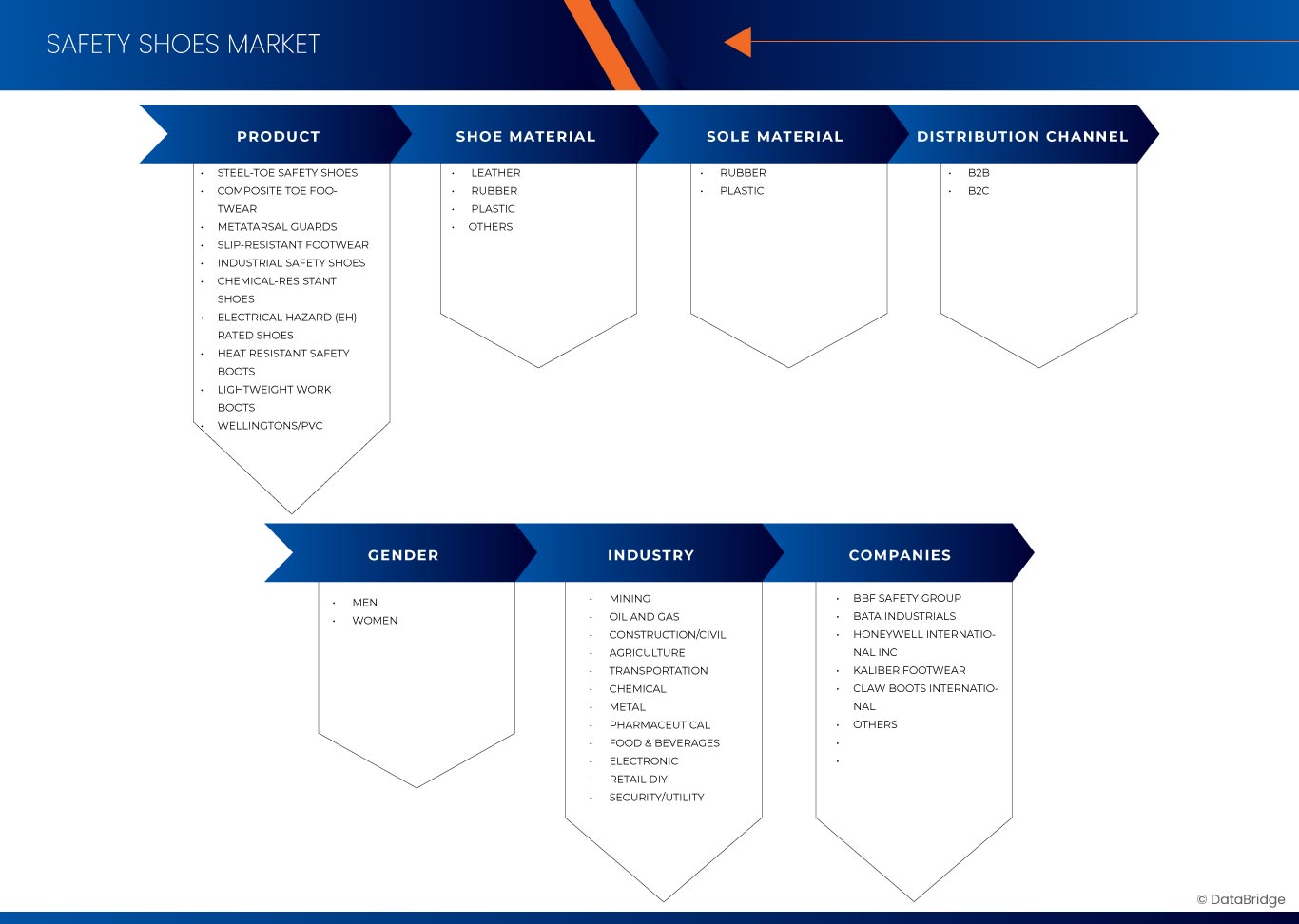
South Africa Safety Shoes Market Segmentation, By Product (Steel-Toe Safety Shoes, Composite Toe Footwear, Metatarsal Guards, Slip-Resistant Footwear, Industrial Safety Shoes, Chemical-Resistant Shoes, Electrical Hazard (EH) Rated Shoes, Heat Resistant Safety Boots, Lightweight Work Boots, Wellingtons/PVC Boots/Gumboots, Fiber Toe Safety Shoes, and Sport Safety Shoes), Shoe Material (Leather, Rubber, Plastic, and Others), Sole Material (Rubber and Plastic), Distribution Channel (B2B and B2C), Gender (Men and Women), Industry (Mining, Oil and Gas, Construction/Civil, Agriculture, Transportation, Chemical, Metal, Pharmaceutical, Food & Beverages, Electronic, Retail DIY, and Security/Utility) – Industry Trends and Forecast to 2032
Safety Shoes Market Analysis
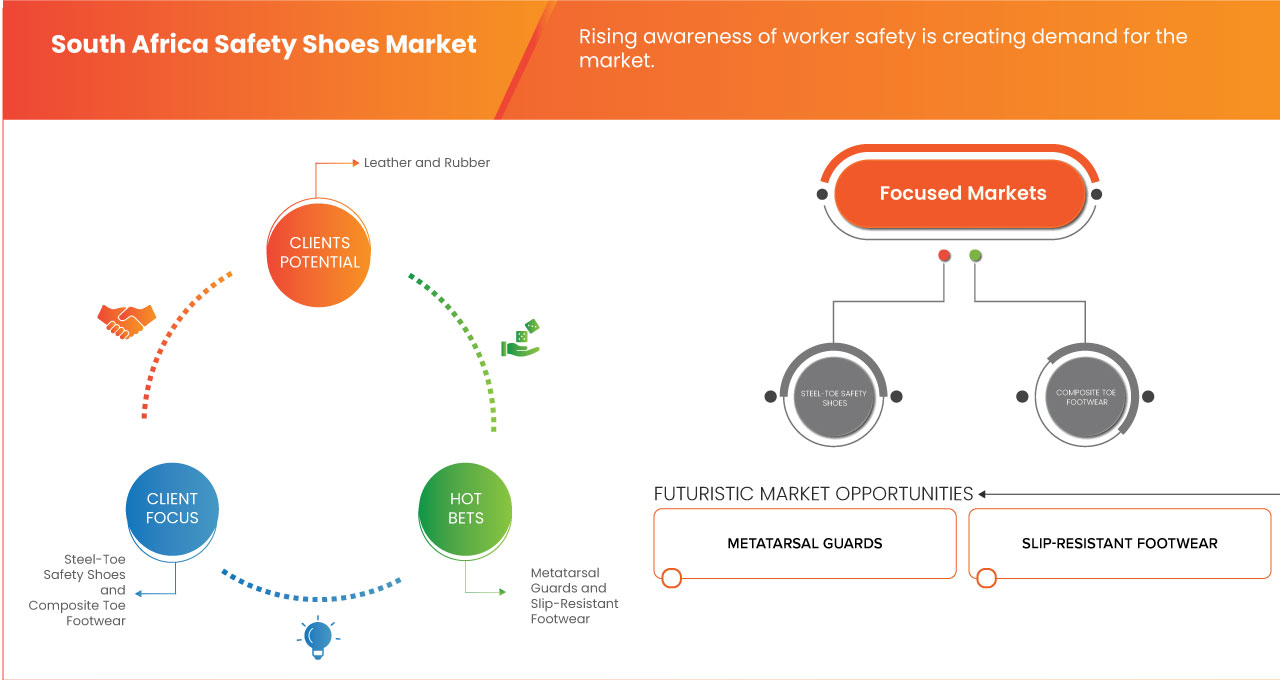
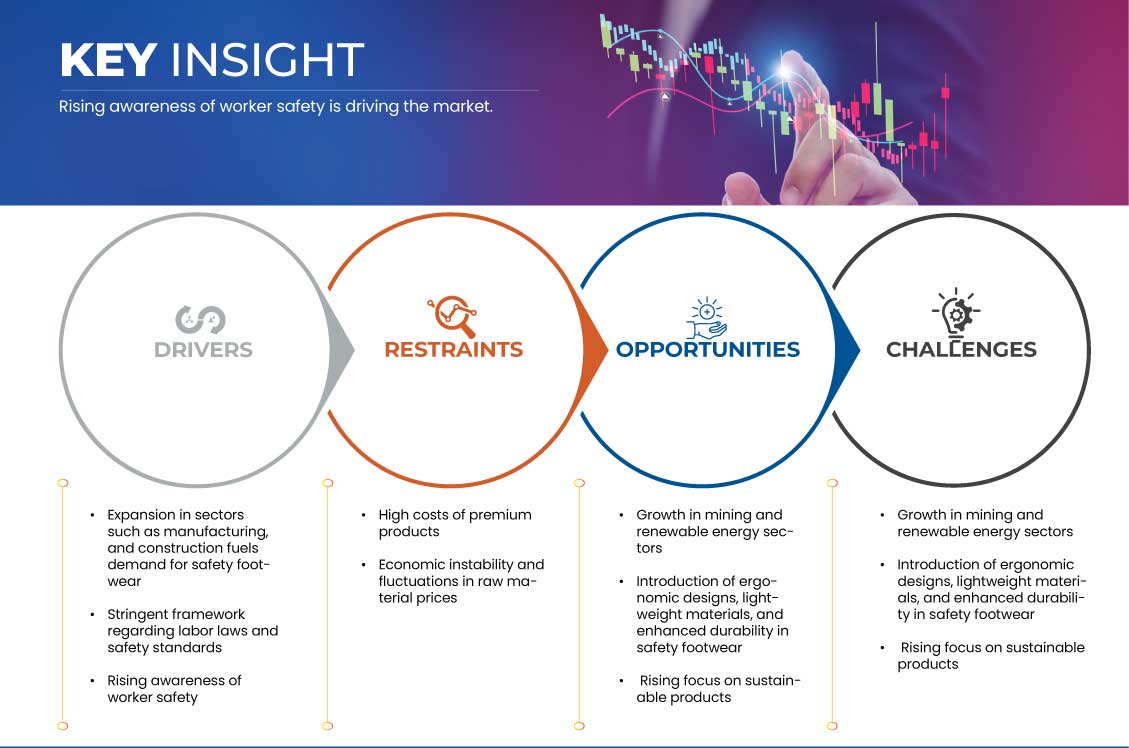
Expansion in sectors such as manufacturing, and construction fuels demand for safety footwear and stringent framework regarding labor laws and safety standards and rising awareness of worker safety. Some of the major restraints that may negatively impact the market growth are high costs of premium products and economic instability and fluctuations in raw material prices. Growth in mining and renewable energy sectors and introduction of ergonomic designs, lightweight materials, and enhanced durability in safety footwear and rising focus on sustainable products. Limited local manufacturing capabilities and availability of low-cost counterfeit products, thereby driving market growth in South Africa.
Safety Shoes Market Size
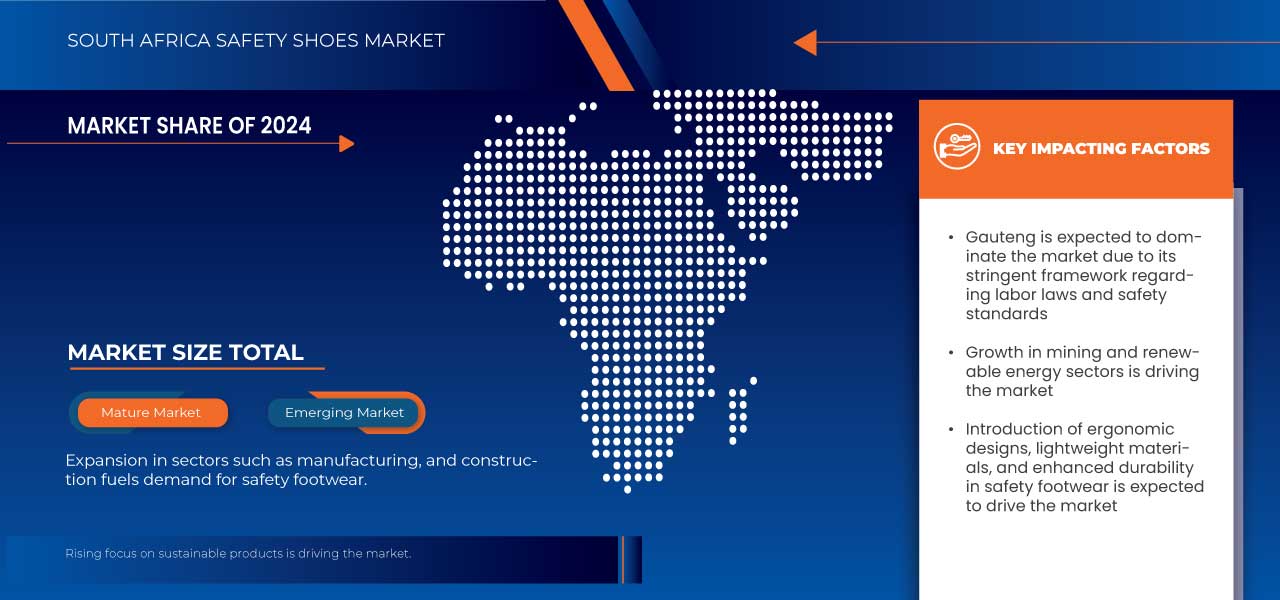
South Africa safety shoes market is expected to reach USD 227.37 million by 2032 from USD 131.13 million in 2024, growing with a substantial CAGR of 7.26% in the forecast period of 2025 to 2032.
Safety Shoes Market Trends
“Expansion in Sectors Such As Manufacturing and Construction Fuels Demand for Safety Footwear”
The expansion of sectors such as manufacturing and construction in South Africa significantly fuels the demand for safety footwear. Both industries are inherently high-risk, with workers exposed to potential hazards such as falling objects, sharp product, heavy machinery, and slippery surfaces. As a result, safety footwear has become essential in ensuring worker protection and compliance with stringent occupational health and safety regulations.
In the manufacturing sector, rapid growth and technological advancements have led to an increase in the workforce and a higher demand for Personal Protective Equipment (PPE), including safety shoes. Workers in manufacturing plants, especially those involved in heavy machinery operations or handling raw product, are highly vulnerable to foot injuries. Consequently, there is a rising trend for shoes that offer features like steel-toe caps, puncture-resistant soles, and slip-resistance to reduce injuries and accidents. With a growing number of factories and production units in South Africa, the demand for safety footwear continues to expand.
Report Scope and Market Segmentation
|
Attributes |
Safety Shoes Market Key Market Insights |
|
Segments Covered |
By Product: Steel-Toe Safety Shoes, Composite Toe Footwear, Metatarsal Guards, Slip-Resistant Footwear, Industrial Safety Shoes, Chemical-Resistant Shoes, Electrical Hazard (EH) Rated Shoes, Heat Resistant Safety Boots, Lightweight Work Boots, Wellingtons/PVC Boots/Gumboots, Fiber Toe Safety Shoes, and Sport Safety Shoes By Shoe Material: Leather, Rubber, Plastic, and Others By Sole Material: Rubber and Plastic By Distribution Channel : B2B and B2C By Gender: Men and Women By Industry: Mining, Oil and Gas, Construction/Civil, Agriculture, Transportation, Chemical, Metal, Pharmaceutical, Food & Beverages, Electronic, Retail DIY, and Security/Utility |
|
Provinces Covered |
Gauteng, Kwazulu-Natal, Western Cape, Eastern Cape, Limpopo, Mpumalanga, North West, Free State, and Northern Cape |
|
Key Market Players |
Kaliber Footwear (South Africa), Honeywell International Inc (U.S.), BBF Safety Group (South Africa), SHEQ SAFETY (South Africa), Neptun Boot (South Africa), Bata Industrials (South Africa), Claw Boots International (South Africa), uvex group (Germany), and JCB Workwear (U.K.) among others |
|
Market Opportunities |
|
|
Value Added Data Infosets |
In addition to the insights on market scenarios such as market value, growth rate, segmentation, geographical coverage, and major players, the market reports curated by the Data Bridge Market Research also include in-depth expert analysis, pricing analysis, brand share analysis, consumer survey, demography analysis, supply chain analysis, value chain analysis, raw material/consumables overview, vendor selection criteria, PESTLE Analysis, Porter Analysis, and regulatory framework. |
Safety Shoes Market Definition
Safety shoes are specialized footwear designed to protect the feet from various workplace hazards, such as falling objects, sharp product, slippery surfaces, electrical risks, and heavy machinery. They typically feature reinforced toes, often with steel or composite material, to prevent injury from impacts. Additionally, safety shoes may include slip-resistant soles, cushioning, arch support, and anti-static properties to enhance comfort and reduce fatigue.
Safety Shoes Market Dynamics
Drivers
- Stringent Framework Regarding Labor Laws and Safety Standards
South Africa has implemented a stringent framework regarding labor laws and safety standards, which plays a pivotal role in driving the demand for safety footwear across industries like manufacturing, construction, and mining. The country’s regulatory environment emphasizes worker protection and sets high standards for workplace safety, ensuring that businesses comply with regulations designed to minimize workplace injuries and fatalities.
The Occupational Health and Safety Act (OHSA) of South Africa mandates that employers must provide a safe working environment, including the provision of appropriate Personal Protective Equipment (PPE) for employees. Safety footwear is a key component of this PPE, particularly in hazardous work environments where workers face risks such as falling objects, electrical hazards, and exposure to sharp or heavy product. The law requires that employers ensure workers wear suitable safety footwear to prevent injuries, such as fractures or punctures, which could result from accidents in industries like construction and manufacturing.
South Africa's stringent labor laws and safety standards, including the Occupational Health and Safety Act, require employers to provide protective footwear in high-risk industries like construction and manufacturing. Compliance with these regulations, along with growing awareness of workplace safety, drives the demand for high-quality, protective safety footwear.
- Rising Awareness of Worker Safety
Rising awareness of worker safety in South Africa has become a significant driver for the increased demand for safety footwear across various industries. Over the years, there has been a notable shift in attitudes toward workplace safety, with both employers and employees recognizing the critical importance of protecting workers from potential injuries. This shift is influenced by a combination of stricter regulations, improved safety training programs, and a greater societal focus on occupational health.
As industries like manufacturing, construction, and mining continue to grow, the awareness surrounding the risks faced by workers in these environments has also heightened. Workers are more informed about the hazards they face daily, such as heavy machinery, electrical risks, sharp objects, and falling debris. This heightened awareness has led to increased demand for Personal Protective Equipment (PPE), including safety shoes, as workers understand their role in preventing injuries and accidents.
- In September 2023, according to an article published by WorkFoxx, rising awareness of worker safety is crucial in preventing injuries. Employers should educate employees on the importance of wearing proper safety footwear, ensuring comfort, and complying with industry regulations. By fostering a culture of safety, companies can reduce risks, enhance productivity, and demonstrate their commitment to employee well-being
Rising awareness of worker safety in South Africa has significantly increased the demand for safety footwear across industries. Both employers and employees recognize the importance of protective gear to prevent injuries. Stricter regulations, improved safety training, and employee advocacy contribute to a greater focus on safety, driving demand for high-quality footwear.
Opportunities
- Growth in Mining and Renewable Energy Sectors
The growth in South Africa’s mining and renewable energy sectors has significantly contributed to the increasing demand for safety footwear. Both industries involve high-risk environments where worker safety is a priority, driving the need for protective equipment, including specialized safety shoes. As these sectors continue to expand, the demand for quality safety footwear is expected to rise, ensuring that workers are protected from potential hazards.
The mining sector, a cornerstone of South Africa's economy, is known for its challenging and dangerous working conditions. Workers in mines are exposed to risks such as falling rocks, heavy machinery, electrical hazards, and extreme environmental conditions. This has led to a heightened focus on safety, with mining companies investing heavily in Personal Protective Equipment (PPE), including high-quality safety footwear. Footwear with features such as steel-toe protection, slip resistance, and puncture-resistant soles is essential in mitigating injuries in these high-risk environments. As mining operations increase and new projects are developed, the demand for such safety footwear will continue to grow.
For instance,
- In September 2023, according to a study published by Acme Safety Shoes, the growth in the mining and renewable energy sectors is driving increased demand for sustainable safety footwear. Eco-friendly safety shoes, made from recycled material, bioplastics, and innovative composites, are gaining popularity. Advanced manufacturing processes, energy efficiency, and waste reduction further enhance sustainability, benefiting both workers and the environment
Introduction of Ergonomic Designs, Lightweight Material, and Enhanced Durability in Safety Footwear
- The introduction of ergonomic designs, lightweight material, and enhanced durability in safety footwear has revolutionized the South African safety footwear market, making protective shoes more comfortable and functional for workers in high-risk industries. As industries like manufacturing, construction, and mining continue to grow, there is a rising demand for safety footwear that not only provides protection but also enhances comfort and performance throughout long work hours throughout long work hours. The integration of innovative material and designs addresses the evolving needs of workers who require reliable footwear without compromising on comfort
Ergonomic designs have become a key feature in modern safety footwear, as they are specifically tailored to reduce foot fatigue and improve overall comfort. These shoes are designed to fit the natural contours of the foot, providing better support and cushioning, which is crucial for workers who stand or walk for long periods. The ergonomic designs also help distribute pressure evenly, reducing the risk of foot pain, blisters, and long-term musculoskeletal issues. This improvement in comfort encourages workers to wear their safety shoes consistently, ensuring better protection and reducing the likelihood of foot-related injuries.
- Restrains/Challenges
Limited Local Manufacturing Capabilities
- Limited local manufacturing capabilities present a significant challenge to the growth of the South African safety footwear market. While the demand for high-quality safety footwear is increasing across industries such as construction, mining, and manufacturing, local manufacturers face constraints in meeting this demand due to limited production capacity, lack of advanced technology, and reliance on imported material.
- One of the key limitations is the relatively small scale of local manufacturers compared to global competitors. Many South African manufacturers struggle to achieve economies of scale, which results in higher production costs. As a result, they may find it difficult to compete with international brands that benefit from larger production volumes and lower costs. This creates a challenge in producing footwear that is both affordable and of high quality, a critical consideration in a market where price sensitivity is prevalent, especially among Small to Medium-Sized Businesses (SMEs).
For instance,
- In February 2024, according to a blog published by SHKL, local and international manufacturers are vying for market share, focusing on product quality, innovation, and pricing strategies. The competition is intensifying as companies strive to meet evolving consumer demands and adapt to emerging market trends in the shower enclosure industry
Availability of Low-Cost Counterfeit Products
- The availability of low-cost counterfeit products is a significant challenge for the South African safety footwear market, posing risks to both consumers and manufacturers. Counterfeit safety footwear, often produced with substandard material and lacking proper safety certifications, can undermine the growth of the industry by offering cheaper, yet less reliable, alternatives to genuine products. This issue is especially prevalent in price-sensitive markets, where companies and individuals may prioritize cost over quality and safety.
- One of the primary concerns with counterfeit safety footwear is its inability to provide adequate protection. Genuine safety shoes are designed to meet strict safety standards and regulations, with features such as steel-toe protection, puncture-resistant soles, slip resistance, and electrical hazard protection. Counterfeit products, however, often lack these essential features or use inferior materials that do not provide the same level of safety, increasing the risk of injuries in hazardous work environments. In industries like construction, mining, and manufacturing, where workers are exposed to constant dangers, this can result in serious accidents and even fatalities.
Impact and Current Market Scenario of Raw Material Shortage and Shipping Delays
Data Bridge Market Research offers a high-level analysis of the market and delivers information by keeping in account the impact and current market environment of raw material shortage and shipping delays. This translates into assessing strategic possibilities, creating effective action plans, and assisting businesses in making important decisions.
Apart from the standard report, we also offer in-depth analysis of the procurement level from forecasted shipping delays, distributor mapping by region, commodity analysis, production analysis, price mapping trends, sourcing, category performance analysis, supply chain risk management solutions, advanced benchmarking, and other services for procurement and strategic support.
Expected Impact of Economic Slowdown on the Pricing and Availability of Products
When economic activity slows, industries begin to suffer. The forecasted effects of the economic downturn on the pricing and accessibility of the products are taken into account in the market insight reports and intelligence services provided by DBMR. With this, our clients can typically keep one step ahead of their competitors, project their sales and revenue, and estimate their profit and loss expenditures.
South Africa Safety Shoes Market Scope
The market is segmented on the basis of product, shoe material, sole material, distribution channel, gender, and industry. The growth amongst these segments will help you analyze meagre growth segments in the industries and provide the users with a valuable market overview and market insights to help them make strategic decisions for identifying core market applications.
Product
- Steel-Toe Safety Shoes
- Composite Toe Footwear
- Metatarsal Guards
- Chaussures antidérapantes
- Chaussures de sécurité industrielles
- Chaussures résistantes aux produits chimiques
- Chaussures classées pour risques électriques (EH)
- Bottes de sécurité résistantes à la chaleur
- Bottes de travail légères
- Bottes en caoutchouc/Bottes en PVC/Bottes en caoutchouc
- Chaussures de sécurité à embout en fibre
- Chaussures de sécurité pour le sport
Matériau de la chaussure
- Cuir
- Caoutchouc
- Plastique
- Autres
- Cuir, par type
- Cuir suédé
- cuir véritable
- Cuir véritable beige
- Cuir synthétique
- Autres
- Cuir, par Leather Print
- Cuir imprimé Barton
- Cuir imprimé CG
- Caoutchouc, par type
- Caoutchouc synthétique
- Caoutchouc naturel
- Plastique, par type
- Polyuréthane (PU) et mousse de polyuréthane
- Éthylène-acétate de vinyle (EVA)
- Polyester
- Chlorure de polyvinyle (PVC)
- Polyuréthane (PU) et mousse de polyuréthane, par procédé
- Procédé d'injection directe
- Processus de coulée
- Cuir, par type
Matériau de la semelle
- Caoutchouc
- Plastique
- Caoutchouc, par type
- Caoutchouc thermoplastique
- Caoutchouc vulcanisé
- Crêpe de caoutchouc
- Caoutchouc résine
- Plastique, par type
- Polyuréthane
- Polyuréthane thermoplastique
- PVC
- EVA
- Caoutchouc, par type
Canal de distribution
- B2B
- B2C
- B2C, par canal de distribution
- Hors ligne
- En ligne
- Hors ligne, par canal de vente
- Magasins de détail
- Grands magasins
- Magasins de marque
- Hypermarché/Supermarché
- Grands magasins, par type
- Magasins de détail
- Grands magasins
- Magasins de marque
- Hypermarché/Supermarché
- En ligne, par canal de vente
- Sites Web tiers
- Sites Web de l'entreprise
- B2C, par canal de distribution
Genre
- Hommes
- Femmes
Industrie
- Exploitation minière,
- Exploitation minière, par produit
- Bottes de sécurité résistantes à la chaleur
- Chaussures de sécurité à embout d'acier
- Chaussures à embout composite
- Protections métatarsiennes
- Chaussures antidérapantes
- Chaussures de sécurité industrielles
- Chaussures résistantes aux produits chimiques
- Chaussures classées pour risques électriques (EH)
- Bottes de travail légères
- Bottes en caoutchouc/Bottes en PVC/Bottes en caoutchouc
- Chaussures de sécurité à embout en fibre
- Chaussures de sécurité pour le sport
- Exploitation minière, par application
- À terre
- Au large
- Exploitation minière, par produit
- Pétrole et gaz
- Construction/Génie Civil
- Agriculture
- Transport
- Chimique
- Métal
- Pharmaceutique
- Alimentation et boissons
- Électronique
- Commerce de détail de bricolage
- Sécurité/Utilité
- Pétrole et gaz, par produit
- Protections métatarsiennes
- Chaussures antidérapantes
- Chaussures résistantes aux produits chimiques
- Bottes de sécurité résistantes à la chaleur
- Chaussures de sécurité à embout d'acier
- Chaussures à embout composite
- Chaussures de sécurité industrielles
- Chaussures classées pour risques électriques (EH)
- Bottes de travail légères
- Bottes en caoutchouc/Bottes en PVC/Bottes en caoutchouc
- Chaussures de sécurité à embout en fibre
- Chaussures de sécurité pour le sport
- Construction/génie civil, par application
- Ingénierie de la construction
- Construction résidentielle
- Construction commerciale
- Construction technique, par type
- Tunnels et barrages
- Les routes
- Pipelines
- Les ponts
- Chemins de fer
- Construction d'aéroport
- Autres
- Construction commerciale, par type
- Entrepôts
- Établissements de santé
- Bureaux
- Hôtels
- Laboratoires de recherche
- Établissements d'enseignement
- Restaurants et bars
- Autres
- Construction/génie civil, par produit
- Chaussures de sécurité à embout d'acier
- Chaussures à embout composite
- Protections métatarsiennes
- Chaussures antidérapantes
- Chaussures de sécurité industrielles
- Chaussures résistantes aux produits chimiques
- Chaussures classées pour risques électriques (EH)
- Bottes de sécurité résistantes à la chaleur
- Bottes de travail légères
- Bottes en caoutchouc/Bottes en PVC/Bottes en caoutchouc
- Chaussures de sécurité à embout en fibre
- Chaussures de sécurité pour le sport
- Agriculture, par produit
- Chaussures de sécurité à embout d'acier
- Chaussures à embout composite
- Protections métatarsiennes
- Chaussures antidérapantes
- Chaussures de sécurité industrielles
- Chaussures résistantes aux produits chimiques
- Chaussures classées pour risques électriques (EH)
- Bottes de sécurité résistantes à la chaleur
- Bottes de travail légères
- Bottes en caoutchouc/Bottes en PVC/Bottes en caoutchouc
- Chaussures de sécurité à embout en fibre
- Chaussures de sécurité pour le sport
- Transport, par produit
- Chaussures de sécurité à embout d'acier
- Chaussures à embout composite
- Protections métatarsiennes
- Chaussures antidérapantes
- Chaussures de sécurité industrielles
- Chaussures résistantes aux produits chimiques
- Chaussures classées pour risques électriques (EH)
- Bottes de sécurité résistantes à la chaleur
- Bottes de travail légères
- Bottes en caoutchouc/Bottes en PVC/Bottes en caoutchouc
- Chaussures de sécurité à embout en fibre
- Chaussures de sécurité pour le sport
- Produit chimique, sous-produit
- Chaussures résistantes aux produits chimiques
- Chaussures antidérapantes
- Chaussures de sécurité à embout d'acier
- Chaussures à embout composite
- Protections métatarsiennes
- Chaussures de sécurité industrielles
- Chaussures classées pour risques électriques (EH)
- Bottes de sécurité résistantes à la chaleur
- Bottes de travail légères
- Bottes en caoutchouc/Bottes en PVC/Bottes en caoutchouc
- Chaussures de sécurité à embout en fibre
- Chaussures de sécurité pour le sport
- Métal, par produit
- Bottes de sécurité résistantes à la chaleur
- Chaussures de sécurité à embout d'acier
- Chaussures à embout composite
- Protections métatarsiennes
- Chaussures antidérapantes
- Chaussures de sécurité industrielles
- Chaussures résistantes aux produits chimiques
- Chaussures classées pour risques électriques (EH)
- Bottes de travail légères
- Bottes en caoutchouc/Bottes en PVC/Bottes en caoutchouc
- Chaussures de sécurité à embout en fibre
- Chaussures de sécurité pour le sport
- Pharmaceutique, par produit
- Chaussures antidérapantes
- Chaussures résistantes aux produits chimiques
- Chaussures de sécurité à embout d'acier
- Chaussures à embout composite
- Protections métatarsiennes
- Chaussures de sécurité industrielles
- Chaussures classées pour risques électriques (EH)
- Bottes de sécurité résistantes à la chaleur
- Bottes de travail légères
- Bottes en caoutchouc/Bottes en PVC/Bottes en caoutchouc
- Chaussures de sécurité à embout en fibre
- Chaussures de sécurité pour le sport
- Alimentation et boissons, par catégorie
- Nourriture
- Boissons
- Alimentation, par type
- Viandes et substituts
- Produits céréaliers
- Lait et produits laitiers
- Fruits et légumes
- Autres
- Boissons, par type
- Alcoolique
- Sans alcool
- Alcoolique, par type
- Bière
- Esprits
- Vins
- Champagne
- Tequila et cocktails
- Non alcoolisé, par type
- Boissons gazeuses non alcoolisées (CSD)
- Eau en bouteille
- Boissons fonctionnelles
- Boissons sportives
- Boissons aux fruits
- Autres
- Alimentation et boissons, par produit
- Chaussures de sécurité à embout d'acier
- Chaussures à embout composite
- Protections métatarsiennes
- Chaussures antidérapantes
- Chaussures de sécurité industrielles
- Chaussures résistantes aux produits chimiques
- Chaussures classées pour risques électriques (EH)
- Bottes de sécurité résistantes à la chaleur
- Bottes de travail légères
- Bottes en caoutchouc/Bottes en PVC/Bottes en caoutchouc
- Chaussures de sécurité à embout en fibre
- Chaussures de sécurité pour le sport
- Électronique, par produit
- Chaussures à embout composite
- Chaussures classées pour risques électriques (EH)
- Chaussures de sécurité à embout en fibre
- Chaussures de sécurité à embout d'acier
- Protections métatarsiennes
- Chaussures antidérapantes
- Chaussures de sécurité industrielles
- Chaussures résistantes aux produits chimiques
- Bottes de sécurité résistantes à la chaleur
- Bottes de travail légères
- Bottes en caoutchouc/Bottes en PVC/Bottes en caoutchouc
- Chaussures de sécurité pour le sport
- Bricolage au détail, par produit
- Chaussures de sécurité à embout d'acier
- Chaussures à embout composite
- Protections métatarsiennes
- Chaussures antidérapantes
- Chaussures de sécurité industrielles
- Chaussures résistantes aux produits chimiques
- Chaussures classées pour risques électriques (EH)
- Bottes de sécurité résistantes à la chaleur
- Bottes de travail légères
- Bottes en caoutchouc/Bottes en PVC/Bottes en caoutchouc
- Chaussures de sécurité à embout en fibre
- Chaussures de sécurité pour le sport
- Sécurité/Utilité, par produit
- Chaussures de sécurité à embout d'acier
- Chaussures à embout composite
- Protections métatarsiennes
- Chaussures antidérapantes
- Chaussures de sécurité industrielles
- Chaussures résistantes aux produits chimiques
- Chaussures classées pour risques électriques (EH)
- Bottes de sécurité résistantes à la chaleur
- Bottes de travail légères
- Bottes en caoutchouc/Bottes en PVC/Bottes en caoutchouc
- Chaussures de sécurité à embout en fibre
- Chaussures de sécurité pour le sport
- Pétrole et gaz, par produit
Analyse régionale du marché des chaussures de sécurité en Afrique du Sud
Le marché est analysé et des informations sur la taille et les tendances du marché sont fournies par pays, produit, matériau de la chaussure, matériau de la semelle, canal de distribution, sexe, industrie comme référencé ci-dessus.
The Provinces covered in the market are Gauteng, Kwazulu-Natal, Western Cape, Eastern Cape, Limpopo, Mpumalanga, North West, Free State, and Northern Cape.
Gauteng is expected to dominate the market due to advanced mining, agricultural practices, and high demand for innovative solutions.
The country section of the report also provides individual market impacting factors and changes in regulation in the market domestically that impacts the current and future trends of the market. Data points like down-stream and upstream value chain analysis, technical trends and porter's five forces analysis, case studies are some of the pointers used to forecast the market scenario for individual Provinces. Also, the presence and availability of country brands and their challenges faced due to large or scarce competition from local and domestic brands, impact of domestic tariffs and trade routes are considered while providing forecast analysis of the country data.
South Africa Safety Shoes Market Share
The market competitive landscape provides details by competitors. Details included are company overview, company financials, revenue generated, market potential, investment in research and development, new market initiatives, country presence, production sites and facilities, production capacities, company strengths and weaknesses, product launch, product width and breadth, application dominance. The above data points provided are only related to the companies' focus related to market.
Safety Shoes Market Leaders Operating in the Market Are:
- Kaliber Footwear (South Africa)
- Honeywell International Inc (U.S.)
- BBF Safety Group (South Africa)
- SHEQ SAFETY (South Africa)
- Neptun Boot (South Africa)
- Bata Industrials (South Africa)
- Claw Boots International (South Africa)
- uvex group (Germany)
- JCB Workwear (South Africa) (U.K.)
Latest Developments in South Africa Safety Shoes Market
- In June 2024, uvex group product Uvex 1 X-Craft safety shoe won the prestigious Red Dot Award for its innovative design and superior functionality. The shoe features advanced technology, offering exceptional comfort, durability, and protection. Its modern, stylish look combined with cutting-edge features makes it a standout in personal protective footwear for professionals
- In November 2024, Honeywell International Inc announced its agreement to sell its Personal Protective Equipment (PPE) business to Protective Industrial Products (PIP) for USD 1.325 billion in cash. This move aligns with Honeywell's strategy to streamline its portfolio and focus on three megatrends: automation, aviation, and energy transition. The sale is part of Honeywell’s broader strategy to divest non-core operations while reinforcing its core business areas. The transaction, which involves 20 manufacturing sites and 17 distribution centers globally, is expected to close in the first half of 2025
- In April 2023, Bata South Africa has partnered with Lion Match to launch a school shoe drive aimed at supporting disadvantaged children. The initiative seeks to provide quality school shoes to those in need, promoting education and giving back to the community. This collaboration reflects Bata's commitment to social responsibility
- In August 2022, Bata South Africa was honored with a special award for its quick and effective response in safeguarding its factory during the KZN looting. The company's commitment to protecting its employees, products, and facilities during the crisis highlighted its resilience and dedication to the local community
SKU-
Accédez en ligne au rapport sur le premier cloud mondial de veille économique

- Tableau de bord d'analyse de données interactif
- Tableau de bord d'analyse d'entreprise pour les opportunités à fort potentiel de croissance
- Accès d'analyste de recherche pour la personnalisation et les requêtes
- Analyse de la concurrence avec tableau de bord interactif
- Dernières actualités, mises à jour et analyse des tendances
- Exploitez la puissance de l'analyse comparative pour un suivi complet de la concurrence
Méthodologie de recherche
La collecte de données et l'analyse de l'année de base sont effectuées à l'aide de modules de collecte de données avec des échantillons de grande taille. L'étape consiste à obtenir des informations sur le marché ou des données connexes via diverses sources et stratégies. Elle comprend l'examen et la planification à l'avance de toutes les données acquises dans le passé. Elle englobe également l'examen des incohérences d'informations observées dans différentes sources d'informations. Les données de marché sont analysées et estimées à l'aide de modèles statistiques et cohérents de marché. De plus, l'analyse des parts de marché et l'analyse des tendances clés sont les principaux facteurs de succès du rapport de marché. Pour en savoir plus, veuillez demander un appel d'analyste ou déposer votre demande.
La méthodologie de recherche clé utilisée par l'équipe de recherche DBMR est la triangulation des données qui implique l'exploration de données, l'analyse de l'impact des variables de données sur le marché et la validation primaire (expert du secteur). Les modèles de données incluent la grille de positionnement des fournisseurs, l'analyse de la chronologie du marché, l'aperçu et le guide du marché, la grille de positionnement des entreprises, l'analyse des brevets, l'analyse des prix, l'analyse des parts de marché des entreprises, les normes de mesure, l'analyse globale par rapport à l'analyse régionale et des parts des fournisseurs. Pour en savoir plus sur la méthodologie de recherche, envoyez une demande pour parler à nos experts du secteur.
Personnalisation disponible
Data Bridge Market Research est un leader de la recherche formative avancée. Nous sommes fiers de fournir à nos clients existants et nouveaux des données et des analyses qui correspondent à leurs objectifs. Le rapport peut être personnalisé pour inclure une analyse des tendances des prix des marques cibles, une compréhension du marché pour d'autres pays (demandez la liste des pays), des données sur les résultats des essais cliniques, une revue de la littérature, une analyse du marché des produits remis à neuf et de la base de produits. L'analyse du marché des concurrents cibles peut être analysée à partir d'une analyse basée sur la technologie jusqu'à des stratégies de portefeuille de marché. Nous pouvons ajouter autant de concurrents que vous le souhaitez, dans le format et le style de données que vous recherchez. Notre équipe d'analystes peut également vous fournir des données sous forme de fichiers Excel bruts, de tableaux croisés dynamiques (Fact book) ou peut vous aider à créer des présentations à partir des ensembles de données disponibles dans le rapport.
Questions fréquemment posées