



Asia-Pacific Intrauterine Contraceptive Devices Market Segmentation, By Type of Product (Hormonal, IUCD and Copper IUCD), End Use (Hospitals, Gynaecology Clinics, Community Healthcare and Others)- Industry Trends and Forecast to 2033
Asia-Pacific Intrauterine Contraceptive Devices Market Size
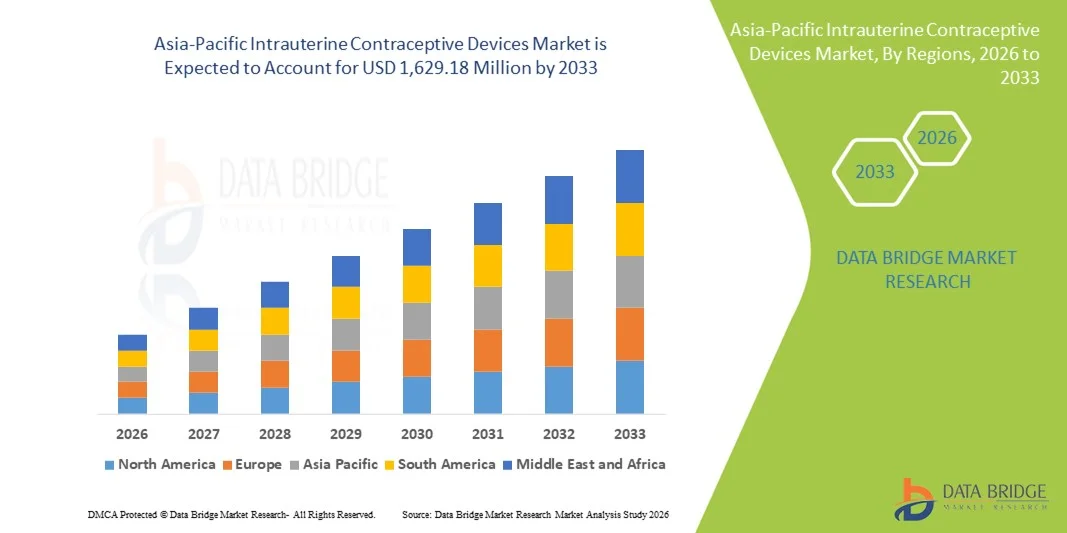
- The Asia-Pacific intrauterine contraceptive devices market size was valued at USD 730.30 million in 2025 and is expected to reach USD 1,629.18 million by 2033, at a CAGR of 10.55% during the forecast period
- The market growth is largely fueled by increasing population growth, rising awareness of modern contraceptive methods, expanding healthcare infrastructure, and supportive government family planning initiatives across key Asia‑Pacific countries, which are enhancing access and adoption of long‑acting reversible contraceptives in both urban and rural settings
- Furthermore, growing demand for effective, long‑term contraception and increasing focus on women’s reproductive health are driving the uptake of intrauterine contraceptive solutions. Continued efforts to educate women about contraceptive options and strong family planning programs are establishing IUDs as a preferred method of birth control across the region, thereby significantly boosting industry growth
Asia-Pacific Intrauterine Contraceptive Devices Market Analysis
- Asia-Pacific intrauterine contraceptive devices, offering long-acting, reversible contraception, are increasingly vital components of family planning programs and women’s reproductive healthcare across the region due to their effectiveness, ease of use, and minimal maintenance requirements
- The escalating demand for Asia-Pacific intrauterine contraceptive devices is primarily fueled by increasing awareness of modern contraceptive methods, growing government initiatives for family planning, and a rising preference among women for long-term, reliable contraception solutions
- India dominated the Asia-Pacific intrauterine contraceptive devices market with a revenue share of 22.3% in 2025, characterized by large reproductive-age populations, expanding healthcare infrastructure, and strong government family planning programs, with urban areas experiencing substantial growth in IUD adoption due to improved access, awareness campaigns, and healthcare provider initiatives
- Indonesia is anticipated to be the fastest-growing country in the Asia-Pacific intrauterine contraceptive devices market due to increasing government efforts in family planning programs, rising awareness of modern contraceptives, and improving healthcare infrastructure across urban and semi-urban areas
- Copper IUD segment dominated the Asia-Pacific intrauterine contraceptive devices market with a market share of 45.6% in 2025, driven by its established reputation for effectiveness, affordability, and long-term use without the need for hormonal intervention
Report Scope and Asia-Pacific Intrauterine Contraceptive Devices Market Segmentation
|
Attributes |
Asia-Pacific Intrauterine Contraceptive Devices Key Market Insights |
|
Segments Covered |
|
|
Countries Covered |
Asia-Pacific
|
|
Key Market Players |
|
|
Market Opportunities |
|
|
Value Added Data Infosets |
In addition to the insights on market scenarios such as market value, growth rate, segmentation, geographical coverage, and major players, the market reports curated by the Data Bridge Market Research also include in-depth expert analysis, patient epidemiology, pipeline analysis, pricing analysis, and regulatory framework |
Asia-Pacific Intrauterine Contraceptive Devices Market Trends
Rising Adoption of Long-Acting Reversible Contraception (LARC)
- A significant and accelerating trend in the Asia-Pacific intrauterine contraceptive devices market is the growing preference for long-acting reversible contraception (LARC), including both copper and hormonal IUDs, due to their effectiveness, convenience, and low maintenance
- For instance, the TCu380A copper IUD is widely adopted in India and China, offering women a hormone-free, long-term birth control solution that can last up to 10 years with minimal follow-up requirements
- The integration of modern IUDs with improved biocompatible materials and smaller insertion sizes is enhancing user comfort and reducing procedural complications, making the devices more appealing to women and healthcare providers
- 医療従事者は、診療所やデジタルプラットフォームを通じて女性に対し子宮内避妊器具(IUD)の利点について啓発活動を行う機会が増えており、都市部や準都市部の人々の間でIUDに対する認識と受容度が高まっている。
- 効果が高く、メンテナンスの手間がかからない避妊法へのこうした傾向は、家族計画ソリューションに対する期待を再構築しており、バイエルやプレグナなどの企業は、改良されたデザイン、挿入の容易さ、副作用の軽減を実現した先進的なIUDを提供している。
- 女性が生殖に関する自己決定権と選択権をますます重視するようになるにつれ、公的医療部門と民間医療部門の両方で、便利で持続性があり、侵襲性の低い避妊具への需要が急速に高まっている。
- 個別化された生殖医療と個々のニーズに合わせた避妊法への注目の高まりは、ホルモン放出調節機能や小型で使いやすいデバイスなど、IUD設計の革新を促進している。
アジア太平洋地域における子宮内避妊器具市場の動向
ドライバ
政府による取り組みと啓発プログラムの強化
- アジア太平洋地域における政府主導の家族計画プログラムと啓発キャンペーンの拡大は、子宮内避妊器具の普及拡大の重要な要因となっている。
- 例えば、インドネシアは2025年に、意図しない妊娠を減らし、母体の健康状態を改善することを目的として、公立保健センターで手頃な価格の子宮内避妊器具(IUD)を提供する全国的な取り組みを開始した。
- 安全で効果的な避妊方法に関する女性の意識の高まりは、特に医療サービスへのアクセスが良い都市部において、避妊法の利用を促進している。
- 医療従事者やNGOは、子宮内避妊器具(IUD)の利点を広めるための啓発プログラム、ワークショップ、カウンセリングを実施し、情報に基づいた避妊方法の選択を促進している。
- 毎日注意を払ったり、補充のために何度も通院したりする必要がない、長期作用型で可逆的な避妊法の利便性は、都市部と農村部の両方で普及を促進する重要な要因となっている。
- 民間メーカーと公衆衛生機関との連携強化により、流通ネットワークが拡大し、IUDがより低価格で広く入手可能になっている。
- 生殖医療インフラへの投資の増加と熟練した医療従事者の育成により、より安全で効率的な子宮内避妊器具(IUD)挿入が実現し、普及が促進されている。
- ソーシャルメディアやモバイルヘルスキャンペーンの普及により、若い女性の間で避妊具の使用が一般的になりつつあり、子宮内避妊器具(IUD)が主要な避妊法として受け入れられるようになっている。
抑制/挑戦
認知度の低さと文化的受容の障壁
- アジア太平洋地域の子宮内避妊器具市場における主要な課題の一つは、一部の地域における現代的な避妊法に対する認知度の低さや文化的抵抗感である。
- 例えば、インドや東南アジアの農村部では、子宮内避妊器具(IUD)が不妊症や深刻な副作用を引き起こすという誤解が、政府の取り組みにもかかわらず普及を遅らせている。
- 医療従事者は、カウンセリング、教育キャンペーン、地域社会との連携を通じてこれらの懸念に対処し、女性や家族の間で信頼と受容を築く必要がある。
- プレミアムIUDオプションの相対的なコストと、一部の農村部や低所得地域における訓練を受けた挿入専門家へのアクセスの制限は、市場浸透をさらに阻害する可能性がある。
- 市場の成長を維持し、普及率を高めるためには、ターゲットを絞った啓発プログラム、手頃な価格のデバイスオプション、プロバイダー研修の改善などを通じてこれらの課題を克服することが不可欠です。
- アジア太平洋地域における各国の規制承認の制限や医療政策のばらつきは、新しいIUD製品の導入を遅らせ、市場拡大を制限する可能性がある。
- 特定の地域における社会的偏見やジェンダー規範は、避妊に関する率直な議論を阻害し、避妊の普及率を低下させ、教育や啓発キャンペーンの障壁となっている。
- サプライチェーンの混乱や遠隔地・農村地域における子宮内避妊器具(IUD)の供給の不安定さは依然として課題であり、認知度と需要の高まりにもかかわらず、普及を阻害している。
アジア太平洋地域における子宮内避妊器具市場の範囲
市場は製品の種類と最終用途に基づいて区分される。
- 製品の種類
製品の種類に基づくと、アジア太平洋地域の子宮内避妊器具市場は、ホルモンIUD、子宮内避妊器具(IUCD)、および銅IUCDに分類されます。銅IUCDセグメントは、長期避妊効果、手頃な価格、ホルモンフリーという定評により、2025年には45.6%という最大の収益シェアで市場を席巻しました。銅IUCDは、フォローアップが最小限で済み、最長10年間確実な避妊効果が得られるため、インド、中国、東南アジアの公的医療プログラムや都市部の診療所で広く好まれています。挿入の容易さ、最新の銅製デザインの生体適合性、医療従事者による強力な推奨も、このセグメントの優位性をさらに高めています。銅IUCDは、政府が支援する家族計画イニシアチブでも広く採用されており、補助金付きで提供されることで、農村部や準都市部への普及が進んでいます。さらに、NGOや病院による銅製子宮内避妊器具の有効性に関する啓発キャンペーンは、生殖年齢の女性の間での銅製子宮内避妊器具の市場における存在感を強化した。
The hormonal IUD segment is expected to witness the fastest growth from 2026 to 2033, fueled by increasing preference for hormone-based contraception that reduces menstrual bleeding and provides additional gynecological benefits. Hormonal IUDs offer targeted release of levonorgestrel, improving comfort and user experience compared to traditional copper devices. Rising awareness about personalized reproductive health and increasing availability of hormonal IUDs through private clinics and telemedicine services are driving adoption. In urban regions, women increasingly choose hormonal IUDs for their dual benefits of contraception and symptom management, particularly for heavy menstrual bleeding or endometriosis. The aesthetic appeal, reduced side effects, and endorsement by gynecologists are also contributing factors. Moreover, hormonal IUD manufacturers are focusing on smaller, easier-to-insert designs, which further supports market growth in both private and public healthcare segments.
- By End Use
On the basis of end use, the Asia-Pacific intrauterine contraceptive devices market is segmented into hospitals, gynecology clinics, community healthcare centers, and others. The hospitals segment dominated the market with the largest revenue share of 48.3% in 2025, owing to the high patient footfall and advanced medical infrastructure in tertiary and multi-specialty hospitals. Hospitals are preferred for IUD insertions due to the availability of trained gynecologists, sterilized equipment, and follow-up care, ensuring higher safety and lower complication rates. Public and private hospitals also form the backbone of government family planning programs, providing copper and hormonal IUDs at subsidized or free-of-cost rates. Hospitals often conduct awareness campaigns, workshops, and counseling sessions for women, which further boosts IUD adoption. The integration of digital health systems in hospitals also enables better patient tracking and post-insertion monitoring, strengthening their dominant position. Urban hospitals are particularly influential in shaping contraceptive choices among educated women, contributing significantly to the segment’s market share.
The gynecology clinics segment is expected to witness the fastest growth from 2026 to 2033, driven by increasing demand for personalized reproductive healthcare services and convenient access for women. Clinics offer shorter wait times, privacy, and specialized counseling for women, making them an attractive choice for hormonal IUD insertion and follow-up. The growth of private gynecology clinics in urban and semi-urban areas, along with the rise of telemedicine consultations and home health services, is further supporting market expansion. Clinics also actively promote newer and innovative IUD types, providing flexible insertion options tailored to individual patient needs. Rising awareness among younger, working women seeking discreet and efficient family planning methods is accelerating adoption in this segment. In addition, clinics’ ability to combine contraception services with broader reproductive health management enhances their appeal and drives revenue growth.
Asia-Pacific Intrauterine Contraceptive Devices Market Regional Analysis
- India dominated the Asia-Pacific intrauterine contraceptive devices market with a revenue share of 22.3% in 2025, characterized by large reproductive-age populations, expanding healthcare infrastructure, and strong government family planning programs, with urban areas experiencing substantial growth in IUD adoption due to improved access, awareness campaigns, and healthcare provider initiatives
- Consumers and women in the region increasingly value the convenience, long-term effectiveness, and minimal maintenance of IUDs, along with access to trained healthcare providers for safe insertion and follow-up care
- This widespread adoption is further supported by expanding healthcare infrastructure, growing awareness campaigns on reproductive health, and increasing availability of IUDs in public hospitals and clinics, establishing IUDs as a preferred contraceptive solution for both urban and rural populations
The India Intrauterine Contraceptive Devices Market Insight
The India intrauterine contraceptive devices market accounted for the largest revenue share in Asia-Pacific in 2025, attributed to the country’s large reproductive-age population, growing awareness of family planning, and robust government initiatives providing free or subsidized IUDs. Urbanization, rising disposable incomes, and expanding healthcare infrastructure are enabling wider access to both copper and hormonal IUDs. Public hospitals and gynecology clinics play a pivotal role in educating women about the safety, effectiveness, and convenience of IUDs. In addition, increasing adoption of private healthcare services, coupled with digital health platforms for consultation and follow-up, is boosting IUD penetration. The preference for long-acting reversible contraception and low-maintenance solutions is further driving growth in both urban and semi-urban regions.
China Intrauterine Contraceptive Devices Market Insight
The China intrauterine contraceptive devices market is witnessing strong growth due to rising awareness of modern contraceptive methods, increasing government support for reproductive health, and expanding healthcare facilities. Women increasingly prefer long-acting reversible contraception, such as copper and hormonal IUDs, for their effectiveness and minimal maintenance. Urban hospitals and gynecology clinics are key distribution channels, providing training, counseling, and safe insertion procedures. Moreover, government family planning programs ensure wide availability of IUDs, particularly copper devices, at subsidized rates. The growing acceptance of IUDs among working women and young couples, combined with increasing digital health campaigns, is accelerating adoption throughout the country.
Indonesia Intrauterine Contraceptive Devices Market Insight
The Indonesia intrauterine contraceptive devices market is expected to be the fastest-growing country in the Asia-Pacific region during the forecast period, driven by rising government initiatives, awareness campaigns, and improving healthcare access in rural and semi-urban areas. Public health centers are expanding their outreach to provide both copper and hormonal IUDs at affordable costs. Women are increasingly seeking long-term, effective contraception options, supported by counseling programs in clinics and community health centers. The adoption of digital platforms for reproductive health education, alongside growing private healthcare services, is further boosting market growth. Increasing awareness about the benefits of IUDs and the convenience of long-acting reversible contraception is creating substantial opportunities for market expansion across Indonesia.
Japan Intrauterine Contraceptive Devices Market Insight
The Japan intrauterine contraceptive devices market is growing steadily due to high awareness of women’s reproductive health, advanced healthcare infrastructure, and increasing urbanization. Women are increasingly adopting both copper and hormonal IUDs for long-term contraception and gynecological benefits. Hospitals and specialized gynecology clinics offer safe and convenient insertion services, while awareness campaigns and consultations through digital platforms help drive informed decision-making. In addition, the aging population and preference for minimally invasive, low-maintenance contraception solutions contribute to steady adoption in both residential and private healthcare segments. Rising government focus on reproductive health programs further supports growth in this market.
Asia-Pacific Intrauterine Contraceptive Devices Market Share
The Asia-Pacific Intrauterine Contraceptive Devices industry is primarily led by well-established companies, including:
- Bayer AG (Germany)
- The Cooper Companies, Inc. (U.S.)
- Teva Pharmaceuticals Inc. (U.S.)
- Pregna International Ltd. (India)
- SMB Corporation of India (India)
- OCON Therapeutics, Inc. (U.S.)
- HLL Lifecare Limited (India)
- Meril Life Sciences Pvt. Ltd. (India)
- Medicines360 (U.S.)
- Mona Lisa N.V. (Belgium)
- EUROGINE S.L. (Spain)
- Prosan International B.V. (Netherlands)
- DKT International (U.S.)
- Melbea AG (Switzerland)
- Egemen International (Turkey)
- Medisafe Distribution Inc. (Canada)
- Krishco Medical Products Pvt. Ltd. (India)
- Zhejiang Daji Medical Instruments Co., Ltd. (China)
- Medical Engineering Corporation S.A. (Argentina)
- Trimedic Supply Network Ltd. (U.S.)
What are the Recent Developments in Asia-Pacific Intrauterine Contraceptive Devices Market?
- In December 2025, Greenlandic women involved in a decades‑long legal fight over forced IUD insertions by Danish doctors were confirmed to be eligible for compensation from a reconciliation fund marking a historic step toward justice for victims of non‑consensual contraception practices
- In October 2025, health facilities across Nepal reported critically low supplies of intrauterine devices and other birth control methods, with only 350 IUDs available in inventory, highlighting ongoing access and supply challenges for modern contraceptives in rural Asia‑Pacific health system
- In September 2025, Denmark announced plans to establish a reconciliation fund offering financial compensation to Greenlandic women who were fitted with intrauterine contraceptive devices without consent as part of a coercive program, highlighting global scrutiny on reproductive rights practices
- In June 2025, a major advocacy article highlighted that sexual and reproductive health and rights, including access to contraception such as IUDs, remain limited for many women in the Asia‑Pacific region due to education, health system gaps, and restrictive laws, underscoring ongoing challenges in contraceptive access
- In May 2025, Australia saw significant public health discourse revealing that IUD usage among reproductive‑age women remains low due to lack of awareness and education, even though IUDs are among the most effective forms of contraception; experts called for stronger provider training and public information
SKU-
世界初のマーケットインテリジェンスクラウドに関するレポートにオンラインでアクセスする

- インタラクティブなデータ分析ダッシュボード
- 成長の可能性が高い機会のための企業分析ダッシュボード
- カスタマイズとクエリのためのリサーチアナリストアクセス
- インタラクティブなダッシュボードによる競合分析
- 最新ニュース、更新情報、トレンド分析
- 包括的な競合追跡のためのベンチマーク分析のパワーを活用
調査方法
データ収集と基準年分析は、大規模なサンプル サイズのデータ収集モジュールを使用して行われます。この段階では、さまざまなソースと戦略を通じて市場情報または関連データを取得します。過去に取得したすべてのデータを事前に調査および計画することも含まれます。また、さまざまな情報ソース間で見られる情報の不一致の調査も含まれます。市場データは、市場統計モデルと一貫性モデルを使用して分析および推定されます。また、市場シェア分析と主要トレンド分析は、市場レポートの主要な成功要因です。詳細については、アナリストへの電話をリクエストするか、お問い合わせをドロップダウンしてください。
DBMR 調査チームが使用する主要な調査方法は、データ マイニング、データ変数が市場に与える影響の分析、および一次 (業界の専門家) 検証を含むデータ三角測量です。データ モデルには、ベンダー ポジショニング グリッド、市場タイムライン分析、市場概要とガイド、企業ポジショニング グリッド、特許分析、価格分析、企業市場シェア分析、測定基準、グローバルと地域、ベンダー シェア分析が含まれます。調査方法について詳しくは、お問い合わせフォームから当社の業界専門家にご相談ください。
カスタマイズ可能
Data Bridge Market Research は、高度な形成的調査のリーダーです。当社は、既存および新規のお客様に、お客様の目標に合致し、それに適したデータと分析を提供することに誇りを持っています。レポートは、対象ブランドの価格動向分析、追加国の市場理解 (国のリストをお問い合わせください)、臨床試験結果データ、文献レビュー、リファービッシュ市場および製品ベース分析を含めるようにカスタマイズできます。対象競合他社の市場分析は、技術ベースの分析から市場ポートフォリオ戦略まで分析できます。必要な競合他社のデータを、必要な形式とデータ スタイルでいくつでも追加できます。当社のアナリスト チームは、粗い生の Excel ファイル ピボット テーブル (ファクト ブック) でデータを提供したり、レポートで利用可能なデータ セットからプレゼンテーションを作成するお手伝いをしたりすることもできます。











