



欧州インターベンショナル神経学デバイス市場のセグメンテーション:製品タイプ別(動脈瘤コイル塞栓デバイス、脳バルーン血管形成術およびステントシステム、サポートデバイス、神経血栓除去デバイス)、疾患病理別(虚血性脳卒中、脳動脈瘤、動静脈奇形および瘻孔、その他)、処置別(塞栓術、血管形成術、神経血栓除去術、その他)、エンドユーザー別(病院、神経科クリニック、外来診療センター、その他)- 業界動向と2033年までの予測
ヨーロッパInterventionalの神経学装置市場のサイズおよび成長率は何ですか。
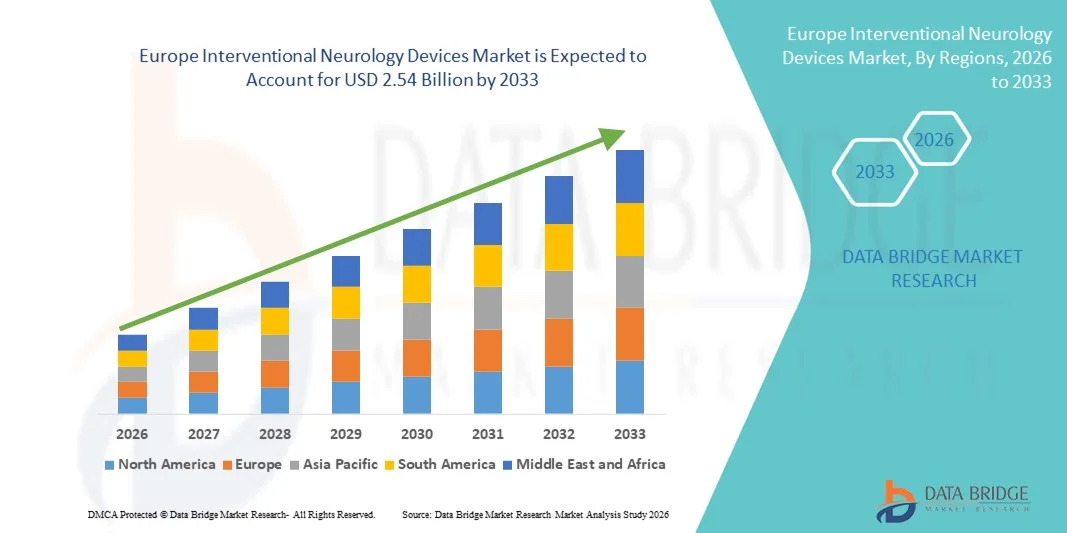
- データブリッジ市場調査分析により、欧州の介入神経学装置市場規模が評価されました2025年のUSD 1.35億そして到達する予定2033年までに2.54億米ドル, お問い合わせ8.25%のCAGR予報期間中
- 市場成長は、脳卒中、脳卒中、血管内血管疾患などの神経障害の高まりによる大幅な燃料を補給し、両方の病院および専門ニューロンセンターにおける最小侵襲的および画像ガイド的介入手順の採用の増加と相まって
- さらに、安全、正確、およびより速い回復処置のための忍耐強い好みを増加し、ステント、エンボリック・コイル、カテーテルおよび血栓療法システムのような神経管の装置で連続的な技術の進歩と共に、現代神経管の心配の必要な用具として慣習的な神経学装置を確立しています。 これらの収束因子は、Interventional Neurology Deviceソリューションの取込みを加速し、全体的な市場成長を著しく向上しています
市場規模と予測
- グローバル市場価値 (2025):1億米ドル
- 期待される市場価値 (2033):米ドル 2.54 億
- 予測CAGR (2026-2033):8.25%
ヨーロッパの伝統的な神経系デバイス市場の主要なテイクアウトは何ですか
- 神経血管のステント、エンボリック・コイル、血栓症装置およびマイクロカテーテルを含むInterventionalの神経学装置は、脳卒中の最小侵襲的、正確で、有効な処置、aneurysmsおよび他のcerebrovascularの無秩序を可能にする機能による病院および専門の神経中心を渡る現代神経学のます重要な部品です
- インターベンショナルニューロロジーデバイスに対するエスケーラビリティの要求は、主に、脳血管疾患の増大による燃料供給、画像ガイドおよび最小侵襲的手順の採用の増加、患者の意識の増大、および神経血管機器の継続的な技術的進歩により、安全、手続き上の成功、および回復時間を改善する
- U.K.は、2025年に28.5%の最大の収益分配と欧州の介入神経学装置市場を支配しました。先進医療インフラ、低侵襲神経血管の手順の高い採用、強力な払い戻し方針、および主要な病院および神経介入センターの運転装置利用の存在の高度化
- ドイツは、脳卒中および血管拡張の発生率を増加させ、ニューロンインターベンショナルテクノロジーへの投資の増加、革新的な血栓切除術およびコイルシステムの導入、および最小限の侵襲的治療に焦点を当てたヘルスケア支出の拡大に重点を置いた、欧州の介入神経学装置市場で最も急速に成長している国であることが期待されます。
- 虚構ストロークセグメントは、2025年に最大52.1%の最大の収益シェアを保持し、高齢化と高度なイメージングによる検出の増加に起因する
報告書 スコープとインターベンショナル 神経デバイス 市場セグメント
|
アトリビュート |
インターベンショナル・ニューロロジー・デバイス・キー・マーケット・インサイト |
|
カバーされる区分 |
|
|
カバーされた国 |
ヨーロッパ
|
|
主要市場プレイヤー |
|
|
マーケットチャンス |
|
|
付加価値データインフォセットを追加 |
市場価値、成長率、セグメンテーション、地理的カバレッジ、主要なプレーヤーなどの市場シナリオに関する洞察に加えて、Data Bridge Market Researchがキュレーションした市場レポートには、詳細なエキスパート分析、患者疫学、パイプライン分析、価格設定分析、規制フレームワークも含まれています。 |
ヨーロッパの慣習的な神経学装置市場の主要な傾向は何ですか。
最小侵襲的およびイメージ指導的なプロシージャの上昇の採用
- 欧州のインターベンショナルニューロロジーデバイス市場における主要なおよび加速傾向は、最小限の侵襲的、イメージガイド的なニューロンバル介入の広範な採用です
- これらの手順は、子宮内膜血栓切除術、aneurysmの巻上げおよび神経形成を含む、従来のオープン手術と比較して外科外傷、より短い病院の滞在および改善された忍耐強い結果を提供します。 病院は効率および忍耐強い満足を最大限に活用するために、これらの高度の技術はます好まれます
- たとえば、ドイツ有数のニューロンバルセンターは、医師がaneurysmの修理中にマイクロカテーテルを正確に配置し、合併症のリスクを減らすことを可能にする高精度の画像ガイドナビゲーションシステムを実装しています。 初期臨床データは、これらの先進的な介入技術で治療された患者がより速く回復し、後産の神経系欠乏症を少なくし、これらのデバイスにおける自信を高めることを示しています
- また、リアルタイム断層検査・3D断層撮影・ナビゲーションイメージングシステムを搭載したハイブリッド操作室の統合により、洗練されたインターベンショナル機器の採用に新たな機会を創出しています。 フランスとオランダの病院は、より安全かつ効率的に複雑な神経介入を実行するために、これらのハイブリッドセットアップにますます投資しています
- トレンドは、患者ベースの神経介入に対する需要の増加によっても支持され、最小限の侵襲的なアプローチにより、より高速な売上高を可能にし、医療システムのためのコストを削減
欧州のInterventionalの神経学装置市場の動的
ドライバー
神経障害および打撃の発生の蔓延を育てて下さい
- 市場の第一次運転者は神経疾患、特に虚血および出血の打撃、aneurysmsおよび動脈硬化の変形の上昇の優先順位です。 欧州の老化人口で、脳血管疾患の負担は増加し続け、先進的な介入ソリューションを必要としています
- 例えば、2024年のヨーロッパストローク組織報告書は、ドイツとイギリスで1.2万回のストロークケースにハイライトされ、再発を防ぐためのフォローアップの介入手順に対するより高い要求率が高まっています。
- 脳卒中および神経管障害の早期発見・管理を目指したヘルスケアへの取り組みも市場成長を促進しています。 公共の意識キャンペーンと神経イメージングスクリーニングプログラムの普及率が高まっています。
- U.K.とドイツを含む主要な国で好ましい償還フレームワークは、フローダイバーターのステント、エンボレーションコイル、および血栓切除術システムなどの高コストの介入装置を採用しています。 これらの方針は、金融障壁を削減し、最先端の技術に投資するために病院を奨励します
- デバイスの技術的進歩は、別の重要なドライバーです。 カテーテル設計、マイクロカテーテルの柔軟性、低プロファイルの配信システムの改善、およびイメージング後の視認性の強化は、先進的な成功率と安全性を高め、市場導入を加速
- AI-assistedイメージングとロボティック・アシスト・ナビゲーション・プラットフォームの統合により、神経介入の精度と効率性を高め、デバイスの採用と臨床検証の正サイクルを創出
拘束/チャレンジ
高デバイスコスト、規制障害、および熟練した労働力不足
- 市場の可能性にもかかわらず、いくつかの課題は急速な成長を妨げる。 MRI互換のステント、神経管のフロー ダイバーター、AI 対応のナビゲーション・システム、より小さい病院の採用を限る限界採用の高度の interventional の神経学装置の高い費用または予算禁忌の地域
- セリウムの印および医療機器の規則(MDR)に従うことを含む厳しいヨーロッパの規制要件は、プロダクト承認を遅らせ、開発および臨床試験コストを増加できます
- たとえば、2023年にフローダイバーターのステントの大手メーカーは、臨床証拠の要件に加えて、複数のEU諸国の市場参入を延期するCE承認の12か月の遅延を経験しました。 これらの要因は、市場への革新的なデバイスのタイムリーな導入を制限する
- 別の主要な拘束は訓練された神経介入の専門家の不足です。 都市センターは、熟練した神経外科医と介入放射線学者へのアクセスを持っていますが、農村と半都市地域は、多くの場合、十分な訓練された人員が欠如し、高度なデバイスのリーチを制限しています
- 医師や技術者のための継続的なトレーニングプログラムの信頼性は、新しい技術の採用を遅らせることができる病院の運用コストを追加します。
- さらに、複雑な神経介入、長期デバイスの耐久性に関する懸念、およびヘルスケアプロバイダーを安心するための堅牢な市場臨床証拠の必要性に関連する手続き上のリスクを含む課題
- これらの課題を克服するには、共同医師のトレーニングプログラム、費用対効果の高いデバイス開発、学術機関とのパートナーシップ、より迅速な承認のための規制経路を合理化する必要があります。 これは、ヨーロッパ全体の市場の持続的かつ包括的な成長のために不可欠です
ヨーロッパのInterventional Neurologyデバイス市場はどのように区分されますか
市場は、製品の種類、病気の病理学、手順、エンドユーザーに基づいてセグメント化されます。
- 製品タイプ別
製品の種類に基づいて、Interventional Neurology Device 市場は、Aneurysm コイリングとエンボレーション デバイス、Cerebral バルーン Angioplasty およびシステム、サポート デバイス、および Neurothrombectomy デバイスにセグメント化されます。 Aneurysm の巻上げおよびエンボライゼーション デバイス セグメントは 2025 年に 47.5% の最大の市場収益シェアを占め、脳の aneurysms を扱い、破裂を防ぎる広範な使用によって運転しました。 病院および神経学の医院はそれらの最小限に侵襲的な性質、精密および忍耐強い回復時間を減らす機能のためにこれらの装置に頼ります。 取り外し可能なコイルやエンボリック材料の改善などの技術革新は、手続き的な安全と結果を高めています。 老化人口における脳血管の拡大可能性, 血管内科の手順の上昇意識と相まって, さらなる採用をサポートしています. 先進的なニューロンケア機器の普及、償還スキームの推進、およびニューロンインターベンチュアルスイートのインフラの増大も需要を促進します。 欧州・北米のデバイス利用状況は、市場リーダーシップに貢献します。
Neurothrombectomyデバイスセグメントは、2026年から2033年までの13.2%の最速のCAGRを目撃すると予想され、世界各地の虚血ストロークの発生率を増加させ、迅速な腐敗手続の採用を増加させました。 病院やストロークセンターは、血流を回復し、機能的な結果を改善するための神経血栓切除術装置をますますます好んでいます。 脳卒中治療のガイドラインの意識を高め、脳卒中施設への高い投資、先進的なイメージングの採用により、成長軌跡をサポートします。 市場拡大は、より小さいカテーテル、改善されたナビゲーション・システムおよび安全特徴を含む装置設計の改善によってまた助けられます、それらを複雑な神経管の場合のために適したようにします。
- 病気病理学
病気の病理学に基づいて、市場はIschemic打撃、Cerebral Aneurysms、Arteriovenous MalformationsおよびFistulas、および他に分けられます。 虚構ストロークセグメントは、2025年に最大52.1%の収益シェアを保持し、高齢化と高度なイメージングによる検出の増加に起因します。 病院および専門にされた打撃の中心は機械thrombectomyおよびカテーテル ベースのreperfusionのための装置に重く頼ります。 早期の介入と最小限の侵襲的な手順は、障害と病院の滞在期間を削減し、採用を強化します。 患者の意識を高め、熟練した神経科医の可用性、政府の健康への取り組みにより、さらなる成長を促進します。 イメージングとデジタルモニタリングによる技術統合により、治療計画と後工程のフォローアップを最適化します。
動脈硬化変容とフィストラスセグメントは、2026年から2033年にかけて最も速いCAGRを目撃し、認知度を高め、早期診断を行うことで計画されています。 AVMとfistulasの最小侵襲的エンボレーション技術は、オープン手術と比較してリスクを削減し、より速い回復のために好まれています。 マイクロカテーテルやエンボリックエージェントのイノベーションとともに、神経内科のインフラや専門クリニックへの投資、迅速な採用をサポートします。 小児および成人の人口の血管形成の有利な発生率も、市場成長を促進します。
- プロシージャ
手順に基づいて、市場はエンボライゼーション、Angioplasty、Neurothrombectomy、その他に分けられます。 Embolization セグメントは 2025 年に 49.8% の最大の収益シェアを占めています。これは、脳の aneurysms、AVM、および fistulas を扱うための好ましい方法です。 病院および神経学の医院は最小限の侵襲的なアプローチ、改善された忍耐強い安全および減らされた回復時間による均衡を優先順位付けします。 脳血管疾患の治療、支持的償還フレームワーク、および高度なエンボルゼーションデバイスドライブ優位性の可用性の意識の拡大。 先進的な映像のモダリティを3DアソグラフィやAI支援計画などの採用で、手続き精度を高めます。 欧州全域の革新的なコイルおよびエンボリック材料の規制承認により、市場シェアを強化します。
Neurothrombectomyの区分は2026年から2033年までの13.6%の最も速いCAGRを目撃し、高められた虚血の打撃の箱および機械 clotの検索装置のより広い臨床採用によって燃料を供給されると期待されます。 病院は、脳血流を回復し、生存と機能的な結果を改善するための実証済みの有効性のために神経血栓切除術装置を採用しています。 ストローク対応施設への投資、治療ガイドラインの更新、小型化、ナビゲート可能なカテーテルなどの技術改良により、成長を加速 初期の介入キャンペーンや公共意識プログラムでは、特に開発途上国では脳卒中ケアネットワークの拡大にも貢献しています。
- エンドユーザーによる
エンドユーザーに基づいて、市場は病院、神経科クリニック、血管科ケアセンター、その他に分けられます。 病院のセグメントは、2025年に56.3%の最大の収益シェアを保持し、高患者のボリューム、高度なインフラ、および介入スイートの可用性によって駆動しました。 病院は、aneurysm、打撃およびAVMの処置をカバーする広範囲の装置ポートフォリオを好む。 政府のイニシアチブ、償還、および熟練したニューロロジストは、さらなる採用を強化します。 大規模病院では、スケールと多変性イメージングの統合の経済性から恩恵を受け、継続的な優位性をサポートします。
Ambulatory Care Centresのセグメントは、2026年から2033年までの12.9%の最速のCAGRを目撃する予定です。 最小侵襲的な処置およびより短い回復時間は、断熱性の設定にとって理想的です。 ポータブルイメージングおよび治療機器の可用性を高めるとともに、安全で効率的な外来処置を可能にする技術革新、サポート成長。 民間神経学の実践と専門ケアセンターによる採用により、市場拡大をさらに加速します。 患者需要が高い都市・半都市地域への進出も急成長に貢献します。
ヨーロッパのInterventionalの神経学装置市場の地域分析
- 欧州のインターベンショナルニューロロジーデバイス市場は、主に脳卒中、脳卒中、動脈瘤、動脈硬化などの神経管障害の上昇による増加の優先順位によって駆動され、予測期間全体で実質的なCAGRで拡大することを計画しています。
- 血栓切除術装置、コイルシステム、フローダイバーター、AI支援のナビゲーションプラットフォームなど、デバイス技術の進歩は、先進的な精度と患者の成果を強化し、市場の成長をさらに促進しています。 デジタルニューロンインターベンチュアルプラットフォームへの投資の増加、早期介入および予防ケアに関するヘルスケアプロバイダーの普及と相まって、市場拡大をサポート
- また、欧州における脳卒中ケア、高齢化人口、および病院インフラの普及を推進する政府の取り組みは、公共および民間医療の双方の普及に貢献しています。
U.K. Interventional Neurology デバイス市場情報
U.K. インターベンショナルニューロロジーデバイス市場は、予測期間中に注目すべきCAGRで成長することを期待しています, 主に高度な医療インフラによって駆動, 最小侵略神経血管の手順の高い採用, 強力な払い戻しフレームワーク. 主要な病院および専門にされた神経慣習的な中心の存在はthrombectomyシステム、神経管のコイルおよび流れのダイバーザーを含む革新的な装置の一貫した利用を保障します。 また、脳卒中および血管管理における早期介入に対する意識が高まり、神経内臓の強固なトレーニングプログラムと相まって、より高度な手続き量をサポートします。 U.K.の積極的な医療政策は、AI-assistedイメージングおよびナビゲーションシステムの採用の増加と相まって、市場成長を加速する予定です。
ドイツInterventional Neurology装置市場の洞察
ドイツの介入神経学装置市場は、脳卒中および血管拡張の増加、ヘルスケア支出の増加、および先進的な神経介入技術の実質的な投資によって駆動され、予測期間の間に欧州で最速成長することが期待されます。 病院や専門センターは、コイルエンボライゼーションシステム、ステントアシスト血栓装置、AIガイド型のナビゲーションプラットフォームなど、革新的なデバイスを採用し、手続き効率と患者の安全を改善しています。 ドイツは、老化人口とヘルスケアインフラの拡大と相まって、最小限の侵襲的治療アプローチに焦点を合わせ、都市と半都市の領域にわたってこれらのデバイスの広範な採用を促進しています。 また、支援的償還方針、継続的な臨床試験、および神経内科のトレーニングプログラムへの投資は、国における長期的成長を維持することが期待されます。
ヨーロッパでトップ企業は、Neurologyデバイス市場をインターベンショナル
Interventionalの神経学装置企業は主に下記のものを含む確立された会社によって、導きます:
- メドトロニック plc(アイルランド)
- ストライカー株式会社(米国)
- ボストン科学株式会社(アメリカ)
- Siemens Healthineers AG(ドイツ)
- 株式会社ペンムブラ(アメリカ)
- 株式会社テルモ(日本)
- MicroVention, Inc.(米国)
- ジョンソン&ジョンソン(米国)
- Cerenovus(アメリカ)
- バルトの放出(フランス)
- Phenox GmbH(ドイツ)
- 株式会社カネカ(日本)
- 旭インテック株式会社(日本)
- NeuroIntervention AG(スイス)
- パルス医療機器株式会社(米国)
ヨーロッパの伝統的な神経系デバイス市場における最近の発展は何ですか
- 2025年6月、InspireMDは、CGuard Primeエンボリック防止システム(EPS)が欧州医療機器規制(MDR)に基づくCEマーク承認を受け、脳卒中防止に使用することを発表しました。 CEマークは、欧州のヘルスケアシステム全体でこのエンボリック保護装置を幅広く採用し、臨床医はオートティッドの介入中にストロークリスクを減らすための新しいツールを提供しています。
- 2025年5月、Terumo Interventional Systemsは、欧州市場でFDA認定のROADSAVER Carotid Stent Systemを発売しました。 ナノパラソルエンボリックプロテクションシステムでの使用のために設計されており、ROADSAVER Stent Systemは、軟骨動脈の狭窄を治療し、高い外科的リスクで患者のための治療オプションを拡大するための最小限の侵襲ソリューションを提供します
- 2025年3月、ボストン科学は、ヨーロッパ市場を選定するフィルタワイヤーEZのエンボリック保護システムを更新しました。 更新されたシステムは、血流を維持しながらエンボリック破片を捕獲するように設計されている110-micron-poreフィルター先端を特色にし、神経管法のエンボリック保護性能を改善します
SKU-
世界初のマーケットインテリジェンスクラウドに関するレポートにオンラインでアクセスする

- インタラクティブなデータ分析ダッシュボード
- 成長の可能性が高い機会のための企業分析ダッシュボード
- カスタマイズとクエリのためのリサーチアナリストアクセス
- インタラクティブなダッシュボードによる競合分析
- 最新ニュース、更新情報、トレンド分析
- 包括的な競合追跡のためのベンチマーク分析のパワーを活用
調査方法
データ収集と基準年分析は、大規模なサンプル サイズのデータ収集モジュールを使用して行われます。この段階では、さまざまなソースと戦略を通じて市場情報または関連データを取得します。過去に取得したすべてのデータを事前に調査および計画することも含まれます。また、さまざまな情報ソース間で見られる情報の不一致の調査も含まれます。市場データは、市場統計モデルと一貫性モデルを使用して分析および推定されます。また、市場シェア分析と主要トレンド分析は、市場レポートの主要な成功要因です。詳細については、アナリストへの電話をリクエストするか、お問い合わせをドロップダウンしてください。
DBMR 調査チームが使用する主要な調査方法は、データ マイニング、データ変数が市場に与える影響の分析、および一次 (業界の専門家) 検証を含むデータ三角測量です。データ モデルには、ベンダー ポジショニング グリッド、市場タイムライン分析、市場概要とガイド、企業ポジショニング グリッド、特許分析、価格分析、企業市場シェア分析、測定基準、グローバルと地域、ベンダー シェア分析が含まれます。調査方法について詳しくは、お問い合わせフォームから当社の業界専門家にご相談ください。
カスタマイズ可能
Data Bridge Market Research は、高度な形成的調査のリーダーです。当社は、既存および新規のお客様に、お客様の目標に合致し、それに適したデータと分析を提供することに誇りを持っています。レポートは、対象ブランドの価格動向分析、追加国の市場理解 (国のリストをお問い合わせください)、臨床試験結果データ、文献レビュー、リファービッシュ市場および製品ベース分析を含めるようにカスタマイズできます。対象競合他社の市場分析は、技術ベースの分析から市場ポートフォリオ戦略まで分析できます。必要な競合他社のデータを、必要な形式とデータ スタイルでいくつでも追加できます。当社のアナリスト チームは、粗い生の Excel ファイル ピボット テーブル (ファクト ブック) でデータを提供したり、レポートで利用可能なデータ セットからプレゼンテーションを作成するお手伝いをしたりすることもできます。











