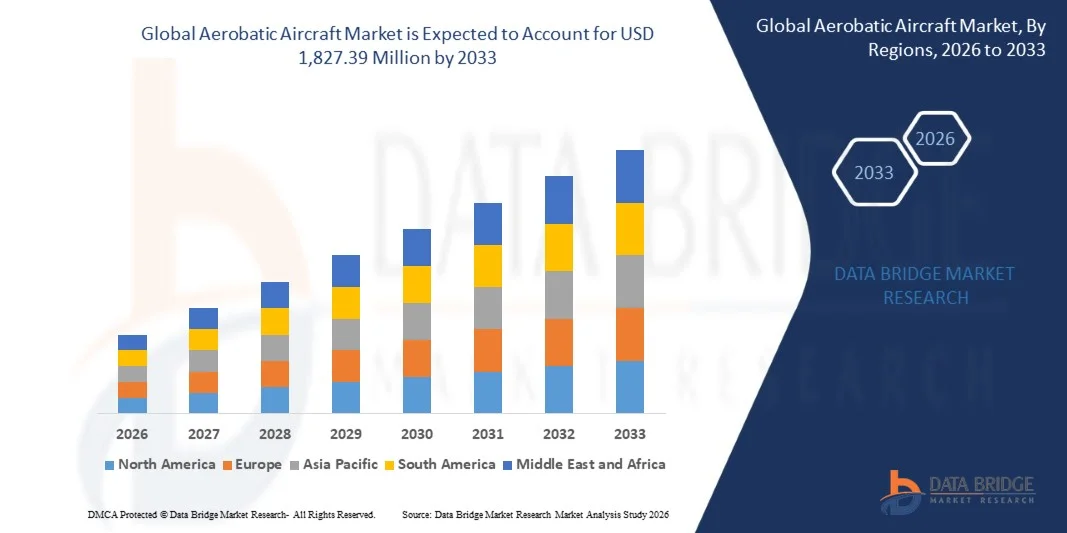
Global Aerobatic Aircraft Market Size, Share, and Trends Analysis Report – Industry Overview and Forecast to 2033

Request for TOC TOC のリクエスト Speak to Analyst アナリストに相談する Free Sample Report 無料サンプルレポート Inquire Before Buying 事前に問い合わせる Buy Now今すぐ購入

Global Aerobatic Aircraft Market Size, Share, and Trends Analysis Report – Industry Overview and Forecast to 2033

Global Aerobatic Aircraft Market Segmentation, By Product Type (Single-engine and Kit), Application (Leisure Activity and Instructional)- Industry Trends and Forecast to 2033

  • Automotive
  • Nov 2021
  • Global
  • 350 ページ
  • テーブル数: 220
  • 図の数: 60

Global Aerobatic Aircraft Market Size, Share, and Trends Analysis Report

Market Size in USD Billion

CAGR :  % Diagram

Chart Image USD 980.00 Million USD 1,827.39 Million 2025 2033
Diagram 予測期間
2026 –2033
Diagram 市場規模(基準年)
USD 980.00 Million
Diagram Market Size (Forecast Year)
USD 1,827.39 Million
Diagram CAGR
%
Diagram Major Markets Players
  • Textron Inc. (U.S.)
  • Embraer (Brazil)
  • Gulfstream Aerospace Corporation (U.S.)
  • Pilatus Aircraft (Switzerland)
  • Boeing (U.S.)

Global Aerobatic Aircraft Market Segmentation, By Product Type (Single-engine and Kit), Application (Leisure Activity and Instructional)- Industry Trends and Forecast to 2033

Aerobatic Aircraft Market Size

  • The global aerobatic aircraft market size was valued at USD 980.00 million in 2025 and is expected to reach USD 1,827.39 million by 2033, at a CAGR of 8.10% during the forecast period
  • The market growth is largely fuelled by the increasing popularity of air sports and aerobatic competitions, rising interest in recreational aviation, and advancements in lightweight, high-performance aircraft technologies
  • Growing investment by private aviation clubs and flying schools to expand aerobatic training programs is also driving demand

Aerobatic Aircraft Market Analysis

  • The market is witnessing steady growth due to technological innovations, including improved engine performance, aerodynamics, and safety features in aerobatic aircraft
  • Increasing disposable incomes and a growing community of aviation enthusiasts are positively impacting adoption rates
  • North America dominated the aerobatic aircraft market with the largest revenue share of 42.15% in 2025, driven by a growing interest in recreational aviation, air sports, and aerobatic competitions, as well as the presence of well-established flight schools and aviation clubs
  • Asia-Pacific region is expected to witness the highest growth rate in the global aerobatic aircraft market, driven by increasing urbanization, rising disposable incomes, growing participation in air sports and aerobatic competitions, and government support for aviation training and infrastructure development
  • The Single-engine segment held the largest market revenue share in 2025, driven by its widespread use in competitions, air shows, and recreational flying. Single-engine aerobatic aircraft are preferred for their maneuverability, reliability, and ease of maintenance, making them a popular choice among professional pilots and aviation enthusiasts. In addition, ongoing technological advancements in lightweight materials and engine performance further strengthen the adoption of single-engine aircraft for aerobatic applications

Aerobatic Aircraft Market

Report Scope and Aerobatic Aircraft Market Segmentation   

Attributes

Aerobatic Aircraft Key Market Insights

Segments Covered

  • By Product Type: Single-engine and Kit
  • By Application: Leisure Activity and Instructional

Countries Covered

North America

  • U.S.
  • Canada
  • Mexico

Europe

  • Germany
  • France
  • U.K.
  • Netherlands
  • Switzerland
  • Belgium
  • Russia
  • Italy
  • Spain
  • Turkey
  • Rest of Europe

Asia-Pacific

  • China
  • Japan
  • India
  • South Korea
  • Singapore
  • Malaysia
  • Australia
  • Thailand
  • Indonesia
  • Philippines
  • Rest of Asia-Pacific

Middle East and Africa

  • Saudi Arabia
  • U.A.E.
  • South Africa
  • Egypt
  • Israel
  • Rest of Middle East and Africa

South America

  • Brazil
  • Argentina
  • Rest of South America

Key Market Players

Textron Inc. (U.S.)
Embraer (Brazil)
Gulfstream Aerospace Corporation (U.S.)
Pilatus Aircraft (Switzerland)
Boeing (U.S.)
• Airbus S.A.S. (France)
• Bombardier (Canada)
• Dassault Aviation (France)
• Honda Aircraft Company (Japan)
• Volocopter GmbH (Germany)
• Zunum Aero (U.S.)
• Joby Aviation (U.S.)
• Karem Aircraft (U.S.)
• Samad Aerospace Ltd. (U.A.E.)
• AirCharter International (U.K.)
• VistaJet (Malta)
• Qatar Airways (Qatar)
• NetJets IP, LLC. (U.S.)

Market Opportunities

• Rising Demand For Recreational Aviation
• Growth In Aerobatic Competitions And Air Shows

Value Added Data Infosets

In addition to the market insights such as market value, growth rate, market segments, geographical coverage, market players, and market scenario, the market report curated by the Data Bridge Market Research team includes in-depth expert analysis, import/export analysis, pricing analysis, production consumption analysis, and pestle analysis.

Aerobatic Aircraft Market Trends

“Rising Popularity of Recreational and Competitive Aviation”

• The growing interest in aerobatic flying and air sports is significantly shaping the aerobatic aircraft market, as enthusiasts increasingly prefer aircraft that offer high maneuverability, performance, and safety. Aerobatic aircraft are gaining traction due to their advanced aerodynamic design, lightweight construction, and adaptability for both recreational and competitive use. This trend strengthens adoption across air sports clubs, flight schools, and private aviation, encouraging manufacturers to innovate with new models that cater to evolving pilot preferences

• Increasing participation in aerobatic competitions and air shows has accelerated demand for aerobatic aircraft, with pilots and aviation clubs actively seeking high-performance models for training and events. The rising visibility of aerobatic sports globally is prompting manufacturers to emphasize agility, structural durability, and fuel efficiency in new aircraft designs

• Technological advancements in materials, avionics, and engine performance are influencing purchasing decisions, with manufacturers focusing on improved safety, reliability, and pilot experience. Enhanced safety features and optimized aircraft handling allow pilots to perform complex maneuvers while minimizing risk

• For instance, in 2024, Extra Aircraft in Germany and Sukhoi in Russia expanded their aerobatic aircraft offerings with upgraded models designed for both competition and recreational use. These launches were introduced in response to increasing pilot interest, with distribution across flight schools, air sports clubs, and private owners

• While demand for aerobatic aircraft is growing, sustained market expansion depends on continuous innovation, cost-effective production, and regulatory compliance with aviation standards. Manufacturers are also focusing on pilot training programs, maintenance support, and fuel-efficient engines to enhance adoption and customer satisfaction

Aerobatic Aircraft Market Dynamics

Driver

“Growing Interest in Air Sports and Recreational Flying”

• Rising participation in aerobatic competitions, air shows, and private recreational flying is a major driver for the aerobatic aircraft market. Manufacturers are increasingly designing high-performance aircraft to meet pilot expectations for agility, speed, and precision

• Expanding applications in flight schools, aerobatic training programs, and competitive aviation are influencing market growth. Aerobatic aircraft help pilots develop advanced skills while offering enhanced safety and structural reliability

• Aviation clubs and private owners are actively promoting aerobatic aircraft through events, exhibitions, and social media campaigns. These efforts are supported by increasing awareness of air sports, attracting new pilots, and encouraging investment in aerobatic aircraft fleets

• For instance, in 2023, Pitts Special in the U.S. and CAP Aviation in France reported increased sales of aerobatic aircraft for competition and recreational flying. This growth followed higher pilot participation in air shows and flight training programs, driving repeat purchases and brand recognition

• Although rising interest in aerobatics supports market growth, wider adoption depends on pilot skill development, affordability, and access to training facilities. Investment in flight schools, aircraft certification, and maintenance support will be critical for meeting global demand and sustaining growth

Restraint/Challenge

“High Costs and Regulatory Compliance”

• The relatively high cost of aerobatic aircraft compared to conventional light aircraft remains a key challenge, limiting adoption among price-sensitive pilots and smaller aviation clubs. High manufacturing costs, advanced materials, and specialized avionics contribute to elevated pricing

• Regulatory compliance and certification requirements vary across countries, which can delay aircraft delivery and limit market penetration. Pilots and manufacturers must adhere to strict safety standards and operational regulations to ensure airworthiness

• Limited availability of trained aerobatic instructors and pilot training programs also impacts market growth, as novices may face barriers to entry. Access to certified training schools and specialized flight programs is essential for skill development

• For instance, in 2024, flight schools in India and Thailand reported slower uptake of aerobatic aircraft due to high costs and limited access to certified instructors and training facilities. Regulatory complexities and import restrictions further affected aircraft availability and adoption

• Overcoming these challenges will require cost optimization, expanded training programs, and collaboration with aviation authorities. Manufacturers and flight schools can also develop pilot education initiatives, leasing options, and maintenance support to unlock long-term growth potential in the global aerobatic aircraft market

Aerobatic Aircraft Market Scope

The market is segmented on the basis of product type and application.

• By Product Type

On the basis of product type, the global aerobatic aircraft market is segmented into Single-engine and Kit. The Single-engine segment held the largest market revenue share in 2025, driven by its widespread use in competitions, air shows, and recreational flying. Single-engine aerobatic aircraft are preferred for their maneuverability, reliability, and ease of maintenance, making them a popular choice among professional pilots and aviation enthusiasts. In addition, ongoing technological advancements in lightweight materials and engine performance further strengthen the adoption of single-engine aircraft for aerobatic applications.

The Kit segment is expected to witness the fastest growth rate from 2026 to 2033, driven by its lower cost, customizable design options, and accessibility for amateur pilots. Kit aerobatic aircraft allow owners to assemble and modify aircraft according to personal preferences, providing flexibility and reducing overall ownership costs. The increasing popularity of DIY aviation and the growth of private flying clubs are also contributing to the segment’s rapid adoption.

• By Application

On the basis of application, the market is segmented into Leisure Activity and Instructional. The Leisure Activity segment dominated the market in 2025 due to rising participation in recreational flying, air sports, and aerobatic competitions. Aerobatic aircraft used for leisure provide high maneuverability, advanced safety features, and enhanced pilot experience, making them ideal for hobbyists and private owners.

The Instructional segment is projected to grow at a significant rate from 2026 to 2033, as flight schools and training centers increasingly adopt aerobatic aircraft for pilot skill development and certification programs. Instructional use emphasizes safety, precision, and reliability, supporting the training of new pilots while boosting overall demand for aerobatic aircraft in educational and professional aviation settings.

Aerobatic Aircraft Market Regional Analysis

• North America dominated the aerobatic aircraft market with the largest revenue share of 42.15% in 2025, driven by a growing interest in recreational aviation, air sports, and aerobatic competitions, as well as the presence of well-established flight schools and aviation clubs

• Pilots and aviation enthusiasts in the region highly value aircraft performance, maneuverability, and safety features, along with the availability of advanced single-engine aerobatic models and training programs

• This widespread adoption is further supported by high disposable incomes, a strong culture of private flying, and increasing investment in air shows and competitive events, establishing aerobatic aircraft as a preferred choice for both leisure and instructional purposes

U.S. Aerobatic Aircraft Market Insight

The U.S. aerobatic aircraft market captured the largest revenue share in 2025 within North America, fueled by the expanding trend of recreational flying and growing participation in aerobatic competitions. Pilots are increasingly prioritizing high-performance, agile aircraft for both personal use and training. The rising popularity of flight schools, aerobatic clubs, and air shows, combined with a growing focus on safety and advanced avionics, further propels the market. Moreover, technological enhancements in engine performance, lightweight materials, and maneuverability are significantly contributing to market growth.

Europe Aerobatic Aircraft Market Insight

The Europe aerobatic aircraft market is expected to witness the fastest growth rate from 2026 to 2033, primarily driven by increasing participation in aerobatic competitions, expanding flight schools, and rising awareness of air sports. The growth is further supported by government initiatives promoting recreational aviation and strong infrastructure for private flying. European pilots are attracted to aircraft that offer superior handling, durability, and performance for both leisure and instructional applications. The region is experiencing increasing adoption across commercial flight schools, clubs, and airshow organizers.

U.K. Aerobatic Aircraft Market Insight

The U.K. aerobatic aircraft market is expected to witness the fastest growth rate from 2026 to 2033, driven by a surge in recreational aviation and a growing interest in competitive aerobatic flying. Safety concerns and a desire for reliable, high-performance aircraft are motivating both private owners and flight schools to adopt aerobatic models. The U.K.’s strong aviation culture, coupled with well-established e-commerce and aviation retail channels, is expected to continue stimulating market expansion.

Germany Aerobatic Aircraft Market Insight

The Germany aerobatic aircraft market is expected to witness rapid growth from 2026 to 2033, fueled by increasing awareness of recreational and competitive flying, advanced aviation infrastructure, and a strong focus on pilot training. The country’s emphasis on innovation and precision engineering promotes the adoption of aerobatic aircraft, particularly in flight schools and professional training programs. Integration of modern avionics and safety systems in aerobatic aircraft is also gaining traction, aligning with local expectations for high-performance and reliable aircraft.

Asia-Pacific Aerobatic Aircraft Market Insight

The Asia-Pacific aerobatic aircraft market is expected to witness the fastest growth rate from 2026 to 2033, driven by rising urbanization, increasing disposable incomes, and growing interest in private and recreational aviation in countries such as China, Japan, and India. Government initiatives promoting aviation sports and the expansion of flight schools are driving adoption. In addition, as APAC emerges as a hub for aircraft manufacturing and maintenance services, affordability and availability of aerobatic aircraft are increasing, broadening access to both leisure and instructional markets.

Japan Aerobatic Aircraft Market Insight

The Japan aerobatic aircraft market is expected to witness rapid growth from 2026 to 2033 due to the country’s high-tech aviation culture, rising participation in air sports, and growing demand for safe, high-performance aircraft. The market is fueled by increasing private ownership and the integration of modern avionics and safety systems in aerobatic aircraft. Japan’s aging population and focus on pilot training are also expected to drive demand for aircraft that are easier to operate and suitable for both leisure and instructional applications.

China Aerobatic Aircraft Market Insight

The China aerobatic aircraft market accounted for the largest market revenue share in Asia-Pacific in 2025, attributed to rapid urbanization, an expanding middle class, and growing interest in private aviation and air sports. China’s increasing number of flight schools, air shows, and aerobatic competitions is boosting adoption. Government initiatives supporting recreational aviation, combined with domestic aircraft manufacturing capabilities and increasing affordability of aerobatic aircraft, are key factors driving the market across both leisure and instructional applications.

Aerobatic Aircraft Market Share

The Aerobatic Aircraft industry is primarily led by well-established companies, including:

• Textron Inc. (U.S.)
• Embraer (Brazil)
• Gulfstream Aerospace Corporation (U.S.)
• Pilatus Aircraft (Switzerland)
• Boeing (U.S.)
• Airbus S.A.S. (France)
• Bombardier (Canada)
• Dassault Aviation (France)
• Honda Aircraft Company (Japan)
• Volocopter GmbH (Germany)
• Zunum Aero (U.S.)
• Joby Aviation (U.S.)
• Karem Aircraft (U.S.)
• Samad Aerospace Ltd. (U.A.E.)
• AirCharter International (U.K.)
• VistaJet (Malta)
• Qatar Airways (Qatar)
• NetJets IP, LLC. (U.S.)

Latest Developments in Global Aerobatic Aircraft Market

  • In December 2024, Aura Aero, received EASA certification for its Integral R two-seat aerobatic training airplane. The certification validates the aircraft against stringent European aviation standards, allowing it to compete effectively in the aerobatic training segment. This achievement enhances Aura Aero’s market credibility, expands potential customer adoption in flight schools and training centers, and strengthens its presence in the European aerobatic aircraft market
  • In September 2024, Italian Government, announced a EUR 1.6 billion program to procure 20 new T346 jets for its aerobatic display team. This long-term initiative, extending through 2038, supports the country’s goal of advancing aerobatic aviation capabilities. The program drives demand for high-performance training jets, boosts aerospace manufacturing in Italy, and reinforces Europe’s position in competitive and instructional aerobatic aviation


SKU-

世界初のマーケットインテリジェンスクラウドに関するレポートにオンラインでアクセスする

  • インタラクティブなデータ分析ダッシュボード
  • 成長の可能性が高い機会のための企業分析ダッシュボード
  • カスタマイズとクエリのためのリサーチアナリストアクセス
  • インタラクティブなダッシュボードによる競合分析
  • 最新ニュース、更新情報、トレンド分析
  • 包括的な競合追跡のためのベンチマーク分析のパワーを活用
デモのリクエスト

調査方法

データ収集と基準年分析は、大規模なサンプル サイズのデータ​​収集モジュールを使用して行われます。この段階では、さまざまなソースと戦略を通じて市場情報または関連データを取得します。過去に取得したすべてのデータを事前に調査および計画することも含まれます。また、さまざまな情報ソース間で見られる情報の不一致の調査も含まれます。市場データは、市場統計モデルと一貫性モデルを使用して分析および推定されます。また、市場シェア分析と主要トレンド分析は、市場レポートの主要な成功要因です。詳細については、アナリストへの電話をリクエストするか、お問い合わせをドロップダウンしてください。

DBMR 調査チームが使用する主要な調査方法は、データ マイニング、データ変数が市場に与える影響の分析、および一次 (業界の専門家) 検証を含むデータ三角測量です。データ モデルには、ベンダー ポジショニング グリッド、市場タイムライン分析、市場概要とガイド、企業ポジショニング グリッド、特許分析、価格分析、企業市場シェア分析、測定基準、グローバルと地域、ベンダー シェア分析が含まれます。調査方法について詳しくは、お問い合わせフォームから当社の業界専門家にご相談ください。

カスタマイズ可能

Data Bridge Market Research は、高度な形成的調査のリーダーです。当社は、既存および新規のお客様に、お客様の目標に合致し、それに適したデータと分析を提供することに誇りを持っています。レポートは、対象ブランドの価格動向分析、追加国の市場理解 (国のリストをお問い合わせください)、臨床試験結果データ、文献レビュー、リファービッシュ市場および製品ベース分析を含めるようにカスタマイズできます。対象競合他社の市場分析は、技術ベースの分析から市場ポートフォリオ戦略まで分析できます。必要な競合他社のデータを、必要な形式とデータ スタイルでいくつでも追加できます。当社のアナリスト チームは、粗い生の Excel ファイル ピボット テーブル (ファクト ブック) でデータを提供したり、レポートで利用可能なデータ セットからプレゼンテーションを作成するお手伝いをしたりすることもできます。


業界関連レポート

お客様の声