Global Beta-Thalassemia Market Size, Share, and Trends Analysis Report – Industry Overview and Forecast to 2032

Request for TOC TOC のリクエスト Speak to Analyst アナリストに相談する Free Sample Report 無料サンプルレポート Inquire Before Buying 事前に問い合わせる Buy Now今すぐ購入

Global Beta-Thalassemia Market Size, Share, and Trends Analysis Report – Industry Overview and Forecast to 2032

  • Pharmaceutical
  • Upcoming Report
  • Oct 2023
  • Global
  • 350 ページ
  • テーブル数: 220
  • 図の数: 60

アジャイルなサプライチェーンコンサルティングで関税の課題を回避

サプライチェーンエコシステム分析は、現在DBMRレポートの一部です

Global Beta

Market Size in USD Billion

CAGR :  % Diagram

Chart Image USD 9.70 Billion USD 17.96 Billion 2024 2032
Diagram 予測期間
2025 –2032
Diagram 市場規模(基準年)
USD 9.70 Billion
Diagram Market Size (Forecast Year)
USD 17.96 Billion
Diagram CAGR
%
Diagram Major Markets Players
  • bluebird bioInc. Protagonist Therapeutics Inc. AGiosInc. Ionis Pharmaceuticals Vifor Pharma Group Sangamo Therapeutics CRISPR Therapeutics

Global Beta-Thalassemia Market Segmentation, By Type (Beta Thalassemia Minor, Beta Thalassemia Intermedia, and Beta Thalassemia Major), Treatment (Iron Chelating Drugs, Erythroid Maturation Agents, Stem Cell Therapy, Blood Transfusion, and Others), Diagnosis (Complete Blood Count (CBC), Hemoglobin Electrophoresis with Hemoglobin F and A2 Quantitation, and Others), Symptoms (Shortness of Breath, Tiredness, Fast Heartbeat, Moodiness, Jaundice, Slow Growth, and Others), Dosage (Injection, Tablets, and Others), Route of Administration (Oral, Intravenous, and Others), End-Users (Clinic, Hospital, Others), Distribution Channel (Hospital Pharmacy, Retail Pharmacy, and Online Pharmacy) – Industry Trends and Forecast to 2032

Beta-Thalassemia Market z

Beta-Thalassemia Market Size

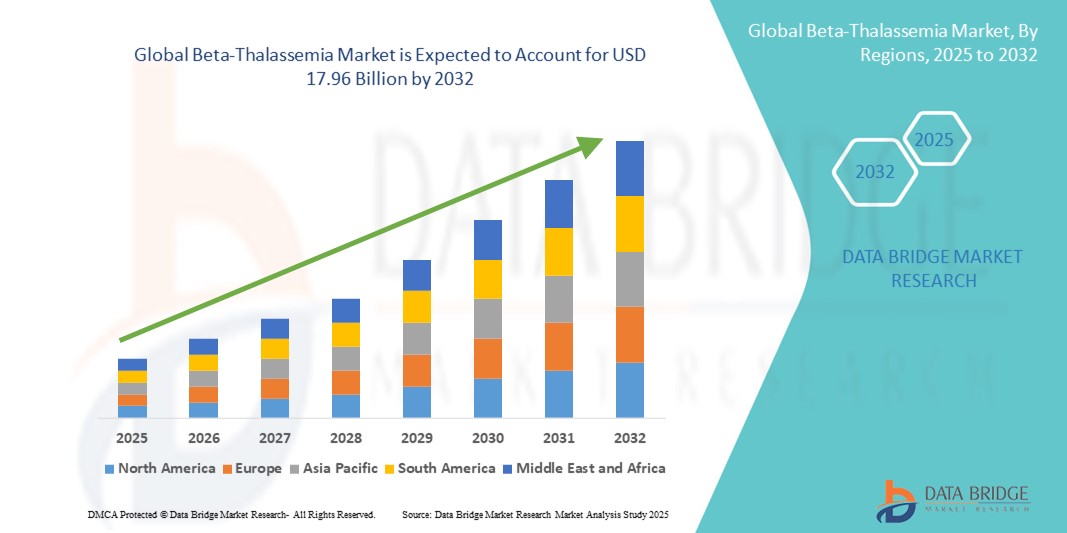
  • The global beta-thalassemia market size was valued at USD 9.70 billion in 2024 and is expected to reach USD 17.96 billion by 2032, at a CAGR of 8.00% during the forecast period
  • The market growth is largely fueled by increasing prevalence of genetic blood disorders, advancements in therapeutic interventions, and rising awareness about early diagnosis and treatment options for Beta-Thalassemia
  • Furthermore, ongoing research and development, coupled with the introduction of innovative therapies such as gene therapy, novel pharmacological agents, and improved blood transfusion protocols, are driving the adoption of Beta-Thalassemia treatments, thereby significantly boosting the industry's growth.

Beta-Thalassemia Market Analysis

  • The Beta-Thalassemia market is witnessing significant growth due to increasing prevalence of genetic blood disorders, rising awareness about early diagnosis, and advancements in treatment options such as gene therapy, medications, and supportive care. Early detection and improved management strategies are driving demand across hospitals, specialty clinics, and diagnostic centers
  • The escalating demand for Beta-Thalassemia treatments is primarily fueled by the growing prevalence of hemoglobin disorders globally, improved healthcare infrastructure, and government initiatives supporting patient care and genetic testing programs. Enhanced patient awareness and accessibility to therapies further contribute to market expansion
  • North America dominated the Beta-Thalassemia market with the largest revenue share of 41.2% in 2024, supported by advanced healthcare infrastructure, widespread availability of treatment options, and a high prevalence of diagnosed cases. The U.S. is witnessing substantial growth due to increasing adoption of innovative therapies, gene-editing research initiatives, and comprehensive patient support programs that facilitate treatment access and long-term disease management
  • Asia-Pacific is expected to be the fastest-growing region in the Beta-Thalassemia market during the forecast period, registering a CAGR of 22% from 2025 to 2032, driven by increasing urbanization, rising disposable incomes, expanding healthcare access, and awareness programs. Countries such as India, China, and Thailand are actively adopting screening programs and modern therapeutic interventions, which is significantly fueling regional market growth
  • Hemoglobin Electrophoresis with Hemoglobin F and A2 Quantitation dominated the Beta-Thalassemia market with a revenue share of 48% in 2024, owing to its ability to provide the most precise identification of Beta-Thalassemia variants

Report Scope and Beta-Thalassemia Market Segmentation  

Attributes

Beta-Thalassemia Key Market Insights

Segments Covered

  • By Type: Beta Thalassemia Minor, Beta Thalassemia Intermedia, Beta Thalassemia Major
  • By Treatment: Iron Chelating Drugs, Erythroid Maturation Agents, Stem Cell Therapy, Blood Transfusion, and Others
  • By Diagnosis: Complete Blood Count (CBC), Hemoglobin Electrophoresis with Hemoglobin F and A2 Quantitation, and Others
  • By Symptoms: Shortness of Breath, Tiredness, Fast Heartbeat, Moodiness, Jaundice, Slow Growth, and Others
  • By Dosage: Injection, Tablets, and Others
  • By Route of Administration: Oral, Intravenous, and Others
  • By End-Users: Clinic, Hospital, and Others
  • By Distribution Channel: Hospital Pharmacy, Retail Pharmacy, and Online Pharmacy

Countries Covered

North America

  • U.S.
  • Canada
  • Mexico

Europe

  • Germany
  • France
  • U.K.
  • Netherlands
  • Switzerland
  • Belgium
  • Russia
  • Italy
  • Spain
  • Turkey
  • Rest of Europe

Asia-Pacific

  • China
  • Japan
  • India
  • South Korea
  • Singapore
  • Malaysia
  • Australia
  • Thailand
  • Indonesia
  • Philippines
  • Rest of Asia-Pacific

Middle East and Africa

  • Saudi Arabia
  • U.A.E.
  • South Africa
  • Egypt
  • Israel
  • Rest of Middle East and Africa

South America

  • Brazil
  • Argentina
  • Rest of South America

Key Market Players

Market Opportunities

  • Expansion of Gene Therapy and Advanced Treatments
  • Emerging Markets and Increased Healthcare Access

Value Added Data Infosets

In addition to the insights on market scenarios such as market value, growth rate, segmentation, geographical coverage, and major players, the market reports curated by the Data Bridge Market Research also include in-depth expert analysis, pricing analysis, brand share analysis, consumer survey, demography analysis, supply chain analysis, value chain analysis, raw material/consumables overview, vendor selection criteria, PESTLE Analysis, Porter Analysis, and regulatory framework.

Beta-Thalassemia Market Trends

Growing Focus on Advanced Therapeutics and Patient-Centric Care

  • A significant and accelerating trend in the global Beta-Thalassemia market is the increasing emphasis on advanced therapeutics, personalized treatment approaches, and improved patient care programs. This trend is enhancing the overall management of Beta-Thalassemia and improving patient quality of life
    • For instance, the introduction of novel gene therapies and targeted pharmacological treatments has allowed patients to achieve better hemoglobin levels and reduced dependence on regular blood transfusions. These developments are reshaping treatment protocols and setting new standards in disease management
  • Recent advancements in iron chelation therapies are improving long-term outcomes by effectively managing iron overload, one of the major complications associated with Beta-Thalassemia. This has become a central focus for clinicians aiming to reduce treatment-related risks and improve patient adherence
  • The growing adoption of patient-centric care models, including regular monitoring, home-based treatments, and telemedicine consultations, is providing more flexible and accessible healthcare solutions for Beta-Thalassemia patients
  • Healthcare providers and pharmaceutical companies are increasingly investing in education programs and support initiatives, which help patients and caregivers manage the condition more effectively while improving adherence to treatment regimens
  • The trend towards integrating comprehensive care with advanced treatment options is reshaping expectations for Beta-Thalassemia management, emphasizing long-term outcomes, reduced complications, and enhanced patient well-being
  • Companies such as Bluebird Bio and Novartis are actively developing and expanding access to innovative therapies, including gene editing approaches and disease-modifying drugs, addressing the evolving needs of patients globally
  • The demand for advanced Beta-Thalassemia treatments is growing rapidly across both developed and emerging markets, driven by increasing disease awareness, expanding diagnostic capabilities, and rising availability of specialized therapies

Beta-Thalassemia Market Dynamics

Driver

Growing Need Due to Rising Disease Awareness and Advanced Treatment Adoption

  • The increasing prevalence of Beta-Thalassemia globally, coupled with rising awareness among patients and healthcare providers, is a significant driver for the heightened demand for advanced therapeutic options
    • For instance, in April 2024, pharmaceutical companies announced the expansion of clinical trials for novel gene therapies and targeted pharmacological treatments aimed at reducing transfusion dependence and managing iron overload in Beta-Thalassemia patients. Such initiatives are expected to drive industry growth during the forecast period
  • As patient awareness increases, demand for personalized treatment regimens, improved monitoring protocols, and comprehensive care programs has risen, providing a more structured approach to disease management
  • Furthermore, the growing adoption of iron chelation therapies, alongside supportive care measures such as nutritional supplementation and regular monitoring, is enhancing patient outcomes and reducing long-term complications
  • The convenience and efficacy of newer therapies, including oral medications and home-administered supportive treatments, are key factors propelling the adoption of advanced Beta-Thalassemia management strategies across hospitals and specialized clinics

Restraint/Challenge

Concerns Regarding High Treatment Costs and Limited Accessibility

  • The high cost of advanced Beta-Thalassemia therapies, including gene therapies, novel pharmacological treatments, and specialized iron chelation regimens, remains a major barrier to widespread adoption. Patients in low- and middle-income regions often face financial constraints, limiting access to these potentially life-changing treatments
  • In addition to cost, limited availability of specialized healthcare centers, trained hematologists, and diagnostic laboratories in certain regions hampers timely diagnosis and treatment initiation. This can lead to delays in care and suboptimal management of the disease
  • Insurance coverage gaps and reimbursement challenges further exacerbate the problem, as many patients may not be able to afford long-term treatment and monitoring without financial support
  • Patients in rural or underdeveloped areas often face logistical challenges, including travel to specialized clinics, lack of consistent follow-up care, and difficulties in obtaining essential medications or transfusion services
  • Adherence to complex treatment regimens can also be a concern, particularly for therapies requiring frequent hospital visits, regular monitoring, or long-term medication schedules. Non-adherence can negatively impact therapeutic outcomes and increase the risk of complications
  • Addressing these challenges requires comprehensive strategies such as patient assistance programs, government initiatives to subsidize treatment, expansion of specialized care centers, and training programs for healthcare providers in underserved regions
  • Enhanced awareness campaigns and community-based healthcare initiatives are also crucial to educate patients and caregivers about disease management, early intervention, and the benefits of sustained treatment adherence
  • Overcoming these financial, logistical, and accessibility barriers will be vital for expanding the Beta-Thalassemia market, improving patient outcomes, and ensuring equitable access to advanced therapeutic solutions globally.

Beta-Thalassemia Market Scope

The market is segmented into on the basis of type, treatment, diagnosis, symptoms, dosage, route of administration, end-users, and distribution channel.

  • By Type

On the basis of type, the Beta-Thalassemia market is segmented into Beta Thalassemia Minor, Beta Thalassemia Intermedia, and Beta Thalassemia Major. The Beta Thalassemia Major segment dominated the market with a revenue share of 45% in 2024, as it represents the most severe form of the disorder requiring intensive management, frequent blood transfusions, and long-term therapeutic intervention. Patients with Beta Thalassemia Major face chronic anemia and other complications, which makes monitoring and treatment crucial. The segment benefits from increasing awareness about genetic counseling and early diagnosis, particularly in high-prevalence regions.

Beta Thalassemia Intermedia is expected to witness the fastest CAGR of 11.2% from 2025 to 2032, as moderate cases are increasingly detected through advanced diagnostic techniques, driving the adoption of targeted treatment plans. Beta Thalassemia Minor also maintains steady growth due to genetic screening programs, prenatal testing, and awareness campaigns, which encourage early interventions and preventive strategies. Rising prevalence in countries with high incidence rates and expansion of healthcare infrastructure are supporting overall market growth in this segment.

  • By Treatment

On the basis of treatment, the Beta-Thalassemia market is segmented into Iron chelating drugs, erythroid maturation agents, stem cell therapy, blood transfusion, and others. Blood Transfusion dominated the market with a revenue share of 42% in 2024, as it continues to serve as the cornerstone therapy for patients with severe Beta-Thalassemia, effectively increasing hemoglobin levels and improving overall quality of life. Regular transfusions are essential, particularly for Beta-Thalassemia Major, where ongoing management prevents complications such as anemia-induced organ damage. The segment is further driven by hospital-based care models, the growing number of transfusion centers, and strong clinical adherence to treatment protocols.

Erythroid Maturation Agents are expected to witness the fastest CAGR of 10.8% from 2025 to 2032, due to their unique ability to stimulate red blood cell production in patients experiencing ineffective erythropoiesis, offering a therapeutic alternative to frequent transfusions. Iron Chelating Drugs remain critical for managing transfusion-related iron overload, minimizing organ toxicity and improving long-term survival.

  • By Diagnosis

On the basis of diagnosis, the Beta-Thalassemia market is segmented into Complete Blood Count (CBC), Hemoglobin Electrophoresis with Hemoglobin F and A2 Quantitation, and Others. Hemoglobin Electrophoresis with Hemoglobin F and A2 Quantitation dominated the market with a revenue share of 48% in 2024, owing to its ability to provide the most precise identification of Beta-Thalassemia variants. This method allows differentiation between Beta-Thalassemia Major, Intermedia, and Minor, which is critical for formulating tailored treatment strategies and monitoring therapeutic effectiveness. Electrophoresis is widely preferred by clinicians due to its accuracy in measuring hemoglobin subtypes, which guides iron chelation therapy, transfusion schedules, and genetic counseling.

The Complete Blood Count (CBC) segment is expected to witness the fastest CAGR of 9.5% from 2025 to 2032, supported by its widespread accessibility, low cost, and ability to detect anemia early in routine screenings. CBC tests serve as an initial diagnostic tool, helping healthcare providers identify potential patients for further confirmatory tests like electrophoresis.

  • By Symptoms

On the basis of symptoms, the Beta-Thalassemia market is segmented into shortness of breath, tiredness, fast heartbeat, moodiness, jaundice, slow growth, and others. Tiredness dominated the market with a share of 38% in 2024, reflecting the chronic anemia and fatigue commonly experienced by patients with Beta-Thalassemia. This persistent fatigue often prompts medical consultations and contributes to sustained demand for supportive therapies, transfusions, and iron chelation management. Patients exhibiting shortness of breath, fast heartbeat, and jaundice also require ongoing clinical monitoring, creating a strong demand for integrated healthcare solutions and specialized treatment plans.

Shortness of Breath is expected to witness the fastest CAGR of 8.9% from 2025 to 2032, driven by increasing awareness among caregivers and clinicians about early symptom detection and intervention strategies. Symptom-based monitoring is becoming a key component of personalized patient care, ensuring that therapeutic plans are adapted to disease severity and progression. In addition, symptoms such as slow growth, mood disturbances, and other related clinical manifestations are also contributing to the holistic management of Beta-Thalassemia, further supporting the demand for comprehensive diagnostic and treatment services in both hospital and outpatient settings.

  • By Dosage

On the basis of dosage, the Beta-Thalassemia market is segmented into injection, tablets, and others. Tablets dominated the market with a revenue share of 46% in 2024, primarily due to their convenience, ease of administration, and strong patient compliance, especially for long-term oral iron chelation therapy. Tablet-based treatments are particularly suitable for outpatient care, reducing hospital visits and allowing patients to adhere to therapy at home, which is critical for maintaining consistent hemoglobin and iron levels.

Injection is expected to witness the fastest CAGR of 10.2% from 2025 to 2032, as it is extensively used for hospital-administered therapies such as blood transfusions, erythroid maturation agents, and emerging parenteral therapies requiring precise dosing. Injectable formulations are essential for rapid intervention in severe cases and for therapies that cannot be delivered orally, ensuring effective treatment outcomes.

  • By Route of Administration

On the basis of route of administration, the Beta-Thalassemia market is segmented into oral, intravenous, and others. Oral administration dominated the market with a revenue share of 47% in 2024, primarily due to its ease of use, convenience, and strong patient adherence, especially in home-based care settings. Oral therapies, including iron chelators and supportive medications, allow patients to maintain treatment regimens without frequent hospital visits, which is particularly valuable for long-term management of Beta-Thalassemia. This route is preferred for mild and moderate cases and is often combined with monitoring programs to ensure effectiveness.

Intravenous administration is expected to witness the fastest CAGR of 9.8% from 2025 to 2032, driven by its critical role in blood transfusions, erythroid maturation agents, and hospital-based therapeutic interventions for severe cases. Hospitals increasingly use intravenous methods for rapid and precise delivery of therapies, improving patient outcomes and reducing complications. The synergy between home-based oral therapy and hospital-administered intravenous treatments is emerging as a key trend, supporting more personalized, flexible, and effective disease management.

  • By End-Users

On the basis of end-users, the Beta-Thalassemia market is segmented into clinics, hospitals, and others. Hospitals dominated with a revenue share of 50% in 2024, owing to their ability to provide integrated care encompassing diagnostics, blood transfusions, iron chelation therapy, and continuous monitoring for severe Beta-Thalassemia cases. Hospitals are equipped with specialized hematology departments and advanced treatment facilities, making them the primary choice for patients requiring intensive care.

Clinics are expected to witness the fastest CAGR of 8.7% from 2025 to 2032, as they offer accessible outpatient care, routine follow-ups, and localized therapy management for patients with milder forms of the disease. Clinics are increasingly being equipped with diagnostic tools and monitoring systems to provide community-based care and reduce the burden on larger hospitals. The “Others” segment includes home healthcare services, diagnostic centers, and specialty centers, which are playing an increasingly important role in decentralized patient care and supporting broader healthcare access, particularly in remote or underdeveloped regions.

  • By Distribution Channel

On the basis of distribution channel, the Beta-Thalassemia market is segmented into hospital pharmacy, retail pharmacy, and online pharmacy. Hospital pharmacies dominated with a revenue share of 44% in 2024, as they are directly linked with patient treatment cycles, providing immediate access to prescribed therapies, iron chelators, and supportive medications. Hospital pharmacies ensure seamless integration with inpatient and outpatient services, allowing timely supply and administration of critical therapies.

Online Pharmacies are expected to witness the fastest CAGR of 12% from 2025 to 2032, driven by increasing e-commerce adoption, growing patient preference for home delivery of medications, and the expansion of digital health platforms. Online channels facilitate convenient, contactless access to therapies, improving adherence and supporting home-based care models.

Beta-Thalassemia Market Regional Analysis

  • North America dominated the beta-thalassemia market with the largest revenue share of 41.2% in 2024, supported by advanced healthcare infrastructure, widespread availability of treatment options, and a high prevalence of diagnosed cases
  • The region benefits from well-established clinical research networks, government-backed initiatives for rare disease management, and comprehensive patient support programs that facilitate early diagnosis and long-term care
  • North American healthcare providers are increasingly adopting innovative therapies, including gene-editing research initiatives and modern pharmacological interventions, which are improving patient outcomes and disease management

U.S. Beta-Thalassemia Market Insight

The U.S. beta-thalassemia market captured the largest revenue share of 81% in 2024 within North America, fueled by the increasing prevalence of Beta-Thalassemia cases and robust clinical research activities. Substantial investments in gene therapy and supportive care programs are enhancing treatment accessibility and improving quality of life for patients. Growing focus on early diagnosis, comprehensive transfusion management, and iron chelation therapies is further driving market expansion. Collaborations between pharmaceutical companies, research institutions, and healthcare providers are promoting the development of novel therapeutics and patient-centric programs.

Europe Beta-Thalassemia Market Insight

The Europe beta-thalassemia market is projected to expand at a substantial CAGR during the forecast period, driven by increasing awareness, structured treatment programs, and the presence of specialized healthcare centers. National health initiatives in countries such as the U.K. and Germany emphasize early detection, regular monitoring, and patient education to enhance adherence and long-term disease management. Growth is supported by multidisciplinary treatment approaches integrating transfusions, iron chelation, and emerging gene therapies. Collaborations between public and private institutions foster clinical research, innovation in therapies, and patient support services across the region.

U.K. Beta-Thalassemia Market Insight

The U.K. beta-thalassemia market is anticipated to grow at a noteworthy CAGR during the forecast period, driven by the increasing implementation of national screening programs and heightened disease awareness. Structured clinical care, patient education, and government-backed rare disease initiatives support better management and treatment outcomes. The healthcare system’s focus on specialized treatment centers and accessible therapies enhances patient care across both pediatric and adult populations.

Germany Beta-Thalassemia Market Insight

The Germany beta-thalassemia market is expected to expand at a considerable CAGR during the forecast period, fueled by rising awareness of rare blood disorders and the availability of advanced treatment options. Well-developed healthcare infrastructure, emphasis on innovation, and the adoption of eco-conscious and advanced therapeutic solutions are key growth drivers. Multidisciplinary care, early diagnosis programs, and participation in international clinical trials further reinforce the market’s expansion.

Asia-Pacific Beta-Thalassemia Market Insight

The Asia-Pacific Beta-Thalassemia market is poised to grow at the fastest CAGR of 22% during the forecast period of 2025 to 2032, driven by increasing urbanization, rising disposable incomes, and expanding healthcare access in countries such as India, China, and Japan. Implementation of neonatal screening programs and government-backed awareness campaigns is enabling early diagnosis and timely intervention. Expansion of hospital networks, accessibility to modern therapies, and growing patient awareness are fueling regional market growth. Countries such as India and China are actively investing in gene therapy research, transfusion protocols, and iron chelation programs, improving disease management.

Japan Beta-Thalassemia Market Insight

The Japan beta-thalassemia market is gaining momentum due to the country’s high-tech healthcare system, urbanization, and focus on patient-centric therapies. Structured care programs, regular monitoring, and access to advanced therapeutic options are enhancing patient outcomes. Gene therapy research, combined with supportive transfusion and chelation protocols, is driving market adoption across both pediatric and adult populations.

China Beta-Thalassemia Market Insight

The China beta-thalassemia market accounted for the largest revenue share in the Asia-Pacific region in 2024, driven by rapid urbanization, increasing healthcare infrastructure, and government-supported rare disease initiatives. Neonatal screening programs, growing patient awareness, and accessibility to advanced treatment options are key growth factors. Expansion of hospital networks and local manufacturing of therapies ensure improved treatment availability and affordability, further propelling market growth.

Beta-Thalassemia Market Share

The Beta-Thalassemia industry is primarily led by well-established companies, including:

  • bluebird bio, Inc. (U.S.)
  • Protagonist Therapeutics Inc. (U.S.)
  • Agios Pharmaceuticals, Inc. (U.S.)
  • Ionis Pharmaceuticals, Inc. (U.S.)
  • Vifor Pharma Group (Switzerland)
  • Sangamo Therapeutics, Inc. (U.S.)
  • CRISPR Therapeutics AG (Switzerland)
  • Biogen Inc. (U.S.)
  • Novartis AG (Switzerland)
  • F. Hoffmann-La Roche AG (Switzerland)
  • Vertex Pharmaceuticals Incorporated (U.S.)
  • Editas Medicine, Inc. (U.S.)
  • Beam Therapeutics Inc. (U.S.)
  • Intellia Therapeutics, Inc. (U.S.)
  • Regeneron Pharmaceuticals, Inc. (U.S.)
  • Gilead Sciences, Inc. (U.S.)
  • Celgene Corporation (U.S.)
  • Amgen Inc. (U.S.)
  • Sanofi S.A. (France)
  • AbbVie Inc. (U.S.)

Latest Developments in Global Beta-Thalassemia Market

  • In August 2022, the U.S. Food and Drug Administration (FDA) approved betibeglogene autotemcel (Zynteglo), the first gene therapy for transfusion-dependent β-thalassemia. This one-time treatment involves inserting a functional copy of the β-globin gene into a patient's own hematopoietic stem cells, enabling the production of normal hemoglobin and reducing or eliminating the need for regular blood transfusions
  • In January 2024, the FDA approved exagamglogene autotemcel (Casgevy), a second cell-based gene therapy for β-thalassemia. Developed by Vertex Pharmaceuticals and CRISPR Therapeutics, Casgevy utilizes CRISPR-Cas9 gene-editing technology to correct the underlying genetic mutation in patients' stem cells, allowing for the production of healthy red blood cells
  • In November 2024, Vertex Pharmaceuticals reported that the first non-clinical trial patient received Casgevy in the third quarter of 2024. This milestone marked the beginning of the treatment's availability to patients outside of clinical trials, with plans to expand to approximately 75 authorized centers globally
  • In April 2025, the Children's Hospital of Philadelphia announced that it had administered the first FDA-approved gene therapy for β-thalassemia to a patient. This event underscored the growing accessibility and adoption of gene therapies for rare blood disorders
  • In June 2025, a study presented at a medical conference suggested that gene therapy for transfusion-dependent β-thalassemia may contribute to improved growth in pediatric patients. The study observed that patients treated with gene therapy between November 2020 and September 2023 showed positive growth outcomes, indicating potential benefits beyond hematologic improvement


SKU-

世界初のマーケットインテリジェンスクラウドに関するレポートにオンラインでアクセスする
  • インタラクティブなデータ分析ダッシュボード
  • 成長の可能性が高い機会のための企業分析ダッシュボード
  • カスタマイズとクエリのためのリサーチアナリストアクセス
  • インタラクティブなダッシュボードによる競合分析
  • 最新ニュース、更新情報、トレンド分析
  • 包括的な競合追跡のためのベンチマーク分析のパワーを活用
デモのリクエスト

調査方法

データ収集と基準年分析は、大規模なサンプル サイズのデータ​​収集モジュールを使用して行われます。この段階では、さまざまなソースと戦略を通じて市場情報または関連データを取得します。過去に取得したすべてのデータを事前に調査および計画することも含まれます。また、さまざまな情報ソース間で見られる情報の不一致の調査も含まれます。市場データは、市場統計モデルと一貫性モデルを使用して分析および推定されます。また、市場シェア分析と主要トレンド分析は、市場レポートの主要な成功要因です。詳細については、アナリストへの電話をリクエストするか、お問い合わせをドロップダウンしてください。

DBMR 調査チームが使用する主要な調査方法は、データ マイニング、データ変数が市場に与える影響の分析、および一次 (業界の専門家) 検証を含むデータ三角測量です。データ モデルには、ベンダー ポジショニング グリッド、市場タイムライン分析、市場概要とガイド、企業ポジショニング グリッド、特許分析、価格分析、企業市場シェア分析、測定基準、グローバルと地域、ベンダー シェア分析が含まれます。調査方法について詳しくは、お問い合わせフォームから当社の業界専門家にご相談ください。

カスタマイズ可能

Data Bridge Market Research は、高度な形成的調査のリーダーです。当社は、既存および新規のお客様に、お客様の目標に合致し、それに適したデータと分析を提供することに誇りを持っています。レポートは、対象ブランドの価格動向分析、追加国の市場理解 (国のリストをお問い合わせください)、臨床試験結果データ、文献レビュー、リファービッシュ市場および製品ベース分析を含めるようにカスタマイズできます。対象競合他社の市場分析は、技術ベースの分析から市場ポートフォリオ戦略まで分析できます。必要な競合他社のデータを、必要な形式とデータ スタイルでいくつでも追加できます。当社のアナリスト チームは、粗い生の Excel ファイル ピボット テーブル (ファクト ブック) でデータを提供したり、レポートで利用可能なデータ セットからプレゼンテーションを作成するお手伝いをしたりすることもできます。


Frequently Asked Questions

市場はGlobal Beta-Thalassemia Market Segmentation, By Type (Beta Thalassemia Minor, Beta Thalassemia Intermedia, and Beta Thalassemia Major), Treatment (Iron Chelating Drugs, Erythroid Maturation Agents, Stem Cell Therapy, Blood Transfusion, and Others), Diagnosis (Complete Blood Count (CBC), Hemoglobin Electrophoresis with Hemoglobin F and A2 Quantitation, and Others), Symptoms (Shortness of Breath, Tiredness, Fast Heartbeat, Moodiness, Jaundice, Slow Growth, and Others), Dosage (Injection, Tablets, and Others), Route of Administration (Oral, Intravenous, and Others), End-Users (Clinic, Hospital, Others), Distribution Channel (Hospital Pharmacy, Retail Pharmacy, and Online Pharmacy) – Industry Trends and Forecast to 2032 に基づいて分類されます。
Global Beta-Thalassemia Marketの規模は2024年にUSD 9.70 USD Billionと推定されました。
Global Beta-Thalassemia Marketは2025年から2032年の予測期間にCAGR 8%で成長すると見込まれています。
市場で活動している主要プレーヤーはbluebird bioInc. Protagonist Therapeutics Inc. AGiosInc. Ionis Pharmaceuticals Vifor Pharma Group Sangamo Therapeutics CRISPR Therapeutics ,です。
この市場レポートはNorth Americaのデータを含みます。
Testimonial