世界の角膜トモグラフィー市場規模、シェア、トレンド分析レポート
Market Size in USD Billion
CAGR :
%
USD
841.00 Million
USD
1,098.90 Million
2025
2033
| 2026 –2033 | |
| USD 841.00 Million | |
| USD 1,098.90 Million | |
|
|
|
|
世界の角膜トモグラフィー市場のセグメンテーション:システム別(統合システムおよび角膜トポグラファー)、製品タイプ別(プラシドベースシステム、評価ベースシステム、干渉計システム)、用途別(角膜拡張症の診断、白内障手術の評価、コンタクトレンズのフィッティング、角膜移植後、屈折矯正手術後の評価)、エンドユーザー別(病院、眼科クリニック、外来手術センター、その他) - 業界動向と2033年までの予測
角膜トモグラフィー市場規模
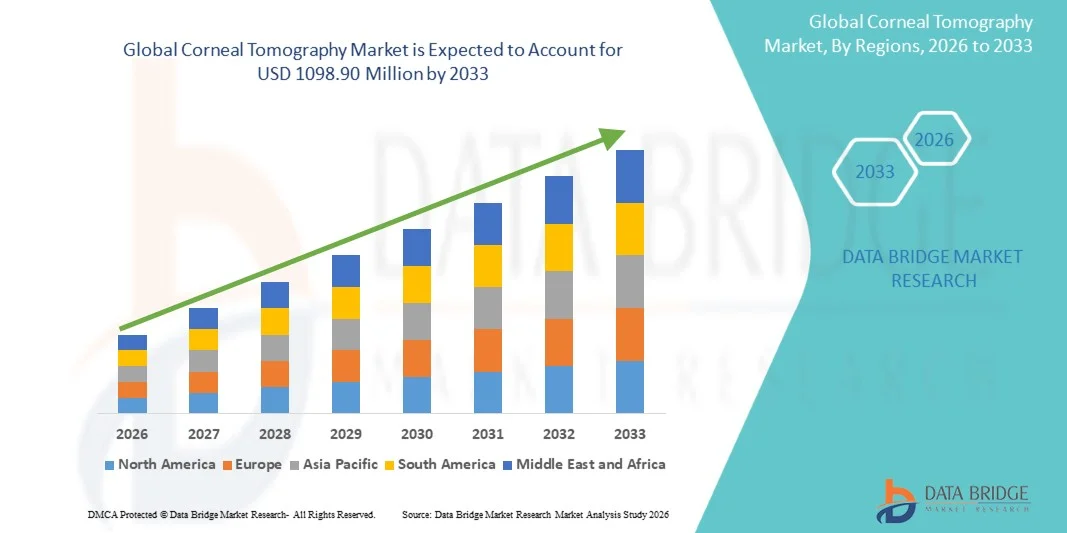
- 世界の角膜トモグラフィー市場規模は、2025年には8億4,100万米ドルと評価され、予測期間中の年平均成長率(CAGR)3.40%で、2033年には10億9,890万米ドル に達すると予測されています 。
- 市場の成長は、円錐角膜、乱視、角膜ジストロフィーなどの眼疾患の罹患率の上昇と、眼科診断機器の継続的な技術進歩によって大きく促進されており、これにより眼科医療における精度と早期発見が向上している。
- さらに、屈折矯正手術や白内障手術における正確な術前・術後評価への需要の高まりにより、角膜トモグラフィーシステムは現代眼科医療において不可欠な診断ツールとしての地位を確立しつつあります。これらの要因が相まって、角膜トモグラフィーソリューションの導入が加速し、業界の成長を大きく後押ししています。
角膜断層撮影市場分析
- 角膜の詳細な三次元画像化とマッピングに使用される角膜トモグラフィーシステムは、その高い精度と包括的な角膜構造解析能力により、角膜異常の検出や屈折矯正手術計画の支援において、眼科における不可欠な診断ツールになりつつあります。
- 角膜断層撮影装置の需要増加は、主に円錐角膜や乱視などの眼疾患の罹患率の上昇、屈折矯正手術や白内障手術の増加、そして早期かつ正確な眼科診断の必要性の高まりによって促進されている。
- 北米は、2025年に38.6%という最大の収益シェアを獲得し、角膜トモグラフィー市場を牽引しました。これは、高度な医療インフラ、技術的に高度な眼科診断機器の高い普及率、そして主要な眼科機器メーカーの強力な存在感によって特徴づけられます。特に米国では、屈折矯正手術の評価に対する需要の高まりを背景に、病院や専門眼科クリニック全体で角膜トモグラフィーの使用が大幅に増加しています。
- アジア太平洋地域は、中国、インド、日本などの国々における眼の健康に対する意識の高まり、医療費の増加、眼科クリニックの拡大、視力矯正手術を受ける患者数の増加により、予測期間中に角膜トモグラフィー市場で最も急速に成長する地域になると予想されています。
- 統合システム分野は、複数の診断技術を単一のプラットフォームに統合して包括的な角膜評価を行うことができるため、2025年には市場収益の58.4%を占め、最大のシェアを獲得しました。
レポートの範囲と角膜トモグラフィー市場のセグメンテーション
|
属性 |
角膜トモグラフィーの主要市場インサイト |
|
対象分野 |
|
|
対象国 |
北米
ヨーロッパ
アジア太平洋
中東およびアフリカ
南アメリカ
|
|
主要市場プレーヤー |
• Carl Zeiss Meditec AG (ドイツ) |
|
市場機会 |
|
|
Value Added Data Infosets |
In addition to the insights on market scenarios such as market value, growth rate, segmentation, geographical coverage, and major players, the market reports curated by the Data Bridge Market Research also include in-depth expert analysis, patient epidemiology, pipeline analysis, pricing analysis, and regulatory framework. |
Corneal Tomography Market Trends
“Growing Integration of Advanced Imaging and Diagnostic Technologies”
- A significant and accelerating trend in the global corneal tomography market is the increasing integration of advanced imaging technologies and digital diagnostic platforms to enhance the accuracy and efficiency of corneal assessment. Modern corneal tomography systems are designed to provide highly detailed three-dimensional images of the cornea, enabling ophthalmologists to evaluate corneal structure, curvature, and thickness with greater precision
- For instance, advanced corneal tomography devices such as Scheimpflug imaging systems and optical coherence tomography (OCT)-based platforms allow clinicians to perform comprehensive corneal analysis. These technologies help detect subtle abnormalities in the cornea that may not be visible through conventional diagnostic techniques, thereby improving early diagnosis of corneal diseases
- The integration of digital imaging software and automated diagnostic tools is further enhancing the capabilities of corneal tomography systems. These solutions enable clinicians to generate detailed corneal maps, monitor disease progression, and plan surgical procedures such as refractive surgery and corneal transplantation with improved accuracy. In addition, advanced software platforms allow seamless data storage, comparison of historical scans, and improved clinical decision-making
- Furthermore, the growing adoption of corneal tomography in refractive surgery screening and keratoconus detection is significantly supporting market growth. Healthcare providers are increasingly utilizing these technologies to evaluate patient suitability for procedures such as LASIK and to identify early-stage corneal disorders
- This trend toward technologically advanced diagnostic tools is reshaping ophthalmic imaging practices worldwide. As a result, manufacturers are focusing on developing high-resolution, user-friendly corneal tomography systems with improved imaging speed, enhanced diagnostic algorithms, and better integration with ophthalmic diagnostic workflows
- The demand for precise, non-invasive diagnostic technologies continues to rise across hospitals, ophthalmology clinics, and specialized eye care centers, further driving the adoption of corneal tomography systems globally
Corneal Tomography Market Dynamics
Driver
“Rising Prevalence of Corneal Disorders and Increasing Demand for Refractive Surgeries”
- The increasing prevalence of corneal disorders, such as keratoconus, corneal dystrophies, and post-surgical corneal complications, is a significant driver for the growth of the corneal tomography market. These conditions require accurate corneal imaging and detailed structural analysis, which has increased the reliance on advanced corneal tomography systems among ophthalmologists
- For instance, the growing number of refractive surgeries performed globally has significantly increased the demand for pre-operative and post-operative corneal evaluation technologies. Corneal tomography systems play a crucial role in assessing corneal thickness, curvature, and structural stability before procedures such as LASIK, PRK, and other vision correction surgeries
- As awareness regarding eye health continues to grow, patients are increasingly seeking advanced diagnostic services for early detection of eye disorders. Corneal tomography provides detailed imaging that supports early identification of corneal abnormalities, enabling timely treatment and improved patient outcomes
- Furthermore, the expansion of ophthalmology clinics, rising investments in eye care infrastructure, and increasing adoption of advanced ophthalmic imaging technologies are contributing to the growing demand for corneal tomography systems across healthcare facilities
- The increasing focus on preventive eye care and early diagnosis of corneal diseases is further supporting the adoption of corneal tomography devices in hospitals, specialty eye clinics, and ambulatory surgical centers
Restraint/Challenge
“High Equipment Costs and Limited Accessibility in Developing Regions”
- The relatively high cost associated with advanced corneal tomography systems represents a key challenge for widespread market adoption. These devices involve sophisticated imaging technologies and specialized software platforms, making them expensive for smaller clinics and healthcare facilities with limited budgets
- For instance, In many developing regions, healthcare providers face financial constraints that limit investments in advanced ophthalmic diagnostic equipment. As a result, many eye care centers continue to rely on conventional corneal diagnostic tools instead of adopting advanced tomography systems
- In addition, the need for trained professionals to operate corneal tomography devices and interpret complex imaging results can create barriers to adoption, particularly in regions where access to specialized ophthalmologists is limited. Proper training and clinical expertise are essential to ensure accurate diagnosis and effective utilization of these imaging technologies
- Furthermore, limited awareness regarding advanced corneal diagnostic technologies in certain regions may slow the adoption of corneal tomography systems, especially in rural or underserved healthcare settings
- Addressing these challenges through technological innovation, cost-effective device development, and increased investment in ophthalmic healthcare infrastructure will be essential for supporting the long-term growth of the corneal tomography market
Corneal Tomography Market Scope
The market is segmented on the basis of system, product type, application, and end user.
• By System
On the basis of system, the Corneal Tomography market is segmented into integrated system and corneal topographer. The integrated system segment dominated the largest market revenue share of 58.4% in 2025, driven by its ability to combine multiple diagnostic technologies into a single platform for comprehensive corneal assessment. Integrated systems enable ophthalmologists to obtain detailed information about corneal thickness, curvature, elevation, and anterior chamber parameters. These systems are widely used in hospitals and specialized eye clinics due to their high diagnostic accuracy and efficiency. The demand for integrated systems is increasing as eye care professionals prefer multi-functional devices that support advanced ophthalmic evaluations. Technological advancements in imaging technologies, including Scheimpflug imaging and optical coherence tomography integration, are further strengthening the segment’s growth. Healthcare providers also benefit from improved workflow efficiency when using integrated systems. The rising prevalence of refractive disorders and corneal diseases is increasing the demand for advanced diagnostic systems. Eye care centers are investing in integrated devices to enhance diagnostic precision and patient management. The growing number of refractive surgeries also increases reliance on integrated corneal analysis systems. Manufacturers are continuously developing improved systems with better software capabilities and data analytics. These factors collectively contribute to the strong dominance of the integrated system segment in the global corneal tomography market.
The corneal topographer segment is anticipated to witness the fastest growth rate of 13.9% CAGR from 2026 to 2033, driven by its affordability and accessibility for small and mid-sized ophthalmology clinics. Corneal topographers are widely used for mapping the curvature and shape of the cornea to assist in vision correction procedures. These systems provide detailed corneal surface measurements that are essential for diagnosing corneal abnormalities. The increasing demand for vision correction procedures such as LASIK and PRK is boosting the adoption of corneal topography devices. Eye care clinics prefer these devices because they offer reliable diagnostic information at a relatively lower cost compared to integrated systems. Technological improvements have enhanced the accuracy and imaging capabilities of modern corneal topographers. Growing awareness about early detection of corneal disorders also supports the adoption of these devices. Portable and compact corneal topography systems are gaining popularity among private clinics. The expansion of ophthalmology practices in emerging economies is further supporting market growth. Increasing patient volumes for refractive surgeries also encourage clinics to adopt dedicated topography systems. These factors are expected to significantly accelerate the growth of the corneal topographer segment during the forecast period.
• By Product Type
On the basis of product type, the Corneal Tomography market is segmented into placido-based systems, elevation-based systems, and interferometric systems. The placido-based systems segment dominated the largest market revenue share of 44.7% in 2025, primarily due to its long-standing use in corneal surface mapping and refractive surgery planning. Placido-based systems use concentric rings projected onto the cornea to analyze curvature and surface irregularities. These systems are widely used in ophthalmology clinics because of their reliability and cost-effectiveness. The technology is particularly effective for evaluating anterior corneal surface abnormalities and supporting contact lens fitting procedures. Eye care specialists frequently rely on placido-based systems for routine corneal examinations. The availability of user-friendly software and rapid imaging capabilities also contributes to their widespread adoption. Many ophthalmic clinics continue to prefer placido-based systems due to their established clinical validation. Increasing demand for refractive surgery and vision correction treatments also supports the growth of this segment. Technological improvements in placido-based imaging software are enhancing diagnostic accuracy. Healthcare providers value the speed and efficiency offered by these systems in busy clinical environments. Continuous product innovations by manufacturers further strengthen the segment’s market position. These factors collectively support the dominance of placido-based systems in the corneal tomography market.
The elevation-based systems segment is expected to witness the fastest CAGR of 14.6% from 2026 to 2033, driven by their ability to provide comprehensive three-dimensional corneal analysis. Elevation-based systems measure both anterior and posterior corneal surfaces, offering more detailed information compared to traditional methods. These systems are particularly useful for detecting early-stage keratoconus and other corneal ectatic disorders. Ophthalmologists increasingly prefer elevation-based systems for advanced diagnostic applications. Technological advancements in Scheimpflug imaging and optical scanning technologies are improving the performance of elevation-based devices. The rising number of refractive and cataract surgeries is increasing the need for highly accurate corneal measurements. Eye care professionals rely on these systems for pre-surgical planning and postoperative evaluation. Increasing awareness regarding early detection of corneal abnormalities is further driving adoption. Hospitals and specialized eye centers are investing in elevation-based systems to enhance diagnostic capabilities. Continuous research and development in ophthalmic imaging technologies also support the segment’s growth. The ability to provide comprehensive corneal analysis is expected to significantly boost the demand for elevation-based systems in the coming years.
• By Application
On the basis of application, the Corneal Tomography market is segmented into corneal ectatic disorder diagnosis, cataract surgery evaluation, contact lens fitting, post-penetrating keratoplasty, and evaluation of post-refractive surgery. The corneal ectatic disorder diagnosis segment dominated the largest market revenue share of 36.5% in 2025, driven by the increasing prevalence of conditions such as keratoconus and other corneal thinning disorders. Early detection of ectatic diseases is critical for preventing severe vision impairment. Corneal tomography systems provide detailed imaging of corneal thickness and shape, enabling accurate diagnosis of such conditions. Ophthalmologists rely heavily on tomography devices to identify early signs of keratoconus. Growing awareness about corneal health and improved diagnostic capabilities are encouraging routine screening for corneal abnormalities. Hospitals and eye clinics are adopting advanced tomography technologies for early disease detection. Rising demand for specialized eye care services is further supporting the segment’s growth. Technological advancements in corneal imaging allow more precise evaluation of corneal structures. Increasing patient visits to ophthalmology clinics for vision-related problems also contribute to segment expansion. Healthcare providers emphasize early diagnosis to improve treatment outcomes. These factors collectively contribute to the dominance of the corneal ectatic disorder diagnosis segment in the market.
The cataract surgery evaluation segment is expected to witness the fastest CAGR of 14.2% from 2026 to 2033, driven by the rising global prevalence of cataracts and the increasing number of cataract surgeries performed each year. Corneal tomography plays a crucial role in preoperative planning for cataract surgery by providing accurate corneal measurements. Surgeons rely on tomography systems to assess corneal curvature, thickness, and irregularities before surgery. Accurate corneal analysis helps improve surgical outcomes and patient satisfaction. The growing elderly population worldwide is increasing the demand for cataract surgeries. Advanced diagnostic imaging technologies are improving surgical planning and reducing complications. Ophthalmology clinics are investing in advanced tomography devices to support high-precision surgical procedures. Increasing adoption of premium intraocular lenses also requires precise corneal evaluation. Healthcare providers emphasize detailed preoperative assessment to optimize vision correction outcomes. Continuous improvements in ophthalmic diagnostic technologies further support the segment’s growth. These factors are expected to significantly drive the expansion of the cataract surgery evaluation segment during the forecast period.
• By End User
On the basis of end user, the Corneal Tomography market is segmented into hospitals, ophthalmology clinics, ambulatory surgical centers, and others. The hospitals segment dominated the largest market revenue share of 42.8% in 2025, driven by the availability of advanced ophthalmic diagnostic equipment and specialized medical professionals. Hospitals serve as primary healthcare centers for complex eye disease diagnosis and treatment. They often have the financial capacity to invest in advanced corneal tomography systems. Increasing patient admissions for eye disorders and surgical procedures also contribute to segment growth. Hospitals provide comprehensive ophthalmic services including diagnostics, surgery, and postoperative care. Government and private investments in hospital infrastructure further support the adoption of advanced ophthalmic technologies. Many hospitals operate specialized eye departments equipped with modern diagnostic devices. Rising prevalence of vision disorders and corneal diseases is increasing patient visits to hospitals. Hospitals also serve as training and research centers for ophthalmology, supporting technology adoption. Increasing healthcare expenditure and infrastructure development further strengthen hospital capabilities. These factors collectively ensure the dominance of the hospital segment in the global corneal tomography market.
The ophthalmology clinics segment is anticipated to witness the fastest growth rate of 15.1% CAGR from 2026 to 2033, driven by the rapid expansion of specialized eye care centers worldwide. Ophthalmology clinics focus exclusively on eye health services, making them key adopters of advanced diagnostic technologies. These clinics frequently invest in corneal tomography systems to support accurate diagnosis and treatment planning. The increasing number of refractive surgeries and vision correction procedures is driving patient visits to ophthalmology clinics. Clinics often offer faster appointments and specialized services compared to large hospitals. Growing awareness regarding regular eye examinations also encourages patients to visit specialized clinics. Technological advancements have made compact tomography devices more suitable for clinic settings. Many private ophthalmology practices are expanding their diagnostic capabilities to remain competitive. The rise of outpatient eye care services further boosts clinic-based diagnostic demand. Financial investments and partnerships with diagnostic technology providers are also supporting clinic expansion. These factors are expected to significantly accelerate the growth of the ophthalmology clinics segment during the forecast period.
Corneal Tomography Market Regional Analysis
- North America dominated the corneal tomography market with the largest revenue share of 38.6% in 2025, primarily driven by the presence of advanced healthcare infrastructure, a strong concentration of ophthalmology specialists, and the rapid adoption of technologically advanced ophthalmic diagnostic devices across hospitals and specialized eye care centers
- Healthcare providers in the region increasingly rely on corneal tomography systems for accurate corneal imaging, early detection of corneal disorders, and comprehensive pre-operative evaluation for refractive surgeries such as LASIK and PRK. The growing prevalence of eye disorders and the rising number of refractive surgical procedures are further strengthening the adoption of these diagnostic technologies
- This widespread adoption is further supported by strong healthcare spending, continuous technological innovation in ophthalmic imaging devices, and the presence of leading ophthalmology equipment manufacturers, establishing corneal tomography as a vital diagnostic tool across hospitals, ophthalmology clinics, and ambulatory surgical centers
U.S. Corneal Tomography Market Insight
The U.S. corneal tomography market captured the largest revenue share within North America in 2025, driven by the strong presence of advanced ophthalmology centers and the growing demand for precise diagnostic imaging in eye care. The increasing volume of refractive surgeries and the rising need for accurate corneal evaluation before and after surgical procedures are major factors supporting market growth in the country. In addition, the adoption of technologically advanced ophthalmic diagnostic devices across hospitals and specialized eye clinics continues to expand, as healthcare providers focus on improving early detection and treatment of corneal disorders. Furthermore, ongoing investments in eye care infrastructure, strong research activities, and the presence of major ophthalmic device manufacturers are further contributing to the expansion of the corneal tomography market in the U.S.
Europe Corneal Tomography Market Insight
The Europe corneal tomography market is projected to expand at a substantial CAGR throughout the forecast period, supported by the region’s well-established healthcare systems and increasing emphasis on early diagnosis of ophthalmic disorders. Growing awareness regarding eye health, along with rising demand for advanced ophthalmic imaging technologies, is encouraging healthcare providers to adopt corneal tomography devices across hospitals and specialized eye clinics. In addition, the rising number of patients undergoing vision correction procedures and the presence of advanced ophthalmology research institutions are contributing to the growing adoption of corneal diagnostic technologies across the region.
U.K. Corneal Tomography Market Insight
The U.K. corneal tomography market is anticipated to grow at a noteworthy CAGR during the forecast period, driven by the increasing demand for advanced eye diagnostic technologies and the growing prevalence of vision-related disorders. Healthcare providers in the country are increasingly incorporating corneal tomography systems into clinical practice to enhance diagnostic accuracy and improve treatment planning for corneal diseases. In addition, the rising number of refractive surgeries and increasing patient awareness regarding early detection of eye conditions are expected to further support the growth of the corneal tomography market in the U.K.
Germany Corneal Tomography Market Insight
The Germany corneal tomography market is expected to expand at a considerable CAGR during the forecast period, fueled by the country’s strong healthcare infrastructure and growing focus on advanced ophthalmic diagnostics. Germany is recognized for its emphasis on technological innovation and high-quality medical equipment, which supports the widespread adoption of sophisticated corneal imaging systems in hospitals and eye care clinics. The increasing demand for precise corneal analysis for refractive surgeries and corneal disease diagnosis is also contributing to the expansion of the corneal tomography market in the country.
Asia-Pacific Corneal Tomography Market Insight
The Asia-Pacific corneal tomography market is expected to grow at the fastest CAGR during the forecast period, driven by increasing awareness regarding eye health, expanding healthcare infrastructure, and rising healthcare expenditure across emerging economies. The growing prevalence of vision disorders, along with the increasing number of ophthalmology clinics and eye hospitals in countries such as China, India, and Japan, is significantly supporting market expansion. Furthermore, the rising demand for refractive surgery procedures and the adoption of advanced ophthalmic diagnostic technologies are expected to accelerate the growth of the corneal tomography market across the Asia-Pacific region.
Japan Corneal Tomography Market Insight
The Japan corneal tomography market is gaining momentum due to the country’s advanced healthcare system, high adoption of medical technologies, and growing demand for precision ophthalmic diagnostics. Healthcare providers in Japan are increasingly adopting advanced corneal tomography systems to improve diagnostic accuracy and support effective treatment planning for corneal diseases. In addition, the increasing aging population and the rising demand for vision correction procedures are contributing to the growing utilization of corneal imaging technologies across hospitals and specialized eye clinics in Japan.
China Corneal Tomography Market Insight
The China corneal tomography market accounted for the largest market revenue share in the Asia-Pacific region in 2025, attributed to the country’s rapidly expanding healthcare infrastructure and increasing investment in ophthalmic care services. The rising patient population requiring vision correction procedures, along with growing awareness regarding early detection of eye disorders, is significantly supporting the adoption of corneal tomography systems across hospitals and specialized eye care centers. Moreover, the expansion of ophthalmology clinics, government initiatives to improve healthcare accessibility, and the increasing availability of advanced ophthalmic diagnostic equipment are further propelling the growth of the corneal tomography market in China.
Corneal Tomography Market Share
The Corneal Tomography industry is primarily led by well-established companies, including:
• Carl Zeiss Meditec AG (Germany)
• Oculus Optikgeräte GmbH (Germany)
• Topcon Corporation (Japan)
• Nidek Co., Ltd. (Japan)
• Ziemer Ophthalmic Systems AG (Switzerland)
• Optovue, Inc. (U.S.)
• Tomey Corporation (Japan)
• Visionix (France)
• Cassini Technologies B.V. (Netherlands)
• Costruzione Strumenti Oftalmici (CSO) (Italy)
• Bausch + Lomb (Canada)
• Alcon (Switzerland)
• Heidelberg Engineering GmbH (Germany)
• Essilor Instruments (France)
• Lumedica (U.S.)
• Medmont International Pty Ltd (Australia)
• Tracey Technologies (U.S.)
• Reichert Technologies (U.S.)
• Bon Optic Vertriebsgesellschaft mbH (Germany)
• Appasamy Associates (India)
Latest Developments in Global Corneal Tomography Market
- In September 2024, OCULUS Optikgeräte GmbH introduced the Pentacam Cornea OCT at the European Society of Cataract and Refractive Surgeons (ESCRS) Congress in Barcelona. The new device combines Scheimpflug tomography with ultra-high-resolution spectral-domain optical coherence tomography (OCT), enabling clinicians to visualize corneal layers and microstructures with exceptional precision. This integrated imaging approach supports earlier detection of corneal abnormalities, improved surgical planning for refractive procedures, and enhanced monitoring of post-operative outcomes, thereby advancing the capabilities of modern corneal tomography systems
- In May 2024, Carl Zeiss Meditec announced enhancements to its CIRRUS 6000 optical coherence tomography (OCT) platform to support more advanced ophthalmic diagnostics. The updated system includes an expanded reference database and improved data-driven workflow capabilities, enabling ophthalmologists to obtain more precise imaging and analytics for eye diseases. These improvements support better clinical decision-making and expand the application of advanced imaging technologies used in corneal and anterior-segment diagnostics
- In September 2023, Carl Zeiss Meditec showcased the ZEISS ATLAS 500 corneal topography system at the European Society of Cataract and Refractive Surgeons (ESCRS). The system integrates corneal topography, pupillometry, and dry-eye assessment tools in a single device, enabling clinicians to perform comprehensive anterior segment analysis. The technology supports improved screening for refractive surgery candidates and enhances diagnostic accuracy in corneal evaluation
- In September 2025, Carl Zeiss Meditec highlighted new ophthalmic workflow innovations and digital diagnostic tools at the ESCRS conference. The company presented advancements in its corneal and refractive diagnostic ecosystem, including AI-enabled data analysis tools and integrated digital workflow solutions designed to improve clinical efficiency and patient-specific treatment planning. These developments reflect the growing integration of digital technologies with advanced ocular imaging systems used in corneal diagnostics
- In February 2025, OCULUS launched a new Myopia Software Package for its Pentacam AXL Wave system. The software integrates axial length measurement with corneal tomography analysis, allowing clinicians to monitor myopia progression, assess corneal stability, and manage orthokeratology treatments within a single diagnostic platform. This development strengthens the role of advanced corneal tomography systems in comprehensive refractive and myopia management program
SKU-
世界初のマーケットインテリジェンスクラウドに関するレポートにオンラインでアクセスする

- インタラクティブなデータ分析ダッシュボード
- 成長の可能性が高い機会のための企業分析ダッシュボード
- カスタマイズとクエリのためのリサーチアナリストアクセス
- インタラクティブなダッシュボードによる競合分析
- 最新ニュース、更新情報、トレンド分析
- 包括的な競合追跡のためのベンチマーク分析のパワーを活用
調査方法
データ収集と基準年分析は、大規模なサンプル サイズのデータ収集モジュールを使用して行われます。この段階では、さまざまなソースと戦略を通じて市場情報または関連データを取得します。過去に取得したすべてのデータを事前に調査および計画することも含まれます。また、さまざまな情報ソース間で見られる情報の不一致の調査も含まれます。市場データは、市場統計モデルと一貫性モデルを使用して分析および推定されます。また、市場シェア分析と主要トレンド分析は、市場レポートの主要な成功要因です。詳細については、アナリストへの電話をリクエストするか、お問い合わせをドロップダウンしてください。
DBMR 調査チームが使用する主要な調査方法は、データ マイニング、データ変数が市場に与える影響の分析、および一次 (業界の専門家) 検証を含むデータ三角測量です。データ モデルには、ベンダー ポジショニング グリッド、市場タイムライン分析、市場概要とガイド、企業ポジショニング グリッド、特許分析、価格分析、企業市場シェア分析、測定基準、グローバルと地域、ベンダー シェア分析が含まれます。調査方法について詳しくは、お問い合わせフォームから当社の業界専門家にご相談ください。
カスタマイズ可能
Data Bridge Market Research は、高度な形成的調査のリーダーです。当社は、既存および新規のお客様に、お客様の目標に合致し、それに適したデータと分析を提供することに誇りを持っています。レポートは、対象ブランドの価格動向分析、追加国の市場理解 (国のリストをお問い合わせください)、臨床試験結果データ、文献レビュー、リファービッシュ市場および製品ベース分析を含めるようにカスタマイズできます。対象競合他社の市場分析は、技術ベースの分析から市場ポートフォリオ戦略まで分析できます。必要な競合他社のデータを、必要な形式とデータ スタイルでいくつでも追加できます。当社のアナリスト チームは、粗い生の Excel ファイル ピボット テーブル (ファクト ブック) でデータを提供したり、レポートで利用可能なデータ セットからプレゼンテーションを作成するお手伝いをしたりすることもできます。