



世界のデジタル X 線市場、タイプ別 (アナログ X 線システムとデジタル X 線システム)、アプリケーション別 (一般放射線撮影、胸部イメージング アプリケーション、整形外科アプリケーション、心血管イメージング、歯科アプリケーション、マンモグラフィー、ガン、透視検査、およびその他の一般放射線撮影アプリケーション)、テクノロジー別 (直接放射線撮影とコンピューター放射線撮影)、携帯性別 (固定式デジタル X 線システム、ポータブル デジタル X 線システム)、システム別 (レトロフィット デジタル X 線システムと新しいデジタル X 線システム)、価格帯別 (ローエンド デジタル X 線システム、ミッドレンジ デジタル X 線システム、ハイエンド デジタル X 線システム)、エンド ユーザー別 (病院、診断センター、歯科治療センター) – 2031 年までの業界動向と予測。
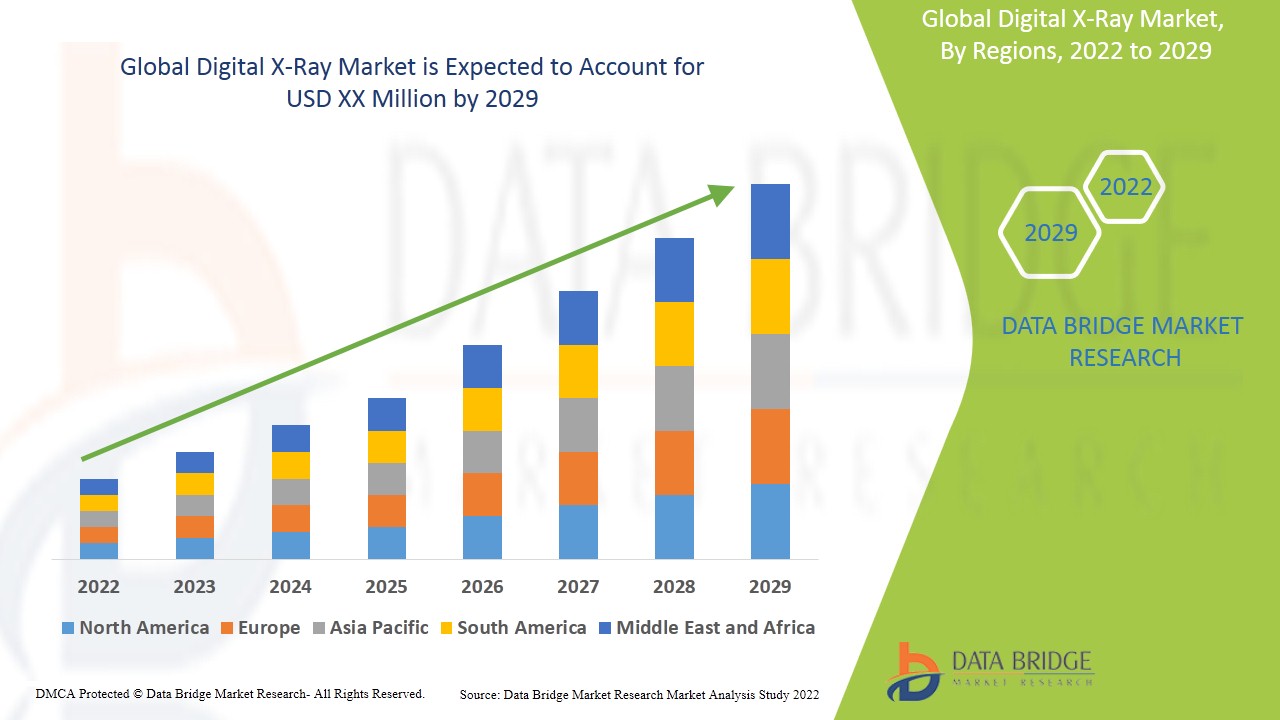
デジタルX線市場の分析と規模
デジタル X 線市場の主な用途である診断用画像診断には、さまざまな状態を診断するために内部構造を視覚化することを目的とした幅広い医療処置が含まれます。デジタル X 線技術により、骨、臓器、組織の高品質な画像診断が可能になり、骨折、腫瘍、感染症、その他の異常をより鮮明かつ詳細に検出できるようになります。画像取得が高速で放射線量が低いため、臨床現場での患者の安全性と効率が向上します。さらに、デジタル X 線システムにより、画像データと電子医療記録の統合が容易になり、医療提供者間のシームレスなコミュニケーションが可能になり、診断の精度が向上します。
世界のデジタルX線市場規模は2023年に131億8,000万米ドルと評価され、2024年から2031年の予測期間中に9.22%のCAGRで成長し、2031年には266億9,000万米ドルに達すると予測されています。
Data Bridge Market Research がまとめた市場レポートには、市場価値、成長率、セグメンテーション、地理的範囲、主要プレーヤーなどの市場シナリオに関する洞察に加えて、詳細な専門家の分析、患者の疫学、パイプライン分析、価格分析、規制の枠組みも含まれています。
レポートの範囲と市場セグメンテーション
|
レポートメトリック |
詳細 |
|
予測期間 |
2024-2031 |
|
基準年 |
2023 |
|
歴史的な年 |
2022 (2016~2021年にカスタマイズ可能) |
|
定量単位 |
売上高(10億米ドル)、販売数量(個数)、価格(米ドル) |
|
対象セグメント |
タイプ (アナログ X 線システムとデジタル X 線システム)、用途 (一般放射線撮影、胸部画像撮影、整形外科用、心臓血管画像撮影、歯科用、マンモグラフィー、ガン、透視、その他の一般放射線撮影)、技術 (直接放射線撮影とコンピューター放射線撮影)、携帯性 (固定式デジタル X 線システム、ポータブル デジタル X 線システム)、システム (レトロフィット デジタル X 線システムと新しいデジタル X 線システム)、価格帯 (ローエンド デジタル X 線システム、ミッドレンジ デジタル X 線システム、ハイエンド デジタル X 線システム)、エンド ユーザー (病院、診断センター、歯科治療センター) |
|
対象国 |
米国、カナダ、メキシコ、ドイツ、イタリア、英国、フランス、スペイン、オランダ、ベルギー、スイス、トルコ、ロシア、その他のヨーロッパ諸国、日本、中国、インド、韓国、オーストラリア、シンガポール、マレーシア、タイ、インドネシア、フィリピン、その他のアジア太平洋諸国、ブラジル、アルゼンチン、その他の南米諸国、南アフリカ、サウジアラビア、UAE、エジプト、イスラエル、その他の中東およびアフリカ諸国 |
|
対象となる市場プレーヤー |
キヤノン(日本)、富士フイルムメディカルシステムズ(日本)、GEヘルスケア(米国)、日立メディコ(日本)、ホロジック(米国)、フィリップス(オランダ)、島津製作所(日本)、シーメンスヘルシナーズ(ドイツ)、東芝メディカルシステムズ(日本)、ダナハー(米国)、ケアストリームヘルス(米国)、シロナデンタルシステムズ(米国)、プランメカ(フィンランド)、ヴァレックスイメージングコーポレーション(米国)、アグファ・ゲバルトグループ(ベルギー) |
|
市場機会 |
|
市場の定義
デジタル X 線は、従来のフィルムを使用する代わりに X 線画像をデジタルで撮影する最新の画像技術です。電子検出器を使用して X 線をデジタル信号に変換し、それを処理してコンピューター画面で表示します。この方法は、従来の X 線システムに比べて、画像の取得が高速で、放射線量が低く、デジタルで画像を簡単に保存、転送、操作できるため診断能力が向上するなど、いくつかの利点があります。
デジタルX線市場の動向
ドライバー
- 技術の進歩の進展
Technological advancements continuously enhance imaging capabilities and diagnostic accuracy. Innovations such as digital detectors, advanced image processing algorithms, and artificial intelligence integration contribute to higher-resolution images and improved detection of abnormalities. These advancements not only enhance diagnostic capabilities but also streamline workflow efficiency, reducing examination times and improving patient throughput. Moreover, ongoing research and development efforts lead to the development of portable, lightweight, and user-friendly digital X-ray systems, expanding their applicability across various healthcare settings and facilitating point-of-care imaging.
- Rising Government Initiatives
Government initiatives fosters the adoption and implementation of advanced imaging technologies in healthcare systems. Through funding programs, subsidies, and regulatory policies, governments incentivize healthcare providers to upgrade their infrastructure with digital X-ray systems, thus promoting access to high-quality diagnostic imaging services. Initiatives aimed at improving healthcare delivery in underserved areas and enhancing diagnostic capabilities in rural or remote regions drive the demand for portable and mobile digital X-ray solutions. Regulatory frameworks and standards set by governments ensure the quality, safety, and interoperability of digital X-ray equipment, thereby boosting market growth while ensuring patient care standards are met.
Opportunities
- Increasing Healthcare Expenditure
Healthcare budget is expanding due to which there's a greater capacity for investment in advanced diagnostic imaging technologies such asdigital X-ray systems. Healthcare providers are increasingly allocating funds to upgrade their imaging infrastructure to meet the growing demand for diagnostic services and improve patient care. Moreover, rising healthcare expenditure signifies a commitment to enhancing healthcare outcomes, driving the adoption of digital X-ray technology to enable faster and more accurate diagnoses. This trend reflects a recognition of the importance of diagnostic imaging in modern healthcare, further fueling the growth of the digital X-ray market.
- Escalating Burden of Chronic Diseases
Escalating burden of chronic diseases including cardiovascular conditions, cancer, and respiratory illnesses become more prevalent which leads to a heightened demand for accurate and timely diagnostic imaging to facilitate early detection, treatment planning, and monitoring of disease progression. Digital X-ray technology enables healthcare providers to efficiently visualize and assess the impact of chronic conditions on internal structures, aiding in precise diagnosis and personalized treatment strategies. Moreover, the ability of digital X-ray systems to offer detailed imaging with reduced radiation exposure aligns with the imperative of minimizing patient risk, making them indispensable tools in managing the complex healthcare challenges posed by chronic diseases.
Restraints/Challenges
- High Initial Costs
Healthcare facilities face substantial expenses when acquiring digital X-ray equipment, including the purchase of hardware, software, and installation, along with ongoing maintenance and staff training costs. These upfront investments can strain the budgets of healthcare providers, particularly in resource-limited settings or smaller practices. The capital-intensive nature of digital X-ray adoption may deter facilities from upgrading their imaging capabilities or lead to delayed investment decisions, limiting the expansion of the market.
- Growing Concerns Regarding Radiation Exposure
Despite advancements aimed at minimizing radiation doses, there persists apprehension among patients and healthcare providers about potential health risks associated with X-ray imaging. This concern can lead to reluctance in undergoing X-ray procedures, especially for repetitive or unnecessary scans, impacting patient compliance and healthcare utilization rates. Additionally, heightened awareness of radiation risks may drive demand for alternative imaging modalities with lower or no radiation exposure, potentially diverting market share away from digital X-ray systems.
This market report provides details of new recent developments, trade regulations, import-export analysis, production analysis, value chain optimization, market share, impact of domestic and localized market players, analyses opportunities in terms of emerging revenue pockets, changes in market regulations, strategic market growth analysis, market size, category market growths, application niches and dominance, product approvals, product launches, geographic expansions, technological innovations in the market. To gain more info on the market contact Data Bridge Market Research for an Analyst Brief, our team will help you take an informed market decision to achieve market growth.
Recent Development
- In December 2023, German researchers explored the application of AI assistance for non-radiologists interpreting emergency chest X-rays. Led by Dr. Jan Rudolph from University Hospital LMU Munich, the study revealed significant advantages for non-radiologists, particularly in smaller hospitals, improving chest X-ray analysis in emergency scenarios. This integration of AI technology could potentially expedite diagnoses and enhance patient outcomes in critical care settings
- In November 2023, Carestream Health launched Horizon, a compact analog X-ray system designed specifically for small-to-midsize healthcare facilities. Featuring a user-friendly design and requiring low investment, Horizon includes a floating tabletop for flexible patient positioning. The system also offers a seamless transition to digital imaging with Focus detectors, addressing financial constraints commonly faced by smaller facilities and enabling them to upgrade their imaging capabilities affordably
- In July 2023, Konica Minolta Healthcare Americas, Inc., extended the implementation of Dynamic Digital Radiography (DDR) systems to healthcare institutions such asAppleton Area Health, New Hampshire Neurospine Institute, Zwanger-Pesiri Radiology, and Summit Medical Center. DDR, a pioneering X-ray technology, enables real-time visualization of anatomical structures during diverse clinical procedures, potentially enhancing diagnostic accuracy and patient care
Digital X-Ray Market Scope
The market is segmented on the basis of type, application, technology, portability, systems, price range and end users. The growth amongst these segments will help you analyse meagre growth segments in the industries and provide the users with a valuable market overview and market insights to help them in making strategic decisions for the identification of core market applications.
Type
- Analog X-ray Systems
- Digital X-ray Systems
Application
- General Radiography
- Chest Imaging Applications
- Orthopedic Applications
- Cardiovascular Imaging
- Dental Applications
- Mammography
- Cancer
- Fluoroscopy
- Other General Radiography Applications
Technology
- Direct Radiography
- Computed Radiography
Portability
- Fixed Digital X-ray Systems
- Floor-to-Ceiling-Mounted Systems
- Ceiling-Mounted Systems
- Portable Digital X-ray Systems
- Mobile X-ray Systems
- Handheld X-ray Systems
Systems
- Retrofit Digital X-ray Systems
- New Digital X-ray Systems
Price Range
- Low-End Digital X-ray Systems
- Mid-Range Digital X-ray Systems
- High-End Digital X-ray Systems
End Users
- Hospitals
- Diagnostic Centers
- Dental Care Centers
Digital X-Ray Market Regional Analysis/Insights
The market is segmented on the basis of type, application, technology, portability, systems, price range and end users.
The countries covered in the market report are the U.S., Canada, Mexico, Germany, France, U.K., Netherlands, Switzerland, Belgium, Russia, Italy, Spain, Turkey, Rest of Europe, China, Japan, India, South Korea, Singapore, Malaysia, Australia, Thailand, Indonesia, Philippines, Rest of Asia-Pacific (APAC), Saudi Arabia, U.A.E, South Africa, Egypt, Israel, Rest of the Middle East and Africa (MEA), Brazil, Argentina and Rest of South America.
North America dominates the market, driven by the widespread adoption of advanced healthcare technology. The region's increasing prevalence of chronic diseases is fueling further growth. This trend underscores a shift towards sophisticated healthcare systems, amplifying demand for digital X-ray technology. As such, North America is poised for continued expansion in the digital X-ray market throughout the forecast period.
Asia-Pacific is expected for substantial growth in the digital X-ray market, driven by a surge in chronic diseases such as cardiovascular diseases, asthma, lung, and breast cancer. This rise in disease incidence necessitates advanced diagnostic tools such as digital X-ray systems. Additionally, intense competition among healthcare providers is fostering the adoption of digital X-ray technology to improve diagnostic accuracy and efficiency. These factors collectively indicate a promising trajectory for market expansion in the region over the forthcoming years.
The country section of the report also provides individual market impacting factors and changes in regulation in the market domestically that impacts the current and future trends of the market. Data points such as down-stream and upstream value chain analysis, technical trends and porter's five forces analysis, case studies are some of the pointers used to forecast the market scenario for individual countries. Also, the presence and availability of global brands and their challenges faced due to large or scarce competition from local and domestic brands, impact of domestic tariffs and trade routes are considered while providing forecast analysis of the country data.
Healthcare Infrastructure Growth Installed base and New Technology Penetration
The market also provides you with detailed market analysis for every country growth in healthcare expenditure for capital equipment, installed base of different kind of products for market, impact of technology using life line curves and changes in healthcare regulatory scenarios and their impact on the market. The data is available for historic period 2016-2021.
Competitive Landscape and Digital X-Ray Market Analysis
市場競争環境では、競合他社ごとに詳細が提供されます。含まれる詳細には、会社概要、会社の財務状況、収益、市場の可能性、研究開発への投資、新しい市場への取り組み、世界的なプレゼンス、生産拠点と施設、生産能力、会社の強みと弱み、製品の発売、製品の幅と広さ、アプリケーションの優位性などがあります。提供されている上記のデータ ポイントは、エピジェネティクス診断市場に関連する会社の焦点にのみ関連しています。
市場で活動している主要企業は次のとおりです。
- キヤノン(日本)
- 富士フイルムメディカルシステムズ(日本)
- GEヘルスケア(米国)
- 日立メディコ株式会社(日本)
- ホロジックコーポレーション(米国)
- Koninklijke Philips NV (オランダ)
- 島津製作所(日本)
- シーメンス ヘルシナーズ(ドイツ)
- 東芝メディカルシステムズ株式会社(日本)
- ダナハー(米国)
- ケアストリームヘルス(米国)
- シロナデンタルシステムズ社(米国)
- プランメカ(フィンランド)
- Varex Imaging Corporation(米国)
- アグファ・ゲバルトグループ(ベルギー)
SKU-
世界初のマーケットインテリジェンスクラウドに関するレポートにオンラインでアクセスする

- インタラクティブなデータ分析ダッシュボード
- 成長の可能性が高い機会のための企業分析ダッシュボード
- カスタマイズとクエリのためのリサーチアナリストアクセス
- インタラクティブなダッシュボードによる競合分析
- 最新ニュース、更新情報、トレンド分析
- 包括的な競合追跡のためのベンチマーク分析のパワーを活用
調査方法
データ収集と基準年分析は、大規模なサンプル サイズのデータ収集モジュールを使用して行われます。この段階では、さまざまなソースと戦略を通じて市場情報または関連データを取得します。過去に取得したすべてのデータを事前に調査および計画することも含まれます。また、さまざまな情報ソース間で見られる情報の不一致の調査も含まれます。市場データは、市場統計モデルと一貫性モデルを使用して分析および推定されます。また、市場シェア分析と主要トレンド分析は、市場レポートの主要な成功要因です。詳細については、アナリストへの電話をリクエストするか、お問い合わせをドロップダウンしてください。
DBMR 調査チームが使用する主要な調査方法は、データ マイニング、データ変数が市場に与える影響の分析、および一次 (業界の専門家) 検証を含むデータ三角測量です。データ モデルには、ベンダー ポジショニング グリッド、市場タイムライン分析、市場概要とガイド、企業ポジショニング グリッド、特許分析、価格分析、企業市場シェア分析、測定基準、グローバルと地域、ベンダー シェア分析が含まれます。調査方法について詳しくは、お問い合わせフォームから当社の業界専門家にご相談ください。
カスタマイズ可能
Data Bridge Market Research は、高度な形成的調査のリーダーです。当社は、既存および新規のお客様に、お客様の目標に合致し、それに適したデータと分析を提供することに誇りを持っています。レポートは、対象ブランドの価格動向分析、追加国の市場理解 (国のリストをお問い合わせください)、臨床試験結果データ、文献レビュー、リファービッシュ市場および製品ベース分析を含めるようにカスタマイズできます。対象競合他社の市場分析は、技術ベースの分析から市場ポートフォリオ戦略まで分析できます。必要な競合他社のデータを、必要な形式とデータ スタイルでいくつでも追加できます。当社のアナリスト チームは、粗い生の Excel ファイル ピボット テーブル (ファクト ブック) でデータを提供したり、レポートで利用可能なデータ セットからプレゼンテーションを作成するお手伝いをしたりすることもできます。











