Global Hybridization-based Molecular Diagnostics Market Size, Share and Trends Analysis Report – Industry Overview and Forecast to 2033

Request for TOC TOC のリクエスト Speak to Analyst アナリストに相談する Free Sample Report 無料サンプルレポート Inquire Before Buying 事前に問い合わせる Buy Now今すぐ購入

Global Hybridization-based Molecular Diagnostics Market Size, Share and Trends Analysis Report – Industry Overview and Forecast to 2033

Global Hybridization-based Molecular Diagnostics Market Segmentation, By Application (Infectious Diseases, Oncology, Genetic Tests, and Others) Product (Instruments, Reagents, and Other Products) End User (Hospital & Academic Laboratories, Reference Laboratories, and Others) - Industry Trends and Forecast to 2033

  • Healthcare
  • Feb 2022
  • Global
  • 350 ページ
  • テーブル数: 220
  • 図の数: 60

Global Hybridization

Market Size in USD Billion

CAGR :  % Diagram

Chart Image USD 2.85 Billion USD 4.82 Billion 2025 2033
Diagram 予測期間
2026 –2033
Diagram 市場規模(基準年)
USD 2.85 Billion
Diagram Market Size (Forecast Year)
USD 4.82 Billion
Diagram CAGR
%
Diagram Major Markets Players
  • F. Hoffmann-La Roche Ltd. (Switzerland)
  • Thermo Fisher Scientific Inc. (U.S.)
  • Abbott (U.S.)
  • Agilent Technologies Inc. (U.S.)
  • Illumina Inc. (U.S.)

Global Hybridization-based Molecular Diagnostics Market Segmentation, By Application (Infectious Diseases, Oncology, Genetic Tests, and Others) Product (Instruments, Reagents, and Other Products) End User (Hospital & Academic Laboratories, Reference Laboratories, and Others) - Industry Trends and Forecast to 2033

Hybridization-based Molecular Diagnostics Market Size

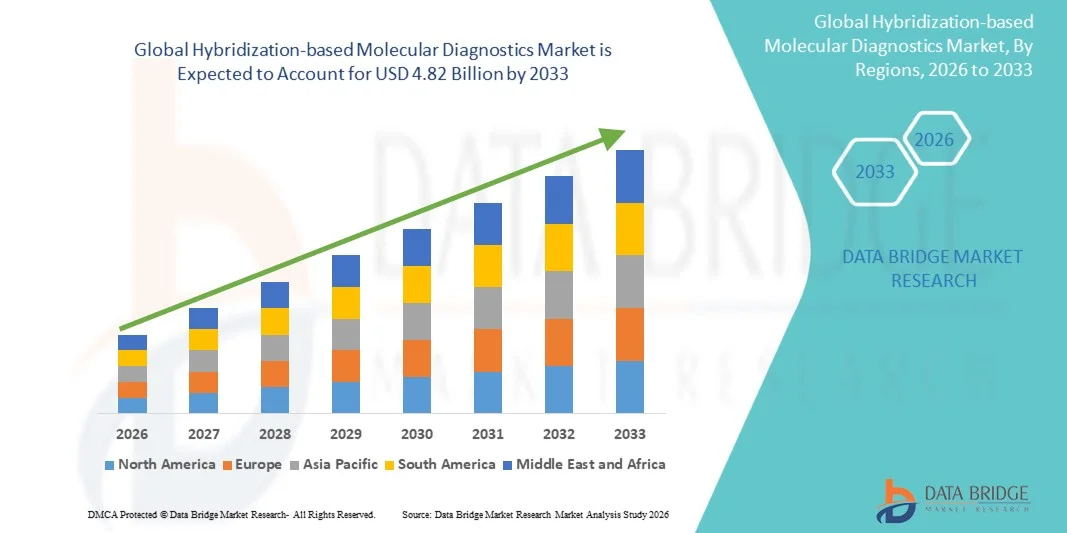
  • The global hybridization-based molecular diagnostics market size was valued at USD 2.85 billion in 2025 and is expected to reach USD 4.82 billion by 2033, at a CAGR of 6.80% during the forecast period
  • The market growth is largely fueled by the increasing prevalence of infectious diseases and genetic disorders, along with the growing demand for accurate and early disease diagnosis in clinical and research settings
  • Furthermore, rising adoption of advanced molecular diagnostic technologies in hospitals, diagnostic laboratories, and research institutions is driving the demand for hybridization-based molecular diagnostics, as these methods enable precise detection of nucleic acids and support effective disease diagnosis and monitoring.

Hybridization-based Molecular Diagnostics Market Analysis

  • Hybridization-based molecular diagnostics, which utilize nucleic acid probe hybridization techniques to detect specific DNA or RNA sequences, are increasingly becoming essential tools in modern clinical diagnostics and research laboratories due to their high specificity, reliability, and ability to detect genetic variations and infectious agents with precision
  • The rising demand for hybridization-based molecular diagnostics is primarily driven by the increasing prevalence of infectious diseases and genetic disorders, growing awareness regarding early disease detection, and expanding use of molecular diagnostic techniques in hospitals, diagnostic laboratories, and research institutions
  • North America dominated the hybridization-based molecular diagnostics market with the largest revenue share of 38.7% in 2025, characterized by strong healthcare infrastructure, high adoption of advanced diagnostic technologies, and the presence of major biotechnology and molecular diagnostics companies, with the U.S. witnessing significant growth in molecular diagnostic testing and research activities
  • Asia-Pacific is expected to be the fastest growing region in the hybridization-based molecular diagnostics market during the forecast period due to rapidly expanding healthcare infrastructure, increasing investments in biotechnology research, and rising demand for advanced diagnostic solutions across countries such as China, India, and Japan
  • The reagents segment accounted for the largest market revenue share of 54.1% in 2025, primarily driven by the recurring demand for reagents used in hybridization assays

Hybridization-based Molecular Diagnostics Market

Report Scope and Hybridization-based Molecular Diagnostics Market Segmentation

Attributes

Hybridization-based Molecular Diagnostics Key Market Insights

Segments Covered

  • By Application: Infectious Diseases, Oncology, Genetic Tests, and Others
  • By Product: Instruments, Reagents, and Other Products
  • By End User: Hospital & Academic Laboratories, Reference Laboratories, and Others

Countries Covered

North America

  • U.S.
  • Canada
  • Mexico

Europe

  • Germany
  • France
  • U.K.
  • Netherlands
  • Switzerland
  • Belgium
  • Russia
  • Italy
  • Spain
  • Turkey
  • Rest of Europe

Asia-Pacific

  • China
  • Japan
  • India
  • South Korea
  • Singapore
  • Malaysia
  • Australia
  • Thailand
  • Indonesia
  • Philippines
  • Rest of Asia-Pacific

Middle East and Africa

  • Saudi Arabia
  • U.A.E.
  • South Africa
  • Egypt
  • Israel
  • Rest of Middle East and Africa

South America

  • Brazil
  • Argentina
  • Rest of South America

Key Market Players

F. Hoffmann-La Roche Ltd. (Switzerland)
Thermo Fisher Scientific Inc. (U.S.)
Abbott (U.S.)
Agilent Technologies, Inc. (U.S.)
Illumina, Inc. (U.S.)
• Bio-Rad Laboratories, Inc. (U.S.)
• QIAGEN N.V. (Netherlands)
• Danaher Corporation (U.S.)
• Siemens Healthineers AG (Germany)
• Hologic, Inc. (U.S.)
• Becton, Dickinson and Company (U.S.)
• PerkinElmer Inc. (U.S.)
• Bio-Techne Corporation (U.S.)
• Meridian Bioscience, Inc. (U.S.)
• Grifols, S.A. (Spain)
• Takara Bio Inc. (Japan)
• Tecan Group Ltd. (Switzerland)
• Luminex Corporation (U.S.)
• DiaSorin S.p.A. (Italy)
• GenMark Diagnostics, Inc. (U.S.)

Market Opportunities

  • Growing demand for early and accurate disease diagnosis
  • Expansion of molecular diagnostic testing in emerging markets

Value Added Data Infosets

In addition to the insights on market scenarios such as market value, growth rate, segmentation, geographical coverage, and major players, the market reports curated by the Data Bridge Market Research also include in-depth expert analysis, patient epidemiology, pipeline analysis, pricing analysis, and regulatory framework.

Hybridization-based Molecular Diagnostics Market Trends

Growing Integration of Advanced Molecular Techniques and Automation

  • A key and accelerating trend in the global Hybridization-based Molecular Diagnostics market is the increasing integration of advanced molecular technologies with automated diagnostic platforms to improve testing accuracy, efficiency, and scalability. These systems enable laboratories to conduct complex nucleic acid detection procedures with minimal manual intervention
  • For instance, hybridization-based diagnostic techniques such as fluorescence in situ hybridization (FISH) and microarray-based assays are increasingly being integrated into automated laboratory systems, enabling faster identification of genetic abnormalities, infectious pathogens, and cancer-related biomarkers
  • Automation in molecular diagnostic laboratories allows healthcare professionals to perform large volumes of tests with higher precision while reducing the risk of contamination and human error. These systems also support standardized workflows, improving consistency in clinical results across laboratories
  • In addition, technological advancements in probe design, signal amplification methods, and multiplex testing capabilities are expanding the clinical applications of hybridization-based diagnostics. These improvements enable simultaneous detection of multiple genetic targets, which is particularly beneficial in oncology, infectious disease diagnostics, and genetic disorder screening
  • The integration of hybridization-based diagnostic technologies with digital laboratory information systems is also improving data management and reporting efficiency. Laboratories can now process, analyze, and store molecular data more effectively, supporting clinical decision-making and research activities
  • As healthcare systems continue to emphasize early disease detection and precision medicine, the demand for highly accurate molecular diagnostic tools is increasing, thereby driving the adoption of hybridization-based diagnostic technologies in hospitals, research institutes, and diagnostic laboratories worldwide

Hybridization-based Molecular Diagnostics Market Dynamics

Driver

“Growing Need Due to Rising Security Concerns and Smart Home Adoption”

  • The growing need for early and accurate disease diagnosis is a major driver of the Hybridization-based Molecular Diagnostics market. Healthcare providers are increasingly adopting molecular diagnostic technologies to detect diseases at earlier stages, enabling timely treatment and improved patient outcomes
  • For instance, Thermo Fisher Scientific provides FISH probe kits and microarray-based diagnostic solutions that are widely used for identifying chromosomal abnormalities and cancer biomarkers, helping clinicians diagnose diseases such as leukemia and breast cancer at an early stage
  • Hybridization-based techniques play a crucial role in detecting genetic mutations, chromosomal abnormalities, and infectious pathogens, making them essential tools in fields such as oncology, infectious disease diagnostics, and genetic testing
  • In addition, the increasing focus on precision medicine is accelerating the demand for molecular diagnostic tools capable of identifying patient-specific genetic markers. These technologies help physicians select targeted therapies based on an individual's genetic profile, improving treatment effectiveness
  • The expansion of biotechnology research, growth of clinical laboratories, and increasing investments in genomic studies are further contributing to the rising adoption of hybridization-based molecular diagnostics across hospitals, research institutes, and pharmaceutical companies

Restraint/Challenge

High Cost of Advanced Diagnostic Technologies and Technical Complexity

  • The high cost associated with advanced molecular diagnostic technologies remains a significant challenge for the growth of the Hybridization-based Molecular Diagnostics market. Hybridization-based testing platforms often require sophisticated laboratory infrastructure, specialized reagents, and advanced imaging or detection systems, which can increase operational costs
  • For instance, fluorescence in situ hybridization (FISH) diagnostic systems supplied by companies such as Agilent Technologies often require specialized fluorescence microscopes and trained laboratory professionals, making them comparatively expensive for small diagnostic laboratories and hospitals in developing regions
  • Many healthcare facilities, particularly in developing regions, face financial constraints that limit their ability to adopt advanced molecular diagnostic systems. This cost barrier can slow the widespread implementation of hybridization-based diagnostic technologies in routine clinical settings
  • In addition, hybridization-based diagnostic procedures often require highly skilled laboratory personnel with specialized training in molecular biology techniques. The shortage of trained professionals in some regions can create operational challenges for diagnostic laboratories
  • The complexity of assay preparation, probe design, and data interpretation can also increase testing time and operational workload in laboratories. Ensuring consistent test quality and maintaining strict laboratory standards can further add to the overall cost of diagnostic operations
  • Addressing these challenges through technological advancements, automation of laboratory workflows, and the development of cost-effective diagnostic kits will be crucial for improving accessibility and supporting the long-term growth of the Hybridization-based Molecular Diagnostics market

Hybridization-based Molecular Diagnostics Market Scope

The Hybridization-based Molecular Diagnostics market is segmented on the basis of application, product, and end user.

• By Application

On the basis of application, the Hybridization-based Molecular Diagnostics market is segmented into infectious diseases, oncology, genetic tests, and others. The infectious diseases segment dominated the largest market revenue share of 46.8% in 2025, driven by the rising global burden of infectious pathogens and the increasing demand for accurate and rapid diagnostic technologies. Hybridization-based molecular diagnostic techniques are widely used for detecting viruses, bacteria, and other pathogens due to their high specificity and sensitivity. Healthcare systems across the world continue to prioritize early detection and monitoring of infectious diseases such as tuberculosis, HIV, and respiratory infections, which significantly supports the demand for hybridization-based assays. In addition, ongoing public health surveillance programs and pandemic preparedness initiatives have strengthened the adoption of molecular diagnostics in infectious disease testing. The integration of advanced probe technologies and automation in diagnostic laboratories has further improved testing efficiency and throughput. Increasing investments by healthcare organizations and governments in disease monitoring programs also contribute to the segment’s strong market presence. Moreover, continuous technological advancements enabling multiplex detection of multiple pathogens in a single test are further accelerating adoption across hospitals and diagnostic laboratories globally.

The oncology segment is anticipated to witness the fastest growth rate with a CAGR of 19.4% from 2026 to 2033, fueled by the increasing prevalence of cancer and the growing importance of molecular diagnostics in cancer detection and treatment planning. Hybridization-based diagnostic techniques, including fluorescence in situ hybridization (FISH), are widely used for identifying chromosomal abnormalities and gene amplifications associated with different cancer types. The rising shift toward personalized medicine and targeted therapies has significantly increased the demand for molecular diagnostic tools that help identify specific genetic mutations and biomarkers. Healthcare providers increasingly rely on these diagnostic technologies to support early cancer detection, prognosis assessment, and therapy selection. In addition, the growing number of cancer screening programs and research initiatives focused on oncology diagnostics further supports market expansion. Continuous innovation in molecular diagnostic technologies and the introduction of advanced probe kits are expected to enhance diagnostic accuracy and expand clinical applications, thereby driving strong growth in the oncology segment over the forecast period.

• By Product

On the basis of product, the Hybridization-based Molecular Diagnostics market is segmented into instruments, reagents, and other products. The reagents segment accounted for the largest market revenue share of 54.1% in 2025, primarily driven by the recurring demand for reagents used in hybridization assays. Reagents are essential consumables required for each diagnostic test, including probes, buffers, and detection kits, making them a critical component of molecular diagnostic workflows. The increasing number of diagnostic tests conducted globally, particularly for infectious diseases and genetic disorders, significantly contributes to the high demand for reagents. Diagnostic laboratories and hospitals rely heavily on high-quality reagents to ensure accurate and reproducible results. In addition, advancements in probe design and reagent formulations have improved the sensitivity and specificity of hybridization-based tests. Continuous research activities in genomics and molecular biology also support the growing consumption of reagents in both clinical diagnostics and research laboratories. Furthermore, manufacturers are focusing on developing ready-to-use reagent kits that simplify laboratory workflows and reduce testing time, which further strengthens the dominance of this segment.

The instruments segment is expected to witness the fastest CAGR of 18.6% from 2026 to 2033, driven by the increasing adoption of automated molecular diagnostic platforms across clinical laboratories. Instruments used in hybridization-based diagnostics, such as hybridization ovens, fluorescence microscopes, and imaging systems, play a crucial role in detecting genetic material and analyzing results accurately. The growing demand for high-throughput testing solutions and automation in laboratories is encouraging healthcare facilities to invest in advanced diagnostic instruments. These systems help improve workflow efficiency, reduce manual errors, and enhance test reproducibility. In addition, the integration of digital imaging technologies and artificial intelligence-based analysis tools is further improving diagnostic accuracy and operational efficiency. Expanding healthcare infrastructure in emerging economies and increasing investments in laboratory modernization are also contributing to the strong growth of this segment. As laboratories continue to upgrade their diagnostic capabilities, the demand for advanced hybridization-based diagnostic instruments is expected to rise steadily over the forecast period.

• By End User

On the basis of end user, the Hybridization-based Molecular Diagnostics market is segmented into hospital & academic laboratories, reference laboratories, and others. The hospital & academic laboratories segment dominated the largest market revenue share of 48.6% in 2025, driven by the increasing adoption of molecular diagnostic technologies in hospital-based diagnostic settings. Hospitals serve as the primary point of care for patients undergoing diagnostic testing for infectious diseases, cancer, and genetic conditions. The availability of advanced laboratory infrastructure and skilled healthcare professionals enables hospitals to conduct complex molecular diagnostic tests efficiently. Academic laboratories also contribute significantly to this segment through ongoing research activities in genomics, molecular biology, and disease diagnostics. The increasing focus on early disease detection and personalized medicine has encouraged hospitals to integrate advanced molecular diagnostic tools into their diagnostic workflows. In addition, collaborations between hospitals, research institutions, and biotechnology companies are supporting the development and clinical validation of new diagnostic assays. Government funding and healthcare investments aimed at strengthening diagnostic infrastructure further contribute to the strong market position of hospital and academic laboratories.

The reference laboratories segment is projected to witness the fastest CAGR of 20.1% from 2026 to 2033, fueled by the growing demand for specialized and high-complexity diagnostic testing services. Reference laboratories offer advanced molecular diagnostic capabilities and often serve as centralized testing facilities for hospitals, clinics, and smaller diagnostic centers. These laboratories are equipped with highly sophisticated technologies and skilled professionals capable of performing complex genetic and molecular analyses. The rising prevalence of chronic diseases, cancer, and rare genetic disorders has significantly increased the demand for specialized diagnostic services provided by reference laboratories. In addition, the growing trend of outsourcing complex diagnostic tests to centralized laboratories helps healthcare providers reduce operational costs and improve efficiency. Increasing investments in laboratory automation, high-throughput diagnostic platforms, and advanced genomic technologies are further enhancing the capabilities of reference laboratories. As healthcare providers continue to rely on specialized diagnostic services, the demand for reference laboratories is expected to grow rapidly during the forecast period.

Hybridization-based Molecular Diagnostics Market Regional Analysis

  • North America dominated the hybridization-based molecular diagnostics market with the largest revenue share of 38.7% in 2025, characterized by strong healthcare infrastructure, high adoption of advanced diagnostic technologies, and the presence of major biotechnology and molecular diagnostics companies. The region is witnessing significant utilization of hybridization-based diagnostic techniques across hospitals, diagnostic laboratories, and research institutions for detecting genetic disorders, infectious diseases, and cancer biomarkers
  • Healthcare providers and laboratories in the region place strong emphasis on accurate and early disease detection, which has accelerated the adoption of technologies such as fluorescence in situ hybridization (FISH) and microarray-based assays for clinical diagnostics and biomedical research
  • This widespread adoption is further supported by rising investments in genomics research, increasing demand for precision medicine, and strong regulatory frameworks governing diagnostic testing, establishing hybridization-based molecular diagnostics as an essential tool in modern clinical and research settings

U.S. Hybridization-based Molecular Diagnostics Market Insight

The U.S. hybridization-based molecular diagnostics market captured the largest revenue share in 2025 within North America, driven by the country’s strong biotechnology ecosystem and increasing demand for advanced diagnostic testing. Hospitals, diagnostic laboratories, and research institutions are widely adopting hybridization-based technologies to identify genetic mutations, chromosomal abnormalities, and infectious pathogens. In addition, the presence of leading biotechnology companies, increasing funding for biomedical research, and the expansion of clinical diagnostic laboratories are significantly supporting market growth in the country. The growing focus on personalized medicine and early disease detection is further accelerating the adoption of molecular diagnostic technologies in the U.S.

Europe Hybridization-based Molecular Diagnostics Market Insight

The Europe hybridization-based molecular diagnostics market is projected to expand at a substantial CAGR throughout the forecast period, primarily driven by strong regulatory standards, increasing research activities, and rising demand for advanced diagnostic technologies in healthcare systems. The region’s well-established healthcare infrastructure and growing focus on genomic research are encouraging hospitals, diagnostic laboratories, and research institutions to adopt hybridization-based diagnostic techniques. In addition, increasing investments in biotechnology innovation and the expansion of precision medicine initiatives across several European countries are contributing to the growth of the market.

U.K. Hybridization-based Molecular Diagnostics Market Insight

The U.K. hybridization-based molecular diagnostics market is anticipated to grow at a noteworthy CAGR during the forecast period, driven by increasing investments in healthcare research and the expansion of molecular diagnostic laboratories. Hospitals and research institutions across the country are increasingly utilizing hybridization-based diagnostic techniques to support early detection of diseases and genetic disorders. Moreover, government initiatives supporting genomic research and the growing presence of biotechnology companies are expected to further stimulate market growth in the U.K..

Germany Hybridization-based Molecular Diagnostics Market Insight

The Germany hybridization-based molecular diagnostics market is expected to expand at a considerable CAGR during the forecast period, supported by the country’s strong biotechnology and pharmaceutical sectors. Germany’s advanced healthcare infrastructure and emphasis on research and technological innovation are encouraging hospitals, diagnostic laboratories, and research institutions to adopt molecular diagnostic technologies. In addition, the increasing focus on cancer diagnostics, genetic testing, and precision medicine is significantly driving the demand for hybridization-based diagnostic solutions in the country.

Asia-Pacific Hybridization-based Molecular Diagnostics Market Insight

The Asia-Pacific hybridization-based molecular diagnostics market is expected to be the fastest-growing region during the forecast period, driven by rapidly expanding healthcare infrastructure, increasing investments in biotechnology research, and rising demand for advanced diagnostic solutions across countries such as China, India, and Japan. The growing number of hospitals, diagnostic laboratories, and academic research institutions in the region is significantly increasing the demand for molecular diagnostic technologies capable of providing accurate disease detection. Furthermore, government initiatives aimed at strengthening healthcare systems, expanding biotechnology research capabilities, and improving access to advanced diagnostic technologies are supporting the adoption of hybridization-based molecular diagnostics across the region.

Japan Hybridization-based Molecular Diagnostics Market Insight

The Japan hybridization-based molecular diagnostics market is gaining momentum due to the country’s strong focus on technological innovation and biomedical research. Hospitals and diagnostic laboratories are increasingly utilizing hybridization-based diagnostic methods to detect genetic abnormalities and infectious diseases with high accuracy. In addition, the presence of advanced research institutions and increasing investments in genomic medicine are supporting the adoption of molecular diagnostic technologies in Japan.

China Hybridization-based Molecular Diagnostics Market Insight

The China hybridization-based molecular diagnostics market accounted for the largest market revenue share in Asia Pacific in 2025, attributed to the country’s rapidly expanding healthcare infrastructure and growing biotechnology sector. The increasing number of hospitals, diagnostic laboratories, and research institutions is driving the demand for advanced molecular diagnostic technologies for disease detection and genetic analysis. Moreover, strong government support for biotechnology research, rising investments in healthcare modernization, and the growing focus on precision medicine are key factors propelling the adoption of hybridization-based molecular diagnostics in China.

Hybridization-based Molecular Diagnostics Market Share

The Hybridization-based Molecular Diagnostics industry is primarily led by well-established companies, including:

• F. Hoffmann-La Roche Ltd. (Switzerland)
• Thermo Fisher Scientific Inc. (U.S.)
• Abbott (U.S.)
• Agilent Technologies, Inc. (U.S.)
• Illumina, Inc. (U.S.)
• Bio-Rad Laboratories, Inc. (U.S.)
• QIAGEN N.V. (Netherlands)
• Danaher Corporation (U.S.)
• Siemens Healthineers AG (Germany)
• Hologic, Inc. (U.S.)
• Becton, Dickinson and Company (U.S.)
• PerkinElmer Inc. (U.S.)
• Bio-Techne Corporation (U.S.)
• Meridian Bioscience, Inc. (U.S.)
• Grifols, S.A. (Spain)
• Takara Bio Inc. (Japan)
• Tecan Group Ltd. (Switzerland)
• Luminex Corporation (U.S.)
• DiaSorin S.p.A. (Italy)
• GenMark Diagnostics, Inc. (U.S.)

Latest Developments in Global Hybridization-based Molecular Diagnostics Market

  • In March 2023, Sysmex Corporation, a global diagnostics company, announced the launch of its IVDR-compliant DNA FISH probes, which are ready-to-use, premixed, and directly labeled probes designed for in-situ detection of genetic alterations across multiple sample types. These probes were developed to improve batch-to-batch consistency and reduce scoring time in molecular cytogenetics laboratories. The launch also aimed to minimize retesting rates and ensure compliance with evolving European In-Vitro Diagnostic Regulation (IVDR) standards. By simplifying workflows and improving diagnostic reliability, the new probes help laboratories identify chromosomal abnormalities more efficiently in both clinical diagnostics and research applications
  • In April 2023, Agilent Technologies Inc., a leading life sciences and diagnostics company, expanded its portfolio of SureFISH probes, strengthening its range of oligonucleotide-based fluorescent in situ hybridization assays. The expanded portfolio enables researchers and clinical laboratories to detect genetic abnormalities associated with cancer and genetic disorders with higher precision. The new probe options support high-resolution genomic analysis and provide improved flexibility for molecular cytogenetics testing. This development reflects Agilent’s ongoing strategy to enhance its molecular diagnostics capabilities and support the growing demand for precision medicine and advanced genetic testing
  • In July 2023, KromaTiD, a biotechnology company focused on genomic analysis technologies, launched over 300 new fluorescent in situ hybridization (FISH) probes designed for its Directional Genomic Hybridization (dGH) in-site assays. These probes target specific genomic regions including telomeres, centromeres, and gene loci, enabling researchers to detect chromosomal structural variations with high accuracy. The expanded probe library enhances the ability of laboratories to analyze genomic instability and structural chromosome changes. This launch supports advanced applications in cancer research, gene therapy development, and cell therapy research by providing improved tools for high-resolution genome analysis
  • In January 2024, Barco, a global technology provider of visualization solutions, entered a strategic partnership with Applied Spectral Imaging (ASI) to integrate digital pathology technologies into fluorescence in situ hybridization workflows. The collaboration combines Barco’s medical-grade display technology with ASI’s advanced imaging and analysis platforms used in cytogenetics and molecular pathology laboratories. This integration helps improve image clarity, diagnostic accuracy, and workflow efficiency for laboratories performing hybridization-based molecular diagnostics. The partnership highlights the increasing adoption of digital pathology and automated imaging solutions in molecular diagnostics laboratories
  • In January 2025, Molecular Instruments, a biotechnology company specializing in imaging technologies, announced the launch of its HCR Gold and HCR Pro product lines for advanced RNA fluorescence in situ hybridization (RNA-FISH) applications. These products are based on the company’s Hybridization Chain Reaction imaging platform, which enables multiplexed and quantitative visualization of RNA molecules in cells and tissues. The new product lines allow researchers to detect gene expression with high sensitivity even in complex or highly autofluorescent biological samples. This innovation expands the use of RNA-FISH in molecular diagnostics, genomics research, and precision medicine
  • In April 2025, Empire Genomics, a molecular diagnostics company, partnered with BioDot to introduce the BDot Probe Line, a new set of optimized fluorescent in situ hybridization probe panels designed for automated cytogenetics workflows. These probes are specifically developed to integrate with the BioDot CellWriter automation system, enabling more efficient laboratory operations. The probe panels support FISH testing for several hematologic cancers such as leukemia and myelodysplastic syndromes. This development improves laboratory productivity, reduces manual handling, and helps deliver faster and more reliable molecular diagnostic results


SKU-

世界初のマーケットインテリジェンスクラウドに関するレポートにオンラインでアクセスする

  • インタラクティブなデータ分析ダッシュボード
  • 成長の可能性が高い機会のための企業分析ダッシュボード
  • カスタマイズとクエリのためのリサーチアナリストアクセス
  • インタラクティブなダッシュボードによる競合分析
  • 最新ニュース、更新情報、トレンド分析
  • 包括的な競合追跡のためのベンチマーク分析のパワーを活用
デモのリクエスト

調査方法

データ収集と基準年分析は、大規模なサンプル サイズのデータ​​収集モジュールを使用して行われます。この段階では、さまざまなソースと戦略を通じて市場情報または関連データを取得します。過去に取得したすべてのデータを事前に調査および計画することも含まれます。また、さまざまな情報ソース間で見られる情報の不一致の調査も含まれます。市場データは、市場統計モデルと一貫性モデルを使用して分析および推定されます。また、市場シェア分析と主要トレンド分析は、市場レポートの主要な成功要因です。詳細については、アナリストへの電話をリクエストするか、お問い合わせをドロップダウンしてください。

DBMR 調査チームが使用する主要な調査方法は、データ マイニング、データ変数が市場に与える影響の分析、および一次 (業界の専門家) 検証を含むデータ三角測量です。データ モデルには、ベンダー ポジショニング グリッド、市場タイムライン分析、市場概要とガイド、企業ポジショニング グリッド、特許分析、価格分析、企業市場シェア分析、測定基準、グローバルと地域、ベンダー シェア分析が含まれます。調査方法について詳しくは、お問い合わせフォームから当社の業界専門家にご相談ください。

カスタマイズ可能

Data Bridge Market Research は、高度な形成的調査のリーダーです。当社は、既存および新規のお客様に、お客様の目標に合致し、それに適したデータと分析を提供することに誇りを持っています。レポートは、対象ブランドの価格動向分析、追加国の市場理解 (国のリストをお問い合わせください)、臨床試験結果データ、文献レビュー、リファービッシュ市場および製品ベース分析を含めるようにカスタマイズできます。対象競合他社の市場分析は、技術ベースの分析から市場ポートフォリオ戦略まで分析できます。必要な競合他社のデータを、必要な形式とデータ スタイルでいくつでも追加できます。当社のアナリスト チームは、粗い生の Excel ファイル ピボット テーブル (ファクト ブック) でデータを提供したり、レポートで利用可能なデータ セットからプレゼンテーションを作成するお手伝いをしたりすることもできます。


業界関連レポート

お客様の声