Global Hypereosinophilic Syndrome Market Segmentation, By Treatment (Biological Therapy, Corticosteroid, Chemotherapy, and Others), Route of Administration (Oral and Injectable), End-Users (Hospitals, Homecare, Specialty Clinics, and Others), Distribution Channel (Hospital Pharmacy, Online Pharmacy, and Retail Pharmacy)- Industry Trends and Forecast to 2033
Hypereosinophilicシンドローム市場規模と成長率は何ですか
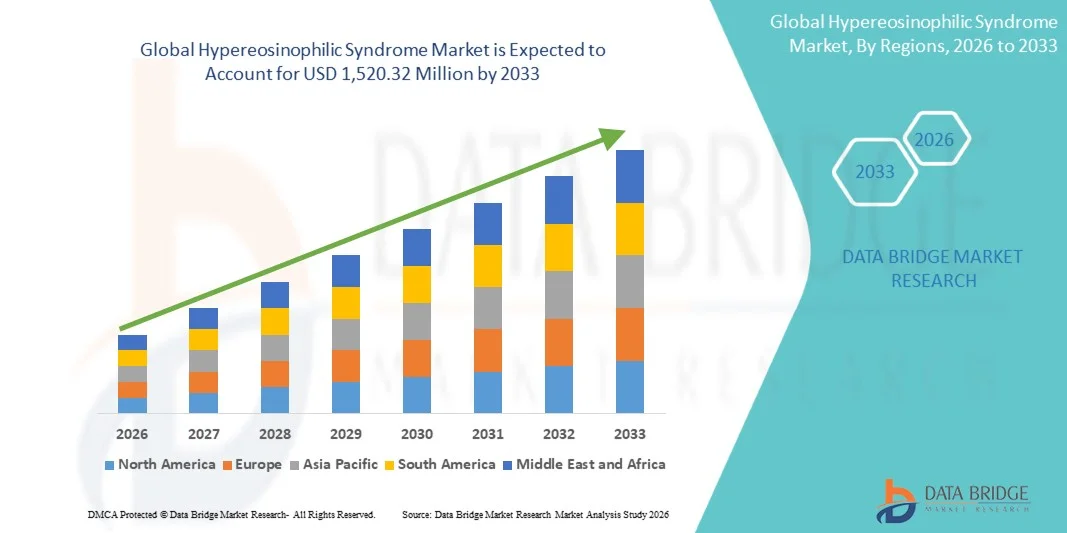
- 世界的なhypereosinophilic症候群市場規模は、2025年のUSD 763.00百万そして到達する予定米ドル 1,520.32 百万 以 2033, お問い合わせCAGRの9.00%予報期間中
- 市場成長は、まれなヘマトロジックおよび免疫学的障害の増加の優先順位によって主に燃料を供給され、ターゲットを絞った生態学療法の進歩とともに、診断および治療結果を改善することにつながる
- さらに、医療専門家の意識を高め、研究の取り組みを拡大し、効果的で長期にわたる治療オプションに対する強い需要は、疾患管理の好ましいアプローチとして高度の治療薬を確立しています。 これらの収束因子は、hypereosinophilic症候群の治療の採用を加速しています。これにより、業界の成長を著しく向上します。
市場規模と予測
- グローバル市場価値 (2025):米ドル 763.00 百万
- 期待される市場価値 (2033):1,520.32百万円
- 予測CAGR (2026-2033):9.00%
Hypereosinophilicシンドローム市場の主要なテイクアウトは何ですか
- 過敏に臓器の損傷につながるeosinophilic Syndrome(HES)は、標的生物学的の可用性、改善された診断能力、および精密医学の進歩の拡大による開発および新興医療システム全体で臨床的重要性を高めています
- hypereosinophilic症候群の治療に対するエスカレート要求は、主にまれな病気、上昇中の診断率、およびターゲットを絞った治療に対する成長の好みの意識を高めることによって燃料を供給されますモノクローナル抗体従来のコルチコステロイドと比較して効果が向上し、副作用を低減する
- 北アメリカは2025年に42.00%の最大の収益シェアを持つhypereosinophilic症候群の市場を支配しました、強力な医療インフラ、高度な生態学の採用、および米国の大手製薬会社の存在によって、進行中の臨床試験および革新的な治療の早期導入による有意な成長を目撃しました
- アジア・パシフィックは、医療インフラの改善、希少疾患の認知度の向上、中国、日本、インドなどの国における専門的治療への投資の拡大など、予測期間におけるhypereosinophilic症候群市場で最も急速に成長する地域であると予想される
- 生物的療法の区分は2025年に48.0%の市場占有率のhypereosinophilic症候群の市場占有率を増加させ、長期病気管理のための高度のmonoclonal抗体の処置の承認を増加させました
レポートスコープとHyeosinophilic Syndrome市場セグメンテーション
|
アトリビュート |
Hypereosinophilicシンドロームキーマーケットインサイト |
|
カバーされる区分 |
|
|
カバーされた国 |
北アメリカ
ヨーロッパ
アジアパシフィック
中東・アフリカ
南米
|
|
主要市場プレイヤー |
|
|
マーケットチャンス |
|
|
付加価値データインフォセットを追加 |
市場価値、成長率、セグメンテーション、地理的カバレッジ、主要なプレーヤーなどの市場シナリオに関する洞察に加えて、Data Bridge Market Researchがキュレーションした市場レポートには、詳細なエキスパート分析、患者疫学、パイプライン分析、価格設定分析、規制フレームワークも含まれています。 |
Hypereosinophilicシンドローム市場での重要な傾向は何ですか
「標的生薬・精密薬の高度化」
- 世界的なhypereosinophilic症候群市場での有意で加速傾向は、ターゲティングされた生態学療法とモノクローナル抗体やシトカイン阻害剤などの精密医学アプローチの普及が高まっています。 この進歩は処置の効力および忍耐強い結果を大幅に改善します
- たとえば、Nuccala は eosinophil レベルを削減し、病気の欠陥を防ぐ効果を実証しました。 同様に、Fasenraは、eosinophilic条件を管理するための標的メカニズムを探っています
- バイオロジックの統合により、よりパーソナライズされた治療戦略が実現し、臨床医は病気のサブタイプと重症に基づいて治療を調整することができます。 たとえば、ターゲットを絞った療法は、長期のコルチコステロイドの信頼性を低下させ、忍耐強い生活の質を改善しながら、関連する副作用を最小限に抑えるのを助けます。 さらに、継続的な研究は、治療選択を最適化するためにバイオマーカーを特定することに焦点を当てています
- 高度療法および改善された診断用具の高められた可用性はよりよい病気管理および監視を促進します。 専門的治療アプローチにより、ヘルスケアプロバイダーは、他の関連免疫疾患とともに、高雄症候性症候群をより効果的に管理し、より構造化された統合ケアパスウェイを作成することができます。
- より正確で効果的で、患者中心的な治療アプローチに対するこの傾向は、根本的に臨床管理戦略を再構築することです。 その結果、GlaxoSmithKlineなどの企業は、まれなeosinophilic条件のための強化された有効性と長期安全プロファイルでバイオロジック療法を開発しています
- 標的生物学的および精密医学のアプローチの要求は臨床医が副作用の減少の有効で、長期病気制御を優先するにつれて急速に成長しています
- 医薬品会社と研究機関とのコラボレーションを加速し、次世代療法の開発を加速し、全体的な治療のアクセシビリティを向上させる
Hypereosinophilicシンドローム市場ダイナミクス
ドライバー
「希少疾患の意識とターゲティング療法の採用による成長ニーズ」
- 医療従事者および患者の間でまれな病気の認識の増加の優先順位は、標的された生物的療法の採用と相まって、hypereosinophilic症候群の治療のための高まる要求のための重要な運転者です
- たとえば、近年では、AstraZenecaは、生態学的薬物開発と臨床試験に焦点を当て、eosinophilic障害の研究を拡大しています。 主要な企業によるそのような戦略は、予測期間におけるhypereosinophilic症候群の市場成長を駆動することが期待されています
- 臨床医は病気の複雑さや診断の進歩をもっと認識するにつれて、標的療法はeosinophilの過剰生産の根本的な病理学に取り組むことによって改善された結果を提供し、従来の治療アプローチに対する説得力のある選択肢を提供します
- さらに、パーソナライズされた医療とバイオマーカー主導の療法に対する成長の焦点は、高度なバイオロジックを治療プロトコルの不可欠なコンポーネントにし、改善された病気管理と再燃率を提供します
- 専門的治療オプションの可用性、医療サービスへのアクセスの増加、および長期療法による慢性症状を効果的に管理する能力は、グローバル市場における高機能症症候群の治療の採用を推進する重要な要因です。 早期診断への傾向と患者モニタリングの改善により、市場成長に貢献
- オーファンの薬物の指定および規制上のインセンティブを拡大することはまれな病気療法に投資するために製薬会社を奨励しています、それによってプロダクト開発および商品化を加速します
- 開発地域における医療費の上昇および改善された払い戻し枠組みは、高度のhypereosinophilic症候群治療への患者のアクセスをサポートしています
拘束/チャレンジ
「高治療費と限定疾患の病気障害」
- 生態学療法の高コストと多汗性症候群の限られた意識を取り巻く懸念は、市場浸透の拡大に大きな課題を提起します。 高度の処置が長期管理を要求すると同時に、それらは患者およびヘルスケア システムのための財政の負荷を作成できま、アクセシビリティおよび有価証券についての心配を上げます
- 例えば, 限られた診断率と開発地域における意識の欠如は、患者の過激化をもたらしました, 全体的な市場成長の可能性を制限
- 啓発キャンペーンの充実、診断インフラの整備、保険の拡大による課題の解決は、治療のアクセシビリティ向上に不可欠です。 Sanofiなどの企業は、バイオロジカルセラピーへのアクセスを改善するための研究開発とパートナーシップに焦点を当てています。 また、オーファン薬の規制当局の承認の複雑さは、特定の地域で市場参入を遅らせ、治療の可用性を制限することができます
- 治療の進歩は進行中ですが、専門療法の高コストと限られた可用性は、特に低・中所得の国では、特に、医療リソースが制約されている
- 費用対効果の高い処置の開発、支持的な規制枠組み、および高められた全体的な意識のイニシアチブによるこれらの課題を克服することは、持続的な市場成長のために不可欠です
- 大規模な臨床試験を実施する限られた患者プールと課題は、薬物開発を遅くし、規制当局の承認を遅らせることができます
- 長期生物学的使用に関連付けられる処置応答および潜在的な副作用の変化は患者の付着および全面的な処置の結果に影響を与えるかもしれません
Hypereosinophilicシンドローム市場はどのように区分されますか
市場は処置、管理のルート、エンド ユーザーおよび配分チャネルに基づいて区分されます。
- 処置によって
処置に基づいて、hypereosinophilic症候群の市場はに分けられます生物療法、コルチコステロイド、化学療法および他の。 生物学的療法の区分は2025年に48.0%の最大の市場収益のシェアと市場を支配しましたり、eosinophilレベルを制御する作用および優秀な効力のターゲットにされたメカニズムによって運転しました。 疾患再燃を抑え、長期臓器の損傷を最小限に抑える能力により、Nuccalaなどの生態学がますます優先されます。 医師は、長期のコルチコロイド使用と比較して、安全性プロファイルの改善を提供するため、バイオロジックにシフトしています。 また、このセグメントを強化し、さらなる承認と強力な臨床パイプライン開発を強化しています。 パーソナライズド医療とバイオマーカーベースの療法の採用の増加も、その優位性に貢献しています。
コルチコステロイドのセグメントは、予測期間の間に最速の成長率を目撃するために予想されます, その広範な可用性と費用対効果によって燃料を供給. コルチコステロイドは、オシンフォワード数を制御するための迅速な行動のために、多くの患者のための最初のライン療法を維持します。 開発地域と開発地域の両方のアクセシビリティにより、広く利用されている治療オプションが可能になります。 さらに、ドージングを最適化し、副作用を減らすための継続的な研究は、継続的な需要をサポートしています。 治療レジメンの生態学とコルチコステロイドの組み合わせは、臨床関連性を高めています。
- 行政のルートで
管理のルートに基づいて、hypereosinophilic症候群の市場は経口および注射可能に分けられます。 注射可能なセグメントは、2025年に最大の収益シェアで市場を支配しました。, 副cutaneousまたは静脈内ルートを介して管理された生態学療法の増加の使用によって駆動. 注射可能な処置は重症例のためにより有効なそれらを作るより高い生物学的利用能およびターゲットを絞られた配達を提供します。 モノクローナル抗体療法に対する成長性は、この優位性に大きく貢献しています。 さらに、ヘルスケアプロバイダーは、より優れた患者モニタリングと臨床設定の遵守のために注射可能な管理を支持しています。 専門バイオロジカルの拡大により、セグメントの成長をサポートします。
口腔セグメントは、予報期間中に最速の成長率を目撃し、患者の利便性と非侵襲的な治療オプションの好みを増加させることで期待されます。 経口療法は、特に長期疾患管理のために、患者のコンプライアンスを管理し、改善することが容易です。 経口薬製剤の進歩は、有効性を高め、副作用を減らすことです。 さらに、経口コルチコステロイドは、初期療法として広く処方され続ける。 また、本セグメントの拡大にも貢献しています。
- エンドユーザーによる
エンドユーザーに基づいて、hypereosinophilic症候群の市場は、病院、ホームケア、専門医などに分かれています。 病院の区分は高度の診察道具の可用性および専門にされたヘルスケアの専門家へのアクセスによって運転される2025の最大の収益のシェアと市場を支配しました。 病院は、生態学的療法を管理し、hypereosinophilic症候群の重症例を管理するための主要なセンターです。 多角的なチームの存在は、包括的な病気管理と監視を保証します。 また、希少疾患の診断や治療のための病院の入院率が増加し、セグメントの成長に貢献します。 病院の設定における払い戻しサポートの可用性は、その優位性を強化します。
ホームケアセグメントは、予報期間中に最速の成長率を目撃する見込みで、外来のケアと治療の自己管理へのシフトが増えました。 患者は病院の訪問および関連した費用を減らすために家ベースの処置のためにますます採用しています。 ユーザーフレンドリーな注射可能なデバイスと経口薬の可用性は、この移行をサポートしています。 さらに、テレメディシンおよびリモートモニタリングの進歩は、ホームケア設定における患者管理を強化しています。 患者様の利便性と生活の質の向上は、ホームケアソリューションの採用を加速しています。
- 流通チャネル
配布チャネルに基づいて、hypereosinophilic症候群市場は、病院薬局、オンライン薬局、小売薬局に分けられます。 病院の薬学の区分は制御された貯蔵および管理を必要とする生物的療法のための高需要によって運転される2025の最大の収入のシェアと市場を支配しました。 病院の薬剤師は専門にされた薬物の可用性および温度感受性の薬剤の適切な処理を保障します。 彼らはまた、医師の監督の下で高コスト療法を分配する上で重要な役割を果たしています。 また、医療従事者と病院の薬局との間の強力な調整は、治療の継続をサポートしています。 償還フレームワークの存在は、このセグメントの優位性をさらに高めます。
オンライン薬局のセグメントは、デジタルヘルスケアプラットフォームおよび電子商取引の採用の増加によって推進された予測期間中に最速の成長率を目撃する予定です。 オンライン薬局は、特に遠隔地の患者のために、薬への利便性、宅配、および改善されたアクセスを提供します。 デジタル処方とテレコンサルテーションの普及は、この傾向をさらに支持しています。 また、オンラインプラットフォームを通じて利用可能な競争力のある価格設定と割引は、より多くの患者を引き付けています。 デジタルヘルスケアインフラの拡大は、このセグメントの成長を著しく向上しています。
Hypereosinophilic Syndrome Marketの最大のシェアはどの地域ですか
- 北アメリカは2025年に42.00%の最大の収益分配のhypereosinophilicシンドロームの市場を、強いヘルスケアのインフラ、高度の生態学の採用および一流の製薬会社の存在によって支配しました
- 地域における患者およびヘルスケアプロバイダーは、Nuccalaなどの生物学的治療療法によって提供される有効性、標的治療アプローチ、および改善された臨床結果を非常に評価しています。
- この広範囲にわたる採用は、強力な医療インフラ、高ヘルスケアの支出、および主要な製薬会社の存在によってさらに支持され、早期診断および長期疾患管理のための成長の優先順位と共に、高度療法をhypereosinophilic症候群治療のための好まれたソリューションとして確立します
米国Hypereosinophilic Syndrome市場洞察
米国のhypereosinophilic症候群市場は、2025年に北米で80%の最大の収益シェアを占め、先進的なバイオロジカル療法の普及とまれなeosinophilic障害の意識の増加によって燃料を供給しました。 患者およびヘルスケアプロバイダは、疾患管理を改善し、長期合併症を減らすために早期診断および標的治療オプションを優先しています。 パーソナライズド医薬品の普及傾向と、専門医療施設へのアクセスは、市場成長を促進します。 また、堅牢な臨床研究、新療法の強力なパイプライン、および十分に確立された保険および払い戻しシステムは、市場拡大に著しく貢献しています。
ヨーロッパHypereosinophilicシンドローム市場洞察
欧州のhypereosinophilic症候群市場は、主にまれな病気の意識を高め、オルファンの薬物開発をサポートする有利な政府の取り組みを主導し、予測期間全体で実質的なCAGRで拡大する予定です。 eosinophilic無秩序の上昇の優先順位は、生物製剤およびモノクローナル抗体療法の進歩と結合され、市場採用を促進しています。 ヨーロッパの医療システムは早期診断と病気のモニタリングを強調し、治療の摂取量を高めます。 また、医療費の増大や専門医療センターの統合は、病院やホームケアのセッティングを通じて成長を促進しています。
U.K. Hypereosinophilic Syndrome 市場 洞察
U.K. hypereosinophilic症候群市場は、予測期間中に注目すべきCAGRで成長することを期待しています, 臨床医やまれなeosinophilic障害に関する患者の間で高度に意識することによって駆動. 生物的療法および標的処置の選択のための増加された要求は市場拡大を支えます。 さらに、健康で確立された医療インフラと払い戻しメカニズムは、先進的な治療法の採用を促します。 まれな病気の治療薬の忍耐強い教育のイニシアチブそして臨床試験はまた成長を刺激します。 免疫学や希少疾患の研究開発に重点を置いた英国は、市場拡大の継続を期待しています。
ドイツ Hypereosinophilic Syndrome 市場 洞察
ドイツhypereosinophilic症候群市場は、予測期間中にかなりのCAGRで拡大することが期待されます, 強力な医療インフラと技術的に高度な診断と治療ソリューションの採用によって燃料を供給. eosinophilic無秩序の意識を高め、生物的療法の使用の増加は処置のuptakeを運転しています。 ドイツは、医療のイノベーションに重点を置き、希少疾患管理のサポートは、早期診断と専門ケアへのアクセスを奨励します。 パーソナライズされたセラピーを病院に統合し、専門クリニックの設定も普及しています。 さらに、製薬会社とヘルスケアプロバイダー間の患者重視のプログラムとコラボレーションにより、市場成長を強化しています。
Asia-Pacific Hypereosinophilic Syndrome 市場 洞察
アジア・パシフィック・hypereosinophilic症候群市場は、予測期間中に最速のCAGRで成長し、希少疾患の認知度を高め、医療インフラを改善し、中国、日本、インドなどの国で特殊治療薬への投資を増加させることで表彰されています。 地域における生態学的およびモノクローナル抗体療法の普及は、強化された疾患管理をサポートしています。 希少疾患のケアを促進し、ヘルスケアサービスへのアクセスを拡大する政府の取り組みは、市場アップテークを加速しています。 また、高度な診断ツールの可用性を高めるとともに、使い捨ての収入と都市化を増加させ、急速な成長に貢献しています。
日本Hypereosinophilicシンドローム市場洞察
日本hypereosinophilic症候群市場は、国の先進医療システム、臨床研究の増加、および効果的なまれな病気の治療の需要による勢いを増加させています。 生態学療法の採用は、標的された処置アプローチのための高い忍耐強い意識および医者の好みによって運転されます。 さらに、新規治療サポート市場成長の臨床試験および承認の拡大。 早期診断とホームケアの選択肢に焦点を合わせ、病気管理を強化します。 また、希少疾患の患者様支援プログラムや保険カバレッジは、先進的な治療へのアクセスを容易にし、市場全体の拡大を促進します。
インド Hypereosinophilic Syndrome 市場 洞察
インドのhypereosinophilic症候群市場は、2025年にアジア・パシフィックで最大の収益シェアを占め、希少疾患の普及、ヘルスケアアクセスの増加、およびバイオロジック療法の採用の増加に寄与しました。 インドは、専門的な治療センターの改善診断率と可用性を証しています。 中級・都市化の拡大は、先進的な治療に対する患者の要求を担っています。 政府はまれな病気の心配を、国内の薬剤の進歩と結合し、現実的な療法の選択は、市場成長を促進する主要な要因支えます。 また、グローバル製薬企業とのパートナーシップは、治療の可用性と臨床研究基盤を強化しています。
Hypereosinophilic Syndrome Marketのトップ企業は
Hypereosinophilic シンドローム業界は、主に以下のような、確立された企業によって導かれています。
- 株式会社Pfizer, (米国)
- ノバルティスAG, (スイス)
- Hikmaの薬剤PLC, (米国)
- Aurobindoファーマリミテッド, (インド)
- GSK 液晶, (米国)
- Bausch Health Companies Inc.(カナダ)
- Amneal Pharmaceuticals LLC(米国)
- バイエルAG(ドイツ)
- Lupin Limited(インド)
- AbbVie Inc.(米国)
- ブリストル・ウォーズ・スクイブ・カンパニー(米国)
- Fresenius Kabi AG(ドイツ)
- ノップバイオサイエンス合同会社(米国)
- サン製薬工業株式会社(インド)
- 協和発酵キリン株式会社(日本)
- ステムリン・セラピューティクス株式会社(米国)
- F.ホフマン・ラ・ロチェAG(ロチェ)、スイス
- 株式会社ティーバ製薬(イスラエル)
- アストラゼネカ(イギリス)
- メルク&株式会社(米国)
- Regeneronの薬剤、(米国)
- 株式会社アムゲン(米国)
グローバルHypereosinophilic Syndrome市場における最近の発展は何ですか
- 2025年12月に、新しいHES臨床研究は、イディオパシーHESに関連した新しい多系統的浮腫症状を強調し、疾患病理学への深い洞察を提供し、まれなeosinophilic合併症の診断と管理のための新興臨床的考察を明らかにしました
- 2025年11月、アメリカン・カレッジ・オブ・アレルギー、アスマ、免疫学(ACAAI)で発表された新しい臨床データ2025年会議では、ベニラシズマブが有意に減少し、高血症症候群(HES)患者における症状の欠陥と改善された疲労スコアを増加させることが示されました。
- 2025年11月、AstraZenecaはフルフェーズIII NATRONの試験結果が生態学FASENRA (benralizumab)をかなり遅らせ、hypereosinophilic症候群の患者で悪化する病気を減少させました、すべての第一次および主要な二次エンドポイントを満たし、疲労を含む症状の改善を実証する
- 2025年11月、Phase 2 臨床試験は、既存の eosinophil-depleting 生態学に部分的な反応を持っていたhypereosinophilic 症候群を持つ患者のためのアドオン療法としてdupilumabを探索し、免疫療法を組み合わせて新たな関心を示す、未治療ギャップを解決しました
- 2021年12月、米国食品医薬品局(FDA)は、成人と12歳の子供を治療するためのmepolizumab(Nucala)を承認し、hypereosinophilic症候群(HES)で、14年近くで最初の治療をマークし、フェーズIIIの臨床試験結果に基づいて、このまれなeosinophil-driven障害のために規制クリアランスを受け取る
SKU-
世界初のマーケットインテリジェンスクラウドに関するレポートにオンラインでアクセスする
- インタラクティブなデータ分析ダッシュボード
- 成長の可能性が高い機会のための企業分析ダッシュボード
- カスタマイズとクエリのためのリサーチアナリストアクセス
- インタラクティブなダッシュボードによる競合分析
- 最新ニュース、更新情報、トレンド分析
- 包括的な競合追跡のためのベンチマーク分析のパワーを活用
調査方法
データ収集と基準年分析は、大規模なサンプル サイズのデータ収集モジュールを使用して行われます。この段階では、さまざまなソースと戦略を通じて市場情報または関連データを取得します。過去に取得したすべてのデータを事前に調査および計画することも含まれます。また、さまざまな情報ソース間で見られる情報の不一致の調査も含まれます。市場データは、市場統計モデルと一貫性モデルを使用して分析および推定されます。また、市場シェア分析と主要トレンド分析は、市場レポートの主要な成功要因です。詳細については、アナリストへの電話をリクエストするか、お問い合わせをドロップダウンしてください。
DBMR 調査チームが使用する主要な調査方法は、データ マイニング、データ変数が市場に与える影響の分析、および一次 (業界の専門家) 検証を含むデータ三角測量です。データ モデルには、ベンダー ポジショニング グリッド、市場タイムライン分析、市場概要とガイド、企業ポジショニング グリッド、特許分析、価格分析、企業市場シェア分析、測定基準、グローバルと地域、ベンダー シェア分析が含まれます。調査方法について詳しくは、お問い合わせフォームから当社の業界専門家にご相談ください。
カスタマイズ可能
Data Bridge Market Research は、高度な形成的調査のリーダーです。当社は、既存および新規のお客様に、お客様の目標に合致し、それに適したデータと分析を提供することに誇りを持っています。レポートは、対象ブランドの価格動向分析、追加国の市場理解 (国のリストをお問い合わせください)、臨床試験結果データ、文献レビュー、リファービッシュ市場および製品ベース分析を含めるようにカスタマイズできます。対象競合他社の市場分析は、技術ベースの分析から市場ポートフォリオ戦略まで分析できます。必要な競合他社のデータを、必要な形式とデータ スタイルでいくつでも追加できます。当社のアナリスト チームは、粗い生の Excel ファイル ピボット テーブル (ファクト ブック) でデータを提供したり、レポートで利用可能なデータ セットからプレゼンテーションを作成するお手伝いをしたりすることもできます。