


世界の交通機関向け電子キオスク市場のセグメンテーション:コンポーネント別(ハードウェア、ソフトウェア、サービス)、エンドユーザー別(金融サービス、ヘルスケア)-業界動向と2033年までの予測
輸送Eキオスク市場における重要なトレンドとは
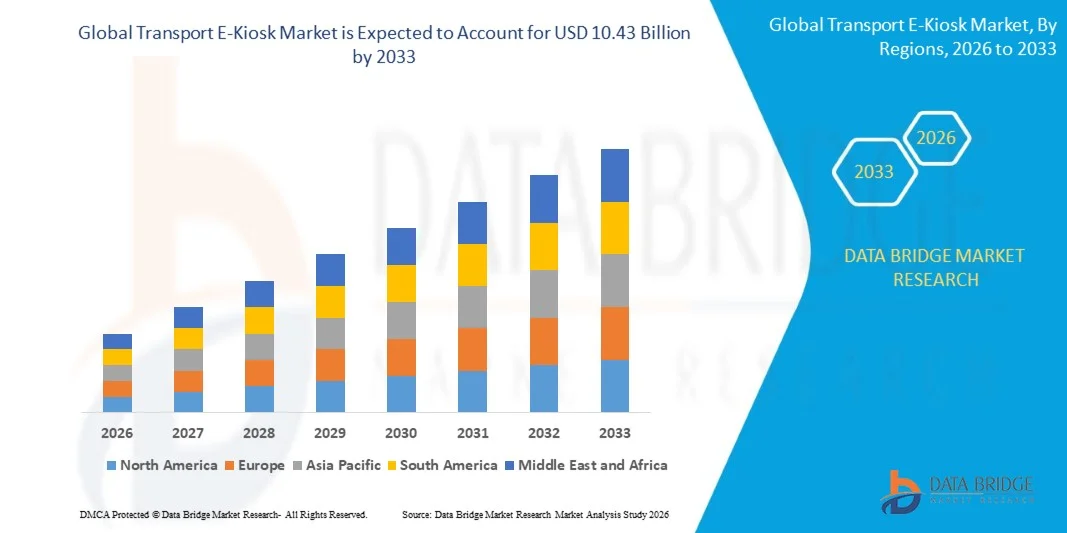
- データブリッジ市場調査分析による 世界的な輸送Eキオスク市場規模が評価されました2025年のUSD 4.94億そして到達する予定2033年までのUSD 10.43億, お問い合わせ9.80%のCAGR予報期間中
- 市場成長は、公共輸送におけるセルフサービスのソリューションの採用の増加、無接触の切符システムに対する需要の増加、および主要地域における都市化の拡大によって大きく加速されます。
- デジタルインフラにおけるスマートシティ・イニシアチブや投資の拡大により、E-キオスクの普及を支援
輸送Eキオスク市場の主要なテイクアウトは何ですか
- 市場は、タッチスクリーンインターフェイス、NFCベースの支払い、モバイルアプリとQRコードスキャンとの統合などの技術進歩によって駆動されます
- 導入はデジタル変革およびスマートな輸送ネットワークに投資する地域で特に高いです、操作上の効率および乗客の経験を高めます
- 北米は、デジタルセルフサービスのソリューションの普及とBFSIおよびヘルスケア部門の無接触取引のための増加の必要性を主導し、2025年に最大の収益シェアで輸送Eキオスク市場を支配しました
- アジア太平洋地域は、世界最高成長率を目撃する見込み輸送 Eキオスク市場, 公共輸送システムの近代化によって駆動, スマートな都市を促進する政府の取り組み, 空港および地下鉄の駅で自動発券および情報キオスクの需要の増加
- ハードウェアセグメントは、輸送ステーション、空港、バスターミナルの耐久性、高性能キオスクの展開によって駆動され、2025年に最大の市場収益シェアを保持しました。 タッチスクリーン、プリンター、スキャナなどのハードウェアソリューションは、信頼性の高い切符、情報、および決済サービスにとって不可欠であり、輸送事業者の好ましい選択肢となっています。
市場規模と予測
グローバル市場価値(2025):USD:4.94億
予想される市場価値(2033):USD10.43億
予測CAGR (2026~2033):9.80%
レポートスコープと輸送Eキオスク市場セグメンテーション
アトリビュート |
トランスポートE-Kioskキーマーケットインサイト |
|
カバーされる区分 |
|
|
カバーされた国 |
北アメリカ
ヨーロッパ
アジアパシフィック
中東・アフリカ
南米
|
|
主要市場プレイヤー |
・NCR株式会社(米国) |
|
マーケットチャンス |
• スマートシティ・イニシアチブおよびデジタル交通インフラの拡大 |
|
付加価値データインフォセットを追加 |
市場価値、成長率、セグメンテーション、地理的カバレッジ、主要なプレーヤーなどの市場シナリオに関する洞察に加えて、Data Bridge Market Researchがキュレーションした市場レポートには、詳細なエキスパート分析、地理的に代表される企業指向の生産と能力、ディストリビューターおよびパートナーのネットワークレイアウト、詳細および更新された価格の傾向分析、サプライチェーンと需要の欠陥分析が含まれます。 |
輸送Eキオスク市場における重要なトレンドとは
「無接触およびセルフサービスの解決の上昇の採用」
•自動および無接触の切符システムの増加の焦点は輸送のEキオスクの市場をかなり形づけます、通勤者および旅行者は速く、能動態および接触なしのトランザクションを好むので。 輸送Eキオスクは、キュータイムを削減し、業務を合理化し、乗客の体験を向上する能力のためにトラクションを獲得しています。 この傾向は、公共の輸送、空港、鉄道駅、およびバスターミナル全体での採用を強化し、メーカーがユーザーフレンドリーなインターフェイスで高度なソリューションを開発するよう求めています。
• デジタルインフラやスマートシティのイニシアチブの普及は、Eキオスクの輸送需要を加速しました。 都市人口は、積極的に効率的な輸送ソリューションを求めています, 政府機関や民間事業者は、チケットのキオスクを統合します, 情報, 決済サービス. また、テクノロジープロバイダーとトランスポート事業者との間で協業し、利便性、信頼性、機能性を高めています。
•無接触およびデジタル化の傾向は速いサービス、最低の人間の相互作用およびシステム信頼性を強調するオペレータとの購買および配置の決定に影響を及ぼします。 これらの要因は、組織がサービス品質を差別化し、運用コストを削減し、乗客の満足度を向上させるのに役立ちます。また、高度な決済システム、モバイル発券、および忠誠プログラムの統合を推進しています。
• 例えば、2024年、ドイツにおけるSiemens Mobility、米国におけるCubic Transport Systemsは、鉄道および地下鉄ネットワーク向けのEキオスクの提供を拡大しました。 これらの展開は、セルフサービスの切符およびリアルタイムの輸送情報のための上昇の通勤需要を満たすために導入されました, ステーションと公共交通機関ハブにインストールされたシステムと. ソリューションは、効率的な、信頼性、および無接触として販売され、乗客の利便性を改善し、使用を繰り返しました
• Eキオスクを輸送するための需要が高まっていますが、持続的な市場拡大は、継続的な革新、費用対効果の高い展開、および従来のシステムとの統合に依存します。 メーカーは、ソフトウェアの相互運用性、クラウド接続、およびモジュラーハードウェア設計の改善にも注力しています。
トランスポート E-Kiosk Market Dynamics
「自動および無接触転移の解決のための上昇の要求」
•タッチレス取引とセルフサービスのオプションのためのコミューター設定を成長させることは、Eキオスク市場を輸送するための主要なドライバです。 従来のチケットカウンターをEキオスクに交換し、サービス効率を改善し、スタッフのコストを削減し、乗客の満足度を高めます。 このトレンドは、先進的なハードウェア、AI搭載インターフェース、統合決済ソリューションの研究を促します。
•地下鉄の駅、バスターミナル、空港および鉄道ハブを渡る拡大の塗布は市場成長に影響を及ぼします。 トランスポートEキオスクは、トランザクション速度を改善し、待ち時間を最小限に抑え、リアルタイム情報を提供し、オペレータが現代の通勤の期待を満たすことを可能にします。 スマートシティやデジタルインフラの普及が進んでおり、このトレンドをさらに強化
•技術プロバイダーおよび運輸当局は、革新的な設計、モバイル統合、および高度なソフトウェア機能を通じて、Eキオスクの採用を積極的に推進しています。 これらの取り組みは、コミューターの需要が便利で迅速で信頼性の高いサービスをサポートし、相互運用性を高め、サービスカバレッジを拡大するためのパートナーシップを奨励しています。
• たとえば、2023年、米国およびドイツでScheidt & BachmannのCubic Transportation Systemsは、都市輸送ネットワーク全体でEキオスクの展開が増加しました。 セルフサービスの切符、無接触の支払いおよび実時間運輸情報のためのこの拡張はより高い乗客の要求に続きます。 両社は、信頼性、アクセシビリティ、ユーザーフレンドリーなインターフェースを強調し、採用を強化
• 増加するオートメーションおよび無接触の傾向サポート成長が、より広い採用はインフラの信頼性、技術コストおよびシステム互換性に依存します。 スケーラブルなソリューション、安全な決済方法、および耐久性のあるハードウェアへの投資は、グローバルな需要を満たし、競争上の優位性を維持するために不可欠です
拘束/チャレンジ
「高い実装コストとシステム統合の問題」
•従来の切符カウンターと比較して、Eキオスクを輸送する比較的高いコストは、予算の禁断された運輸当局に採用を制限する重要な課題を残します。 ハードウェアの費用、ソフトウェアライセンス、メンテナンスの要件は、所有コストの上昇に貢献します。 また、既存のレガシーシステムとキオスクを統合することで、複雑で時間がかかります。
• オペレータおよび通勤意識は、特にデジタルインフラが依然として進化している地域を開発する不均等に残っています。 機能的な利点の限られた理解はより小さい運輸ネットワークを渡る採用を制限できます。 これはまた、最小限のデジタルインフラサポートで新興国におけるイノベーションの加速を加速させる
• 導入および維持の挑戦はまた、輸送Eキオスクが高交通区域のための信頼できる力、接続および耐久ハードウェアを要求するので市場成長に影響を与えます。 環境要因、破壊リスク、技術的な問題は、運用コストを増加させることができます。 組織は、適切なインストール、予防保守、システム監視に投資し、中断のないサービスを確実にしなければなりません。
• たとえば、2024年、東南アジアの地域における運輸当局は、高い設置コストとデジタルシステムに関する限られたスタッフの精通による、より遅いEキオスクのアップテークを報告しました。 モバイルチケットアプリとレガシートランジットネットワークとの統合は、追加の障壁を構成しました。 これらの要因はまた、運用効率に影響を与えるキオスクと一緒に従来のカウンターを維持するためにオペレータを促しました
• これらの課題を克服することは、コスト効率の高い展開、スタッフのトレーニングプログラム、既存のインフラとのシームレスな統合が必要です。 テクノロジープロバイダー、決済サービスパートナー、システムインテグレータとのコラボレーションにより、グローバルトランスポートEキオスク市場における長期的成長の可能性を享受できます。 さらに、耐久性、ユーザーフレンドリー、スケーラブルなシステムの開発は、幅広い採用に不可欠です。
輸送E-Kiosk市場はどのように区分されますか
トランスポートEキオスク市場は、コンポーネントとエンドユースに基づいてセグメント化されます。
•部品によって
コンポーネントをベースに、E-kiosk 市場をハードウェア、ソフトウェア、サービスに分割します。 ハードウェアセグメントは、輸送ステーション、空港、バスターミナルの耐久性、高性能キオスクの展開によって駆動され、2025年に最大の市場収益シェアを保持しました。 タッチスクリーン、プリンター、スキャナなどのハードウェアソリューションは、信頼できる発券、情報、および決済サービスにとって不可欠であり、輸送事業者に好ましい選択をしています。
ソフトウェアセグメントは、インテリジェントな管理プラットフォーム、クラウド接続、およびモバイル統合の採用の増加によって駆動され、2026から2033までの最速の成長率を目撃する予定です。 ソフトウェア対応キオスクでは、オペレーターが運賃を更新したり、リアルタイムで取引を管理したり、ロイヤリティプログラムを統合したり、ユーザーエクスペリエンスと運用効率を向上させることができます。
•エンド使用による
エンドユースに基づいて、Eキオスクの輸送市場はBFSIおよびヘルスケアに分けられます。 BFSIセグメントは、2025年に最大の市場収益シェアを保有し、セルフサービスバンキング、自動決済、および高トラフィック領域のデジタル情報ターミナルの需要の増加により燃料を供給しました。 BFSI機関は、Eキオスクを活用して待機時間を減らし、カスタマーサービスを強化し、労働力配分を最適化します。
医療分野は、2026年から2033年までの最も速い成長率を目撃し、患者の自己登録、任命のスケジューリング、および病院および医院の情報キオスクの増加の必要性によって運転されることを期待しています。 ヘルスケアのEキオスクは、管理業務を合理化しながら、患者体験を改善し、安全で、無接触、効率的なサービスを提供しています。
輸送 E キオスク市場 地域分析
- 北米は、デジタルセルフサービスのソリューションの普及とBFSIおよびヘルスケア部門の無接触取引のための増加の必要性を主導し、2025年に最大の収益シェアで輸送Eキオスク市場を支配しました
- 地域における消費者や企業は、Eキオスクが提供する利便性、リアルタイム情報アクセス、運用効率が非常に高く評価されています。
- 高デジタルリテラシー、堅牢なITインフラ、スマートシティおよびキャッシュレス・イニシアチブへの強力な投資により、Eキオスクを商用およびヘルスケア・アプリケーションに優先するソリューションとして確立
米国運輸 E-Kiosk Market Insight
米国の輸送Eキオスク市場は、2025年に北米で最大の収益シェアを獲得し、銀行、保険、医療サービスの高速デジタル変革によって燃料を供給しました。 セルフサービス取引、無接触決済、および強化された顧客エンゲージメントの需要は、Eキオスクの採用を推進しています。 クラウドプラットフォーム、AIベースの分析、モバイルアプリケーションとの統合により、市場成長を促進します。 スマートな都市プロジェクトやキャッシュレス取引の推進に向けた取り組みも、米国Eキオスク市場の拡大に貢献しています。
欧州輸送E-Kiosk市場インサイト
欧州輸送Eキオスク市場は、2026年から2033年までの最速成長率を目撃する見込みで、主にデジタル化のための規制対応とBFSIおよびヘルスケア分野における自動サービスポイントの需要の増加によって推進されています。 スマートシティインフラにおける都市化と投資の拡大は、小売・サービス環境におけるEキオスクの採用を促進しています。 消費者は、市場成長をサポートし、迅速で安心、そして無接触なサービスオプションにますますます傾斜しています。 ヨーロッパはまた、ソフトウェアとサービスの統合における重要な発展を目撃しています, 機能を強化し、Eキオスクを輸送するユーザーエクスペリエンス.
U.K.トランスポートE-Kioskマーケットインサイト
米国のEキオスク市場は、BFSIおよびヘルスケア産業におけるデジタルセルフサービスソリューションおよび運用効率の向上の必要性によって駆動され、2026年から2033年までの強力な成長を目撃する見込みです。 非接触決済の採用が高まっています。政府がキャッシュレスとデジタルインフラをサポートする取り組みと相まって、Eキオスクを展開する組織を奨励しています。 また、迅速かつパーソナライズされたサービスの消費者の好みは、全国の商業および医療施設のキオスクの蓄積に貢献しています。
ドイツトランスポートE-Kioskマーケットインサイト
ドイツのEキオスク市場は、2026年から2033年にかけて急速に成長を目撃する見込みで、BFSIおよびヘルスケア分野におけるデジタルオートメーションおよびセルフサービス技術に対する需要が高まっています。 ドイツの先進的なインフラ、業界 4.0 に重点を置き、スマートシティ・イニシアチブへの投資は、E-kiosks の採用を推進しています。 市場は、リアルタイムのデータ収集、顧客エンゲージメント、および運用最適化を可能にするソフトウェアソリューションの高消費者意識、技術の進歩、および統合によってさらにサポートされています。
アジア・パシフィック・トランスポート E-Kiosk Market Insight
アジア太平洋輸送Eキオスク市場は、2026年から2033年にかけて、都市化の拡大、使い捨て所得の拡大、中国、インド、日本などの国における急速なデジタル導入による成長率を目撃する見込みです。 地域は、BFSIおよびヘルスケア分野における無接触およびセルフサービスソリューションの需要が高まっています。 政府主導のスマートシティプロジェクトとインフラの近代化への取り組みは、輸送Eキオスクの展開を加速しています。 さらに、AI対応ソフトウェア、モバイルインテグレーション、クラウドベースのサービスを中心に、E-kiosksの機能とユーザーエクスペリエンスを強化しています。
ジャパントランスポート E-Kiosk Market Insight
日本国内の輸送Eキオスク市場は、国の高いデジタルリテラシー、強力なITインフラ、および無接触サービスソリューションの必要性により、2026年から2033年にかけて大幅に成長する見込みです。 日本消費者は、BFSIおよびヘルスケア部門の採用を運転し、迅速かつ信頼性が高く、安全なセルフサービスオプションを評価します。 モバイルウォレット、AI主導の分析、クラウドプラットフォームとの統合により、市場成長をサポートします。 また、病院や銀行の効率的なサービスポイントの高齢化人口や需要は、日本のEキオスクの採用をさらに推進しています。
中国の輸送Eキオスク市場洞察
E-kiosk市場は、2025年にアジア・パシフィック地域で最大の収益シェアを占め、国の急速な都市化、強力なデジタル決済エコシステム、および技術の進歩に起因しています。 中国は、セルフサービスEキオスクの最大の市場の一つとして立ち、BFSIおよびヘルスケア部門の展開を増加させます。 政府のスマートシティインフラ、キャッシュレスイニシアチブ、AIベースのデジタルサービスは、広範な採用を推進しています。 また、コスト効率の高いハードウェア、高度なソフトウェアプラットフォーム、およびEキオスクの展開をサポートするローカルメーカーの可用性は、中国での市場成長を促進しています。
トランスポートEキオスク市場シェア
輸送E-Kiosk産業は、主に、以下のような広範な企業によって導かれています。
・NCR株式会社(アメリカ)
• SlabbKiosks (米国)
•高度のキオスク(米国)
・テクノロジ(アメリカ)
・IER SAS(フランス)
• メリディアン(米国)
・Diebold Nixdorf AGの特長(ドイツ)
・アドバンテック株式会社(台湾)
• リディレフ(米国)
・NEXCOMインターナショナル(台湾)
• KIOSK情報システム(米国)
・ジーブラテクノロジーズ株式会社(米国)
• エンブロス(カナダ)
SKU-
世界初のマーケットインテリジェンスクラウドに関するレポートにオンラインでアクセスする

- インタラクティブなデータ分析ダッシュボード
- 成長の可能性が高い機会のための企業分析ダッシュボード
- カスタマイズとクエリのためのリサーチアナリストアクセス
- インタラクティブなダッシュボードによる競合分析
- 最新ニュース、更新情報、トレンド分析
- 包括的な競合追跡のためのベンチマーク分析のパワーを活用
調査方法
データ収集と基準年分析は、大規模なサンプル サイズのデータ収集モジュールを使用して行われます。この段階では、さまざまなソースと戦略を通じて市場情報または関連データを取得します。過去に取得したすべてのデータを事前に調査および計画することも含まれます。また、さまざまな情報ソース間で見られる情報の不一致の調査も含まれます。市場データは、市場統計モデルと一貫性モデルを使用して分析および推定されます。また、市場シェア分析と主要トレンド分析は、市場レポートの主要な成功要因です。詳細については、アナリストへの電話をリクエストするか、お問い合わせをドロップダウンしてください。
DBMR 調査チームが使用する主要な調査方法は、データ マイニング、データ変数が市場に与える影響の分析、および一次 (業界の専門家) 検証を含むデータ三角測量です。データ モデルには、ベンダー ポジショニング グリッド、市場タイムライン分析、市場概要とガイド、企業ポジショニング グリッド、特許分析、価格分析、企業市場シェア分析、測定基準、グローバルと地域、ベンダー シェア分析が含まれます。調査方法について詳しくは、お問い合わせフォームから当社の業界専門家にご相談ください。
カスタマイズ可能
Data Bridge Market Research は、高度な形成的調査のリーダーです。当社は、既存および新規のお客様に、お客様の目標に合致し、それに適したデータと分析を提供することに誇りを持っています。レポートは、対象ブランドの価格動向分析、追加国の市場理解 (国のリストをお問い合わせください)、臨床試験結果データ、文献レビュー、リファービッシュ市場および製品ベース分析を含めるようにカスタマイズできます。対象競合他社の市場分析は、技術ベースの分析から市場ポートフォリオ戦略まで分析できます。必要な競合他社のデータを、必要な形式とデータ スタイルでいくつでも追加できます。当社のアナリスト チームは、粗い生の Excel ファイル ピボット テーブル (ファクト ブック) でデータを提供したり、レポートで利用可能なデータ セットからプレゼンテーションを作成するお手伝いをしたりすることもできます。











