



Asia-Pacific Nut Ingredients Market Segmentation By Category (Conventional, Organic), Type (Almonds, Brazil Nuts, Cashews, Chestnuts, Hazelnuts, Hickory Nuts, Macadamia Nuts, Pecans, Pine Nuts, Pistachios, Walnuts, Peanuts, and Others), Coating Type (Coated, Uncoated), Form (Whole, Diced/Cut, Roasted, Granular), End User (Household/Retail, Food Service Sector, Café, Catering, Bakery, Others), Distribution Channel (Store Based Retailers, Non-Store Retailers) - Industry Trends and Forecast to 2032
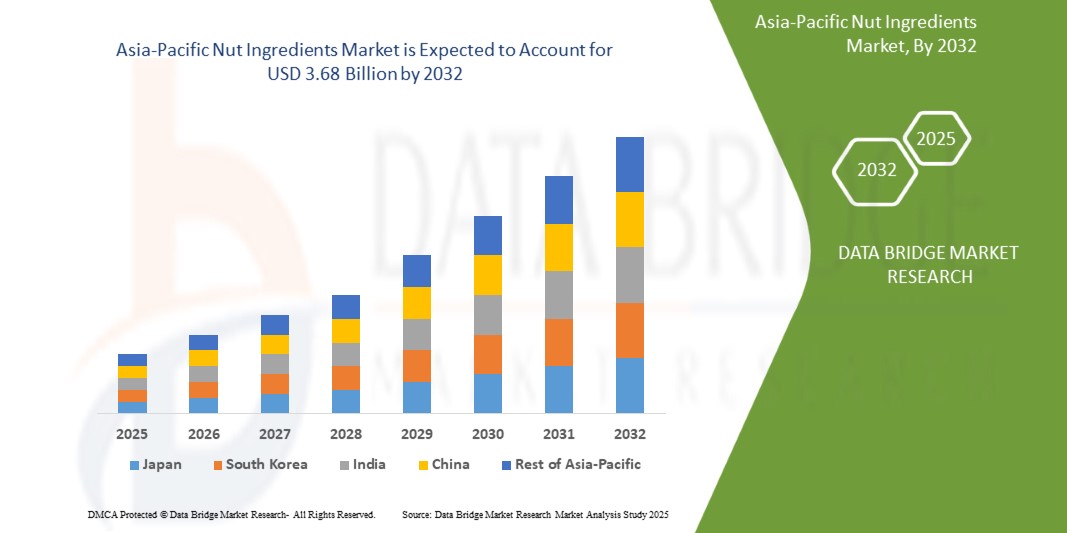
Nut Ingredients Market Size
- The Asia-Pacific Nut Ingredients market size was valued at USD 2.02 billion in 2024 and is expected to reach USD 3.68 billion by 2032, at a CAGR of 7.77% during the forecast period
- The market growth is largely fueled by rising consumer awareness of health and wellness, increasing demand for plant-based and protein-rich food products, expanding vegan population, and the growing popularity of convenient, nutritious snack options. Additionally, innovations in flavor and product variety further boost the appeal of nut ingredients.
- Furthermore, advancements in processing technologies and sustainable sourcing practices are enhancing product quality and availability. Increasing investments by key players in product development and marketing, along with expanding distribution channels, are also driving the widespread adoption of nut ingredients across various food and beverage sectors.
Nut Ingredients Market Analysis
- Advancements in processing technologies and sustainable sourcing practices are improving the quality, safety, and consistency of nut ingredients, making them more appealing to manufacturers and consumers, while also supporting environmental and ethical standards within the supply chain.
- Increased investments by key players in product innovation, marketing strategies, and expanding distribution networks are accelerating the penetration of nut ingredients in diverse food and beverage categories, enhancing consumer accessibility and driving overall market growth.
- India dominates the Nut Ingredients market with a 34.65% revenue share in 2025, driven by its leading cashew production and export, strong domestic demand, cultural integration of nuts in cuisine, expanding processing capacity, and rising global health-conscious consumption trends.
- Additionally, India’s robust supply chain, government support for nut farming, increasing investments in processing technology, and growing international trade partnerships further strengthen its leadership in the Nut Ingredients market, boosting revenue growth and solidifying its position through 2025 and beyond.
- The conventional segment is expected to dominate the Nut Ingredients market with a significant share of around 65% in 2025, driven by widespread consumer preference, established production methods, cost-effectiveness, and strong supply chain networks supporting traditional nut processing and distribution.
Report Scope and Nut Ingredients Market Segmentation
|
Attributes |
Nut Ingredients Key Market Insights |
|
Segments Covered |
|
|
Countries Covered |
Asia-Pacific
|
|
Key Market Players |
|
|
Market Opportunities |
|
|
Value Added Data Infosets |
In addition to the insights on market scenarios such as market value, growth rate, segmentation, geographical coverage, and major players, the market reports curated by the Data Bridge Market Research also include in-depth expert analysis, pricing analysis, brand share analysis, consumer survey, demography analysis, supply chain analysis, value chain analysis, raw material/consumables overview, vendor selection criteria, PESTLE Analysis, Porter Analysis, and regulatory framework. |
Nut Ingredients Market Trends
“Increasing use of nut ingredients in plant-based products”
- Nut ingredients like almonds, cashews, and walnuts are increasingly used as creamy bases in plant-based dairy alternatives such as milk, yogurt, and cheese, offering a rich texture and nutritional benefits, meeting consumer demand for lactose-free, vegan-friendly options.
- Plant-based meat alternatives are incorporating nut proteins and oils to improve texture, flavor, and nutritional profile, providing healthier fats and essential nutrients while catering to flexitarians and vegans seeking sustainable protein sources
- The rise in allergen-friendly formulations is driving innovation in nut blends, allowing manufacturers to create diverse plant-based snacks and protein bars that are free from common allergens like soy and gluten, while leveraging nuts’ natural richness and health benefits.
- Nut ingredients are favored in plant-based baking and confectionery for their flavor, crunch, and nutrient density, enabling producers to offer indulgent yet healthier treats that appeal to health-conscious and vegan consumers alike, enhancing product variety in the market.
- Advances in food processing technology enable extraction of nut-based oils and proteins with improved stability and shelf life, facilitating their integration into ready-to-eat plant-based meals, sauces, and dressings, aligning with the growing convenience food trend among busy consumers..
Nut Ingredients Market Dynamics
Driver
“Growing veganism fuels plant-based nut product innovation”
- Increasing vegan populations globally push food manufacturers to innovate by incorporating nut-based ingredients that mimic dairy and meat textures, providing creamy, rich, and protein-packed alternatives that meet ethical and dietary preferences without compromising taste or nutrition.
- Vegan consumers demand clean-label, allergen-friendly products, encouraging brands to use nuts like cashews, almonds, and macadamias as natural thickeners, creamers, and protein sources, leading to a surge in novel plant-based cheeses, yogurts, and desserts with improved sensory qualities.
- The ethical and environmental motivations behind veganism inspire research into sustainable nut cultivation and processing methods, enabling development of plant-based foods that not only appeal to vegans but also reduce carbon footprint and water usage compared to animal-based products.
- To satisfy diverse vegan palates, companies experiment with nut blends and innovative formulations, combining nuts with legumes and seeds, expanding the variety of plant-based meat substitutes, snacks, and protein powders available in the market with enhanced flavor and texture profiles.
- The growth of veganism stimulates investment in food technology startups focusing on nut-derived ingredients, leading to breakthroughs such as nut-based milks with extended shelf life, nut protein isolates, and fermented nut products, expanding options for consumers seeking cruelty-free nutrition.
Restraint/Challenge
“Allergies restrict consumer base for nut ingredient products”
- Nut allergies affect a significant portion of the population, causing manufacturers to face challenges in product formulation and labeling to ensure safety, which limits the widespread adoption of nut-based ingredients in mainstream food products
- 알레르기 유발 물질 표시 및 교차 오염 방지에 대한 엄격한 규제 요건으로 인해 기업의 생산 비용이 증가하고 절차가 복잡해져 일부 기업은 견과류 성분을 포함하지 않고, 그로 인해 시장에서 견과류 기반 제품의 가용성과 종류가 제한됩니다.
- 소비자들은 알레르기 반응에 대한 두려움 때문에 견과류가 들어간 식품을 전혀 피하는 경우가 많습니다. 그 결과 시장 수요가 감소하고, 더 광범위한 고객을 타겟으로 하는 견과류 성분 제조업체의 성장 기회가 제한됩니다.
- 식품 서비스 및 소매 부문에서는 책임 문제와 전담 처리 절차의 필요성 때문에 견과류 성분 제품을 제공하는 데 주저할 수 있으며, 이는 학교 및 병원과 같은 장소에서의 시장 확장을 더욱 제한할 수 있습니다.
- 알레르기를 유발하지 않는 대체 성분에 대한 필요성은 혁신을 촉진하지만 소비자의 관심도 분산시켜, 견과류 성분이 씨앗이나 대두 기반 옵션과 같은 알레르기 친화적 대체품에 비해 우위를 점하는 데 어려움을 겪는 분산된 시장 세그먼트가 발생합니다.
견과류 성분 시장 범위
시장은 범주, 유형, 코팅 유형, 형태, 최종 사용자 및 유통 채널을 기준으로 세분화됩니다.
- 카테고리별
견과류 원료 시장은 범주별로 일반 견과류와 유기농 견과류로 구분됩니다. 일반 견과류는 2025년 약 65%의 시장 매출 점유율을 차지하며 가장 큰 비중을 차지할 것으로 예상되며, 이는 기존 생산 방식, 비용 효율성, 소비자에게 널리 친숙한 환경, 그리고 전통적인 견과류 재배 및 가공을 지원하는 잘 발달된 공급망 덕분입니다.
기존 부문은 저렴한 견과류 제품에 대한 수요 증가, 가공 능력 확대, 신흥 시장의 소비 증가에 힘입어 2025년부터 2032년까지 약 7.2%의 CAGR로 가장 빠른 성장률을 보일 것으로 예상됩니다.
- 유형별
견과류 원료 시장은 처리 용량을 기준으로 아몬드, 브라질너트, 캐슈넛, 밤, 헤이즐넛, 히코리넛, 마카다미아넛, 피칸, 잣, 피스타치오, 호두, 땅콩 등으로 세분화됩니다. 아몬드는 높은 영양가, 간식 및 유제품 대체 식품에서의 다용도 활용, 건강식품에 대한 소비자 선호도 증가, 글로벌 생산량 증가, 그리고 식물성 및 클린 라벨 제품에서의 아몬드의 활용 증가로 견과류 원료 시장을 주도하고 있습니다.
아몬드 부문은 2025년부터 2032년까지 가장 빠른 CAGR을 기록할 것으로 예상되며, 이는 건강에 대한 인식이 높아지고, 식물성 제품 적용 분야가 확대되고, 생산량이 늘어나고, 영양이 풍부하고 편리한 간식 옵션에 대한 수요 증가에 힘입은 것입니다.
- 코팅 유형별
견과류 재료 시장은 코팅 유형에 따라 코팅된 제품과 코팅되지 않은 제품으로 구분됩니다. 코팅된 제품은 풍미, 질감, 그리고 유통기한이 향상되어 맛있고 편리한 간식을 선호하는 소비자들의 기호를 충족시키며 견과류 재료 시장을 주도하고 있습니다. 코팅 기술의 혁신 또한 제과 및 스낵 산업의 제품 차별화와 수요 증가를 뒷받침합니다.
코팅된 부문은 2025년부터 2032년까지 가장 빠른 CAGR을 기록할 것으로 예상되며, 이는 풍미 있는 바로 먹을 수 있는 간식에 대한 소비자 수요 증가, 코팅 기술의 혁신, 그리고 전 세계적으로 과자, 베이커리, 짭짤한 제품 분야에서의 사용 증가에 힘입어 이뤄질 것입니다.
- 형태 로
견과류 재료 시장은 형태에 따라 통견과류, 다진 견과류, 구운 견과류, 과립형 견과류로 구분됩니다. 견과류는 자연 그대로의 맛, 최소한의 가공, 그리고 다양한 요리 활용을 통해 전체 시장이 견과 재료 시장을 주도하고 있습니다. 소비자들은 식감, 영양적 이점, 그리고 클린 라벨(Clean Label) 특성 때문에 통견과류를 선호하며, 이로 인해 간식, 제빵류, 건강식품에 대한 수요가 증가하고 있습니다.
이 부문은 2025년부터 2032년까지 가장 빠른 CAGR을 기록할 것으로 예상되며, 이는 천연, 최소한으로 가공된 식품에 대한 소비자 선호도 증가, 건강한 간식에 대한 사용 증가, 그리고 제빵, 과자 및 식물성 제품 분야에 대한 수요 증가에 따른 것입니다.
- 최종 사용자 별
최종 사용자를 기준으로 견과류 재료 시장은 가정/소매, 외식업, 카페, 케이터링, 제빵, 기타 등으로 세분화됩니다. 가정/소매 부문은 소비자들의 가정 요리 선호도 증가, 건강상의 이점에 대한 인식 제고, 편리한 포장에 대한 수요 증가, 그리고 전 세계 슈퍼마켓과 온라인 소매 채널에서 다양한 견과류 제품의 공급 확대로 견과류 재료 시장을 주도하고 있습니다.
가정/소매 부문은 2025년부터 2032년까지 가장 빠른 CAGR을 기록할 것으로 예상되며, 이는 건강에 대한 의식이 높아지고 온라인 식료품 판매가 늘어나고 집에서 편리하게 사용할 수 있는 견과류 성분 제품에 대한 수요가 증가함에 따라 촉진됩니다.
- 유통 채널 별
유통 채널을 기준으로 견과류 재료 시장은 매장 기반 소매업체와 비매장 소매업체로 구분됩니다. 매장 기반 소매업체는 소비자들이 제품의 신선도, 접근성, 구매 전 품질 확인을 중요하게 여기고, 다양한 견과류 품종을 제공하는 강력한 소매업체 네트워크와 매력적인 프로모션을 통해 매출을 증대시키기 때문에 견과류 재료 시장을 주도하고 있습니다.
매장 기반 소매업체 부문은 2025년부터 2032년까지 가장 빠른 CAGR을 기록할 것으로 예상되며, 이는 소매 체인 확장, 물리적 매장에 대한 소비자 신뢰 증가, 신선하고 고급 견과류 제품에 대한 수요 증가, 매장 내 쇼핑 경험 향상에 힘입은 것입니다.
견과류 성분 시장 지역 분석
- 인도는 2025년 매출 점유율 34.65%로 견과류 재료 시장을 장악할 것으로 예상됩니다. 이는 선도적인 캐슈넛 생산 및 수출, 강력한 국내 수요, 요리에 견과류를 접목한 문화적 요소, 확대되는 가공 용량, 그리고 건강을 중시하는 전 세계 소비 트렌드의 증가에 힘입은 것입니다.
- 풍부한 문화적 식생활과 건강 의식 제고에 힘입어 국내 소비가 크게 증가하면서 인도의 견과류 시장이 성장하고 있습니다. 영양가 있는 간식에 대한 선호도 증가와 견과류 가공 및 수출 인프라 확충은 인도가 세계 견과류 원료 산업에서 주도적인 위치를 더욱 공고히 할 것입니다.
- 또한, 인도 정부는 견과류 재배를 장려하는 이니셔티브와 유리한 기후 조건, 숙련된 노동력을 결합하여 생산 효율성과 품질을 향상시켜, 국가가 경쟁 우위를 유지하고 2025년까지 견과류 성분 시장에서 증가하는 글로벌 수요를 충족할 수 있도록 합니다.
중국 견과류 성분 시장 통찰력
중국 견과류 성분 시장은 2025년에 아시아 태평양(APAC) 지역에서 약 28%의 가장 큰 매출 점유율을 차지할 것으로 예상됩니다. 이는 방대한 국내 소비, 확대되는 식품 가공 산업, 강력한 수출 역량, 건강한 간식 및 식물성 제품에 대한 수요 증가에 힘입은 것입니다.
베트남 견과류 재료 시장 통찰력
베트남 시장은 캐슈넛과 호두 생산의 급속한 성장, 국내 소비 증가, 수출 기회 확대, 견과류 농사에 대한 정부 지원, 그리고 국내외적으로 영양가 있는 간식과 식물성 제품에 대한 수요 증가에 힘입어 성장하고 있습니다.
견과류 성분 시장 점유율
견과류 성분 산업은 주로 다음을 포함한 잘 확립된 회사들이 주도하고 있습니다.
- 올람 인터내셔널(싱가포르)
- 아처 대니얼스 미들랜드 컴퍼니(미국)
- Bunge Limited(미국)
- 블루 다이아몬드 그로어스(미국)
- 마리아니 패킹 주식회사(미국)
- 호멜푸드(미국)
- Barry Callebaut AG(스위스)
- JM 스머커 컴퍼니(미국)
- 골든 땅콩과 견과류(미국)
- 올람 아그로 인디아 Pvt. Ltd. (인도)
- NutraFood 성분(인도)
- 산둥 젠위안 식품 유한회사(중국)
- PT. Indofood Sukses Makmur Tbk(인도네시아)
- 알무네카르 SA(스페인)
- 윌마 인터내셔널 리미티드(싱가포르)
아시아 태평양 견과류 성분 시장의 최신 동향
- 2024년 1월, ProV Foods는 인도 시장을 겨냥한 스낵팩 라인인 ProV Minis를 출시했습니다. 이 팩에는 풍미가 가미된 건과일, 견과류, 씨앗류가 들어 있어 휴대가 간편한 영양 섭취를 충족합니다. 캐슈 로스트 & 솔티드, 견과류 & 씨앗 믹스, 캐슈 크리미 치즈, 캐슈 크랙드 페퍼, 아몬드 로스트 & 솔티드, 아몬드 피리피리 등이 있습니다.
- 2024년 6월, Archer Daniels Midland Company(ADM)는 캘리포니아주 모데스토에 위치한 California Gold Almonds의 견과류 및 씨앗 가공 사업과 자산을 인수했습니다. 이번 인수를 통해 캘리포니아주 로디와 스톡턴에 위치한 ADM의 서부 해안 견과류 사업에 중요한 가공 역량이 추가될 것입니다.
- 2024년 5월, 올람 인터내셔널은 APB 파트너스로부터 캘리포니아 아몬드 가공 및 원료 제조업체인 휴슨 너트(Hughson Nut)를 5,400만 달러에 인수하기로 합의했습니다. 이번 인수는 올람의 기존 포트폴리오를 확장하고 아몬드 기반 제품에 대한 증가하는 수요를 충족하기 위한 것입니다.
- In February 2024, Following the acquisition of Diamond Foods by Snyder-Lance, Blue Road Capital agreed to acquire the Diamond of California brand of nuts. The brand produces walnuts, almonds, cashews, and pistachios, and the acquisition aims to enhance Blue Road Capital's presence in the nut products market.
- In March 2024, Barry Callebaut, the world's leading manufacturer of high-quality cocoa and chocolate products, signed an agreement to acquire 100% of the private Spanish manufacturer of nuts, La Morella Nuts SA. La Morella Nuts is known as a specialist in premium quality ingredients in dried fruit base for the food industry in Europe.
SKU-
세계 최초의 시장 정보 클라우드 보고서에 온라인으로 접속하세요

- 대화형 데이터 분석 대시보드
- 높은 성장 잠재력 기회를 위한 회사 분석 대시보드
- 사용자 정의 및 질의를 위한 리서치 분석가 액세스
- 대화형 대시보드를 통한 경쟁자 분석
- 최신 뉴스, 업데이트 및 추세 분석
- 포괄적인 경쟁자 추적을 위한 벤치마크 분석의 힘 활용
연구 방법론
데이터 수집 및 기준 연도 분석은 대규모 샘플 크기의 데이터 수집 모듈을 사용하여 수행됩니다. 이 단계에는 다양한 소스와 전략을 통해 시장 정보 또는 관련 데이터를 얻는 것이 포함됩니다. 여기에는 과거에 수집한 모든 데이터를 미리 검토하고 계획하는 것이 포함됩니다. 또한 다양한 정보 소스에서 발견되는 정보 불일치를 검토하는 것도 포함됩니다. 시장 데이터는 시장 통계 및 일관된 모델을 사용하여 분석하고 추정합니다. 또한 시장 점유율 분석 및 주요 추세 분석은 시장 보고서의 주요 성공 요인입니다. 자세한 내용은 분석가에게 전화를 요청하거나 문의 사항을 드롭하세요.
DBMR 연구팀에서 사용하는 주요 연구 방법론은 데이터 마이닝, 시장에 대한 데이터 변수의 영향 분석 및 주요(산업 전문가) 검증을 포함하는 데이터 삼각 측량입니다. 데이터 모델에는 공급업체 포지셔닝 그리드, 시장 타임라인 분석, 시장 개요 및 가이드, 회사 포지셔닝 그리드, 특허 분석, 가격 분석, 회사 시장 점유율 분석, 측정 기준, 글로벌 대 지역 및 공급업체 점유율 분석이 포함됩니다. 연구 방법론에 대해 자세히 알아보려면 문의를 통해 업계 전문가에게 문의하세요.
사용자 정의 가능
Data Bridge Market Research는 고급 형성 연구 분야의 선두 주자입니다. 저희는 기존 및 신규 고객에게 목표에 맞는 데이터와 분석을 제공하는 데 자부심을 느낍니다. 보고서는 추가 국가에 대한 시장 이해(국가 목록 요청), 임상 시험 결과 데이터, 문헌 검토, 재생 시장 및 제품 기반 분석을 포함하도록 사용자 정의할 수 있습니다. 기술 기반 분석에서 시장 포트폴리오 전략에 이르기까지 타겟 경쟁업체의 시장 분석을 분석할 수 있습니다. 귀하가 원하는 형식과 데이터 스타일로 필요한 만큼 많은 경쟁자를 추가할 수 있습니다. 저희 분석가 팀은 또한 원시 엑셀 파일 피벗 테이블(팩트북)로 데이터를 제공하거나 보고서에서 사용 가능한 데이터 세트에서 프레젠테이션을 만드는 데 도움을 줄 수 있습니다.











