



Asia-Pacific Soy Protein Concentrate Market Segmentation, By Category (Single Compound and Fortified Compound), Extraction Process (Aqueous Alcohol Wash Process, Acid Wash Process, and Water Wash Process with Heat Denaturation), Modification Type (Thermal Modification, Chemical Modification, and Enzyme Modification), Protein Concentration (70% Protein), Form (Dry and Liquid), Nature (Organic and Conventional), Function (Solubility, Gelation, Emulsification, Water Binding, Foaming, Texturizing Agent, Stabilizer, Thickening Agent, and Others), Application (Food Products, Beverages, Nutraceuticals, and Dietary Supplements, Cosmetics and Personal Care, Animal Feed, Pharmaceuticals, and Others) - Industry Trends and Forecast to 2033
Asia-Pacific Soy Protein Concentrate Market Size
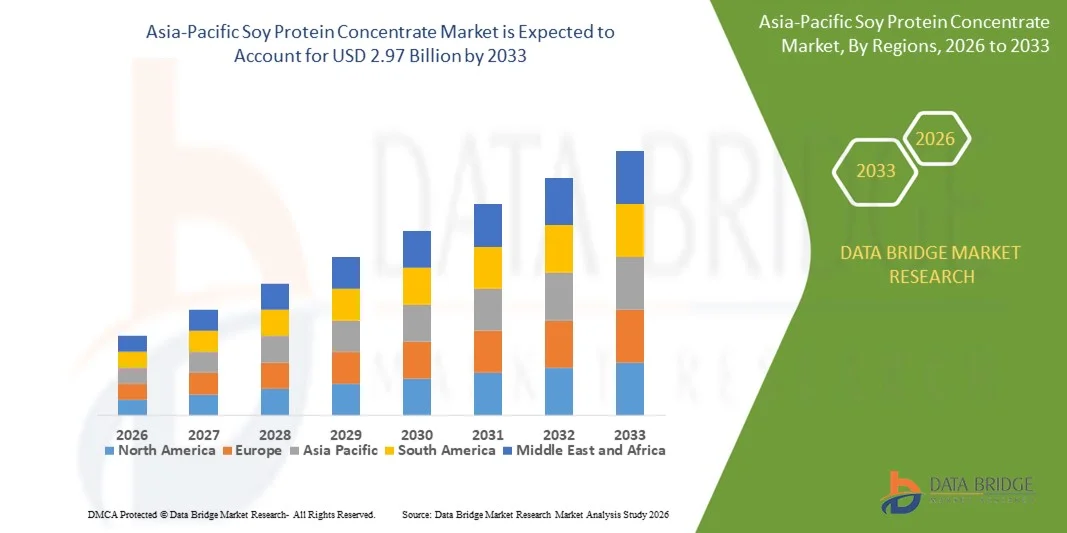
- The Asia-Pacific soy protein concentrate market size was valued at USD 1.02 billion in 2025 and is expected to reach USD 2.97 billion by 2033, at a CAGR of 14.3% during the forecast period
- The market growth is largely fueled by the rising demand for plant-based and high-protein food ingredients, supported by increasing consumer focus on health, nutrition, and sustainable dietary choices across both developed and emerging economies
- Furthermore, growing adoption of soy protein concentrate by food manufacturers for protein enrichment, texture improvement, and cost efficiency in processed foods and meat alternatives is accelerating market penetration, thereby significantly supporting overall market expansion
Asia-Pacific Soy Protein Concentrate Market Analysis
- Soy protein concentrate is a plant-derived protein ingredient produced by removing soluble carbohydrates from defatted soy flour, resulting in a high-protein product used to enhance nutritional value, texture, and functional performance in food, feed, and nutraceutical applications
- The increasing demand for soy protein concentrate is primarily driven by the shift toward plant-based diets, rising use in functional and fortified food products, and expanding application in animal nutrition due to its balanced amino acid profile and functional versatility
- China dominated the soy protein concentrate market in 2025, due to high consumption of soy-based foods, strong domestic soybean processing capacity, and widespread use of soy protein concentrate across food products and animal feed
- India is expected to be the fastest growing region in the soy protein concentrate market during the forecast period due to rising population, increasing protein consumption, and growing adoption of plant-based and affordable nutrition solutions
- Conventional segment dominated the market with a market share of 74.6% in 2025, due to established supply chains and cost advantages. Conventional soy protein concentrate meets large-scale demand from food and feed industries. Stable availability and competitive pricing sustain its leading position
Report Scope and Soy Protein Concentrate Market Segmentation
|
Attributes |
Soy Protein Concentrate Key Market Insights |
|
Segments Covered |
|
|
Countries Covered |
Asia-Pacific
|
|
Key Market Players |
|
|
Market Opportunities |
|
|
Value Added Data Infosets |
In addition to the insights on market scenarios such as market value, growth rate, segmentation, geographical coverage, and major players, the market reports curated by the Data Bridge Market Research also include in-depth expert analysis, pricing analysis, brand share analysis, consumer survey, demography analysis, supply chain analysis, value chain analysis, raw material/consumables overview, vendor selection criteria, PESTLE Analysis, Porter Analysis, and regulatory framework. |
Asia-Pacific Soy Protein Concentrate Market Trends
Increasing Use in Animal Feed
- The soy protein concentrate market is expanding rapidly as manufacturers and livestock producers recognize its value as a high-protein, cost-effective ingredient in animal feed, particularly for poultry, swine, and aquaculture sectors
- For instance, major companies such as Bunge have strengthened their position by acquiring specialized soy protein concentrate manufacturers such as CJ Selecta, enabling them to offer tailored feed solutions and support the increasing demand for sustainable, protein-rich livestock nutrition
- The adoption of soy protein concentrate in animal feed is driven by its superior amino acid profile, digestibility, and ability to enhance growth rates and feed efficiency, making it highly attractive for large-scale commercial farms
- Rising concerns about antibiotic use and the need for optimized animal health are prompting feed formulators to incorporate soy protein concentrate as a functional ingredient to improve gut health and immune response in livestock
- Technological advancements in processing are leading to the development of non-GMO, low-oligosaccharide, and highly digestible soy protein concentrates designed specifically for the feed industry, broadening the appeal to producers with varied needs
- Sustainable sourcing, lower environmental footprint compared to animal-based protein feed, and heightened focus on food chain transparency are further fueling its increasing adoption in the feed industry
Asia-Pacific Soy Protein Concentrate Market Dynamics
Driver
Rising Demand for Plant-Based Proteins
- The surge in health-conscious consumers, coupled with the growing popularity of vegetarian, vegan, and flexitarian diets, is significantly boosting global demand for plant-based proteins across food and beverage sectors
- For instance, leading players such as DuPont and Solae have collaborated to create soy protein concentrates with improved taste and texture, making them more suitable for plant-based meat alternatives and functional foods
- The versatility of soy protein concentrate—as a core ingredient in meat substitutes, protein bars, dairy alternatives, and health supplements—is underpinning its market growth among both mainstream and specialty food producers
- Affordability and balanced amino acid profiles position soy protein concentrates as an attractive alternative to animal proteins, especially in regions with limited access to traditional protein sources
- The growing focus on clean-label, non-GMO, and sustainably produced protein ingredients is prompting food companies to integrate soy protein concentrate into their portfolios, aligning with evolving consumer preferences for transparency and eco-friendly nutrition
Restraint/Challenge
Allergic Reactions to Soy
- Soy is one of the top eight food allergens globally, and the risk of allergic reactions presents a significant barrier to the broader adoption of soy protein concentrate in both food and feed industries
- For instance, Nestlé has implemented strict allergen labeling and segregation protocols across its soy-based product lines to comply with regulations in North America and Europe and to mitigate consumer safety risks
- The search for hypoallergenic formulations and the emergence of alternative plant-based proteins—such as pea, rice, and oat protein—are intensifying competitive pressures and driving innovation to address the allergen issue
- Consumer perception of soy, sometimes influenced by myths about genetic modification or health concerns, can affect purchasing decisions and necessitate additional education or marketing investment from brands
- Regulatory differences between regions regarding labeling, allowed levels of allergenic proteins, and permitted claims further complicate market expansion and require robust compliance strategies from manufacturers
Asia-Pacific Soy Protein Concentrate Market Scope
The market is segmented on the basis of category, extraction process, modification type, protein concentration, form, nature, function, and application.
- By Category
On the basis of category, the Soy Protein Concentrate market is segmented into single compound and fortified compound. The single compound segment dominated the largest market revenue share in 2025, supported by its widespread use as a cost-efficient protein source in food processing and animal nutrition. Manufacturers favor single compound soy protein concentrate due to its consistent protein profile and ease of formulation across multiple applications. Its neutral functionality supports stable texture and nutritional enhancement without altering end-product characteristics. Strong demand from large-scale food processors further reinforced its leading position.
The fortified compound segment is expected to witness the fastest growth from 2026 to 2033, driven by rising demand for enhanced nutritional profiles in functional foods and dietary supplements. Fortified variants allow the inclusion of vitamins, minerals, and amino acids, improving overall health positioning. Growing consumer awareness of protein quality and targeted nutrition supports adoption. Premium product positioning and higher margins also encourage manufacturers to expand fortified offerings.
- By Extraction Process
On the basis of extraction process, the market is segmented into aqueous alcohol wash process, acid wash process, and water wash process with heat denaturation. The aqueous alcohol wash process segment dominated the market revenue share in 2025 due to its effectiveness in reducing anti-nutritional factors while preserving protein functionality. This process delivers high-purity concentrates with improved taste and color, making it suitable for human food applications. Consistent quality output supports its large-scale industrial adoption.
The water wash process with heat denaturation segment is anticipated to register the fastest growth during the forecast period, driven by growing preference for cleaner processing methods. This process aligns with clean-label trends by minimizing chemical usage. Improved protein digestibility and functional performance enhance its appeal in food and nutraceutical applications. Regulatory and consumer pressure toward natural processing further accelerates growth.
- By Modification Type
On the basis of modification type, the Soy Protein Concentrate market is segmented into thermal modification, chemical modification, and enzyme modification. Thermal modification held the dominant market share in 2025 owing to its wide acceptance and cost-effective scalability. This method improves protein functionality, including water absorption and texture, without complex processing steps. Its compatibility with existing manufacturing infrastructure supports extensive usage.
Enzyme modification is projected to witness the fastest growth rate from 2026 to 2033 due to its precision in tailoring functional properties. Enzymatic processes enhance solubility and digestibility, supporting advanced food formulations. Rising demand for high-performance plant proteins in specialized nutrition drives adoption. Innovation in enzyme technologies further strengthens growth prospects.
- By Protein Concentration
On the basis of protein concentration, the market is segmented into <20% protein, 20%–70% protein, and >70% protein. The 20%–70% protein segment dominated the market revenue share in 2025, supported by its balanced nutritional profile and functional versatility. This range is widely used across food products, animal feed, and nutraceuticals due to favorable cost-to-protein value. Broad applicability ensures sustained demand across industries.
The >70% protein segment is expected to grow at the fastest pace during the forecast period, driven by rising demand for high-protein formulations. Sports nutrition and dietary supplement manufacturers increasingly prefer higher protein concentrates. Consumer focus on muscle health and protein enrichment supports this trend. Premium positioning further enhances market expansion.
- By Form
On the basis of form, the Soy Protein Concentrate market is segmented into dry and liquid. The dry form segment dominated the market in 2025 due to its longer shelf life and ease of transportation. Dry soy protein concentrate offers formulation flexibility and cost efficiency for manufacturers. Its widespread use in bakery, snacks, and meat alternatives reinforces dominance.
The liquid form segment is anticipated to witness the fastest growth from 2026 to 2033, driven by increasing use in beverages and ready-to-use formulations. Liquid concentrates enable faster processing and uniform blending. Growing demand for protein-enriched drinks and emulsified products supports adoption. Convenience in industrial applications accelerates growth momentum.
- By Nature
On the basis of nature, the market is segmented into organic and conventional. The conventional segment accounted for the largest market revenue share of 74.6% in 2025, supported by established supply chains and cost advantages. Conventional soy protein concentrate meets large-scale demand from food and feed industries. Stable availability and competitive pricing sustain its leading position.
The organic segment is expected to register the fastest growth during the forecast period, driven by rising consumer preference for organic and non-GMO products. Organic certification enhances product credibility in health-focused markets. Growth in clean-label and sustainable food consumption supports expansion. Premium pricing further encourages producer participation.
- By Function
On the basis of function, the market is segmented into solubility, gelation, emulsification, water binding, foaming, texturizing agent, stabilizer, thickening agent, and others. The emulsification function segment dominated the market in 2025 due to its critical role in processed food stability. Soy protein concentrate is widely used to improve texture and consistency in meat alternatives and dairy substitutes. Strong demand from food manufacturers sustains dominance.
The texturizing agent segment is projected to witness the fastest growth from 2026 to 2033, driven by expanding plant-based meat consumption. Texturizing functionality enhances mouthfeel and structural integrity of alternative proteins. Innovation in meat analog formulations supports rising demand. Consumer shift toward plant-based diets accelerates growth.
- By Application
On the basis of application, the Soy Protein Concentrate market is segmented into food products, beverages, nutraceuticals and dietary supplements, cosmetics and personal care, animal feed, pharmaceuticals, and others. The food products segment dominated the market revenue share in 2025, driven by extensive use in bakery, meat alternatives, and processed foods. Protein enrichment and functional benefits support widespread adoption. High-volume consumption sustains segment leadership.
The nutraceuticals and dietary supplements segment is expected to witness the fastest growth from 2026 to 2033, supported by rising health awareness and protein supplementation trends. Soy protein concentrate offers plant-based nutrition with high digestibility. Demand from aging populations and fitness-focused consumers drives growth. Product innovation and targeted formulations further strengthen expansion.
Asia-Pacific Soy Protein Concentrate Market Regional Analysis
- China dominated the soy protein concentrate market with the largest revenue share in 2025, driven by high consumption of soy-based foods, strong domestic soybean processing capacity, and widespread use of soy protein concentrate across food products and animal feed
- Rapid expansion of the food processing industry, increasing demand for affordable plant-based protein, and strong integration of soy ingredients into traditional and modern diets reinforce China’s leadership in the regional market
- The presence of large domestic producers, continuous capacity expansions, and growing use of soy protein concentrate in meat alternatives, bakery, and functional foods continue to strengthen China’s dominant position during the forecast period
Japan Soy Protein Concentrate Market Insight
The Japan soy protein concentrate market is anticipated to grow steadily from 2026 to 2033, supported by a mature food industry focused on quality, functionality, and nutritional balance. Japanese manufacturers increasingly use soy protein concentrate in processed foods, ready meals, and specialized nutrition products to enhance protein content and texture. Strong demand for clean-label and high-quality plant-based ingredients aligns well with soy protein concentrate adoption. Well-established distribution through food manufacturers and ingredient suppliers supports stable demand. Japan’s emphasis on food safety, innovation, and nutritional value underpins its consistent market growth outlook.
India Soy Protein Concentrate Market Insight
India is projected to register the fastest CAGR in the Asia Pacific soy protein concentrate market during 2026–2033, fueled by rising population, increasing protein consumption, and growing adoption of plant-based and affordable nutrition solutions. Expanding use of soy protein concentrate in processed foods, dietary supplements, and animal feed is supporting rapid market growth. Rising health awareness and government focus on protein fortification are accelerating demand. Growth of organized food processing, expanding nutraceutical sector, and improving supply chain infrastructure are enhancing market accessibility. Increasing consumer focus on cost-effective protein sources positions India as the fastest-growing market in the region.
Asia-Pacific Soy Protein Concentrate Market Share
The soy protein concentrate industry is primarily led by well-established companies, including:
- Cargill Incorporated (U.S.)
- DuPont (U.S.)
- ADM (U.S.)
- THE VINCENT CORPORATION (U.S.)
- Wilmar International Ltd (Singapore)
- Batory Foods (U.S.)
- Nordic Soya Oy (Finland)
- Aminola (U.S.)
- Crown Soya Protein Group Company (China)
- Solbar Ningbo Protein Technology Co., Ltd (China)
- Victoria Group (Serbia)
- Yuwang (China)
- Shandong Yuxin Biotechnology Co., Ltd (China)
- Gushen Biotechnology Group Co., Ltd. (China)
- Arshine Pharmaceutical Co., Limited (China)
- Tianwei Biotech Group Co., Ltd. (China)
- Foodchem International Corporation (China)
Latest Developments in Asia-Pacific Soy Protein Concentrate Market
- In May 2025, Bunge introduced a new line of soy protein concentrates at IFFA, scheduled for launch in the fall. These concentrates are designed to tackle key formulation challenges in the plant-based protein sector by offering a clean taste, neutral color, and cost-efficiency. This strategic product expansion is expected to enhance Bunge’s market presence and drive greater adoption of soy protein concentrate among food manufacturers seeking scalable, high-performance ingredients
- In February 2024, Amfora announced the commercial launch of its first-generation ultra-high plant protein products. This entry into the market strengthens the competitive landscape and supports the rising demand for sustainable, nutrient-dense ingredients. Amfora’s innovation is likely to accelerate the growth of soy protein concentrate usage in functional and fortified food categories
- In June 2023, Nutra Ingredients launched a new soy protein concentrate enriched with essential amino acids, targeting the sports nutrition market. This innovative product promises enhanced muscle recovery and growth benefits, broadening the application of soy protein concentrates within the sports nutrition industry
- In February 2022, Benson Hill launched its TruVail soy protein ingredient portfolio, featuring distinct sustainability advantages tailored for diverse food applications. This launch marked a significant move toward integrating environmental stewardship with food innovation. The sustainability-focused approach is contributing to increased market interest in clean-label and eco-conscious soy protein solutions, reinforcing consumer and manufacturer alignment with responsible sourcing practices
- In July 2020, DuPont expanded its Danisco Planit portfolio with the launch of new products such as Response Textured Soy Protein Concentrates and Alpha Functional soy protein concentrates, catering to diverse applications and enhancing its soy protein concentrate offerings
SKU-
세계 최초의 시장 정보 클라우드 보고서에 온라인으로 접속하세요

- 대화형 데이터 분석 대시보드
- 높은 성장 잠재력 기회를 위한 회사 분석 대시보드
- 사용자 정의 및 질의를 위한 리서치 분석가 액세스
- 대화형 대시보드를 통한 경쟁자 분석
- 최신 뉴스, 업데이트 및 추세 분석
- 포괄적인 경쟁자 추적을 위한 벤치마크 분석의 힘 활용
연구 방법론
데이터 수집 및 기준 연도 분석은 대규모 샘플 크기의 데이터 수집 모듈을 사용하여 수행됩니다. 이 단계에는 다양한 소스와 전략을 통해 시장 정보 또는 관련 데이터를 얻는 것이 포함됩니다. 여기에는 과거에 수집한 모든 데이터를 미리 검토하고 계획하는 것이 포함됩니다. 또한 다양한 정보 소스에서 발견되는 정보 불일치를 검토하는 것도 포함됩니다. 시장 데이터는 시장 통계 및 일관된 모델을 사용하여 분석하고 추정합니다. 또한 시장 점유율 분석 및 주요 추세 분석은 시장 보고서의 주요 성공 요인입니다. 자세한 내용은 분석가에게 전화를 요청하거나 문의 사항을 드롭하세요.
DBMR 연구팀에서 사용하는 주요 연구 방법론은 데이터 마이닝, 시장에 대한 데이터 변수의 영향 분석 및 주요(산업 전문가) 검증을 포함하는 데이터 삼각 측량입니다. 데이터 모델에는 공급업체 포지셔닝 그리드, 시장 타임라인 분석, 시장 개요 및 가이드, 회사 포지셔닝 그리드, 특허 분석, 가격 분석, 회사 시장 점유율 분석, 측정 기준, 글로벌 대 지역 및 공급업체 점유율 분석이 포함됩니다. 연구 방법론에 대해 자세히 알아보려면 문의를 통해 업계 전문가에게 문의하세요.
사용자 정의 가능
Data Bridge Market Research는 고급 형성 연구 분야의 선두 주자입니다. 저희는 기존 및 신규 고객에게 목표에 맞는 데이터와 분석을 제공하는 데 자부심을 느낍니다. 보고서는 추가 국가에 대한 시장 이해(국가 목록 요청), 임상 시험 결과 데이터, 문헌 검토, 재생 시장 및 제품 기반 분석을 포함하도록 사용자 정의할 수 있습니다. 기술 기반 분석에서 시장 포트폴리오 전략에 이르기까지 타겟 경쟁업체의 시장 분석을 분석할 수 있습니다. 귀하가 원하는 형식과 데이터 스타일로 필요한 만큼 많은 경쟁자를 추가할 수 있습니다. 저희 분석가 팀은 또한 원시 엑셀 파일 피벗 테이블(팩트북)로 데이터를 제공하거나 보고서에서 사용 가능한 데이터 세트에서 프레젠테이션을 만드는 데 도움을 줄 수 있습니다.











