



Europe Citrus Based Alcohol Market By Product Type (Spirits, Wine, and Beer), Citrus Fruit (Lemon, Lime, Orange, Grapefruit, Tangerine, and Others), Packaging (Glass Bottles, Cans, and Plastic Bottles), Distribution Channel (Specialty Stores, Hotel/Restaurants/Bars, Convenience Stores, Online Retailers, and Others), IndustryTrends and forecast to 2029.
Europe Citrus Based Alcohol Market Analysis and Insights
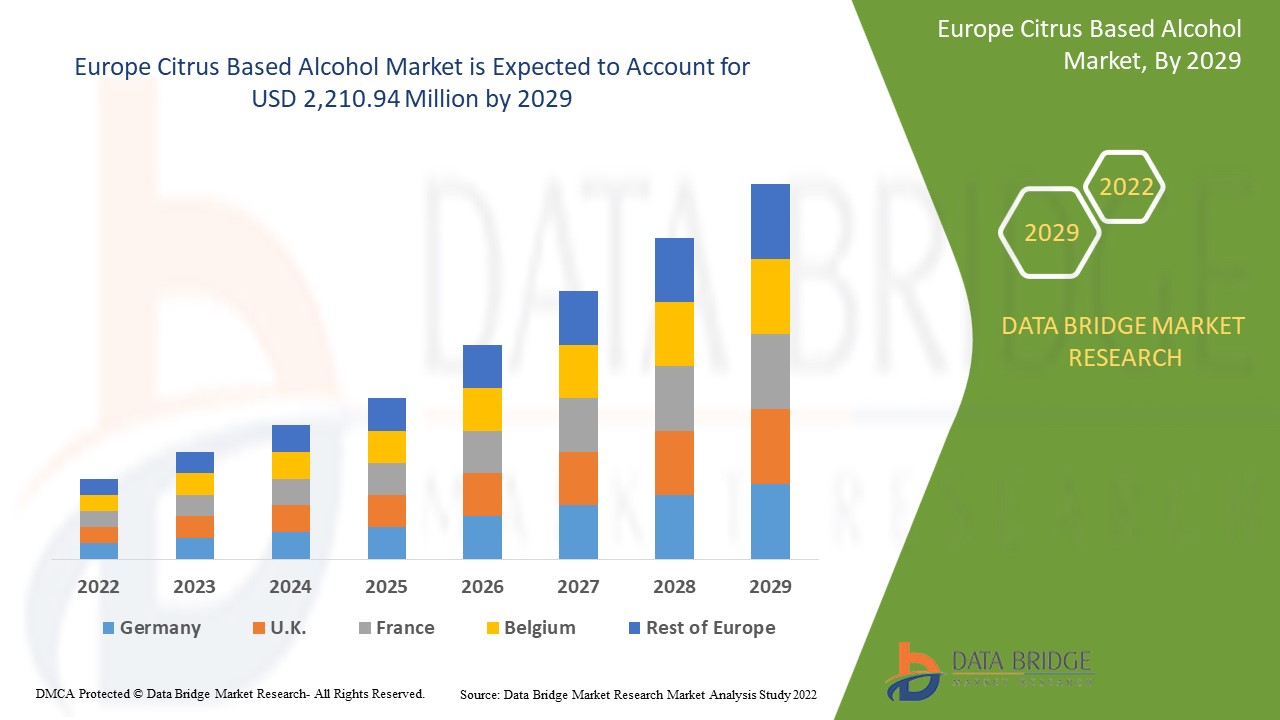
The citrus based alcohol market is expected to gain significant growth in the forecast period of 2022 to 2029. Data Bridge Market Research analyses that the market is growing with a CAGR of 3.9% in the forecast period of 2022 to 2029 and is expected to reach USD 2,210.94 million by 2029. The major factor driving the growth of the citrus based alcohol market is the growing trend of craft spirits and the adoption of cost-effective ingredients.
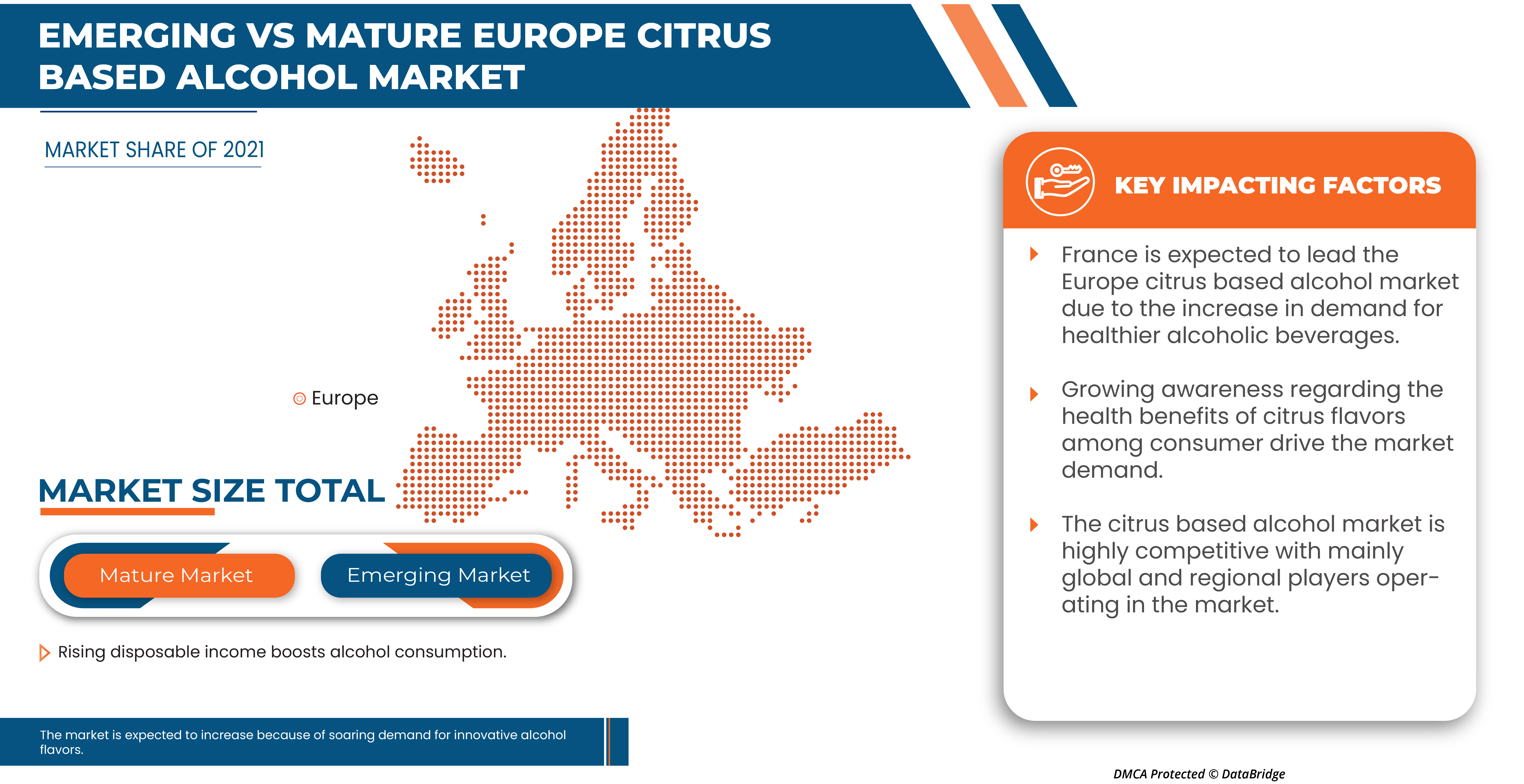
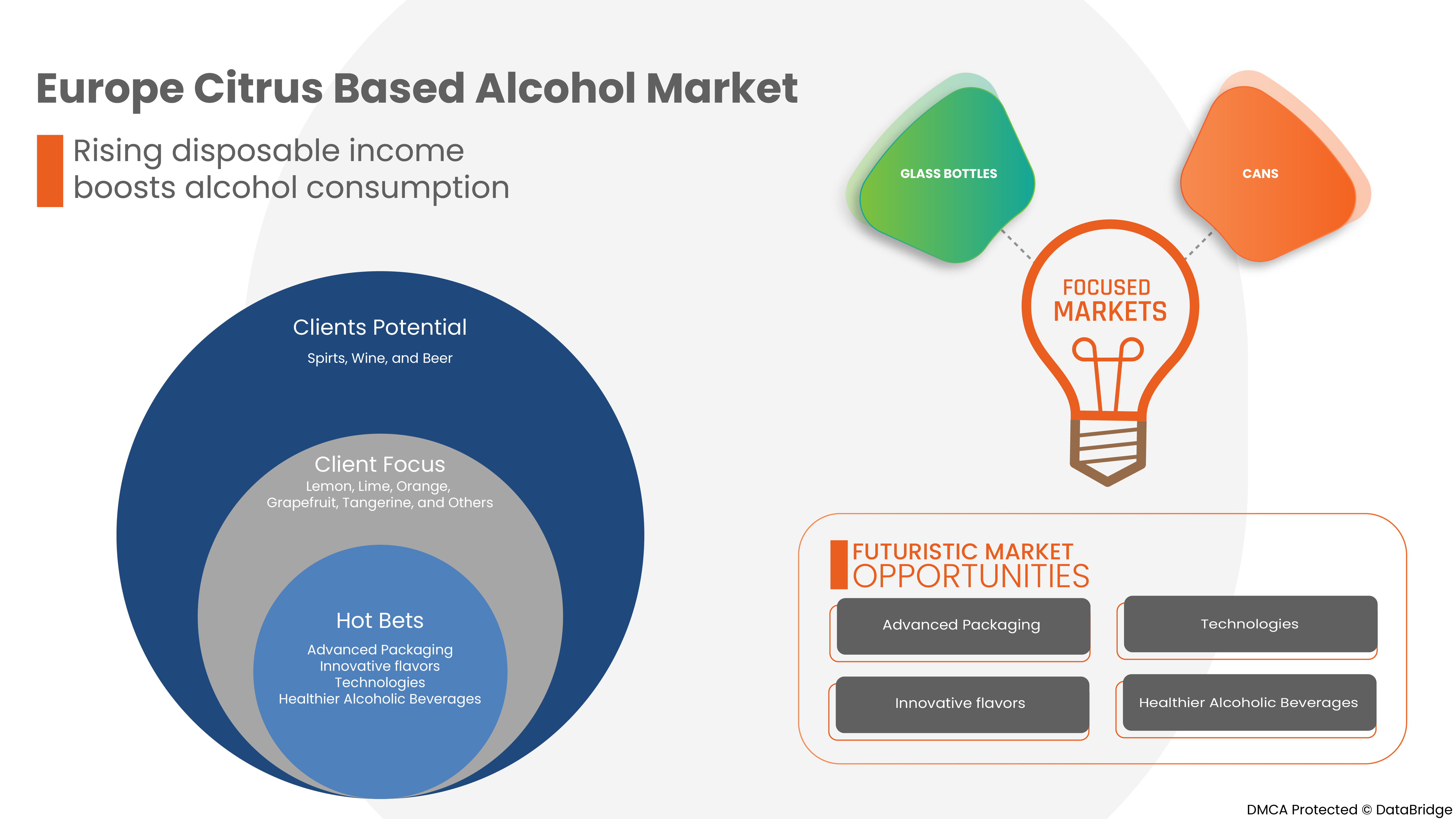
The increasing demand and popularity of craft spirits and the adoption of cost-effective ingredients is an important driver for the Europe citrus based alcohol market. Rising disposable income boosts alcohol consumption, and growing awareness regarding the health benefits of citrus flavors among consumers are expected to propel the growth of the Europe citrus based alcohol market.
The citrus based alcohol market report provides details of market share, new developments, and the impact of domestic and localized market players, analyses opportunities in terms of emerging revenue pockets, changes in market regulations, products approvals, strategic decisions, product launches, geographic expansions, and technological innovations in the market. To understand the analysis and the market scenario contact us for an analyst brief, our team will help you create a revenue impact solution to achieve your desired goal.
|
Report Metric |
Details |
|
Forecast Period |
2022 to 2029 |
|
Base Year |
2021 |
|
Historic Years |
2020 (Customizable to 2019 - 2014) |
|
Quantitative Units |
Revenue in USD Millions |
|
Segments Covered |
By Product Type (Spirits, Wine, and Beer), Citrus Fruit (Lemon, Lime, Orange, Grapefruit, Tangerine, and Others), Packaging (Glass Bottles, Cans, and Plastic Bottles), Distribution Channel (Specialty Stores, Hotel/Restaurants/Bars, Convenience Stores, Online Retailers, and Others). |
|
Countries Covered |
U.K., Russia, France, Spain, Italy, Germany, Turkey, Netherlands, Switzerland, Belgium, Rest of Europe. |
|
Market Players Covered |
Anheuser-Busch InBev, Constellation Brands, Inc., Heineken N.V., The Coca-Cola Company, ASAHI GROUP HOLDINGS, LTD., Anheuser-Busch Companies, LLC., The BOSTON BEER COMPANY, Diageo, Beam Suntory, Inc., Radico Khaitan Ltd., EDRINGTON, SUNTORY HOLDINGS LIMITED, Accolade Wines Limited., WILLIAM GRANT & SONS, Carlsberg Breweries A/S, Halewood Artisanal Spirits, Pernod Ricard, UNITED BREWERIES LTD., Brown-Forman, KALS Distilleries Private Limited, Bacardi Limited |
Market Definition
The citrus based alcohols are produced mainly from citrus fruits such as lemon, lime, grapefruits, and orange. Due to its flavor and strong acidity, citrus has become an integral part of alcoholic drinks, including beer and spirits such as wine, rum, and gin, and is used to provide balance in cocktails. Likewise, citrus alcohol is used as a base and flavor-additive in alcohol production. The citrus based alcohol beverages inherit the nutritional profile of the citrus fruits from which they are produced, such as lemon, lime, orange, grapefruit, tangerine and others. Citrus fruits are rich in vitamin C which is a powerful antioxidant that protects cells from free radical damage, and play an important role in preventing conditions such as diabetes, cancer, neurological disease.
Craft spirits are majorly developed by using the fruit’s flavors infusion. The innovation that stems from craft spirits is otherwise unparalleled in the drinks industry. Craft products are viewed as more creative, nimble, and niche by the consumer with so much variety and artistry. This increasing growth of craft spirits helps the growth of citrus-based alcohol by incorporating citrus in their distillery products. In addition to the citrus fruits, the spirit is infused with various spices including cinnamon, vanilla, ginger, pepper, and others to improve the taste and aroma. This adoption of the ingredients and citrus fruits is both healthier and more cost-effective for the production of spirits.
Citrus Based Alcohol Market Dynamics
Drivers
- Growing trend of craft spirits and the adoption of cost-effective ingredients
As the drinks industry continues to expand and develop, the rise of craft spirits, among craft beers and ciders, cannot be ignored. From rum to gin, 'there's plenty in the way of craft spirits, both online and in-store – all of which embody something different. So much so that many prefer craft spirits to more traditionally commercial brands, which is also likely down to the consumer trend of buying locally from smaller distilleries and breweries. The rapid demand for premium quality craft spirits owing to changing cultural attitudes of the young and affluent population is a major contributor to the growth of the craft spirits market worldwide. Craft spirit consumers prefer products made using natural or organic flavors while small-scale distillers differentiate themselves with clean labels authentic handpicked ingredients such as spring water and non-GMO grains and unique flavor combinations. The most popular craft rum is spiced rum, infused with various spices including cinnamon, ginger, vanilla, nutmeg, and pepper. This adoption of the ingredients is healthier and cost-effective for the production of craft spirits.
- Rising disposable income boosts alcohol consumption
But nowadays alcohol became more affordable in the majority of countries, because of the rising disposable income of the people. The change in real income was greater than the change in the relative price of alcohol. This shows that the growth in real income was the main driver of affordability. The growth of alcohol is large for the age sector between 18 to 80. Especially amongst the youth. The increasing employment and rising disposable income coupled with the decreasing unemployment rates are driving the demand for alcohol. In the modern world, everywhere people need alcohol to enjoy their days and night for their vacations, party, and also leisure time. Increasing IT sectors and people trying to become more social among colleagues. This socialization mostly needs alcohol. In order to ease this, alcohol is not only available in liquor shops or stores, high-end hotels, and restaurants are keen to bring craft spirit into their portfolio.
- Growing awareness regarding the health benefits of citrus flavors among consumer
Citrus-flavored alcohol drinks are becoming increasingly popular among most people worldwide because of their multiple health benefits and taste-enhancing ability. Citrus fruits, such as lemons and oranges, are high in vitamin C, a powerful antioxidant protecting cells from free radical damage. Bone production, connective tissue healing, and gum health all require mainly vitamin C which one gets from citrus-flavored drinks. Vitamin C found in citrus also aids in the prevention of wrinkles, dry skin from aging, and sun damage. Moreover, it also catalyzes the production of collagen, which is vital for skin health.
Opportunities
- Soaring demand for innovative alcohol flavors
There are many ways to upgrade a pure alcoholic beverage using fruit flavors. Citrus oils are widely used for beverage flavoring. This fruit belongs to Rutaceae family and consists of about 140 tribes and 1300 species, such as: green Lemon, grapefruit, oranges, yellow Lemon, mandarins, pomelo, bergamot and citron. Citrus oils are stored in leaves, peels, and juice. Terpenes, sesquiterpenes, aldehydes, alcohols, esters, and sterols are among the many chemicals found in these excellent essential oils. They are also known as hydrocarbon mixtures, oxygen-containing chemicals, and non-volatile residue compounds. Citrus flavors are popular in drinks, particularly wheat beer. One of the wheat beer fermentation products are esters which give the fruit taste and aroma to the beer itself, so it perfectly fits with citrus flavors and almost hides the flavor and aroma provided by hops. The most popular beer cocktails are mixed with citrus fruits such as lemon, orange juice, or flavorings.
- Increasing focus of the key manufacturer to upgrade the existing technologies
The alcoholic beverage market is in a rapid transition with the expanding consumption of the citrus based alcoholic drinks. The production technique of citrus fermented alcoholic drinks such as citrus wine and citrus brandy belong to the citrus deep processing field uses citrus fruit as raw material, and adopts the following steps: pressing juice, centrifuging, standing still and clarifying, regulating sugar-acid ratio, and low-temp. Primary fermentation, post-fermentation, filtering and ageing, blending, freezing and filtering, ultra-high temperature flash-pasteurization, and thermal filling to obtain the citrus fermented wine; and then making the dry type citrus fermented wine undergo the processes of distillation, making-up, filtering, aging, blending, freezing and filtering to obtain the invented citrus brandy. Said citrus brandy is clear and transparent, possesses citrus fragrance and natural color, and tastes rich and palate full. And also, other existing technologies are available for manufacturing the citrus-based alcoholic drinks.
Restraints/Challenges
- Price volatility in citrus fruits
Citrus fruits or raw materials prices are playing a major in the citrus based alcohol market because of the use of the citrus fruits flavoring in alcohol, considerably healthier and tastiest beverages are produced and sold in the market. The rise in consumption of alcohol around the globe increases the consumption of citrus based alcohol drinks, too, because of their natural fruit-flavored mix of citrus fruits. The basic main raw material for the production citrus based alcohol is citrus fruits. Citrus fruits include oranges, lemons, limes, and grapefruits. Despite the fact that these citrus fruits are widely available in the market, the inflation rate of several countries, climatic conditions, import and export laws and duties, volatility of petroleum product prices used for transport, and other factors have a significant impact and cause the price fluctuations.
- Strict rules aimed at limiting alcohol consumption
The major strict policies used to reduce the consumption of alcohol includes several 'countries' use of taxation to target alcohol prices such as Unitary tax, specific (volumetric) tax, and other all alcohol excise taxes. In addition to these taxes, some governments have become increasingly interested in minimum unit pricing (MUP). MUP is a policy tool that sets a mandatory floor price per unit of alcohol or standard drink, targeting cheap alcoholic beverages. Several countries including Canada, implemented MUP. Alcohol availability can be restricted to affect intake, limiting the opportunity for people to purchase and consume alcohol. For instance, In Tamil Nadu, India, the operating time of alcohol stores are from 12 PM to 10 PM.
- Growing concerns about the harmful effects of artificial flavors on health
The artificial flavors do not have any nutritional value. They do not add to health benefits through essential vitamins and minerals. They pose harmful effects on human health. The main effects of high consumption of flavored alcoholic drinks are high cancer risk and others like high blood pressure, heart disease, stroke, liver disease, weakening of the immune system, and others.
- A high prevalence of alcohol use disorder (AUD)
The causes of alcohol use disorder appear to be a combination of genetics, early childhood events, and attempts to relieve emotional pain. People are more likely to develop alcohol use disorder if they consume alcohol often, in large amounts or begin drinking early in life, have suffered through trauma, such as physical or sexual abuse, have a family history of alcohol use disorder, have mental health issues, such as grief, anxiety, depression, eating disorders and post-traumatic stress disorder. Have had stomach bypass surgery for weight issues.
- Availability of substitutes for citrus
There are many alternatives to fresh citrus juice to balance out our cocktails, and they come in the form of naturally occurring acids. The one 'you're likely to know of is citric acid. Still, there are several others: malic acid (found in apples, apricots, peaches), tartaric acid (grapes, bananas), and lactic acid (dairy products), to name a few. In addition, vinegars, mollases and verjuice can provide different kinds of acidity and sourness than citrus and powdered acids. Using an incredibly small percentage of acid makes it possible to stabilise syrups and juices, which have a natural degradation of flavor, and vastly increase their shelf life.
Recent Development
- In October 2021, According to Craft Spirits, SunDaze, the citrus ready-to-drink canned cocktails, announced its launch in Southern California at PinkDot and Total Wine locations across Los Angeles County and nationwide (where legal) via direct-to-consumer shipping online. This launch will intensify the company’s operations in the Europe market.
- In July 2022, According to the Spirits Business, UK-based Shakespeare Distillery launched a Citrus Vodka as part of its limited edition Distillery Special range. This Citrus Vodka has strong flavors of fresh oranges and lemons that are hand-peeled at the Distillery.
Citrus Based Alcohol Market Scope
The citrus based alcohol market is categorized based on product type, citrus fruit, packaging, and distribution channel. The growth amongst these segments will help you analyze major growth segments in the industries and provide the users with a valuable market overview and market insights to make strategic decisions to identify core market applications.
Product Type
- Spirits
- Wine
- Beer
On the basis of product type, the citrus based alcohol market is classified into three segments namely beer, wine, spirits.
Citrus Fruit
- Lemon
- Lime
- Orange
- Grapefruit
- Tangerine
- Others
On the basis of citrus fruit, the citrus based alcohol market is classified into six segments namely lemon, lime, orange, grapefruit, tangerine, and others.
Packaging
- Glass bottles
- Cans
- Plastic bottles
On the basis of packaging, the citrus based alcohol market is classified into three segments namely glass bottles, cans, and plastic bottles.
Distribution Channel
- Specialty stores
- Hotel/Restaurants/Bars
- Convenience stores
- Online Retailer
- Others
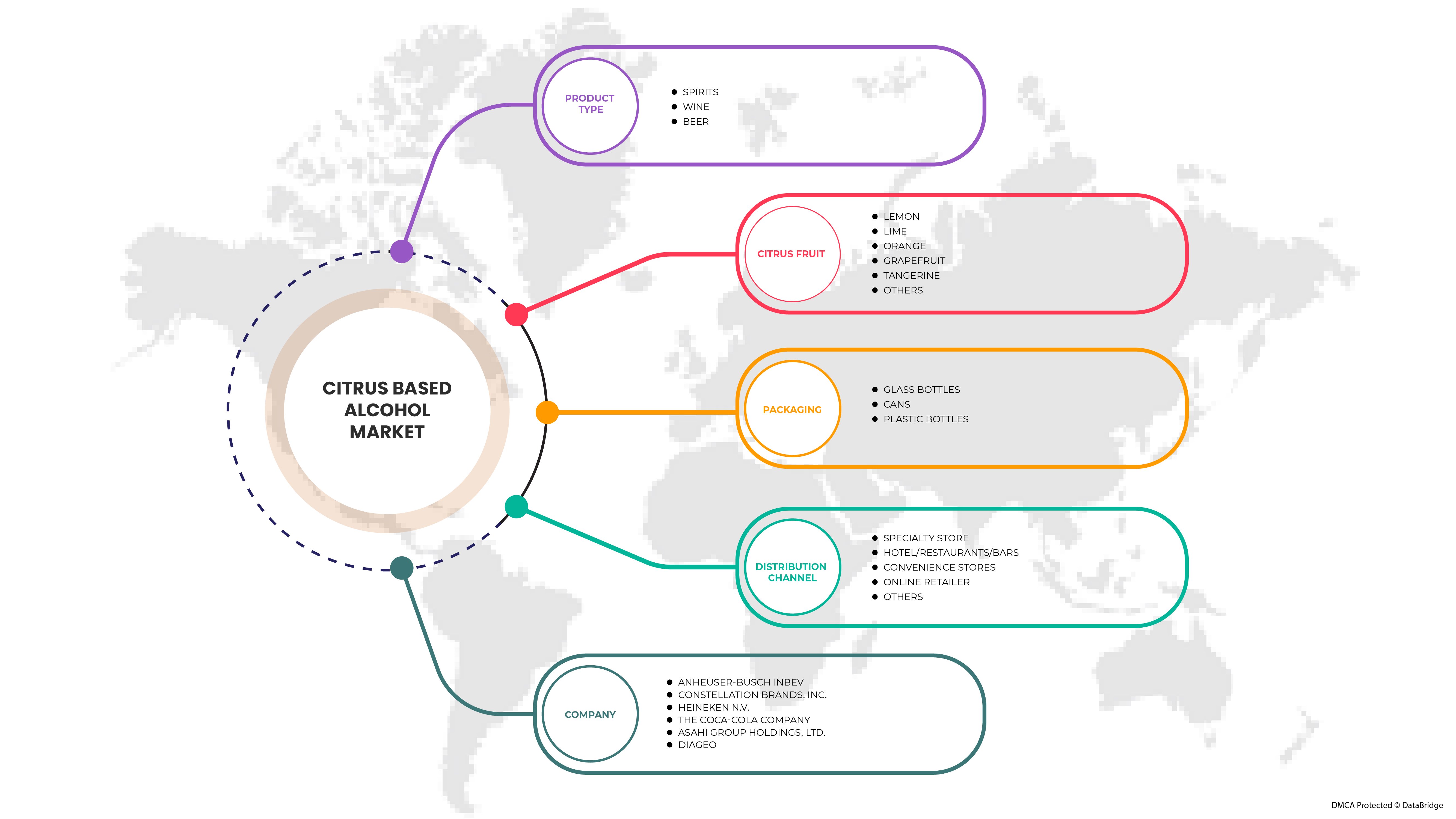
On the basis of distribution channel, the citrus based alcohol market is classified into five segments namely specialty stores, hotel/restaurants/bars, convenience stores, online retailers, and others.
Citrus Based Alcohol Market Regional Analysis/Insights
The citrus based alcohol market is segmented on the basis of product type, citrus fruit, packaging, and distribution channel.
The countries in the citrus based alcohol market are the U.K., Russia, France, Spain, Italy, Germany, Turkey, Netherlands, Switzerland, Belgium, and Rest of Europe.
In Europe, the France is expected to dominate the Europe citrus based alcohol market due to the growing trend of craft spirits.
The country section of the report also provides individual market-impacting factors and changes in market regulation that impact the current and future trends of the market. Data points downstream and upstream value chain analysis, technical trends, porter's five forces analysis, and case studies are some of the pointers used to forecast the market scenario for individual countries. Also, the presence and availability of Europe brands and their challenges faced due to large or scarce competition from local and domestic brands, the impact of domestic tariffs, and trade routes are considered while providing forecast analysis of the country data.
Competitive Landscape and Citrus Based Alcohol Market Share Analysis
The citrus based alcohol market competitive landscape provides details by competitors. Details included are company overview, company financials, revenue generated, market potential, investment in research and development, new market initiatives, production sites and facilities, company strengths and weaknesses, product launch, product trials pipelines, product approvals, patents, product width and breadth, application dominance, technology lifeline curve. The above data points provided are only related to the companies’ focus related to the citrus based alcohol market.
Some of the major market players operating in the market are Anheuser-Busch InBev, Constellation Brands, Inc., Heineken N.V., The Coca-Cola Company, ASAHI GROUP HOLDINGS, LTD., Anheuser-Bush Companies, LLC., The BOSTON BEER COMPANY, Diageo, Beam Suntory, Inc., Radico Khaitan Ltd., EDRINGTON, SUNTORY HOLDINGS LIMITED., Accolade Wines Limited., WILLIAM GRANT & SONS, Carlsberg Breweries A/S, Halewood Artisanal Spirits, Pernod Ricard, UNITED BREWERIES LTD., Brown-Forman, KALS Distilleries Private Limited, Bacardi Limited and amongst others.
Research Methodology
Data collection and base year analysis are done using data collection modules with large sample sizes. The market data is analyzed and estimated using market statistical and coherent models. In addition, market share analysis and key trend analysis are the major success factors in the market report. The key research methodology used by the DBMR research team is data triangulation which involves data mining, analysis of the impact of data variables on the market, and primary (industry expert) validation. Apart from this, data models include Vendor Positioning grids, Market Time Line Analysis, Market Overview and Guide, Company Positioning grids, Company Market Share Analysis, Standards of Measurement, Europe Vs Regional, and Vendor Share Analysis. Please request an analyst call in case of further inquiry.
SKU-
세계 최초의 시장 정보 클라우드 보고서에 온라인으로 접속하세요

- 대화형 데이터 분석 대시보드
- 높은 성장 잠재력 기회를 위한 회사 분석 대시보드
- 사용자 정의 및 질의를 위한 리서치 분석가 액세스
- 대화형 대시보드를 통한 경쟁자 분석
- 최신 뉴스, 업데이트 및 추세 분석
- 포괄적인 경쟁자 추적을 위한 벤치마크 분석의 힘 활용
목차
1 서론
1.1 연구 목적
1.2 시장 정의
1.3 유럽 감귤 기반 알코올 시장 개요
1.4 제한 사항
1.5 대상 시장
2 시장 세분화
2.1 대상 시장
2.2 지리적 범위
연구에 2.3년이 고려됨
2.4 통화 및 가격
2.5 DBMR TRIPOD 데이터 검증 모델
2.6 유형 생명선 곡선
2.7 다변량 모델링
2.8 주요 여론 선도자와의 1차 인터뷰
2.9 DBMR 시장 위치 그리드
2.1 DBMR 시장 도전 매트릭스
2.11 DBMR 공급업체 점유율 분석
2.12 2차 소스
2.13 가정
3 요약
4가지 프리미엄 인사이트
4.1 최종 사용자의 구매 결정에 영향을 미치는 요인
4.2 주요 시장 참여자의 성장 전략
4.3 경제가 시장에 미치는 영향
4.3.1 가격에 미치는 영향
4.3.2 공급망에 미치는 영향
4.3.3 선적에 대한 영향
4.3.4 회사의 전략적 결정에 미치는 영향
4.4 산업 동향 및 미래 전망
4.5 기술적 진보
4.6 FOB 및 B2B 가격 – 유럽 감귤 기반 알코올 시장
4.7 B2B 가격 – 유럽 감귤 기반 알코올 시장
4.8 가치 사슬 분석:
4.9 공급망 분석
4.9.1 원자재 조달
4.9.2 제조 및 포장
4.9.3 마케팅 및 유통
4.9.4 최종 사용자
5 규제 프레임워크 및 가이드라인
6 시장 개요
6.1 드라이버
6.1.1 크래프트 스피릿의 성장 추세와 비용 효율적인 재료의 채택
6.1.2 가처분 소득 증가로 알코올 소비량 증가
6.1.3 소비자들 사이에서 감귤 향의 건강상의 이점에 대한 인식 증가
6.2 제약
6.2.1 감귤류 과일의 가격 변동성
6.2.2 알코올 소비를 제한하기 위한 엄격한 규칙
6.2.3 인공 향료의 건강에 미치는 유해한 영향에 대한 우려 증가
6.3 기회
6.3.1 혁신적인 알코올 맛에 대한 수요 급증
6.3.2 기존 기술 업그레이드를 위한 주요 제조업체의 집중력 강화
6.4 과제
6.4.1 알코올 사용 장애(AUD)의 높은 유병률
6.4.2 감귤류 대체품의 가용성
7 유럽 감귤 기반 알코올 시장, 제품 유형별
7.1 개요
7.2 영혼
7.2.1 증류주
7.2.1.1 보드카
7.2.1.2 위스키
7.2.1.3 럼
7.2.1.3.1 라이트 럼
7.2.1.3.2 골드럼
7.2.1.3.3 다크럼
7.2.1.3.4 럼의 과도한 발효
7.2.1.3.5 스파이스 럼
7.2.1.3.6 카샤카
7.2.1.3.7 향이 나는 럼
7.2.1.4 테킬라
7.2.1.4.1 블랑코
7.2.1.4.2 리포사도
7.2.1.4.3 아네호
7.2.1.4.4 엑스트라-아네호
7.2.1.5 브랜디
7.2.1.5.1 코냑
7.2.1.5.2 아르마냑
7.2.1.5.3 스페인 브랜디
7.2.1.5.4 미국 브랜디
7.2.1.5.5 그라파
7.2.1.5.6 오드비
7.2.1.5.7 향이 나는 브랜디
7.2.1.6 진
7.2.1.6.1 런던 드라이 진
7.2.1.6.2 플리머스 진
7.2.1.6.3 올드 톰 진
7.2.1.6.4 제네버
7.2.1.6.5 뉴 아메리칸
7.2.2 증류되지 않은 주류
7.3 와인
7.3.1 레드와인
7.3.1.1 카베르네 소비뇽
7.3.1.2 피노누아르
7.3.1.3 진판델
7.3.1.4 시라
7.3.2 화이트 와인
7.3.2.1 샤르도네
7.3.2.2 리슬링
7.3.2.3 피노 그리
7.3.2.4 소비뇽 블랑
7.3.3 로제 와인
7.3.4 스파클링 와인
7.3.5 디저트 와인
7.4 맥주
7.4.1 에어로졸
7.4.1.1 브라운 에일
7.4.1.2 페이엘 에일
7.4.1.3 인도 페이 에일
7.4.1.4 사워 에일
7.4.2 라거
7.4.3 포터
7.4.4 스타우트
7.4.5 밀
7.4.6 필스너
8 유럽 감귤 기반 알코올 시장, 감귤류 과일별
8.1 개요
8.2 레몬
8.3 라임
8.4 오렌지
8.5 그레이프프루트
8.6 귤
8.7 기타
9 유럽 감귤 기반 알코올 시장, 포장별
9.1 개요
9.2 유리병
9.3 캔
9.4 플라스틱 병
10 유럽 감귤 기반 알코올 시장, 유통 채널별
10.1 개요
10.2 전문점
10.3 호텔/레스토랑/바
10.4 편의점
10.5 온라인 소매업체
10.6 기타
11 유럽 감귤 기반 알코올 시장, 지역별
11.1 유럽
11.1.1 프랑스
11.1.2 스페인
11.1.3 독일
11.1.4 영국
11.1.5 스위스
11.1.6 벨기에
11.1.7 네덜란드
11.1.8 이탈리아
11.1.9 러시아
11.1.10 터키
11.1.11 유럽의 나머지 지역
12 유럽 감귤 기반 알코올 시장, 회사 환경
12.1 회사 점유율 분석: 유럽
12.2 합병 및 인수
12.3 확장
12.4 신제품 개발
12.5 계약
12.6 파트너십
13 SWOT 분석
14 회사 프로필
14.1 안하이저-부시 인베프
14.1.1 회사 스냅샷
14.1.2 수익 분석
14.1.3 회사 점유율 분석
14.1.4 제품 포트폴리오
14.1.5 최근 개발
14.2 컨스텔레이션 브랜드 주식회사
14.2.1 회사 스냅샷
14.2.2 수익 분석
14.2.3 회사 점유율 분석
14.2.4 제품 포트폴리오
14.2.5 최근 개발
14.3 하이네켄 NV
14.3.1 회사 스냅샷
14.3.2 수익 분석
14.3.3 회사 점유율 분석
14.3.4 제품 포트폴리오
14.3.5 최근 개발
14.4 코카콜라 회사
14.4.1 회사 스냅샷
14.4.2 수익 분석
14.4.3 회사 점유율 분석
14.4.4 제품 포트폴리오
14.4.5 최근 개발
14.5 아샤히 그룹 홀딩스, 유한회사
14.5.1 회사 스냅샷
14.5.2 수익 분석
14.5.3 회사 점유율 분석
14.5.4 제품 포트폴리오
14.5.5 최근 개발 사항
14.6 안하이저-부시 컴퍼니, 유한회사.
14.6.1 회사 스냅샷
14.6.2 제품 포트폴리오
14.6.3 최근 개발
14.7 보스턴 맥주 회사
14.7.1 회사 스냅샷
14.7.2 수익 분석
14.7.3 제품 포트폴리오
14.7.4 최근 개발 사항
14.8 디아지오
14.8.1 회사 스냅샷
14.8.2 수익 분석
14.8.3 제품 포트폴리오
14.8.4 최근 개발
14.9 빔 산토리 주식회사
14.9.1 회사 스냅샷
14.9.2 제품 포트폴리오
14.9.3 최근 개발 사항
14.1 아콜레이드 와인스 리미티드.
14.10.1 회사 스냅샷
14.10.2 제품 포트폴리오
14.10.3 최근 개발
14.11 바카디 리미티드
14.11.1 회사 스냅샷
14.11.2 제품 포트폴리오
14.11.3 최근 개발
14.12 브라운-포먼
14.12.1 회사 스냅샷
14.12.2 수익 분석
14.12.3 제품 포트폴리오
14.12.4 최근 개발 사항
14.13 칼스버그 브루어리 A/S
14.13.1 회사 스냅샷
14.13.2 수익 분석
14.13.3 제품 포트폴리오
14.13.4 최근 개발
14.14 에드링턴
14.14.1 회사 스냅샷
14.14.2 수익 분석
14.14.3 제품 포트폴리오
14.14.4 최근 개발
14.15 헤일우드 아티사날 스피릿
14.15.1 회사 스냅샷
14.15.2 제품 포트폴리오
14.15.3 최근 개발
14.16 KALS 증류소 주식회사.
14.16.1 회사 스냅샷
14.16.2 제품 포트폴리오
14.16.3 최근 개발
14.17 페르노 리카르
14.17.1 회사 스냅샷
14.17.2 수익 분석
14.17.3 제품 포트폴리오
14.17.4 최근 개발 사항
14.18 라디코 카이탄 유한회사
14.18.1 회사 스냅샷
14.18.2 수익 분석
14.18.3 제품 포트폴리오
14.18.4 최근 개발
14.19 산토리 홀딩스 리미티드
14.19.1 회사 스냅샷
14.19.2 수익 분석
14.19.3 제품 포트폴리오
14.19.4 최근 개발
14.2 유나이티드 브루어리 주식회사
14.20.1 회사 스냅샷
14.20.2 수익 분석
14.20.3 제품 포트폴리오
14.20.4 최근 개발
14.21 윌리엄 그랜트 앤 선즈
14.21.1 회사 스냅샷
14.21.2 제품 포트폴리오
14.21.3 최근 개발
15 설문지
16 관련 보고서
표 목록
표 1 유럽 감귤 기반 알코올 시장, 제품 유형별, 2020-2029년(백만 달러)
표 2 유럽 감귤 기반 알코올 시장, 제품 유형별, 2020-2029년(백만 리터)
표 3 지역별 감귤 기반 알코올 시장의 유럽 스피릿, 2020-2029년(백만 달러)
표 4 지역별 감귤 기반 알코올 시장의 유럽 스피릿, 2020-2029년(백만 리터)
표 5 유럽의 시트러스 기반 알코올 시장에서의 스피릿, 카테고리별, 2020-2029 (백만 달러)
표 6 유럽 증류주 시장, 카테고리별 감귤 기반 알코올 시장, 2020-2029년(백만 달러)
표 7 스타일별 시트러스 기반 알코올 시장의 유럽 럼, 2020-2029년(백만 달러)
표 8 스타일별 시트러스 기반 알코올 시장에서의 유럽 테킬라, 2020-2029년(백만 달러)
표 9 스타일별 감귤 기반 알코올 시장에서의 유럽 브랜디, 2020-2029년(백만 달러)
표 10 스타일별 감귤 기반 알코올 시장에서의 유럽 진, 2020-2029년(백만 달러)
표 11 2020-2029년 지역별 유럽 와인의 감귤 기반 알코올 시장(백만 달러)
표 12 지역별 유럽 와인의 감귤 기반 알코올 시장, 2020-2029년(백만 리터)
표 13 와인 제조 기술에 따른 유럽 와인의 감귤 기반 알코올 시장, 2020-2029년(백만 달러)
표 14 유럽 레드 와인의 감귤 기반 알코올 시장, 품종별, 2020-2029년(백만 달러)
표 15 유럽 화이트 와인의 감귤 기반 알코올 시장, 품종별, 2020-2029년(백만 달러)
표 16 지역별 유럽 맥주의 감귤 기반 알코올 시장, 2020-2029년(백만 달러)
표 17 지역별 유럽 맥주의 감귤 기반 알코올 시장, 2020-2029년(백만 리터)
표 18 유럽 맥주의 감귤 기반 알코올 시장, 카테고리별, 2020-2029 (백만 달러)
표 19 유럽 에일의 감귤 기반 알코올 시장, 유형별, 2020-2029 (백만 달러)
표 20 유럽 감귤 기반 알코올 시장, 감귤류별, 2020-2029년(백만 달러)
표 21 유럽 레몬 기반 알코올 시장, 지역별, 2020-2029 (백만 달러)
표 22 지역별 유럽 라임 기반 알코올 시장, 2020-2029 (백만 달러)
표 23 유럽 오렌지 기반 알코올 시장, 지역별, 2020-2029 (백만 달러)
표 24 유럽 자몽의 감귤 기반 알코올 시장, 지역별, 2020-2029 (백만 달러)
표 25 유럽 감귤 기반 알코올 시장, 지역별, 2020-2029 (백만 달러)
표 26 유럽 기타 지역별 감귤 기반 알코올 시장, 2020-2029년(백만 달러)
표 27 유럽 감귤 기반 알코올 시장, 포장 기준, 2020-2029 (백만 달러)
표 28 2020-2029년 지역별 감귤 기반 알코올 시장에서 유럽 유리병(백만 달러)
표 29 2020-2029년 지역별 유럽 캔 감귤 기반 알코올 시장(백만 달러)
표 30 유럽의 감귤 기반 알코올 시장에서의 플라스틱 병, 지역별, 2020-2029 (백만 달러)
표 31 유럽 감귤 기반 알코올 시장, 유통 채널별, 2020-2029년(백만 달러)
표 32 유럽 특수 매장의 지역별 감귤 기반 알코올 시장 범위, 2020-2029 (백만 달러)
표 33 지역별 감귤 기반 알코올 시장의 유럽 호텔/레스토랑/바, 2020-2029년(백만 달러)
표 34 2020-2029년 지역별 감귤 기반 알코올 시장의 유럽 편의점(백만 달러)
표 35 2020-2029년 지역별 감귤 기반 알코올 시장의 유럽 온라인 소매업체(백만 달러)
표 36 유럽 기타 지역별 감귤 기반 알코올 시장, 2020-2029년(백만 달러)
표 37 국가별 유럽 감귤 기반 알코올 시장, 2020-2029년(백만 달러)
표 38 국가별 유럽 감귤 기반 알코올 시장, 2020-2029년(백만 리터)
표 39 유럽 감귤 기반 알코올 시장, 제품 유형별, 2020-2029년(백만 달러)
표 40 유럽 감귤 기반 알코올 시장, 제품 유형별, 2020-2029년(백만 리터)
표 41 유럽의 시트러스 기반 알코올 시장에서의 스피릿, 카테고리별, 2020-2029 (백만 달러)
표 42 유럽 증류주 시장, 카테고리별, 2020-2029년(백만 달러)
표 43 스타일별 유럽 럼 기반 알코올 시장, 2020-2029년(백만 달러)
표 44 스타일별 시트러스 기반 알코올 시장에서의 유럽 테킬라, 2020-2029년(백만 달러)
표 45 스타일별 감귤 기반 알코올 시장에서의 유럽 브랜디, 2020-2029년(백만 달러)
표 46 스타일별 유럽 진의 감귤 기반 알코올 시장, 2020-2029년(백만 달러)
표 47 와인 제조 기술에 따른 유럽 와인의 감귤 기반 알코올 시장, 2020-2029년(백만 달러)
표 48 유럽 레드 와인의 감귤 기반 알코올 시장, 품종별, 2020-2029년(백만 달러)
표 49 유럽 화이트 와인의 감귤 기반 알코올 시장, 품종별, 2020-2029년(백만 달러)
표 50 유럽 맥주의 감귤 기반 알코올 시장, 카테고리별, 2020-2029 (백만 달러)
표 51 2020-2029년 유형별 감귤 기반 알코올 시장의 유럽 에일(백만 달러)
표 52 유럽 감귤 기반 알코올 시장, 감귤류별, 2020-2029년(백만 달러)
표 53 유럽 감귤 기반 알코올 시장, 포장 기준, 2020-2029년(백만 달러)
표 54 유럽 감귤 기반 알코올 시장, 유통 채널별, 2020-2029년(백만 달러)
표 55 프랑스 감귤 기반 알코올 시장, 제품 유형별, 2020-2029년(백만 달러)
표 56 프랑스 감귤 기반 알코올 시장, 제품 유형별, 2020-2029년(백만 리터)
표 57 2020-2029년 카테고리별 프랑스 스피릿의 감귤 기반 알코올 시장(백만 달러)
표 58 2020-2029년 카테고리별 프랑스 증류주 시장(백만 달러)
표 59 스타일별 감귤 기반 알코올 시장에서의 프랑스 럼, 2020-2029년(백만 달러)
표 60 스타일별 시트러스 기반 알코올 시장에서의 프랑스 테킬라, 2020-2029년(백만 달러)
표 61 스타일별 감귤 기반 알코올 시장에서의 프랑스 브랜디, 2020-2029년(백만 달러)
표 62 스타일별 감귤 기반 알코올 시장에서의 프랑스 진, 2020-2029년(백만 달러)
표 63 와인 제조 기술에 따른 프랑스 와인의 감귤 기반 알코올 시장, 2020-2029년(백만 달러)
표 64 프랑스 레드 와인의 감귤 기반 알코올 시장, 품종별, 2020-2029년(백만 달러)
표 65 품종별 프랑스 화이트 와인의 감귤 기반 알코올 시장, 2020-2029년(백만 달러)
표 66 2020-2029년 카테고리별 프랑스 맥주 시트러스 기반 알코올 시장(백만 달러)
표 67 2020-2029년 유형별 감귤 기반 알코올 시장에서의 프랑스 에일(백만 달러)
표 68 프랑스 감귤 기반 알코올 시장, 감귤류별, 2020-2029년(백만 달러)
표 69 프랑스 감귤 기반 알코올 시장, 포장별, 2020-2029 (백만 달러)
표 70 프랑스 감귤 기반 알코올 시장, 유통 채널별, 2020-2029년(백만 달러)
표 71 스페인 감귤 기반 알코올 시장, 제품 유형별, 2020-2029년(백만 달러)
표 72 스페인 감귤 기반 알코올 시장, 제품 유형별, 2020-2029년(백만 리터)
표 73 스페인의 감귤 기반 알코올 시장에서의 스피릿, 카테고리별, 2020-2029년(백만 달러)
표 74 스페인 증류주 시장, 카테고리별 감귤 기반 알코올 시장, 2020-2029년(백만 달러)
표 75 스타일별 감귤 기반 알코올 시장에서의 스페인 럼, 2020-2029년(백만 달러)
표 76 스페인 테킬라의 시트러스 기반 알코올 시장, 스타일별, 2020-2029 (백만 달러)
표 77 스타일별 감귤 기반 알코올 시장에서의 스페인 브랜디, 2020-2029년(백만 달러)
표 78 스타일별 감귤 기반 알코올 시장에서의 스페인 진, 2020-2029년(백만 달러)
표 79 와인 제조 기술에 따른 스페인 와인의 감귤 기반 알코올 시장, 2020-2029년(백만 달러)
표 80 스페인 레드 와인의 감귤 기반 알코올 시장, 품종별, 2020-2029년(백만 달러)
표 81 스페인산 화이트 와인의 감귤 기반 알코올 시장, 품종별, 2020-2029년(백만 달러)
표 82 2020-2029년 카테고리별 스페인 맥주 시트러스 기반 알코올 시장(백만 달러)
표 83 2020-2029년 유형별 감귤 기반 알코올 시장에서의 스페인산 에일(백만 달러)
표 84 스페인 감귤 기반 알코올 시장, 감귤류별, 2020-2029년(백만 달러)
표 85 스페인 감귤 기반 알코올 시장, 포장 기준, 2020-2029 (백만 달러)
표 86 스페인 감귤 기반 알코올 시장, 유통 채널별, 2020-2029년(백만 달러)
표 87 독일 감귤 기반 알코올 시장, 제품 유형별, 2020-2029년(백만 달러)
표 88 독일 감귤 기반 알코올 시장, 제품 유형별, 2020-2029년(백만 리터)
표 89 2020-2029년 카테고리별 독일산 감귤 기반 알코올 시장의 스피릿(백만 달러)
표 90 독일 증류주 시장, 카테고리별 감귤 기반 알코올 시장, 2020-2029 (백만 달러)
표 91 스타일별 감귤 기반 알코올 시장에서의 독일 럼, 2020-2029년(백만 달러)
표 92 스타일별 감귤 기반 알코올 시장에서의 독일 테킬라, 2020-2029년(백만 달러)
표 93 스타일별 감귤 기반 알코올 시장에서의 독일 브랜디, 2020-2029년(백만 달러)
표 94 스타일별 감귤 기반 알코올 시장에서의 독일 진, 2020-2029년(백만 달러)
표 95 와인 제조 기술에 따른 독일 와인의 감귤 기반 알코올 시장, 2020-2029년(백만 달러)
표 96 독일 레드 와인의 감귤 기반 알코올 시장, 품종별, 2020-2029년(백만 달러)
표 97 독일 화이트 와인의 감귤 기반 알코올 시장, 품종별, 2020-2029년(백만 달러)
표 98 독일 맥주, 카테고리별 감귤 기반 알코올 시장, 2020-2029년(백만 달러)
표 99 2020-2029년 유형별 감귤 기반 알코올 시장에서의 독일 에일(백만 달러)
표 100 독일 감귤 기반 알코올 시장, 감귤류별, 2020-2029년(백만 달러)
표 101 독일 감귤 기반 알코올 시장, 포장 기준, 2020-2029 (백만 달러)
표 102 독일 감귤 기반 알코올 시장, 유통 채널별, 2020-2029년(백만 달러)
표 103 영국 감귤 기반 알코올 시장, 제품 유형별, 2020-2029년(백만 달러)
표 104 영국 감귤 기반 알코올 시장, 제품 유형별, 2020-2029년(백만 리터)
표 105 영국산 감귤 기반 알코올 시장의 스피릿, 카테고리별, 2020-2029년(백만 달러)
표 106 영국 증류주 시장, 카테고리별 감귤 기반 알코올 시장, 2020-2029년(백만 달러)
표 107 영국 럼의 시트러스 기반 알코올 시장, 스타일별, 2020-2029(백만 달러)
표 108 영국 테킬라의 시트러스 기반 알코올 시장, 스타일별, 2020-2029년(백만 달러)
표 109 영국 브랜디의 시트러스 기반 알코올 시장, 스타일별, 2020-2029년(백만 달러)
표 110 영국 진의 시트러스 기반 알코올 시장, 스타일별, 2020-2029(백만 달러)
표 111 와인 제조 기술에 따른 영국 와인의 감귤 기반 알코올 시장, 2020-2029년(백만 달러)
표 112 영국 레드 와인의 감귤 기반 알코올 시장, 품종별, 2020-2029년(백만 달러)
표 113 영국산 화이트 와인의 감귤 기반 알코올 시장, 품종별, 2020-2029년(백만 달러)
표 114 영국 맥주의 감귤 기반 알코올 시장, 카테고리별, 2020-2029년(백만 달러)
표 115 영국산 감귤 기반 알코올 시장의 에일, 유형별, 2020-2029년(백만 달러)
표 116 영국 감귤 기반 알코올 시장, 감귤류별, 2020-2029년(백만 달러)
표 117 영국 감귤 기반 알코올 시장, 포장 기준, 2020-2029년(백만 달러)
표 118 영국 감귤 기반 알코올 시장, 유통 채널별, 2020-2029년(백만 달러)
표 119 스위스 감귤 기반 알코올 시장, 제품 유형별, 2020-2029년(백만 달러)
표 120 스위스 감귤 기반 알코올 시장, 제품 유형별, 2020-2029년(백만 리터)
표 121 2020-2029년 카테고리별 감귤 기반 알코올 시장에서의 스위스 스피릿(백만 달러)
표 122 2020-2029년 카테고리별 감귤 기반 알코올 시장에서의 스위스 증류주(백만 달러)
표 123 스타일별 감귤 기반 알코올 시장에서의 스위스 럼, 2020-2029년(백만 달러)
표 124 스타일별 감귤 기반 알코올 시장에서의 스위스 테킬라, 2020-2029년(백만 달러)
표 125 스타일별 감귤 기반 알코올 시장에서의 스위스 브랜디, 2020-2029년(백만 달러)
표 126 스타일별 감귤 기반 알코올 시장에서의 스위스 진, 2020-2029년(백만 달러)
표 127 와인 제조 기술에 따른 스위스 와인의 감귤 기반 알코올 시장, 2020-2029년(백만 달러)
표 128 스위스 레드 와인의 감귤 기반 알코올 시장, 품종별, 2020-2029년(백만 달러)
표 129 스위스 화이트 와인의 감귤 기반 알코올 시장, 품종별, 2020-2029년(백만 달러)
표 130 2020-2029년 카테고리별 감귤 기반 알코올 시장에서의 스위스 맥주(백만 달러)
표 131 2020-2029년 유형별 감귤 기반 알코올 시장에서의 스위스 에일(백만 달러)
표 132 스위스 감귤 기반 알코올 시장, 감귤류별, 2020-2029년(백만 달러)
표 133 스위스 감귤 기반 알코올 시장, 포장 기준, 2020-2029 (백만 달러)
표 134 스위스 감귤 기반 알코올 시장, 유통 채널별, 2020-2029년(백만 달러)
표 135 벨기에 감귤 기반 알코올 시장, 제품 유형별, 2020-2029년(백만 달러)
표 136 벨기에 감귤 기반 알코올 시장, 제품 유형별, 2020-2029년(백만 리터)
표 137 2020-2029년 카테고리별 감귤 기반 알코올 시장에서의 벨기에 스피릿(백만 달러)
표 138 벨기에 증류주, 카테고리별 감귤 기반 알코올 시장, 2020-2029년(백만 달러)
표 139 스타일별 감귤 기반 알코올 시장에서의 벨기에 럼, 2020-2029년(백만 달러)
표 140 스타일별 감귤 기반 알코올 시장에서 벨기에 테킬라, 2020-2029년(백만 달러)
표 141 스타일별 감귤 기반 알코올 시장에서의 벨기에 브랜디, 2020-2029년(백만 달러)
표 142 스타일별 감귤 기반 알코올 시장에서의 벨기에 진, 2020-2029년(백만 달러)
표 143 와인 제조 기술에 따른 감귤 기반 알코올 시장의 벨기에 와인, 2020-2029년(백만 달러)
표 144 벨기에 레드 와인의 감귤 기반 알코올 시장, 품종별, 2020-2029년(백만 달러)
표 145 품종별 감귤 기반 알코올 시장에서의 벨기에 화이트 와인, 2020-2029년(백만 달러)
표 146 2020-2029년 카테고리별 감귤 기반 알코올 시장에서의 벨기에 맥주(백만 달러)
표 147 2020-2029년 유형별 감귤 기반 알코올 시장에서의 벨기에 에일(백만 달러)
표 148 벨기에 감귤 기반 알코올 시장, 감귤류별, 2020-2029년(백만 달러)
표 149 벨기에 감귤 기반 알코올 시장, 포장 기준, 2020-2029 (백만 달러)
표 150 벨기에 감귤 기반 알코올 시장, 유통 채널별, 2020-2029년(백만 달러)
표 151 네덜란드 감귤 기반 알코올 시장, 제품 유형별, 2020-2029년(백만 달러)
표 152 네덜란드 감귤 기반 알코올 시장, 제품 유형별, 2020-2029년(백만 리터)
표 153 2020-2029년 카테고리별 감귤 기반 알코올 시장에서의 네덜란드 스피릿(백만 달러)
표 154 2020-2029년 카테고리별 네덜란드 증류주 시장(백만 달러)
표 155 스타일별 감귤 기반 알코올 시장에서의 네덜란드 럼, 2020-2029년(백만 달러)
표 156 스타일별 시트러스 기반 알코올 시장에서의 네덜란드 테킬라, 2020-2029년(백만 달러)
표 157 스타일별 감귤 기반 알코올 시장에서의 네덜란드 브랜디, 2020-2029년(백만 달러)
표 158 스타일별 감귤 기반 알코올 시장에서의 네덜란드 진, 2020-2029년(백만 달러)
표 159 와인 제조 기술에 따른 네덜란드 와인의 감귤 기반 알코올 시장, 2020-2029년(백만 달러)
표 160 품종별 감귤 기반 알코올 시장에서의 네덜란드 레드 와인, 2020-2029년(백만 달러)
표 161 품종별 감귤 기반 알코올 시장에서의 네덜란드 화이트 와인, 2020-2029년(백만 달러)
표 162 2020-2029년 카테고리별 네덜란드 맥주 시트러스 기반 알코올 시장(백만 달러)
표 163 2020-2029년 유형별 감귤 기반 알코올 시장에서의 네덜란드 에일(백만 달러)
표 164 네덜란드 감귤 기반 알코올 시장, 감귤류별, 2020-2029년(백만 달러)
표 165 네덜란드 감귤 기반 알코올 시장, 포장 기준, 2020-2029 (백만 달러)
표 166 네덜란드 감귤 기반 알코올 시장, 유통 채널별, 2020-2029년(백만 달러)
표 167 제품 유형별 이탈리아 감귤 기반 알코올 시장, 2020-2029년(백만 달러)
표 168 이탈리아 감귤 기반 알코올 시장, 제품 유형별, 2020-2029년(백만 리터)
표 169 2020-2029년 카테고리별 이탈리아산 감귤 기반 알코올 시장의 스피릿(백만 달러)
표 170 이탈리아 증류주 시장, 카테고리별 감귤 기반 알코올 시장, 2020-2029 (백만 달러)
표 171 스타일별 감귤 기반 알코올 시장에서의 이탈리아 럼, 2020-2029년(백만 달러)
표 172 스타일별 이탈리아 시트러스 기반 알코올 시장에서의 테킬라, 2020-2029년(백만 달러)
표 173 스타일별 감귤 기반 알코올 시장에서의 이탈리아 브랜디, 2020-2029년(백만 달러)
표 174 스타일별 이탈리아 진의 감귤 기반 알코올 시장, 2020-2029년(백만 달러)
표 175 와인 제조 기술에 따른 이탈리아 와인의 감귤 기반 알코올 시장, 2020-2029년(백만 달러)
표 176 이탈리아 레드 와인의 감귤 기반 알코올 시장, 품종별, 2020-2029년(백만 달러)
표 177 이탈리아 화이트 와인의 감귤 기반 알코올 시장, 품종별, 2020-2029년(백만 달러)
표 178 2020-2029년 카테고리별 이탈리아 맥주 시트러스 기반 알코올 시장(백만 달러)
표 179 2020-2029년 유형별 감귤 기반 알코올 시장에서의 이탈리아 에일(백만 달러)
표 180 이탈리아 감귤 기반 알코올 시장, 감귤류별, 2020-2029년(백만 달러)
표 181 이탈리아 감귤 기반 알코올 시장, 포장 기준, 2020-2029 (백만 달러)
표 182 이탈리아 감귤 기반 알코올 시장, 유통 채널별, 2020-2029년(백만 달러)
표 183 러시아 감귤 기반 알코올 시장, 제품 유형별, 2020-2029년(백만 달러)
표 184 러시아 감귤 기반 알코올 시장, 제품 유형별, 2020-2029년(백만 리터)
표 185 러시아 스피릿, 카테고리별 감귤 기반 알코올 시장, 2020-2029 (백만 달러)
표 186 러시아 증류주 시장, 카테고리별 감귤 기반 알코올 시장, 2020-2029 (백만 달러)
표 187 스타일별 감귤 기반 알코올 시장에서의 러시아 럼, 2020-2029년(백만 달러)
표 188 러시아 테킬라의 시트러스 기반 알코올 시장, 스타일별, 2020-2029년(백만 달러)
표 189 스타일별 감귤 기반 알코올 시장에서의 러시아 브랜디, 2020-2029년(백만 달러)
표 190 스타일별 감귤 기반 알코올 시장에서의 러시아 진, 2020-2029년(백만 달러)
표 191 와인 제조 기술에 따른 감귤 기반 알코올 시장의 러시아 와인, 2020-2029년(백만 달러)
표 192 품종별 감귤 기반 알코올 시장에서의 러시아 레드 와인, 2020-2029년(백만 달러)
표 193 품종별 감귤 기반 알코올 시장에서의 러시아 화이트 와인, 2020-2029년(백만 달러)
표 194 2020-2029년 카테고리별 감귤 기반 알코올 시장에서의 러시아 맥주(백만 달러)
표 195 2020-2029년 유형별 감귤 기반 알코올 시장에서의 러시아 에일(백만 달러)
표 196 러시아 감귤 기반 알코올 시장, 감귤류별, 2020-2029년(백만 달러)
표 197 러시아 감귤 기반 알코올 시장, 포장별, 2020-2029 (백만 달러)
표 198 러시아 감귤 기반 알코올 시장, 유통 채널별, 2020-2029년(백만 달러)
표 199 터키 감귤 기반 알코올 시장, 제품 유형별, 2020-2029년(백만 달러)
표 200 터키 감귤 기반 알코올 시장, 제품 유형별, 2020-2029년(백만 리터)
표 201 2020-2029년 카테고리별 감귤 기반 알코올 시장에서의 터키 스피릿(백만 달러)
표 202 2020-2029년 카테고리별 감귤 기반 알코올 시장에서의 터키 증류주(백만 달러)
표 203 스타일별 감귤 기반 알코올 시장에서의 터키 럼, 2020-2029년(백만 달러)
표 204 스타일별 감귤 기반 알코올 시장에서의 터키 테킬라, 2020-2029년(백만 달러)
표 205 스타일별 감귤 기반 알코올 시장에서의 터키 브랜디, 2020-2029년(백만 달러)
표 206 스타일별 감귤 기반 알코올 시장에서의 터키 진, 2020-2029년(백만 달러)
표 207 와인 제조 기술에 따른 감귤 기반 알코올 시장에서의 터키 와인, 2020-2029년(백만 달러)
표 208 2020-2029년 품종별 감귤 기반 알코올 시장에서의 터키산 레드 와인(백만 달러)
표 209 2020-2029년 품종별 감귤 기반 알코올 시장에서의 터키산 화이트 와인(백만 달러)
표 210 2020-2029년 카테고리별 감귤 기반 알코올 시장에서의 터키 맥주(백만 달러)
표 211 2020-2029년 유형별 감귤 기반 알코올 시장에서의 터키 에일(백만 달러)
표 212 터키 감귤 기반 알코올 시장, 감귤류 과일별, 2020-2029년(백만 달러)
표 213 터키 감귤 기반 알코올 시장, 포장별, 2020-2029년(백만 달러)
표 214 유통 채널별 터키 감귤 기반 알코올 시장, 2020-2029년(백만 달러)
표 215 유럽 기타 지역 감귤 기반 알코올 시장, 제품 유형별, 2020-2029년(백만 달러)
표 216 유럽 기타 지역 감귤 기반 알코올 시장, 제품 유형별, 2020-2029년(백만 리터)
그림 목록
그림 1 유럽 감귤 기반 알코올 시장
그림 2 유럽 감귤 기반 알코올 시장: 데이터 삼각 측량
그림 3 유럽 감귤 기반 알코올 시장: DROC 분석
그림 4 유럽 감귤 기반 알코올 시장: 유럽 대 지역 시장 분석
그림 5 유럽 감귤 기반 알코올 시장: 회사 연구 분석
그림 6 유럽 감귤 기반 알코올 시장: 유형 생명선 곡선
그림 7 유럽 감귤 기반 알코올 시장: 다변량 모델링
그림 8 유럽 감귤 기반 알코올 시장: 인터뷰 인구 통계
그림 9 유럽 감귤 기반 알코올 시장: DBMR 시장 위치 그리드
그림 10 유럽 감귤 기반 알코올 시장: 시장 과제 매트릭스
그림 11 유럽 감귤 기반 알코올 시장: 공급업체 점유율 분석
그림 12 유럽 감귤 기반 알코올 시장: 세분화
그림 13 수제 주류의 성장 추세와 비용 효율적인 재료의 채택은 예측 기간 동안 유럽 감귤 기반 알코올 시장을 주도할 것으로 예상됩니다.
그림 14 스피릿 부문은 2022년 및 2029년에 유럽 감귤 기반 알코올 시장에서 가장 큰 점유율을 차지할 것으로 예상됩니다.
그림 15 공급망 분석 – 유럽 감귤 기반 알코올 시장
그림 16 유럽 감귤 기반 알코올 시장의 동인, 제약, 기회 및 과제
그림 17 유럽 감귤 기반 알코올 시장: 제품 유형별, 2021년
그림 18 유럽 감귤 기반 알코올 시장: 감귤류 과일별, 2021
그림 19 유럽 감귤 기반 알코올 시장: 포장별, 2021
그림 20 유럽 감귤 기반 알코올 시장: 유통 채널별, 2021
그림 21 유럽 감귤 기반 알코올 시장: 스냅샷(2021)
그림 22 유럽 감귤 기반 알코올 시장: 국가별(2021년)
그림 23 유럽 감귤 기반 알코올 시장: 국가별(2022년 및 2029년)
그림 24 유럽 감귤 기반 알코올 시장: 국가별(2021년 및 2029년)
그림 25 유럽 감귤 기반 알코올 시장: 제품 유형별(2022-2029)
그림 26 유럽 감귤 기반 알코올 시장: 회사 점유율 2021(%)

연구 방법론
데이터 수집 및 기준 연도 분석은 대규모 샘플 크기의 데이터 수집 모듈을 사용하여 수행됩니다. 이 단계에는 다양한 소스와 전략을 통해 시장 정보 또는 관련 데이터를 얻는 것이 포함됩니다. 여기에는 과거에 수집한 모든 데이터를 미리 검토하고 계획하는 것이 포함됩니다. 또한 다양한 정보 소스에서 발견되는 정보 불일치를 검토하는 것도 포함됩니다. 시장 데이터는 시장 통계 및 일관된 모델을 사용하여 분석하고 추정합니다. 또한 시장 점유율 분석 및 주요 추세 분석은 시장 보고서의 주요 성공 요인입니다. 자세한 내용은 분석가에게 전화를 요청하거나 문의 사항을 드롭하세요.
DBMR 연구팀에서 사용하는 주요 연구 방법론은 데이터 마이닝, 시장에 대한 데이터 변수의 영향 분석 및 주요(산업 전문가) 검증을 포함하는 데이터 삼각 측량입니다. 데이터 모델에는 공급업체 포지셔닝 그리드, 시장 타임라인 분석, 시장 개요 및 가이드, 회사 포지셔닝 그리드, 특허 분석, 가격 분석, 회사 시장 점유율 분석, 측정 기준, 글로벌 대 지역 및 공급업체 점유율 분석이 포함됩니다. 연구 방법론에 대해 자세히 알아보려면 문의를 통해 업계 전문가에게 문의하세요.
사용자 정의 가능
Data Bridge Market Research는 고급 형성 연구 분야의 선두 주자입니다. 저희는 기존 및 신규 고객에게 목표에 맞는 데이터와 분석을 제공하는 데 자부심을 느낍니다. 보고서는 추가 국가에 대한 시장 이해(국가 목록 요청), 임상 시험 결과 데이터, 문헌 검토, 재생 시장 및 제품 기반 분석을 포함하도록 사용자 정의할 수 있습니다. 기술 기반 분석에서 시장 포트폴리오 전략에 이르기까지 타겟 경쟁업체의 시장 분석을 분석할 수 있습니다. 귀하가 원하는 형식과 데이터 스타일로 필요한 만큼 많은 경쟁자를 추가할 수 있습니다. 저희 분석가 팀은 또한 원시 엑셀 파일 피벗 테이블(팩트북)로 데이터를 제공하거나 보고서에서 사용 가능한 데이터 세트에서 프레젠테이션을 만드는 데 도움을 줄 수 있습니다.











