Global Chronic Kidney Disease Medication Market Segmentation, By Drug Class (Erythropoiesis-Stimulating Agents (ESAs), Phosphate Binders, Renin-Angiotensin System Inhibitors, Sodium-Glucose Cotransporter 2 (SGLT2) Inhibitors, Diuretics, and Other Medications), Treatment Stage (Early-Stage CKD, Moderate-Stage CKD, and End-Stage CKD), End User (Hospitals, Clinics, Home Care Settings, and Dialysis Centers), Distribution Channel (Hospital Pharmacies, Retail Pharmacies, Online Pharmacies, and Others) – Industry Trends and Forecast to 2032
Chronic Kidney Disease Medication Market Analysis
The global chronic kidney disease (CKD) medication market is experiencing significant growth, driven by the increasing prevalence of CKD worldwide. According to the World Health Organization (WHO), CKD is responsible for an estimated 1.2 million deaths annually, and its prevalence is steadily rising, with an estimated 10% of the global population affected by some form of kidney disease. The market is also bolstered by the growing burden of diabetes and hypertension, two major risk factors for CKD, particularly in regions such as North America and Asia-Pacific. In the U.S., about 37 million people are affected by CKD, and the number is expected to rise due to aging demographics and rising lifestyle-related diseases. Furthermore, the introduction of novel therapies such as SGLT2 inhibitors, along with increased awareness and early diagnosis, is fueling demand for CKD medications. These factors, combined with advancements in renal care and an aging population, are shaping the market dynamics and driving pharmaceutical innovation in CKD treatments.
Chronic Kidney Disease Medication Market Size
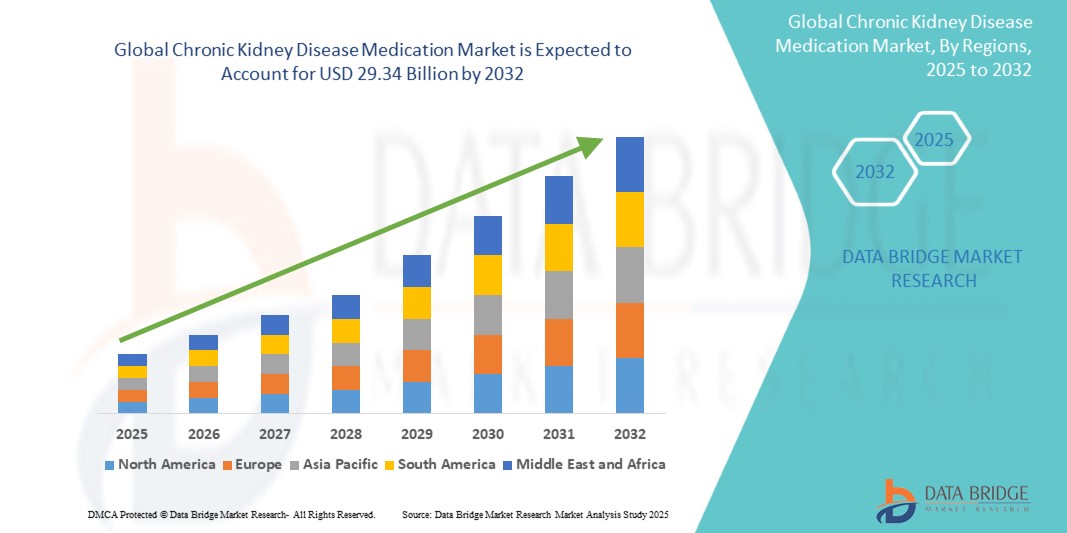
Global chronic kidney disease medication market size was valued at USD 14.52 billion in 2024 and is projected to reach USD 29.34 billion by 2032, with a CAGR of 8.99% during the forecast period of 2025 to 2032. In addition to the insights on market scenarios such as market value, growth rate, segmentation, geographical coverage, and major players, the market reports curated by the Data Bridge Market Research also include depth expert analysis, patient epidemiology, pipeline analysis, pricing analysis, and regulatory framework.
Chronic Kidney Disease Medication Market Trends
“Shift Toward Home-based Care”
The shift toward home-based care is becoming a prominent trend in the management of chronic kidney disease (CKD). As patients and healthcare providers seek more convenient and flexible treatment options, home care solutions are increasingly being embraced. Telemedicine is playing a key role, allowing patients to consult with healthcare professionals remotely, which reduces the need for frequent hospital visits. Along with telemedicine, the demand for oral medications is growing, as they offer patients an easier way to manage their condition at home. Additionally, the rise of home dialysis equipment reflects a broader shift towards enabling patients to perform dialysis in the comfort of their own homes, further reducing the burden on healthcare facilities. This trend is reshaping CKD care by providing patients with more autonomy and improving their quality of life while reducing healthcare system strain.
Report Scope and Chronic Kidney Disease Medication Market Segmentation
|
Attributes |
Chronic Kidney Disease Medication Key Market Insights |
|
Segments Covered |
|
|
Countries Covered |
U.S., Canada, Mexico, Germany, France, U.K., Netherlands, Switzerland, Belgium, Russia, Italy, Spain, Turkey, Rest of Europe, China, Japan, India, South Korea, Singapore, Malaysia, Australia, Thailand, Indonesia, Philippines, Rest of Asia-Pacific, Saudi Arabia, U.A.E., South Africa, Egypt, Israel, Rest of Middle East and Africa, Brazil, Argentina, Rest of South America |
|
Key Market Players |
Fresenius Medical Care AG & Co. KGaA (Germany), AbbVie Inc. (U.S.), Baxter International Inc. (U.S.), Amgen Inc. (U.S.), Bristol-Myers Squibb Company (U.S.), Johnson & Johnson Services, Inc.(U.S.), Novartis AG (Switzerland), Sanofi S.A. (France), F. Hoffmann-La Roche Ltd (Switzerland), Pfizer Inc. (U.S.), Lupin (India), Viatris Inc. (U.S.), Eli Lilly and Company (U.S.), Teva Pharmaceutical Industries Ltd. (Israel), Ferring Pharmaceuticals (Switzerland), Horizon Therapeutics plc (Ireland), Akebia Therapeutics, Inc. (U.S.), and Mallinckrodt Pharmaceuticals (U.S.) |
|
Market Opportunities |
|
|
Value Added Data Infosets |
In addition to the insights on market scenarios such as market value, growth rate, segmentation, geographical coverage, and major players, the market reports curated by the Data Bridge Market Research also include depth expert analysis, patient epidemiology, pipeline analysis, pricing analysis, and regulatory framework. |
Chronic Kidney Disease Medication Market Definition
Chronic kidney disease (CKD) Medication refers to a range of pharmaceutical treatments used to manage and slow the progression of kidney damage in individuals with CKD. These medications aim to control the underlying causes and complications of CKD, such as hypertension, diabetes, and anemia. They also help manage symptoms and prevent further kidney damage. Key categories of CKD medications include angiotensin-converting enzyme (ACE) inhibitors, angiotensin II receptor blockers (ARBs), diuretics, phosphate binders, erythropoiesis-stimulating agents (ESAs), and sodium-glucose cotransporter 2 (SGLT2) inhibitors, among others. The goal is to improve quality of life, manage associated comorbidities, and reduce the risk of progression to end-stage renal disease (ESRD) or kidney failure.
Chronic Kidney Disease Medication Market Dynamics
Drivers
- Rising Prevalence of Risk Factors
The rising prevalence of risk factors such as diabetes, hypertension, and obesity is a major driver of the global chronic kidney disease (CKD) medication market. These conditions are closely associated with the development and progression of CKD, with high blood pressure and uncontrolled diabetes being the leading causes of kidney damage. As the global population experiences a significant rise in these risk factors due to unhealthy lifestyle habits, poor dietary choices, and aging populations, the demand for CKD treatments has surged. For instance, diabetes is known to damage blood vessels in the kidneys, leading to diabetic nephropathy, while hypertension increases the risk of kidney failure. Obesity also contributes to kidney dysfunction by promoting inflammation and increasing the likelihood of conditions such as diabetes and hypertension. As these risk factors continue to rise globally, the need for medications that effectively manage CKD and prevent further complications becomes increasingly critical in healthcare systems worldwide.
- Advancements in CKD Treatments
Advancements in CKD treatments have significantly boosted the market, particularly with the introduction of SGLT2 inhibitors and erythropoiesis-stimulating agents (ESAs). SGLT2 inhibitors, such as empagliflozin and dapagliflozin, have proven effective in slowing the progression of kidney disease by reducing blood glucose levels and alleviating the burden on the kidneys. These drugs also help manage heart failure and reduce the risk of cardiovascular events, which are common complications in CKD patients. Additionally, erythropoiesis-stimulating agents (ESAs) are used to treat anemia, a frequent complication of CKD, by stimulating red blood cell production, improving energy levels, and reducing the need for blood transfusions. These innovations have not only improved the management of CKD but have also enhanced patient outcomes, offering a more targeted approach to treatment. As a result, there has been a significant shift toward the adoption of these newer therapies, which has driven the market's growth.
Opportunities
- New Drug Approvals and Pipeline Innovations
New drug approvals and pipeline innovations present significant growth opportunities in the global CKD medication market. Ongoing research and development efforts are focusing on discovering novel treatments that target key mechanisms involved in CKD, such as fibrosis, inflammation, and metabolic disturbances. Medications that address these underlying processes could slow disease progression more effectively than current therapies. For instance, new drugs targeting kidney fibrosis aim to prevent the scarring of kidney tissues, a critical factor in CKD progression. Additionally, innovations in inflammation control and metabolic regulation are opening up new avenues for treating CKD patients who often experience comorbidities such as cardiovascular disease and diabetes. The approval of these innovative therapies would not only fill gaps in the current treatment landscape but also expand the range of options for patients, providing more personalized and effective care. As these new therapies are developed and approved, they are expected to improve patient outcomes and drive the market's growth.
- Growing Telemedicine and Remote Monitoring Solutions
The rise of telemedicine and remote monitoring solutions offers a significant opportunity for the global CKD medication market. With the growing demand for convenient and accessible healthcare, patients and healthcare providers are increasingly turning to remote care options, reducing the need for frequent hospital visits. This shift is driving the demand for medications that can be easily monitored and adjusted from a distance. Digital health technologies, such as mobile apps and wearable devices, enable real-time tracking of medication adherence, kidney function, and vital signs, improving patient engagement and ensuring timely intervention. These technologies also allow healthcare providers to remotely adjust treatment plans based on patient data, optimizing outcomes. As a result, integrating remote monitoring with CKD treatments can enhance the overall management of the disease, particularly for patients in remote areas or those with mobility challenges. This trend is opening up new avenues for pharmaceutical companies to develop innovative solutions that align with the growing telehealth ecosystem.
Restraints/Challenges
- High Cost of Treatment
The high cost of treatment is a significant restraint in the global chronic kidney disease (CKD) medication market. Medications such as SGLT2 inhibitors and erythropoiesis-stimulating agents (ESAs), which have proven to be effective in managing CKD, can be prohibitively expensive, particularly for patients in low- and middle-income countries. The ongoing financial burden of long-term medication, combined with the high costs of essential CKD treatments such as dialysis and other related therapies, limits access to proper care. This economic barrier prevents many patients from receiving the necessary treatments at the right stage, potentially leading to disease progression and complications. Additionally, healthcare systems in resource-constrained regions may struggle to absorb the costs of these advanced therapies, further exacerbating inequalities in care. The high cost can also affect patient adherence to prescribed treatments, as patients may not be able to afford medications or ongoing therapies, which impacts the overall effectiveness of CKD management.
- Lack of Early Diagnosis and Awareness
Lack of early diagnosis and awareness is a major challenge in the global Chronic Kidney Disease (CKD) medication market. CKD often develops gradually and silently, with few symptoms in its early stages. This lack of noticeable signs means many individuals are unaware of their condition until it has progressed to more severe stages, such as kidney failure. By this point, the effectiveness of treatments is significantly reduced, and managing the disease becomes more complex and costly. Additionally, both the general public and healthcare professionals may not fully recognize the importance of early CKD screening, leading to missed opportunities for early intervention. Without timely diagnosis and treatment, patients are less likely to benefit from medications that could slow disease progression in its initial stages. This challenge limits the market’s growth potential, as late-stage diagnoses lead to increased healthcare costs and reduced treatment efficacy, ultimately affecting patient outcomes.
This market report provides details of new recent developments, trade regulations, import-export analysis, production analysis, value chain optimization, market share, impact of domestic and localized market players, analyses opportunities in terms of emerging revenue pockets, changes in market regulations, strategic market growth analysis, market size, category market growths, application niches and dominance, product approvals, product launches, geographic expansions, technological innovations in the market. To gain more info on the market contact Data Bridge Market Research for an Analyst Brief, our team will help you take an informed market decision to achieve market growth.
Chronic Kidney Disease Medication Market Scope
The market is segmented on the basis of drug class, treatment stage, end user, and distribution channel. The growth amongst these segments will help you analyze meagre growth segments in the industries and provide the users with a valuable market overview and market insights to help them make strategic decisions for identifying core market applications.
Drug Class
- Erythropoiesis-Stimulating Agents (ESAs)
- Phosphate Binders
- Renin-Angiotensin System Inhibitors
- Sodium-Glucose Cotransporter 2 (SGLT2) Inhibitors
- Diuretics
- Other Medications
Treatment Stage
- Early-Stage CKD
- Moderate-Stage CKD
- End-Stage CKD
End User
- Hospitals
- Clinics
- Home Care Settings
- Dialysis Centers
Distribution Channel
- Hospital Pharmacies
- Retail Pharmacies
- Online Pharmacies
- Others
Chronic Kidney Disease Medication Market Regional Analysis
The market is analyzed and market size insights and trends are provided by country, drug class, treatment stage, end user, and distribution channel as referenced above.
The countries covered in the market are U.S., Canada, Mexico, Germany, France, U.K., Netherlands, Switzerland, Belgium, Russia, Italy, Spain, Turkey, rest of Europe, China, Japan, India, South Korea, Singapore, Malaysia, Australia, Thailand, Indonesia, Philippines, rest of Asia-Pacific, Saudi Arabia, U.A.E., South Africa, Egypt, Israel, rest of Middle East and Africa, Brazil, Argentina, and rest of South America.
North America is expected to dominate the market due to advanced healthcare infrastructure, high awareness of CKD, and a large patient population with increasing prevalence of risk factors such as diabetes and hypertension.
Asia-Pacific is expected to be the fastest growing due to increasing prevalence of chronic conditions such as diabetes and hypertension, which are placing greater demands on healthcare systems. The region’s improving healthcare infrastructure, including advancements in medical technology and the expansion of digital health services, is further accelerating the adoption of AI-based tools.
The country section of the report also provides individual market impacting factors and changes in regulation in the market domestically that impacts the current and future trends of the market. Data points such as down-stream and upstream value chain analysis, technical trends and porter's five forces analysis, case studies are some of the pointers used to forecast the market scenario for individual countries. Also, the presence and availability of global brands and their challenges faced due to large or scarce competition from local and domestic brands, impact of domestic tariffs and trade routes are considered while providing forecast analysis of the country data.
Global Chronic Kidney Disease Medication Market Share
The market competitive landscape provides details by competitor. Details included are company overview, company financials, revenue generated, market potential, investment in research and development, new market initiatives, global presence, production sites and facilities, production capacities, company strengths and weaknesses, product launch, product width and breadth, application dominance. The above data points provided are only related to the companies' focus related to market.
Global Chronic Kidney Disease Medication Market Leaders Operating in the Market Are:
- Fresenius Medical Care AG & Co. KGaA (Germany)
- AbbVie Inc. (U.S.)
- Baxter International Inc. (U.S.)
- Amgen Inc. (U.S.)
- Bristol-Myers Squibb Company (U.S.)
- Johnson & Johnson Services, Inc. (U.S.)
- Novartis AG (Switzerland)
- Sanofi S.A. (France)
- F. Hoffmann-La Roche Ltd (Switzerland)
- Pfizer Inc. (U.S.)
- Lupin (India)
- Viatris Inc. (U.S.)
- Eli Lilly and Company (U.S.)
- Teva Pharmaceutical Industries Ltd. (Israel)
- Ferring Pharmaceuticals (Switzerland)
- Horizon Therapeutics plc (Ireland)
- Akebia Therapeutics, Inc. (U.S.)
- Mallinckrodt Pharmaceuticals (U.S.)
Latest Developments in Global Chronic Kidney Disease Medication Market
- In December 2024, CORE Kidney has partnered with Boehringer Ingelheim and Eli Lilly at the 2025 Tournament of Roses Parade to emphasize the importance of two tests—blood and urine—for those at risk of kidney disease, particularly individuals with type 2 diabetes or high blood pressure, which contribute to most CKD cases. This collaboration will enhance awareness and position CORE Kidney as a key player in promoting early detection and prevention of CKD
- In November 2024, Mitsui Chemicals, Inc. has invested in Rege Nephro Co., Ltd. through the 321FORCE Global Innovation Fund L.P. Rege Nephro, focused on R&D for kidney disease drugs, will benefit from this investment by accelerating the development of its innovative treatments
- In October 2024, Rege Nephro Co., Ltd. has secured approximately USD17 million in new Series B funding, bringing its total funding to USD30 million. The round was led by strategic investors such as DCI Partners Co., Ltd., JIC Venture Growth Investments, and several others. The funds will advance Phase II clinical trials for RN-014, a promising treatment for Autosomal Dominant Polycystic Kidney Disease (ADPKD), and support preclinical trials for RN-032, aimed at treating Chronic Kidney Disease (CKD) through cell therapy. This funding will enable Rege Nephro to accelerate the development of its innovative treatments, bringing them closer to improving outcomes for patients with kidney diseases
- In May 2024, Premier, Inc. has formed a strategic partnership with AstraZeneca for the Uncover CKD - Care Collective initiative, aimed at identifying undiagnosed CKD patients, raising awareness among healthcare providers, and assisting U.S. health systems in improving CKD diagnosis and management strategies. This collaboration will enhance Premier's role in advancing CKD care and expand its influence in healthcare systems through effective early detection and management solutions
- In January 2024, XORTX Therapeutics has submitted a new patent for treating chronic kidney disease (CKD), focusing on safer and more effective oral and sublingual formulations of xanthine oxidase inhibitors (XOI) for conditions such as ADPKD, diabetic nephropathy, and others. This patent will help the company protect its innovative treatment strategies and enhance its portfolio in the kidney disease market
SKU-
세계 최초의 시장 정보 클라우드 보고서에 온라인으로 접속하세요
- 대화형 데이터 분석 대시보드
- 높은 성장 잠재력 기회를 위한 회사 분석 대시보드
- 사용자 정의 및 질의를 위한 리서치 분석가 액세스
- 대화형 대시보드를 통한 경쟁자 분석
- 최신 뉴스, 업데이트 및 추세 분석
- 포괄적인 경쟁자 추적을 위한 벤치마크 분석의 힘 활용
연구 방법론
데이터 수집 및 기준 연도 분석은 대규모 샘플 크기의 데이터 수집 모듈을 사용하여 수행됩니다. 이 단계에는 다양한 소스와 전략을 통해 시장 정보 또는 관련 데이터를 얻는 것이 포함됩니다. 여기에는 과거에 수집한 모든 데이터를 미리 검토하고 계획하는 것이 포함됩니다. 또한 다양한 정보 소스에서 발견되는 정보 불일치를 검토하는 것도 포함됩니다. 시장 데이터는 시장 통계 및 일관된 모델을 사용하여 분석하고 추정합니다. 또한 시장 점유율 분석 및 주요 추세 분석은 시장 보고서의 주요 성공 요인입니다. 자세한 내용은 분석가에게 전화를 요청하거나 문의 사항을 드롭하세요.
DBMR 연구팀에서 사용하는 주요 연구 방법론은 데이터 마이닝, 시장에 대한 데이터 변수의 영향 분석 및 주요(산업 전문가) 검증을 포함하는 데이터 삼각 측량입니다. 데이터 모델에는 공급업체 포지셔닝 그리드, 시장 타임라인 분석, 시장 개요 및 가이드, 회사 포지셔닝 그리드, 특허 분석, 가격 분석, 회사 시장 점유율 분석, 측정 기준, 글로벌 대 지역 및 공급업체 점유율 분석이 포함됩니다. 연구 방법론에 대해 자세히 알아보려면 문의를 통해 업계 전문가에게 문의하세요.
사용자 정의 가능
Data Bridge Market Research는 고급 형성 연구 분야의 선두 주자입니다. 저희는 기존 및 신규 고객에게 목표에 맞는 데이터와 분석을 제공하는 데 자부심을 느낍니다. 보고서는 추가 국가에 대한 시장 이해(국가 목록 요청), 임상 시험 결과 데이터, 문헌 검토, 재생 시장 및 제품 기반 분석을 포함하도록 사용자 정의할 수 있습니다. 기술 기반 분석에서 시장 포트폴리오 전략에 이르기까지 타겟 경쟁업체의 시장 분석을 분석할 수 있습니다. 귀하가 원하는 형식과 데이터 스타일로 필요한 만큼 많은 경쟁자를 추가할 수 있습니다. 저희 분석가 팀은 또한 원시 엑셀 파일 피벗 테이블(팩트북)로 데이터를 제공하거나 보고서에서 사용 가능한 데이터 세트에서 프레젠테이션을 만드는 데 도움을 줄 수 있습니다.