



Global Conversational Artificial Intelligence (AI) Market Segmentation, By Component (Platform and Services), Type (Intelligent Virtual Assistants and Chatbots), Technology (Machine Learning and Deep Learning, Natural Language Processing, and Automated Speech Recognition), Deployment Model (On-Premises and Cloud), Application (Customer Support, Personal Assistant, Branding and Advertisement, Customer Engagement and Retention, Onboarding and Employee Engagement, Data Privacy and Compliance, and Others), Organization Size (Large Enterprises and Small and Medium-Sized Enterprises), Business Function (Sales and Marketing, Finance, HR, Operations, and IT Service Management), Mode of Integration (Web-based, App-based, and Telephonic), End User (Banking, Financial Services, and Insurance, Retail and Ecommerce, Healthcare and Life Sciences, Travel and Hospitality, Telecom, Media and Entertainment, and Others) - Industry Trends and Forecast to 2033
Conversational Artificial Intelligence (AI) 마켓 크기 및 개요는 무엇입니까
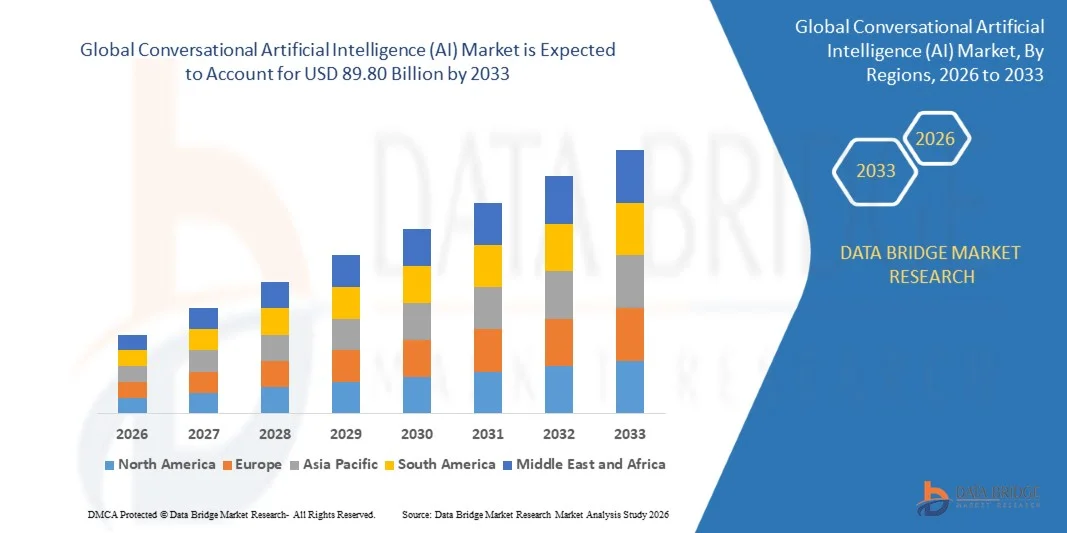
- Data Bridge Market Research Analysis에 따라 시장 규모가 평가되었습니다.2025년 USD 16.02 억견적 요청2033년 USD 89.80 억, 에 의해24.04%의 상승예측 기간
- 시장 성장은 기업과 고객 관계 애플리케이션을 통해 AI-powered 솔루션의 증가 채택에 의해 크게 연료를 공급, 강화회사연혁, 개량한 가동 효율성 및 BFSI와 같은 분야에 있는 개인화한 사용자 경험,의료보험, 전자 상거래
- 또한, 수요 상승지능형 가상 조수 및 chatbot그것은 실시간 응답을 제공 할 수 있으며 고객 쿼리를 효율적으로 처리하고 기존 디지털 플랫폼과 완벽하게 통합하여 대화 형 AI 솔루션을 배포합니다. 이러한 융합 요인은 산업 전반에 걸쳐 채택을 가속화하고 있으며, 시장 성장을 크게 늘리고 있습니다.
시장 크기 & Forecast
- 글로벌 시장 가치 (2025):50억 달러
- 예상 시장 가치 (2033):50억 달러
- 캐스트 CAGR (2026–2033): 24.04
- 2025년에 지도하는 지역:북아메리카
- 가장 빠른 성장 지역:아시아 태평양
Conversational Artificial Intelligence (AI) 시장 분석
- Chatbots 및 지능형 가상 조수 등 다양한 AI 솔루션은 고객 상호 작용을 자동화하고 참여를 강화하고 웹, 모바일 및 대기업 및 SME의 telephonic 플랫폼을 통해 맞춤 경험을 제공합니다.
- 대화 형 AI의 escalating 수요는 주로 효율적인 고객 지원, 향상된 브랜드 참여 및 비용 효율적인 자동화, 기계 학습, 자연 언어 처리 및 음성 인식 기술에 대한 발전에 의해 연료를 공급
- 북미는 대화 형 인공지능 (AI) 시장을 지배 공유하기2025년 26.56%, 산업 전반에 걸쳐 급속한 디지털 전환 및 AI 전원 고객 참여 솔루션 채택
- 아시아 태평양은 빠르게 디지털화 및 모바일 첫 전략으로 인해 예측 기간 동안 대화 형 인공지능 (AI) 시장에서 가장 빠르게 성장하는 지역이 될 것으로 예상됩니다.
- 플랫폼 세그먼트는 AI 기반 통신 솔루션을 구현하기위한 기반 백본 역할을하기 위해 2025 %의 시장 점유율을 가진 시장을 지배했습니다. 기업을 구축하고, 사용자 정의하고, 고객 지원 및 가상 조수와 같은 다양한 용도에 대한 대화 응용 프로그램을 배치 할 수 있습니다.
 보고서 범위 및 대화 형 인공지능 (AI) Market Segmentation
|
관련 기사 |
Conversational Artificial Intelligence (AI) 주요 시장 통찰력 |
|
Segments 적용 |
|
|
국가 덮음 |
북아메리카
·
아시아 태평양
중동 및 아프리카
대한민국
|
|
핵심 시장 선수 |
|
|
시장 기회 |
|
|
Value 추가 데이터 Infosets |
시장 가치, 성장률, 시장 세그먼트, 지리적 적용, 시장 플레이어 및 시장 시나리오와 같은 시장 통찰력 외에도 데이터 브리지 시장 연구 팀은 심층적 인 전문가 분석, 수입 / 수출 분석, 가격 분석, 생산 소비 분석 및 pestle 분석이 포함됩니다. |
Conversational Artificial Intelligence (AI) 마켓의 핵심 트렌드는 무엇입니까
“AI-Powered Customer Engagement Solutions의 승인”
- 대화형 AI 시장의 중요한 추세는 고객 참여를 위한 AI-powered 해결책의 증가 배치, 더 빠른 응답 시간, 개량한 소비자 만족 및 가동 효율성을 추구하는 기업에 의해 모는 입니다. 이 솔루션은 웹 사이트, 메시징 앱 및 음성 플랫폼을 포함한 여러 터치포인트를 통해 고객 상호 작용을 강화하고 있습니다.
- 예를 들어, LivePerson 및 Nuance Communications와 같은 회사는 실시간 지원 및 개인화 된 권고를 사용자에게 제공 할 수있는 기업을 가능하게하는 AI chatbot 및 가상 조수를 제공합니다. 고객 서비스 운영을 간소화하고, 대응 지연을 줄이고, 고객 서비스 운영을 간소화하고 있습니다.
- 음성 조수와 스마트 기기와의 대화형 AI의 통합은 급속하게 확장되고, 인체와 같은 상호 작용을 허용하는 자연적인 언어 처리 기능을 가능하게 합니다. 이 트렌드는 AI 기반 대화를 현대 디지털 생태계의 근본적인 구성 요소로 배치합니다.
- 엔터프라이즈는 대화 형 AI를 활용하여 내부 워크플로우 및 직원 지원 시스템을 최적화하고 가상 HR 조수와 IT 헬프 데스크 봇과 같은 애플리케이션은 즉시 지도 및 자동화 작업을 제공합니다. 생산성 향상을 추구하는 대형 조직의 채택
- e-commerce 부문은 점점 더 많은 대화형 AI를 사용하여 맞춤 쇼핑 경험을 제공합니다. 추천 엔진과 AI 조수는 사용자 행동을 가이드 구매에 분석합니다. 고객 충성도 향상
- 시장은 글로벌 시장에서 사용자 이해를 강화하는 다국어 및 컨텍스트 인식 AI 시스템의 강력한 혁신을 목격하고 있습니다. 이 고급 솔루션은 비즈니스를 확장하고 일관된 경험을 제공하며 전 세계 브랜드 존재를 강화합니다.
Conversational Artificial Intelligence (AI) 시장의 주요 드라이버는 무엇입니까
관련 기사
"자동화 및 개인화 된 사용자 경험을위한 성장 필요"
- 자동화 및 사용자 정의 상호 작용을위한 상승 수요는 반복적 인 작업을 처리 할 수있는 대화 형 AI 솔루션의 채택을 구동하고 쿼리에 응답하고 개인화 된 권고를 제공합니다. 이 기능은 고객 만족을 강화하는 동안 인간적인 workload를 감소시킵니다
- 예를 들어, IBM Watson Assistant는 Autodesk와 같은 비즈니스를 활성화하여 컨텍스트와 고객 서비스 워크플로우를 자동화하는 AI 기반 지원 시스템을 구현합니다. 이 통합은 운영 효율을 향상시키고 사용자 문제의 빠른 해결을 보장합니다.
- 대화형 인터페이스와 결합된 AI 기반 분석의 채택은 조직이 사용자 선호도를 이해하고 더 많은 타겟 서비스를 가능하게 합니다. 이 추세는 고객의 요구가 예상 할 수있는 매우 적합한 가상 에이전트의 개발 연료입니다.
- 은행, 의료 및 통신 분야의 기업은 점점 24 / 7 지원을위한 AI 보조를 배포하고 접근성 및 응답성을 향상시킵니다. 이 응용 프로그램은 더 높은 참여 및 더 효율적인 서비스 제공을 구동
- omnichannel 경험의 초점은 웹, 모바일 및 음성 플랫폼에서 대화 형 AI의 배포를 강화하고 일관된 상호 작용을 보장합니다. 이 정렬은 AI-powered 솔루션의 지속적인 시장 성장과 더 넓은 수용에 기여합니다.
스트레인트/Challenge
어떤 요인은 대화 형 인공지능 (AI) 시장의 성장에 직면
- AI 시스템은 민감한 개인 및 조직 정보를 처리하는 데이터 프라이버시 및 보안에 대한 우려가 증가하기 때문에 대화 형 AI 시장의 과제를 직면합니다. 대화 데이터의 Breache 또는 misuse는 평판 손상 및 규제 처벌으로 이어질 수 있습니다.
- 예를 들어, Facebook 및 Google과 같은 회사에 의해 배포되는 Chatbots의 고객 데이터 사용에 대한 우려는 개인 정보 보호 watchdogs 및 규제 기관에서 scrutiny를 제기했습니다. 이 과제는 강력한 암호화, 준수 측정 및 보안 데이터 처리 관행을 중시합니다.
- GDPR, CCPA 및 기타 지역 준수는 시스템 설계 및 운영 프로토콜에 복잡성을 추가하여 배포 시간에 영향을 미칩니다. 조직은 기밀 규정에 엄격한 준수를 가진 진보된 AI 기능을 균형을 잡아야 합니다
- 모험의 위험, 무단 액세스 및 AI 모델 악용은 제약 시장의 성장을 계속합니다. 공급 업체는 안전한 AI 프레임 워크 및 지속적인 모니터링에 투자하고 이러한 위험을 완화합니다.
- AI 기반 개인화를 활용하면서 사용자 신뢰 유지는 중요한 도전입니다. 이 문제를 해결하는 것은 대화 형 AI 솔루션의 광범위한 채택 및 장기 지속 가능성에 필수적입니다.
Conversational Artificial Intelligence (AI) 시장 범위
시장은 구성 요소, 유형, 기술, 배포 모델, 응용 프로그램, 조직 크기, 비즈니스 기능, 통합 모드 및 최종 사용자의 기초에 구분됩니다.
- 으로 구성
Conversational AI 시장은 플랫폼 및 서비스로 구분됩니다. 플랫폼 세그먼트는 AI 기반 통신 솔루션을 구현하기위한 기반 백본 역할을 기반으로 2025에서 61.56%의 최대 시장 매출 점유율을 기록했습니다. 기업을 구축하고, 사용자 정의하고, 고객 지원 및 가상 조수와 같은 다양한 용도에 대한 대화 응용 프로그램을 배치 할 수 있습니다.
관리 서비스, 전문 서비스, 교육 및 컨설팅, 시스템 통합 및 구현 및 지원 및 유지 보수가 포함 된 서비스 세그먼트는 2026에서 2033로 가장 빠른 성장률을 목격 할 것으로 예상됩니다. 이 성장은 기업의 투자를 극대화하고 원활한 운영을 보장하기 위해 복잡한 대화형 AI 솔루션을 배포, 관리 및 최적화하는 전문 지식이 필요합니다.
- 이름 *
유형의 기초에, 대화 형 인공지능 (AI) 시장은 지적인 가상 조수 및 Chatbots로 구분됩니다. Chatbots 세그먼트는 2025 년에 가장 큰 시장 수익 공유를 열었으며, 고객 참여 및 간소화 작업을 강화하기위한 산업 전반에 걸쳐 광범위한 채택에 의해 구동되었습니다. 기계 학습 및 자연 언어 처리 (NLP)의 지속적인 발전은 크게 Chatbot 기능을 개선했으며 일상적인 상호 작용과 데이터 수집을 자동화하기위한 인기있는 선택입니다.
지적인 가상 조수 세그먼트는 2026년에서 2033년까지 가장 빠른 성장율을 목격하기 위하여 예상됩니다. 이 성장은 복잡한 쿼리를 처리하고 유능한 지원을 제공 할 수있는 더 많은 인간과 개인화 상호 작용을 제공하는 IVAs의 증가 간질에 영향을 미칩니다. 스마트 스피커 기반 기술 및 홈 오토메이션의 상승 수요는 IVA의 급속한 확장에 기여합니다.
- By 기술
기술의 기초에, 대화 형 인공지능 (AI) 시장은 기계 학습 및 딥러닝, 자연 언어 처리 (NLP) 및 자동화 된 연설 인식 (ASR)으로 구분됩니다. 자연적인 언어 처리 (NLP) 세그먼트는 2025년에 가장 큰 시장 수익 몫을 열었습니다, 그것은 AI 체계를 해석하고, 이해하고, 인간적인 언어에 효과적으로 반응하는 가능하게 하는 기본적인 기술로 봉사합니다. NLP의 중요한 역할은 대화 형 AI 기능의 많은 자연적인 언어 자료의 광대한 양을 처리하기 위하여 기계를 허용하.
자동 음성 인식 (ASR) 세그먼트는 2026에서 2033까지의 가장 빠른 성장률을 목격 할 것으로 예상됩니다. 이 가속은 음성 상호 작용과 ASR 기술의 지속적인 발전에 대한 소비자 선호도 증가에 의해 구동되며 음성 기반 대화 형 AI를 다양한 장치 및 응용 분야에서보다 정확하고 액세스 할 수 있습니다.
- Deployment 모델
배포 모델의 기초에, 대화 형 인공지능 (AI) 시장은 On-Premises 및 Cloud로 구분됩니다. 클라우드 배포 세그먼트는 2025년 가장 큰 시장 수익 점유율을 기록했으며, 전 세계적으로 클라우드 기반 기술 및 서비스의 중요성이 높아졌습니다. 클라우드 플랫폼은 확장성, 유연성, 감소된 인프라 관리와 같은 상당한 이점을 제공하며, 대화형 AI 솔루션을 배포 및 관리하기 위해 매우 매력적입니다.
Cloud 배포 세그먼트는 2026에서 2033까지 가장 빠른 성장률을 목격 할 것으로 예상됩니다. 이 급속한 성장은 일반 업데이트, 고급 기능 및 다른 클라우드 서비스와의 원활한 통합을 포함하여 클라우드 기반 대화 형 AI 플랫폼의 지속적인 개선에 의해 연료를 공급하고, 모든 크기의 기업을위한 비용 효과적이고 민첩한 솔루션을 제공합니다.
- 회사연혁
응용 프로그램의 기초에, 대화 형 인공지능 (AI) 시장은 고객 지원, 개인 보조, 브랜딩 및 광고, 고객 참여 및 Retention, Onboarding 및 Employee Engagement, 데이터 개인 정보 보호 및 규정 준수 및 기타로 구분됩니다. 고객 지원 부문은 2025년 가장 큰 시장 매출 점유율을 기록했으며, 기업의 광범위한 필요성을 바탕으로 고객 상호 작용을 효율적으로 관리하고 있습니다. Conversational AI는 24/7의 가용성을 제공하고 응답 시간을 줄이고 자주 묻는 질문에 대한 응답을 자동화함으로써 고객 지원을 크게 향상시킵니다.
Customer Engagement 및 Retention 세그먼트는 2026년부터 2033년까지 가장 빠른 성장률을 목격할 것으로 예상됩니다. 고객 만족과 충성도 향상을 위해 맞춤화된 고객 경험과 대화형 AI의 능력에 중점을 둡니다.
- 회사소개
조직 크기에, 대화 형 인공지능 (AI) 시장은 큰 기업과 중소기업 (SMEs)로 구분됩니다. 대형 기업 부문은 2025년 가장 큰 시장 매출 점유율을 기록했으며, 이는 고객 서비스, 내부 커뮤니케이션 및 프로세스 자동화를 위한 강력한 대화형 AI 솔루션을 필요로 하는 실질적 투자 능력과 복잡한 운영적 요구로 인해 크게 증가했습니다.
중소기업(SME) 부문은 2026년부터 2033년까지 가장 빠른 성장률을 목격하는 것으로 예상됩니다. 이 성장은 클라우드 기반 대화형 AI 플랫폼의 접근성과 감당성 증가에 의해 구동되며, SME는 고객 상호 작용을 강화하고 운영을 최적화하고 더 큰 조직으로 더 효과적으로 경쟁 할 수 있도록 고급 AI 기능을 활용할 수 있습니다.
- 사업 기능
사업 기능의 기초에, 대화 인공 지능 (AI) 시장은 판매 및 마케팅, 금융, HR, 운영 및 IT 서비스 관리로 구분됩니다. 2025년 가장 큰 시장 점유율을 차지하는 영업 및 마케팅 부문. AI의 발전, 고객 관계 관리, 개인화 된 마케팅 캠페인 및 실시간 고객 참여의 증가로 인해 매출을 높이고 브랜드 인식을 향상시킵니다.
Human Resources(HR) 세그먼트는 2026년부터 2033년까지 가장 빠른 성장률을 경험할 것으로 예상됩니다. 이 가속은 채용 및 인재 취득, 직원 온보딩, 일상 쿼리 처리, 셀프 서비스 옵션 제공, 효율성과 직원 경험을 향상시키기 위해 대화 형 AI의 성장 채택에 의해 구동됩니다.
- 통합의 형태
통합의 모드에 따라 대화형 인공지능(AI) 시장은 Web 기반, App 기반 및 Telephonic으로 구분됩니다. 웹 기반 통합은 채팅봇의 광범위한 사용으로 인해 지배적 인 공유를 보유하고 있습니다. 웹 기반 통합은 사용자 참여를 개선하고 응답 시간을 줄이고 디지털 터치 포인트를 통해 개인화된 지원을 제공합니다. 예를 들어 Zendesk 및 Intercom과 같은 회사들은 기업들이 고객 서비스, 리드 생성 및 쿼리 해상도를 위해 지능형 채팅봇을 배포할 수 있는 웹 기반 대화형 AI 솔루션을 제공합니다.
앱 기반 통합은 모바일 애플리케이션의 확산과 원활한 인앱 대화 경험을 위한 수요로 인해 급속한 성장을 볼 것으로 예상됩니다. Telephonic 통합, 더 전통적이지만, 통화 센터 및 IVR 시스템에 대한 고급 음성 AI로 진화합니다.
- 최종 사용자
최종 사용자의 기초에, 대화 인공 지능 (AI) 시장은 은행, 금융 서비스 및 보험 (BFSI), 소매 및 전자 상거래, 의료 및 생명 과학, 여행 및 환대, 통신, 미디어 및 엔터테인먼트 및 기타로 구분됩니다. 소매 및 전자 상거래 부문은 2025 년 가장 큰 시장 수익 점유율을 차지했으며, 부문의 지속적인 혁신과 고객 참여를 강화하고 쇼핑 경험을 개인화하고 다양한 터치 포인트를 통해 고객 서비스를 자동화 할 필요가 있습니다.
의료 및 생명 과학 부문은 2026에서 2033까지의 가장 빠른 성장률을 목격 할 것으로 예상됩니다. 이 서지는 환자 참여, 상담 스케줄링, 건강 정보 제공, 의료 지원 및 관리 업무 간소화, 환자 관리 및 운영 효율성을 개선하기 위해 선도적 인 의사 소통 AI의 증가 채택에 적합합니다.
Conversational Artificial Intelligence (AI) 마켓 지역 분석
- 북미는 2025 년에 26.56%의 최대 수익 점유율을 가진 대화 형 인공지능 (AI) 시장을 지배하고, 산업과 AI 전원 고객 참여 솔루션의 높은 채택을 통해 급속한 디지털 변환에 의해 구동
- 주요 기술 기업과 스타트업의 강력한 존재는 혁신과 발전을 가속화합니다.
- 소비자 및 기업 부문 모두의 음성 보조 및 스마트 장치와 AI의 통합 증가 시장 진입
U.S. Conversational Artificial Intelligence (AI) 시장 통찰력
미국 대화 형 인공지능 (AI) 시장은 북미 내에서 2025에서 가장 큰 수익 점유율을 캡처했으며 소매, 의료 및 은행과 같은 분야의 광범위한 배포에 의해 구동됩니다. 국가는 고객 상호 작용에서 자동화를 향한 가속화 된 이동을 목격하고, 채팅봇과 가상 조수를위한 AI 기반 솔루션에 투자하는 회사와. 비즈니스는 온라인 및 오프라인 플랫폼에서 자연 언어 지원 시스템을 배포함으로써 고객 참여 및 운영 효율성을 강화하는 데 중점을 둡니다. 주요 기술 제공업체와 견고한 IT 인프라의 강력한 존재는 광범위한 AI 통합을 지원합니다. 또한, 스마트 폰과 스마트 홈 기기의 지능형 음성 조수에 대한 수요가 지속적으로 시장을 높일 수 있습니다.
유럽 Conversational Artificial Intelligence (AI) 시장 통찰력
유럽 대화 형 인공지능 (AI) 시장은 예측 기간 동안 실질적인 CAGR에 확장하기 위해 계획되어 기업 중 디지털 전환 전략의 채택에 의해 뒷받침됩니다. 유럽 회사는 고객의 경험을 개선하기 위해 대화 형 AI를 구현하고 준수 기준을 충족하며 다국어 통신을 관리합니다. 엔터프라이즈 플랫폼, CRM 시스템 및 고객 인터페이스와 AI의 통합은 성장에 기여하고 있습니다. 은행, 소매 및 자동차와 같은 분야는 24 / 7 지원 및 개인화된 서비스를 위한 AI 솔루션을 활용하고 있습니다. 또한 음성 인식 및 정서적 AI 기능의 발전은 사용자 상호 작용 품질을 강화하는 견인력을 얻고 있습니다.
U.K. Conversational Artificial Intelligence (AI) 시장 통찰력
U.K. 대화 형 인공지능(AI) 시장은 디지털 뱅킹, 온라인 소매 및 공공 서비스 전반에 걸쳐 AI 채택을 통해 지원되는 예측 기간 동안 주목할만한 CAGR에서 성장할 것으로 예상됩니다. 조직은 AI 기반 고객 서비스 도구에 투자하여 통신을 간소화하고 서비스 배달을 향상시킵니다. AI 혁신을 위한 AI 시작 생태계 및 정부 지원의 확장은 시장 성숙을 가속화하고 있습니다. Businesses는 AI chatbot을 사용하여 자주 묻는 질문, 처리 예약 서비스 및 디지털 워크플로우를 관리합니다. 즉시, 개인화한 커뮤니케이션 증가를 위한 고객 기대로, 대화적인 AI는 기업을 통하여 중요한 차별화가 되고 있습니다.
독일 Conversational Artificial Intelligence (AI) 시장 통찰력
독일의 대화 형 인공지능(AI) 시장은 B2B 및 B2C 환경에서 실시간 지원을 위한 산업 디지털화 및 수요가 주도하는 예측 기간 동안 상당한 CAGR에 확장할 것으로 예상됩니다. 기업은 전자 상거래, 통신 및 물류의 AI 기반 채팅 솔루션을 배포하여 응답성과 효율성을 향상시킵니다. 데이터 개인 정보 보호 및 안전한 AI 구현에 대한 초점은 소비자 기대와 일치, 더 지원 성장. 또한, 독일 기업은 AI와 인간적인 대리인을 통합하는 잡종 상호적인 체계를 탐구하고 더 전체적인 사용자 경험을 제공하기 위하여. 음성 기반 AI 도구 및 ERP 시스템과 통합 된 혁신은 또한 모멘텀을 얻고 있습니다.
Asia-Pacific Conversational Artificial Intelligence (AI) 시장 통찰력
아시아 태평양 대화 형 인공지능 (AI) 시장은 2026 년 2033 년 예측 기간 동안 24%의 가장 빠른 CAGR에서 성장하기 위해 고안되었으며, 지역 전역의 신속한 디지털화 및 모바일 첫 번째 전략에 의해 spurred. 인도, 중국, 일본 등 국가의 비즈니스는 대화 형 AI를 사용하여 대규모 고객 상호 작용을 효율적으로 관리합니다. tech-savvy 인구와 모바일 앱 사용 증가, chatbots 및 가상 에이전트는 고객 참여에 표준 도구가됩니다. 예를 들어, 지역 전자 상거래 플랫폼은 AI Assistants를 배포하여 주문 추적, 제품 쿼리 및 결제 지원 관리합니다. 산업 전반에 걸쳐 광범위한 사용은 시장 확장을 형성하고 있습니다.
Japan Conversational Artificial Intelligence (AI) 마켓 인사이트
일본 대화 형 인공지능(AI) 시장은 자동화 및 디지털 편의에 중점을 둔 전국의 초점에 의해 지원되는 견인력을 얻고 있습니다. 비즈니스는 고객 서비스, 스마트 기기 및 공공장소 시스템으로 대화 형 AI를 통합하고 사용자의 상호 작용을 강화합니다. 로봇과 인공 지능과 일본의 첨단 기술 풍경과 익숙함은 AI 기반 통신 도구에 대한 비옥한 접지를 제공합니다. 사용 사례는 AI 접수, 가상 여행 보조, 의료 상담 시스템에서 AI를 포함합니다. 기업은 고객 여행과 노동 절약 솔루션을 지속적으로 최적화하기 위해 일본의 대화 형 AI 채택은 크게 상승합니다.
중국 Conversational Artificial Intelligence (AI) 시장 통찰력
중국 대화 형 인공지능 (AI) 시장은 2025년 아시아 태평양에서 가장 큰 시장 수익 점유율을 차지했으며, 높은 모바일 침투 및 공격적인 디지털 서비스 확장을 지원했습니다. 국가는 e-commerce, fintech 및 소셜 플랫폼에서 고객 참여를 위한 AI 기술을 채택하는 최전선에 있습니다. 중국 기술 거대는 다국어 및 음성 지원 대화 형 AI 시스템을 개발하여 광대하고 다양한 사용자 기반을 제공합니다. AI 조수는 고객 문의, 제품 권고 및 물류 추적을 위해 배포됩니다. AI 개발 및 숙련 된 재능의 가용성을 지원하는 정부 이니셔티브는이 시장에서 국가의 리더십을 더 bolster.
Conversational Artificial Intelligence (AI) 마켓 공유
대화형 인공지능(AI) 산업은 주로 다음과 같은 회사들이 주도하고 있습니다.
- Google, LLC (미국)
- 마이크로 소프트 (미국)
- IBM (미국)
- Amazon 웹 서비스, Inc. (미국)
- Baidu (중국)
- Oracle (미국)
- SAP SE (독일)
- FIS (미국)
- 인공 솔루션 (Sweden)
- (주)코레아이
- (미국)
- Inbenta Holdings Inc. (미국)
- 크리에이티브 가상(주)
- SoundHound AI, Inc. (미국)
- Avaamo (미국)
- Jio Haptik Technologies Limited (미국)
- Solvvy (미국)
- Cisco 시스템, Inc. (미국)
- Kasisto (미국)
- Gupshup (미국)
Global Conversational Artificial Intelligence (AI) 시장의 최신 개발
- Inbenta는 대화형 제품 데모를 전문으로하는 토론토 기반의 소프트웨어 회사인 Horizn을 인수했습니다. 이 인수는 Horizn의 혁신적인 기술을 Inbenta의 AI 기반 고객 경험 플랫폼에 통합합니다. Inbenta는 Horizn의 역량을 바탕으로 고객에게 제품 이해와 고객 만족을 촉진하는 immersive 경험을 제공하는 것을 목표로하고 있습니다. 따라서 마켓플레이스에서 디지털 상호 작용을 변환하는 데 헌신을 강화하십시오.
- 2023년 8월, Kore.ai Inc.는 Kore.ai XO 플랫폼에 의해 구동되는 지능형 가상 조수로 사용자를 제공하는 Zoom Contact Center와 함께 경험 최적화 플랫폼의 통합을 도입했습니다. 이 통합은 Zoom의 고객은 고급 대화 형 AI를 활용하여 고객 서비스 효율성과 응답성을 강화할 수 있습니다. 상호 작용을 자동화함으로써, 기업은 가동을 간소화하고 사용자 참여를 개선하고, 궁극적으로 더 나은 고객 경험 및 만족을 몰고 있습니다.
- 3 월 2023에서 Nuance Communications는 Dragon Ambient eXperience Express를 출시했으며, OpenAI의 최신 모델 인 GPT-4와 대화 및 주변 AI를 혼합하는 최초의 제품입니다. 이 혁신적인 시스템은 워크플로우 내에서 임상 문서를 자동화하고, 드래곤 의료 제품 라인의 성공을 구축합니다. 기존의 드래곤 주변 솔루션을 강화함으로써 Nuance는 의료 문서 프로세스를 개선하고 의료 제공자가 환자 관리에 더 집중할 수 있도록 도와줍니다.
- 2021 년 4 월, Microsoft는 음성 인식과 비문 기술 기능을 강화하는 것을 목표로 모든 현금 거래에서 19.7 억 달러의 Nuance Communications 인수를 발표했습니다. AI 기반 솔루션의 선두 주자 인 Nuance는 의료 및 기타 분야에서 Microsoft의 제품을 향상시키는 광범위한 전문 지식을 제공합니다. 이 취득은 Microsoft의 AI 기술을 옹호하고 제품 생태계에 통합하여 고객에게 더 나은 서비스를 제공합니다.
- 2021 년 3 월, Google Cloud는 Vertex AI의 일반적인 가용성을 발표했다, AI 모델의 개발 및 유지 보수를 간소화하도록 설계된 관리 된 기계 학습 플랫폼. Vertex AI는 강력한 도구와 인프라를 갖춘 기업을 제공하며, 기계 학습 애플리케이션의 빠른 배포를 가능하게 합니다. 고급 AI 기능에 쉽게 액세스 할 수 있도록함으로써 Google Cloud는 조직이 AI 기술을 효과적으로 활용하고 효율적으로 활용할 수 있도록하는 것을 목표로합니다.
SKU-
세계 최초의 시장 정보 클라우드 보고서에 온라인으로 접속하세요

- 대화형 데이터 분석 대시보드
- 높은 성장 잠재력 기회를 위한 회사 분석 대시보드
- 사용자 정의 및 질의를 위한 리서치 분석가 액세스
- 대화형 대시보드를 통한 경쟁자 분석
- 최신 뉴스, 업데이트 및 추세 분석
- 포괄적인 경쟁자 추적을 위한 벤치마크 분석의 힘 활용
연구 방법론
데이터 수집 및 기준 연도 분석은 대규모 샘플 크기의 데이터 수집 모듈을 사용하여 수행됩니다. 이 단계에는 다양한 소스와 전략을 통해 시장 정보 또는 관련 데이터를 얻는 것이 포함됩니다. 여기에는 과거에 수집한 모든 데이터를 미리 검토하고 계획하는 것이 포함됩니다. 또한 다양한 정보 소스에서 발견되는 정보 불일치를 검토하는 것도 포함됩니다. 시장 데이터는 시장 통계 및 일관된 모델을 사용하여 분석하고 추정합니다. 또한 시장 점유율 분석 및 주요 추세 분석은 시장 보고서의 주요 성공 요인입니다. 자세한 내용은 분석가에게 전화를 요청하거나 문의 사항을 드롭하세요.
DBMR 연구팀에서 사용하는 주요 연구 방법론은 데이터 마이닝, 시장에 대한 데이터 변수의 영향 분석 및 주요(산업 전문가) 검증을 포함하는 데이터 삼각 측량입니다. 데이터 모델에는 공급업체 포지셔닝 그리드, 시장 타임라인 분석, 시장 개요 및 가이드, 회사 포지셔닝 그리드, 특허 분석, 가격 분석, 회사 시장 점유율 분석, 측정 기준, 글로벌 대 지역 및 공급업체 점유율 분석이 포함됩니다. 연구 방법론에 대해 자세히 알아보려면 문의를 통해 업계 전문가에게 문의하세요.
사용자 정의 가능
Data Bridge Market Research는 고급 형성 연구 분야의 선두 주자입니다. 저희는 기존 및 신규 고객에게 목표에 맞는 데이터와 분석을 제공하는 데 자부심을 느낍니다. 보고서는 추가 국가에 대한 시장 이해(국가 목록 요청), 임상 시험 결과 데이터, 문헌 검토, 재생 시장 및 제품 기반 분석을 포함하도록 사용자 정의할 수 있습니다. 기술 기반 분석에서 시장 포트폴리오 전략에 이르기까지 타겟 경쟁업체의 시장 분석을 분석할 수 있습니다. 귀하가 원하는 형식과 데이터 스타일로 필요한 만큼 많은 경쟁자를 추가할 수 있습니다. 저희 분석가 팀은 또한 원시 엑셀 파일 피벗 테이블(팩트북)로 데이터를 제공하거나 보고서에서 사용 가능한 데이터 세트에서 프레젠테이션을 만드는 데 도움을 줄 수 있습니다.











