Global Human African Trypanosomiasis (Sleeping Sickness) Market Segmentation, By Type (Trypanosoma Brucei Gambiense (TbG) and Trypanosoma Brucei Rhodesiense (TbR)), Symptoms (Stage 1: Fevers, Headaches, Itchiness, Joint Pains, Stage 2: Trouble Sleeping, Confusion, and Poor Coordination), Treatment (Pentamidine, Suramin, Melarsoprol, and Eflornithine and Nifurtimox (used in Combination with Eflornithine)), Diagnostic Method (Blood Smear and Lumbar Puncture) – Industry Trends and Forecast to 2032
Human African Trypanosomiasis (Sleeping Sickness) Market Analysis
Human African trypanosomiasis also known as sleeping sickness, is a parasitic disease caused by Trypanosoma species transmitted through tsetse flies. It is endemic to sub-Saharan Africa, where it poses a significant public health threat, especially in rural areas. The market for HAT diagnostics and treatments has been evolving with the development of more effective drugs and diagnostic methods. Recent advancements include improved treatments such as eflornithine and nifurtimox, used in combination for better efficacy. Diagnostic techniques have also improved, with blood smears and lumbar punctures being standard methods. However, challenges remain, including the high cost of drugs, limited access to healthcare in endemic areas, and the need for widespread screening. The market is driven by the increasing awareness of the disease, funding from global health organizations, and efforts to eliminate the disease in affected regions. The introduction of more affordable and accessible treatments and diagnostics continues to drive market growth.
Human African Trypanosomiasis (Sleeping Sickness) Market Size
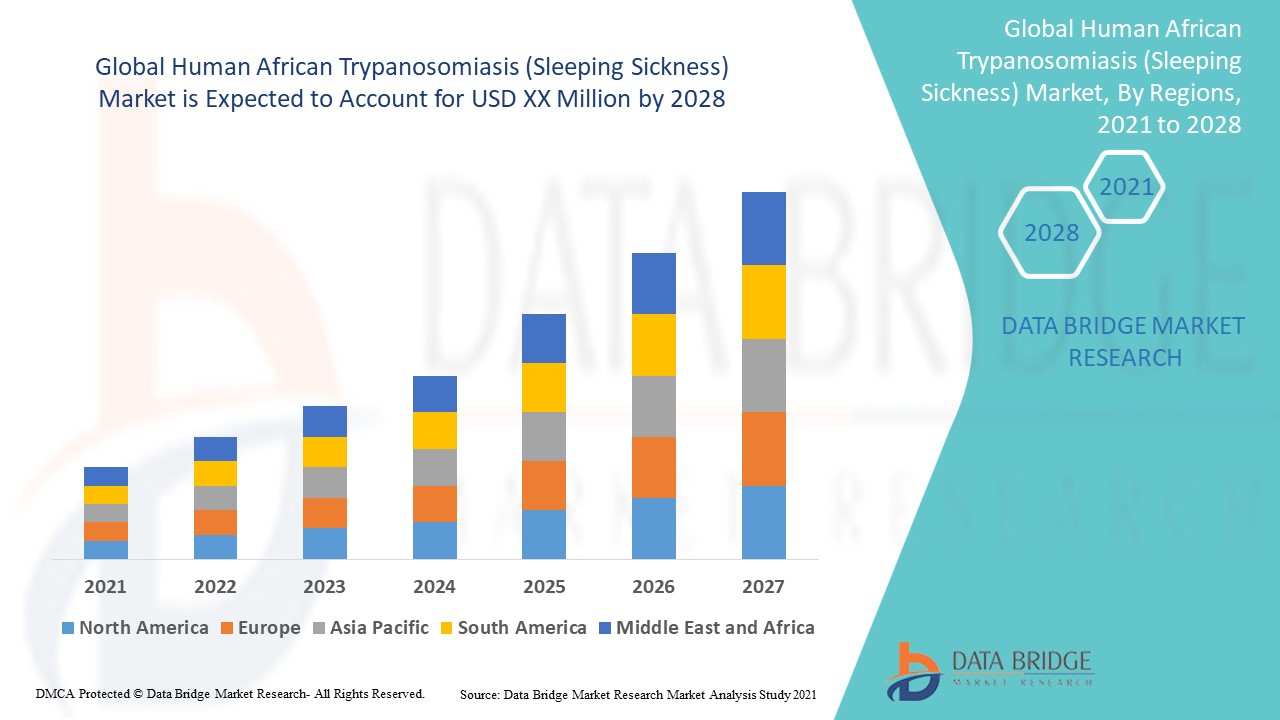
The global human African trypanosomiasis (sleeping sickness) market size was valued at USD 92.75 million in 2024 and is projected to reach USD 150.30 million by 2032, with a CAGR of 6.22% during the forecast period of 2025 to 2032. In addition to the insights on market scenarios such as market value, growth rate, segmentation, geographical coverage, and major players, the market reports curated by the Data Bridge Market Research also include depth expert analysis, patient epidemiology, pipeline analysis, pricing analysis, and regulatory framework.
Human African Trypanosomiasis (Sleeping Sickness) Market Trends
“Innovations in Diagnostic Methods”
The human African trypanosomiasis sleeping sickness market is experiencing significant advancements as global health organizations focus on eradicating this disease. Innovations in diagnostic methods and treatments are driving market growth. One major trend is the increasing use of combination therapies, such as eflornithine and nifurtimox, to improve treatment outcomes for both stages of the disease. These combination therapies offer better efficacy and fewer side effects compared to older treatments such as melarsoprol. Additionally, novel diagnostic techniques, such as rapid diagnostic tests (RDTs), are making early detection more accessible in remote, endemic areas. This innovation is essential to enhance patient outcomes and reduce the spread of human African trypanosomiasis, improving healthcare infrastructure in affected regions and contributing to the overall market development.
Report Scope and Human African Trypanosomiasis (Sleeping Sickness) Market Segmentation
|
Attributes |
Human African Trypanosomiasis (Sleeping Sickness) Key Market Insights |
|
Segments Covered |
|
|
Countries Covered |
U.S., Canada and Mexico in North America, Germany, France, U.K., Netherlands, Switzerland, Belgium, Russia, Italy, Spain, Turkey, Rest of Europe in Europe, China, Japan, India, South Korea, Singapore, Malaysia, Australia, Thailand, Indonesia, Philippines, Rest of Asia-Pacific (APAC) in the Asia-Pacific (APAC), Saudi Arabia, U.A.E., South Africa, Egypt, Israel, Rest of Middle East and Africa (MEA) as a part of Middle East and Africa (MEA), Brazil, Argentina and Rest of South America as part of South America. |
|
Key Market Players |
SARA Healthcare (India), Bayer AG (Germany), Scinopharm Taiwan (Taiwan), Rusan Pharma (India), and Sanofi (France) |
|
Market Opportunities |
|
|
Value Added Data Infosets |
In addition to the insights on market scenarios such as market value, growth rate, segmentation, geographical coverage, and major players, the market reports curated by the Data Bridge Market Research also include depth expert analysis, patient epidemiology, pipeline analysis, pricing analysis, and regulatory framework. |
Human African Trypanosomiasis (Sleeping Sickness) Market Definition
Human African trypanosomiasis, also known as sleeping sickness, is a parasitic disease caused by Trypanosoma species, primarily Trypanosoma brucei gambiense and Trypanosoma brucei rhodesiense. It is transmitted to humans through the bite of infected tsetse flies. The disease progresses in two stages: the first involves fever, headaches, and joint pains, while the second stage affects the central nervous system, leading to confusion, poor coordination, and sleep disturbances, hence the name "sleeping sickness”.
Human African Trypanosomiasis (Sleeping Sickness) Market Dynamics
Drivers
- Rising Incidence of the Disease
An increase in the prevalence of human African trypanosomiasis (sleeping sickness), particularly in sub-saharan Africa, significantly drives the demand for diagnostics, treatments, and healthcare interventions. The disease primarily affects rural and remote areas with limited access to healthcare, making early detection and effective treatment crucial. As the number of cases rises, there is a heightened need for improved diagnostic tools, such as rapid tests and laboratory-based screening methods, to ensure timely intervention. This growing burden on healthcare systems in endemic regions fuels the demand for innovative treatments and healthcare solutions, thereby acting as a key market driver.
- Focus on Neglected Tropical Diseases (NTDs)
The global focus on neglected tropical diseases treatment (NTDs), including human African trypanosomiasis (sleeping sickness), has sparked significant investment and research efforts aimed at combating these diseases. International health organizations, governments, and philanthropic bodies are increasingly prioritizing NTDs, recognizing their impact on public health and socioeconomic development in affected regions. This attention has led to the allocation of more resources towards the development of new diagnostic methods, treatments, and vaccines for sleeping sickness. As a result, the surge in funding and research drives innovation and market growth, enabling better disease management and fostering the availability of advanced healthcare solutions.
Opportunities
- Novel Treatment Options
The growing focus on developing new therapies, especially for drug-resistant strains of human African trypanosomiasis (sleeping sickness), presents significant market opportunities for pharmaceutical companies. As drug resistance to existing treatments increases, there is a critical need for novel and more effective therapies that can target resistant parasites. Pharmaceutical companies have the opportunity to innovate by creating safer, more accessible treatments that can be administered in resource-limited settings, improving patient outcomes. This growing demand for advanced therapies addresses an urgent healthcare need and opens avenues for market expansion, particularly in endemic regions where the disease burden is highest.
- Telemedicine and Mobile Health
Leveraging telemedicine and mobile health solution platforms to reach remote populations offers a significant market opportunity for digital health solutions in the management of human African trypanosomiasis (sleeping sickness). In areas where healthcare infrastructure is limited, telemedicine can provide remote consultations, enabling early diagnosis and continuous monitoring of patients. Mobile health platforms can enhance access to treatment information, reminders for medication adherence, and educational resources for prevention. By utilizing these technologies, healthcare providers can overcome geographical barriers and deliver timely care to underserved regions, driving demand for digital health solutions and improving disease management, thus fostering market growth.
Restraints/Challenges
- Limited Healthcare Infrastructure
In endemic regions, particularly sub-Saharan Africa, inadequate healthcare infrastructure presents a significant challenge in managing human African trypanosomiasis (sleeping sickness). Limited access to essential diagnostic tools, treatment centers, and trained healthcare professionals hinders the ability to detect the disease early and administer timely treatments. The scarcity of healthcare resources, coupled with a lack of proper transportation networks in remote areas, results in delayed diagnosis and intervention. This contributes to higher mortality rates and increased disease transmission. The insufficient infrastructure limits effective disease control and poses a major barrier to market growth for diagnostic and treatment solutions.
- High Treatment Costs
The cost of diagnosing and treating human African trypanosomiasis (sleeping sickness), particularly with newer therapies, poses a significant market restraint. In many low-income regions, especially sub-Saharan Africa, the financial burden associated with advanced diagnostic tools and drug treatments can be prohibitive for local populations. The high costs of newer therapies, combined with limited healthcare budgets, prevent timely and widespread access to essential care. As a result, patients in these areas may not receive the necessary treatment, leading to prolonged illness and higher mortality rates. This economic barrier hinders the growth of the market for diagnostic and therapeutic solutions in affected regions.
This market report provides details of new recent developments, trade regulations, import-export analysis, production analysis, value chain optimization, market share, impact of domestic and localized market players, analyses opportunities in terms of emerging revenue pockets, changes in market regulations, strategic market growth analysis, market size, category market growths, application niches and dominance, product approvals, product launches, geographic expansions, technological innovations in the market. To gain more info on the market contact Data Bridge Market Research for an Analyst Brief, our team will help you take an informed market decision to achieve market growth.
Human African Trypanosomiasis (Sleeping Sickness) Market Scope
The market is segmented on the basis of type, symptoms, treatment, and diagnostic method. The growth amongst these segments will help you analyse meagre growth segments in the industries and provide the users with a valuable market overview and market insights to help them make strategic decisions for identifying core market applications.
Type
- Trypanosoma Brucei Gambiense (TbG)
- Trypanosoma Brucei Rhodesiense (TbR)
Symptoms
- Stage 1: Fevers, Headaches, Itchiness, Joint Pains
- Stage 2: Trouble Sleeping, Confusion, Poor Coordination
Treatment
- Pentamidine
- Suramin
- Melarsoprol
- Eflornithine and Nifurtimox (used in combination with Eflornithine)
Diagnostic Method
- Blood Smear
- Lumbar Puncture
Human African Trypanosomiasis (Sleeping Sickness) Market Regional Analysis
The market is analysed and market size insights and trends are provided by country, type, symptoms, treatment, and diagnostic method as referenced above.
The countries covered in the market report are U.S., Canada and Mexico in North America, Germany, France, U.K., Netherlands, Switzerland, Belgium, Russia, Italy, Spain, Turkey, Rest of Europe in Europe, China, Japan, India, South Korea, Singapore, Malaysia, Australia, Thailand, Indonesia, Philippines, Rest of Asia-Pacific (APAC) in the Asia-Pacific (APAC), Saudi Arabia, U.A.E., South Africa, Egypt, Israel, Rest of Middle East and Africa (MEA) as a part of Middle East and Africa (MEA), Brazil, Argentina and Rest of South America as part of South America.
North America leads the human African trypanosomiasis (sleeping sickness) market, driven by rising healthcare spending and increased research funding. The region benefits from a well-established healthcare infrastructure and growing government support for R&D efforts. Additionally, a large patient population and focus on innovative treatments further contribute to the market's dominance.
The country section of the report also provides individual market impacting factors and changes in regulation in the market domestically that impacts the current and future trends of the market. Data points such as down-stream and upstream value chain analysis, technical trends and porter's five forces analysis, case studies are some of the pointers used to forecast the market scenario for individual countries. Also, the presence and availability of global brands and their challenges faced due to large or scarce competition from local and domestic brands, impact of domestic tariffs and trade routes are considered while providing forecast analysis of the country data.
Human African Trypanosomiasis (Sleeping Sickness) Market Share
The market competitive landscape provides details by competitor. Details included are company overview, company financials, revenue generated, market potential, investment in research and development, new market initiatives, global presence, production sites and facilities, production capacities, company strengths and weaknesses, product launch, product width and breadth, application dominance. The above data points provided are only related to the companies' focus related to market.
Human African Trypanosomiasis (Sleeping Sickness) Market Leaders Operating in the Market Are:
- SARA HEALTHCARE (India)
- Bayer AG (Germany)
- Scinopharm Taiwan (Taiwan)
- Rusan Pharma (India)
- Sanofi (France)
SKU-
세계 최초의 시장 정보 클라우드 보고서에 온라인으로 접속하세요
- 대화형 데이터 분석 대시보드
- 높은 성장 잠재력 기회를 위한 회사 분석 대시보드
- 사용자 정의 및 질의를 위한 리서치 분석가 액세스
- 대화형 대시보드를 통한 경쟁자 분석
- 최신 뉴스, 업데이트 및 추세 분석
- 포괄적인 경쟁자 추적을 위한 벤치마크 분석의 힘 활용
연구 방법론
데이터 수집 및 기준 연도 분석은 대규모 샘플 크기의 데이터 수집 모듈을 사용하여 수행됩니다. 이 단계에는 다양한 소스와 전략을 통해 시장 정보 또는 관련 데이터를 얻는 것이 포함됩니다. 여기에는 과거에 수집한 모든 데이터를 미리 검토하고 계획하는 것이 포함됩니다. 또한 다양한 정보 소스에서 발견되는 정보 불일치를 검토하는 것도 포함됩니다. 시장 데이터는 시장 통계 및 일관된 모델을 사용하여 분석하고 추정합니다. 또한 시장 점유율 분석 및 주요 추세 분석은 시장 보고서의 주요 성공 요인입니다. 자세한 내용은 분석가에게 전화를 요청하거나 문의 사항을 드롭하세요.
DBMR 연구팀에서 사용하는 주요 연구 방법론은 데이터 마이닝, 시장에 대한 데이터 변수의 영향 분석 및 주요(산업 전문가) 검증을 포함하는 데이터 삼각 측량입니다. 데이터 모델에는 공급업체 포지셔닝 그리드, 시장 타임라인 분석, 시장 개요 및 가이드, 회사 포지셔닝 그리드, 특허 분석, 가격 분석, 회사 시장 점유율 분석, 측정 기준, 글로벌 대 지역 및 공급업체 점유율 분석이 포함됩니다. 연구 방법론에 대해 자세히 알아보려면 문의를 통해 업계 전문가에게 문의하세요.
사용자 정의 가능
Data Bridge Market Research는 고급 형성 연구 분야의 선두 주자입니다. 저희는 기존 및 신규 고객에게 목표에 맞는 데이터와 분석을 제공하는 데 자부심을 느낍니다. 보고서는 추가 국가에 대한 시장 이해(국가 목록 요청), 임상 시험 결과 데이터, 문헌 검토, 재생 시장 및 제품 기반 분석을 포함하도록 사용자 정의할 수 있습니다. 기술 기반 분석에서 시장 포트폴리오 전략에 이르기까지 타겟 경쟁업체의 시장 분석을 분석할 수 있습니다. 귀하가 원하는 형식과 데이터 스타일로 필요한 만큼 많은 경쟁자를 추가할 수 있습니다. 저희 분석가 팀은 또한 원시 엑셀 파일 피벗 테이블(팩트북)로 데이터를 제공하거나 보고서에서 사용 가능한 데이터 세트에서 프레젠테이션을 만드는 데 도움을 줄 수 있습니다.