글로벌 미토콘드리아 Bioenergetics 변조 약물 시장 세그먼트, 약 유형에 의해 (작은 Molecule 약, 펩타이드 기반 약, 산화 방지제, Coenzyme 기반 치료, 및 기타), 응용 프로그램에 의해 ( Neurodegenerative 질병, 심혈관 장애, 대사 장애, 희귀 유전 질환 및 기타) - 산업 동향 및 2033
Mitochondrial Bioenergetics 변조 약시장 크기
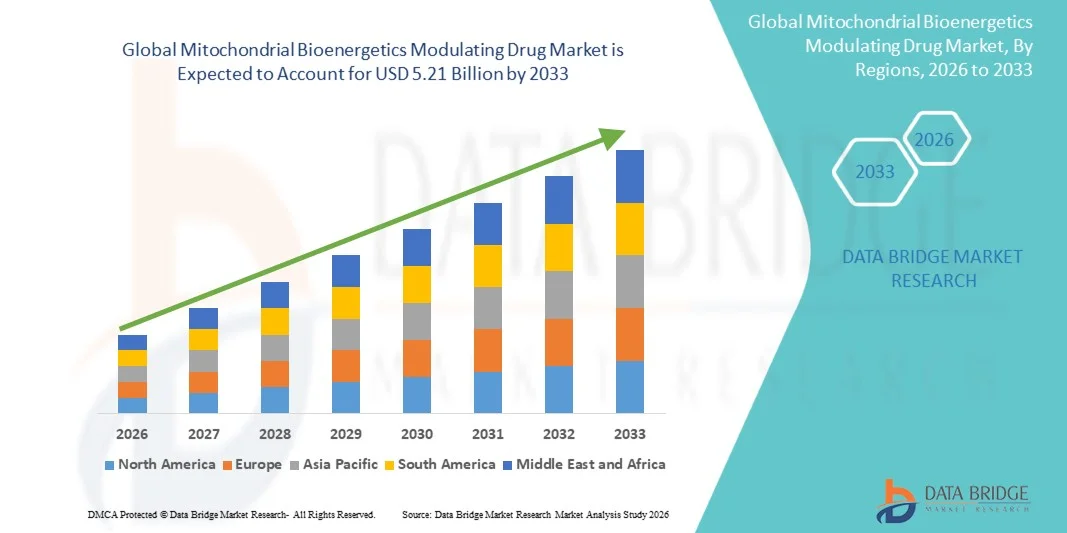
- 세계 mitochondrial bioenergetics modulating 약 시장 크기는 값이2025년 USD 1.28억견적 요청2033년 USD 5.21억, 에 a19.20%의 CAGR예측 기간
- 시장 성장은 세포 에너지 물질 대사의 이해를 증가하고, 만성 및 퇴행성 질병을 위한 표적 치료 접근의 가속한 발달을 위한 표적 치료 접근의 상승 채택, 세포질 에너지 물질 대사의 증가에 의해 크게 연료를 공급하고, 약제 분야에 있는 혁신적인 생물 에너지 약 후보자의 발전을 가속하기 위하여 지도하는
- 또한, neurodegenerative 질환, 대사 질환 및 심혈관 질환에 대한 효과적인 치료 옵션에 대한 상승 수요는 다음 세대 치료 접근으로 mitochondrial bioenergetics 개조 약물을 수립하고 있습니다. 이러한 융합 요인은 Mitochondrial Bioenergetics 변조 약물 솔루션의 섭취를 가속화하고 업계의 성장을 크게 향상
Mitochondrial Bioenergetics 변조 약시장 분석
- Mitochondrial bioenergetics modulating 약, mitochondria 내에서 세포 에너지 생산 통로를 타겟팅, 현대 정밀 의학의 중요한 치료 접근으로 신흥 신경 퇴행성 질환, 대사 질병 및 심장 혈관 조건을 치료하는 잠재력 때문에 현대 정밀 의학의 중요한 치료 접근으로, 개선된 질병 퇴화 효과 및 향상된 세포 기능 제공
- 미토콘드리아 바이오세라믹을 위한 escalating 수요는 주로 미토콘드리아 바이오세라믹 연구에 있는 발전을 성장하고 있는 만성 및 연령 관련 질병의 상승에 의해 연료를 공급하고, 표적과 개인화한 처리 전략에 집중하고 세포 에너지 균형을 회복하고 환자 결과를 개량하는 것을 목적으로 합니다.
- 북아메리카는 2025년에 41.6%의 가장 큰 수입 점유율을 가진 mitochondrial bioenergetics modulating 약 시장을 지배했습니다, 강한 연구 및 개발 투자에 의해 특색지어진, 진보된 치료 혁신의 초기 채택 및 미국과 더불어 중요한 biopharmaceutical 기업의 강력한 존재, mitochondrial-targeted 치료의 임상 발달 그리고 상용화에 있는 실질적인 성장을 경험하는 미국과 더불어, 약 발견과 정밀도 약에 있는 진행에 의해 모인 치료
- Asia-Pacific은 미토콘드리아 바이오에너지의 가장 빠르게 성장하는 지역이 될 것으로 예상되며, 의료 지출으로 인한 예측 기간 동안 약물 시장의 변조, 확장바이오 제약연구 활동, 만성 질환의 조기 증가, 신흥 경제학의 고급 치료 혁신의 채택
- 작은 분자 약 세그먼트는 2025 년 39.8%의 가장 큰 시장 수익 공유를 지배하고, 그들의 강한 생체 이용성, 구두 행정의 용이성, 그리고 세포 에너지 규정에 관련된 표적 mitochondrial 통로를 능률화하는 능력에 의해 몰아,
보고서 범위 및Mitochondrial Bioenergetics 변조 약 시장 세그먼트
|
관련 기사 |
Mitochondrial Bioenergetics 변조 약 열쇠시장 통찰력 |
|
Segments 적용 |
|
|
국가 덮음 |
북아메리카 · 미국 · 캐나다 · 멕시코 · · 독일 · 프랑스 · 미국 · 네덜란드 · 스위스 · 벨기에 · 러시아 · 이탈리아 · 스페인 · 터키 · 유럽의 나머지 아시아 태평양 · 중국 · 일본 · 인도 · 대한민국 · 싱가포르 · 말레이시아 · 호주 · 태국 · 인도네시아 · 필리핀 · 아시아 태평양의 휴식 중동 및 아프리카 · 사우디 아라비아 · 미국 · 남아프리카 공화국 · 이집트 · 이스라엘 · 중동 및 아프리카의 나머지 대한민국 · 브라질 · 아르헨티나 · 남미의 휴식 |
|
핵심 시장 선수 |
·스텔스 BioTherapeutics(미국) ·Reneo 제약(미국) ·미토브리지(미국) ·NeuroVive 약제(스웨덴) ·다운로드(네덜란드) · CohBar (미국) · 에디슨 제약 (미국) · Mitochon 약제 (미국) · Pfizer Inc. (미국) · Novartis AG (스위스) · F. Hoffmann-La Roche Ltd (스위스) · Sanofi S.A. (프랑스) · AstraZeneca plc (미국) · GlaxoSmithKline plc (미국) · Takeda Pharmaceutical Company Limited (일본) · 바이어 AG (독일) · Biogen Inc. (미국) · Johnson & Johnson (미국) · (주)성진제약 · Teva 제약 산업 (Israel) |
|
시장 기회 |
· 정밀 의약품 및 mitochondrial-targeted 치료에 중점을 둡니다. · Emerging Markets의 수요 상승 |
|
Value 추가 데이터 Infosets |
시장 가치, 성장률, 세그먼트, 지리적 범위 및 주요 플레이어와 같은 시장 시나리오에 대한 통찰력 외에도 데이터 브리지 시장 연구에 의해 큐레이터 시장 보고서는 심층적 인 전문가 분석, 환자 분석, 파이프라인 분석, 가격 분석 및 규제 프레임 워크를 포함합니다. |
Mitochondrial Bioenergetics 변조 약 시장 동향
"대상 Mitochondrial Therapies 및 Precision Medicine Approaches의 발전·
- 세계 미토콘드리아 바이오 에너지원 변조약 시장의 중요한 추세는 세포 에너지 물질 대사를 개선하고 복잡한 만성 질환을 치료하는 데 초점을 맞추고 있습니다.
- 예를 들어, 제약 및 생명 공학 회사는 점점 엽서 약물 후보를 개발하여 mitochondrial 기능을 강화하고 산화 스트레스를 조절하고 신경 퇴행 장애, 대사 질환, 심혈관 질환 및 희귀 한 mitochondrial 장애로 고통받는 환자의 세포 생물학적 균형을 복원합니다.
- genomics, genomics 및 biomarker ID의 전진은 연구원이 mitochondrial dysfunction 메커니즘을 잘 이해하고 고도로 표적 치료 개입을 개발할 수 있습니다. 이 혁신은 특정 환자 인구와 질병 경로에 맞게 맞춤 치료 전략의 출현을 지원합니다.
- 또한, Parkinson의 질병, Alzheimer의 질병과 같은 질병을 위한 mitochondrial 변조 치료에 대한 연구를 증가시키고, mitochondrial 무질서를 상속하고, 만성 피로 관련 조건은 다수 임상 신청의 치료 잠재력을 확장하고 있습니다
- 진보된 약 납품 기술 및 개량한 검열 플랫폼의 통합은 또한 더 효과적인 mitochondrial bioenergetics에 의하여 강화된 효험 및 감소된 부작용을 가진 치료 조절하는 더 안전한의 발달을 가속하고 있습니다
- 이 추세는 정밀 태아 mitochondrial 치료는 만성 및 드문 질병에 대한 치료 풍경을 변환하고 Mitochondrial Bioenergetics 변조 약물 시장에서 중요한 혁신과 장기 성장을 주도 할 것으로 예상된다
Mitochondrial Bioenergetics 변조 약 시장 역학
관련 기사
"Chronic Diseases의 상승과 Cellular Energy Disorders의 증가 초점"
- 세포 에너지 물질 대사 장애에 대한 인식 증가와 결합 된 mitochondrial 기능 장애와 관련된 만성 질환의 성장률은 Mitochondrial Bioenergetics 변조 약물 시장의 성장을 주도하는 주요 요인입니다
- 예를 들어, neurodegenerative 질병, 심장 혈관 질환, 당뇨병, 비만 및 희귀 한 상속 된 mitochondrial 질병의 발생은 mitochondrial 성능 및 세포 에너지 생산을 개선하는 치료에 대한 수요가 크게 증가합니다.
- 의료 제공자와 연구원들은 점점 질병 진행에 있는 mitochondrial dysfunction의 중요한 역할을 인식하고, mitochondrial pathways 및 oxidative stress mechanisms를 표적하는 치료의 발달에 있는 중대한 투자에 지도하
- 또한, 생명 공학 연구, 임상 시험 및 정밀 의학 이니셔티브의 성장 투자는 혁신적인 mitochondrial-targeted 약의 발견과 상용화 가속화됩니다
- 전 세계적으로 증가하는 노후화 인구가 증가하고 있으며, 미토콘드리아 제도에 연계된 대사 및 퇴행성 질환에 더 많이 감염되어 시장 수요가 늘어나고 있습니다.
- 또한, 드문 질병 연구에 대한 지원 정부 기금, 진단 기술의 발전, 제약 협력을 확장하는 것은 전 세계적으로 시장 성장 기회를 강화하는 것입니다
스트레인트/Challenge
"복합 의약품 개발 과정 및 높은 치료 비용·
- mitochondrial biology의 복합 자연과 효과적인 mitochondrial-targeted therapies 개발과 관련된 도전은 시장 성장에 중요한 장벽을 남아있다.
- 예를 들어, mitochondrial 질병은 종종 연구원과 제약 회사에 특히 어려운 약물 발달 및 환자 응답 예측을 만들기, 다양한 유전적 mutations 및 높은 가변 임상 증상을 포함
- 또한, 긴 임상 시험 시간, 엄격한 규제 요구 사항 및 소설 mitochondrial 치료와 관련된 높은 연구 및 개발 비용은 제조업체에 대한 제품 상용화 및 금융 위험을 지연시킬 수 있습니다.
- 특정 드문 편향성 질환에 대한 상대적으로 제한적 인 환자 인구는 또한 약물 개발자를위한 상업적 인 인 인센티브를 감소시킬 수 있습니다. 잠재적으로 niche 치료 영역의 투자 수준에 영향을 미치는
- 또한, 고급 mitochondrial 치료 및 정밀 의학 치료의 높은 비용은 낮은- 및 중간-income 지역의 환자에 대한 접근성을 제한 할 수 있습니다, 특히 퇴적 지원이 inadequate 남아있는 곳
- 지속적인 과학 연구, 개선된 진단 기능, 확장된 임상 협력, 규제 지원 및 비용 효과적인 치료 개발 전략을 통해 이러한 과제를 해결하는 데 필수적이 될 것입니다 글로벌 Mitochondrial Bioenergetics 변조 약물 시장
Mitochondrial Bioenergetics 변조 약 시장 범위
시장은 약 유형과 신청의 기초에 구분됩니다.
약 유형
약 유형의 기초에, Mitochondrial Bioenergetics 변조 약 시장은 작은 분자 약, 펩티드 근거한 약, 산화 방지제, coenzyme 근거한 치료 및 다른 사람으로 구분됩니다. 작은 분자 약물 세그먼트는 2025 년 39.8%의 가장 큰 시장 수익 공유를 지배하고, 그들의 강한 생체 이용성, 구두 관리의 용이성, 및 세포 에너지 규정에 관련 된 기생충 통로를 효율적으로 대상으로하는 능력. 이 약은 그들의 비용 효과 때문에 임상 조정에서 넓게 선호되고, 잘 설치된 pharmacokinetic 단면도 및 확장 가능한 제조 과정. mitochondrial dysfunction-related 질병에 집중된 연구와 개발 활동 증가는 세그먼트 성장을 더 강화했습니다. 또한, 제약 회사는 산화 스트레스와 에너지 물질 대사 통로를 대상으로하는 새로운 작은 분자 후보에 적극적으로 투자하고 있습니다. neurodegenerative 및 대사 장애와 같은 만성 질환의 상승 전도는 크게 더 높은 채택에 기여했습니다. 또한, 차세대 mitochondrial 치료제에 대한 지속적인 임상 시험 및 규제 승인은 강한 수요를 유지할 것으로 예상됩니다. 질병 진도에 대한 mitochondrial 건강에 대한 인식도 시장 확장을 지원하고있다. 대상 약물 전달 시스템의 지속적인 혁신은 예측 기간 동안 치료 효능을 강화하고 세그먼트 지배력을 강화하는 것입니다.
coenzyme 기반 치료 세그먼트는 2026에서 2033까지 22.4%의 가장 빠른 CAGR을 목격하는 것으로 예상되며, 코코노이드와 같은 코코노이드의 역할을 지원하는 임상 증거를 증가시켜 미토콘드리아 에너지 생산을 향상시킵니다. 이 치료는 ATP 종합을 강화하고 세포 시스템에 산화 스트레스를 줄일 수있는 능력 때문에 견인력을 얻고 있습니다. 만성 질환 관리의 중독 치료에 대한 수요가 크게 세그먼트 성장을 지원하고있다. 또한, neurodegenerative와 심장 혈관 조건에서 coenzyme 보충의 증가 사용은 채택을 가속화합니다. bioavailable 정립에 있는 약제 전진 및 조합 치료는 더 개량 효과입니다. 안전하고, 자연적으로 파생된 치료 옵션에 대한 환자 선호도는 세그먼트 확장에 기여하고 있습니다. nutraceutical 기반 약물 개발 및 mitochondrial 연구에 대한 투자 증가는 더 강력한 미래 성장을 구동 할 것으로 예상됩니다.
회사연혁
응용 프로그램의 기초에, Mitochondrial Bioenergetics 변조 약물 시장은 neurodegenerative 질병, 심장 혈관 질환, 대사 장애, 희귀 유전 질환 및 다른 사람으로 구분됩니다. neurodegenerative 질병 세그먼트는 Alzheimer의 질병, Parkinson의 질병 및 헌팅턴병과 같은 조건의 증가에 의해 구동 2025에서 34.6%의 가장 큰 시장 수익 점유율을 열었습니다. Mitochondrial 기능 장애는 신경 재생에 중요한 기여자, bioenergetics-modulating 약에게 중요한 치료 접근을 만들기. 전 세계적으로 일어나는 노후화 인구는 크게 neurodegenerative 장애의 부담을 증가했다. 또한 신경 과학 연구 및 약물 개발의 성장 투자는 치료 전진을 가속화하고 있습니다. 제약 회사는 mitochondrial-targeted therapies에 초점을 맞추고 질병 진행을 늦추고 환자의 삶의 질을 개선합니다. neuroprotection를 위한 mitochondrial modulators를 평가하는 임상 시험은 세그먼트 성장을 더 지원합니다. 전문 신경 치료 센터의 확장 및 초기 진단에 대한 인식은 시장 수요에 기여하고 있습니다. 또한, Orphan 및 neurodegenerative 질병 약에 대한 지원 규제 프레임 워크는 예측 기간 동안 강력한 세그먼트 지배력을 유지할 것으로 예상됩니다.
대사 장애 세그먼트는 2026에서 2033에 23.1%의 가장 빠른 CAGR를 목격할 것으로 예상되며, 비만, 당뇨병 및 미토콘드리아 대사 증후군의 상승 글로벌 임신에 의해 구동됩니다. Mitochondrial bioenergetics는 대사 질병 관리를 위해 높게 관련된 이 약을 만들기 위하여 포도당 물질 대사, 지질 산화 및 에너지 균형에 있는 중요한 역할을 합니다. 인슐린 저항과 대사 역기능을 위한 표적 치료의 증가 채택은 상당히 세그먼트 성장을 밀어줍니다. 또한, 라이프 스타일 관련 질병에 대한 인식을 증가시키고 예방 의료는 조기 개입 전략을 지원합니다. 제약 회사는 mitochondrial 증강 인자를 개발하여 대사 효율을 향상시키고 질병 합병증을 감소시킵니다. 비만 관련 장애의 상승 부담과 당뇨병 관리 환자 풀 확장은 더 많은 수요를 가속. 정밀 의학 및 바이오 마커 기반 치료 접근법의 발전도 치료 결과를 강화하고 있습니다. 연속 R & D 투자 및 골반 질병 치료에 대한 파이프라인 확장은 예측 기간 동안 강력한 성장을 구동 할 것으로 예상됩니다.
Mitochondrial Bioenergetics Modulating 약 시장 지역 분석
- 북미는 2025 년에 41.6%의 가장 큰 수입 점유율을 가진 mitochondrial bioenergetics modulating 약 시장을 지배했습니다, 강한 연구 및 개발 투자에 의해 특징, 진보된 치료 혁신의 초기 채택, 그리고 중요한 biopharmaceutical 기업의 강력한 존재
- 고도로 개발 된 생명 과학 생태계의 지역 혜택, 정밀 의학에 초점을 증가, 그리고 mitochondrial-targeted 약 발견에 급속 한 발전
- 또한, 임상 시험 활동, 지원 규제 프레임 워크 성장, 제약 회사 및 연구 기관 간의 성장 협력은 북미 전역의 시장 확장 가속화
미국 Mitochondrial Bioenergetics 변조 약 시장 통찰력
미국 mitochondrial bioenergetics modulating 약 시장은 2025 년 북미 내에서 가장 큰 수익을 기록, 임상 개발 프로그램 및 혁신적인 mitochondrial-targeted 치료의 상용화에 중요한 성장에 의해 구동. 강력한 Biopharmaceutical 인프라, 높은 의료 지출 및 정밀 의학 연구의 선도적 인 위치에서 국가의 이점. 또한, 약물 발견 기술에 대한 지속적인 발전, 만성 및 대사 질병의 전세 증가, 공공 및 민간 부문의 강력한 투자는 미국에서 시장의 급속한 확장을 지원하고있다.
유럽 Mitochondrial Bioenergetics 변조 약 시장 통찰력
유럽 mitochondrial bioenergetics modulating 약 시장은 예측 기간 동안 실질적으로 CAGR에 확장하기 위해 계획, 주로 만성 질환의 상승, 그리고 혁신적인 치료를위한 강력한 규제 지원에 대한 mitochondrial biology의 연구 증가에 의해 구동. 이 지역의 잘 설립 된 제약 산업은 생물 공학 및 번역 의학의 성장 투자와 결합되어 고급 mitochondrial-targeted 치료의 개발을 촉진하고 있습니다. 또한, 학술 기관과 제약 회사의 협력 연구 이니셔티브는 유럽에서 시장 성장을 가속화하고 있습니다.
U.K. Mitochondrial Bioenergetics 변조 약 시장 통찰력
미국 mitochondrial bioenergetics modulating 약 시장은 예측 기간 동안 주목할만한 CAGR에서 성장할 것으로 예상되며, 바이오 의학 연구에 중점을두고 고급 치료법의 채택을 가속화합니다. 이 나라의 강력한 학술 연구 기지는 생명 과학 혁신에 대한 지원 정부 기금과 결합되어 소설 mitochondrial-targeted 치료의 개발에 기여하고 있습니다. 또한, 임상 시험에 참여하고 연구 기관과 제약 회사 간의 협력을 증가시키고 시장 성장을 강화하고 있습니다.
독일 Mitochondrial Bioenergetics Modulating 약 시장 통찰력
독일 mitochondrial bioenergetics modulating 약 시장은 예측 기간 동안 상당한 CAGR에서 확장 할 것으로 예상되며 강력한 제약 R & D 기능, 고급 의료 인프라로 연료를 공급하며 혁신적인 약물 개발에 중점을 둡니다. 독일의 생명 공학 혁신과 정밀 의학에 중점을두고 연구는 mitochondrial 기능 장애 관련 질병으로 연구합니다. 또한, 생명 과학에 대한 투자와 임상 연구 활동 성장은 mitochondrial-targeted therapeutic 솔루션의 채택을 지원하는 것입니다.
Asia-Pacific Mitochondrial Bioenergetics 변조 약 시장 통찰력
아시아 태평양 mitochondrial bioenergetics modulating 약 시장은 Mitochondrial Bioenergetics Modulating 약 시장의 가장 빠른 성장 지역이 될 것으로 예상됩니다 의료 지출, 확장 바이오 제약 연구 활동, 만성 질환의 전임 증가, 신흥 경제학에 걸쳐 고급 치료 혁신의 성장 채택. 이 지역은 임상 연구 인프라에서 급속한 확장을 목격하고, 생물 공학 발전을 위한 정부 지원을 증가시키고, 글로벌 약 발견 프로그램에 참여합니다. 또한, 고급 의료 및 정밀 의학의 인식에 대한 액세스 향상은 아시아 태평양 전역의 시장 성장을 가속화하고있다.
일본 Mitochondrial Bioenergetics Modulating 약 시장 통찰력
일본 mitochondrial bioenergetics modulating 약 시장은 국가의 강력한 생명 공학 생태계, 노후화 인구, 혁신적인 치료 솔루션에 초점을 맞추고있는 순간을 얻고 있습니다. 연령 관련 및 대사 장애의 상승 전도는 진보된 mitochondrial-targeted 처리를 위한 주행 수요입니다. 또한, 일본의 강력한 임상 연구 환경, 제약 혁신을 위한 정밀 의학 및 정부 지원의 증가 채택과 결합 된, 시장 확장에 기여하고 있습니다.
중국 Mitochondrial Bioenergetics 변조 약물 시장 통찰력
중국 mitochondrial bioenergetics modulating 약 시장은 2025 년 아시아 태평양에서 가장 큰 시장 수익 점유율을 차지했으며, Biopharmaceutical 연구의 급속한 확장에 따르면, 의료 지출 증가, 만성 질환의 성장률. 국가는 국내 약 발견 능력에 강한 성장을 목격하고 생명 공학 혁신에 대한 투자 상승. 또한, 정부는 제약 현대화, 임상 시험 활동을 확장하고, 글로벌 제약 회사와 협력을 증가시키는 것은 중국의 주요 요인 추진 시장 성장입니다.
Mitochondrial Bioenergetics 변조 약 시장 공유
Mitochondrial Bioenergetics Modulating 약 산업은 주로 잘 설립 된 회사에 의해 주도됩니다.
- Stealth BioTherapeutics (미국)
- Reneo 제약 (미국)
- Mitobridge (미국)
- NeuroVive 약제 (스웨덴)
- Khondrion B.V. (네덜란드)
- CohBar (미국)
- 에디슨 제약 (미국)
- Mitochon 제약 (미국)
- Pfizer Inc. (미국)
- Novartis AG (스위스)
- Hoffmann-La Roche Ltd (스위스)
- Sanofi S.A. (프랑스)
- AstraZeneca plc (미국)
- GlaxoSmithKline plc (미국)
- Takeda Pharmaceutical Company Limited (일본)
- Bayer AG (독일)
- Biogen Inc. (미국)
- Johnson & Johnson (미국)
- (주)성진제약
- Teva 제약 산업 (Israel)
Global Mitochondrial Bioenergetics Modulating Drug Market의 최신 개발
- 2021 년 3 월, Alzheimer의 협회 및 빌 게이트 - 백업 부분 클라우드 이니셔티브는 신경 퇴행성 질환의 mitochondrial dysfunction 및 bioenergetics 통로를 대상으로하는 초기 단계 인간 임상 시험에 대한 기금을 확장, 실험적 및 재구성 된 약물의 개발을 지원 및 염증 중심 신경 손상을 감소
- 1 월 2022에서 ASP0367 (bocidelpar)와 같은 mitochondrial-targeting 약물 후보의 임상 연구가 발표되었으며, 안전, 약리학 및 peroxisome proliferator-activated receptor delta (PPARδ) modulators의 pharmacodynamics를 개선하기 위해 설계된 pharmacodynamics의 pharmacodynamics
- 9월 2023일, 과학 문학은 미토콘드리아 바이오 에너지원 변조에 대한 치료의 관심을 증가, 편집 보고서와 함께 미토콘드리아-타르커드 치료를 분자의 의료에서 "다음의 붕괴"로 자극, neurodegeneration, 대사 장애 및 염증 질병의 역할의 증거 증가에 의해 구동
- 4월 2024일, 미토촌의 임상 연구 전진은 연구 조사를 통해 확대되고, 산화 phosphorylation 통로의 mitochondrial 이식 및 선택적인 변조, 에너지 deficit 조건 대우를 위한 이른 번역 잠재력을 보여주기 위하여 기인한 phosphorylation 경로의 선택적인 변조를 조사합니다
- 2025 년 5 월, Pharmacology의 Frontiers에 대한 동료 검토는 mitochondrial bioenergetics를 modulate 자연 및 합성 화합물의 상당한 진전을보고 COPD와 같은 호흡 및 대사 질병에 대한 mitochondrial-targeted 치료에 대한 preclinical-to-clinical 전환 노력 강조
- 9월 2025일, 미국 FDA는 태아 프레데이드 (SS-31, Forzinity로 시장에 내놓은), 일류 mitochondrial cardiolipin-binding 치료에 대한 승인을 수여하고 기생충 구조 복원을 위해 설계된 최초의 상류 mitochondrial cardiolipin-binding 치료에 대한 주요 이정표를 표시하고 배스 증후군의 생물 에너지가 향상되었습니다.
SKU-
세계 최초의 시장 정보 클라우드 보고서에 온라인으로 접속하세요
- 대화형 데이터 분석 대시보드
- 높은 성장 잠재력 기회를 위한 회사 분석 대시보드
- 사용자 정의 및 질의를 위한 리서치 분석가 액세스
- 대화형 대시보드를 통한 경쟁자 분석
- 최신 뉴스, 업데이트 및 추세 분석
- 포괄적인 경쟁자 추적을 위한 벤치마크 분석의 힘 활용
연구 방법론
데이터 수집 및 기준 연도 분석은 대규모 샘플 크기의 데이터 수집 모듈을 사용하여 수행됩니다. 이 단계에는 다양한 소스와 전략을 통해 시장 정보 또는 관련 데이터를 얻는 것이 포함됩니다. 여기에는 과거에 수집한 모든 데이터를 미리 검토하고 계획하는 것이 포함됩니다. 또한 다양한 정보 소스에서 발견되는 정보 불일치를 검토하는 것도 포함됩니다. 시장 데이터는 시장 통계 및 일관된 모델을 사용하여 분석하고 추정합니다. 또한 시장 점유율 분석 및 주요 추세 분석은 시장 보고서의 주요 성공 요인입니다. 자세한 내용은 분석가에게 전화를 요청하거나 문의 사항을 드롭하세요.
DBMR 연구팀에서 사용하는 주요 연구 방법론은 데이터 마이닝, 시장에 대한 데이터 변수의 영향 분석 및 주요(산업 전문가) 검증을 포함하는 데이터 삼각 측량입니다. 데이터 모델에는 공급업체 포지셔닝 그리드, 시장 타임라인 분석, 시장 개요 및 가이드, 회사 포지셔닝 그리드, 특허 분석, 가격 분석, 회사 시장 점유율 분석, 측정 기준, 글로벌 대 지역 및 공급업체 점유율 분석이 포함됩니다. 연구 방법론에 대해 자세히 알아보려면 문의를 통해 업계 전문가에게 문의하세요.
사용자 정의 가능
Data Bridge Market Research는 고급 형성 연구 분야의 선두 주자입니다. 저희는 기존 및 신규 고객에게 목표에 맞는 데이터와 분석을 제공하는 데 자부심을 느낍니다. 보고서는 추가 국가에 대한 시장 이해(국가 목록 요청), 임상 시험 결과 데이터, 문헌 검토, 재생 시장 및 제품 기반 분석을 포함하도록 사용자 정의할 수 있습니다. 기술 기반 분석에서 시장 포트폴리오 전략에 이르기까지 타겟 경쟁업체의 시장 분석을 분석할 수 있습니다. 귀하가 원하는 형식과 데이터 스타일로 필요한 만큼 많은 경쟁자를 추가할 수 있습니다. 저희 분석가 팀은 또한 원시 엑셀 파일 피벗 테이블(팩트북)로 데이터를 제공하거나 보고서에서 사용 가능한 데이터 세트에서 프레젠테이션을 만드는 데 도움을 줄 수 있습니다.