



Global Restriction Endonucleases Products Market, Source (Bacteria, Archaea), Cleavage Position (Isoschizomers, Neoschizomers), Application (Polymerase Chain Reaction, Epigenetics, Restriction Fragment Length Polymorphism (RFLP), Restriction Digestion, Cloning, Sequencing), End User (Hospitals, Academic Research Institutes, Pharmaceutical, Diagnostic Centers, Biotechnology Companies, Clinics, Other) – Industry Trends and Forecast to 2030.
Endonucleases 제품 시장 분석 및 크기 제한
Restriction Endonuclease 제품 시장은 생명 과학과 genomics에 있는 연구 학문을, 뿐 아니라 만성 질병, 심장 혈관 질병, 암 및 당뇨병의 높은 prevalence를 가진 성장한 geriatric 인구에 의해 1 차적으로 몰고 있습니다. 또한 DNA sequencing 및 nucleotides 추출에 사용 된 유전자 표현과 같은 생명 공학은 시장 성장을 구동 할 것으로 예상됩니다. 또한, 이 과정은 시장 수요를 늘릴 가능성이 있습니다. 의료 산업은 급속하게 확장되고, 분자 생물학 효소, 장비 및 시약을 위한 수요는 증가할 것으로 예상됩니다.
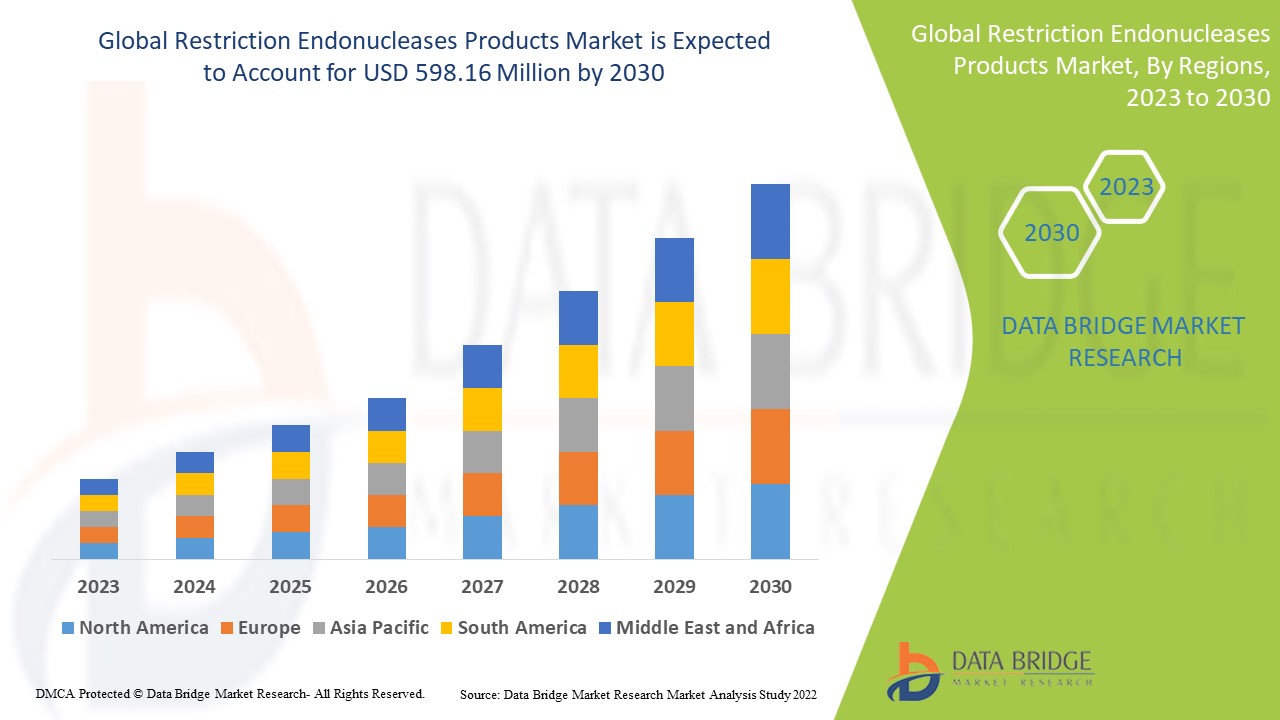
데이터 브리지 시장 연구 분석은 2022 년에 USD 375.29 백만 달러가 375.29 백만 달러 598.16 백만 달러에 도달 할 것으로 예상됩니다 2030, 예측 기간 동안 6.00%의 CAGR에서 2030. 시장 가치, 성장률, 세그먼트, 지리적 범위 및 주요 플레이어와 같은 시장 시나리오에 대한 통찰력 외에도 데이터 브리지 시장 연구에 의해 큐레이터는 깊이 전문가 분석, 환자 분석, 파이프라인 분석, 가격 분석 및 규제 프레임 워크를 포함합니다.
제한 Endonucleases 제품 시장 범위 및 세그먼트
|
미터 표시 |
제품 정보 |
|
예측 기간 |
2023에서 2030 |
|
기본 년 |
2022 |
|
역사 년 |
2021 (2015년~2020년) |
|
양적 단위 |
USD 백만, 단위의 볼륨, USD의 가격 |
|
Segments 적용 |
Source (Bacteria, Archaea), Cleavage Position (Isoschizomers, Neoschizomers), 응용 프로그램 (Polymerase 사슬 반응, Epigenetics의 장점, 제한 파편 길이 다형성 (RFLP), 제한 소화, Cloning, Sequencing), 최종 사용자 (병원, 학술 연구소,제약 산업, 진단 센터, 생명 공학 회사, 클리닉, 기타) |
|
국가 덮음 |
미국, 캐나다 및 멕시코 북미, 독일, 프랑스, 미국, 네덜란드, 스위스, 벨기에, 러시아, 이탈리아, 스페인, 터키, 유럽, 중국, 일본, 인도, 대한민국, 싱가포르, 말레이시아, 호주, 태국, 인도네시아, 필리핀, 아시아 태평양 (APAC), 사우디 아라비아, 미국, 남아프리카, 이집트, 이스라엘, 중동 및 아프리카의 나머지 (아메리카, 브라질, 남아프리카, 브라질, 중동 및 아프리카의 나머지 (아메리카, 브라질, 남아프리카 공화국, 브라질, 브라질, 남아프리카 공화국, 브라질, 미국, 브라질, 브라질, 남아프리카 공화국, 브라질, 미국, 브라질, 브라질, 브라질, 미국, 브라질, 브라질, 미국, 브라질, 브라질, 미국, 브라질, 미국, 브라질, 브라질, 브라질, 미국, 미국, 브라질, 미국, 미국, 미국, 미국, 미국, 미국, 미국, 미국, 미국, 미국, 미국, 미국, 미국, 미국, 미국, 미국, 미국, 미국, 미국, 미국, 미국, 미국, 미국, 미국, 미국, 미국, 미국, 미국, 미국, 미국, 미국, 미국, 미국, 미국, 미국, 미국, 미국, 미국, 미국, 미국, 미국, 미국, 미국, 미국, 미국, 미국, 미국, 미국, 미국, |
|
시장 선수는 덮었습니다 |
(주)뉴 잉글랜드 바이오랩스 (U.K.), Vertex Pharmaceutical Incorporated (U.S.), Thermo Fisher Scientific Inc. (U.S.), Takara Bio Inc. (일본), Sigma-Aldrich (U.S.), Illumina Inc. (U.S.), Agilent Technologies Inc. (U.S.), Promega Corporation (U.S.), Jena Bioscience (U.S.), Inc. (U.S.) |
|
시장 기회 |
|
시장 정의
제한 endonucleases는 또한 "제한 효소"로 불립니다. Restriction endonucleases는 제한 위치로 알려진 특정 DNA 순서에 DNA를 cleave는 효소입니다. 각 제한 효소는 단일 또는 몇 가지 제한 사이트를 인식하거나 식별 할 수 있습니다. 이 효소가 식별하고 제한 사이트에 바인딩되면, 그들은이 사이트에서 DNA를 잘라.
Global Restriction Endonucleases 제품 시장 역학
드라이버
- 자금 및 투자의 양 증가
다양한 생명공학 및 제약업체의 펀딩 및 투자의 증가 금액은 크게 글로벌 제약 Endonucleases 제품 시장의 개발에 영향을 미칩니다. 또한, 제한 소화, 복제 및 sequencing과 같은 다양한 응용 분야에 대한 제한 endonuclease 효소의 성장 사용은 글로벌 제한 endonuclease 제품 시장에 긍정적으로 영향을 미칩니다.
- Rising 정부 이니셔티브
연구 활동을 개선하기 위해 정부 이니셔티브는 시장 성장을 주도 할 것으로 예상됩니다. 예를 들어, Genomics Medicine Ireland (GMI)는 북서부 유럽의 시장 플레이어 인 Genomics Medicine Ireland (GMI)는 2018에서 정부 기금으로 413.91 백만 달러를 받았습니다.
또한 새로운 기술을 도입하면 제품 포트폴리오를 강화하고 경쟁력을 유지합니다. 예를 들어, Thermo Fisher Scientific, Inc.는 2019 년 세계 최초의 스마트 qPCR 장비를 출시했습니다. 계기의 기능은 얼굴 입증, 음성 명령, 고주파 식별 (RFID)-enabled 판 스캐닝, 단 하나 접촉과 서비스 및 지원에 빠른 접근을 포함합니다.
회사연혁
- Rising 혁신 기술
DNA sequencing 및 gene expression과 같은 새롭고 혁신적인 기술에 대한 선호도는 세계적인 제한 endonucleases 제품 시장에서 제조업체 및 플레이어를 수많은 매력적인 성장과 확장 기회를 제공합니다.
스트레인 / 캡enges
- 제한 endonucleases 생산의 높은 비용
제한 endonucleases 생산의 확장과 제한 효소 제품의 신뢰성과 관련된 높은 비용은 예측 기간 동안 제한 endonucleases 제품 시장의 성장에 중요한 제약이 될 것입니다.
이 제한 endonucleases 제품 시장 보고서는 새로운 최근의 개발, 무역 규정, 수입 수출 분석, 생산 분석, 가치 사슬 최적화, 시장 점유율, 국내 및 현지화 시장 선수의 영향, 신흥 수입 포켓 분석의 관점에서 기회, 시장 규제의 변화, 전략적 시장 성장 분석, 시장 크기, 카테고리 시장 성장, 응용 니치 및 지배, 제품 승인, 제품 출시, 지리적 확장, 시장에서 기술 혁신을 제공합니다. 제약 Endonucleases 제품 시장 연락처 데이터 브리핑 시장 조사에 대한 자세한 정보를 얻기 위해, 우리의 팀은 당신이 시장 성장을 달성하기 위해 알리는 시장 결정에 도움이 될 것입니다.
Global Restriction Endonucleases 제품 시장 범위
제한 endonucleases 제품 시장은 근원, 경적 위치, 최종 사용자 및 신청의 기초에 세그먼트됩니다. 이러한 세그먼트의 성장은 업계의 meagre 성장 세그먼트를 분석하고 핵심 시장 응용 프로그램을 식별하기위한 전략적 결정을 만드는 데 도움이되는 가치있는 시장 개요 및 시장 통찰력을 가진 사용자에게 제공합니다.
이름 *
- 기본 정보
- 카테고리
Cleavage 위치
- Isoschizomers의 장점
- Neoschizomers의 장점
제품 설명
- Polymerase 사슬 반응
- Epigenetics의 장점
- 제한 조각 길이 Polymorphism (RFLP)
- 제한 소화
- 구독하기
- 연락처
끝 사용자
- 병원소개
- 학술연구기관
- 제약 산업
- 진단 센터
- Biotechnology 기업
- 진료시간
- 이름 *
제한 Endonucleases 제품 시장 지역 분석/Insights
제한 endonucleases 제품 시장은 분석되고 시장 크기 통찰력 및 동향은 국가, 근원, cleavage 위치, 최종 사용자 및 신청에 의해 위에 참조되는 상태에서 제공됩니다.
아시아 태평양 (APAC), 사우디 아라비아, 미국, 인도, 한국, 싱가포르, 말레이시아, 호주, 태국, 인도네시아, 필리핀, 아시아 태평양 (APAC)에서 아시아 태평양 (APAC)의 나머지 아시아 태평양 (APAC)의 나머지 아시아 태평양 (APAC), 아시아 태평양 (APAC), 사우디 아라비아, 미국, 중동, 아프리카, 아프리카, 중동, 아프리카, 아프리카, 중동, 아프리카, 아프리카, 아프리카, 중동, 아프리카, 아프리카, 중동, 아프리카, 아프리카, 중동, 아프리카, 동남 아시아 태평양 (APAC)의 제한 endonucleases 제품 시장 보고서에 포함 된 국가.
북미는 강력한 연구, 생명 공학 성장, 계약 연구 아웃소싱의 출석으로 인해 제한 endonucleases 제품 시장 및 지역에있는 게놈 및 생명 과학을위한 자금 상승을 지배합니다.
Asia-Pacific은 2023년부터 2030년까지 가장 높은 성장률로 성장할 것으로 예상되며, 환자 인식 향상, 이 특정 지역에서 다양한 정부 이니셔티브 및 빠르게 성장하는 의료 인프라가 있습니다.
보고서의 국가 섹션은 또한 시장의 현재와 미래 추세에 영향을 미치는 시장의 규제에 개별 시장 영향을 미치는 요인과 변화를 제공합니다. 다운스트림 및 업스트림 값 체인 분석, 기술 동향 및 포터의 5 단계 분석과 같은 데이터 포인트는 개별 국가 시장 시나리오를 예측하는 데 사용되는 포인터의 일부입니다. 또한, 글로벌 브랜드의 존재 및 가용성 및 현지 및 국내 브랜드의 대형 또는 scarce 경쟁으로 인해 직면, 국내 관세 및 무역 경로의 영향은 국가 데이터의 예측 분석을 제공하면서 고려됩니다.
경쟁 조경 및 제한 Endonucleases 제품 시장 점유율 분석
restriction endonucleases 제품 시장 경쟁적인 조경은 경쟁자에 의해 세부사항을 제공합니다. 포함 된 세부 사항은 회사 개요, 회사 재무, 수익 생성, 시장 잠재력, 연구 및 개발 투자, 새로운 시장 이니셔티브, 글로벌 존재, 생산 사이트 및 시설, 생산 능력, 회사 강점 및 약점, 제품 출시, 제품 폭 및 폭, 응용 도민. 위의 데이터 포인트는 제한 endonucleases 제품 시장과 관련된 회사의 초점에만 해당됩니다.
제한 endonucleases 제품 시장에서 작동하는 주요 플레이어 중 일부는 다음과 같습니다.
- 뉴 잉글랜드 Biolabs (UK) Ltd. (미국)
- Vertex Pharmaceuticals Incorporated (미국)
- Thermo Fisher Scientific Inc. (미국)
- Takara Bio Inc. (일본)
- Sigma-Aldrich (미국)
- (주)일루미나
- Agilent Technologies Inc. (미국)
- Promega Corporation (미국)
- Jena Biosciences (독일)
- Genetix Biotech Asia Pvt. (인도)
- F. Hoffmann-La Roche Ltd (스위스)
- Merck & Co. Inc. (미국)
- Pfizer Inc. (미국)
- (주)암젠
- PerkinElmer Inc. (미국)
- Sisco 연구실 Pvt Ltd (인도)
- (주)닛폰젠
SKU-
세계 최초의 시장 정보 클라우드 보고서에 온라인으로 접속하세요

- 대화형 데이터 분석 대시보드
- 높은 성장 잠재력 기회를 위한 회사 분석 대시보드
- 사용자 정의 및 질의를 위한 리서치 분석가 액세스
- 대화형 대시보드를 통한 경쟁자 분석
- 최신 뉴스, 업데이트 및 추세 분석
- 포괄적인 경쟁자 추적을 위한 벤치마크 분석의 힘 활용
연구 방법론
데이터 수집 및 기준 연도 분석은 대규모 샘플 크기의 데이터 수집 모듈을 사용하여 수행됩니다. 이 단계에는 다양한 소스와 전략을 통해 시장 정보 또는 관련 데이터를 얻는 것이 포함됩니다. 여기에는 과거에 수집한 모든 데이터를 미리 검토하고 계획하는 것이 포함됩니다. 또한 다양한 정보 소스에서 발견되는 정보 불일치를 검토하는 것도 포함됩니다. 시장 데이터는 시장 통계 및 일관된 모델을 사용하여 분석하고 추정합니다. 또한 시장 점유율 분석 및 주요 추세 분석은 시장 보고서의 주요 성공 요인입니다. 자세한 내용은 분석가에게 전화를 요청하거나 문의 사항을 드롭하세요.
DBMR 연구팀에서 사용하는 주요 연구 방법론은 데이터 마이닝, 시장에 대한 데이터 변수의 영향 분석 및 주요(산업 전문가) 검증을 포함하는 데이터 삼각 측량입니다. 데이터 모델에는 공급업체 포지셔닝 그리드, 시장 타임라인 분석, 시장 개요 및 가이드, 회사 포지셔닝 그리드, 특허 분석, 가격 분석, 회사 시장 점유율 분석, 측정 기준, 글로벌 대 지역 및 공급업체 점유율 분석이 포함됩니다. 연구 방법론에 대해 자세히 알아보려면 문의를 통해 업계 전문가에게 문의하세요.
사용자 정의 가능
Data Bridge Market Research는 고급 형성 연구 분야의 선두 주자입니다. 저희는 기존 및 신규 고객에게 목표에 맞는 데이터와 분석을 제공하는 데 자부심을 느낍니다. 보고서는 추가 국가에 대한 시장 이해(국가 목록 요청), 임상 시험 결과 데이터, 문헌 검토, 재생 시장 및 제품 기반 분석을 포함하도록 사용자 정의할 수 있습니다. 기술 기반 분석에서 시장 포트폴리오 전략에 이르기까지 타겟 경쟁업체의 시장 분석을 분석할 수 있습니다. 귀하가 원하는 형식과 데이터 스타일로 필요한 만큼 많은 경쟁자를 추가할 수 있습니다. 저희 분석가 팀은 또한 원시 엑셀 파일 피벗 테이블(팩트북)로 데이터를 제공하거나 보고서에서 사용 가능한 데이터 세트에서 프레젠테이션을 만드는 데 도움을 줄 수 있습니다.











