Global Testicular Germ Cell Tumors Market Segmentation, By Type of Tumor (Seminoma, Non-Seminoma), Treatment Type (Surgery, Radiation Therapy, Chemotherapy, Stem Cell Therapy, Targeted Therapy), Stage of Cancer (Stage I (Localized), Stage II (Regional spread), Stage III (Metastatic)), Age Group (Pediatric, Adult, Geriatric), End User (Hospitals, Oncology Centers, Research Institutes, Clinics) – Industry Trends and Forecast to 2032
Global Testicular Germ Cell Tumors Market Analysis
The global testicular germ cell tumors market is influenced by the rising prevalence of testicular cancer, particularly among young adult males. TGCT accounts for approximately 95% of all testicular cancers, with an estimated 9,000 new cases diagnosed annually in the United States alone. The incidence of TGCT is most common in men aged 15 to 35, with rates being notably higher in Caucasian populations compared to other ethnic groups. The survival rate for TGCT has significantly improved over the past few decades, reaching over 95% in localized cases, owing to advancements in early detection and treatment options like chemotherapy, surgery, and radiation therapy. Despite the high survival rates, the market continues to grow due to the demand for more effective, personalized treatments, as well as a focus on improving long-term quality of life for survivors. Additionally, the increasing focus on precision medicine and immunotherapies in the oncology field is expected to contribute to the market's development.
Testicular Germ Cell Tumors Market Size
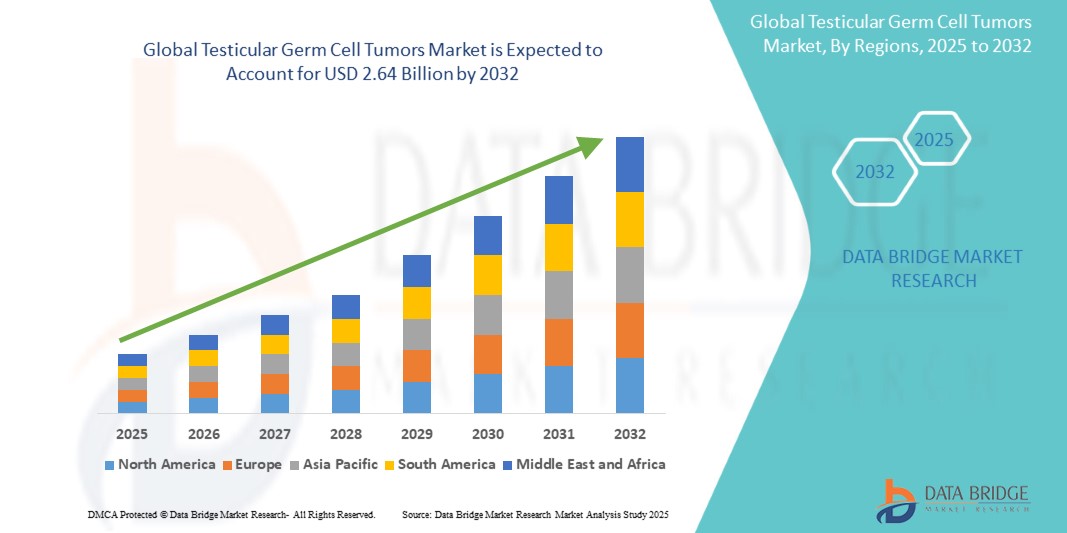
Global Testicular Germ Cell Tumors market size was valued at USD 1.14 billion in 2024 and is projected to reach USD 2.64 billion by 2032, with a CAGR of 11.10% during the forecast period of 2025 to 2032. In addition to the insights on market scenarios such as market value, growth rate, segmentation, geographical coverage, and major players, the market reports curated by the Data Bridge Market Research also include depth expert analysis, patient epidemiology, pipeline analysis, pricing analysis, and regulatory framework.
Testicular Germ Cell Tumors Market Trends
“Increasing Focus on Survivorship Care”
The increasing focus on survivorship care is becoming a significant trend in the global testicular germ cell tumors market. As survival rates for TGCT patients remain high, there is a growing recognition of the need for comprehensive care beyond initial treatment. This trend encompasses managing the long-term physical and psychological effects that patients may experience after surviving cancer, such as fertility issues, cardiovascular health, and mental health challenges. Consequently, there is a rising emphasis on rehabilitation therapies, counseling services, and lifestyle management programs to help survivors regain their quality of life. This shift toward holistic care reflects a broader understanding of the importance of post-treatment support for long-term health and well-being.
Report Scope and Global Testicular Germ Cell Tumors Market Segmentation
|
Attributes |
Global Testicular Germ Cell Tumors Key Market Insights |
|
Segments Covered |
|
|
Countries Covered |
U.S., Canada, Mexico, Germany, France, U.K., Netherlands, Switzerland, Belgium, Russia, Italy, Spain, Turkey, Rest of Europe, China, Japan, India, South Korea, Singapore, Malaysia, Australia, Thailand, Indonesia, Philippines, Rest of Asia-Pacific, Saudi Arabia, U.A.E., South Africa, Egypt, Israel, Rest of Middle East and Africa, Brazil, Argentina, Rest of South America |
|
Key Market Players |
Bristol-Myers Squibb Company (U.S.), Eli Lilly and Company (U.S.), F. Hoffmann-La Roche AG (Switzerland), Novartis AG (Switzerland), Pfizer Inc. (U.S.), Merck & Co., Inc. (U.S.), Bayer AG (Germany), Johnson & Johnson (U.S.), Amgen Inc. (U.S.), AstraZeneca PLC (UK), Boehringer Ingelheim International GmbH (Germany), Sanofi S.A. (France), Baxter International Inc. (U.S.), AbbVie Inc. (U.S.), Eisai Co., Ltd. (Japan), Teva Pharmaceutical Industries Ltd. (Israel), Viatris Inc. (U.S.), Gilead Sciences, Inc. (U.S.), among others. |
|
Market Opportunities |
|
|
Value Added Data Infosets |
In addition to the insights on market scenarios such as market value, growth rate, segmentation, geographical coverage, and major players, the market reports curated by the Data Bridge Market Research also include depth expert analysis, patient epidemiology, pipeline analysis, pricing analysis, and regulatory framework. |
Testicular Germ Cell Tumors Market Definition
Testicular Germ Cell Tumors (TGCT) are a type of cancer that originates in the germ cells of the testicles, which are responsible for producing sperm. These tumors are categorized into two main types: seminomas, which are slow-growing and typically occur in men aged 30 to 50, and non-seminomas, which include various subtypes like embryonal carcinoma, yolk sac tumors, choriocarcinoma, and teratomas. TGCT is the most common form of cancer found in young men, particularly those between the ages of 15 and 35. It is characterized by the abnormal growth of cells in the testes, leading to a mass or lump. While TGCT can be aggressive, it is highly treatable, especially when detected early.
Testicular Germ Cell Tumors Market Dynamics
Drivers
- Rising Incidence of Testicular Cancer
The rising incidence of Testicular Germ Cell Tumors (TGCT) is a significant driver in the market, especially in developed regions. Over the past few decades, there has been a noticeable increase in the number of TGCT cases, with the highest rates observed among young men aged 15-35. Several factors contribute to this trend, including environmental influences, lifestyle changes, and genetic predispositions. Environmental factors such as exposure to certain chemicals, endocrine disruptors, and changes in diet may play a role in the rising incidence. Additionally, lifestyle factors like delayed family planning and low physical activity can contribute to the increased risk. Genetic predispositions also make some individuals more susceptible to developing TGCT. This growing incidence of testicular cancer fuels the demand for medical treatments, diagnostic tools, and healthcare services, leading to the expansion of the TGCT market as healthcare providers work to address the rising number of affected patients.
- Advancements in Diagnostic Techniques
Advancements in diagnostic techniques have played a crucial role in improving the detection and management of Testicular Germ Cell Tumors (TGCT). The introduction of high-resolution ultrasound, CT scans, and blood tests for tumor markers like alpha-fetoprotein (AFP) and human chorionic gonadotropin (hCG) have significantly enhanced early diagnosis. These tools enable healthcare providers to detect TGCT at an early stage, even before physical symptoms appear, which leads to better treatment outcomes and higher survival rates. The ability to identify the tumor's presence and type more accurately allows for personalized treatment plans, such as targeted therapy and chemotherapy, which can be tailored based on the tumor's specific characteristics. Early detection also increases the likelihood of preserving fertility and minimizing long-term complications for patients. As a result, the improved accuracy and availability of diagnostic technologies contribute to a growing number of patients seeking treatment, fueling the expansion of the TGCT market.
Opportunities
- Growing Collaborations and Partnerships in Research
Collaborations and partnerships in research are creating significant opportunities in the Global Testicular Germ Cell Tumors (TGCT) market. Pharmaceutical companies, biotech firms, and academic institutions are working together to investigate the genetic and molecular foundations of TGCT, which could lead to groundbreaking innovations in diagnostics and treatments. These collaborative efforts enable a more comprehensive understanding of TGCT’s pathophysiology, helping to identify new biomarkers and therapeutic targets that can be leveraged to develop more precise and effective treatments. By pooling resources and expertise, these partnerships accelerate the discovery of next-generation therapies, such as targeted drugs or immunotherapies, which can offer better efficacy and fewer side effects compared to traditional treatments. Additionally, joint research initiatives can enhance the development of advanced diagnostic tools, enabling earlier and more accurate detection of TGCT. This collaborative approach holds the potential to revolutionize the management of TGCT and improve outcomes for patients globally.
- Expansion of Survivorship Care Programs
As the survival rate for Testicular Germ Cell Tumors (TGCT) patients continues to improve, there is a growing need for comprehensive post-treatment care that addresses the long-term physical and psychological effects of the disease. Survivorship care programs, which focus on managing these effects, are becoming increasingly important. These programs include services such as fertility preservation, as many TGCT patients are concerned about their reproductive health after treatment, as well as mental health counseling to address the psychological impact of cancer. Lifestyle management, including nutrition and exercise programs, is also crucial in helping patients regain overall well-being. The expansion of these survivorship care programs presents an opportunity for healthcare providers to offer specialized services tailored to the unique needs of TGCT survivors. As the focus shifts to improving the quality of life for survivors, this creates a new market segment, supporting the demand for ongoing care and interventions that help patients live healthier, fulfilling lives after treatment.
Restraints/Challenges
- High Treatment Costs
The high treatment costs associated with Testicular Germ Cell Tumors (TGCT) pose a significant restraint on the market. While TGCT has a high survival rate, the treatment regimen often includes surgery, chemotherapy, and sometimes radiation therapy, all of which can be costly. Additionally, patients may require long-term follow-up care, such as monitoring for recurrence and managing potential side effects from treatment. Fertility preservation is also a concern for many TGCT patients, adding further costs to their treatment plans. These expenses can be prohibitive, especially in lower-income regions or countries with underdeveloped healthcare systems, where access to advanced medical care is limited. The financial burden of treatment may delay diagnosis or prevent some patients from seeking proper care, potentially worsening outcomes. As a result, the high treatment costs can limit the accessibility of care, affecting patient outcomes and restricting market growth in certain regions.
- Heterogeneity in Tumor Behavior
A significant challenge in managing Testicular Germ Cell Tumors (TGCT) is the heterogeneity in tumor behavior, which means that TGCTs can vary greatly in terms of aggressiveness, response to treatment, and prognosis. While many TGCTs are highly treatable with excellent survival rates, others may relapse or show resistance to standard treatments like chemotherapy and radiation. This variation complicates the establishment of a standardized treatment protocol. Some patients also face long-term side effects, including infertility or cardiovascular issues, which can further impact their quality of life. The differences in genetic mutations and molecular profiles of the tumors require personalized treatment plans tailored to each patient’s unique tumor characteristics. However, these individualized treatment approaches are not always readily available due to limited resources or expertise in certain healthcare settings. Additionally, identifying reliable biomarkers for effective risk stratification remains an ongoing challenge, adding to the complexity of managing TGCT effectively.
Testicular Germ Cell Tumors Market Scope
The market is segmented on the basis of type of tumor, treatment type, stage of cancer, age group, and end user. The growth amongst these segments will help you analyze meagre growth segments in the industries and provide the users with a valuable market overview and market insights to help them make strategic decisions for identifying core market applications.
Type of Tumor
- Seminoma
- Non-Seminoma
Treatment Type
- Surgery
- Radiation Therapy
- Chemotherapy
- Stem Cell Therapy
- Targeted Therapy
Stage of Cancer
- Stage I (Localized)
- Stage II (Regional spread)
- Stage III (Metastatic)
Age Group
- Pediatric
- Adult
- Geriatric
End User
- Hospitals
- Oncology Centers
- Research Institutes
- Clinics
Testicular Germ Cell Tumors Market Regional Analysis
The market is analyzed and market size insights and trends are provided by country, type of tumor, treatment type, stage of cancer, age group, and end user as referenced above.
The countries covered in the market are U.S., Canada, Mexico, Germany, France, U.K., Netherlands, Switzerland, Belgium, Russia, Italy, Spain, Turkey, rest of Europe, China, Japan, India, South Korea, Singapore, Malaysia, Australia, Thailand, Indonesia, Philippines, rest of Asia-Pacific, Saudi Arabia, U.A.E., South Africa, Egypt, Israel, rest of Middle East and Africa, Brazil, Argentina, and rest of South America.
North America is expected to dominate the market due to advanced healthcare infrastructure, high awareness and early detection rates, and significant investments in research and treatment innovations.
Asia-Pacific is expected to be the fastest growing due to increasing healthcare investments, rising awareness about testicular cancer, and improving diagnostic capabilities in emerging economies.
The country section of the report also provides individual market impacting factors and changes in regulation in the market domestically that impacts the current and future trends of the market. Data points like down-stream and upstream value chain analysis, technical trends and porter's five forces analysis, case studies are some of the pointers used to forecast the market scenario for individual countries. Also, the presence and availability of global brands and their challenges faced due to large or scarce competition from local and domestic brands, impact of domestic tariffs and trade routes are considered while providing forecast analysis of the country data.
Testicular Germ Cell Tumors Market Share
The market competitive landscape provides details by competitor. Details included are company overview, company financials, revenue generated, market potential, investment in research and development, new market initiatives, global presence, production sites and facilities, production capacities, company strengths and weaknesses, product launch, product width and breadth, application dominance. The above data points provided are only related to the companies' focus related to market.
Testicular Germ Cell Tumors Market Leaders Operating in the Market Are:
- Bristol-Myers Squibb Company (U.S.)
- Eli Lilly and Company (U.S.)
- F. Hoffmann-La Roche AG (Switzerland)
- Novartis AG (Switzerland)
- Pfizer Inc. (U.S.)
- Merck & Co., Inc. (U.S.)
- Bayer AG (Germany)
- Johnson & Johnson (U.S.)
- Amgen Inc. (U.S.)
- AstraZeneca PLC (UK)
- Boehringer Ingelheim International GmbH (Germany)
- Sanofi S.A. (France)
- Baxter International Inc. (U.S.)
- AbbVie Inc. (U.S.)
- Eisai Co., Ltd. (Japan)
- Teva Pharmaceutical Industries Ltd. (Israel)
- Viatris Inc. (U.S.)
- Gilead Sciences, Inc. (U.S.)
Latest Developments in Testicular Germ Cell Tumors Market
- In February 2024, BioNTech SE and Autolus Therapeutics plc have partnered to advance autologous CAR-T cell therapies toward commercialization, subject to regulatory approval. This collaboration will strengthen their position in the cell therapy market and accelerate the development of innovative cancer treatments
SKU-
세계 최초의 시장 정보 클라우드 보고서에 온라인으로 접속하세요
- 대화형 데이터 분석 대시보드
- 높은 성장 잠재력 기회를 위한 회사 분석 대시보드
- 사용자 정의 및 질의를 위한 리서치 분석가 액세스
- 대화형 대시보드를 통한 경쟁자 분석
- 최신 뉴스, 업데이트 및 추세 분석
- 포괄적인 경쟁자 추적을 위한 벤치마크 분석의 힘 활용
연구 방법론
데이터 수집 및 기준 연도 분석은 대규모 샘플 크기의 데이터 수집 모듈을 사용하여 수행됩니다. 이 단계에는 다양한 소스와 전략을 통해 시장 정보 또는 관련 데이터를 얻는 것이 포함됩니다. 여기에는 과거에 수집한 모든 데이터를 미리 검토하고 계획하는 것이 포함됩니다. 또한 다양한 정보 소스에서 발견되는 정보 불일치를 검토하는 것도 포함됩니다. 시장 데이터는 시장 통계 및 일관된 모델을 사용하여 분석하고 추정합니다. 또한 시장 점유율 분석 및 주요 추세 분석은 시장 보고서의 주요 성공 요인입니다. 자세한 내용은 분석가에게 전화를 요청하거나 문의 사항을 드롭하세요.
DBMR 연구팀에서 사용하는 주요 연구 방법론은 데이터 마이닝, 시장에 대한 데이터 변수의 영향 분석 및 주요(산업 전문가) 검증을 포함하는 데이터 삼각 측량입니다. 데이터 모델에는 공급업체 포지셔닝 그리드, 시장 타임라인 분석, 시장 개요 및 가이드, 회사 포지셔닝 그리드, 특허 분석, 가격 분석, 회사 시장 점유율 분석, 측정 기준, 글로벌 대 지역 및 공급업체 점유율 분석이 포함됩니다. 연구 방법론에 대해 자세히 알아보려면 문의를 통해 업계 전문가에게 문의하세요.
사용자 정의 가능
Data Bridge Market Research는 고급 형성 연구 분야의 선두 주자입니다. 저희는 기존 및 신규 고객에게 목표에 맞는 데이터와 분석을 제공하는 데 자부심을 느낍니다. 보고서는 추가 국가에 대한 시장 이해(국가 목록 요청), 임상 시험 결과 데이터, 문헌 검토, 재생 시장 및 제품 기반 분석을 포함하도록 사용자 정의할 수 있습니다. 기술 기반 분석에서 시장 포트폴리오 전략에 이르기까지 타겟 경쟁업체의 시장 분석을 분석할 수 있습니다. 귀하가 원하는 형식과 데이터 스타일로 필요한 만큼 많은 경쟁자를 추가할 수 있습니다. 저희 분석가 팀은 또한 원시 엑셀 파일 피벗 테이블(팩트북)로 데이터를 제공하거나 보고서에서 사용 가능한 데이터 세트에서 프레젠테이션을 만드는 데 도움을 줄 수 있습니다.