


Global Thermoplastic Polyester Elastomer (TPEE) Market Segmentation, By Type (Injection Molding Grade, Extrusion Grade, and Other Types), End-user Industry (Automotive and Transportation, Healthcare, Building and Construction, Electrical and Electronics, Consumer Goods, and Other End-user Industries) - Industry Trends and Forecast to 2032
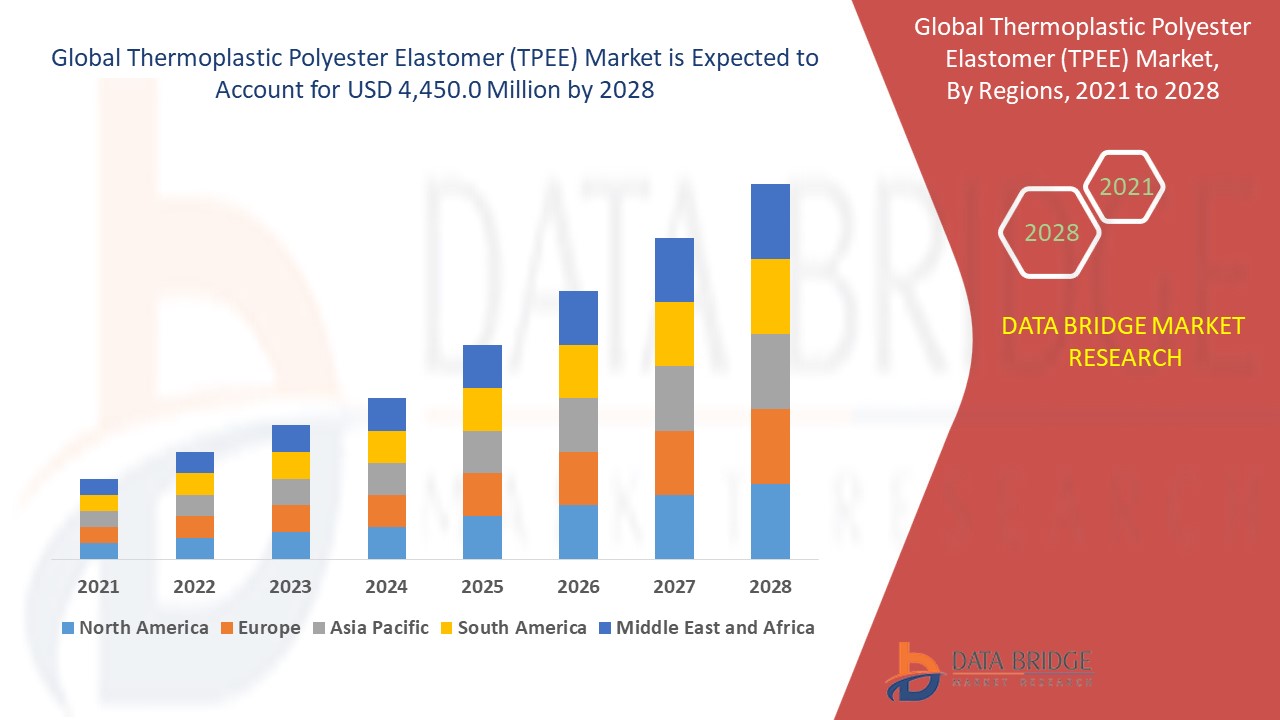
Thermoplastic Polyester Elastomer (TPEE) Market Analysis
The thermoplastic polyester elastomer (TPEE) market is seeing significant growth driven by advancements in material technology. A key innovation is the development of high-performance TPEE blends, combining superior chemical resistance, temperature stability, and flexibility. These innovations have enabled TPEE to be used in increasingly demanding applications, such as automotive parts, medical devices, and electrical cables.
Recent advancements in processing techniques, such as injection molding and extrusion, have improved the efficiency and cost-effectiveness of TPEE production. In addition, the incorporation of recycled materials into TPEE formulations is gaining traction as part of the move towards sustainable manufacturing practices.
TPEE’s versatility has led to its rising demand across industries, with automotive companies using it for lightweight, durable components that enhance fuel efficiency. In the medical sector, TPEE is favored for its biocompatibility and durability, especially in devices requiring sterilization. The market’s growth is further supported by increasing demand for lightweight and eco-friendly materials, as well as innovations in compounding techniques that improve performance in diverse conditions, accelerating TPEE adoption globally.
Thermoplastic Polyester Elastomer (TPEE) Market Size
The global thermoplastic polyester elastomer (TPEE) market size was valued at USD 3.79 billion in 2024 and is projected to reach USD 5.23 billion by 2032, with a CAGR of 4.1% during the forecast period of 2025 to 2032. In addition to the insights on market scenarios such as market value, growth rate, segmentation, geographical coverage, and major players, the market reports curated by the Data Bridge Market Research also include import export analysis, production capacity overview, production consumption analysis, price trend analysis, climate change scenario, supply chain analysis, value chain analysis, raw material/consumables overview, vendor selection criteria, PESTLE Analysis, Porter Analysis, and regulatory framework.
Thermoplastic Polyester Elastomer (TPEE) Market Trends
“Rising Demand for TPEE in Automotive Applications”
A significant trend driving the growth of the thermoplastic polyester elastomer (TPEE) market is the increasing demand for lightweight, durable, and high-performance materials in the automotive industry. TPEE's superior mechanical properties, including its high-temperature resistance, chemical stability, and flexibility, make it ideal for automotive parts such as connectors, fuel lines, and engine components. The push for electric vehicles (EVs) is also contributing to TPEE’s adoption due to its ability to withstand high temperatures and provide long-lasting performance in battery systems. For instance, TPEE is used in under-the-hood automotive components, offering better fuel efficiency and reduced emissions, thus supporting the growing EV trend.
Report Scope and Thermoplastic Polyester Elastomer (TPEE) Market Segmentation
|
Attributes |
Thermoplastic Polyester Elastomer (TPEE) Key Market Insights |
|
Segments Covered |
|
|
Countries Covered |
U.S., Canada and Mexico in North America, Germany, France, U.K., Netherlands, Switzerland, Belgium, Russia, Italy, Spain, Turkey, Rest of Europe in Europe, China, Japan, India, South Korea, Singapore, Malaysia, Australia, Thailand, Indonesia, Philippines, Rest of Asia-Pacific (APAC) in the Asia-Pacific (APAC), Saudi Arabia, U.A.E, South Africa, Egypt, Israel, Rest of Middle East and Africa (MEA) as a part of Middle East and Africa (MEA), Brazil, Argentina and Rest of South America as part of South America |
|
Key Market Players |
A. Schulman, Inc. (U.S.), Ashland (U.S.), BASF SE (Germany), Celanese Corporation (U.S.), Covestro AG (Germany), DuPont (U.S.), L.G. Chem (South Korea), Mitsubishi Engineering-Plastics Corporation (Japan), L.C.Y. Group (Taiwan), SABIC (Saudi Arabia), Exxon Mobil Corporation (U.S.), Tosoh Corporation (Japan), Chang Chun Group (Taiwan), Kraton Corporation (U.S.), TOYOBO CO., LTD. (Japan), Dow (U.S.), Arkema (France), Evonik Industries AG (Germany), LyondellBasell Industries Holdings B.V. (Netherlands), and The Lubrizol Corporation (U.S.) |
|
Market Opportunities |
|
|
Value Added Data Infosets |
In addition to the insights on market scenarios such as market value, growth rate, segmentation, geographical coverage, and major players, the market reports curated by the Data Bridge Market Research also include import export analysis, production capacity overview, production consumption analysis, price trend analysis, climate change scenario, supply chain analysis, value chain analysis, raw material/consumables overview, vendor selection criteria, PESTLE Analysis, Porter Analysis, and regulatory framework. |
Thermoplastic Polyester Elastomer (TPEE) Market Definition
Thermoplastic polyester elastomer (TPEE) is a versatile and high-performance polymer that combines the characteristics of both thermoplastics and elastomers. It offers excellent chemical resistance, high temperature stability, and superior mechanical properties such as flexibility and toughness. TPEE is used in a wide range of applications, including automotive parts, industrial components, and medical devices, due to its ability to withstand harsh conditions. It is also recyclable, making it an environmentally friendly choice. The material is known for its ease of processing and can be molded or extruded into various shapes, providing manufacturers with flexibility in product design.
Thermoplastic Polyester Elastomer (TPEE) Market Dynamics
Drivers
- High Demand for Lightweight Materials
The growing emphasis on energy efficiency in industries such as automotive, aerospace, and consumer goods is driving the demand for thermoplastic polyester elastomers (TPEE). TPEE is a lightweight material, making it ideal for use in automotive applications such as fuel lines, air ducts, and interior components, where reducing weight directly contributes to improved fuel efficiency and reduced emissions. In aerospace, TPEE is used in components such as seals and gaskets to reduce overall aircraft weight, enhancing fuel economy. In addition, in consumer goods, TPEE's lightweight nature is beneficial for products such as footwear and medical devices, where comfort and durability are paramount. This trend towards lightweight materials is significantly boosting the TPEE market.
- Improved Fuel Efficiency in Vehicles
TPEE's lightweight properties are a key driver in the automotive sector, where reducing vehicle weight is essential to improving fuel efficiency. As regulatory pressures around the world intensify to lower carbon emissions and meet fuel economy standards, automotive manufacturers are increasingly turning to materials such as TPEE. It is used in components such as fuel lines, air ducts, and seals, offering durability without adding significant weight. By enhancing fuel efficiency and reducing greenhouse gas emissions, TPEE helps manufacturers meet environmental regulations. This growing demand for lightweight materials in the automotive industry is significantly boosting the thermoplastic polyester elastomer (TPEE) market.
Opportunities
- Rising Demand for Consumer Goods
The increasing use of thermoplastic polyester elastomer (TPEE) in consumer goods presents a significant opportunity for market expansion. TPEE's flexibility, durability, and comfort make it ideal for applications in footwear, medical devices, and sports equipment. For instance, TPEE is used in footwear for its cushioning properties, in medical devices for its biocompatibility, and in sports equipment for enhanced performance and durability. As consumer preference shifts toward high-performance, sustainable, and comfortable products, the demand for TPEE is expected to rise. This trend presents opportunities for manufacturers to innovate and expand their product portfolios, capturing a larger share of the growing consumer goods market.
- Enhanced Durability and Performance
The superior durability and performance of thermoplastic polyester elastomer (TPEE) create significant market opportunities, particularly in demanding industrial applications. TPEE’s exceptional resistance to wear, abrasion, and chemicals makes it ideal for high-stress environments such as gears, seals, and bearings. These properties allow manufacturers to extend product lifespan and reduce maintenance costs, driving adoption in industries such as automotive, aerospace, and machinery. In addition, TPEE’s ability to perform under extreme conditions positions it as a preferred choice for critical components, boosting demand in sectors that require long-lasting and reliable materials. This increasing need for durable, high-performance materials is fueling growth and innovation within the TPEE market.
Restraints/Challenges
- High Production Cost
The high production cost of Thermoplastic Polyester Elastomer (TPEE) is a significant restraint in its market growth. The production of TPEE involves expensive raw materials, such as high-performance polyesters, and specialized manufacturing processes that require advanced equipment and technical expertise. These factors result in higher production costs compared to other thermoplastics, making TPEE less attractive for cost-sensitive industries such as automotive and consumer goods. As a result, companies in these sectors may opt for more affordable alternatives, such as thermoplastic vulcanizates (TPVs) or standard polyolefins. The increased cost burden limits the widespread adoption of TPEE, especially in price-sensitive markets where cost efficiency is a key factor in material selection.
- Complex Manufacturing Requirements
The production of thermoplastic polyester elastomers (TPEE) involves precise and complex manufacturing processes, requiring specialized equipment and expertise. The need for high precision during extrusion, molding, and blending stages makes TPEE production expensive and technically demanding. This limits its widespread adoption, particularly among small and medium-sized enterprises (SMEs) that may not have access to the advanced machinery or resources necessary for such precise production. As a result, these companies often opt for more cost-effective alternatives, hindering the growth of the TPEE market. The barrier of advanced manufacturing requirements restricts scalability and broader market penetration, especially in cost-sensitive sectors.
This market report provides details of new recent developments, trade regulations, import-export analysis, production analysis, value chain optimization, market share, impact of domestic and localized market players, analyses opportunities in terms of emerging revenue pockets, changes in market regulations, strategic market growth analysis, market size, category market growths, application niches and dominance, product approvals, product launches, geographic expansions, technological innovations in the market. To gain more info on the market contact Data Bridge Market Research for an Analyst Brief, our team will help you take an informed market decision to achieve market growth.
Impact and Current Market Scenario of Raw Material Shortage and Shipping Delays
Data Bridge Market Research offers a high-level analysis of the market and delivers information by keeping in account the impact and current market environment of raw material shortage and shipping delays. This translates into assessing strategic possibilities, creating effective action plans, and assisting businesses in making important decisions. Apart from the standard report, we also offer in-depth analysis of the procurement level from forecasted shipping delays, distributor mapping by region, commodity analysis, production analysis, price mapping trends, sourcing, category performance analysis, supply chain risk management solutions, advanced benchmarking, and other services for procurement and strategic support.
Expected Impact of Economic Slowdown on the Pricing and Availability of Products
When economic activity slows, industries begin to suffer. The forecasted effects of the economic downturn on the pricing and accessibility of the products are taken into account in the market insight reports and intelligence services provided by DBMR. With this, our clients can typically keep one step ahead of their competitors, project their sales and revenue, and estimate their profit and loss expenditures.
Thermoplastic Polyester Elastomer (TPEE) Market Scope
The market is segmented on the basis of type and end-user industry. The growth amongst these segments will help you analyse meagre growth segments in the industries and provide the users with a valuable market overview and market insights to help them make strategic decisions for identifying core market applications.
Type
- Injection Molding Grade
- Extrusion Grade
- Other Types
End-user Industry
- Automotive and Transportation
- Healthcare
- Building and Construction
- Electrical and Electronics
- Consumer Goods
- Other End-user Industries
Thermoplastic Polyester Elastomer (TPEE) Market Regional Analysis
The market is analysed and market size insights and trends are provided by type and end-user industry as referenced above.
The countries covered in the market report are U.S., Canada and Mexico in North America, Germany, France, U.K., Netherlands, Switzerland, Belgium, Russia, Italy, Spain, Turkey, Rest of Europe in Europe, China, Japan, India, South Korea, Singapore, Malaysia, Australia, Thailand, Indonesia, Philippines, Rest of Asia-Pacific (APAC) in the Asia-Pacific (APAC), Saudi Arabia, U.A.E, South Africa, Egypt, Israel, Rest of Middle East and Africa (MEA) as a part of Middle East and Africa (MEA), Brazil, Argentina and Rest of South America as part of South America.
Asia-Pacific is expected to dominate the thermoplastic polyester elastomer (TPEE) market due to the rise in the manufacturing sector because of the growing need in the automotive, industrial machinery, packaging, and electrical and electronics industries. Furthermore, the increase in the need for thermoplastic polyester elastomer will further boost the growth of the thermoplastic polyester elastomer (TPEE) market in the region during the forecast period.
North America is projected to observe a significant amount of growth in the thermoplastic polyester elastomer (TPEE) market due to the occurrence of several automobile manufacturers favouring plastic vehicle parts. Moreover, the rise in the achievement of low-cost production is further anticipated to propel the growth of the thermoplastic polyester elastomer (TPEE) market in the region in the coming years.
The country section of the report also provides individual market impacting factors and changes in regulation in the market domestically that impacts the current and future trends of the market. Data points such as down-stream and upstream value chain analysis, technical trends and porter's five forces analysis, case studies are some of the pointers used to forecast the market scenario for individual countries. Also, the presence and availability of global brands and their challenges faced due to large or scarce competition from local and domestic brands, impact of domestic tariffs and trade routes are considered while providing forecast analysis of the country data.
Thermoplastic Polyester Elastomer (TPEE) Market Share
The market competitive landscape provides details by competitor. Details included are company overview, company financials, revenue generated, market potential, investment in research and development, new market initiatives, global presence, production sites and facilities, production capacities, company strengths and weaknesses, product launch, product width and breadth, application dominance. The above data points provided are only related to the companies' focus related to market.
Thermoplastic Polyester Elastomer (TPEE) Market Leaders Operating in the Market Are:
- A. Schulman, Inc. (U.S.)
- Ashland (U.S.)
- BASF SE (Germany)
- Celanese Corporation (U.S.)
- Covestro AG (Germany)
- DuPont (U.S.)
- L.G. Chem (South Korea)
- Mitsubishi Engineering-Plastics Corporation (Japan)
- L.C.Y. Group (Taiwan)
- SABIC (Saudi Arabia)
- Exxon Mobil Corporation (U.S.)
- Tosoh Corporation (Japan)
- Chang Chun Group (Taiwan)
- Kraton Corporation (U.S.)
- TOYOBO CO., LTD. (Japan)
- Dow (U.S.)
- Arkema (France)
- Evonik Industries AG (Germany)
- LyondellBasell Industries Holdings B.V. (Netherlands)
- The Lubrizol Corporation (U.S.)
Latest Developments in Thermoplastic Polyester Elastomer (TPEE) Market
- In June 2023, MM Polytrade Ltd acquired Celanese's thermoplastic copolyesters (TPC) and hotmelt polyesters operations from the Ferrara Donegani plant. The deal also included assets from the Forlì compounding plant. This strategic acquisition, executed through its subsidiary Taro Plast, strengthens MM Polytrade’s presence in the advanced polyester materials market
- In July 2022, PolySource, a distributor of engineered resins, expanded its portfolio by adding SKYPEL through a collaboration with SK Chemicals America Inc. This partnership aimed to target the growing demand for specialty materials, enabling both companies to attract broader markets and new customers across the U.S.
- In February 2022, Celanese Corporation announced acquiring DuPont's Mobility & Materials (M&M) thermoplastics and elastomers business for USD 11.0 billion. This acquisition enhanced Celanese’s thermoplastic polyester elastomer offerings and provided increased access to the rapidly growing Asian markets, bolstering its global market reach and competitive positioning
SKU-
세계 최초의 시장 정보 클라우드 보고서에 온라인으로 접속하세요

- 대화형 데이터 분석 대시보드
- 높은 성장 잠재력 기회를 위한 회사 분석 대시보드
- 사용자 정의 및 질의를 위한 리서치 분석가 액세스
- 대화형 대시보드를 통한 경쟁자 분석
- 최신 뉴스, 업데이트 및 추세 분석
- 포괄적인 경쟁자 추적을 위한 벤치마크 분석의 힘 활용
연구 방법론
데이터 수집 및 기준 연도 분석은 대규모 샘플 크기의 데이터 수집 모듈을 사용하여 수행됩니다. 이 단계에는 다양한 소스와 전략을 통해 시장 정보 또는 관련 데이터를 얻는 것이 포함됩니다. 여기에는 과거에 수집한 모든 데이터를 미리 검토하고 계획하는 것이 포함됩니다. 또한 다양한 정보 소스에서 발견되는 정보 불일치를 검토하는 것도 포함됩니다. 시장 데이터는 시장 통계 및 일관된 모델을 사용하여 분석하고 추정합니다. 또한 시장 점유율 분석 및 주요 추세 분석은 시장 보고서의 주요 성공 요인입니다. 자세한 내용은 분석가에게 전화를 요청하거나 문의 사항을 드롭하세요.
DBMR 연구팀에서 사용하는 주요 연구 방법론은 데이터 마이닝, 시장에 대한 데이터 변수의 영향 분석 및 주요(산업 전문가) 검증을 포함하는 데이터 삼각 측량입니다. 데이터 모델에는 공급업체 포지셔닝 그리드, 시장 타임라인 분석, 시장 개요 및 가이드, 회사 포지셔닝 그리드, 특허 분석, 가격 분석, 회사 시장 점유율 분석, 측정 기준, 글로벌 대 지역 및 공급업체 점유율 분석이 포함됩니다. 연구 방법론에 대해 자세히 알아보려면 문의를 통해 업계 전문가에게 문의하세요.
사용자 정의 가능
Data Bridge Market Research는 고급 형성 연구 분야의 선두 주자입니다. 저희는 기존 및 신규 고객에게 목표에 맞는 데이터와 분석을 제공하는 데 자부심을 느낍니다. 보고서는 추가 국가에 대한 시장 이해(국가 목록 요청), 임상 시험 결과 데이터, 문헌 검토, 재생 시장 및 제품 기반 분석을 포함하도록 사용자 정의할 수 있습니다. 기술 기반 분석에서 시장 포트폴리오 전략에 이르기까지 타겟 경쟁업체의 시장 분석을 분석할 수 있습니다. 귀하가 원하는 형식과 데이터 스타일로 필요한 만큼 많은 경쟁자를 추가할 수 있습니다. 저희 분석가 팀은 또한 원시 엑셀 파일 피벗 테이블(팩트북)로 데이터를 제공하거나 보고서에서 사용 가능한 데이터 세트에서 프레젠테이션을 만드는 데 도움을 줄 수 있습니다.











