


Indonesia Corporate Telehealth Market, By Component (Hardware, Services, and Software), Delivery Mode (Cloud, On-Premise), Application (Virtual Primary Care and Continuing Care, Teleradiology, Comprehensive Behavioral Health/Telepsychiatry, Dermatology Care, High-Acuity Care, Pediatric Corporate Telehealth, Others), Connectivity Device (Smartphone, Laptop, and Others), End-User (Healthcare Providers, Patients, and Healthcare Payers) - Industry Trends and Forecast to 2029.
인도네시아 기업 Telehealth 시장 분석 및 통찰력
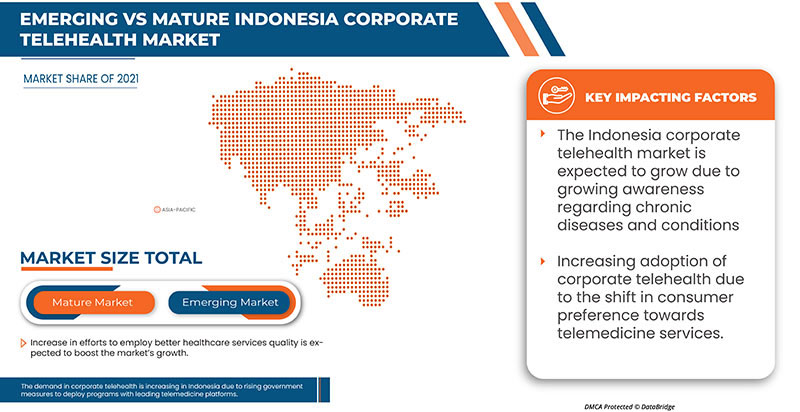
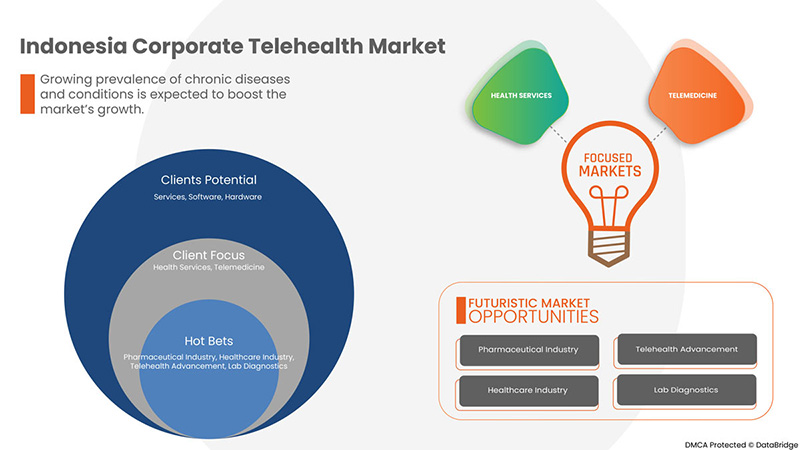
인도네시아 법인 telehealth 시장은 2022년에서 2029년 예측 기간에 상당한 성장을 기대할 것으로 예상됩니다. 데이터 브리지 시장 연구 분석 시장은 2022에서 2029까지의 예측 기간에서 3.3%의 CAGR로 성장하고 있으며 USD 10,180.06 천에 2029에 도달 할 것으로 예상됩니다. 기업 telehealth 시장의 성장을 모는 주요 요인은 더 나은 고용에 있는 노력에 있는 증가입니다의료보험서비스 품질, 만성 질환 및 조건의 성장 우선 순위, 및 인도네시아 인구에 따라 의사와 의료 직원의 부족.
인도네시아는 건강 체계의 다른 양상에 몇몇 개혁을 소개하고, 건강 체계는 또한 정부와 공중 행정의 multisectoral 개혁에 의해 영향을 줬습니다. 주요 multisectoral reforms는 공공 보건 서비스 관리 및 규정에 대한 책임을 포함하여 중앙에서 지방 정부의 특정 정부 기능에 대한 권위의 위임을 포함하고, 병원을 포함하여 공공 서비스 조직의 관리에 큰 자율성 도입.
인도네시아 기업 telehealth 시장 보고서는 시장 점유율, 새로운 개발 및 국내 및 현지화 시장 플레이어의 영향, 시장 규제, 제품 승인, 전략 결정, 제품 출시, 지리적 확장 및 시장의 기술 혁신 측면에서 새로운 수익 주머니의 관점에서 기회를 분석합니다. 분석과 시장 시나리오를 이해하기 위해 Analyst Brief에 문의하십시오. 우리의 팀은 당신이 당신의 원한 목표를 달성하기 위하여 수익 충격 해결책을 창조할 것을 도울 것입니다.
|
미터 표시 |
제품 정보 |
|
예측 기간 |
2022에서 2029 |
|
기본 년 |
2021 |
|
역사 년 |
2020 (2019-2014 년 지정 가능) |
|
양적 단위 |
USD에서 수익 |
|
Segments 적용 |
구성 요소 (하드웨어, 서비스, 소프트웨어), 배달 모드 (클라우드, 온-프레미스), 응용 프로그램 (가상 1 차 치료 및 지속적인 관리, Teleradiology, 종합 행동 건강 / Telepsychiatry,피부과관리, 고기능 관리, 소아과 기업 Telehealth, 기타), 연결 장치 (스마트 폰, 노트북 및 기타), 최종 사용자 (Healthcare Providers, 환자 및 의료 Payers) |
|
국가 덮음 |
한국어 |
|
시장 선수는 덮었습니다 |
HALODOC, Alodokter, ProSehat, Good Doctor, aido 건강, PT Medika Komunika Teknologi, Vascular Indonesia, 건강한 인도네시아, 인텔 회사, Cisco 시스템, Inc 건강한 링크 및 Trustmedis 인도네시아 |
시장 정의
Telehealth는 Caregivers 및 간호사가 실시간으로 환자 건강 정보를 제공하는 동안 일관된 연결을 유지하도록 허용합니다. 텔레헬스 시설은 장거리 건강 교육을 제공하여 고객의 건강을 개선합니다. 텔레 헬스케어의 수요는 인터넷과 스마트폰의 성장으로 인해 건강 라이프 스타일을 향한 소비자 선호도와 함께 성장하고 있습니다. Telehealth 서비스는 환자가 시간을 절약하고 불필요한 여행 비용을 줄일 수 있도록 돕는 telephonic/video 상담을 통해 의료 서비스에 대한 액세스를 제공합니다.
인도네시아 기업 Telehealth 시장 역학
드라이버
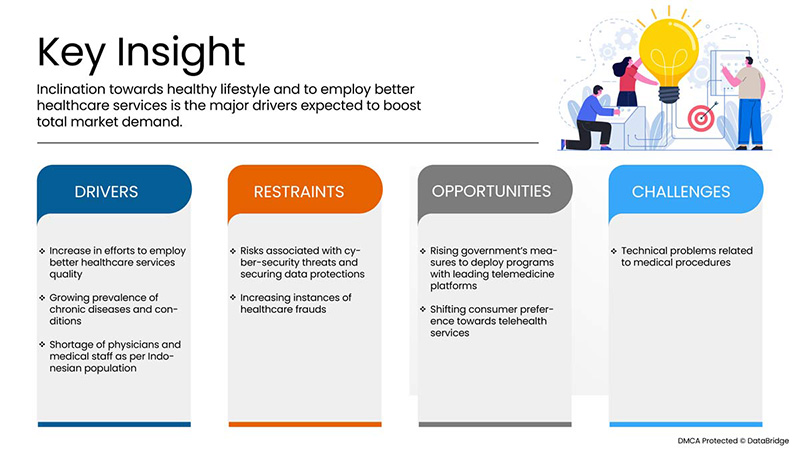
- 더 나은 의료 서비스 품질을 고용하는 노력의 증가
인도네시아의 정부는 의료 관련 제도를 확장하여 서비스 품질 및 접근성에 대한 지역적 장애를 해결하고 자원을 효과적으로 관리하고 비용을 줄이고 사기를 최소화합니다. 또한 정부는 민간 부문과 건강 증진 및 예방 프로그램에 투자를 유지하고 있습니다. 인도네시아 정부 (GoI)는 최근에이 방향으로 이동했습니다. 그것은 국립 사회 보안 시스템에 법 제 40 / 2004을 설립하여 2014 년 Jaminan Kesehatan Nasional (JKN) 국가 건강 보험 프로그램에 적용됩니다.
- 만성 질환 및 질환의 전임
이 연구에 따르면, 이 연구에 따르면, 이 연구에 따르면, 이 연구에 따르면, 이 연구에 따르면, 이 연구에 따르면, 이 연구에 따르면, 이 연구에 따르면, 이 연구에 따르면, 이 연구에 따르면, 이 연구에 따르면, 이 연구에 따르면, 이 연구에 따르면, 연구에 따르면, 이 연구에 따르면, 연구에 따르면, 이 연구에 따르면, 이 연구에 따르면, 이 연구에 따르면, 이 연구에 따르면, 이 연구에 따르면, 이 연구에 따르면, 이 연구에 따르면, 이 연구에 따르면, 이 연구에 따르면, 이 연구에 따르면, 이 연구에 따르면, 이 연구에 따르면, 이 연구에 따르면, 이 연구에 따르면. 의료비의 증가, 의료 분야의 기술 혁신의 spur, 및 원격 영역의 의료 분야의 접근성 문제를 해결하기 위해 노력은 인도네시아를 포함한 전 세계 경제 발전에 대한 다년생 문제였습니다. 동시에 높은 혈압, 높은 콜레스테롤, 과체중 및 흡연과 같은 non-communicable 질병 (NCDs)에 대한 위험 요소가 증가합니다. 점점 더 복잡한 간염 패턴에 반응하는 여러 매크로 전환은 기업 telehealth 서비스를 사용하여 효과적으로 촉촉하게하는 '국가 보건 시스템의 주요 과제 중 하나입니다.
- 인도네시아 인구에 따라 의사와 의료 직원의 부족
Telehealth는 pandemic 도중 인도네시아의 인구학적 상태를 위해 아주 적당한 입증된 대안 제품입니다. 의료 시설 및 사회 및 경제 센터에 대한 제한된 액세스와 함께, 건강, 상담 및 치료에 관한 정보를 정기적으로 필요로하는 환자는 hampered, 따라서 건강의 정보 기술 요구. 텔레 헬스를 가진 의료 시스템은 이 전염병에 대한 외래 환자 치료의 연속성을 유지하고 "스테이-at-home"의 주문 및 신체 장애 조치는 지역 사회와 공존 확산을 감소시킵니다.
회사연혁
- 정부의 변화는 선도적 인 telehealth 플랫폼으로 프로그램을 배포하는
인도네시아 정부는 열심히 일하고 보편적인 건강 보험 (UHC)를 달성하기 위하여 노력하고 있습니다 그래서 전체 인구는 비용 제약 없이 포괄적인 질 건강 서비스를 받을 수 있습니다. 또한 National Health Insurance/Healthy Indonesia Card(JKN/KIS) 프로그램은 2014년 1월 1일부터 시행되었습니다. 건강 사회 안전 관리 (BPJS)는 National Social Security System (SJSN)에 관한 2004의 법률 번호 40에 근거를 둔 이 프로그램을 책임집니다. 이 프로그램은 건강 서비스에 대한 공공의 액세스를 제공하고 금융 보호를 제공합니다. 2020 년 대부분의 참가자는 49.10 %의 PBI (APBN) 세그먼트에서 왔습니다. 그러나 1 년에서 1 년 동안 참가자의 가장 중요한 성장은 비 PBI에 발생했습니다. 2020 년 말까지, JKN / KIS의 총 범위는 222.4 만 명이 도달했습니다.
- telehealth 서비스를 통한 소비자 선호도
COVID-19 전염병의 최근 에피소드는 많은 분야의 삶을 바꾸고 일상 생활에서 사회 발전을 적용하기 위해 사람들을 강제했습니다. 질병 통제 및 예방 센터 (CDC)의 다양한 방향은 코로나 바이러스 (COVID-19)의 지역에있는 사람들 및 의료 제공 업체에 배치되었습니다. 이 방향은 사회적 분산 관행을 실행하고 특히 의료 시설 및 제공 업체가 가상화 된 병원 서비스를 사용해야한다는 것을 권장합니다. telehealth를 통해 palliative 배려를 받는 환자는 전형적으로 그들이 시간과 돈을 더 저장하기 때문에 아주 만족합니다. Telehealth는 통신 및 정보 기술 (IT)를 거리의 맞은편에 접근 건강 평가, 진단, 개입, 상담, 감시 및 정보에 나타납니다.
스트레인 / 캡enges
- 사이버 보안 위협 및 데이터 보호와 관련된 위험
Telehealth는 컴퓨터 네트워크 및 공공 인터넷을 사용하여 전자 정보를 회의에 의존합니다. 이 세션에서 교환 된 정보 (연결 된 네트워크 자체)는 사이버 위협에 더 노출됩니다. 오늘날의 기후는 엄격하게 규제 보호, 누출은 두 명망 손상과 규제 기관에서 의료 기관에 심각한 문제를 일으킬 수 있습니다. 따라서, 개인 및 공공 제공자의 성장 수에 의해 기업 telehealth 서비스의 급속한 확장은 의료 부문에 강화된 사이버 assault의 시간에 옵니다. 이러한 힘은 clinicians, 환자, 그리고 그들이 일하는 시스템에 직면 한 독특한 사이버 보안 문제를 해결하기 위해 필수적입니다. 헬스케어 조직은 telemedicine 및 cybersecurity 공급업체와 파트너 관계를 맺고 이러한 기술을 활용하여 인프라 및 제품을 최대한 활용할 수 있는 방법을 이해해야 합니다.
- 의료 사기의 인스턴스 증가
텔레 헬스 방문을 찾는 의료 환자의 수로 인해 사기 및 학대에 대한 잠재력을했다. 기업 telehealth 서비스의 시대에, clinicians는 그들의 malpractice 또는 책임 보험은 telemedicine를 커버하고, 필요한 경우, 그것은 국가 선의 맞은편에 제공되는 서비스를 다룹니다. COVID-19 발발 중에는 많은 클리닉이 서비스를 제공하기 전에 보호 된 것을 보장해야하는 telehealth 서비스의 첫 번째 사용자였습니다. 이 웹 사이트는 애플 리케이션에 전념. 우리는 정품 앱과 게임을 제공 할 목적으로이 사이트를 만들었습니다. 4AppsApk 최고의 안드로이드 애플 리케이션을위한 무료 APK 파일 다운로드 서비스, 계략. 이 외에도, telehealth 세션 중 청구 및 지불에 관한 다양한 사기가 있었고, 돈은 병원 또는 기업 telehealth 서비스 제공 업체에게 신용되지 않았습니다.
- 의료 절차 관련 기술 문제
telehealth 사용과 관련된 가장 큰 과제 중 하나는 직접적인 신체 검사를 수행 할 수있는 능력이며, telehealth와 특정 전문 활동의 호환성에 관한 문제 및 상호 전문 협력의 문제입니다. telehealth의 가장 중요한 제한은 몇몇 병원 및 큰 의사 관행이 이 방법에 있는 배려를 배달하기 위하여 갖춰집니다. 아직도, 대부분의 병원 및 개인 관행은 몇몇 병원과 같은 뇌졸중 치료 또는 응급 응급 응급 응급 응급 응급 응급 응급 응급 응급 응급 응급 처치와 같은 프로그램에 대 한 전용 기술이 있을 수 없습니다. 기술 접근에 있는 Gaps 및 몇몇 그룹의 환자 중 사용은 심각한 관심사입니다.
최근 개발
- 2021 년 4 월 HALODOC는 새로운 투자자 인 PT Astra Digital Internasional, PT Astra International Tbk (Astra)의 자회사 인 PT Astra Digital Internasional에 의해 주도 된 자금으로 80 만 달러의 자금을 모금했습니다. 다른 투자자 Temasek, Telkomsel의 TMI, Acrew Diversify Capital Fund, Novo Holdings 및 Bangkok Bank. UOB Venture Management, Singtel Innov8, Blibli Group, Allianz X, Openspace Ventures 및 기타 기존 투자자도 참여했습니다.
인도네시아 기업 Telehealth 시장의 COVID-19 영향
COVID-19 전염병의 최근 에피소드는 많은 분야의 삶을 변화시키고 일상 생활에서 사회 발전을 적용하기 위해 모든 사람을 강제했습니다. 질병 통제 및 예방 센터 (CDC)의 다양한 방향은 코로나 바이러스 (COVID-19)의 지역에있는 사람들 및 의료 제공자에 배치되었습니다. COVID-19 전염병 및 기타 건강 관련 합병증과 싸우기 위해 긴급하게 수행되었습니다. 인도네시아 정부는 COVID-19의 온화한 증상을 가진 환자가 telehealth를 통해 대우되어야한다고 발표했습니다. 국가 보건 시스템 내에서 그것을 통합함으로써 telehealth의 구현은 긴급하게 COVID-19 전염병 및 기타 건강 관련 합병증을 싸울 수 있습니다. 따라서, COVID-19는 인도네시아 기업 telehealth 시장에 긍정적으로 영향을 미치고 그 성장을 밀어주었습니다.
인도네시아 기업 Telehealth 시장 범위
인도네시아 기업 telehealth 시장은 성분, 납품 형태, 신청, 연결 장치 및 최종 사용자에 근거를 둔 분류됩니다. 이러한 세그먼트의 성장은 업계의 주요 성장 세그먼트를 분석하고 핵심 시장 응용 프로그램을 식별하기 위해 전략적 결정을 내릴 수있는 가치있는 시장 개요 및 시장 통찰력으로 사용자에게 제공합니다.
제품정보
- 제품정보
- 소프트웨어
- 제품정보
구성 요소에 따라 인도네시아 법인 telehealth 시장은 하드웨어, 소프트웨어 및 서비스로 분류됩니다.
납품 형태
- 클라우드
- 내 계정
납품 형태에 근거하여, 인도네시아 법인 telehealth 시장은 구름과 온-프레미스로 분류됩니다.
제품 설명
- 진료 및 치료
- 학회소개
- 종합적인 행동 건강/telepsychiatry
- 피부 관리
- 높은 안전 관리
- Pediatric 기업 telehealth
- 기타
응용 프로그램에 따라 인도네시아 법인 telehealth 시장은 사실상 1 차적인 배려 및 지속적인 배려, teleradiology, 종합적인 행동 건강/telepsychiatry, dermatology 배려, 높 점성 배려, 소아과 telehealth 및 다른 사람으로 분류됩니다.
연결 장치
- 스마트 폰
- 한국어
- 기타
연결 장치에 근거하여, 인도네시아 기업 telehealth 시장은 스마트폰, 노트북 및 다른 사람으로 분류됩니다.
끝 사용자
- 의료기관
- 환자
- 의료보험
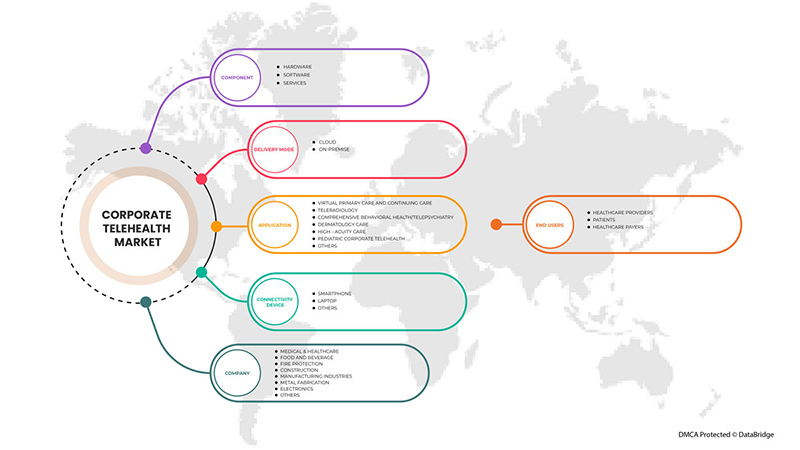
최종 사용자를 기반으로 인도네시아 법인 telehealth 시장은 의료 제공 업체, 환자 및 의료 지불 업체로 분류됩니다.
경쟁 조경 및 인도네시아 기업 Telehealth 시장 점유율 분석
인도네시아 기업 telehealth 시장 경쟁적인 조경은 경쟁자에 의해 세부사항을 제공합니다. 포함 된 세부 사항은 회사 개요, 회사 재무, 수익 생성, 시장 잠재력, 연구 및 개발 투자, 새로운 시장 이니셔티브, 생산 사이트 및 시설, 회사 강점 및 약점, 제품 출시, 제품 평가 파이프라인, 제품 승인, 특허, 제품 폭 및 폭, 응용 도민, 기술 수명 곡선. 위의 데이터 포인트는 인도네시아 법인 telehealth 시장과 관련된 회사의 초점과 관련이 있습니다.
인도네시아 기업 telehealth 시장에서 운영되는 탁월한 참가자 중 일부는 HALODOC, Alodokter, ProSehat, Good Doctor, aido 건강, PT Medika Komunika Teknologi, Vascular Indonesia, Get Healthy Indonesia, Intel Corporation, Cisco Systems, Inc Healthy Link 및 Trustmedis Indonesia입니다.
연구 방법론
Data collection and base year analysis are done using data collection module with large sample size. 시장 데이터 분석 및 시장 통계 및 일관성 모델을 사용하여 추정된다. 또한 시장 점유율 분석 및 주요 추세 분석은 시장 보고서의 주요 성공 요인입니다. DBMR 연구팀에서 사용하는 핵심 연구 방법론은 데이터 마이닝, 시장의 데이터 변수의 영향 분석, 및 기본 (산업 전문가) 검증을 포함하는 데이터 트리angulation입니다. 이 외에도 데이터 모델에는 Vendor Positioning grid, Market Time Line Analysis, Market Overview 및 Guide, Company Positioning grid, Company Market Share Analysis, Standard of Measurement, Indonesia Vs Regional 및 Vendor Share Analysis가 포함됩니다. 더 많은 문의의 경우 analyst 전화 요청하십시오.
SKU-
세계 최초의 시장 정보 클라우드 보고서에 온라인으로 접속하세요

- 대화형 데이터 분석 대시보드
- 높은 성장 잠재력 기회를 위한 회사 분석 대시보드
- 사용자 정의 및 질의를 위한 리서치 분석가 액세스
- 대화형 대시보드를 통한 경쟁자 분석
- 최신 뉴스, 업데이트 및 추세 분석
- 포괄적인 경쟁자 추적을 위한 벤치마크 분석의 힘 활용
목차
1 서론
1.1 연구 목적
1.2 시장 정의
1.3 인도네시아 기업 텔레헬스 시장 개요
1.4 제한
1.5 대상 시장
2 시장 세분화
2.1 대상 시장
2.2 지리적 범위
연구에 2.3년이 고려됨
2.4 통화 및 가격
2.5 DBMR TRIPOD 데이터 검증 모델
2.6 구성 요소 수명선 곡선
2.7 다변량 모델링
2.8 주요 여론 선도자와의 1차 인터뷰
2.9 DBMR 시장 위치 그리드
2.1 시장 최종 사용자 범위 그리드
2.11 DBMR 시장 도전 매트릭스
2.12 2차 소스
2.13 가정
3 요약
4가지 프리미엄 인사이트
4.1 시장 전략적 이니셔티브
4.2 PESTLE 분석
4.2.1 정치적 요인
4.2.2 경제적 요인
4.2.3 사회적 요인
4.2.4 기술적 요인
4.2.5 법적 요소
4.2.6 환경 요인
4.3 포터의 5가지 힘:
4.3.1 신규 진입자의 위협:
4.3.2 대체품 위협:
4.3.3 고객 협상력:
4.3.4 공급업체 협상력:
4.3.5 내부 경쟁(경쟁):
4.4 기술 분석
4.5 가치 사슬 분석
5 시장 개요
5.1 드라이버
5.1.1 더 나은 의료 서비스 품질을 고용하기 위한 노력 증가
5.1.2 만성 질환 및 상태의 증가하는 유병률
5.1.3 인도네시아 인구에 따른 의사 및 의료진 부족
5.2 제약
5.2.1 사이버 보안 위협 및 데이터 보호 보안과 관련된 위험
5.2.2 의료 사기의 증가
5.3 기회
5.3.1 주요 텔레헬스 플랫폼과 함께 프로그램을 배포하기 위한 정부의 조치 증가
5.3.2 소비자 선호도를 텔레헬스 서비스로 전환
5.4 도전
5.4.1 의료 시술과 관련된 기술적 문제
6 인도네시아 기업 텔레헬스 시장, 구성 요소별
6.1 개요
6.1.1 서비스
6.1.1.1 관리 서비스
6.1.1.2 전문 서비스
6.1.1.3 교육 및 컨설팅
6.1.1.4 구현 및 통합
6.1.1.5 지원 및 유지 관리
6.1.2 소프트웨어
6.1.2.1 실시간 상호작용
6.1.2.2 원격 환자 모니터링
6.1.2.3 저장 및 전달 컨설팅
6.1.2.4 기타
6.1.3 하드웨어
6.1.3.1 모니터
6.1.3.2 의료 주변 장치
6.1.3.3 혈압 모니터
6.1.3.4 혈당 측정기
6.1.3.5 펄스 옥시미터
6.1.3.6 저울
6.1.3.7 피크 유량계
6.1.3.8 심전도 모니터
6.1.3.9 액세서리
6.1.3.10 기타
7 인도네시아 기업 텔레헬스 시장, 제공 모델별
7.1 개요
7.1.1 클라우드
7.1.2 온프레미스
8 인도네시아 기업용 텔레헬스 시장, 응용 분야별
8.1 개요
8.1.1 가상 일차 진료 및 지속적 진료
8.1.1.1 당뇨병용액
8.1.1.1.1 당뇨병
8.1.1.1.2 전당뇨병
8.1.1.2 체중 관리
8.1.1.3 외래 환자 치료 솔루션
8.1.1.4 심장병
8.1.1.5 천식
8.1.2 원격방사선학
8.1.3 종합 행동 건강/원격 정신과
8.1.4 피부과 치료
8.1.4.1 고도의 응급 치료
8.1.4.1.1 뇌졸중 솔루션
8.1.4.1.2 중환자실
8.1.5 소아과 기업 원격진료
8.1.6 기타
9 인도네시아 기업 텔레헬스 시장, 연결 장치별
9.1 개요
9.1.1 스마트폰
9.1.2 노트북
9.1.3 기타
10 인도네시아 기업 텔레헬스 시장, 최종 사용자별
10.1 개요
10.2 의료 서비스 제공자
10.3 병원
10.4 클리닉
10.5 진단 센터
10.6 약국
10.7 외래 수술 센터(ASCS)
10.8 기타
10.9 환자
10.1 의료비 지불자
10.11 개인
10.12 중환자실
11 인도네시아 기업 텔레헬스 시장, 회사 환경
11.1 회사 점유율 분석: 인도네시아
11.1.1 인증
11.1.2 자금 조달
11.1.3 성과
11.1.4 협업
12 SWOT 분석
13 회사 프로필
13.1 할로독
13.1.1 회사 스냅샷
13.1.2 제품 포트폴리오
13.1.3 최근 업데이트
13.2 알로독터
13.2.1 회사 스냅샷
13.2.2 제품 포트폴리오
13.2.3 최근 업데이트
13.3 프로세하트
13.3.1 회사 스냅샷
13.3.2 제품 포트폴리오
13.3.3 최근 업데이트
13.4 좋은 의사
13.4.1 회사 스냅샷
13.4.2 제품 포트폴리오
13.4.3 최근 업데이트
13.5 아이도 헬스
13.5.1 회사 스냅샷
13.5.2 제품 포트폴리오
13.5.3 최근 업데이트
13.6 PT MEDIKA KOMUNIKA 기술
13.6.1 회사 스냅샷
13.6.2 제품 포트폴리오
13.6.3 최근 업데이트
13.7 혈관성 인도네시아
13.7.1 회사 스냅샷
13.7.2 제품 포트폴리오
13.7.3 최근 업데이트
13.8 시스코 시스템즈 주식회사
13.8.1 회사 스냅샷
13.8.2 수익 분석
13.8.3 제품 포트폴리오
13.8.4 최근 업데이트
13.9 건강한 인도네시아를 얻으세요
13.9.1 회사 스냅샷
13.9.2 제품 포트폴리오
13.9.3 최근 업데이트
13.1 건강한 링크
13.10.1 회사 스냅샷
13.10.2 제품 포트폴리오
13.10.3 최근 업데이트
13.11 인텔 주식회사
13.11.1 회사 스냅샷
13.11.2 수익 분석
13.11.3 제품 포트폴리오
13.11.4 최근 업데이트
13.12 트러스트메디스 인도네시아
13.12.1 회사 스냅샷
13.12.2 제품 포트폴리오
13.12.3 최근 업데이트
14 설문지
15 관련 보고서
표 목록
표 1 인도네시아 기업 텔레헬스 시장, 구성 요소별, 2020-2029년(USD 천)
표 2 인도네시아 기업용 텔레헬스 시장의 서비스 유형별, 2020-2029년(USD 천)
표 3 인도네시아 기업용 텔레헬스 시장의 소프트웨어 유형별, 2020-2029년(USD 천 달러)
표 4 인도네시아 기업용 텔레헬스 시장의 하드웨어, 유형별, 2020-2029년(USD 천)
표 5 인도네시아 기업용 텔레헬스 시장, 제공 모델별, 2020-2029년(USD 천 달러)
표 6 인도네시아 기업용 텔레헬스 시장, 응용 분야별, 2020-2029년(USD 천 달러)
표 7 인도네시아 가상 1차 진료 및 기업용 텔레헬스 시장의 지속적 진료, 유형별, 2020-2029년(USD 천 달러)
표 8 인도네시아 기업용 텔레헬스 시장에서의 당뇨병 솔루션, 유형별, 2020-2029년(USD 천 달러)
표 9 인도네시아 기업용 텔레헬스 시장에서의 급성 치료 유형별, 2020-2029년(USD 천 달러)
표 10 인도네시아 기업용 텔레헬스 시장, 연결 장치별, 2020-2029년(USD 천)
표 11 인도네시아 기업용 텔레헬스 시장, 최종 사용자별, 2020-2029년(USD 천 달러)
표 12 인도네시아 헬스케어 제공자 유형별 기업용 텔레헬스 시장, 2020-2029 (USD 천)
표 13 인도네시아 헬스케어 지불자 유형별 기업 텔레헬스 시장, 2020-2029 (USD 천)
그림 목록
그림 1 인도네시아 기업 텔레헬스 시장: 세분화
그림 2 인도네시아 기업 텔레헬스 시장: 데이터 삼각 측량
그림 3 인도네시아 기업 텔레헬스 시장: DROC 분석
그림 4 인도네시아 기업 텔레헬스 시장: 인도네시아 시장 분석
그림 5 인도네시아 기업 텔레헬스 시장: 회사 연구 분석
그림 6 인도네시아 기업 텔레헬스 시장: 구성 요소 생명선 곡선
그림 7 인도네시아 기업 텔레헬스 시장: 다변량 모델링
그림 8 인도네시아 기업 텔레헬스 시장: 인터뷰 인구 통계
그림 9 인도네시아 기업 텔레헬스 시장: DBMR 시장 위치 그리드
그림 10 인도네시아 기업 텔레헬스 시장: 시장 응용 범위 그리드
그림 11 인도네시아 기업 텔레헬스 시장: 시장 과제 매트릭스
그림 12 인도네시아 기업 텔레헬스 시장: 세분화
그림 13 더 나은 의료 서비스 품질을 고용하려는 노력의 증가는 예측 기간 동안 인도네시아 기업 텔레헬스 시장 성장을 촉진할 것으로 예상됩니다.
그림 14 서비스 부문은 2022년 및 2029년 인도네시아 기업 텔레헬스 시장에서 가장 큰 점유율을 차지할 것으로 예상됩니다.
그림 15 인도네시아 기업 텔레헬스 시장의 동인, 제약, 기회 및 과제
그림 16 인도네시아 기업 텔레헬스 시장, 구성 요소별, 2021년
그림 17 인도네시아 기업 텔레헬스 시장, 제공 모델별, 2021년
그림 18 인도네시아 기업용 텔레헬스 시장, 응용 분야별, 2021년
그림 19 인도네시아 기업 텔레헬스 시장, 연결 장치별, 2021년
그림 20 인도네시아 기업 텔레헬스 시장, 최종 사용자별, 2021
그림 21 인도네시아 기업 텔레헬스 시장: 회사 점유율 2021(%)

연구 방법론
데이터 수집 및 기준 연도 분석은 대규모 샘플 크기의 데이터 수집 모듈을 사용하여 수행됩니다. 이 단계에는 다양한 소스와 전략을 통해 시장 정보 또는 관련 데이터를 얻는 것이 포함됩니다. 여기에는 과거에 수집한 모든 데이터를 미리 검토하고 계획하는 것이 포함됩니다. 또한 다양한 정보 소스에서 발견되는 정보 불일치를 검토하는 것도 포함됩니다. 시장 데이터는 시장 통계 및 일관된 모델을 사용하여 분석하고 추정합니다. 또한 시장 점유율 분석 및 주요 추세 분석은 시장 보고서의 주요 성공 요인입니다. 자세한 내용은 분석가에게 전화를 요청하거나 문의 사항을 드롭하세요.
DBMR 연구팀에서 사용하는 주요 연구 방법론은 데이터 마이닝, 시장에 대한 데이터 변수의 영향 분석 및 주요(산업 전문가) 검증을 포함하는 데이터 삼각 측량입니다. 데이터 모델에는 공급업체 포지셔닝 그리드, 시장 타임라인 분석, 시장 개요 및 가이드, 회사 포지셔닝 그리드, 특허 분석, 가격 분석, 회사 시장 점유율 분석, 측정 기준, 글로벌 대 지역 및 공급업체 점유율 분석이 포함됩니다. 연구 방법론에 대해 자세히 알아보려면 문의를 통해 업계 전문가에게 문의하세요.
사용자 정의 가능
Data Bridge Market Research는 고급 형성 연구 분야의 선두 주자입니다. 저희는 기존 및 신규 고객에게 목표에 맞는 데이터와 분석을 제공하는 데 자부심을 느낍니다. 보고서는 추가 국가에 대한 시장 이해(국가 목록 요청), 임상 시험 결과 데이터, 문헌 검토, 재생 시장 및 제품 기반 분석을 포함하도록 사용자 정의할 수 있습니다. 기술 기반 분석에서 시장 포트폴리오 전략에 이르기까지 타겟 경쟁업체의 시장 분석을 분석할 수 있습니다. 귀하가 원하는 형식과 데이터 스타일로 필요한 만큼 많은 경쟁자를 추가할 수 있습니다. 저희 분석가 팀은 또한 원시 엑셀 파일 피벗 테이블(팩트북)로 데이터를 제공하거나 보고서에서 사용 가능한 데이터 세트에서 프레젠테이션을 만드는 데 도움을 줄 수 있습니다.











