


Middle East and Africa Wireless Fire Detection Market Segmentation: By Product Type (Smoke Detectors, Heat Detectors, Multi-Sensor Detectors, Control Panels, Modules & Accessories), System Type (Fully Wireless Systems, Hybrid Wireless Systems), Installation Type (New Installation, Retrofit), End User (Residential, Commercial, Industrial, Government, Education, Healthcare, Others) – Industry Trends and Forecast to 2032
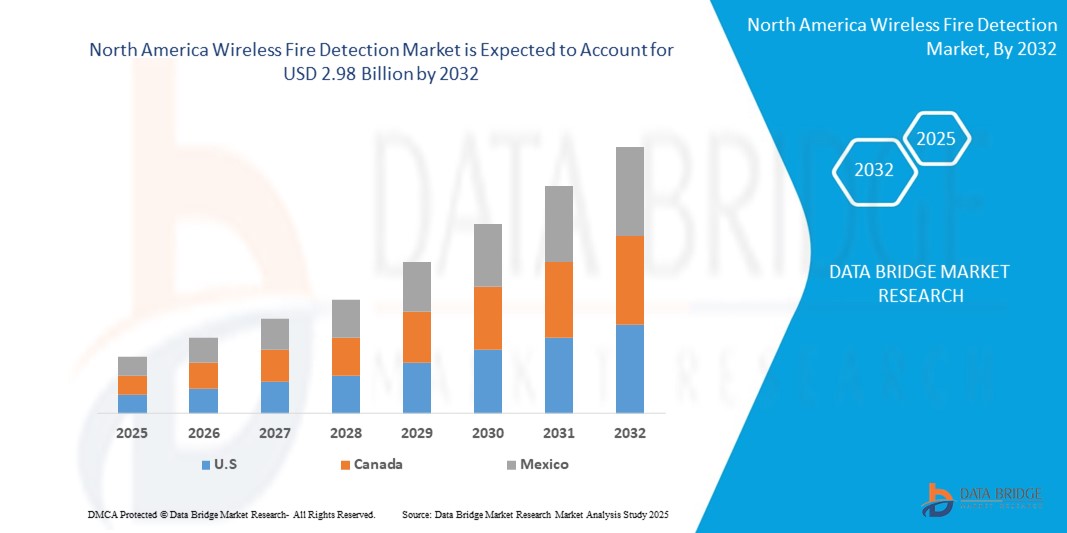
Wireless Fire Detection Market Size – Middle East and Africa
- The Middle East and Africa (MEA) Wireless Fire Detection Market was valued at USD 228.9 Million in 2025 and is projected to reach USD 312.6 Million by 2032, growing at a CAGR of 10.9% during the forecast period.
- This growth is driven by increasing urbanization, smart infrastructure initiatives, and stringent fire safety mandates in countries such as the UAE, Saudi Arabia, South Africa, and Qatar. Demand is particularly strong in retrofitting commercial properties, expanding smart city programs, and modernizing infrastructure with wireless and IoT-enabled life safety technologies.
Wireless Fire Detection Market Analysis – Middle East and Africa
- Wireless fire detection systems are increasingly preferred in MEA due to their cost-effective deployment, minimal infrastructure disruption, and growing compatibility with smart building systems. These systems offer crucial flexibility in a region that balances heritage preservation with modern construction growth.
- The GCC countries, led by the UAE and Saudi Arabia, are investing heavily in smart urban infrastructure, making wireless fire systems a strategic fit for both new construction and retrofits in skyscrapers, commercial malls, and multi-use developments.
- In South Africa and Nigeria, regulatory enforcement is driving adoption across industrial zones, logistics parks, and government facilities, where quick deployment and remote monitoring are vital.
- Advancements in multi-sensor detection, long-life lithium battery technology, and cloud-connected control systems are supporting market penetration. Adoption is further supported by increased awareness of fire safety standards and the need for scalable, compliant systems in rapidly urbanizing regions.
Report Scope and Wireless Fire Detection Market Segmentation
|
Attributes |
Wireless Fire Detection Market Key Insights |
|
Segments Covered |
|
|
Countries Covered |
Middle East and Africa
|
|
Key Market Players |
|
|
Market Opportunities |
|
|
Value Added Data Infosets |
This report provides a comprehensive view of the MEA wireless fire detection market, going beyond traditional segmentation and revenue data. It includes insights into regional building code standards, such as the UAE Fire and Life Safety Code and South Africa’s SANS 10139 framework, to help stakeholders assess regulatory alignment. The analysis also examines battery performance in high-temperature zones, signal strength benchmarks in dense infrastructure, and the impact of wireless systems in off-grid or hybrid power environments. Case studies highlight wireless deployments in landmark projects across Dubai, Riyadh, and Cape Town, showcasing real-world return on investment, maintenance savings, and speed of installation. Strategic frameworks such as PESTLE and Porter’s Five Forces are used to evaluate risk exposure, supplier power, and policy drivers across different MEA subregions. The report also includes government funding outlooks for public-sector safety upgrades, infrastructure modernization programs, and digital transformation strategies that support broader wireless adoption in the life safety ecosystem. |
Market Trends – Middle East and Africa Wireless Fire Detection Market
“Wireless Integration with Smart Buildings and Civil Defense-Compliant Platforms”
- A major trend shaping the MEA wireless fire detection market is the growing integration of wireless detectors with intelligent building systems, especially in GCC smart cities where real-time connectivity, remote monitoring, and digital compliance reporting are essential.
- Companies like Siemens, Honeywell, and Johnson Controls are offering IoT-enabled wireless fire platforms that support mobile alerting, cloud diagnostics, and BMS integration, ideal for high-rise and multi-use commercial buildings.
- 연기, 열, 일산화탄소 감지 기능을 결합한 다중 센서 감지기를 사용하는 추세가 주거 단지 와 공공 시설 모두로 확대되고 있습니다 . 이는 잘못된 경보를 줄이고 조기 감지 기능을 개선하려는 규제 요구 사항에 따른 것입니다.
- 아프리카에서는 태양열과 배터리로 최적화된 무선 시스템 의 도입이 증가하고 있으며, 특히 전기 접근이 제한적인 오프그리드 지역과 농촌 인프라 프로젝트에서 이러한 경향이 두드러지고 있습니다.
- 전반적으로 무선 화재 시스템은 생명 안전 도구일 뿐만 아니라 핵심적인 스마트 인프라 자산 으로 자리매김하고 있으며, 도시 회복력 과 빌딩 인텔리전스 에 대한 국가적 비전에 부합합니다 .
시장 동향 – 중동 및 아프리카 무선 화재 감지 시장
운전사
“도시 확장, 스마트 인프라 투자, 그리고 화재 규정 준수가 시장 수요를 촉진합니다.”
- UAE, 사우디아라비아, 카타르와 같은 국가의 급속한 도시화와 인프라 성장은 확장 가능하고 미래 지향적인 화재 안전 솔루션에 대한 수요를 창출하고 있습니다. 무선 화재 감지 시스템은 유선 시스템보다 더 빠르고 유연한 대안을 제공하여 신규 상업 및 고층 건물 개발에 이상적입니다.
- 사우디아라비아의 네옴(NEOM)과 두바이 2040 도시 기본 계획(Dubai 2040 Urban Master Plan)을 포함한 정부 지원 스마트 시티 사업은 지능형 빌딩 시스템 투자를 가속화하고 있습니다. 무선 화재 솔루션은 더욱 광범위한 IoT 기반 플랫폼에 통합되어 실시간 경보 및 중앙 집중식 모니터링을 통해 생명 안전을 강화하고 있습니다.
- 이 지역 전역에서 방화 규정 시행 및 안전 준수가 강화되고 있습니다. UAE 민방위 및 사우디 건축법 담당 기관과 같은 규제 기관은 신축 및 개보수 프로젝트 모두에 최신 감지 기술 도입을 의무화하고 있으며, 비용 효율성과 구축 용이성을 갖춘 무선 시스템을 선호하고 있습니다.
- 학교, 병원, 정부 청사 등 노후화된 사회 기반 시설의 개보수 기회가 대중 안전 의식 제고로 인해 증가하고 있습니다. 무선 시스템은 운영 중단을 최소화하고 배선 재구축 비용을 절감하여 공공 부문 개보수에 있어 선호되는 선택입니다.
제지/도전
“신흥 하위 지역의 제한된 인프라, 기술 노하우 및 비용 민감성”
- 사하라 이남 아프리카 일부 지역의 설치자 교육 및 지원 인프라가 부족하여 무선 시스템의 적절한 구축이 어렵습니다. 많은 지역에 공인 기술자나 딜러가 부족하여 설치가 최적화되지 않거나 프로젝트 출시가 지연되는 경우가 많습니다.
- 공공기관과 소규모 개발사들의 가격 부담에 대한 우려는 심각한 과제로 남아 있습니다. 고품질 무선 시스템의 초기 비용과 지속적인 배터리 교체 주기는 가격에 민감한 시장에서 장벽으로 여겨집니다.
- 농촌이나 외딴 지역의 연결 문제와 불안정한 전력 공급은 도입을 저해합니다. 무선 시스템은 안정적인 배터리 성능에 의존하며, 신호 증폭기나 메시 네트워크가 필요한 경우가 많은데, 모든 건물에 적합한 것은 아닙니다.
- 두꺼운 벽체, 고층 콘크리트 구조물, 또는 금속 산업 환경에서 발생하는 RF 신호 간섭은 신중하게 설계되지 않으면 무선 시스템의 효율성을 저하시킬 수 있습니다. 이로 인해 구매자는 성능이 보장되지 않는 유선 시스템에서 전환하는 것을 주저하게 됩니다.
- GCC 국가와 아프리카 국가 간에 서로 다른 기준을 적용하는 등 지역 전반에 걸쳐 단편화된 규제 체계는 공급업체에게 혼란을 야기하고 제품 인증 및 승인 과정을 지연시킵니다. 통일된 규정의 부재는 글로벌 제조업체의 시장 진입을 더욱 복잡하게 만듭니다.
무선 화재 감지 시장 범위 – 중동 및 아프리카
시장은 제품 유형 , 시스템 유형 , 설치 유형 및 최종 사용자를 기준으로 세분화되어 있으며 , 이는 해당 지역의 다양한 프로젝트와 다양한 규정 준수 요구 사항을 모두 반영합니다.
• 제품 유형별: 연기 감지기, 열 감지기, 다중 센서 감지기, 제어판 , 모듈 및 액세서리
포함 .
연기 감지기는 도시 건물의 의무적인 방화 규정으로 인해 2025년에 선두를 차지할 것입니다. 다중 센서 감지기는 복잡한 다층 건물에서 오경보 감소 및 감지 정확도 향상에 대한 수요 증가로 인해 주목을 받고 있습니다.
• 시스템 유형별: 완전 무선 시스템 과 하이브리드 무선 시스템
으로 구분됩니다 .
하이브리드 시스템은 기존 배선과의 통합이 용이하여 대규모 상업 및 산업 분야에서 우위를 점하고 있으며, 완전 무선 시스템은 신속한 구축이 중요한 중규모 주거, 교육 및 접객 분야에서 성장하고 있습니다.
• 설치 유형별 신규 설치 와 개량(retrofit)
을
모두 포함합니다 . 기존 인프라를 업그레이드하여 변화하는 건축 기준을 충족해야 하기 때문에 개량 프로젝트가 시장을 주도하고 있습니다. NEOM(사우디 아라비아) 및 두바이 2040 도시 기본 계획 과 같은 스마트 시티 계획에 따라 주요 도시에서 신규 설치가 증가하고 있습니다 .
• By End User
Includes residential, commercial, industrial, government, education, healthcare, and others.
Commercial and residential buildings lead in market share, driven by large-scale real estate development and insurance-driven fire code compliance. The healthcare and education sectors are showing strong adoption, especially in countries modernizing public infrastructure.
Regional Insights – Middle East and Africa
- United Arab Emirates (UAE)
The UAE leads the region in wireless fire detection adoption, supported by strong civil defense enforcement, smart building mandates, and widespread commercial high-rise development.
Dubai’s smart city framework and updated Fire and Life Safety Code support rapid deployment of wireless systems in towers, hotels, malls, and mixed-use complexes.
- Saudi Arabia
Saudi Arabia is investing heavily in intelligent safety infrastructure across Vision 2030 mega-projects, including NEOM and Red Sea Global developments.
Wireless systems are favored for their scalability and fast setup in large-scale, phased construction zones.
- South Africa
South Africa’s urban fire safety strategy is driving the use of wireless detection in public infrastructure, logistics, and industrial parks.
Compliance with SANS 10139 and ongoing modernization of aging facilities has led to growth in hybrid and battery-powered wireless systems.
- Qatar and Oman
Both countries are expanding their smart infrastructure portfolios, especially in education, sports venues, and cultural landmarks, supporting demand for wireless fire solutions that are easy to install and maintain.
Middle East and Africa Wireless Fire Detection Market Share
The competitive landscape of the Middle East and Africa wireless fire detection market is shaped by product compliance, distribution reach, regional certifications, and integration with modern building management systems. Market share is largely influenced by each company’s ability to deliver cost-effective, code-compliant, and scalable fire safety solutions tailored to the region’s mix of new urban construction and retrofit demand in aging infrastructure.
Leading companies such as Honeywell International Inc. (U.S.), Johnson Controls (Ireland/U.S.), Siemens AG (Germany), and Bosch Security Systems (Germany) dominate the MEA market due to their long-standing partnerships with civil defense authorities, broad product portfolios, and strong presence in commercial high-rise and government sectors across the GCC. Their wireless solutions are frequently adopted in smart city developments and high-tech commercial projects for their reliability, multi-sensor accuracy, and integration with building automation systems.
Emerging players and regional vendors, such as NAFFCO (UAE) and Apollo Fire Detectors (U.K. – Halma plc), are gaining ground by offering localized support, modular systems, and cost-competitive solutions for fast-growing sectors like healthcare, education, and affordable housing. These companies are expanding their reach by building distributor networks across Africa and tapping into government-funded retrofit projects in schools, hospitals, and municipal buildings.
The market continues to evolve with growing demand for mesh-networked wireless systems, remote diagnostics, and low-maintenance battery-powered detectors, all of which are critical for success in regions with infrastructure or resource limitations.
- Honeywell International Inc. (US)
- Johnson Controls International plc (Ireland / US Operations)
- Siemens AG (Germany – Middle East operations based in UAE and KSA)
- Robert Bosch GmbH (Germany – active in UAE and South Africa)
- Hochiki Corporation (Japan – regional offices in Dubai and Johannesburg)
- Kidde Fire Systems (United Technologies Corp.) (US)
- Fike Corporation (US)
- Apollo Fire Detectors Ltd. (Halma plc) (UK – Middle East base in Dubai)
- Zeta Alarms Ltd. (UK)
- NAFFCO (National Fire Fighting Manufacturing FZCO) (UAE)
Latest Developments in Middle East and Africa Wireless Fire Detection Market
- In May 2025, Honeywell International Inc. expanded its wireless fire detection solutions in the UAE by launching an advanced IoT-integrated fire alarm system designed for smart buildings, enhancing real-time monitoring and automated emergency responses.
- In April 2025, Johnson Controls International plc announced the rollout of its next-generation wireless fire detection devices across Saudi Arabia and South Africa, featuring enhanced battery life and AI-driven false alarm reduction technologies.
- In March 2025, Siemens AG completed a large-scale deployment of wireless fire detection systems in key infrastructure projects in Dubai and Riyadh, focusing on integration with building management systems to optimize fire safety and operational efficiency.
- In February 2025, Robert Bosch GmbH unveiled a new wireless fire detection sensor with multi-spectral smoke analysis, tailored for high-risk industrial environments in South Africa and the UAE.
- In January 2025, Hochiki Corporation introduced a regional support hub in Johannesburg to strengthen its wireless fire detection service and maintenance capabilities across Africa, alongside launching a new range of low-power wireless detectors.
- In December 2024, Kidde Fire Systems (UTC) launched an innovative wireless fire detection product line with enhanced signal resilience for the harsh environmental conditions common in Middle Eastern and African markets.
- In November 2024, Fike Corporation partnered with regional construction firms in the UAE to implement wireless fire detection systems in newly developed commercial complexes, focusing on scalable and easy-to-install solutions.
- In October 2024, Apollo Fire Detectors Ltd. (Halma plc) expanded its Middle East operations based in Dubai by introducing AI-enabled wireless fire detectors capable of early fire pattern recognition and predictive analytics.
- In September 2024, Zeta Alarms Ltd. announced a strategic collaboration with UAE-based smart city projects to integrate its wireless fire detection systems with IoT platforms for enhanced urban safety.
- In August 2024, NAFFCO (National Fire Fighting Manufacturing FZCO) unveiled a new wireless fire detection solution featuring edge computing capabilities, designed to offer faster on-site fire threat analysis and response coordination for critical infrastructure in the GCC region.
SKU-
세계 최초의 시장 정보 클라우드 보고서에 온라인으로 접속하세요

- 대화형 데이터 분석 대시보드
- 높은 성장 잠재력 기회를 위한 회사 분석 대시보드
- 사용자 정의 및 질의를 위한 리서치 분석가 액세스
- 대화형 대시보드를 통한 경쟁자 분석
- 최신 뉴스, 업데이트 및 추세 분석
- 포괄적인 경쟁자 추적을 위한 벤치마크 분석의 힘 활용
연구 방법론
데이터 수집 및 기준 연도 분석은 대규모 샘플 크기의 데이터 수집 모듈을 사용하여 수행됩니다. 이 단계에는 다양한 소스와 전략을 통해 시장 정보 또는 관련 데이터를 얻는 것이 포함됩니다. 여기에는 과거에 수집한 모든 데이터를 미리 검토하고 계획하는 것이 포함됩니다. 또한 다양한 정보 소스에서 발견되는 정보 불일치를 검토하는 것도 포함됩니다. 시장 데이터는 시장 통계 및 일관된 모델을 사용하여 분석하고 추정합니다. 또한 시장 점유율 분석 및 주요 추세 분석은 시장 보고서의 주요 성공 요인입니다. 자세한 내용은 분석가에게 전화를 요청하거나 문의 사항을 드롭하세요.
DBMR 연구팀에서 사용하는 주요 연구 방법론은 데이터 마이닝, 시장에 대한 데이터 변수의 영향 분석 및 주요(산업 전문가) 검증을 포함하는 데이터 삼각 측량입니다. 데이터 모델에는 공급업체 포지셔닝 그리드, 시장 타임라인 분석, 시장 개요 및 가이드, 회사 포지셔닝 그리드, 특허 분석, 가격 분석, 회사 시장 점유율 분석, 측정 기준, 글로벌 대 지역 및 공급업체 점유율 분석이 포함됩니다. 연구 방법론에 대해 자세히 알아보려면 문의를 통해 업계 전문가에게 문의하세요.
사용자 정의 가능
Data Bridge Market Research는 고급 형성 연구 분야의 선두 주자입니다. 저희는 기존 및 신규 고객에게 목표에 맞는 데이터와 분석을 제공하는 데 자부심을 느낍니다. 보고서는 추가 국가에 대한 시장 이해(국가 목록 요청), 임상 시험 결과 데이터, 문헌 검토, 재생 시장 및 제품 기반 분석을 포함하도록 사용자 정의할 수 있습니다. 기술 기반 분석에서 시장 포트폴리오 전략에 이르기까지 타겟 경쟁업체의 시장 분석을 분석할 수 있습니다. 귀하가 원하는 형식과 데이터 스타일로 필요한 만큼 많은 경쟁자를 추가할 수 있습니다. 저희 분석가 팀은 또한 원시 엑셀 파일 피벗 테이블(팩트북)로 데이터를 제공하거나 보고서에서 사용 가능한 데이터 세트에서 프레젠테이션을 만드는 데 도움을 줄 수 있습니다.











