



Asia-Pacific Frozen Ready Meals Market, By Type (Frozen Rice Mixes, Frozen Quinoa Food Mixes, Frozen Pizza, Frozen Pasta, Frozen Wraps & Rolls, Frozen Snacks, Frozen Ice Cream, Frozen Yogurt, Frozen Cakes, Frozen Sorbet And Sherbet, Frozen Custard, Frozen Drinks, Frozen Savory Products And Frozen Soup, Frozen Dairy Products, Frozen Chicken Products, Frozen Seafood Products, And Others), Category(Organic And Conventional) Technology (Flash-Freezing/ Individual Quick Freezing (IQF), Belt Freezing, High Pressure-Assisted Freezing, And Others), End User (Food Service Sector And Households), Packaging Technique (Freezing Technique And Equipment And Freezing Ready Meals Packaging And Distribution Channel (Store-Based And Non-Store Retailers) - Industry Trends and Forecast to 2029.
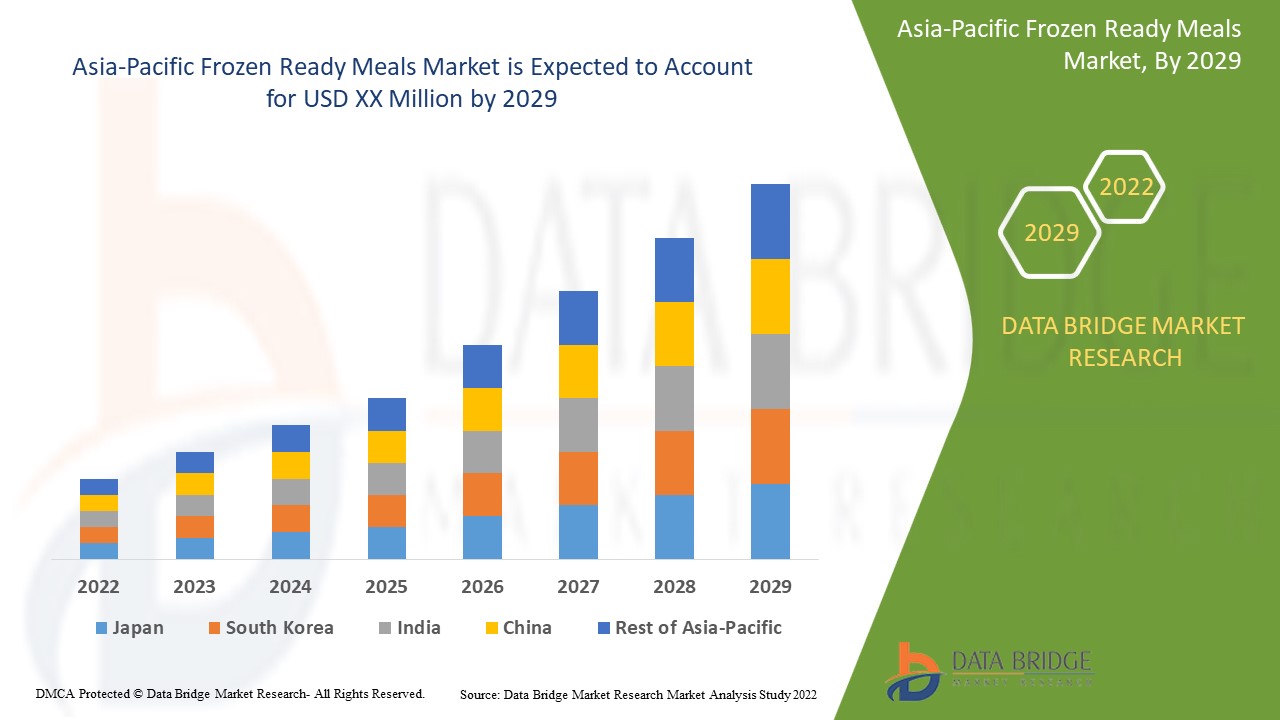
Asia-Pacific Frozen Ready Meals Market Analysis and Insights
Asia-Pacific frozen ready meals market is gaining significant growth due to the growing food & beverage industry and the rising demand for frozen meals & food products. The increase in demand for frozen snacks is also boosting the growth of the Asia-Pacific frozen-ready meals market. However, stringent government regulations associated with labeling & claims are expected to restrain the market growth of the frozen ready meals market during the forecast period.
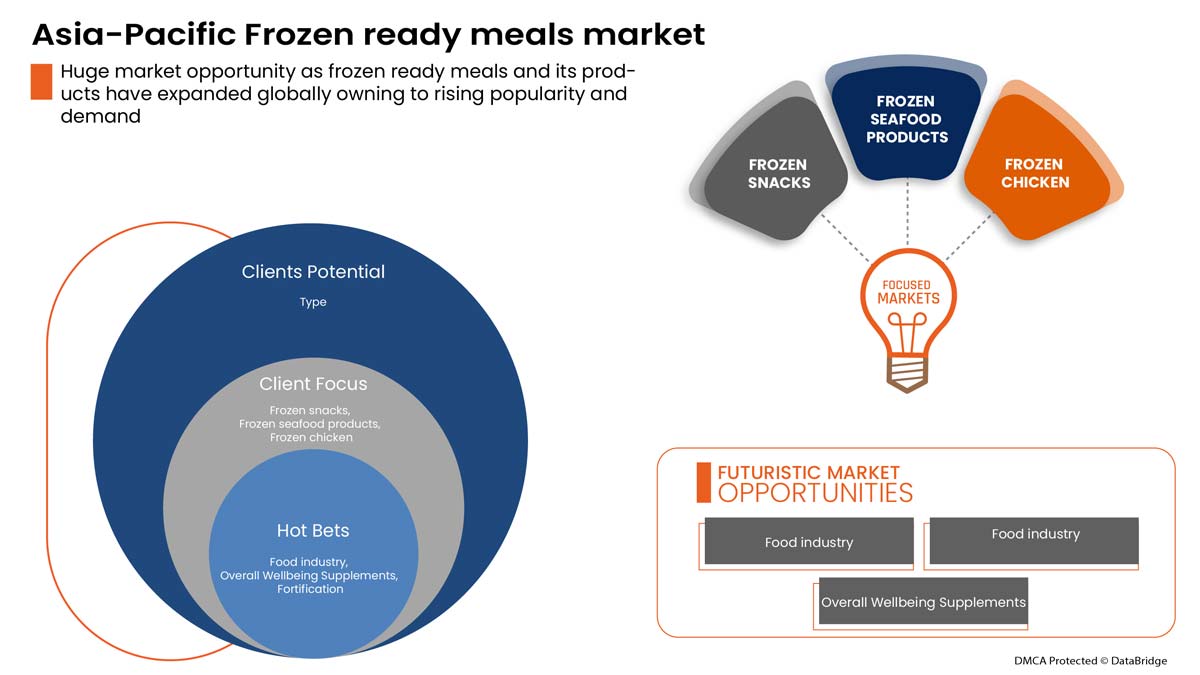
Data Bridge Market Research analyses that the Asia-Pacific frozen ready meals market will grow at a CAGR of 6.2% during the forecast period of 2022 to 2029.
|
Report Metric |
Details |
|
Forecast Period |
2022 to 2029 |
|
Base Year |
2021 |
|
Historic Years |
2020 (Customizable to 2019- 2015) |
|
Quantitative Units |
Revenue in USD Million |
|
Segments Covered |
By Type (Frozen Rice Mixes, Frozen Quinoa Food Mixes, Frozen Pizza, Frozen Pasta, Frozen Wraps & Rolls, Frozen Snacks, Frozen Ice Cream, Frozen Yogurt, Frozen Cakes, Frozen Sorbet And Sherbet, Frozen Custard, Frozen Drinks, Frozen Savory Products And Frozen Soup, Frozen Dairy Products, Frozen Chicken Products, Frozen Seafood Products, And Others), Category(Organic And Conventional) Technology (Flash-Freezing/ Individual Quick Freezing (IQF), Belt Freezing, High Pressure-Assisted Freezing, And Others), End User (Food Service Sector And Households), Packaging Technique (Freezing Technique And Equipment And Freezing Ready Meals Packaging And Distribution Channel (Store-Based And Non-Store Retailers) |
|
Regions Covered |
Japan, Indonesia, China, Philippines, India, South Korea, Australia, Thailand, Malaysia, New Zealand, Vietnam, Singapore, Rest of Asia-Pacific |
|
Market Players Covered |
JBS S/A, The Kraft Heinz Company, Dr. Oetker, BRF Global, General Mills Inc., Nestlé, Kellogg Co., Ajinomoto Co., Inc., and McCain Foods Limited. |
Market Definition
Frozen-ready meals are usually cooked and packaged in a factory. This process includes heating the ingredients and packaging them into containers. Once the meal is prepared and placed in a freezer to cool down, they are popular among consumers because they provide a diverse menu and are convenient to prepare. Frozen meals may contain a meat entree, a vegetable, and starch-based food such as pasta and sauce. Some frozen meals are prepared specifically for vegetarians or individuals with certain dietary needs. The manufacture of such a product requires careful attention from the food processor.
Asia-Pacific Frozen Ready Meals Market Dynamics
Drivers
- Increased use of frozen food in the food service industry
The food service sector is one of the largest sectors where frozen food products are consumed, as frozen ready meals need less preparation and lower customer wait times. Fast food chains and quick service restaurants have incorporated frozen ready meals as fresh ingredient alternatives. Also, restaurants, hotels, and cafes that utilize frozen ready meals save money on labor, space, equipment, and food waste. Since they do not use traditionally competent personnel but those who have been trained to do their simplified roles. Convenience foods need more freezer space but less preparation space. All these factors have increased the use of frozen ready meals in the food service industry. The market for frozen meals in the food service sector will continue to increase as long as frozen-ready meal manufacturers supply a choice of products with consistency and excellent quality to the market players of the food service industry. Furthermore, increased internet penetration and easy smartphone access have made more purchases through online channels. As a result, some food chains are moving toward internet portals to improve online food ordering for these fast food chains, boosting the market's growth.
- Rising preference for ready-to-eat organic foods
In recent years, ready-to-eat food has evolved as one of the most diversified sections of the global ready-meal business. A growth in convenience patterns and an increase in demand for organic meals have led to a growing need for organic frozen packaged meals. The organic frozen food and beverage sector is another stop for on-the-go consumers, offering anything from frozen sweets to appetizers and meals. Organic frozen ready meals are popular among consumers due to their lack of microbiological and fungal contamination. Also, the nutritional and health benefits offered by organic frozen ready meals have led to the growth in market demand. So to appeal to a larger consumer seeking health and flavor, frozen packaged food makers are also integrating nutritious benefits with taste leading to the growth of the global frozen ready meals market. Changing consumer preferences for plant-based, vegan products are paving the way for organic, convenient food products, resulting in increased demand for frozen ready meals in the market.
Opportunities
-
Digitalization of the retail industry
Digital transformation of the food retail industry to improve their service and facilities to stay ahead of the curve and to cater to the customers' demand will provide immense opportunity to frozen food manufacturers. The increase in the inclination of consumers towards online shopping of food products due to its convenience and availability of a wide variety of frozen ready meals on online platforms is creating a huge opportunity for the frozen ready meals market. Online grocery shopping is the major trend going on, which is expected to propel the growth of the market. Moreover, the online shopping platform helps the manufacturers showcase their wide range of products in different categories and sell their food products. In addition to the growing penetration of smartphone and internet usage, retail grocery shopping is emerging as one of the platforms for frozen food manufacturers to grow in the market. The change in consumer shopping patterns and increasing demand for convenient grocery shopping are expected to create great opportunities for frozen food manufacturers.
Restraints/Challenges
- Presence of fats in frozen ready meals
Trans fats are linked to heart disease and blocked arteries in packaged or frozen foods. This lipid raises bad cholesterol (LDL) while decreasing good cholesterol (HDL) (HDL). All of this adds to heart disease. Such foods are also heavy in sodium, which can boost cholesterol levels. Also, Frozen foods are incredibly heavy in fat. These foods have an almost double fat-to-carbohydrate-to-protein ratio, which explains why they are high in calories restraining the demand for frozen food among health-conscious consumers.
Furthermore, frozen meals have a large salt level, so that they might raise blood pressure. Excess salt consumption also increases the risk of various medical disorders such as stroke and heart disease. As more people are becoming more aware of these effects of frozen food, the more they prefer fresh food over frozen food, hindering the market growth of frozen ready meals.
For instance,
- A regular frozen pizza has roughly the same nutritional value as a similar-sized pizza from your favorite pizza chain. For example, it is high in calories (1,920 per "six-serving" pizza), saturated fat (30 grams), and salt (a whopping 5,040 milligrams)
- Most frozen burritos combine convenience with nutritional drawbacks: An eight-ounce frozen burrito (sizes range from eight to fourteen ounces) may include 500-600 calories, 7-9 grams of saturated fat, and half the salt most individuals should have in a day
Thus, as mentioned above, the presence of excess and unhealthy fat in most frozen ready meals may act as a restraining factor for the global frozen ready meals market growth.
- High competition among the market players
The high competition among the existing market players poses a significant challenge for the new players who wish to enter the market as several players are offering various frozen ready meals products in high quality to fulfill the demand of the end-users. The existing players in the market, such as Nestlé, General Mills Inc., Conagra Brands, Inc., The Kraft Heinz Company, Nomad Foods, JBS S/A, and others, offer a large number of different frozen ready meals products and are constantly engaged in launching new products with high-quality, therefore, causing major competition in the market. Moreover, local players and small-scale manufacturers offer low-quality products at lower prices, affecting the global frozen ready meals market. In addition, an increase in manufacturers offering a wide range of frozen ready meals will cause tough competition for the other players in the market.
Post COVID-19 Impact on Asia-Pacific Frozen Ready Meals Market
Post the pandemic, the demand for frozen ready meals has increased as there won't be any restrictions on movement; hence, the supply of products would be easy. In addition, the growing busy lifestyles and hectic work schedules enable consumers to op for ready meal options, which is expected to drive the market's growth.
For instance,
- In November, Mosaic Foods raised USD 6 million in a seed round led by Gather Ventures. The company aims to expand its direct-to-consumer business, develop new products, and expand into offline channels
Recent Developments
- In January, BRF Global acquired Joody Al Sharqiya Food Production Factory, a company that operates a food processing plant in Dammam, Saudi Arabia
- In June, Tyson Foods Introduces New Plant-Based Products, Including the First PrideTM Brand in the Asia Pacific. The company introduces plant-based innovations for Asia's expanding market. This helped the company to establish business and capture the market in the Asia Pacific region
Asia-Pacific frozen ready meals market Scope
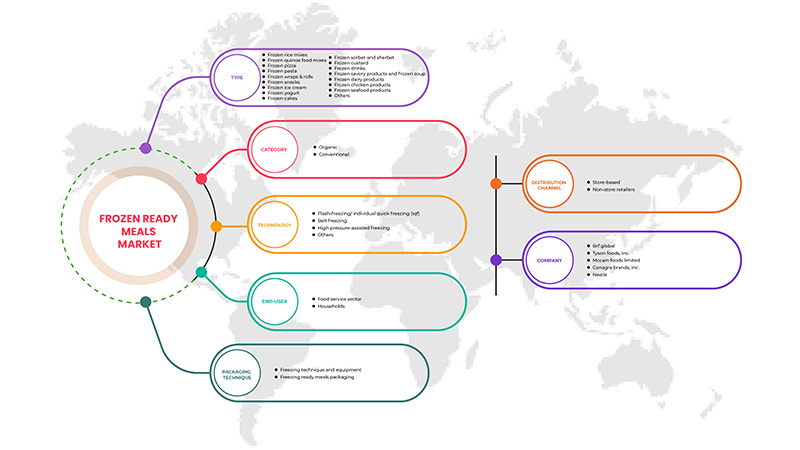
Asia-Pacific frozen ready meals market is segmented into six segments based on type, category, technology, end user, packaging technique, and distribution channel.
The growth amongst these segments will help you analyze major growth segments in the industries and provide the users with a valuable market overview and market insights to make strategic decisions to identify core market applications.
Types
- Frozen Snacks
- Frozen Pizza
- Frozen Ice Cream
- Frozen Seafood Products
- Frozen Chicken Products
- Frozen Yoghurt
- Frozen Dairy Products
- Frozen Pasta
- Frozen Drinks
- Frozen Vegetarian Meals
- Frozen Sorbet and Sherbet
- Frozen Cakes
- Frozen Wraps & Rolls
- Frozen Custard
- Frozen Soup
- Frozen Quinoa Food Mixes
- Frozen Rice Mixes
- Others
On the basis of type, the global frozen ready meals market is segmented into frozen rice mixes, frozen quinoa food mixes, frozen pizza, frozen pasta, frozen wraps & rolls, frozen snacks, frozen ice cream, frozen yogurt, frozen cakes, frozen sorbet and sherbet, frozen custard, frozen drinks, frozen savory products and frozen soup, frozen dairy products, frozen chicken products, frozen seafood products, and others.
Category
- Organic
- Conventional
On the basis of category, the global frozen ready meals market is segmented into organic and conventional.
Technology
- Flash-Freezing/ Individual Quick Freezing (IQF)
- Belt Freezing
- High Pressure-Assisted Freezing
- Others
On the basis of technology, the global frozen ready meals market is segmented into flash-freezing/ individual quick freezing (IQF), belt freezing, high pressure-assisted freezing, and others.
End-User
- Household/Retail Sector
- Food Service Sector
On the basis of end-user, the global frozen ready meals market is segmented into the food service sector and households.
Packaging Technique
- Frozen Ready Meals Packaging
- Freezing Technique & Equipment
On the basis of packaging technique, the global frozen ready meals market is segmented into freezing technique and equipment and freezing ready meals packaging.
Distribution Channel
- Store Based Retailers
- Non-Store Retailers
On the basis of distribution channel, the global frozen ready meals market is segmented into store-based and non-store retailers.
Asia-Pacific Frozen Ready Meals Market Regional Analysis/Insights
Asia-Pacific frozen ready meals market is analyzed, and market size insights and trends are provided based on as referenced above.
The countries covered in the frozen ready meals market report are Japan, Indonesia, China, Philippines, India, South Korea, Australia, Thailand, Malaysia, New Zealand, Vietnam, Singapore, Rest of Asia-Pacific.
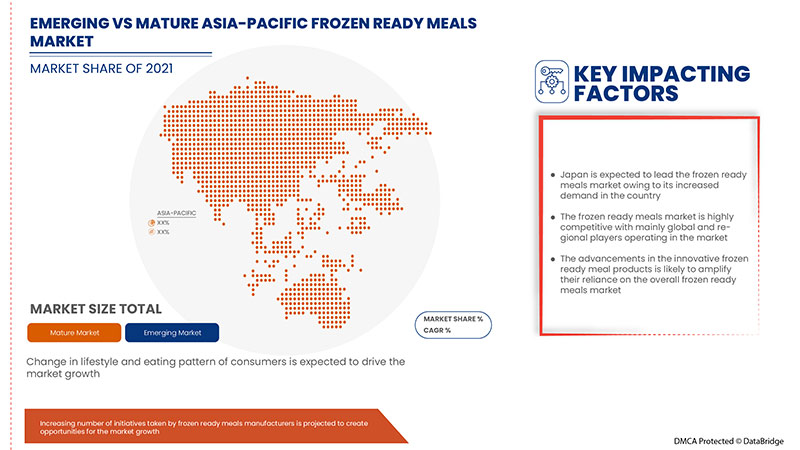
Japan dominates the Asia-Pacific frozen ready meals market in terms of market share and market revenue and will continue to flourish its dominance during the forecast period. This is due to the growing demand for frozen snacks, meals, and frozen meat in Japan, owing to the busy lifestyle and easy availability.
The country section of the report also provides individual market impacting factors and changes in regulations in the market that impact the current and future trends of the market. Data points, such as new and replacement sales, country demographics, disease epidemiology, and import-export tariffs, are some of the major pointers used to forecast the market scenario for individual countries. In addition, the presence and availability of Europe brands and their challenges faced due to high competition from local and domestic brands and the impact of sales channels are considered while providing a forecast analysis of the country data.
Competitive Landscape and Asia-Pacific Frozen Ready Meals Market Share Analysis
Asia-Pacific frozen ready meals market competitive landscape provides details of the competitors. Details included are company overview, company financials, revenue generated, market potential, investment in research and development, new market initiatives, Asia-Pacific presence, production sites and facilities, production capacities, company strengths and weaknesses, product launch, product width, and breadth, and application dominance. The above data points only relate to the companies' focus on the Asia-Pacific frozen ready meals market.
JBS S/A, The Kraft Heinz Company, Dr. Oetker, BRF Global, General Mills Inc., Nestlé, Kellogg Co., Ajinomoto Co., Inc., and McCain Foods Limited.
SKU-
Obtenha acesso online ao relatório sobre a primeira nuvem de inteligência de mercado do mundo

- Painel interativo de análise de dados
- Painel de análise da empresa para oportunidades de elevado potencial de crescimento
- Acesso de analista de pesquisa para personalização e customização. consultas
- Análise da concorrência com painel interativo
- Últimas notícias, atualizações e atualizações Análise de tendências
- Aproveite o poder da análise de benchmark para um rastreio abrangente da concorrência
Metodologia de Investigação
A recolha de dados e a análise do ano base são feitas através de módulos de recolha de dados com amostras grandes. A etapa inclui a obtenção de informações de mercado ou dados relacionados através de diversas fontes e estratégias. Inclui examinar e planear antecipadamente todos os dados adquiridos no passado. Da mesma forma, envolve o exame de inconsistências de informação observadas em diferentes fontes de informação. Os dados de mercado são analisados e estimados utilizando modelos estatísticos e coerentes de mercado. Além disso, a análise da quota de mercado e a análise das principais tendências são os principais fatores de sucesso no relatório de mercado. Para saber mais, solicite uma chamada de analista ou abra a sua consulta.
A principal metodologia de investigação utilizada pela equipa de investigação do DBMR é a triangulação de dados que envolve a mineração de dados, a análise do impacto das variáveis de dados no mercado e a validação primária (especialista do setor). Os modelos de dados incluem grelha de posicionamento de fornecedores, análise da linha de tempo do mercado, visão geral e guia de mercado, grelha de posicionamento da empresa, análise de patentes, análise de preços, análise da quota de mercado da empresa, normas de medição, análise global versus regional e de participação dos fornecedores. Para saber mais sobre a metodologia de investigação, faça uma consulta para falar com os nossos especialistas do setor.
Personalização disponível
A Data Bridge Market Research é líder em investigação formativa avançada. Orgulhamo-nos de servir os nossos clientes novos e existentes com dados e análises que correspondem e atendem aos seus objetivos. O relatório pode ser personalizado para incluir análise de tendências de preços de marcas-alvo, compreensão do mercado para países adicionais (solicite a lista de países), dados de resultados de ensaios clínicos, revisão de literatura, mercado remodelado e análise de base de produtos . A análise de mercado dos concorrentes-alvo pode ser analisada desde análises baseadas em tecnologia até estratégias de carteira de mercado. Podemos adicionar quantos concorrentes necessitar de dados no formato e estilo de dados que procura. A nossa equipa de analistas também pode fornecer dados em tabelas dinâmicas de ficheiros Excel em bruto (livro de factos) ou pode ajudá-lo a criar apresentações a partir dos conjuntos de dados disponíveis no relatório.











