


Asia-Pacific Microbial Based Biological Seed Treatment Market, By Product (Biofertilizers, Biostimulants, Biopesticides, Plant Growth Regulators (PGRs), and Others), Form (Dry, and Liquid), Method (Seed Coating, Seed Pelleted, Suspensions, Seed Dressing, and Others.), Treatment Machine (Coating Machine, Dressing Machine, and Pelleting Machine), Function (Seed Protection, and Seed Enchantments), Distribution Channel (Direct Tenders, and Retailing), Crop Type( Cereals & Grains, Oilseed & Pulses, Fruits, Vegetables, Herbs, Turf & Ornamental, Floral, and others) Industry Trends and Forecast to 2029.
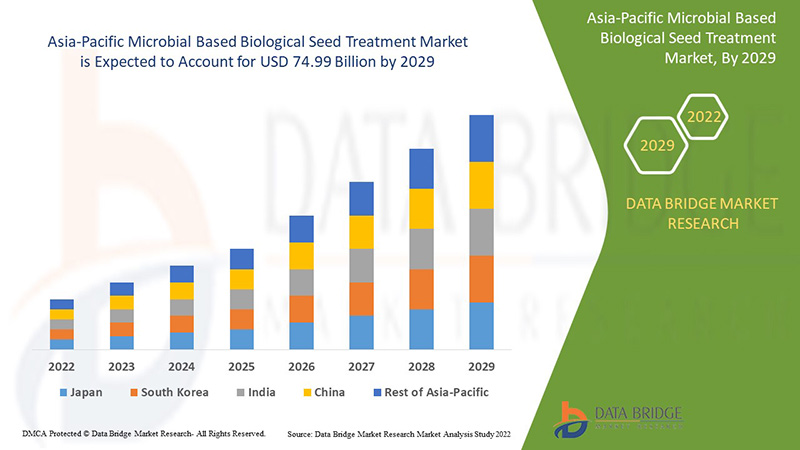
Asia-Pacific Microbial Based Biological Seed Treatment Market Analysis and Insights
Asia-Pacific microbials based biological seed treatment market is gaining significant growth due to an increase in the harmful effects associated with chemical pesticides, and fertilizers have increased the demand for bio-based seed treatment in the region. In addition, consumers' growing inclination, especially after COVID-19, towards organic and natural products to stay healthy and avoid medical conditions. Furthermore, the growing legal restrictions against chemical products in the Asia-Pacific region and the increased focus on environmental protection make biological seed treatment even more intriguing. Thus, this will help the market grow in the coming years.
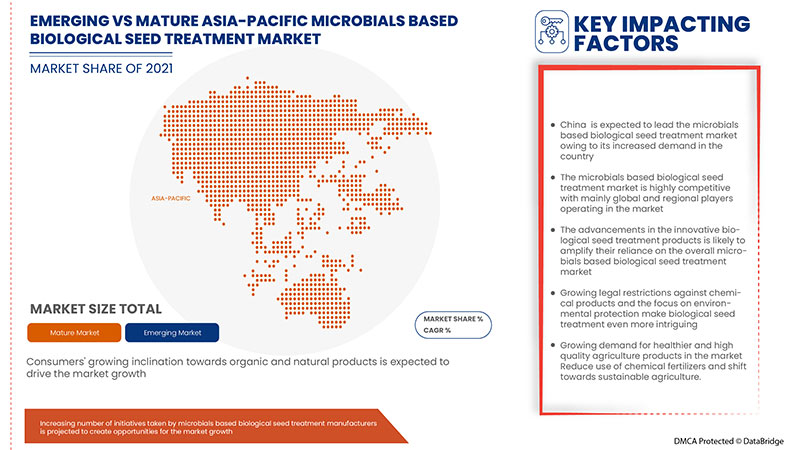
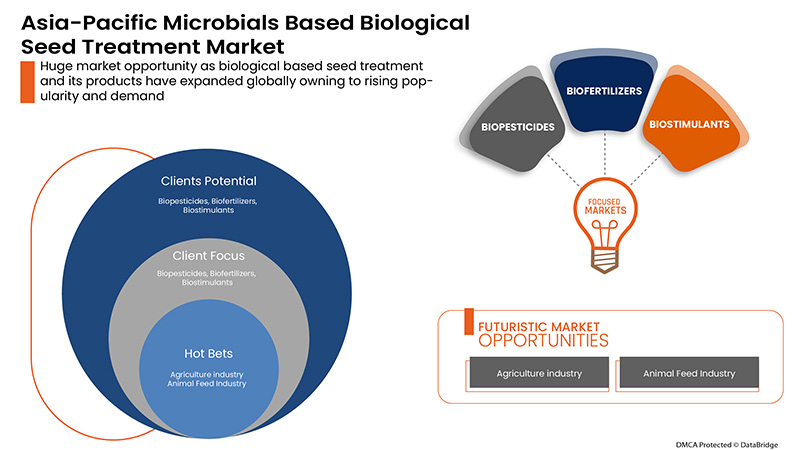
Therefore, the rising standards and regulations laid by governmental bodies must be followed by the manufacturer to sell their products into the market and ensure consumer demands will boost the market's growth. At the same time, the lack of technical expertise in small enterprises is likely to restrict the market's growth in the region.
Data Bridge Market Research analyses that the Asia-Pacific microbials based biological seed treatment market will grow at a CAGR of 11.1% during the forecast period from 2022 to 2029.
|
Report Metric |
Details |
|
Forecast Period |
2022 to 2029 |
|
Base Year |
2021 |
|
Historic Years |
2020 (Customizable to 2019 - 2015) |
|
Quantitative Units |
Revenue in USD Million, Pricing in USD |
|
Segments Covered |
By Product (Biofertilizers, Biostimulants, Biopesticides, Plant Growth Regulators (PGRs), and Others), Form (Dry, and Liquid), Method (Seed Coating, Seed Pelleted, Suspensions, Seed Dressing, and Others.), Treatment Machine (Coating Machine, Dressing Machine, and Pelleting Machine), Function (Seed Protection, and Seed Enchantments), Distribution Channel (Direct Tenders, and Retailing), Crop Type ( Cereals & Grains, Oilseed & Pulses, Fruits, Vegetables, Herbs, Turf & Ornamental, Floral, and others). |
|
Regions Covered |
China, Japan, Australia, India, Philippines, Indonesia, Singapore, South Korea, Malaysia, New Zealand, Thailand, and Rest of the Asia-Pacific. |
|
Market Players Covered |
Syngenta Crop Protection AG, Bayer AG, BASF SE, UPL, FMC Corporation, ADAMA, Albaugh, LLC., Arysta LifeScience Corporation, BioWorks Inc., Croda International Plc, Germains Seed Technology, Hello Nature International, Koppert, Marrone Bio Innovations, Inc., Novozymes, Plant Health Care plc. , T.Stanes and Company Limited, Tagros Chemicals India Pvt. Ltd., Valent BioSciences LLC, and Verdesian Life Sciences, among others. |
Market Definition
Biological seed treatments are a wide class of products with active ingredients, including living microbes, plant extracts, fermentation products, phytohormones, and even hard chemistry. Biological substances are applied to the seed in the form of a powder or a liquid. A uniform coating covers the entire seed. The seed is available to the beneficial ingredients when it needs them in this way. Active agents in biological seed treatment can include microbes such as fungi and bacteria, as well as plant extracts and algal extracts. Beneficial microorganisms from arbuscular mycorrhizal fungus, Trichoderma spp, rhizobia, and other bacteria are applied to seeds before sowing to improve germination. A crop treated with biological seed functions as a biostimulant making it stronger and more productive. The treatment increases agricultural yields while assisting plants in fending diseases and reducing biotic stress. The microorganisms that support plant growth colonize the roots and shield the crop throughout the entire growing season. The applications of microbials based biological seed treatment are diverse.
Asia-Pacific Microbial Based Biological Seed Treatment Market Dynamics
This section deals with understanding the market drivers, opportunities, restraints, and challenges. All of this is discussed in detail as below:
Drivers
- Growing adoption of organic farming
The government's increased approvals for biopesticide products are one of the market's main driving factors. The government's approval for biopesticide products such as biofungicide, bioinsecticide, bioherbicides, and others fosters the manufacturers to launch more natural and biological products to support sustainable agriculture. Also, the rise in approvals is spreading awareness among consumers to opt for more natural, clean, and organic products, leading to farmers adopting biopesticides rather than chemical pesticides to fulfill consumers' growing demand. Thus, increasing the demand for biopesticides among farmers and growth in the number of biopesticide product approval will drive market growth.
In addition, consumers are more aware and concerned about their food and demand more natural and organic ingredients without any chemicals used to avoid medical conditions. Furthermore, after COVID-19, the government has also increased the approvals for bio-based pesticides to fulfill consumer demands, which adds to the market's growth.
- Increase in launches of biological plant growth products for agriculture
Adopting organic farming is on the rise, increasing the demand for natural seed treatment products such as biopesticides, biostimulants, and biofungcides. The need for organic crops, fruits, vegetables, cereals, and other crops increases among the consumers to live a clean and healthy lifestyle which increases the demand for organic farming. The awareness regarding the benefits of consuming organic crops to human health and environmental benefits is increasing among the consumers, forcing the farmers to adopt organic practices to fulfill the growing demand of consumers. The increase in the adoption of organic farming by farmers is leading to a rise in the demand for natural seed treatment products to reduce pollution & environmental damage and the residue levels from the food chain. The high adoption rate for organic farming is increasing the demand for natural & organic products worldwide.
For instance,
- In 2019, according to Eurostat, 13.8 million hector areas of Europe land belonged to the organic farming
- According to The World of Organic Agriculture, in 2018, the organic agriculture practice was adopted by 186 countries, and around 71.5 million hector land belongs to organic farming. Also, the sales of organic food & beverages reached 97 million Euros
The adoption of organic farming is increasing worldwide with the rising health and environmental concerns, which is proportional to the increase in the demand for biological products.
Opportunities
- Rise in environmental pollution caused by chemical pesticides
As soil-borne particles or substances dissolve in water, chemical pesticides may be carried by runoff. Pesticide runoff from treated regions can contaminate wells, ponds, lakes, and streams. Surface water containing pesticide residues can harm wildlife and plants and affect groundwater. Chemical pesticides can pollute turf, water, and other vegetation. Pesticides can be poisonous to various organisms in addition to insects and weeds, such as birds, fish, helpful insects, and non-target plants. Insecticides are the most highly hazardous pesticides, although herbicides can also harm non-target organisms.
Type of contaminations caused by chemical pesticides.
- Surface water contamination- chemical pesticides can enter surface water through soil runoff and plants that have been treated. Pesticides commonly cause water to become contaminated. The herbicide 2,4-D was the most frequently found pesticide
- Groundwater contamination- Groundwater pollution due to pesticides is a global problem. According to the USGS, at least 143 different pesticides and 21 transformation products have been found in groundwater, including pesticides from every major chemical class
- Soil contamination- Bioaccumulable pesticides that are strongly bound to the soil. Pesticides that exhibit such behavior include organochlorine DDT, endosulfan, endrin, heptachlor, and lindane, among others. Most of them are banned in agriculture, but their residues are still in the soil. Heavy soil treatment with pesticides can cause beneficial soil microorganisms to decline. Due to this, soil fertility also declined
- Contamination of air, soil, and non-target vegetation- Pesticide sprays can contaminate the air, soil, and non-target plants by drifting or volatilizing from the treated region. Some pesticide drifts, even from ground-based equipment, every time a pesticide is applied
- Pesticides impact on human health and hazardous levels- Farm workers face particular risks of poisoning from skin contact and inhalation while handling and treating pesticides to crops. Pesticide affects a spectrum of oncological (cancer), pulmonary dysfunction, immune system inadequacies, and inborn abnormalities
With growing concerns about the environmental impact of the agricultural sector and its production systems, there is an urgent need for more sustainable, environmentally friendly crop production processes. This will create a great opportunity in the biological seed treatment market
Plant-beneficial microorganisms (PBMs) are considered a natural alternative to conventional farming methods for reducing environmental stress. These bacteria can assist plants in maintaining or increasing productivity while using fewer agrochemicals, restoring soil fertility, and overcoming issues caused by abiotic and biotic stresses.
Thus, increasing awareness about the harmful effect of chemical pesticides influences customers more toward biological products. There has been a consistent demand for biopesticides, biofertilizers, and others. In the agriculture sector, manufacturers are also launching new products to expand further in this sector, which may promote market growth in the forecast period.
Restraints/Challenges
- Government regulatory barriers for biological seed treatment products
Different nations and regions have different regulatory environments for active biological components. In some countries, biologicals must be registered under specific laws, or they could be registered similarly to chemical plant protection products. Sometimes there are fewer data requirements, and other times there might not even be a clearly defined registration process. The EU demands that a biopesticides product's efficacy be quantified and demonstrated to support label claims. Only permitted biopesticides can be lawfully utilized for crop protection. According to OECD recommendations, biopesticides should only be approved if they pose little risk.
Furthermore, the biopesticides registration data portfolio required by the regulator is typically a modified version of the one in existence for conventional chemical pesticides. It is utilized by the regulator to perform a risk assessment. It contains details on the method of action, toxicological and ecotoxicological assessments, host range tests, and other factors. The cost of producing this data may discourage businesses from commercializing biopesticides, which are often niche market products.
Therefore, not having an appropriate system for biopesticide registration ensures the safety and does not inhibit commercialization which may negatively impact the Asia-Pacific microbials -based biological seed treatment market.
- Availability of chemical-based substitutes
An increase in the use of chemical pesticides, fertilizers, and stimulants across various regions of Asia-Pacific because of the conventional approach of the farmers in the different areas of the world may affect the growth of bio-based products in the market.
Post COVID-19 Impact on Asia Pacific Microbial Based Biological Seed Treatment market
Post the pandemic, the demand for biological seed treatment has increased as there won't be any restrictions on movement, so the supply of products would be easy. In addition, the growing trend of using bio-based organic and natural seed treatment products may propel the market's growth.
The increased demand for microbials based biological seed treatment enables manufacturers to launch innovative and multifunctional seed treatment products, which ultimately increases the demand for microbial based biological seed treatment and has helped the market grow.
Moreover, the high demand for biological seed treatment products will drive the market's growth. Furthermore, the increased demand for organic and natural products after the COVID-19 pandemic resulted in market growth, as consumers were more concerned about their health. Additionally, consumers' interest in new technologies and multipurpose products is expected to fuel the growth of the Asia-Pacific microbial based biological seed treatment market.
Recent Developments
- In February 2021, Novozymes entered the biocontrol segment of agriculture with promising enzyme-based technology and expanded beyond its current microbial products and innovation base. The new technology has broad potential to control major pests that impact the agricultural industry and are responsible for billions of dollars of damages each year
Asia-Pacific Microbial Based Biological Seed Treatment Market Scope
The Asia-Pacific microbial based biological seed treatment market is segmented based on product , form, method, treatment machine, function, distribution channel, and crop type. The growth amongst these segments will help you analyze major growth segments in the industries and provide the users with a valuable market overview and market insights to make strategic decisions to identify core market applications.
Product
- Biofertilizers
- Biostimulants
- Biopesticides
- Plant growth regulators (PGRs)
- Others
On the basis of product, the Asia-Pacific microbial based biological seed treatment market is segmented into Biofertilizers, Biostimulants, Biopesticides, Plant Growth Regulators (PGRs), and others.
Form
- Dry
- Liquid
On the basis of form, the Asia-Pacific microbial based biological seed treatment market is segmented into dry, and liquid.
Method
- Seed Coating
- Seed Pelleted
- Suspensions
- Seed Dressing
- Others
On the basis of method, the Asia-Pacific microbial based biological seed treatment market is segmented into seed coating, seed pelleted, suspensions, seed dressing, and others.
Treatment Machines
- Coating Machine
- Dressing Machine
- Pelleting Machine
On the basis of the treatment machine, the Asia-Pacific microbial based biological seed treatment market is segmented into coating machines, dressing machines, and pelleting machines.
Function
- Seed Protection
- Seed Enhancements
On the basis of function, the Asia-Pacific microbial based biological seed treatment market is segmented into seed protection, and seed enhancements.
Distribution Channel
- Direct Tenders
- Retailing
On the basis of distribution channel, the Asia-Pacific microbial based biological seed treatment market is segmented into direct tenders, and retailing.
Crop Type
- Cereals & Grains
- Oilseed & Pulses
- Fruits
- Vegetables
- Herbs
- Turf & Ornamental
- Floral
- Others
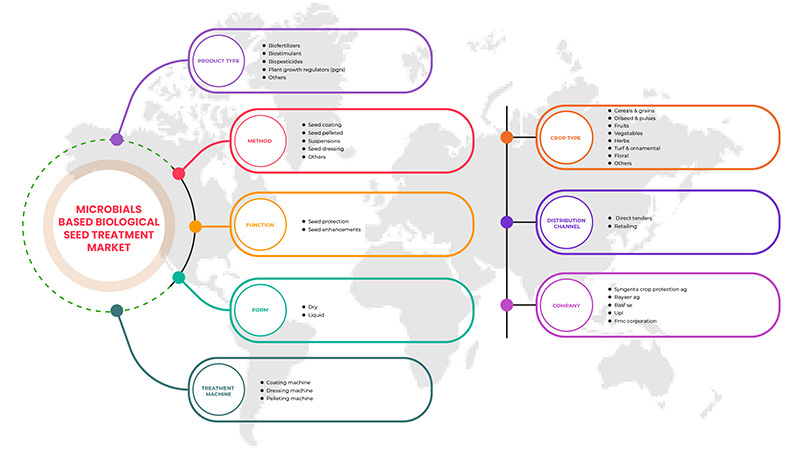
On the basis of crop type, the Asia-Pacific microbial based biological seed treatment market is segmented into cereals & grains, oilseed & pulses, fruits, vegetables, herbs, turf & ornamental, floral, and others.
Asia-Pacific Microbial Based Biological Seed Treatment Market Regional Analysis/Insights
The Asia-Pacific microbial based biological seed treatment market is analyzed, and market size insights and trends are provided based on as referenced above.
The countries covered in the Asia-Pacific Microbial Based Biological Seed Treatment market report are China, Australia, Japan, South Korea, Singapore, Malaysia, Indonesia, Vietnam, Thailand, Philippines, New Zealand, India, rest of Asia-Pacific.
China is expected to dominate the Asia-Pacific microbial based biological seed treatment market in terms of market share and revenue. It is estimated to maintain its dominance during the forecast period due to growing legal restrictions against chemical products in the Asia-Pacific region.
The region section of the report also provides individual market-impacting factors and changes in regulations that impact the market's current and future trends. Data points, such as new and replacement sales, country demographics, disease epidemiology, and import-export tariffs, are some of the major pointers used to forecast the market scenario for individual countries. In addition, the presence and availability of Asia-Pacific brands and their challenges faced due to high competition from local and domestic brands and the impact of sales channels are considered while providing forecast analysis of the country data.
Competitive Landscape and Asia-Pacific Microbial Based Biological Seed Treatment Market Share Analysis
The competitive Asia-Pacific microbial based biological seed treatment market provides details about the competitors. Details include company overview, company financials, revenue generated, market potential, investment in research and development, new market initiatives, Asia-Pacific presence, production sites and facilities, production capacities, company strengths and weaknesses, product launch, product width and breadth, and application dominance. The above data points are only related to the companies' focus on the Asia-Pacific microbial based biological seed treatment market.
Some of the major players operating in the Asia-Pacific microbial based biological seed treatment market are Syngenta Crop Protection AG, Bayer AG, BASF SE, UPL, FMC Corporation, ADAMA, Albaugh, LLC., Arysta LifeScience Corporation, BioWorks Inc., Croda International Plc, Germains Seed Technology, Hello Nature International, Koppert, Marrone Bio Innovations, Inc., Novozymes, Plant Health Care plc. , T.Stanes and Company Limited, Tagros Chemicals India Pvt. Ltd., Valent BioSciences LLC, and Verdesian Life Sciences, among others.
SKU-
Obtenha acesso online ao relatório sobre a primeira nuvem de inteligência de mercado do mundo

- Painel interativo de análise de dados
- Painel de análise da empresa para oportunidades de elevado potencial de crescimento
- Acesso de analista de pesquisa para personalização e customização. consultas
- Análise da concorrência com painel interativo
- Últimas notícias, atualizações e atualizações Análise de tendências
- Aproveite o poder da análise de benchmark para um rastreio abrangente da concorrência
Metodologia de Investigação
A recolha de dados e a análise do ano base são feitas através de módulos de recolha de dados com amostras grandes. A etapa inclui a obtenção de informações de mercado ou dados relacionados através de diversas fontes e estratégias. Inclui examinar e planear antecipadamente todos os dados adquiridos no passado. Da mesma forma, envolve o exame de inconsistências de informação observadas em diferentes fontes de informação. Os dados de mercado são analisados e estimados utilizando modelos estatísticos e coerentes de mercado. Além disso, a análise da quota de mercado e a análise das principais tendências são os principais fatores de sucesso no relatório de mercado. Para saber mais, solicite uma chamada de analista ou abra a sua consulta.
A principal metodologia de investigação utilizada pela equipa de investigação do DBMR é a triangulação de dados que envolve a mineração de dados, a análise do impacto das variáveis de dados no mercado e a validação primária (especialista do setor). Os modelos de dados incluem grelha de posicionamento de fornecedores, análise da linha de tempo do mercado, visão geral e guia de mercado, grelha de posicionamento da empresa, análise de patentes, análise de preços, análise da quota de mercado da empresa, normas de medição, análise global versus regional e de participação dos fornecedores. Para saber mais sobre a metodologia de investigação, faça uma consulta para falar com os nossos especialistas do setor.
Personalização disponível
A Data Bridge Market Research é líder em investigação formativa avançada. Orgulhamo-nos de servir os nossos clientes novos e existentes com dados e análises que correspondem e atendem aos seus objetivos. O relatório pode ser personalizado para incluir análise de tendências de preços de marcas-alvo, compreensão do mercado para países adicionais (solicite a lista de países), dados de resultados de ensaios clínicos, revisão de literatura, mercado remodelado e análise de base de produtos . A análise de mercado dos concorrentes-alvo pode ser analisada desde análises baseadas em tecnologia até estratégias de carteira de mercado. Podemos adicionar quantos concorrentes necessitar de dados no formato e estilo de dados que procura. A nossa equipa de analistas também pode fornecer dados em tabelas dinâmicas de ficheiros Excel em bruto (livro de factos) ou pode ajudá-lo a criar apresentações a partir dos conjuntos de dados disponíveis no relatório.











