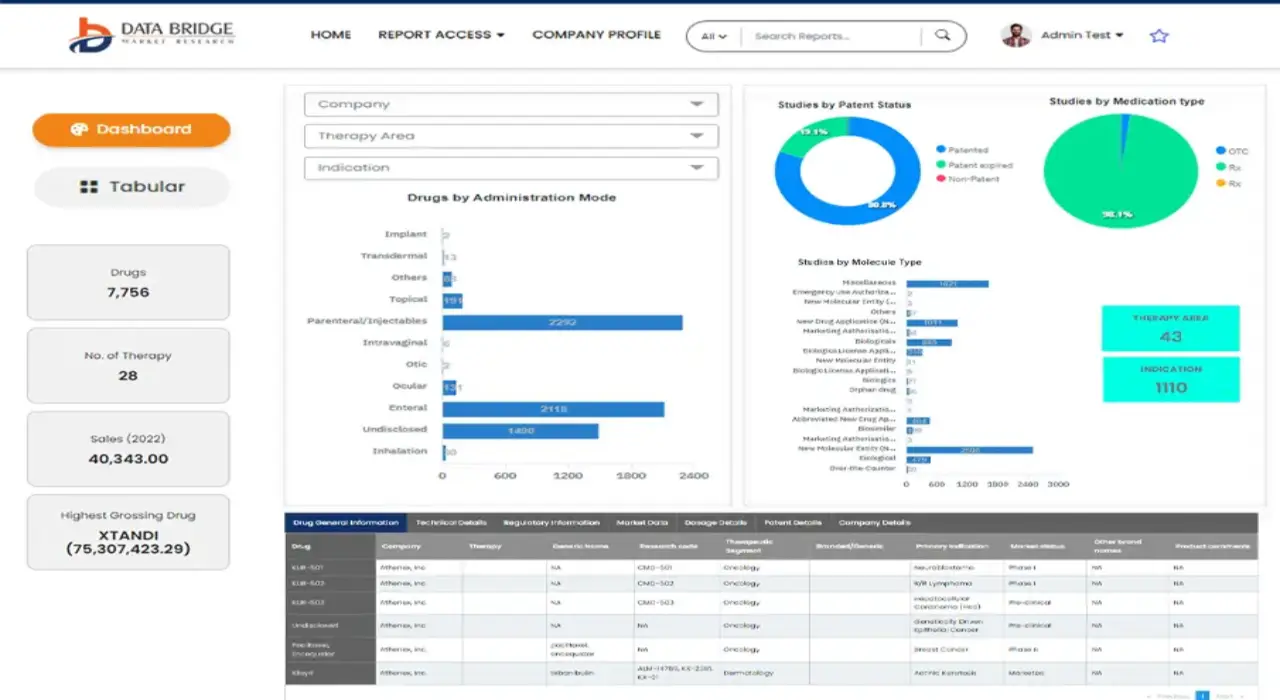
Segmentação Global do Mercado de Adalimumab, Por Classe de Medicamentos (Anti-reumáticos, Inibidores de TNF Alfa e Outros), Indicação (Artrite Reumatoide, Espondilite Anquilosante, Psoríase Crónica da Placa, Doença de Crohn, Colite Ulcerativa, Artrite Psoriática, Artrite Idiopática Juvenil, Hidradenite Supurativa, Intermediária Não Infecciosa, e Outros), Tipo (Biológica e Biossimilares), Força Dosagem (40mg/0,4mlg, 80mg/0,8mlg, 20mg/0,2mlg, 10mg/0,1mlg, 10mg/0,1mlg e Outros), Tipo de Medicamentos (Branded and Generics), Rota de Administração (Oral, Parenteral e Outros), Grupo Etário (Pediátrico, Adulto e Geriátrico), Forma Dosagem (Tablet, Injection, Solução e Outros), Usuários Finais (Hospitais, Clínicas Especiais, Clínicas, Clínicas Especiais e Outros, Distribuição do Canal e Outros)
Qual é o tamanho e a taxa de crescimento do mercado de Adalimumab
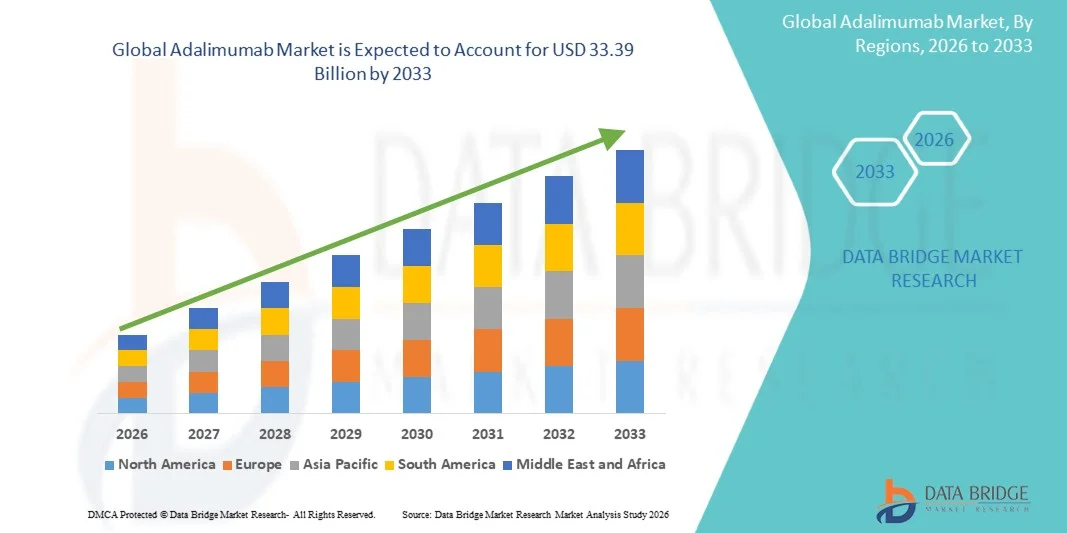
- De acordo com a Data Bridge Market Research Analysis, o tamanho global do mercado de adalimumab foi avaliado em22,09 mil milhões de dólares em 2025e espera-se alcançar33,39 mil milhões de USD até 2033, em umaCAGR de 5,30%durante o período de previsão
- O crescimento do mercado é em grande parte alimentado pelo aumento da prevalência de doenças autoimunes, como artrite reumatoide, psoríase e doenças inflamatórias intestinais, juntamente com o aumento das taxas de conscientização e diagnóstico, levando a uma maior demanda por terapias biológicas eficazes
- Além disso, a adoção crescente de biossimilares, a expansão de aplicações terapêuticas e o aumento do gasto com cuidados de saúde estão acelerando a absorção de soluções de Adalimumab, aumentando significativamente o crescimento da indústria
Tamanho e previsão do mercado
Valor de mercado global (2025):22,09 mil milhões de USD
Valor de mercado previsto (2033):33,39 mil milhões de USD
Previsões CAGR (2026-2033):5.30%
Quais são os principais destinos do mercado de Adalimumab
- Adalimumab, um anticorpo monoclonal utilizado no tratamento de várias doenças auto-imunes, é cada vez mais vital nos cuidados de saúde modernos devido à sua eficácia no tratamento de doenças inflamatórias crónicas e melhoria da qualidade de vida dos doentes em diversas áreas terapêuticas.
- A crescente demanda por Adalimumabe é principalmente alimentada pela crescente prevalência de doenças autoimunes, aumento da adoção de biológicos e biossimilares, e crescente conscientização quanto ao diagnóstico e tratamento precoces
- A América do Norte dominou o mercado de adalimumab com a maior parcela de receita de 41,8% em 2025, impulsionada pela alta adoção de biológicos, forte infraestrutura de saúde e presença de empresas farmacêuticas-chave, com os EUA contribuindo significativamente com o aumento do uso através de múltiplas indicações
- Espera-se que a Ásia-Pacífico seja a região de crescimento mais rápido no mercado de adalimumabe durante o período previsto, registrando um CAGR de 13,6%, alimentado pelo aumento do gasto com saúde, melhoria do acesso aos biológicos e aumento da prevalência de doenças autoimunes
- O segmento de injeção dominou o mercado com uma parcela de receita de 90,1% em 2025, impulsionada pela natureza biológica do adalimumabe. Formulações injetáveis garantem uma entrega eficaz e ação rápida
Âmbito do relatório e Segmentação do Mercado de Adalimumab
|
Atributos |
Insights sobre o Mercado-chave de Adalimumab |
|
Segmentos Cobertos |
|
|
Países abrangidos |
América do Norte
Europa
Ásia- Pacífico
Médio Oriente e África
América do Sul
|
|
Jogadores do mercado chave |
• AbbVie (EUA) |
|
Oportunidades de Mercado |
|
|
Informações sobre o Valor Adicionado |
Além dos insights sobre cenários de mercado, como valor de mercado, taxa de crescimento, segmentação, cobertura geográfica e grandes atores, os relatórios de mercado curados pela Data Bridge Market Research também incluem análise de especialistas em profundidade, epidemiologia de pacientes, análise de pipelines, análise de preços e marco regulatório. |
Qual é a tendência chave no mercado de Adalimumab
“Adoção crescente de biossimilares e terapias biológicas direcionadas“
- Uma tendência significativa e acelerada no mercado global de adalimumab é a adoção crescente de biossimilares e terapias biológicas avançadas com o objetivo de melhorar a acessibilidade ao tratamento e a eficiência de custos. Com a expiração de patentes de biologia de marca, várias versões biossimilares de adalimumab entraram no mercado, aumentando a concorrência e ampliando o acesso dos pacientes em várias regiões
- Por exemplo, a introdução de biossimilares adalimumab em mercados-chave, como os EUA e a Europa, reduziu significativamente os custos do tratamento, permitindo que uma população de pacientes mais ampla se beneficie de terapias para doenças inflamatórias crônicas, como artrite reumatoide, psoríase e doença de Crohn
- A tendência também reflete uma mudança crescente para abordagens de tratamento personalizadas e direcionadas, onde os biológicos são cada vez mais preferidos devido à sua maior eficácia e capacidade de abordar vias imunes específicas envolvidas em doenças autoimunes.
- Além disso, as empresas farmacêuticas estão focando na melhoria dos mecanismos de entrega de medicamentos, como seringas pré-cheias e auto-injetores, para aumentar a conveniência do paciente, minimizar os erros de dosagem e melhorar a adesão aos regimes de terapia de longo prazo.
- A expansão das indicações de adalimumabe e seus biossimilares em múltiplas doenças autoimunes e inflamatórias, incluindo hidradenite supurativa e uveíte, está fortalecendo ainda mais a demanda do mercado.
- Aumentar a confiança do médico em biossimilares, apoiado por evidências e dados clínicos do mundo real, também está acelerando sua adoção em mercados desenvolvidos e emergentes
- Além disso, as colaborações estratégicas entre as empresas farmacêuticas e os prestadores de cuidados de saúde estão a facilitar uma maior distribuição e sensibilização, apoiando assim um crescimento sustentado do mercado.
Dinâmica do Mercado de Adalimumab
Controlador
“Crescimento da Prevalência de Doenças Autoimunes e Aumento da Procura de Terapias Biológicas”
- O aumento da prevalência de doenças inflamatórias autoimunes e crônicas em todo o mundo é um dos principais motores do mercado de Adalimumab. Condições como artrite reumatoide, colite ulcerativa, espondilite anquilosante e psoríase estão se tornando cada vez mais comuns, criando demanda sustentada para tratamento biológico eficaz
- Por exemplo, em 2025, vários sistemas de saúde expandiram a cobertura de reembolso para terapias biológicas, incluindo biossimilares adalimumab, melhorando significativamente o acesso do paciente e direcionando taxas de adoção de tratamento. Prevê-se que tais iniciativas acelerem o crescimento do mercado durante o período previsto
- Aumentar a sensibilização dos doentes e prestadores de cuidados de saúde para o diagnóstico precoce e o tratamento oportuno das doenças autoimunes contribui ainda mais para a procura de biológicos
- A crescente preferência por terapias direcionadas que ofereçam maior eficácia, alívio mais rápido dos sintomas e redução dos efeitos colaterais em relação aos tratamentos sistêmicos convencionais também suporta a expansão do mercado
- Aumentar as despesas com os cuidados de saúde, especialmente nas economias emergentes, está a permitir um melhor acesso a terapias avançadas e a apoiar o desenvolvimento de infra-estruturas para tratamentos biológicos
- Além disso, os avanços na biotecnologia, incluindo melhores técnicas de formulação e maior estabilidade de medicamentos, estão a reforçar o gasoduto de terapias biológicas inovadoras.
- O papel crescente das clínicas especializadas e centros de infusão na administração de terapias biológicas também está facilitando a adoção mais ampla em diversas populações de pacientes.
- Além disso, iniciativas governamentais favoráveis e programas de apoio às doenças raras estão promovendo o uso de biológicos em estratégias de manejo de doenças de longo prazo
Restrição/Desafio
“Custos de tratamento elevados e complexidades regulatórias“
- O elevado custo associado às terapias biológicas, incluindo o adalimumab, continua a ser um desafio significativo, particularmente em regiões em desenvolvimento com orçamentos limitados para cuidados de saúde e quadros de reembolso
- Por exemplo, apesar da disponibilidade de biossimilares, a acessibilidade continua a ser uma preocupação em países de baixa e média renda, onde as despesas fora do bolso podem restringir o acesso dos pacientes ao tratamento de longo prazo.
- Além disso, requisitos regulamentares rigorosos para a aprovação de biossimilares, incluindo ensaios clínicos extensivos, farmacovigilância e estudos de comparabilidade, podem atrasar o lançamento do produto e aumentar os custos de desenvolvimento para os fabricantes
- A complexidade dos processos de fabricação biológica, incluindo a necessidade de sistemas avançados de biorreatores e medidas rigorosas de controle de qualidade, também contribui para maiores custos de produção e desafios na cadeia de suprimentos
- Além disso, preocupações relacionadas com imunogenicidade e mudança de paciente entre biológicos e biossimilares podem afetar a confiança do médico e a adoção lenta em determinados mercados.
- Consciência limitada e equívocos em relação aos biossimilares entre pacientes e prestadores de cuidados de saúde em algumas regiões podem dificultar ainda mais a penetração no mercado
- Desafios logísticos, incluindo os requisitos de armazenamento e transporte de corrente fria, também aumentam o custo global e a complexidade da distribuição biológica
- Enfrentar estes desafios através de estratégias de preços, harmonização regulamentar, melhoria da educação sobre segurança e eficácia biossimilares e expansão das políticas de reembolso será essencial para garantir um crescimento sustentado do mercado
Como está o Mercado de Adalimumab Segmentado
O mercado é segmentado com base na classe de medicamentos, indicação, tipo, dosagem, tipo de fármaco, via de administração, faixa etária, forma de dosagem, usuários finais e canal de distribuição.
• Por classe de drogas
Com base na classe de fármacos, o mercado de Adalimumab é segmentado em Inibidores Antirreumáticos, TNF Alpha e Outros. O segmento dos Inibidores do TNF Alpha dominou o mercado com uma quota de receita de 62,4% em 2025, impulsionada pela sua comprovada eficácia no tratamento de uma ampla gama de doenças autoimunes. O adalimumab, sendo um dos principais inibidores do TNF, é amplamente prescrito para doenças inflamatórias crónicas, como a artrite reumatóide e a doença de Crohn. Fortes evidências clínicas, aprovações regulatórias e preferência médica contribuem para sua dominância. Hospitais e clínicas especializadas dependem fortemente dos inibidores do TNF devido à sua ação direcionada e benefícios de longo prazo no manejo da doença. O aumento da prevalência de doenças autoimunes em todo o mundo está apoiando a demanda. As empresas farmacêuticas estão investindo fortemente no desenvolvimento biológico dentro desta classe. Políticas de reembolso favoráveis em mercados desenvolvidos reforçam ainda mais a adoção. A adesão do paciente também é alta devido à melhora dos desfechos e redução da progressão da doença. A inovação contínua em terapias biológicas está aumentando a eficácia dos inibidores do TNF. O segmento beneficia de forte presença de marca e extensas redes de distribuição. Aumentar a consciência e o diagnóstico precoce estão impulsionando o crescimento do segmento.
Espera-se que o segmento antirreumático testemunhe o CAGR mais rápido de 9,6% de 2026 a 2033, impulsionado pelo aumento da demanda por soluções abrangentes de manejo da artrite. Casos crescentes de artrite reumatoide e condições relacionadas estão impulsionando a adoção de drogas antirreumáticas avançadas. Os profissionais de saúde estão focados em terapias combinadas que incluem adalimumab para melhores resultados do paciente. A expansão do acesso ao tratamento nos mercados emergentes está a contribuir para o crescimento. Os avanços tecnológicos na formulação de medicamentos estão melhorando os perfis de eficácia e segurança. O aumento da população geriátrica é um fator fundamental para apoiar a demanda. As iniciativas governamentais destinadas a melhorar os cuidados com a artrite estão a acelerar ainda mais a adopção. O aumento da consciência dos pacientes e o acesso aos serviços de saúde estão impulsionando as taxas de diagnóstico. As atividades de pesquisa e desenvolvimento estão expandindo o gasoduto de terapias antirreumáticas. Colaborações estratégicas entre empresas farmacêuticas estão aumentando a disponibilidade de produtos. O custo-efetividade em comparação com outros biológicos também está apoiando a adoção. Espera-se que o segmento ganhe forte tração durante o período de previsão.
• Por Indicação
Com base na indicação, o mercado é segmentado em Artrite Reumatoide, Espondilite Anquilosante, Psoríase da Placa Crônica, Doença de Crohn, Colite Ulcerativa, Artrite Psoriática, Artrite Idiopática Juvenil, Hidradenite Supurativa, Uveíte Intermediária Não Infecciosa e Outros. O segmento de artrite reumatoide dominou o mercado com receita de 28,7% em 2025, impulsionada pela alta prevalência global da doença. Adalimumab é amplamente utilizado como tratamento biológico de primeira linha para artrite reumatoide moderada a grave. Hospitais e clínicas priorizam a intervenção precoce para prevenir danos articulares e incapacidade. Aumentar a sensibilização e melhorar as capacidades de diagnóstico estão contribuindo para a adoção precoce do tratamento. O segmento se beneficia de fortes evidências clínicas que apoiam a eficácia a longo prazo. O aumento das despesas com os cuidados de saúde e o acesso aos biológicos estão a apoiar o crescimento. As empresas farmacêuticas estão focando em expandir as indicações para o tratamento da artrite reumatoide. Os programas de apoio ao paciente estão melhorando a adesão ao tratamento. A disponibilidade de biossimilares também está tornando o tratamento mais acessível. As iniciativas governamentais para o gerenciamento da artrite estão apoiando ainda mais a demanda. Os avanços contínuos nos protocolos terapêuticos estão aumentando os resultados. O segmento continua a ser um importante contribuinte no mercado.
Espera-se que o segmento da doença de Crohn testemunhe o CAGR mais rápido de 10,2% de 2026 a 2033, impulsionado pelo aumento da incidência de doenças inflamatórias intestinais globalmente. Aumentar a consciência sobre distúrbios gastrointestinais está levando ao diagnóstico e tratamento precoce. O adalimumab é cada vez mais utilizado no tratamento a longo prazo da doença de Crohn devido ao seu mecanismo específico. Aumentar a adoção de biológicos sobre terapias convencionais está aumentando o crescimento. A melhoria das infra-estruturas de saúde nos mercados emergentes está a apoiar o acesso. As atividades de pesquisa com foco em doenças gastrointestinais estão ampliando as opções de tratamento. Aumentar a preferência do paciente por terapias minimamente invasivas e eficazes está contribuindo para a demanda. Os profissionais de saúde estão enfatizando abordagens de tratamento personalizadas. A ampliação das indicações clínicas e aprovações está acelerando ainda mais a adoção. As políticas de apoio ao reembolso nas regiões desenvolvidas contribuem para o crescimento. Os avanços tecnológicos nos sistemas de administração de drogas estão melhorando a adesão dos pacientes. O segmento está preparado para uma forte expansão ao longo do período de previsão.
• Por tipo
Com base no tipo, o mercado é segmentado em Biologics e Biosimilars. O segmento biológico dominou o mercado com uma parcela de receita de 71,3% em 2025, impulsionada pela ampla utilização de produtos de adalimumabe de marca. Os biológicos oferecem alta eficácia e tratamento direcionado, tornando-os a escolha preferencial entre os profissionais de saúde. O forte reconhecimento da marca e a ampla validação clínica contribuem para sua dominância. As empresas farmacêuticas continuam a investir na inovação biológica e na gestão do ciclo de vida. Hospitais e clínicas especializadas dependem de biológicos para o manejo de condições autoimunes complexas. Alta confiança do paciente e protocolos de tratamento estabelecidos apoiam a adoção. O segmento beneficia de redes de distribuição robustas e presença global. Políticas de reembolso favoráveis em mercados desenvolvidos aumentam ainda mais a acessibilidade. Melhorias contínuas nas formulações biológicas estão impulsionando o crescimento. O aumento da prevalência de doenças crônicas está apoiando a demanda. Parcerias estratégicas e esforços de marketing estão reforçando a posição do mercado. O segmento continua a ser a espinha dorsal do mercado de adalimumab.
Espera-se que o segmento de biossimilares testemunhe o CAGR mais rápido de 13,4% de 2026 a 2033, impulsionado pela relação custo-efetividade e pelo aumento das aprovações regulatórias. Os biossimilares oferecem alternativas acessíveis aos biológicos de marca, ampliando o acesso ao tratamento. Governos e sistemas de saúde estão promovendo biossimilares para reduzir os custos de saúde. A crescente aceitação entre médicos e pacientes está apoiando a adoção. Os mercados emergentes estão a assistir a uma forte procura devido à sensibilidade dos preços. Empresas farmacêuticas estão lançando múltiplas versões biossimilares, aumentando a concorrência. As vias regulatórias para biossimilares estão se tornando mais simplificadas. A crescente concentração na acessibilidade dos cuidados de saúde está a impulsionar a penetração no mercado. Os avanços tecnológicos estão melhorando a qualidade e eficácia biossimilares. Colaborações estratégicas estão aumentando a distribuição global. As campanhas de sensibilização estão aumentando a confiança em biossimilares. Espera-se que o segmento reformule significativamente a paisagem competitiva.
• Por Usuários Finais
Com base nos usuários finais, o mercado é segmentado em Hospitais, Clínicas Especiais, Homecare e Outros. O segmento hospitalar dominou o mercado com uma parcela de receita de 48,9% em 2025, impulsionada pela alta entrada de pacientes e disponibilidade de instalações de tratamento avançado. Os hospitais servem como centros primários de diagnóstico, início do tratamento e manejo de doenças autoimunes. O segmento beneficia-se de profissionais de saúde qualificados e abordagens multidisciplinares. O acesso a ferramentas diagnósticas avançadas e terapias biológicas suporta o crescimento. Os hospitais desempenham um papel fundamental na administração de biológicos injetáveis como o adalimumab. O aumento do número de internações hospitalares e de casos de doença crônica são demanda motriz. Fortes sistemas de aquisição e cobertura de seguros contribuem para o domínio do segmento. O financiamento do governo e o desenvolvimento de infra-estruturas de saúde apoiam ainda mais o crescimento. Os hospitais também estão envolvidos em ensaios clínicos e atividades de pesquisa. A confiança do paciente no tratamento hospitalar é alta. A integração de tecnologias avançadas melhora os resultados do tratamento. O segmento continua a liderar o mercado.
Espera-se que o segmento de cuidado domiciliar testemunhe o CAGR mais rápido de 11,1% de 2026 a 2033, impulsionado pelo aumento da preferência pela autoadministração e conveniência. Adalimumab é frequentemente administrado por injeção subcutânea, tornando-o adequado para uso doméstico. Os pacientes preferem o cuidado domiciliar para reduzir as visitas hospitalares e custos associados. Aumentar a consciência sobre as técnicas de auto-injeção é apoiar a adoção. Os avanços tecnológicos nos dispositivos de entrega de drogas estão aumentando a facilidade de uso. O segmento vem ganhando força entre pacientes com doença crônica que necessitam de terapia de longo prazo. As soluções de telessaúde e de monitorização à distância estão ainda a permitir o tratamento domiciliar. As iniciativas governamentais de promoção da saúde no domicílio estão acelerando o crescimento. O aumento da população geriátrica é um factor essencial para a procura. Custo-efetividade e melhor conforto do paciente são grandes vantagens. As empresas farmacêuticas estão focando em programas de apoio ao paciente para o cuidado domiciliar. Espera-se que o segmento se expanda significativamente nos próximos anos.
• Por meio da dosagem
Com base na dosagem, o mercado é segmentado em 40mg/0,4ml, 80mg/0,8ml, 20mg/0,2ml, 10mg/0,1ml e Outros. O segmento de 40mg/0,4ml dominou o mercado com uma receita de 52,6% em 2025, impulsionada pelo seu uso generalizado como dose padrão de manutenção para múltiplas indicações, como artrite reumatoide, doença de Crohn e psoríase. Os médicos preferem esta dose devido à sua comprovada eficácia clínica e perfil de segurança equilibrado. É comumente prescrito para terapia de longo prazo, garantindo uma demanda consistente. Hospitais e clínicas especializadas dependem fortemente dessa dosagem para protocolos de tratamento. O segmento se beneficia de fortes diretrizes clínicas que apoiam seu uso. A alta adesão do paciente devido à frequência de dosagem otimizada contribui ainda mais para o crescimento. As empresas farmacêuticas se concentram nessa força tanto para os biológicos quanto para os biossimilares. A disponibilidade de seringas pré-cheias aumenta a conveniência. O aumento da prevalência de doenças crônicas está apoiando a demanda. As cadeias de suprimentos estabelecidas garantem fácil disponibilidade. O segmento continua a conduzir devido à sua versatilidade entre as indicações.
Espera-se que o segmento de 80mg/0,8ml testemunhe o CAGR mais rápido de 10,7% de 2026 a 2033, impulsionado pelo seu uso crescente como dose de carga e em condições graves de doença. Os médicos estão adotando doses iniciais mais elevadas para uma resposta terapêutica mais rápida. O segmento vem ganhando tração nas indicações de dermatologia e gastroenterologia. Casos crescentes de doenças autoimunes moderadas a graves estão apoiando o crescimento. Resultados clínicos melhorados com doses mais elevadas são encorajadores da adoção. As empresas farmacêuticas estão promovendo regimes posológicos otimizados. O aumento da sensibilização dos prestadores de cuidados de saúde está a aumentar a utilização. O segmento se beneficia com avanços nos dispositivos de entrega de drogas. Crescer a preferência pelo controle rápido dos sintomas é conduzir a demanda. A ampliação das diretrizes de tratamento está apoiando a maior utilização da dose. Os mercados emergentes também contribuem para o crescimento. O segmento deverá expandir-se de forma constante durante o período de previsão.
• Por tipo de droga
Com base no tipo de droga, o mercado é segmentado em Branded e Generics. O segmento de marca dominou o mercado com uma parcela de receita de 64,8% em 2025, impulsionada pela forte presença global dos produtos originais de adalimumab. Esses medicamentos se beneficiam de eficácia clínica estabelecida, confiança na marca e preferência médica. Hospitais e clínicas especializadas muitas vezes dependem de biológicos marcados para tratamentos críticos. O segmento é apoiado por extensos ensaios clínicos e aprovações regulatórias. Alta confiança do paciente e resultados consistentes do tratamento contribuem para a dominância. As empresas farmacêuticas investem fortemente no marketing e na gestão do ciclo de vida de medicamentos de marca. Políticas de reembolso favoráveis nas regiões desenvolvidas apoiam ainda mais o crescimento. O segmento também se beneficia de redes globais de distribuição. O aumento da prevalência de doenças autoimunes está impulsionando a demanda. Forte proteção de patentes historicamente apoiada liderança de mercado. Mesmo após a expiração, a lealdade da marca permanece forte. O segmento continua a deter uma parte significativa.
Espera-se que o segmento genérico testemunhe o CAGR mais rápido de 12,9% de 2026 a 2033, impulsionado pelo crescente foco nas opções de tratamento custo-efetivo. O aumento dos custos dos cuidados de saúde encoraja a adopção de alternativas genéricas. Os governos e as entidades reguladoras estão a promover genéricos para melhorar a acessibilidade. Os mercados emergentes estão a assistir a uma forte procura devido à acessibilidade. O aumento da concorrência entre os fabricantes está a impulsionar reduções de preços. Os médicos estão gradualmente aceitando genéricos para terapia de longo prazo. A ampliação das aprovações regulatórias está apoiando a entrada no mercado. Os avanços tecnológicos estão melhorando a qualidade dos medicamentos genéricos. A conscientização do paciente sobre o tratamento acessível está aumentando. Colaborações estratégicas estão aumentando a distribuição. O segmento também é apoiado por políticas governamentais favoráveis. Espera-se que os genéricos expandam significativamente a sua presença no mercado nos próximos anos.
• Por Via de Administração
Com base na via de administração, o mercado é segmentado em Oral, Parenteral e Outros. O segmento parenteral dominou o mercado com uma parte de receita de 88,3% em 2025, impulsionada pela natureza do adalimumabe como biológico administrado por injeção subcutânea. A administração parentérica garante alta biodisponibilidade e ação terapêutica rápida. Hospitais e ambientes de cuidado domiciliar adotam amplamente essa via para o manejo eficaz da doença. O segmento se beneficia de protocolos clínicos bem estabelecidos. As seringas pré-cheias e os auto-injectores aumentam a facilidade de utilização. A adopção crescente da auto-injecção está a apoiar o crescimento. As empresas farmacêuticas estão focadas em melhorar os dispositivos de injeção. Alta conformidade do paciente devido à dosagem conveniente suporta a demanda. O segmento é fundamental para o manejo de condições autoimunes crônicas. Os avanços tecnológicos estão melhorando a experiência do paciente. Fortes evidências clínicas suportam essa via. O segmento permanece dominante devido à sua eficácia.
Espera-se que o segmento oral testemunhe o CAGR mais rápido de 8,7% de 2026 a 2033, impulsionado por pesquisas em andamento sobre métodos alternativos de entrega. Apesar de limitados atualmente, os biológicos orais estão ganhando atenção para melhorar a conveniência do paciente. As empresas farmacêuticas estão investindo em tecnologias inovadoras de entrega de medicamentos. Os pacientes preferem métodos de administração não invasivos, apoiando a demanda futura. Os avanços na ciência da formulação estão possibilitando o desenvolvimento biológico oral. Aumentar o foco no cuidado centrado no paciente está conduzindo a pesquisa. Espera-se que o segmento cresça à medida que novos produtos recebem aprovações. Maior conformidade e menor desconforto são vantagens fundamentais. As tecnologias emergentes estão superando desafios de biodisponibilidade. O crescente investimento em I&D está a acelerar os progressos. O segmento possui potencial de crescimento a longo prazo. Prevê-se que a adopção aumente gradualmente ao longo do período previsto.
• Por grupo etário
Com base na faixa etária, o mercado é segmentado em Pediatria, Adulto e Geriatria. O segmento adulto dominou o mercado com receita de 58,2% em 2025, impulsionada pela alta prevalência de doenças autoimunes na população adulta. Os adultos são os destinatários primários do tratamento com adalimumab em múltiplas indicações. O aumento dos distúrbios relacionados ao estilo de vida está contribuindo para a incidência da doença. Hospitais e clínicas se concentram fortemente no atendimento ao paciente adulto. O segmento se beneficia de fortes taxas de diagnóstico e acessibilidade ao tratamento. As empresas farmacêuticas visam este grupo com terapias personalizadas. A sensibilização crescente para os cuidados de saúde apoia o tratamento precoce. A cobertura do seguro é mais acessível para pacientes adultos. O segmento é apoiado por extensa pesquisa clínica. O aumento do estresse relacionado ao trabalho e os fatores ambientais contribuem para a carga de doenças. Monitoramento contínuo e demanda por terapia de longo prazo. O segmento continua a ser o maior contribuinte.
Espera-se que o segmento geriátrico testemunhe o CAGR mais rápido de 10,3% de 2026 a 2033, impulsionado pela população global em rápido envelhecimento. Os idosos são mais suscetíveis a doenças inflamatórias crônicas. O aumento da expectativa de vida está contribuindo para uma maior demanda de tratamento. Os profissionais de saúde estão focando na atenção especializada aos pacientes idosos. Os avanços nas terapias biológicas estão melhorando os perfis de segurança para o uso geriátrico. A adoção do cuidado domiciliar é maior nesse segmento. Programas governamentais de saúde estão apoiando o tratamento de idosos. Aumentar a consciência sobre o manejo da doença está impulsionando o crescimento. A melhoria do acesso aos serviços de saúde está a contribuir. Os avanços tecnológicos estão aumentando o monitoramento do paciente. O segmento está ganhando atenção devido às necessidades médicas não atendidas. Prevê-se que o crescimento se mantenha forte durante o período previsto.
• Por forma de dosagem
Com base na forma de dosagem, o mercado é segmentado em Comprimido, Injeção, Solução e Outros. O segmento de injeção dominou o mercado com uma parcela de receita de 90,1% em 2025, impulsionada pela natureza biológica do adalimumabe. Formulações injetáveis garantem uma entrega eficaz e ação rápida. Hospitais e configurações de cuidados domiciliares utilizam amplamente seringas pré-cheias e auto-injetores. O segmento se beneficia de forte validação clínica. Aumentar a adoção de dispositivos de auto-injeção está apoiando o crescimento. As empresas farmacêuticas focam na melhoria da tecnologia de injeção. A alta adesão do paciente por conveniência é um fator fundamental. O segmento é fundamental para o manejo da doença crônica. As aprovações regulamentares apoiam a utilização generalizada. Soluções avançadas de embalagem aumentam a usabilidade. A forte demanda dos profissionais de saúde impulsiona o crescimento. O segmento permanece dominante devido à necessidade.
Espera-se que o segmento de solução testemunhe o CAGR mais rápido de 9,1% de 2026 a 2033, impulsionado pelos avanços nas tecnologias de formulação. As soluções oferecem maior estabilidade e facilidade de administração. As empresas farmacêuticas estão focadas no desenvolvimento de formulações prontas para uso. O aumento da procura de medicamentos de fácil utilização está a apoiar o crescimento. O segmento se beneficia da inovação em formulações biológicas. Melhoria do prazo de validade e condições de armazenamento melhorar a adoção. Os prestadores de cuidados de saúde preferem soluções para dosagem precisa. Aumentar o foco na conveniência do paciente é dirigir a demanda. Os avanços tecnológicos estão melhorando a qualidade da formulação. As atividades de pesquisa estão expandindo as ofertas de produtos. O segmento está ganhando tração gradualmente. O crescimento deverá acelerar ao longo do tempo.
• Por Canal de Distribuição
Com base no canal de distribuição, o mercado é segmentado em Farmácia Hospitalar, Farmácia Varejo, Farmácia Online e Outros. O segmento de farmácia hospitalar dominou o mercado com uma parcela de receita de 54,3% em 2025, impulsionada pelo alto fluxo de pacientes e administração direta de medicamentos no ambiente hospitalar. Os hospitais servem como centros primários para o início do tratamento biológico. O segmento beneficia de fortes sistemas de aquisição e compras a granel. Os profissionais de saúde garantem a manipulação e administração adequadas. A cobertura do seguro está frequentemente ligada às farmácias hospitalares. O aumento das internações suporta a demanda. O segmento é apoiado por programas governamentais de saúde. Instalações avançadas de armazenamento e manuseio garantem a qualidade das drogas. Os hospitais desempenham papel fundamental no manejo das doenças crônicas. Redes de cadeia de suprimentos fortes suportam disponibilidade. O segmento continua liderando devido à confiabilidade.
Espera-se que o segmento de farmácia on-line testemunhe o CAGR mais rápido de 13,2% de 2026 a 2033, impulsionado pelo aumento da digitalização e adoção do comércio eletrônico em saúde. Os pacientes preferem plataformas on-line para conveniência e entrega domiciliar. A crescente penetração na internet está apoiando a expansão do mercado. As empresas farmacêuticas estão em parceria com plataformas online. O segmento beneficia de preços competitivos e descontos. O aumento da adopção da telessaúde está a aumentar a procura. O apoio regulamentar às farmácias electrónicas está a melhorar a acessibilidade. Os pacientes de Homecare dependem fortemente da distribuição online. Os avanços tecnológicos garantem transações seguras. A sensibilização crescente para os cuidados de saúde digitais está a impulsionar o crescimento. O segmento está se expandindo rapidamente em mercados emergentes. Espera-se que desempenhe um papel significativo na distribuição futura.
Qual a região que detém a maior parte do mercado de Adalimumab
- A América do Norte dominou o mercado de adalimumab com a maior parcela de receita de 41,8% em 2025, impulsionada pela alta adoção de terapias biológicas, forte infraestrutura de saúde e presença de empresas farmacêuticas líderes. A região beneficia de quadros de reembolso bem estabelecidos, conhecimento generalizado das doenças autoimunes e adoção precoce de tratamentos biológicos avançados em múltiplas indicações
- Os profissionais de saúde e pacientes da região dão ênfase significativa ao manejo eficaz da doença através de terapias direcionadas, contribuindo para a demanda sustentada por adalimumab e seus biossimilares. A disponibilidade de instalações de diagnóstico avançadas, o aumento das actividades de investigação clínica e redes de distribuição fortes apoiam ainda mais o crescimento do mercado
- O alto gasto da região em saúde, aliado à contínua inovação em biologia e desenvolvimento biossimiliar, continua a reforçar a posição de liderança da América do Norte no mercado global
U.S. Adalimumab Market Insight
O mercado americano de adalimumab capturou a maior parte de receita na América do Norte em 2025, alimentada pelo uso extensivo de terapias biológicas em uma ampla gama de condições autoimunes. A presença de grandes empresas farmacêuticas, ensaios clínicos em andamento e políticas de reembolso favoráveis contribuem significativamente para a expansão do mercado. Além disso, o aumento da conscientização do paciente, as taxas de diagnóstico precoce e a adoção crescente de biossimilares estão impulsionando a acessibilidade ao tratamento. A expansão de farmácias especializadas e centros de infusão reforça ainda mais a adoção de terapias com adalimumab em todo o país.
Europa Adalimumab Market Insight
Projecta-se que o mercado europeu de adalimumab se expanda em um CAGR substancial durante o período de previsão, impulsionado por forte apoio governamental para biossimilares, sistemas de saúde bem estabelecidos e foco crescente em soluções de tratamento econômicas. A região testemunhou a adoção generalizada de produtos biossimilares de adalimumab, o que melhorou o acesso dos pacientes e reduziu os custos gerais do tratamento. O aumento da sensibilização para as doenças autoimunes, juntamente com o aumento do investimento em infraestrutura de saúde e pesquisa clínica, contribui ainda mais para o crescimento do mercado.
U.K. Adalimumab Market Insight
Prevê-se que o mercado de adalimumab do Reino Unido cresça em um notável CAGR, apoiado pelo aumento da prevalência de doenças autoimunes e pela adoção crescente de biossimilares através de programas nacionais de saúde. Iniciativas lideradas pelo governo para reduzir os custos de saúde e promover o uso de biossimilares têm acelerado significativamente a penetração no mercado. Além disso, a presença de serviços de saúde avançados e fortes programas de apoio ao paciente potencializam a acessibilidade e adesão ao tratamento.
Alemanha Adalimumab Market Insight
Espera-se que o mercado alemão de adalimumab se expanda em um CAGR considerável, impulsionado por um sistema de saúde robusto, alta consciência das terapias biológicas e forte ênfase na pesquisa e inovação. A Alemanha representa um dos maiores mercados de biossimilares na Europa, apoiado por políticas de reembolso favoráveis e aceitação médica. O aumento da procura de terapias específicas e a presença de fabricantes de produtos farmacêuticos líderes contribuem para o crescimento sustentado do mercado.
Asia-Pacific Adalimumab Market Insight
O mercado de adalimumab Ásia-Pacífico está pronto para crescer no CAGR mais rápido de 13,6% durante o período de previsão, alimentado pelo aumento do gasto em saúde, melhoria do acesso aos biológicos e aumento da prevalência de doenças autoimunes. A urbanização rápida, a expansão da população de classe média e a melhoria contínua da infraestrutura de saúde em países como China, Japão e Índia estão impulsionando a expansão do mercado. Além disso, a crescente conscientização sobre o diagnóstico precoce e o tratamento das condições autoimunes, juntamente com o aumento das iniciativas governamentais para melhorar o acesso a terapias avançadas, está acelerando ainda mais o crescimento do mercado na região.
Japão Adalimumab Market Insight
O mercado japonês de adalimumab está ganhando força devido à infraestrutura avançada de saúde, alta adoção de terapias inovadoras e forte suporte regulatório para biológicos e biossimilares. O envelhecimento populacional do país e o aumento da prevalência de doenças inflamatórias crônicas contribuem significativamente para a demanda. Além disso, avanços contínuos na pesquisa clínica e na presença de empresas farmacêuticas bem estabelecidas apoiam o crescimento constante do mercado.
China Adalimumab Market Insight
O mercado chinês de adalimumab representou a maior parte de receita de mercado na Ásia Pacífico em 2025, atribuída à grande população de pacientes do país, aumentando os gastos com saúde e rápida expansão da infraestrutura de saúde. A crescente disponibilidade de biossimilares econômicos, juntamente com políticas governamentais de apoio que promovam o acesso a terapias biológicas, está impulsionando o crescimento do mercado. Além disso, o aumento da sensibilização para as doenças auto-imunes e a melhoria das capacidades de diagnóstico estão a reforçar ainda mais a adopção nas zonas urbanas e rurais.
Quais são as principais empresas no mercado de Adalimumab
A indústria de Adalimumab é liderada principalmente por empresas bem estabelecidas, incluindo:
• AbbVie (EUA)
•Amgen (EUA)
• Pfizer (EUA)
• Samsung Bioepis (Coreia do Sul)
• Sandoz (Suíça)
• Boehringer Ingelheim (Alemanha)
• Fresenius Kabi (Alemanha)
•Mylan (EUA)
• Biocon Biologics (Índia)
• Zydus Lifesciences (Índia)
• Farmacêutica Torrent (Índia)
•Alvotech (Islândia)
• Coherus BioSciences (EUA)
• Celltrion (Coreia do Sul)
• Momenta Farmacêutica (EUA)
• Hikma Pharmaceuticals (U.K.)
Aurobindo Pharma (Índia)
•Lupin (Índia)
• Indústrias Farmacêuticas Teva (Israel)
• Ciências da Vida Fidedignas (Índia)
Quais são as últimas evoluções no mercado de Adalimumab
- Em dezembro de 2021, o FDA dos EUA aprovou adalimumab-aqvh (Yusimry), um biossimelhante de Humira, expandindo o pool de alternativas aprovadas para o tratamento de doenças inflamatórias, como artrite reumatoide e doença de Crohn. Essa aprovação marcou um passo fundamental para o aumento da competição e melhoria do acesso dos pacientes às terapias biológicas
- Em fevereiro de 2021, Celltrion Healthcare recebeu autorização de marketing europeia para sua alta concentração, adalimumab livre de citrato biosimilar (mais tarde marcado como Yuflyma), projetado para melhorar o conforto do paciente e conveniência de dosagem. Este desenvolvimento reflectiu a inovação crescente em formulações biossimilares
- Em janeiro de 2023, Amgen lançou Amjevita (adalimumab biosimilar) nos Estados Unidos após a expiração da patente de Humira, marcando a primeira entrada do biosimilar dos EUA e o início da competição em larga escala no mercado de adalimumab
- Em julho de 2023, vários biossimilares de adalimumab, incluindo Hyrimoz, Hadlima e Cyltezo, foram lançados nos Estados Unidos após Humira perder a exclusividade do mercado, aumentando significativamente a concorrência e impulsionando reduções de preços no segmento biológico
- Em maio de 2024, Celltrion EUA anunciou a disponibilidade de sua alta concentração, adalimumab livre de citrato biosimilar a um preço significativamente mais baixo em comparação com Humira, destacando estratégias de preços agressivos visando melhorar a acessibilidade e acelerar a adoção biosimilar
- Em maio de 2024, Boehringer Ingelheim recebeu aprovação da FDA dos EUA para uma formulação livre de citrato de citrato de Ciletezo (adalimumab-adbm), aumentando a conveniência do tratamento e alinhando-se com as preferências de pacientes e fornecedores em evolução para sistemas de entrega biológica aprimorados
SKU-
Obtenha acesso online ao relatório sobre a primeira nuvem de inteligência de mercado do mundo
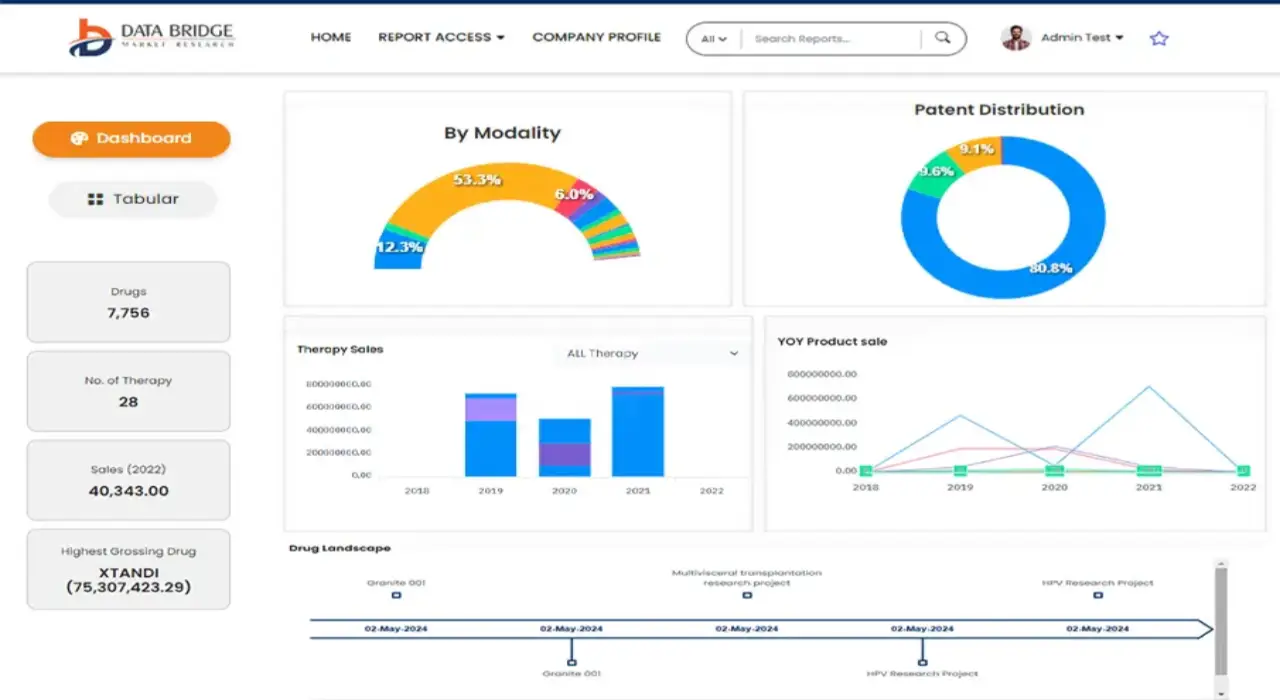
- Painel interativo de análise de dados
- Painel de análise da empresa para oportunidades de elevado potencial de crescimento
- Acesso de analista de pesquisa para personalização e customização. consultas
- Análise da concorrência com painel interativo
- Últimas notícias, atualizações e atualizações Análise de tendências
- Aproveite o poder da análise de benchmark para um rastreio abrangente da concorrência
Metodologia de Investigação
A recolha de dados e a análise do ano base são feitas através de módulos de recolha de dados com amostras grandes. A etapa inclui a obtenção de informações de mercado ou dados relacionados através de diversas fontes e estratégias. Inclui examinar e planear antecipadamente todos os dados adquiridos no passado. Da mesma forma, envolve o exame de inconsistências de informação observadas em diferentes fontes de informação. Os dados de mercado são analisados e estimados utilizando modelos estatísticos e coerentes de mercado. Além disso, a análise da quota de mercado e a análise das principais tendências são os principais fatores de sucesso no relatório de mercado. Para saber mais, solicite uma chamada de analista ou abra a sua consulta.
A principal metodologia de investigação utilizada pela equipa de investigação do DBMR é a triangulação de dados que envolve a mineração de dados, a análise do impacto das variáveis de dados no mercado e a validação primária (especialista do setor). Os modelos de dados incluem grelha de posicionamento de fornecedores, análise da linha de tempo do mercado, visão geral e guia de mercado, grelha de posicionamento da empresa, análise de patentes, análise de preços, análise da quota de mercado da empresa, normas de medição, análise global versus regional e de participação dos fornecedores. Para saber mais sobre a metodologia de investigação, faça uma consulta para falar com os nossos especialistas do setor.
Personalização disponível
A Data Bridge Market Research é líder em investigação formativa avançada. Orgulhamo-nos de servir os nossos clientes novos e existentes com dados e análises que correspondem e atendem aos seus objetivos. O relatório pode ser personalizado para incluir análise de tendências de preços de marcas-alvo, compreensão do mercado para países adicionais (solicite a lista de países), dados de resultados de ensaios clínicos, revisão de literatura, mercado remodelado e análise de base de produtos . A análise de mercado dos concorrentes-alvo pode ser analisada desde análises baseadas em tecnologia até estratégias de carteira de mercado. Podemos adicionar quantos concorrentes necessitar de dados no formato e estilo de dados que procura. A nossa equipa de analistas também pode fornecer dados em tabelas dinâmicas de ficheiros Excel em bruto (livro de factos) ou pode ajudá-lo a criar apresentações a partir dos conjuntos de dados disponíveis no relatório.