



Segmentação do mercado global de prebióticos para aquicultura, por tipo de produto (probióticos bacterianos, probióticos de levedura, probióticos fúngicos e outros), aplicação (peixes, camarões, moluscos e outros), forma (seca, líquida), canal de distribuição (online, offline) - Tendências e previsões do setor até 2033.
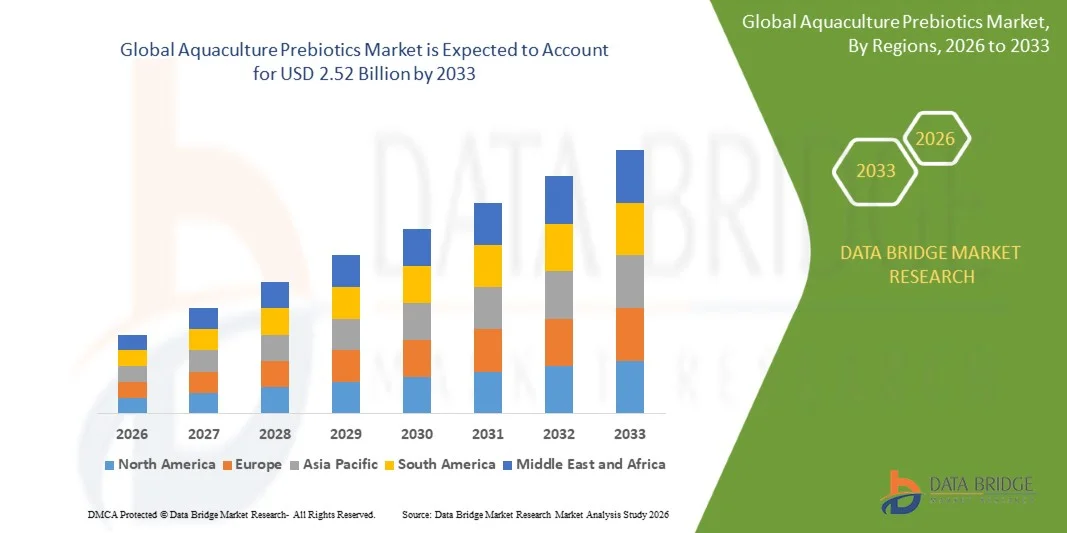
Tamanho do mercado de prebióticos para aquicultura
- O mercado de prebióticos para aquicultura foi avaliado em US$ 1,44 bilhão em 2025 e espera-se que atinja US$ 2,52 bilhões até 2033 , com uma taxa de crescimento anual composta (CAGR) de 7,30% durante o período de previsão.
- O crescimento do mercado é impulsionado principalmente pelo aumento da demanda por práticas de aquicultura sustentáveis e pela crescente conscientização sobre os benefícios dos prebióticos para a saúde, que melhoram a imunidade, o crescimento e a produtividade geral de peixes e camarões.
- Além disso, os avanços nas tecnologias de formulação de rações e a adoção de aditivos funcionais estão incentivando os produtores de aquicultura a incorporar prebióticos como prática padrão. Essas tendências convergentes estão acelerando a adoção de soluções prebióticas na aquicultura, impulsionando significativamente o crescimento do mercado.
Análise do mercado de prebióticos para aquicultura
- Os prebióticos para aquicultura, aditivos funcionais para ração que promovem a saúde intestinal, a imunidade e o crescimento de peixes e camarões, são componentes cada vez mais vitais das práticas modernas de aquicultura, tanto em sistemas de água doce quanto marinhos, devido ao seu papel na melhoria da produtividade, na redução de surtos de doenças e no apoio à agricultura sustentável.
- A crescente demanda por prebióticos na aquicultura é impulsionada principalmente pelo foco cada vez maior na aquicultura sustentável, pelo aumento do consumo global de frutos do mar e pela crescente conscientização dos benefícios das rações funcionais para a melhoria da saúde animal e da rentabilidade das fazendas.
- A América do Norte dominou o mercado de prebióticos para aquicultura, com a maior participação na receita, de 34,7% em 2025. Esse crescimento é caracterizado por indústrias de aquicultura bem estabelecidas, adoção precoce de rações funcionais e fortes investimentos em P&D. Os EUA testemunharam um crescimento substancial na incorporação de prebióticos em rações, impulsionado por inovações tanto de fabricantes de ração consolidados quanto de startups de biotecnologia emergentes.
- Prevê-se que a região Ásia-Pacífico seja a de crescimento mais rápido no mercado de prebióticos para aquicultura durante o período de previsão, devido à expansão das operações de aquicultura, ao aumento da demanda por frutos do mar e ao crescente investimento em tecnologias avançadas de alimentação animal.
- O segmento de probióticos bacterianos dominou o mercado com a maior participação na receita, de 45,6% em 2025, impulsionado por sua eficácia comprovada na melhoria da saúde intestinal, no fortalecimento da imunidade e na promoção do crescimento em diversas espécies aquáticas cultivadas.
Escopo do relatório e segmentação do mercado de prebióticos para aquicultura
|
Atributos |
Principais informações de mercado sobre prebióticos na aquicultura |
|
Segmentos abrangidos |
|
|
Países abrangidos |
América do Norte
Europa
Ásia-Pacífico
Oriente Médio e África
Ámérica do Sul
|
|
Principais participantes do mercado |
|
|
Oportunidades de mercado |
|
|
Conjuntos de informações de dados de valor agregado |
Além das informações sobre cenários de mercado, como valor de mercado, taxa de crescimento, segmentação, cobertura geográfica e principais participantes, os relatórios de mercado elaborados pela Data Bridge Market Research também incluem análises aprofundadas de especialistas, análises de preços, análises de participação de marcas, pesquisas com consumidores, análises demográficas, análises da cadeia de suprimentos, análises da cadeia de valor, visão geral de matérias-primas/insumos, critérios de seleção de fornecedores, análise PESTLE, análise de Porter e estrutura regulatória. |
Tendências do mercado de prebióticos para aquicultura
“Aumento da produtividade por meio da integração avançada de feeds e IA”
- Uma tendência significativa e crescente no mercado de prebióticos para aquicultura é a integração cada vez maior de tecnologias avançadas de alimentação com inteligência artificial (IA) e sistemas de aquicultura de precisão. Essa fusão de tecnologias está aprimorando significativamente a produtividade, o monitoramento e o controle de doenças nas fazendas.
- Por exemplo, plataformas de gestão de ração baseadas em IA podem otimizar as dosagens de prebióticos para diferentes espécies e estágios de crescimento, garantindo o máximo benefício para a saúde e reduzindo o desperdício de ração. Da mesma forma, sensores inteligentes em sistemas de aquicultura podem monitorar a qualidade da água, o comportamento alimentar e o crescimento animal em tempo real, permitindo o ajuste dinâmico da administração de prebióticos.
- A integração da IA na aquicultura permite obter informações preditivas, como a previsão de surtos de doenças ou do desempenho de crescimento com base em dados ambientais e biológicos. Por exemplo, algumas fazendas de camarão modernas utilizam algoritmos de IA para detectar sinais precoces de desequilíbrio intestinal ou estresse, possibilitando a suplementação oportuna de prebióticos para manter a imunidade e as taxas de crescimento.
- A integração perfeita de prebióticos com plataformas digitais de monitoramento e gestão facilita o controle centralizado das operações da fazenda. Através de uma única interface, os produtores podem gerenciar os cronogramas de alimentação, a qualidade da água e a saúde animal, criando um ambiente de aquicultura mais eficiente, automatizado e baseado em dados.
- Essa tendência em direção a sistemas de aquicultura mais inteligentes, adaptáveis e interconectados está remodelando fundamentalmente as expectativas de produtividade e sustentabilidade das fazendas. Consequentemente, empresas como a Cargill e a Novozymes estão desenvolvendo soluções prebióticas com inteligência artificial, com recursos como dosagem preditiva, ajuste automático de ração e integração com softwares de gestão agrícola.
- A demanda por prebióticos combinada com ferramentas de gestão baseadas em IA está crescendo rapidamente tanto em operações de aquicultura de pequena escala quanto em escala comercial, à medida que os produtores priorizam cada vez mais a eficiência operacional, a saúde animal e o crescimento sustentável.
Dinâmica do mercado de prebióticos para aquicultura
Motorista
“Crescente necessidade devido à crescente demanda por práticas de aquicultura sustentáveis e saudáveis”
- O crescente foco em práticas de aquicultura sustentáveis, aliado à demanda global cada vez maior por frutos do mar cultivados mais saudáveis e resistentes a doenças, é um fator significativo para a maior adoção de prebióticos na aquicultura.
- Por exemplo, em 2025, a Cargill anunciou avanços em rações para camarão focadas na saúde intestinal, integrando prebióticos especializados para melhorar a imunidade e as taxas de crescimento. Espera-se que essas iniciativas de empresas importantes impulsionem o crescimento do mercado de prebióticos para aquicultura durante o período de previsão.
- À medida que os agricultores se tornam mais conscientes dos riscos de doenças, dos desafios da qualidade da água e da necessidade de maior produtividade, os prebióticos oferecem benefícios específicos, como melhoria da saúde intestinal, fortalecimento da imunidade e melhor conversão alimentar, proporcionando uma alternativa atraente aos aditivos alimentares tradicionais ou aos antibióticos.
- Além disso, a crescente popularidade da aquicultura de precisão e dos sistemas inteligentes de gestão agrícola está tornando os prebióticos um componente essencial das operações modernas de aquicultura, oferecendo integração perfeita com plataformas automatizadas de alimentação e monitoramento.
- A facilidade de incorporar prebióticos em formulações de ração já existentes, aliada à capacidade de aumentar a produtividade e reduzir as perdas por doenças, são fatores-chave que impulsionam a adoção de prebióticos na aquicultura, tanto em pequenas propriedades quanto em operações comerciais. A tendência em direção a práticas de aquicultura mais sustentáveis e baseadas em dados contribui ainda mais para o crescimento do mercado.
Restrição/Desafio
“Preocupações com relação aos altos custos e à eficácia variável”
- O custo relativamente elevado dos suplementos prebióticos especializados, aliado à variabilidade na eficácia entre diferentes espécies e condições de cultivo, representa um desafio significativo para uma maior penetração no mercado. Os agricultores podem hesitar em adotar prebióticos se os retornos imediatos forem incertos ou se os custos da ração aumentarem substancialmente.
- Por exemplo, pequenas fazendas de aquicultura em regiões em desenvolvimento muitas vezes dependem de rações convencionais devido a restrições orçamentárias, o que limita a adoção de soluções prebióticas de alta qualidade.
- Abordar essas preocupações por meio da demonstração de desempenho consistente, formulações com boa relação custo-benefício e educação dos agricultores sobre as melhores práticas de uso é crucial para construir confiança e incentivar uma adoção mais ampla. Empresas como a Novozymes e a DSM enfatizam programas de testes, suporte técnico e dados de eficácia em suas estratégias de marketing para tranquilizar os potenciais compradores.
- Embora os preços estejam gradualmente se tornando mais competitivos, a percepção de custos elevados para prebióticos de alta qualidade ainda pode dificultar a adoção generalizada, especialmente entre pequenos agricultores ou operações com margens apertadas.
- Superar esses desafios por meio de linhas de produtos acessíveis, demonstração clara dos benefícios para a saúde e a produtividade e educação contínua dos produtores será vital para o crescimento sustentado do mercado de prebióticos para aquicultura.
Escopo do mercado de prebióticos para aquicultura
O mercado está segmentado com base no tipo de produto, aplicação, formato e canal de distribuição.
• Por tipo de produto
Com base no tipo de produto, o mercado de prebióticos para aquicultura é segmentado em probióticos bacterianos, probióticos de levedura, probióticos fúngicos e outros. O segmento de probióticos bacterianos dominou o mercado com a maior participação de receita, de 45,6% em 2025, impulsionado por sua eficácia comprovada na melhoria da saúde intestinal, no fortalecimento da imunidade e na promoção do crescimento em diversas espécies aquáticas cultivadas. Prebióticos bacterianos como Lactobacillus e Bifidobacterium são amplamente utilizados devido à sua capacidade de modular a microbiota intestinal e aumentar a eficiência de conversão alimentar.
O segmento de probióticos à base de levedura deverá apresentar a taxa de crescimento anual composta (CAGR) mais rápida, de 22,4%, entre 2026 e 2033, impulsionado pelo crescente número de pesquisas que comprovam seu papel na resistência a doenças e na mitigação do estresse em camarões e peixes. Os prebióticos à base de levedura também oferecem benefícios como maior absorção de nutrientes, melhoria da qualidade da água e compatibilidade com diversas formulações de ração, tornando-os cada vez mais atrativos para operações comerciais de aquicultura.
• Mediante inscrição
Com base na aplicação, o mercado de prebióticos para aquicultura é segmentado em peixes, camarões, moluscos e outros. O segmento de peixes representou a maior participação na receita do mercado, com 42,8% em 2025, impulsionado pela ampla prevalência da piscicultura em todo o mundo e pelo crescente foco na melhoria da eficiência alimentar, imunidade e resistência a doenças em espécies como salmão, tilápia e bagre. Os prebióticos na ração para peixes ajudam a otimizar a microbiota intestinal, melhorar a utilização de nutrientes e reduzir a dependência de antibióticos, alinhando-se com as práticas de aquicultura sustentável.
O segmento de camarão deverá apresentar a taxa de crescimento anual composta (CAGR) mais rápida, de 23,1%, entre 2026 e 2033, impulsionado pela crescente demanda global por camarão e pela adoção de rações suplementadas com prebióticos para prevenir doenças comuns como a síndrome da mancha branca e a síndrome da mortalidade precoce. A crescente conscientização entre os produtores de camarão sobre os benefícios do manejo da saúde intestinal está acelerando a adoção de prebióticos nesse setor.
• Por formulário
Com base na forma, o mercado de prebióticos para aquicultura é segmentado em prebióticos secos e líquidos. O segmento de prebióticos secos dominou o mercado com uma participação de 57,3% da receita em 2025, devido à sua facilidade de incorporação em rações convencionais, maior prazo de validade e estabilidade em condições de processamento de ração em altas temperaturas. Os prebióticos secos são preferidos para a fabricação de ração em larga escala e são compatíveis com uma ampla gama de espécies aquáticas, tornando-os uma escolha padrão para a aquicultura comercial.
O segmento de líquidos deverá apresentar a taxa de crescimento anual composta (CAGR) mais rápida, de 21,8%, entre 2026 e 2033, impulsionado pela crescente adoção de soluções prebióticas líquidas para aplicação direta na água e suplementação de espécies específicas. Os prebióticos líquidos oferecem vantagens como rápida absorção, dosagem precisa e maior eficácia em animais aquáticos jovens ou estressados, o que está impulsionando a demanda em sistemas modernos de aquicultura intensiva.
• Por canal de distribuição
Com base no canal de distribuição, o mercado de prebióticos para aquicultura é segmentado em canais online e offline. O segmento offline dominou o mercado com uma participação de 62,1% da receita em 2025, devido à forte presença de distribuidores, fornecedores de ração e lojas de suprimentos veterinários que fornecem produtos prebióticos diretamente para fazendas de aquicultura. Os canais offline são preferidos para compras em grande quantidade, suporte técnico e disponibilidade imediata do produto, o que é crucial para operações em larga escala.
Espera-se que o segmento online apresente a taxa de crescimento anual composta (CAGR) mais rápida, de 24,3%, entre 2026 e 2033, impulsionado pela crescente digitalização da aquisição de ração, pelo aumento da penetração do comércio eletrônico em mercados emergentes e pela conveniência da entrega em domicílio. As plataformas online também permitem que os agricultores acessem uma variedade maior de formulações prebióticas, comparem preços e obtenham avaliações de produtos, impulsionando a adoção de prebióticos por meio de canais digitais.
Análise Regional do Mercado de Prebióticos para Aquicultura
- A América do Norte dominou o mercado de prebióticos para aquicultura, com a maior participação na receita, de 34,7% em 2025, impulsionada pela indústria de aquicultura bem estabelecida, pelo foco crescente em práticas agrícolas sustentáveis e pela adoção cada vez maior de aditivos funcionais para ração.
- Os produtores da região valorizam muito os benefícios dos prebióticos, incluindo a melhoria da saúde intestinal, o aumento da imunidade e melhores taxas de conversão alimentar, o que contribui para uma maior produtividade e redução de surtos de doenças em peixes e camarões de cultivo.
- Essa ampla adoção é ainda mais sustentada por infraestrutura avançada de pesquisa e desenvolvimento, alta capacidade de investimento e regulamentações rigorosas que incentivam práticas de aquicultura sustentáveis, estabelecendo os prebióticos como uma solução preferencial tanto para operações de aquicultura comercial quanto para operações em larga escala.
Análise do Mercado de Prebióticos na Aquicultura dos EUA
O mercado de prebióticos para aquicultura nos EUA detinha a maior participação de mercado em receita na América do Norte, com 81% em 2025, impulsionado pelo setor aquícola consolidado e pela crescente adoção de aditivos funcionais para ração. Os produtores priorizam a saúde intestinal, a imunidade e a melhoria da conversão alimentar em peixes e camarões para aumentar a produtividade e reduzir surtos de doenças. A crescente tendência da aquicultura de precisão, combinada com a demanda por cultivo sustentável e livre de antibióticos, impulsiona ainda mais o mercado de prebióticos. Além disso, os avanços em P&D e a integração com sistemas inteligentes de alimentação contribuem significativamente para a expansão do mercado.
Análise do Mercado Europeu de Prebióticos para Aquicultura
Prevê-se que o mercado europeu de prebióticos para aquicultura cresça a uma taxa composta de crescimento anual (CAGR) substancial durante o período de previsão, impulsionado principalmente por regulamentações rigorosas sobre práticas de cultivo sustentáveis e pela crescente demanda por frutos do mar de alta qualidade. A urbanização crescente e a maior conscientização sobre a aquicultura sustentável estão fomentando a adoção de rações suplementadas com prebióticos. Os produtores europeus também são atraídos pelos benefícios da melhoria da resistência a doenças e do desempenho de crescimento. O mercado está apresentando um crescimento significativo na criação de peixes e camarões, com a incorporação de prebióticos tanto em operações comerciais de grande escala quanto em pequenas propriedades rurais.
Análise do Mercado de Prebióticos na Aquicultura do Reino Unido
Prevê-se que o mercado de prebióticos para aquicultura no Reino Unido cresça a uma taxa composta de crescimento anual (CAGR) notável durante o período de previsão, impulsionado pelo crescente foco na aquicultura sustentável e na melhoria da qualidade dos frutos do mar cultivados. As preocupações com surtos de doenças e o desejo por maiores rendimentos estão incentivando os piscicultores e carcinicultores a adotarem rações enriquecidas com prebióticos. A ênfase do Reino Unido na rastreabilidade, segurança alimentar e inovações em rações funcionais deverá continuar a estimular o crescimento do mercado, especialmente na aquicultura comercial e na produção emergente de frutos do mar especiais.
Análise do Mercado de Prebióticos na Aquicultura na Alemanha
O mercado de prebióticos para aquicultura na Alemanha deverá expandir a uma taxa de crescimento anual composta (CAGR) considerável durante o período de previsão, impulsionado pela crescente conscientização sobre práticas de aquicultura sustentáveis e ecologicamente corretas. A infraestrutura avançada de aquicultura da Alemanha e a ênfase na inovação promovem a adoção de prebióticos para melhorar a saúde animal, otimizar o crescimento e reduzir o uso de antibióticos. A integração de prebióticos em rações de alto desempenho está se tornando cada vez mais comum, principalmente em fazendas comerciais de peixes e camarões, em consonância com os padrões regulatórios e as expectativas dos consumidores por frutos do mar seguros e de alta qualidade.
Análise do Mercado de Prebióticos para Aquicultura na Ásia-Pacífico
O mercado de prebióticos para aquicultura na região Ásia-Pacífico está preparado para crescer à taxa composta de crescimento anual (CAGR) mais rápida, de 24%, durante o período de previsão de 2026 a 2033, impulsionado pela rápida urbanização, pelo aumento do consumo de frutos do mar e pelos crescentes investimentos em infraestrutura de aquicultura em países como China, Índia e Japão. A crescente inclinação da região para práticas de aquicultura sustentáveis e de alto rendimento, apoiada por iniciativas governamentais que promovem a segurança alimentar e tecnologias avançadas de ração, está impulsionando a adoção de prebióticos. Além disso, à medida que a região Ásia-Pacífico se consolida como um polo de produção de ração para aquicultura, a acessibilidade e a disponibilidade de prebióticos estão se expandindo, favorecendo uma adoção mais ampla entre pequenos e grandes produtores.
Análise do Mercado de Prebióticos na Aquicultura Japonesa
O mercado japonês de prebióticos para aquicultura está ganhando impulso devido ao foco do país na produção de frutos do mar de alta qualidade e em práticas de aquicultura sustentáveis. Os produtores estão adotando cada vez mais prebióticos para melhorar a saúde intestinal, a imunidade e o desempenho de crescimento de peixes e camarões. A integração de prebióticos com sistemas avançados de alimentação e ferramentas de monitoramento da qualidade da água está impulsionando o crescimento do mercado. Além disso, o envelhecimento da força de trabalho japonesa está impulsionando a demanda por soluções de alimentação mais fáceis de gerenciar e eficientes, que reduzam a intensidade do trabalho, garantindo, ao mesmo tempo, a produtividade ideal das fazendas.
Análise do Mercado de Prebióticos na Aquicultura da China
O mercado de prebióticos para aquicultura na China representou a maior fatia de receita do mercado na região Ásia-Pacífico em 2025, devido à expansão do setor aquícola no país, ao crescimento da classe média e à crescente demanda por frutos do mar. A China é um dos maiores produtores e consumidores de peixes e camarões cultivados no mundo, e os prebióticos estão se tornando cada vez mais populares para melhorar o crescimento, a imunidade e a eficiência alimentar. Iniciativas governamentais que promovem a aquicultura sustentável, a presença de fortes fabricantes nacionais de ração e a disponibilidade de opções de prebióticos acessíveis são fatores-chave que impulsionam o crescimento do mercado na China.
Participação de mercado de prebióticos na aquicultura
O setor de prebióticos para aquicultura é liderado principalmente por empresas consolidadas, incluindo:
- Cargill (EUA)
- Archer Daniels Midland (ADM) (EUA)
- BASF (Alemanha)
- DuPont Nutrição e Biociências (EUA)
- Novozymes (Dinamarca)
- Produtos nutricionais DSM (Países Baixos)
- Beneo (Alemanha)
- Lallemand Animal Nutrition (Canadá)
- Adisseo (França)
- Alltech (EUA)
- Evonik Industries (Alemanha)
- Nutreco (Países Baixos)
- Phileo por Lesaffre (França)
- Zhejiang Kangyuan Biotecnologia (China)
- Grupo Shandong Jiejing (China)
- Guangdong VTR Bio-Tech (China)
- Ração Zhejiang Tianyi (China)
- Biotecnologia do Pacífico (EUA)
- Grupo BioMar (Dinamarca)
- Blue Ocean Nutrition (EUA)
Quais são os desenvolvimentos recentes no mercado de prebióticos para aquicultura?
- Em abril de 2024, a Cargill, líder global em nutrição animal, lançou uma iniciativa estratégica no Sudeste Asiático com o objetivo de aprimorar a saúde e a produtividade de peixes e camarões cultivados por meio de suas soluções avançadas de ração prebiótica. Essa iniciativa reforça o compromisso da empresa em fornecer produtos inovadores para aquicultura, com respaldo científico e adaptados às práticas de cultivo regionais. Ao alavancar sua expertise global e formulações de ponta, a Cargill não só está abordando os desafios de produção locais, como também consolidando sua posição no mercado de prebióticos para aquicultura, que está em rápido crescimento.
- Em março de 2024, a Novozymes, empresa de biotecnologia com sede na Dinamarca, lançou um novo prebiótico à base de levedura, desenvolvido especificamente para a criação de camarão em regiões tropicais. A formulação aumenta a imunidade e a resistência ao estresse, ajudando as fazendas a reduzir surtos de doenças. Esse avanço destaca o compromisso da Novozymes com o desenvolvimento de soluções de ração funcional de ponta que melhoram a sustentabilidade e a produtividade da aquicultura em operações comerciais.
- Em março de 2024, a DSM Nutritional Products implementou com sucesso um programa integrado de suplementação prebiótica em colaboração com grandes fazendas de peixes na Índia, com o objetivo de melhorar o desempenho de crescimento e a saúde intestinal da tilápia e do bagre. Este projeto utiliza tecnologias avançadas de alimentação para promover práticas de aquicultura sustentáveis, reforçando o foco da DSM em aumentar a eficiência das fazendas e apoiar uma produção de frutos do mar mais segura e saudável.
- Em fevereiro de 2024, a Alltech anunciou uma parceria estratégica com a Associação de Produtores de Camarão do Sudeste Asiático (SESHA) para implementar programas de ração enriquecida com prebióticos em fazendas associadas. Essa colaboração visa aprimorar a resistência a doenças, a utilização da ração e a produtividade geral, facilitando operações de aquicultura mais lucrativas e sustentáveis. A iniciativa destaca o compromisso da Alltech com a inovação e a eficiência operacional no setor de aquicultura.
- Em janeiro de 2024, a Adisseo, fornecedora líder global de aditivos para ração animal, apresentou sua linha de prebióticos bacterianos de última geração na Conferência Aquaculture Asia 2024. Os prebióticos, otimizados para espécies de água doce e marinhas, permitem aos produtores melhorar a saúde intestinal, fortalecer a imunidade e aumentar a taxa de conversão alimentar. Este lançamento demonstra o compromisso da Adisseo em integrar tecnologias nutricionais avançadas às rações para aquicultura, oferecendo aos produtores maior eficiência e sustentabilidade na produção de frutos do mar cultivados.
SKU-
Obtenha acesso online ao relatório sobre a primeira nuvem de inteligência de mercado do mundo

- Painel interativo de análise de dados
- Painel de análise da empresa para oportunidades de elevado potencial de crescimento
- Acesso de analista de pesquisa para personalização e customização. consultas
- Análise da concorrência com painel interativo
- Últimas notícias, atualizações e atualizações Análise de tendências
- Aproveite o poder da análise de benchmark para um rastreio abrangente da concorrência
Metodologia de Investigação
A recolha de dados e a análise do ano base são feitas através de módulos de recolha de dados com amostras grandes. A etapa inclui a obtenção de informações de mercado ou dados relacionados através de diversas fontes e estratégias. Inclui examinar e planear antecipadamente todos os dados adquiridos no passado. Da mesma forma, envolve o exame de inconsistências de informação observadas em diferentes fontes de informação. Os dados de mercado são analisados e estimados utilizando modelos estatísticos e coerentes de mercado. Além disso, a análise da quota de mercado e a análise das principais tendências são os principais fatores de sucesso no relatório de mercado. Para saber mais, solicite uma chamada de analista ou abra a sua consulta.
A principal metodologia de investigação utilizada pela equipa de investigação do DBMR é a triangulação de dados que envolve a mineração de dados, a análise do impacto das variáveis de dados no mercado e a validação primária (especialista do setor). Os modelos de dados incluem grelha de posicionamento de fornecedores, análise da linha de tempo do mercado, visão geral e guia de mercado, grelha de posicionamento da empresa, análise de patentes, análise de preços, análise da quota de mercado da empresa, normas de medição, análise global versus regional e de participação dos fornecedores. Para saber mais sobre a metodologia de investigação, faça uma consulta para falar com os nossos especialistas do setor.
Personalização disponível
A Data Bridge Market Research é líder em investigação formativa avançada. Orgulhamo-nos de servir os nossos clientes novos e existentes com dados e análises que correspondem e atendem aos seus objetivos. O relatório pode ser personalizado para incluir análise de tendências de preços de marcas-alvo, compreensão do mercado para países adicionais (solicite a lista de países), dados de resultados de ensaios clínicos, revisão de literatura, mercado remodelado e análise de base de produtos . A análise de mercado dos concorrentes-alvo pode ser analisada desde análises baseadas em tecnologia até estratégias de carteira de mercado. Podemos adicionar quantos concorrentes necessitar de dados no formato e estilo de dados que procura. A nossa equipa de analistas também pode fornecer dados em tabelas dinâmicas de ficheiros Excel em bruto (livro de factos) ou pode ajudá-lo a criar apresentações a partir dos conjuntos de dados disponíveis no relatório.











