


Global Automotive Electronic Control Unit Market, By Type (Engine Control Unit, Brake Control Module, Suspension Control Module, Powertrain Control Module, Transmission Control Module, and Telematics Control Unit), Capacity Type (16-Bit, 32-Bit, and 64-Bit), Vehicle (Passenger Car, Light Commercial Vehicle, and Heavy Commercial Vehicle), Propulsion Type Outlook (Battery Powered, Hybrid, and Internal Combustion Engine), Technology (Transmission Control System, Engine Management System, Anti-Lock Braking System, Climate Control System, Power Steering System, Airbag Restraint System, and Body Control System), End-User (OEM, and Aftermarket) - Industry Trends and Forecast to 2031.
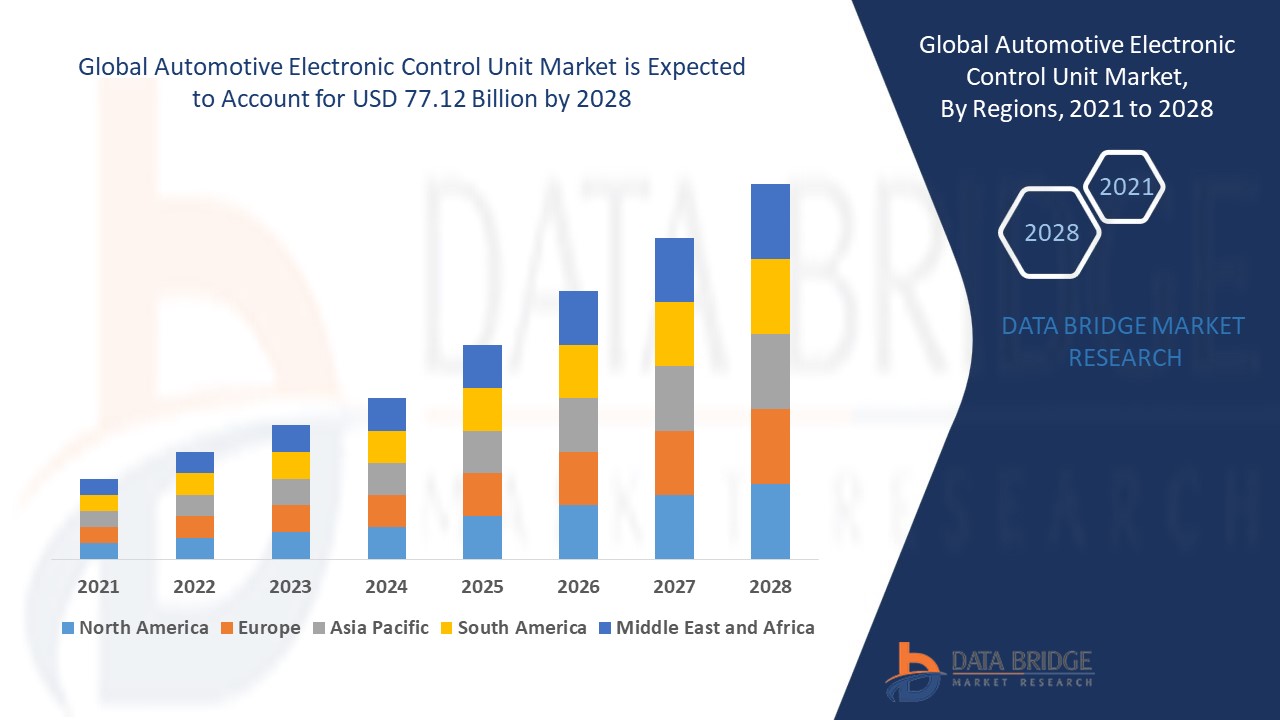
Automotive Electronic Control Unit Market Analysis and Size
Powertrain control is a critical application of automotive electronic control units (ECUs), also known as electronic control units in automobiles (ECUs), focused on optimizing the performance and efficiency of internal combustion engines and transmissions. ECUs in powertrain control manage various aspects such as fuel injection timing, ignition timing, air-fuel ratio, and turbocharger boost levels based on real-time sensor data. This enables vehicles to achieve better fuel economy, reduced emissions, and improved overall performance. Additionally, ECUs in modern vehicles often integrate with transmission control modules (TCMs) to ensure smooth gear shifting and enhance drivability.
The global automotive electronic control unit market size was valued at USD 56.18 billion in 2023 and is projected to reach USD 93.26 billion by 2031, with a CAGR of 6.54% during the forecast period of 2024 to 2031.
In addition to the market insights such as market value, growth rate, market segments, geographical coverage, market players, and market scenario, the market report curated by the Data Bridge Market Research team includes in-depth expert analysis, import/export analysis, pricing analysis, production consumption analysis, and pestle analysis.
Report Scope and Market Segmentation
|
Report Metric |
Details |
|
Forecast Period |
2024-2031 |
|
Base Year |
2023 |
|
Historic Years |
2022 (Customizable to 2016-2021) |
|
Quantitative Units |
Revenue in USD Billion, Volumes in Units, Pricing in USD |
|
Segments Covered |
Type (Engine Control Unit, Brake Control Module, Suspension Control Module, Powertrain Control Module, Transmission Control Module, and Telematics Control Unit), Capacity Type (16-Bit, 32-Bit, and 64-Bit), Vehicle (Passenger Car, Light Commercial Vehicle, and Heavy Commercial Vehicle), Propulsion Type Outlook (Battery Powered, Hybrid, and Internal Combustion Engine), Technology (Transmission Control System, Engine Management System, Anti-Lock Braking System, Climate Control System, Power Steering System, Airbag Restraint System, and Body Control System), End-User (OEM, and Aftermarket) |
|
Countries Covered |
U.S., Canada and Mexico in North America, Germany, France, U.K., Netherlands, Switzerland, Belgium, Russia, Italy, Spain, Turkey, Rest of Europe in Europe, China, Japan, India, South Korea, Singapore, Malaysia, Australia, Thailand, Indonesia, Philippines, Rest of Asia-Pacific (APAC) in the Asia-Pacific (APAC), Saudi Arabia, U.A.E, South Africa, Egypt, Israel, Rest of Middle East and Africa (M.E.A.) as a part of Middle East and Africa (M.E.A.), Brazil, Argentina and Rest of South America as part of South America |
|
Market Players Covered |
Autoliv Inc (Sweden), Bosch Limited (Germany), Continental AG (Germany), Aptiv (Ireland), DENSO CORPORATION (Japan), Magna International Inc (Canada), Hyundai Mobis (South Korea), ZF Friedrichshafen AG (Germany), FUJITSU (Japan), Minda Corp (India), HYUNDAI KEFICO Corporation (South Korea), Hitachi Astemo, Ltd. (Japan), Pektron (U.K.) |
|
Market Opportunities |
|
Market Definition
An automotive electronic control unit (ECU) is a critical component in modern vehicles responsible for controlling and managing various electronic systems. ECUs process and interpret data from sensors throughout the vehicle to regulate functions such as engine performance, emissions, transmission, braking, and more. They play a crucial role in enhancing vehicle efficiency, performance, safety, and meeting regulatory requirements by optimizing operations based on real-time data inputs.
Automotive Electronic Control Unit Market Dynamics
Drivers
- Rising Demand for Vehicle Comfort
Consumers increasingly prioritize comfort features such as advanced climate control systems, personalized seating adjustments, and sophisticated infotainment options. ECUs play a crucial role in managing these amenities by integrating sensors and actuators to regulate temperature, airflow, seat positions, and multimedia interfaces. Moreover, ECUs enhance the overall user experience by automating and optimizing these comfort functions, contributing to passenger satisfaction and loyalty. As automakers compete to differentiate their vehicles with superior comfort features, the demand for advanced ECUs capable of supporting these technologies continues to grow, driving innovation and market expansion.
- Growing Advancements in Vehicle Technology
As vehicles become more connected and autonomous, ECUs play a crucial role in managing and coordinating complex systems such as advanced driver assistance systems (ADAS), autonomous driving functionalities, and vehicle-to-vehicle (V2V) communication. ECUs are also integral to improving vehicle electrification, optimizing power management in electric and hybrid vehicles, and enhancing overall efficiency and performance. Furthermore, advancements in vehicle technology drive demand for ECUs that can support sophisticated infotainment systems, connectivity features, and predictive maintenance capabilities, catering to evolving consumer preferences for smarter and more integrated automotive solutions. This trend underscores the need for continuous ECU innovation to meet the demands of increasingly technologically advanced vehicles.
Opportunities
- Growing Stringent Regulatory Requirements
Governments worldwide are imposing increasingly stringent standards for vehicle emissions, safety, and efficiency. ECUs are essential in helping vehicles comply with these regulations by optimizing engine performance, controlling emissions, and integrating advanced safety features such as electronic stability control (ESC) and advanced driver assistance systems (ADAS). As regulations evolve to address environmental concerns and enhance vehicle safety, automakers are compelled to invest in more sophisticated ECUs capable of meeting these demanding standards. This regulatory push not only stimulates technological innovation within the automotive industry but also creates opportunities for ECU manufacturers to develop and supply advanced solutions that enable compliance and competitive differentiation in the market.
- Growing Collaborations among Technology Providers
Strategic collaborations facilitate the pooling of expertise and resources from various sectors such as automotive OEMs, semiconductor manufacturers, software developers, and technology integrators. Companies can innovate more quickly and efficiently, developing advanced ECUs that meet the evolving demands of vehicle electrification, connectivity, and autonomous driving by working together. Collaborations also enable the integration of cutting-edge technologies like artificial intelligence (AI) and machine learning into ECUs, enhancing their capabilities in real-time data processing and decision-making. Ultimately, these partnerships accelerate the pace of innovation, drive product development, and foster the adoption of sophisticated ECUs across the automotive industry.
Restraints/Challenges
- High Cost of Development
Developing ECUs involves substantial investment in research, engineering, and testing to meet stringent performance, safety, and regulatory standards. These costs are further compounded by the need for continuous innovation to integrate advanced features such as connectivity, autonomous driving capabilities, and cybersecurity measures. Additionally, the complexity of ECUs requires specialized expertise and resources, contributing to higher operational expenses. As a result, manufacturers and automotive OEMs face challenges in maintaining competitive pricing while ensuring profitability, especially amid fluctuating market demands and economic uncertainties.
- Growing Compatibility Issues
ECUs must be compatible with various hardware and software platforms, including sensors, actuators, communication protocols, and vehicle networks. Achieving seamless integration often involves complex testing and validation processes to ensure functionality across different vehicle models and generations. Moreover, as vehicles evolve with new technologies such as electrification and autonomous features, compatibility challenges can escalate, requiring continuous updates and adaptations. These issues can lead to delays in product development, increased costs, and potential limitations in offering advanced features uniformly across the market.
This market report provides details of new recent developments, trade regulations, import-export analysis, production analysis, value chain optimization, market share, impact of domestic and localized market players, analyses opportunities in terms of emerging revenue pockets, changes in market regulations, strategic market growth analysis, market size, category market growths, application niches and dominance, product approvals, product launches, geographic expansions, technological innovations in the market. To gain more info on the market contact Data Bridge Market Research for an Analyst Brief, our team will help you take an informed market decision to achieve market growth.
Recent Developments
- In September 2021 Lear Corporation collaborated with Hu Lane to expand their connector products offerings. Based in China, this venture aims to enhance Lear's global capabilities in competitive connection systems. It enables automakers to utilize advanced architecture components for improved vehicle connectivity and functionality
- In September 2021, Continental AG partnered with Horizon Robotics to establish a collaboration focusing on integrated hardware and software solutions for ADAS and autonomous driving. Located in Shanghai Jiading Industrial Zone, this initiative aims to advance Continental's technological leadership in intelligent mobility solutions
- In July 2021, Fuji Chimera Research Institute Inc. projected significant growth in the global automotive electronic control unit (ECU) market. They anticipated a 75% expansion by 2030, driven by the increasing adoption of electrified vehicles and fuel cell vehicles (FCV). The market for automotive ECU components was forecasted to grow by 37.5% over the same period
- In April 2021, Bosch announced a collaboration with Qingling Motors named Bosch Hydrogen Powertrain Systems (Chongqing) Co. Ltd. This venture focuses on developing, assembling, and marketing fuel cell systems (Fuel Cell Power Modules) for the Chinese market. Components such as the fuel cell stack and control units are supplied by Bosch, supporting China's drive towards hydrogen-powered mobility solutions
Automotive Electronic Control Unit Market Scope
The market is segmented on the basis of type, capacity type, vehicle, propulsion type, technology and end-user. The growth among segments helps you analyse niche pockets of growth and strategies to approach the market and determine your core application areas and the difference in your target markets.
Type
- Engine Control Unit
- Brake Control Module
- Suspension Control Module
- Powertrain Control Module
- Transmission Control Module
- Telematics Control Unit
Capacity Type
- 16-Bit
- 32-Bit
- 64-Bit
Vehicle
- Passenger Car
- Light Commercial Vehicle
- Heavy Commercial Vehicle
Propulsion Type
- Battery Powered
- Hybrid
- Internal Combustion Engine
Technology
- Transmission Control System
- Engine Management System
- Anti-Lock Braking System
- Climate Control System
- Power Steering System
- Airbag Restraint System
- Body Control System
End-User
- OEM
- Aftermarket
Automotive Electronic Control Unit Market Analysis/Insights
The market is analyzed and market size insights and trends are provided by country, type, capacity type, vehicle, propulsion type, technology and end-user as referenced above.
The countries covered in the market report are U.S., Canada, Mexico, Brazil, Argentina and Rest of South America, Germany, Italy, U.K., France, Spain, Netherlands, Belgium, Switzerland, Turkey, Russia, Rest of Europe, Japan, China, India, South Korea, Australia, Singapore, Malaysia, Thailand, Indonesia, Philippines, Rest of Asia-Pacific (APAC), Saudi Arabia, U.A.E, South Africa, Egypt, Israel, Rest of Middle East and Africa (MEA).
Asia-Pacific dominates the market primarily due to surging demand for in-vehicle infotainment and communication systems in passenger vehicles. Rising disposable incomes across countries in this region have fueled consumer spending on advanced automotive technologies. Additionally, the rapid expansion of automobile production facilities in Asia-Pacific countries further boosts the demand for ECUs. This combination of factors positions Asia-Pacific at the forefront of the global automotive ECU market growth.
North America is expected to have growth in the market due to a rising demand for luxury vehicles equipped with advanced electronic systems. The push towards energy-efficient vehicles is driving adoption of ECUs that optimize performance and reduce fuel consumption. Additionally, stringent government regulations aimed at curbing carbon emissions are compelling automakers to integrate sophisticated ECUs for improved engine efficiency and emission control. These trends collectively contribute to North America's prominence in the expanding automotive ECU market.
The country section of the report also provides individual market impacting factors and changes in regulation in the market domestically that impacts the current and future trends of the market. Data points such as down-stream and upstream value chain analysis, technical trends and porter's five forces analysis, case studies are some of the pointers used to forecast the market scenario for individual countries. Also, the presence and availability of global brands and their challenges faced due to large or scarce competition from local and domestic brands, impact of domestic tariffs and trade routes are considered while providing forecast analysis of the country data.
Competitive Landscape and Automotive Electronic Control Unit Market Share Analysis
The market competitive landscape provides details by competitor. Details included are company overview, company financials, revenue generated, market potential, investment in research and development, new market initiatives, Global presence, production sites and facilities, production capacities, company strengths and weaknesses, product launch, product width and breadth, application dominance. The above data points provided are only related to the companies' focus related to market.
Some of the major players operating in the market are:
- Autoliv Inc (Sweden)
- Bosch Limited (Germany)
- Continental AG (Germany)
- Aptiv (Ireland)
- DENSO CORPORATION (Japan)
- Magna International Inc (Canada)
- Hyundai Mobis (South Korea)
- ZF Friedrichshafen AG (Germany)
- FUJITSU (Japan)
- Minda Corp (India)
- HYUNDAI KEFICO Corporation (South Korea)
- Hitachi Astemo, Ltd. (Japan)
- Pektron (U.K.)
SKU-
Obtenha acesso online ao relatório sobre a primeira nuvem de inteligência de mercado do mundo

- Painel interativo de análise de dados
- Painel de análise da empresa para oportunidades de elevado potencial de crescimento
- Acesso de analista de pesquisa para personalização e customização. consultas
- Análise da concorrência com painel interativo
- Últimas notícias, atualizações e atualizações Análise de tendências
- Aproveite o poder da análise de benchmark para um rastreio abrangente da concorrência
Metodologia de Investigação
A recolha de dados e a análise do ano base são feitas através de módulos de recolha de dados com amostras grandes. A etapa inclui a obtenção de informações de mercado ou dados relacionados através de diversas fontes e estratégias. Inclui examinar e planear antecipadamente todos os dados adquiridos no passado. Da mesma forma, envolve o exame de inconsistências de informação observadas em diferentes fontes de informação. Os dados de mercado são analisados e estimados utilizando modelos estatísticos e coerentes de mercado. Além disso, a análise da quota de mercado e a análise das principais tendências são os principais fatores de sucesso no relatório de mercado. Para saber mais, solicite uma chamada de analista ou abra a sua consulta.
A principal metodologia de investigação utilizada pela equipa de investigação do DBMR é a triangulação de dados que envolve a mineração de dados, a análise do impacto das variáveis de dados no mercado e a validação primária (especialista do setor). Os modelos de dados incluem grelha de posicionamento de fornecedores, análise da linha de tempo do mercado, visão geral e guia de mercado, grelha de posicionamento da empresa, análise de patentes, análise de preços, análise da quota de mercado da empresa, normas de medição, análise global versus regional e de participação dos fornecedores. Para saber mais sobre a metodologia de investigação, faça uma consulta para falar com os nossos especialistas do setor.
Personalização disponível
A Data Bridge Market Research é líder em investigação formativa avançada. Orgulhamo-nos de servir os nossos clientes novos e existentes com dados e análises que correspondem e atendem aos seus objetivos. O relatório pode ser personalizado para incluir análise de tendências de preços de marcas-alvo, compreensão do mercado para países adicionais (solicite a lista de países), dados de resultados de ensaios clínicos, revisão de literatura, mercado remodelado e análise de base de produtos . A análise de mercado dos concorrentes-alvo pode ser analisada desde análises baseadas em tecnologia até estratégias de carteira de mercado. Podemos adicionar quantos concorrentes necessitar de dados no formato e estilo de dados que procura. A nossa equipa de analistas também pode fornecer dados em tabelas dinâmicas de ficheiros Excel em bruto (livro de factos) ou pode ajudá-lo a criar apresentações a partir dos conjuntos de dados disponíveis no relatório.











