



Segmentação de Mercado das Plataformas de Bioinformática Global AI, por Componente: (Plataformas de Software, Serviços e Ferramentas de IA), Por Modo de Implantação (Com base em nuvem, On-premise e Hybrid), Aplicação (Análise de Dados Genômicos, Proteomics, Descobrimento de Drogas, Diagnóstico Clínico, Medicina de Precisão, e Outros), Por Tecnologia (Aprendizagem de Máquinas, Aprendizagem Profunda, Processamento de Linguagem Natural (NLP), Big Data Analytics, e Visão Computador), Usuário Final (Empresas de Farmacêutico e Biotecnologia, Institutos Acadêmicos e de Pesquisa, Hospitais e Laboratórios Clínicos e Organizações de Pesquisa de Contratos (CROs), Tipo de Dados (Dados Genômicos, Dados Transcritos, Dados Proteômicos, Dados Metabolômicos e Dados Multiômicos), Funcionalidade (Integração de Dados, Análise de Sequência, Análise Estrutura, Análise Predictiva e Ferramentas de Visualização) Tendências e Previsão da Indústria para 2033
Qual é o tamanho e a taxa de crescimento das plataformas de IA da Bioinformática
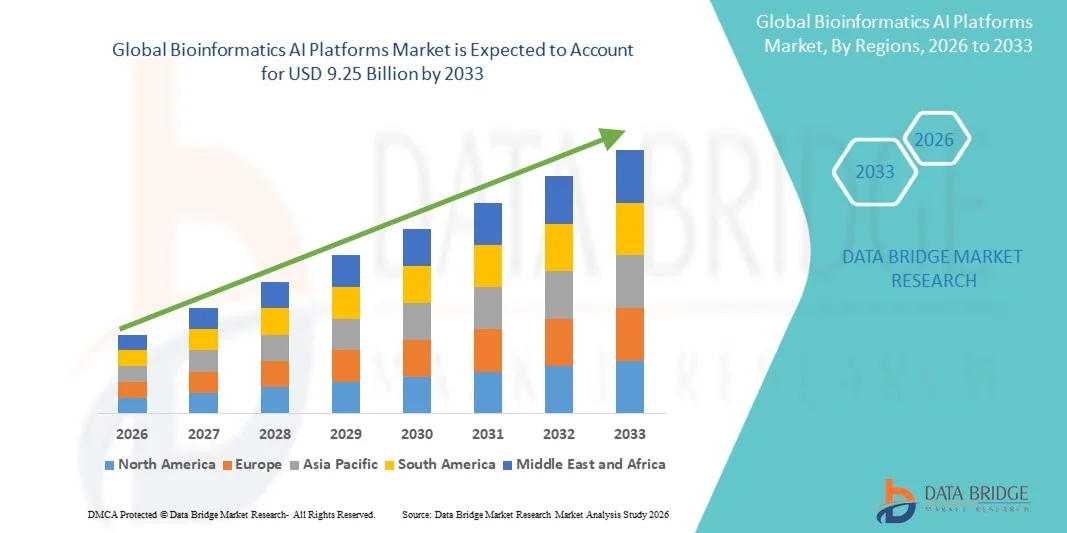
- De acordo com a Data Bridge Market Research Analysis, o tamanho global das plataformas de IA da Bioinformática foi avaliado emUSD 2,38 mil milhões em 2025e espera-se alcançar9,25 mil milhões de USD até 2033, emCAGR de 18,50%durante o período de previsão
- O crescimento do mercado é amplamente impulsionado pela rápida expansão da pesquisa genômica e multi-ômica, crescente adoção de análises orientadas por IA em ciências da vida, e crescente demanda por ferramentas de interpretação de dados de alto rendimento, levando à transformação digital acelerada em ecossistemas de pesquisa farmacêutica, biotecnologia e clínica
- Além disso, a crescente necessidade de descoberta mais rápida de medicamentos, desenvolvimento de medicina de precisão e modelagem avançada de doenças, combinada com crescentes investimentos em inteligência artificial, computação em nuvem e infraestrutura de big data em saúde, estão estabelecendo plataformas de IA da Bioinformática como ferramentas essenciais para a pesquisa biomédica moderna. Esses fatores convergentes estão acelerando a captação de soluções de plataformas de IA da Bioinformática, aumentando significativamente o crescimento da indústria
Tamanho e previsão do mercado
Valor de mercado global (2025):2,38 mil milhões de USD
Valor de mercado previsto (2033):9,25 mil milhões de USD
Previsões CAGR (2026-2033):18.50%
O que são os principais takeaways do mercado de plataformas de IA de bioinformática
- Plataformas de IA da Bioinformática, que integram inteligência artificial, aprendizado de máquina e biologia computacional para analisar dados biológicos complexos, como genômica, proteômica e transcriptômica, são cada vez mais vitais nas ciências da vida moderna e pesquisa em saúde devido à sua capacidade de acelerar a descoberta de drogas, melhorar a medicina de precisão e melhorar a tomada de decisão clínica
- A crescente demanda por plataformas de IA da Bioinformática é alimentada principalmente pelo rápido crescimento de dados multi-ômicos, crescente adoção de IA no desenvolvimento de medicamentos, crescente demanda por medicamentos personalizados e ampliação do uso de ferramentas analíticas baseadas em nuvem nas indústrias farmacêuticas e de biotecnologia
- A América do Norte dominou o mercado de plataformas de bioinformática IA com a maior parcela de receita de 38,9% em 2025, caracterizada por forte investimento em P&D, infraestrutura avançada de saúde, alta adoção de ferramentas de descoberta de medicamentos orientadas por IA, e a presença de empresas líderes em biotecnologia e farmacêutica, com os EUA representando a maioria das atividades de implantação de plataforma e inovação
- Espera-se que a Ásia-Pacífico seja a região de crescimento mais rápido no mercado de plataformas de IA da Bioinformática durante o período de previsão devido à expansão do setor de biotecnologia, aumento do financiamento governamental para pesquisa genômica, adoção crescente de tecnologias de saúde digital e crescentes colaborações entre institutos de pesquisa e fornecedores de soluções de IA em países como China, Índia e Japão
- O segmento baseado na nuvem detinha a maior quota de receita de mercado de 52,3% em 2025, impulsionada pelo aumento da demanda por soluções escaláveis e eficientes de processamento de dados
Segmentação de Mercado das Plataformas de IA e Bioinformática
|
Atributos |
Bioinformática Plataformas de IA Principais Perspectivas do Mercado |
|
Segmentos Cobertos |
|
|
Países abrangidos |
América do Norte
Europa
Ásia- Pacífico
Médio Oriente e África
América do Sul
|
|
Jogadores do mercado chave |
|
|
Oportunidades de Mercado |
|
|
Informações sobre o Valor Adicionado |
Além dos insights sobre cenários de mercado, como valor de mercado, taxa de crescimento, segmentação, cobertura geográfica e grandes atores, os relatórios de mercado curados pela Data Bridge Market Research também incluem análise de especialistas em profundidade, epidemiologia de pacientes, análise de pipelines, análise de preços e marco regulatório. |
Qual é a tendência chave no mercado de plataformas de IA de bioinformática
“Expansão de análises genômicas baseadas em nuvem e descoberta de drogas conduzidas por IA“
- Uma tendência significativa e acelerada no mercado global de plataformas de IA de Bioinformática é a rápida adoção de infraestrutura computacional baseada em nuvem combinada com análises orientadas por IA para interpretação de dados biológicos em larga escala e desenvolvimento de medicina de precisão
- Por exemplo, as plataformas de bioinformática estão cada vez mais alavancando modelos de aprendizado de máquina e de aprendizagem profunda para analisar dados genômicos, proteômicos e transcriptômicos, permitindo a identificação mais rápida de biomarcadores de doenças e alvos terapêuticos.
- A crescente demanda por medicina de precisão e cuidados de saúde personalizados está acelerando o uso de ferramentas de bioinformática alimentadas por IA para interpretar conjuntos de dados biológicos complexos e apoiar a tomada de decisão clínica
- Além disso, as empresas farmacêuticas e de biotecnologia estão cada vez mais usando plataformas de bioinformática baseadas em IA para acelerar a descoberta de pipelines, reduzir os prazos de I&D e melhorar a precisão da identificação de alvos
- A expansão das tecnologias de sequenciamento de próxima geração (NGS) está gerando volumes maciços de dados biológicos, impulsionando ainda mais a necessidade de plataformas computacionais avançadas capazes de processamento e interpretação de dados de alta velocidade
- Essa tendência para análises genômicas habilitadas por IA, integração com computação em nuvem e pesquisa em ciências da vida orientada por dados está reformulando a inovação biomédica. Consequentemente, empresas como Illumina e Thermo Fisher Scientific estão fortalecendo sua bioinformática e plataformas de biologia computacional para apoiar a pesquisa genômica em larga escala.
- A demanda por plataformas de IA da Bioinformática está aumentando rapidamente nos setores de pesquisa farmacêutica, acadêmica e clínica devido à crescente importância da inovação em saúde orientada por dados
Plataformas AI de Bioinformática Dinâmica do Mercado
Controlador
“Demanda crescente de medicina de precisão e descoberta acelerada de medicamentos”
- O foco crescente na medicina de precisão e cuidados personalizados é um dos principais motores de crescimento no mercado global de plataformas de IA da Bioinformática
- Por exemplo, os pesquisadores em saúde estão cada vez mais usando dados genômicos e moleculares para desenvolver terapias direcionadas com base em perfis individuais de pacientes, melhorando significativamente a eficácia do tratamento.
- A crescente complexidade dos conjuntos de dados biológicos gerados a partir da genômica, proteômica e metabolômica está impulsionando a adoção de plataformas de IA capazes de gerenciar e interpretar dados em larga escala de forma eficiente
- Além disso, as empresas farmacêuticas estão alavancando plataformas de IA de bioinformática para acelerar processos de descoberta de medicamentos, identificar novos alvos de medicamentos e reduzir taxas de falha em ensaios clínicos
- Aumentar os investimentos em pesquisa em biotecnologia, iniciativas genômicas financiadas pelo governo e aumentar a colaboração entre instituições de saúde e fornecedores de tecnologia estão apoiando o crescimento do mercado globalmente
- A integração de algoritmos de IA na modelagem de doenças e análise preditiva também está aumentando as capacidades de detecção precoce de doenças e melhorando a eficiência de pesquisa em ciências da vida
Restrição/Desafio
“Aumento da demanda por medicina de precisão e descoberta acelerada de drogas“
- As preocupações com a privacidade e a segurança dos dados genómicos e clínicos sensíveis representam um desafio significativo para o mercado das plataformas de IA da Bioinformática
- Por exemplo, as plataformas de bioinformática lidam com informações genômicas de pacientes altamente sensíveis, tornando essencial e complexa a conformidade com as normas de proteção de dados, como HIPAA e GDPR
- O alto custo da infraestrutura computacional avançada, incluindo sistemas de computação de alto desempenho, armazenamento em nuvem e recursos de processamento de IA, pode limitar a adoção entre instituições de pesquisa menores e participantes emergentes do mercado
- Além disso, a complexidade da integração de conjuntos de dados biológicos heterogéneos de várias fontes pode criar desafios de interoperabilidade e exigir conhecimentos técnicos significativos
- A escassez de profissionais especializados em bioinformática capazes de gerir plataformas orientadas por IA e interpretar dados biológicos complexos restringe ainda mais a escalabilidade do mercado em algumas regiões
- Superar esses desafios através de melhores frameworks de segurança de dados, soluções baseadas em nuvem econômicas, protocolos padronizados de integração de dados e desenvolvimento de força de trabalho em biologia computacional será essencial para sustentar o crescimento a longo prazo no mercado global de plataformas de IA da Bioinformática
Como é segmentado o mercado de plataformas de IA da Bioinformática
O mercado é segmentado com base em componentes, modo de implantação, aplicação, tecnologia, usuário final, tipo de dados e funcionalidade.
- Por Componente
Com base no componente, o mercado de plataformas de IA da Bioinformática é segmentado em plataformas de software, serviços e ferramentas de IA. O segmento de plataformas de software dominou a maior quota de receita de mercado de 46,8% em 2025, impulsionada pela crescente adoção de soluções integradas de bioinformática para análise de dados biológicos em larga escala. Essas plataformas permitem o gerenciamento contínuo de conjuntos de dados genômicos e proteômicos com recursos avançados de análise. O aumento da demanda por software analítico habilitado para nuvem está apoiando ainda mais o crescimento do segmento. As empresas farmacêuticas e de biotecnologia dependem fortemente de plataformas de software para a descoberta de medicamentos e aplicações de medicina de precisão. O segmento beneficia de atualizações tecnológicas contínuas e integração de algoritmos de IA. A adoção crescente de modelos de software baseados em assinaturas também está impulsionando a expansão da receita. Expansão de projetos de pesquisa genômica globalmente está fortalecendo a demanda. Além disso, o aumento do investimento em infraestrutura de saúde digital está apoiando a penetração no mercado. Além disso, espera-se que as capacidades de escalabilidade e automação mantenham a dominância do segmento durante o período de previsão.
Espera-se que o segmento de ferramentas de IA testemunhe o CAGR mais rápido de 18,4% de 2026 a 2033, impulsionado por rápidos avanços no aprendizado de máquina e análise preditiva. As ferramentas de IA são cada vez mais utilizadas para interpretação de dados biológicos complexos e reconhecimento de padrões. A crescente demanda por análise de sequenciamento genômico automatizado está apoiando significativamente a adoção. O aumento da integração da IA em gasodutos de descoberta de drogas está a acelerar ainda mais o crescimento. O segmento beneficia da inovação contínua em modelos de aprendizagem profunda. O aumento da disponibilidade de quadros de IA de código aberto está também a contribuir para a expansão. As empresas farmacêuticas estão investindo fortemente em plataformas de pesquisa orientadas por IA. A expansão do uso de IA no diagnóstico clínico está aumentando a demanda. Além disso, espera-se que o foco crescente na medicina de precisão sustente um momento de crescimento elevado.
- Por Modo de Implantação
Com base no modo de implantação, o mercado é segmentado em nuvem-baseada, on-premise e híbrido. O segmento baseado na nuvem detinha a maior quota de receita de mercado de 52,3% em 2025, impulsionada pelo aumento da demanda por soluções escaláveis e eficientes de processamento de dados. Plataformas baseadas em nuvem permitem acesso em tempo real a conjuntos de dados biológicos de grande escala e suportam pesquisas colaborativas. O segmento beneficia de custos reduzidos de infraestrutura e alta eficiência computacional. A adoção crescente de ferramentas de bioinformática baseadas em SaaS está acelerando ainda mais a demanda. As empresas farmacêuticas preferem a implantação em nuvem para flexibilidade e acessibilidade remota. O aumento do volume de dados genômicos está impulsionando a adoção de armazenamento em nuvem. Fortes avanços na cibersegurança estão aumentando a confiança nos sistemas de nuvem. Instituições de pesquisa estão cada vez mais mudando para análises baseadas em nuvem. A integração com IA e ferramentas de big data está a reforçar o crescimento. Além disso, espera-se que a expansão da transformação digital em saúde sustente a dominância.
Espera-se que o segmento híbrido testemunhe o CAGR mais rápido de 17,1% de 2026 a 2033, impulsionado pela necessidade de soluções seguras e flexíveis de gerenciamento de dados. Modelos híbridos combinam benefícios de escalabilidade em nuvem com segurança de dados no local. O aumento dos requisitos regulamentares para o armazenamento de dados genômicos sensíveis está apoiando a adoção. As organizações procuram uma infraestrutura equilibrada para a eficiência de custo e conformidade. O segmento beneficia de crescentes colaborações de pesquisa multi-institucionais. As preocupações crescentes em relação à privacidade dos dados estão a reforçar ainda mais a adopção híbrida. A integração com plataformas de análise orientadas por IA está expandindo casos de uso. As empresas farmacêuticas preferem modelos híbridos para fluxos de trabalho de pesquisa críticos. Melhorias contínuas na interoperabilidade estão aumentando a eficiência. Além disso, espera-se que a crescente demanda por soluções de implantação personalizadas promova um forte crescimento.
- Por Aplicação
Com base na aplicação, o mercado é segmentado em análise de dados genômica, proteômica, descoberta de drogas, diagnóstico clínico, medicina de precisão, entre outros. O segmento de descoberta de medicamentos representou o maior percentual de receita de mercado de 31,6% em 2025, impulsionado pelo uso crescente de ferramentas de bioinformática alimentadas por IA para acelerar o desenvolvimento terapêutico. Essas plataformas reduzem significativamente o tempo e o custo na identificação de potenciais candidatos a medicamentos. O aumento do investimento em I&D farmacêutica está a apoiar ainda mais o crescimento. A integração de IA e análise de big data está melhorando a precisão de identificação do alvo. O segmento beneficia da crescente demanda por terapias personalizadas. O aumento da prevalência de doenças crônicas está impulsionando a inovação farmacêutica. A colaboração entre empresas de biotecnologia e empresas de IA está a reforçar a adopção. A expansão dos gasodutos de ensaios clínicos está a aumentar ainda mais a procura. O financiamento do governo para a pesquisa de drogas também está apoiando a expansão do segmento. Além disso, espera-se que avanços tecnológicos contínuos sustentem a liderança.
Espera-se que o segmento de medicina de precisão testemunhe o CAGR mais rápido de 19,2% de 2026 a 2033, impulsionado pela crescente demanda por abordagens de tratamento individualizadas com base no perfil genético. As plataformas de IA de bioinformática permitem uma análise detalhada dos dados genômicos específicos do paciente. O aumento da adoção de terapias específicas está apoiando significativamente o crescimento. Os avanços nas tecnologias de sequenciamento estão aumentando ainda mais a precisão. O segmento beneficia com o aumento da conscientização de soluções personalizadas de saúde. A crescente integração da IA na tomada de decisão clínica está acelerando a adoção. As empresas farmacêuticas estão investindo em programas de pesquisa de medicina de precisão. A expansão das bases de dados genómicas está a melhorar as capacidades preditivas. Os profissionais de saúde estão cada vez mais mudando para modelos de tratamento personalizados. Além disso, espera-se que o crescente enfoque global nos cuidados de saúde baseados no valor conduza a um forte crescimento.
- Por Tecnologia
Com base na tecnologia, o mercado é segmentado em aprendizado de máquina, aprendizagem profunda, processamento de linguagem natural (NLP), análise de big data e visão computacional. O segmento de machine learning dominou a maior parcela de receita de mercado de 38,7% em 2025, impulsionada pelo seu amplo uso na modelagem preditiva e classificação de dados biológicos. Algoritmos de aprendizado de máquina são amplamente utilizados para sequenciamento genômico e identificação de alvos de drogas. O segmento beneficia de melhorias contínuas na eficiência do algoritmo. O aumento da disponibilidade de grandes conjuntos de dados biológicos apoia a adoção. As empresas farmacêuticas dependem de aprendizado de máquina para uma geração de insights mais rápida. A integração com plataformas de nuvem está aumentando ainda mais a escalabilidade. A crescente pesquisa em biologia computacional está aumentando a demanda. O segmento também é suportado por frameworks ML de código aberto. A adoção crescente no diagnóstico clínico está fortalecendo ainda mais o crescimento. Além disso, espera-se que o ecossistema de IA em expansão mantenha a dominância.
Espera-se que o segmento de aprendizagem profunda testemunhe o CAGR mais rápido de 20,5% de 2026 a 2033, impulsionado pelo crescente uso na complexa interpretação de dados biológicos. Modelos de aprendizagem profunda permitem reconhecimento avançado de padrões em conjuntos de dados multi-omics. A crescente demanda por análises preditivas de alta precisão está impulsionando a adoção. O segmento se beneficia do aumento da potência computacional e dos avanços da GPU. As empresas farmacêuticas estão alavancando o aprendizado profundo para a descoberta de drogas. A expansão do uso em imagens médicas e genômicas está impulsionando o crescimento. A inovação contínua do algoritmo está melhorando os resultados de desempenho. A integração com plataformas de medicina de precisão está apoiando ainda mais a expansão. O crescente investimento na investigação em IA está a reforçar o desenvolvimento. Além disso, espera-se que o aumento da complexidade dos dados biológicos conduza a uma adoção forte.
- Por Usuário Final
Com base no usuário final, o mercado é segmentado em empresas farmacêuticas e de biotecnologia, institutos acadêmicos e de pesquisa, hospitais e laboratórios clínicos e organizações de pesquisa (ORCs). O segmento de empresas farmacêuticas e de biotecnologia dominou a maior parcela de receita de mercado de 49,1% em 2025, impulsionada pelo uso extensivo de plataformas de IA de bioinformática na descoberta e desenvolvimento de medicamentos. Essas empresas dependem de análises avançadas para identificar alvos de drogas e otimizar ensaios clínicos. O aumento dos investimentos em I&D está a apoiar significativamente o crescimento dos segmentos. Aumentar a adoção de medicina de precisão está aumentando a demanda. O segmento beneficia da forte integração de IA em fluxos de trabalho farmacêuticos. A crescente colaboração com empresas de tecnologia está aumentando a inovação. Expandir o gasoduto de biológicos e biossimilares é o uso de condução. O apoio regulatório à terapêutica avançada também está contribuindo para a adoção. A transformação digital contínua na farmacologia está fortalecendo o domínio do mercado. Além disso, espera-se que a crescente demanda mundial de saúde sustente a liderança.
Espera-se que o segmento de CROs testemunhe o CAGR mais rápido de 17,8% de 2026 a 2033, impulsionado pelo aumento da terceirização das atividades de pesquisa clínica e desenvolvimento de medicamentos. As OCR estão adotando plataformas de IA para melhorar a eficiência e reduzir os custos operacionais. A crescente procura de uma execução mais rápida dos ensaios clínicos está a apoiar o crescimento. O segmento beneficia de crescentes tendências de terceirização farmacêutica. O aumento da complexidade dos estudos clínicos está impulsionando a adoção de análises avançadas. A integração de ferramentas de IA está melhorando a precisão e velocidade de teste. A expansão das redes globais de investigação clínica está a aumentar ainda mais a procura. As empresas farmacêuticas dependem de CROs para capacidades de pesquisa escaláveis. O investimento contínuo em infra-estruturas digitais está a reforçar a adopção. Além disso, espera-se que a crescente procura de soluções de investigação rentáveis conduza a um forte crescimento.
- Por Tipo de Dados
Com base no tipo de dados, o mercado é segmentado em dados genômicos, dados transcriptômicos, dados proteômicos, dados metabolômicos e dados multi-ômicos. O segmento de dados genômicos representou a maior parcela de receita de mercado de 41,5% em 2025, impulsionada pela adoção generalizada de tecnologias de sequenciamento de genomas. Dados genômicos formam a base da maioria das análises bioinformáticas e processos de descoberta de drogas. O aumento dos projetos de sequenciamento em larga escala está apoiando o crescimento do segmento. As empresas farmacêuticas utilizam extensivamente dados genômicos para identificação de alvos. O segmento beneficia da diminuição dos custos de sequenciamento. A expansão das bases de dados genómicas está a acelerar ainda mais as capacidades de investigação. A crescente procura de medicamentos de precisão está a impulsionar a adopção. A integração com ferramentas de IA está melhorando a interpretação dos dados. Iniciativas de genoma financiadas pelo governo estão apoiando a expansão. Além disso, espera-se que aplicações clínicas crescentes sustentem a dominância.
Espera-se que o segmento de dados multi-omics testemunhe o CAGR mais rápido de 21,3% de 2026 a 2033, impulsionado pela crescente integração de múltiplos conjuntos de dados biológicos para análise holística. As abordagens multi-ômicas combinam dados genômicos, proteômicos e metabolômicos para insights mais profundos. Aumentar a demanda por uma compreensão abrangente da doença é apoiar a adoção. O segmento se beneficia de avanços nas tecnologias de integração de dados. O aumento do uso na medicina de precisão está acelerando o crescimento. As empresas farmacêuticas estão alavancando a multi-omics para a descoberta da droga. A expansão das capacidades computacionais está melhorando a eficiência do processamento de dados. A inovação contínua na análise de IA está aumentando ainda mais as aplicações. As instituições de pesquisa estão cada vez mais adotando plataformas multi-omics. Além disso, espera-se que o foco crescente na biologia dos sistemas promova um forte crescimento.
- Por Funcionalidade
Com base na funcionalidade, o mercado é segmentado em integração de dados, análise de sequência, análise estrutural, análise preditiva e ferramentas de visualização. O segmento de análise de sequências dominou a maior parcela de receita de mercado de 36,9% em 2025, impulsionada pelo seu papel crítico na pesquisa genômica e proteômica. As ferramentas de análise de sequência são amplamente utilizadas para identificar variações genéticas e mutações. O segmento beneficia com o aumento da adoção de tecnologias de sequenciamento de próxima geração. As empresas farmacêuticas dependem fortemente de análises sequenciais para a descoberta de medicamentos. A crescente investigação em doenças genéticas está a apoiar a procura. A integração com IA está melhorando a precisão e a eficiência. A expansão das bases de dados de bioinformática está a impulsionar o crescimento. As instituições de pesquisa acadêmica são os principais usuários dessas ferramentas. Os avanços tecnológicos contínuos estão aumentando as capacidades. Além disso, espera-se que a crescente demanda por pesquisas genéticas sustente a dominância.
Espera-se que o segmento de análise preditiva testemunhe o CAGR mais rápido de 19,7% de 2026 a 2033, impulsionado pelo uso crescente de modelos de previsão de IA na pesquisa em saúde. A análise preditiva permite a detecção precoce da doença e a previsão da resposta medicamentosa. A adopção crescente de medicamentos de precisão está a apoiar significativamente o crescimento. O segmento beneficia da integração com algoritmos de aprendizado de máquina. Empresas farmacêuticas estão usando ferramentas preditivas para otimização de ensaios clínicos. Ampliar a disponibilidade de grandes conjuntos de dados está aumentando a precisão do modelo. O aumento da atenção à saúde preventiva está a aumentar ainda mais a procura. Avanços contínuos na IA estão melhorando as capacidades preditivas. As organizações de pesquisa estão cada vez mais adotando abordagens orientadas para análise. Além disso, espera-se que a ênfase crescente na tomada de decisões orientada para os dados acelere o crescimento dos segmentos.
Como é segmentado o mercado de plataformas de IA da Bioinformática
- A América do Norte dominou o mercado de plataformas de IA de bioinformática com a maior parcela de receita de 38,9% em 2025, caracterizada por forte investimento em P&D, infraestrutura avançada de saúde, alta adoção de ferramentas de descoberta de medicamentos orientadas por IA e presença de empresas líderes em biotecnologia e farmacêutica. A região beneficia da rápida integração da inteligência artificial em fluxos de trabalho de genômica, proteômica e descoberta de drogas, juntamente com o uso crescente de plataformas de bioinformática baseadas em nuvem para análise de dados biológicos em larga escala
- A crescente demanda por medicina de precisão, a expansão das aplicações de sequenciamento de próxima geração (NGS) e o crescente foco na aceleração dos prazos de desenvolvimento de medicamentos são fatores fundamentais para a adoção de plataformas de IA de bioinformática entre instituições de pesquisa, empresas farmacêuticas e laboratórios acadêmicos
- Além disso, avanços tecnológicos contínuos, forte financiamento de capital de risco em startups de IA biotecnológicas e colaboração robusta entre provedores de saúde e empresas de tecnologia estão reforçando a liderança da América do Norte no mercado global de plataformas de IA da Bioinformática
Bioinformática dos EUA Plataformas de IA Market Insight
O mercado de plataformas de IA de bioinformática dos EUA captou a maior participação de receita na América do Norte em 2025, representando a maioria das atividades de implantação e inovação de plataformas. Esse crescimento é impulsionado por fortes pipelines de P&D farmacêutica, adoção generalizada de ferramentas de descoberta de medicamentos baseadas em IA e crescente utilização de bioinformática em pesquisas clínicas. A presença de grandes empresas de biotecnologia, de infra-estruturas informáticas avançadas e de investimentos significativos em investigação genómica estão a acelerar ainda mais a expansão do mercado. Além disso, fortes colaborações acadêmico-indústria e financiamento do governo para a inovação de ciências da vida continuam a impulsionar o mercado nos EUA.
Europa Bioinformática AI Plataformas de Informação sobre o Mercado
Prevê-se que o mercado europeu de plataformas de IA de bioinformática se expanda num CAGR substancial ao longo do período previsto, apoiado pelo aumento do investimento em investigação em biotecnologia, pela adopção crescente de tecnologias digitais de saúde e pela procura crescente de soluções de medicina de precisão. O forte quadro regulamentar da região e as instituições de investigação bem estabelecidas estão a incentivar o uso de ferramentas de bioinformática orientadas por IA na descoberta de medicamentos e na investigação clínica. Além disso, a expansão das iniciativas genómicas e o aumento da colaboração entre empresas de biotecnologia e instituições académicas contribuem significativamente para o crescimento do mercado em toda a Europa.
Informação sobre o mercado das plataformas de IA da Bioinformática do Reino Unido
O mercado de plataformas de IA de bioinformática do Reino Unido está previsto para crescer em um CAGR notável durante o período de previsão devido ao ecossistema de ciências da vida forte, aumentando o apoio do governo para a pesquisa de genômica e aumentando a adoção de IA em análises de saúde. O foco do país na medicina personalizada, juntamente com o crescente investimento em infraestrutura de saúde digital, está impulsionando a demanda por plataformas de bioinformática. Além disso, uma forte colaboração entre universidades, organizações de pesquisa e empresas de biotecnologia está apoiando o crescimento do mercado no Reino Unido.
Alemanha Bioinformática AI Platforms Market Insight
Espera-se que o mercado de plataformas de IA de bioinformática da Alemanha se expanda em um considerável CAGR durante o período previsto, alimentado por forte presença da indústria farmacêutica, aumento do investimento em pesquisas biomédicas e adoção crescente de soluções de saúde alimentadas por IA. A ênfase da Alemanha na inovação nas ciências da vida e na medicina de precisão está a acelerar a integração das plataformas de bioinformática na descoberta de medicamentos e na investigação clínica. Além disso, a ampliação do financiamento de pesquisas e colaborações entre empresas de biotecnologia e instituições acadêmicas estão apoiando a expansão do mercado.
Bioinformática Ásia-Pacífico Plataformas de IA Visão do Mercado
Espera-se que o mercado de plataformas de IA de bioinformática Ásia-Pacífico testemunhe o CAGR mais rápido durante o período de previsão devido à expansão do setor de biotecnologia, aumento do financiamento governamental para pesquisa genômica, adoção crescente de tecnologias digitais de saúde e crescente colaboração entre institutos de pesquisa e fornecedores de soluções de IA em países como China, Índia e Japão. Avanços rápidos na infraestrutura de saúde, foco crescente na medicina de precisão e crescentes investimentos em inovação em ciências da vida estão impulsionando significativamente o crescimento do mercado na região. Além disso, a expansão de startups de biotecnologia e iniciativas governamentais de apoio estão acelerando a adoção em todo o Ásia-Pacífico.
Japão Bioinformática AI Platforms Market Insight
O mercado de plataformas de IA de bioinformática do Japão está ganhando impulso devido ao forte foco na pesquisa biomédica avançada, envelhecimento da população e adoção crescente de IA na saúde e na descoberta de drogas. O ecossistema de pesquisa bem desenvolvido do país e o forte investimento em medicina de precisão estão impulsionando a demanda por plataformas de bioinformática. Além disso, a crescente colaboração entre empresas farmacêuticas e instituições de pesquisa está contribuindo para a expansão do mercado no Japão.
China Bioinformática AI plataformas de mercado
O mercado de plataformas de IA de bioinformática da China representou a maior quota de receita de mercado na Ásia-Pacífico em 2025, atribuída à rápida expansão do setor de biotecnologia, ao aumento do apoio do governo à pesquisa em genômica e IA, e ao forte crescimento da inovação farmacêutica. O aumento dos investimentos na digitalização da saúde, a adoção crescente de plataformas de descoberta de medicamentos movidos por IA e a ampliação das colaborações de pesquisa são fatores fundamentais para o crescimento do mercado. Além disso, os conjuntos de dados genômicos em larga escala da China e as fortes capacidades de fabricação de biotecnologia estão contribuindo significativamente para o desenvolvimento do mercado de plataformas de IA da Bioinformática.
Quais são as principais empresas no mercado de plataformas de IA da Bioinformática
A indústria de plataformas de IA da Bioinformática é liderada principalmente por empresas bem estabelecidas, incluindo:
- IBM Corporation (EUA)
- Microsoft Corporation (EUA)
- Google LLC (EUA)
- Serviços Web da Amazon (EUA)
- Illumina Inc. (EUA)
- Thermo Fisher Scientific (EUA)
- Qiagen N.V. (Países Baixos)
- Dassault Systèmes (França)
- SAP SE (Alemanha)
- DNAnexus (EUA)
- Benchling (EUA)
- Genedata AG (Suíça)
- Sete Pontes Genômica (EUA)
- Velsera (EUA)
- Biosimetria (EUA)
- SOPHiA GENÉTICA (Suíça)
- PerkinElmer (EUA)
- Tecnologias Agilent (EUA)
- Partek Incorporated (EUA)
- Citiva (EUA)
Quais são as últimas evoluções no mercado de plataformas de IA da Bioinformática
- Em janeiro de 2021, o Google DeepMind expandiu o acesso ao banco de dados da estrutura da proteína AlphaFold, fornecendo previsões gratuitas para quase todas as proteínas conhecidas. Este tornou-se um dos maiores recursos de IA bioinformática globalmente, acelerando a pesquisa em genômica, descoberta de drogas e biologia estrutural
- Em julho de 2021, a DeepMind lançou oficialmente o AlphaFold Protein Structure Database em colaboração com EMBL-EBI, permitindo a modelagem de proteínas baseadas em IA de acesso aberto para mais de 200 milhões de estruturas, transformando significativamente as plataformas de bioinformática utilizadas na pesquisa acadêmica e farmacêutica
- Em janeiro de 2022, pesquisadores demonstraram a integração do AlphaFold em plataformas de descoberta de drogas orientadas por IA (PandaOmics + Chemistry42), mostrando como os sistemas de IA de bioinformática poderiam reduzir as linhas de tempo de descoberta de drogas em estágio inicial de anos para semanas, marcando uma grande mudança para fluxos de trabalho de biologia computacional movidos por IA
- Em maio de 2023, a NVIDIA e a Illumina expandiram sua colaboração em plataformas de análise de genômica e sequenciamento de IA, integrando modelos de IA acelerados por GPU em pipelines de bioinformática para melhorar a chamada de variantes, interpretação do genoma e aplicações de medicina de precisão
- Em maio de 2024, o Google DeepMind anunciou AlphaFold 3, estendendo capacidades de bioinformática de IA para além de proteínas para DNA, RNA e interações moleculares, melhorando significativamente a modelagem multi-ômica e plataformas de descoberta de drogas de próxima geração
- Em abril de 2025, a pesquisa revisada por pares destacou a rápida expansão de plataformas de bioinformática orientadas por IA através da descoberta de drogas, genômica e integração multi-ômica, enfatizando ferramentas como modelos de IA generativos, gêmeos digitais e sistemas co-cientistas de IA usados em fluxos de trabalho de pesquisa em ciências da vida.
SKU-
Obtenha acesso online ao relatório sobre a primeira nuvem de inteligência de mercado do mundo

- Painel interativo de análise de dados
- Painel de análise da empresa para oportunidades de elevado potencial de crescimento
- Acesso de analista de pesquisa para personalização e customização. consultas
- Análise da concorrência com painel interativo
- Últimas notícias, atualizações e atualizações Análise de tendências
- Aproveite o poder da análise de benchmark para um rastreio abrangente da concorrência
Metodologia de Investigação
A recolha de dados e a análise do ano base são feitas através de módulos de recolha de dados com amostras grandes. A etapa inclui a obtenção de informações de mercado ou dados relacionados através de diversas fontes e estratégias. Inclui examinar e planear antecipadamente todos os dados adquiridos no passado. Da mesma forma, envolve o exame de inconsistências de informação observadas em diferentes fontes de informação. Os dados de mercado são analisados e estimados utilizando modelos estatísticos e coerentes de mercado. Além disso, a análise da quota de mercado e a análise das principais tendências são os principais fatores de sucesso no relatório de mercado. Para saber mais, solicite uma chamada de analista ou abra a sua consulta.
A principal metodologia de investigação utilizada pela equipa de investigação do DBMR é a triangulação de dados que envolve a mineração de dados, a análise do impacto das variáveis de dados no mercado e a validação primária (especialista do setor). Os modelos de dados incluem grelha de posicionamento de fornecedores, análise da linha de tempo do mercado, visão geral e guia de mercado, grelha de posicionamento da empresa, análise de patentes, análise de preços, análise da quota de mercado da empresa, normas de medição, análise global versus regional e de participação dos fornecedores. Para saber mais sobre a metodologia de investigação, faça uma consulta para falar com os nossos especialistas do setor.
Personalização disponível
A Data Bridge Market Research é líder em investigação formativa avançada. Orgulhamo-nos de servir os nossos clientes novos e existentes com dados e análises que correspondem e atendem aos seus objetivos. O relatório pode ser personalizado para incluir análise de tendências de preços de marcas-alvo, compreensão do mercado para países adicionais (solicite a lista de países), dados de resultados de ensaios clínicos, revisão de literatura, mercado remodelado e análise de base de produtos . A análise de mercado dos concorrentes-alvo pode ser analisada desde análises baseadas em tecnologia até estratégias de carteira de mercado. Podemos adicionar quantos concorrentes necessitar de dados no formato e estilo de dados que procura. A nossa equipa de analistas também pode fornecer dados em tabelas dinâmicas de ficheiros Excel em bruto (livro de factos) ou pode ajudá-lo a criar apresentações a partir dos conjuntos de dados disponíveis no relatório.











