


Segmentação do mercado de biolubrificantes globais, por óleo base (óleo vegetável, gordura animal, e outros), aplicação (óleo hidráulico, fluidos metalúrgicos, óleo de serra de corrente, agentes de liberação de molde, óleo de motor de dois ciclos, óleo de engrenagem, graxas, e outros), indústria de uso final (transporte industrial, comercial e automóvel de consumo) – Tendências da indústria e previsão para 2033
Qual é o tamanho e a taxa de crescimento do mercado de biolubrificantes
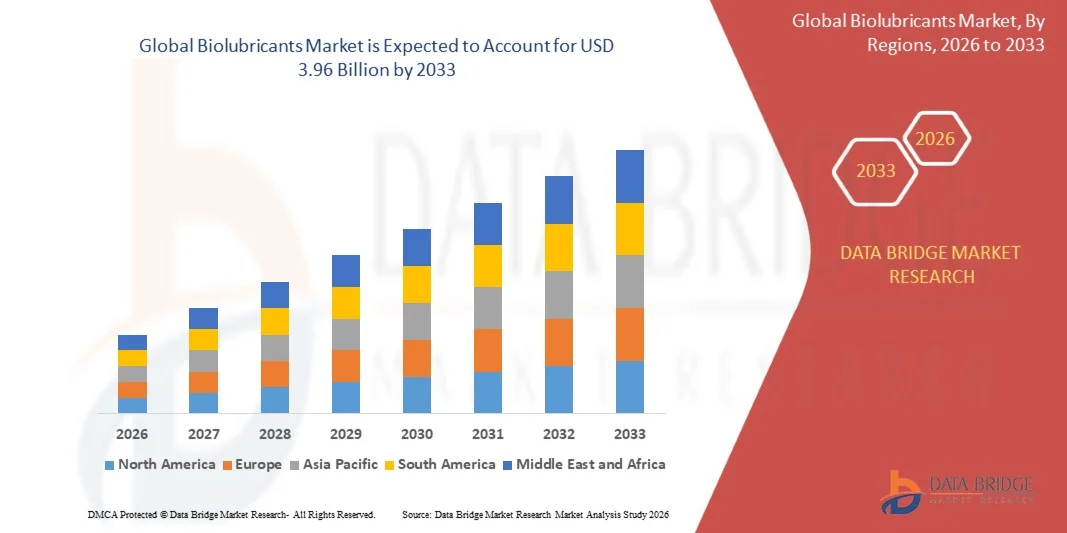
- De acordo com a análise da Data Bridge Market Research, o mercado de biolubrificantes foi avaliado emUSD 2,60 mil milhões em 2025e é projetado para alcançarUSD 3,96 mil milhões até 2033, crescendo emCAGR de 5,43% de 2026 a 2033.
- O crescimento do mercado é principalmente apoiado pela crescente mudança para soluções de lubrificação sustentável, regulamentos ambientais rigorosos que regem a eliminação de lubrificantes e a crescente demanda por produtos biodegradáveis nos setores industrial, marinho, agrícola e de transporte. A crescente preferência por matérias-primas renováveis em relação aos lubrificantes convencionais à base de petróleo reforça ainda mais a adoção do produto.
- A inovação contínua de produtos, a expansão dos investimentos em tecnologias de lubrificante bio-baseadas e políticas governamentais favoráveis que promovem práticas industriais ambientalmente responsáveis estão criando oportunidades de crescimento significativas. Além disso, espera-se que o uso crescente de biolubrificantes de alto desempenho em sistemas hidráulicos, operações de metalurgia e máquinas pesadas sustente a expansão do mercado ao longo do período de previsão.
Tamanho e previsão do mercado
- Valor de mercado (2025): USD 2,60 Bilhões
- Valor de mercado esperado (2033): USD 3,96 Bilhões
- Previsões CAGR (2026-2033): 5,43%
- Região líder em 2025: América do Norte
- Região de crescimento mais rápido: Ásia-Pacífico
Quais são os principaisMercado dos biolubrificantes
- A América do Norte dominou o mercado de biolubrificantes com a maior quota de receita de aproximadamente 36,47% em 2025, apoiada por regulamentos ambientais rigorosos que promovem lubrificantes biodegradáveis, adoção generalizada de lubrificantes ambientais aceitáveis (EALs) em aplicações marinhas, florestais, de construção e industriais, a forte presença de fabricantes líderes de lubrificantes, o aumento dos investimentos em tecnologias de lubrificantes bio-baseados e a crescente demanda por soluções de lubrificação sustentáveis em indústrias-chave de uso final.
- Espera-se que o mercado de biolubrificantes Ásia-Pacífico testemunhe a taxa de crescimento mais rápida em um CAGR de 4,56% de 2026 a 2033, impulsionado principalmente pela rápida industrialização, aumentando a adoção de lubrificantes biodegradáveis em aplicações industriais e automotivas, expandindo as atividades de infraestrutura e construção e aumentando a regulamentação ambiental promovendo soluções de lubrificação sustentáveis.
- O segmento de óleo vegetal teve a maior parcela de receita de mercado de aproximadamente 87,34% em 2025 impulsionada pela sua excelente biodegradabilidade, disponibilidade renovável, alta lubricidade, baixa toxicidade ambiental e forte desempenho de oxidação em formulações modernas.
- Espera-se que o segmento de transporte comercial testemunhe o crescimento mais rápido durante o período de previsão de 2026 a 2033, impulsionado pela crescente adoção de práticas sustentáveis de gestão da frota, ampliação das atividades de logística e transporte de mercadorias e aumento da demanda de lubrificantes biodegradáveis em veículos comerciais para cumprir as normas ambientais e reduzir as emissões do ciclo de vida.
- O segmento de óleo hidráulico detinha a maior parcela de receita de mercado de aproximadamente 31,31% em 2025 impulsionada pelo seu uso extensivo em construção, agricultura, mineração, silvicultura e máquinas industriais. O aumento dos requisitos regulamentares para lubrificantes ambientais aceitáveis (EALs), juntamente com a necessidade de minimizar a contaminação do solo e da água a partir de vazamentos do sistema hidráulico, têm acelerado significativamente a adoção de fluidos hidráulicos biodegradáveis.
- Espera-se que o segmento de óleos de engrenagens testemunhe o crescimento mais rápido durante o período de previsão de 2026 a 2033, impulsionado pelo aumento da demanda por lubrificantes biodegradáveis de alto desempenho em sistemas de engrenagens industriais, turbinas eólicas, equipamentos marítimos, máquinas de mineração e veículos de construção pesados.
Segmentação do Mercado de Biolubrificantes
|
Atributos |
Biolubrificantes Mercado Principais Insights Mercado |
|
Segmentos Cobertos |
|
|
Países abrangidos |
América do Norte
Europa
Ásia- Pacífico
Médio Oriente e África
América do Sul
|
|
Jogadores do mercado chave |
|
|
Oportunidades de Mercado |
|
|
Informações sobre o Valor Adicionado |
Além dos insights sobre cenários de mercado, como valor de mercado, taxa de crescimento, segmentação, cobertura geográfica e principais atores, os relatórios de mercado curados pela Data Bridge Market Research também incluem análise de importação, visão geral da capacidade de produção, análise do consumo de produção, análise de tendências de preços, cenário de mudança climática, análise da cadeia de suprimentos, análise da cadeia de valor, visão geral da matéria-prima/consumíveis, critérios de seleção de fornecedores, Análise de PESTLE, Análise de Porter e quadro regulatório. |
Qual é a tendência chave no mercado de biolubrificantes
- O mercado global de biolubrificantes está presenciando uma mudança para o desenvolvimento de formulações de lubrificantes biodegradáveis de alto desempenho que podem substituir lubrificantes convencionais à base de óleo mineral em aplicações industriais, marinhas, agrícolas e ambientalmente sensíveis.
- Uma tendência fundamental para moldar o mercado é o crescente foco na melhoria das características de desempenho dos biolubrificantes, incluindo estabilidade térmica, resistência à oxidação, desempenho de baixa temperatura e proteção de equipamentos. Os fabricantes estão indo além do posicionamento de biolubrificantes como apenas alternativas sustentáveis e estão desenvolvendo formulações avançadas capazes de atender às exigências de ambientes operacionais exigentes.
- A crescente adoção de ésteres sintéticos, óleos de base bio-base e tecnologias avançadas de aditivos está permitindo o desenvolvimento de lubrificantes adequados para condições extremas, incluindo operações de clima frio, sistemas hidráulicos pesados, equipamentos marítimos e máquinas industriais.
- Por exemplo, em fevereiro de 2025, Lubrificantes Renováveis introduziram fluidos hidráulicos Bio-Ultimax 1200LT, um fluido hidráulico sintético biodegradável projetado para aplicações de baixa temperatura. O produto oferece maior capacidade de bombeamento a frio e confiabilidade de desempenho, apoiando seu uso em equipamentos industriais e móveis operando sob condições ambientais adversas.
- Como os fabricantes de lubrificantes continuam a aumentar a biodegradabilidade, mantendo a paridade de desempenho com os lubrificantes convencionais, espera-se que a expansão dos biolubrificantes em aplicações industriais de alto desempenho continue a ser uma tendência fundamental do mercado, acelerando a adoção em setores de construção, marinha, agricultura e energia renovável.
Quais são os Principais Drivers do Mercado de Biolubrificantes
- O aumento da regulamentação ambiental e as iniciativas de sustentabilidade em indústrias como a marinha, a silvicultura, a agricultura, a construção e as energias renováveis estão impulsionando a demanda por lubrificantes biodegradáveis que minimizem os riscos de contaminação ambiental.
- Um dos principais motores do mercado de biolubrificantes é a crescente necessidade de soluções de lubrificação sustentáveis que ofereçam desempenho confiável em aplicações ambientalmente sensíveis. As indústrias que operam máquinas pesadas estão cada vez mais adotando lubrificantes biodegradáveis para cumprir os padrões ambientais em evolução, mantendo a eficiência operacional.
- A crescente adoção de projetos de energias renováveis, a expansão das atividades de construção e a crescente utilização de equipamentos pesados na agricultura estão incentivando os fabricantes a introduzir soluções avançadas de lubrificantes biodegradáveis em todos os mercados globais.
- Por exemplo, em outubro de 2023, a Shell Markets Middle East Limited anunciou planos para introduzir sua gama PANOLIN de lubrificantes biodegradáveis no mercado do Oriente Médio no início de 2024. A expansão visava atender a crescente demanda por soluções de lubrificação sustentável nos setores de construção, agricultura e energia renovável.
- À medida que governos e indústrias continuam priorizando a sustentabilidade e a proteção ambiental, espera-se que o aumento dos requisitos de conformidade regulatória e a transição para práticas industriais mais ecológicas apoiem o crescimento a longo prazo do mercado de biolubrificantes.
Que fatores estão desafiando o mercado de biolubrificantes
- Manter um equilíbrio entre biodegradabilidade e requisitos de alto desempenho continua a ser um grande desafio para os fabricantes de biolubrificantes, especialmente em aplicações de equipamentos hidráulicos, industriais e pesados.
- Lubrificantes biodegradáveis à base de óleos vegetais e ésteres sintéticos muitas vezes enfrentam limitações relacionadas à estabilidade à oxidação, resistência térmica e vida útil em comparação com lubrificantes convencionais à base de óleo mineral, exigindo melhorias contínuas nas tecnologias de formulação.
- Os fabricantes são obrigados a otimizar os óleos base e as embalagens aditivas para alcançar a conformidade ambiental, garantindo proteção adequada ao desgaste, confiabilidade do equipamento e vida útil prolongada do lubrificante.
- Por exemplo, em março de 2025, Rebecca Zwetzig, Gerente Setorial de Lubrificantes Industriais da Chevron, destacou os desafios associados ao desenvolvimento de fluidos hidráulicos biodegradáveis que atendam às exigências ambientais sem comprometer a proteção de equipamentos e o desempenho operacional.
- Até que os avanços em tecnologias de óleo base e soluções aditivas enfrentem plenamente as limitações de desempenho, alcançar simultaneamente durabilidade, confiabilidade e sustentabilidade continuará a ser um desafio fundamental, afetando a adoção mais rápida de biolubrificantes em aplicações industriais exigentes.
Como é o Mercado de Biolubrificantes Segmentado
O mercado de biolubrificantes é segmentado com base na indústria de óleo base, aplicação e uso final.
- Por óleo base
Com base no óleo base, o mercado de biolubrificantes é segmentado em óleo vegetal, gordura animal, entre outros. O segmento de óleo vegetal teve a maior parcela de receita de mercado de aproximadamente 87,34% em 2025 impulsionada pela sua excelente biodegradabilidade, disponibilidade renovável, alta lubricidade, baixa toxicidade ambiental e forte desempenho de oxidação em formulações modernas. Seu uso generalizado em óleos hidráulicos, fluidos de metalurgia, óleos de engrenagens e lubrificantes industriais, juntamente com regulamentos ambientais rigorosos que promovem alternativas baseadas em bio, tem reforçado ainda mais a liderança do segmento no mercado.
Espera-se que o segmento de gordura animal testemunhe o crescimento mais rápido durante o período de previsão de 2026 a 2033 impulsionado pela crescente utilização de matérias-primas renováveis derivadas de resíduos, avanços nas tecnologias de esterificação e refino, ênfase crescente em iniciativas de economia circular e recuperação de recursos e crescente demanda por formulações lubrificantes sustentáveis e econômicas. Além disso, espera-se que o aumento dos investimentos na produção química bio-baseada e políticas governamentais de apoio ao incentivo às matérias-primas renováveis acelerem a adoção de biolubrificantes à base de gordura animal em aplicações industriais, agrícolas e comerciais.
- Por Aplicação
Com base na aplicação, o mercado de biolubrificantes é segmentado em óleo hidráulico, fluidos metalúrgicos, óleo de motosserra, agentes de liberação de moldes, óleos de motor de dois ciclos, óleos de engrenagens, graxas, entre outros. O segmento de óleo hidráulico detinha a maior parcela de receita de mercado de aproximadamente 31,31% em 2025 impulsionada pelo seu uso extensivo em construção, agricultura, mineração, silvicultura e máquinas industriais. O aumento dos requisitos regulamentares para lubrificantes ambientais aceitáveis (EALs), juntamente com a necessidade de minimizar a contaminação do solo e da água a partir de vazamentos do sistema hidráulico, têm acelerado significativamente a adoção de fluidos hidráulicos biodegradáveis.
Espera-se que o segmento de óleos de engrenagens testemunhe o crescimento mais rápido durante o período de previsão de 2026 a 2033, impulsionado pelo aumento da demanda por lubrificantes biodegradáveis de alto desempenho em sistemas de engrenagens industriais, turbinas eólicas, equipamentos marítimos, máquinas de mineração e veículos de construção pesados. Prevê-se que o aumento dos investimentos em infra-estruturas de energias renováveis, a ênfase crescente no prolongamento da vida útil dos equipamentos e a regulamentação ambiental rigorosa que incentive a utilização de lubrificantes sustentáveis acelerem a adopção de óleos de engrenagens de base biológica. Além disso, avanços em formulações de éster sintético que oferecem estabilidade de oxidação superior, proteção contra desgaste e desempenho térmico estão apoiando ainda mais o crescimento do segmento durante o período de previsão.
- Por Indústria de Uso Final
Com base na indústria de uso final, o mercado de biolubrificantes é segmentado em transporte industrial, comercial e automóvel de consumo. O segmento automóvel de consumo detinha a maior parcela de receita de mercado de aproximadamente 36,13% em 2025 impulsionada pela crescente adoção de óleos de motor de base biológica, fluidos de transmissão e graxas em veículos de passageiros. A sensibilização dos consumidores para os produtos automóveis respeitadores do ambiente, o aumento da propriedade dos veículos e a regulamentação rigorosa em matéria de emissões e ambientais têm apoiado ainda mais a utilização generalizada de biolubrificantes no sector automóvel.
Espera-se que o segmento de transporte comercial testemunhe o crescimento mais rápido durante o período de previsão de 2026 a 2033, impulsionado pela crescente adoção de práticas sustentáveis de gestão da frota, ampliação das atividades de logística e transporte de mercadorias e aumento da demanda de lubrificantes biodegradáveis em veículos comerciais para cumprir as normas ambientais e reduzir as emissões do ciclo de vida. Os investimentos crescentes em iniciativas de transporte verde e lubrificantes bio-baseados de alto desempenho devem acelerar ainda mais o crescimento do segmento.
Qual a região que detém a maior parte do mercado de biolubrificantes
América do Norte Biolubrificantes Market Insight
- A América do Norte dominou o mercado de biolubrificantes com a maior quota de receita de aproximadamente 36,47% em 2025, apoiada por regulamentos ambientais rigorosos que promovem lubrificantes biodegradáveis, adoção generalizada de lubrificantes ambientais aceitáveis (EALs) em aplicações marinhas, florestais, de construção e industriais, a forte presença de fabricantes líderes de lubrificantes, o aumento dos investimentos em tecnologias de lubrificantes bio-baseados e a crescente demanda por soluções de lubrificação sustentáveis em indústrias-chave de uso final.
- A região beneficia ainda mais de infraestrutura industrial e de transporte bem estabelecida, recursos avançados de pesquisa e desenvolvimento e quadros regulatórios favoráveis, como as diretrizes da EPA (EAL) ambientalmente aceitáveis, que incentivam o uso de lubrificantes biodegradáveis em áreas ambientalmente sensíveis. Além disso, o aumento dos investimentos em projetos de energias renováveis, a expansão da adoção de fluidos hidráulicos bio-baseados e lubrificantes industriais, e o aumento das iniciativas de sustentabilidade corporativa continuam a reforçar a liderança da América do Norte no mercado de biolubrificantes.
US Biolubrificants Market Insight
O mercado de biolubrificantes dos EUA está testemunhando crescimento constante devido à adoção crescente de lubrificantes biodegradáveis em aplicações industriais, marinhas, florestais, de construção e agrícolas. Os regulamentos ambientais rigorosos, incluindo o crescente uso de lubrificantes ambientalmente aceitáveis (EALs), estão incentivando as indústrias a substituir lubrificantes convencionais à base de petróleo por alternativas sustentáveis. Além disso, o aumento dos investimentos em tecnologias de lubrificantes de base biológica, a expansão de projetos de energias renováveis e infraestrutura e o crescimento das iniciativas de sustentabilidade corporativa estão impulsionando ainda mais a expansão do mercado. A presença de fabricantes líderes de lubrificantes, a inovação contínua de produtos e a crescente demanda por fluidos hidráulicos biodegradáveis de alto desempenho e lubrificantes industriais continuam a fortalecer o mercado dos EUA.
Insight do mercado de biolubrificantes Ásia-Pacífico
Espera-se que o mercado de biolubrificantes Ásia-Pacífico testemunhe a taxa de crescimento mais rápida em um CAGR de 4,56% de 2026 a 2033, impulsionado principalmente pela rápida industrialização, aumentando a adoção de lubrificantes biodegradáveis em aplicações industriais e automotivas, expandindo as atividades de infraestrutura e construção e aumentando a regulamentação ambiental promovendo soluções de lubrificação sustentáveis. O aumento dos investimentos em projetos de energias renováveis, o aumento da procura de lubrificantes aceitáveis para o ambiente (EAL) e a expansão das indústrias transformadoras em toda a China, Índia, Japão e Sudeste Asiático estão acelerando ainda mais o crescimento do mercado regional. Iniciativas governamentais de apoio que incentivem o uso de produtos bio-baseados e avanços contínuos em tecnologias de lubrificante bio-baseadas também são esperados para fortalecer a posição da Ásia-Pacífico como o mercado regional de crescimento mais rápido durante o período de previsão.
Japão Biolubrificantes Market Insight
O mercado japonês de biolubrificantes está testemunhando crescimento constante devido ao forte foco do país na sustentabilidade ambiental, regulamentos rigorosos que promovem lubrificantes biodegradáveis e a adoção crescente de produtos bio-baseados em aplicações industriais e automotivas. Os investimentos crescentes em tecnologias avançadas de lubrificantes, a expansão de projetos de energias renováveis e a crescente demanda por lubrificantes ambientais aceitáveis (EAL) em equipamentos marítimos e industriais estão apoiando a expansão do mercado. Além disso, o compromisso do Japão com a neutralidade do carbono e a inovação contínua em lubrificantes bio-baseados de alto desempenho estão fortalecendo a posição do país no mercado regional.
China Biolubrificants Market Insight
O mercado de biolubrificantes da China está crescendo rapidamente, impulsionado pela rápida industrialização, pela expansão das atividades de manufatura e construção e pelo aumento das iniciativas governamentais que promovem práticas industriais sustentáveis. A crescente demanda por lubrificantes biodegradáveis nos setores de máquinas industriais, mineração, agricultura e transporte, juntamente com crescentes investimentos em energia renovável e fabricação verde, está acelerando o crescimento do mercado. Além disso, regulamentos ambientais mais rigorosos, o aumento da produção de produtos químicos de base biológica e a presença de uma grande base industrial estão posicionando a China como um dos mercados de maior crescimento para biolubrificantes na região Ásia-Pacífico.
Europa Biolubrificantes Market Insight
O mercado europeu dos biolubrificantes está a registar um crescimento constante, impulsionado por regulamentações ambientais rigorosas, por uma forte ênfase na redução das emissões de carbono e pela adopção crescente de lubrificantes biodegradáveis em aplicações industriais, marinhas, florestais e agrícolas. A região beneficia de políticas de sustentabilidade bem estabelecidas, de investimentos crescentes em matérias-primas renováveis e de crescente demanda por lubrificantes ambientalmente aceitáveis (EALs). Além disso, os quadros regulamentares de apoio, como o rótulo ecológico da UE, o aumento da ênfase na economia circular e os avanços contínuos nas tecnologias de lubrificante bio-baseadas continuam a apoiar a expansão do mercado em toda a Europa.
Alemanha Biolubrificantes Market Insight
O mercado de biolubrificantes da Alemanha está se expandindo constantemente devido à forte base industrial do país, aumentando os investimentos em manufatura sustentável e crescente adoção de lubrificantes biodegradáveis nos setores automotivo, industrial e de energia renovável. O aumento das atividades de pesquisa e desenvolvimento em formulações avançadas de lubrificantes de base biológica, regulamentos ambientais rigorosos e o compromisso da Alemanha com a neutralidade do carbono estão acelerando o crescimento do mercado. Além disso, a presença de fabricantes líderes de lubrificantes e a crescente procura de soluções de lubrificação de alto desempenho e ecológicas estão a reforçar a posição do país no mercado europeu.
Informação sobre o mercado de biolubrificantes do Reino Unido
O mercado de biolubrificantes do Reino Unido está ganhando ímpeto devido ao aumento das iniciativas de sustentabilidade, à crescente demanda por lubrificantes biodegradáveis em aplicações marinhas, de construção e industriais e ao aumento dos investimentos em tecnologias renováveis e de baixo carbono. A expansão da adoção de lubrificantes ambientais aceitáveis, a regulamentação ambiental de apoio e o aumento do foco corporativo na redução das emissões de gases com efeito de estufa estão impulsionando o crescimento do mercado. Além disso, espera-se que a inovação contínua do produto e a crescente utilização de lubrificantes bio-baseados no transporte e máquinas industriais apoiem ainda mais a expansão do mercado de biolubrificantes do Reino Unido.
Quais são as principais empresas no mercado de biolubrificantes
A indústria de biolubrificantes é liderada principalmente por empresas bem estabelecidas, incluindo:
- FUCHS SE(Alemanha)
- TotalEnergias SE(França)
- Shell plc(U.K.)
- Exxon Mobil Corporation(EUA)
- Chevron Corporation(EUA)
- Lubrificantes Renováveis, Inc. (EUA)
- Biolubrificantes Binol S.L. (Espanha)
- Morris Lubricants Ltd. (U.K.)
- Grupo Emery Oleochemicals (Malásia)
- Panolin Holding AG (Suíça)
- Beckett Corporation (EUA)
- Lubriplate Lubricantes Company (EUA)
- Klüber Lubrication München SE & Co. KG (Alemanha)
- Castrol Limited (U.K.)
- Repsol, S.A. (Espanha)
Quais são as últimas evoluções no mercado de biolubrificantes
- Em Janeiro de 2025, a TotalEnergies SE anunciou um investimento de 120 milhões de euros (cerca de 130 milhões de USD) para aumentar a capacidade de produção de éster sintético na sua instalação Oudalle, França. Espera-se que a expansão aumente a capacidade de produção em 50% até o quarto trimestre de 2026, apoiando a crescente demanda por lubrificantes biodegradáveis utilizados em aplicações marinhas, projetos eólicos offshore e outras operações industriais ambientalmente sensíveis.
- Em novembro de 2024, a Shell plc e a Cargill, Incorporated anunciaram uma colaboração para desenvolver soluções lubrificantes de base biológica, incluindo alternativas renováveis para lubrificantes hidráulicos ambientalmente aceitáveis (HEES). A parceria se concentra em utilizar matérias-primas renováveis e tecnologias avançadas de aditivos para melhorar a sustentabilidade do lubrificante, mantendo os requisitos de desempenho para aplicações industriais, de construção e marinhas.
- Em outubro de 2025, a FUCHS SE expandiu seu portfólio de lubrificantes sustentáveis, introduzindo produtos desenvolvidos utilizando matérias-primas recicladas e biobaseadas. A iniciativa reflete o foco contínuo da empresa em princípios de economia circular, formulações renováveis e soluções de lubrificação de alto desempenho para aplicações automotivas e industriais.
- Em outubro de 2025, a Klüber Lubrication München SE & Co. KG introduziu soluções de lubrificante ambientalmente responsáveis produzidas usando matérias-primas de base biológica balanceadas em massa certificadas sob REDcert2. O lançamento da série de óleo de engrenagem Klübersynth GH 6 MB apoia os clientes na redução das emissões de carbono relacionadas ao produto, mantendo o desempenho de lubrificação confiável em aplicações industriais.
- Em setembro de 2025, a Shell plc expandiu seu portfólio de lubrificantes biodegradáveis sob a marca Shell PONOLIN, reunindo suas soluções de lubrificante ambientalmente aceitáveis para aplicações marinhas, de construção, florestais e industriais. O portfólio inclui lubrificantes facilmente biodegradáveis projetados para reduzir o impacto ambiental e atender aos requisitos de sustentabilidade através de certificações como o rótulo ecológico da UE, OSPAR, CEFAS e USDA BioPreferred.
SKU-
Obtenha acesso online ao relatório sobre a primeira nuvem de inteligência de mercado do mundo

- Painel interativo de análise de dados
- Painel de análise da empresa para oportunidades de elevado potencial de crescimento
- Acesso de analista de pesquisa para personalização e customização. consultas
- Análise da concorrência com painel interativo
- Últimas notícias, atualizações e atualizações Análise de tendências
- Aproveite o poder da análise de benchmark para um rastreio abrangente da concorrência
Metodologia de Investigação
A recolha de dados e a análise do ano base são feitas através de módulos de recolha de dados com amostras grandes. A etapa inclui a obtenção de informações de mercado ou dados relacionados através de diversas fontes e estratégias. Inclui examinar e planear antecipadamente todos os dados adquiridos no passado. Da mesma forma, envolve o exame de inconsistências de informação observadas em diferentes fontes de informação. Os dados de mercado são analisados e estimados utilizando modelos estatísticos e coerentes de mercado. Além disso, a análise da quota de mercado e a análise das principais tendências são os principais fatores de sucesso no relatório de mercado. Para saber mais, solicite uma chamada de analista ou abra a sua consulta.
A principal metodologia de investigação utilizada pela equipa de investigação do DBMR é a triangulação de dados que envolve a mineração de dados, a análise do impacto das variáveis de dados no mercado e a validação primária (especialista do setor). Os modelos de dados incluem grelha de posicionamento de fornecedores, análise da linha de tempo do mercado, visão geral e guia de mercado, grelha de posicionamento da empresa, análise de patentes, análise de preços, análise da quota de mercado da empresa, normas de medição, análise global versus regional e de participação dos fornecedores. Para saber mais sobre a metodologia de investigação, faça uma consulta para falar com os nossos especialistas do setor.
Personalização disponível
A Data Bridge Market Research é líder em investigação formativa avançada. Orgulhamo-nos de servir os nossos clientes novos e existentes com dados e análises que correspondem e atendem aos seus objetivos. O relatório pode ser personalizado para incluir análise de tendências de preços de marcas-alvo, compreensão do mercado para países adicionais (solicite a lista de países), dados de resultados de ensaios clínicos, revisão de literatura, mercado remodelado e análise de base de produtos . A análise de mercado dos concorrentes-alvo pode ser analisada desde análises baseadas em tecnologia até estratégias de carteira de mercado. Podemos adicionar quantos concorrentes necessitar de dados no formato e estilo de dados que procura. A nossa equipa de analistas também pode fornecer dados em tabelas dinâmicas de ficheiros Excel em bruto (livro de factos) ou pode ajudá-lo a criar apresentações a partir dos conjuntos de dados disponíveis no relatório.











