



Global Bipolar Electrosurgical Devices Market Segmentation, By Product Type (Advanced Vessel Sealing Devices, and Bipolar Forceps), Surgical Application (General Surgery, Gynecology Surgery, Cardiovascular Surgery, Neurosurgery, and Others), End Users (Hospitals, Ambulatory Surgical Centers, Specialized Clinics, and Others) – Industry Trends and Forecast to 2032
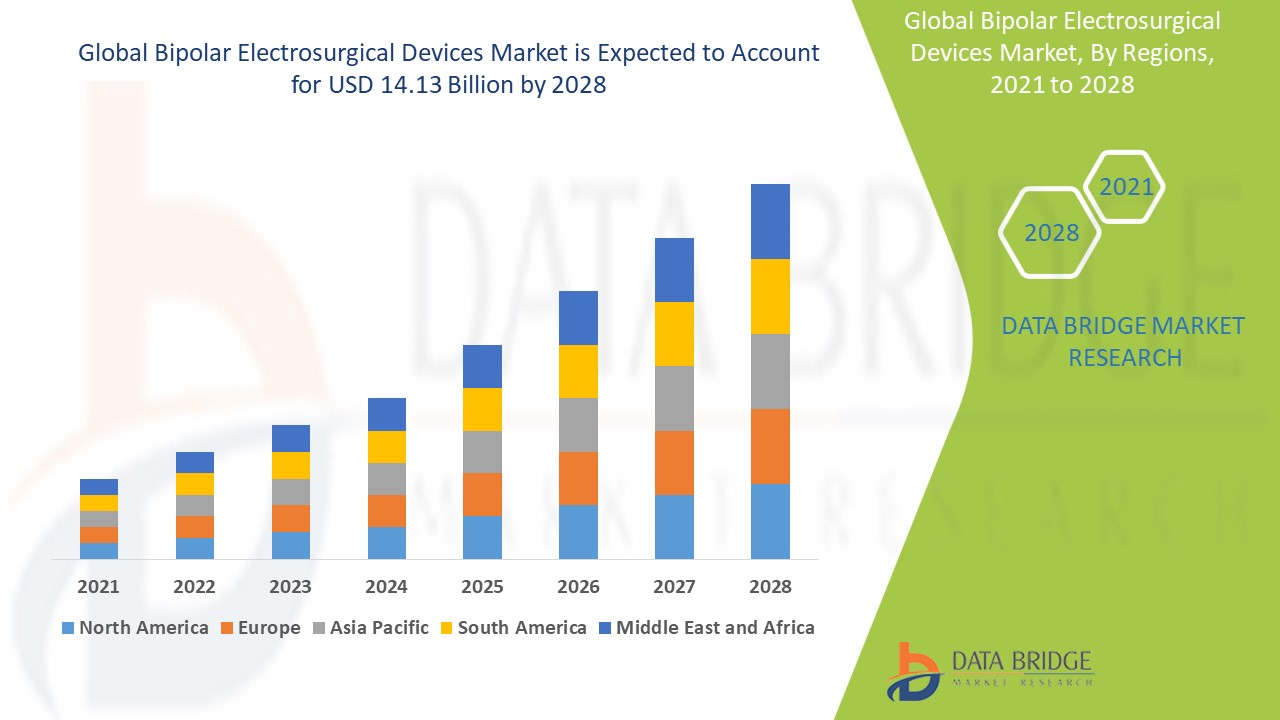
Bipolar Electrosurgical Devices Market Analysis
The bipolar electrosurgical devices market is witnessing significant growth due to advancements in surgical technology and the increasing demand for minimally invasive procedures. Bipolar electrosurgical devices, which use electrical currents to coagulate and cut tissue, offer precise control over tissue handling, reducing damage to surrounding areas and promoting quicker recovery. These devices are widely used in general surgery, gynecology, cardiovascular surgery, and neurosurgery, among other applications, as they ensure minimal bleeding and improve overall surgical outcomes.
Recent advancements in bipolar electrosurgical devices include the development of more compact, portable units and advanced safety features, such as automated tissue recognition and temperature control, which enhance precision and reduce the risk of complications. These innovations have made bipolar electrosurgical devices more accessible for point-of-care and outpatient procedures, broadening their adoption globally. In addition, the integration of AI-powered algorithms and real-time monitoring is further revolutionizing the market by improving decision-making and surgical efficiency.
The growing demand for minimally invasive surgery, increased awareness of the benefits of electrosurgery, and rising healthcare investments, particularly in emerging markets such as Asia-Pacific, are all contributing to the expansion of the bipolar electrosurgical devices market.
Bipolar Electrosurgical Devices Market Size
The global bipolar electrosurgical devices market size was valued at USD 7.85 billion in 2024 and is projected to reach USD 25.41 billion by 2032, with a CAGR of 15.81% during the forecast period of 2025 to 2032. In addition to the insights on market scenarios such as market value, growth rate, segmentation, geographical coverage, and major players, the market reports curated by the Data Bridge Market Research also include depth expert analysis, patient epidemiology, pipeline analysis, pricing analysis, and regulatory framework.
Bipolar Electrosurgical Devices Market Trends
“Growing Demand for Minimally Invasive Surgery”
A key trend in the bipolar electrosurgical devices market is the growing demand for minimally invasive surgery, driven by advancements in device portability and precision technology. The increasing preference for outpatient procedures and shorter recovery times is pushing healthcare providers to adopt more efficient and safer surgical tools. For instance, the development of compact, portable bipolar electrosurgical units, such as the ERBE VIO 300D, allows for greater flexibility in general surgery and gynecological procedures, enabling surgeons to perform precise cutting and coagulation with minimal tissue damage. These devices also integrate advanced safety features such as automatic tissue recognition and real-time feedback, which reduce the such aslihood of complications. The demand for these high-precision, user-friendly devices is particularly strong in emerging markets such as Asia-Pacific, where economic growth and rising healthcare investments are making advanced electrosurgical devices more accessible. As these trends continue, the bipolar electrosurgical devices market is set for significant expansion.
Report Scope and Bipolar Electrosurgical Devices Market Segmentation
|
Attributes |
Bipolar Electrosurgical Devices Key Market Insights |
|
Segments Covered |
|
|
Countries Covered |
U.S., Canada and Mexico in North America, Germany, France, U.K., Netherlands, Switzerland, Belgium, Russia, Italy, Spain, Turkey, Rest of Europe in Europe, China, Japan, India, South Korea, Singapore, Malaysia, Australia, Thailand, Indonesia, Philippines, Rest of Asia-Pacific (APAC) in the Asia-Pacific (APAC), Saudi Arabia, U.A.E., South Africa, Egypt, Israel, Rest of Middle East and Africa (MEA) as a part of Middle East and Africa (MEA), Brazil, Argentina and Rest of South America as part of South America |
|
Key Market Players |
B. Braun SE (Germany), Medical Devices Business Services, Inc. (U.S.), Medtronic (U.S.), OLYMPUS CORPORATION (Japan), Aspen Surgical Products, Inc. (U.S.), LAMIDEY NOURY (France), Avante Animal Health (U.S.), BD (Becton, Dickinson and Company) (U.S.), Applied Medical Resources Corporation (U.S.), Cook (U.S.), Advin Urology (India), CONMED Corporation (U.S.), Kirwan Surgical Products, LLC (U.S.), Accurate Surgical & Scientific Instruments (U.S.), Medline Industries, Inc. (U.S.), Quirumed SLU (Spain), Intuitive Surgical Operations, Inc. (U.S.), KLS Martin Manufacturing LLC (U.S.), Smith + Nephew (U.K.), and Boston Scientific Corporation (U.S.) |
|
Market Opportunities |
|
|
Value Added Data Infosets |
In addition to the insights on market scenarios such as market value, growth rate, segmentation, geographical coverage, and major players, the market reports curated by the Data Bridge Market Research also include depth expert analysis, patient epidemiology, pipeline analysis, pricing analysis, and regulatory framework. |
Bipolar Electrosurgical Devices Market Definition
Bipolar electrosurgical devices are medical instruments used in surgery to cut, coagulate, or dissect tissue by passing an electrical current through two electrodes that are placed on either side of the tissue. Ulike monopolar devices, which use a single electrode and require a grounding pad, bipolar devices apply electrical current directly between two tips, reducing the risk of burns to surrounding tissues.
Bipolar Electrosurgical Devices Market Dynamics
Drivers
- Rising Awareness of the Benefits of Electrosurgery
Rising awareness of the benefits of electrosurgery is a key driver for the growth of the bipolar electrosurgical devices market. Surgeons and healthcare professionals are increasingly recognizing the advantages of bipolar electrosurgery, such as reduced bleeding, precise tissue handling, and faster recovery times for patients. For instance, in gynecological surgeries, bipolar electrosurgical devices are widely used for tissue coagulation and vessel sealing, which significantly minimize the risk of hemorrhage and post-operative complications. These benefits are particularly valuable in minimally invasive procedures, where smaller incisions and quicker healing are crucial for improving patient outcomes. As medical professionals become more aware of these advantages, the demand for advanced bipolar electrosurgical devices is growing, further driving their adoption across various surgical specialties such as general surgery, cardiovascular surgery, and urology. This growing awareness is a major factor contributing to the expansion of the bipolar electrosurgical devices market, making it a key market driver.
- Growing Aging Population
The aging global population is a significant driver for the growth of the bipolar electrosurgical devices market, as elderly individuals are more susceptible to chronic conditions that often require surgical intervention. According to the United Nations, the number of people aged 60 and older is expected to reach 2.1 billion by 2050, up from 1 billion in 2020, highlighting the growing need for medical procedures to manage age-related health issues. Chronic conditions such as cardiovascular diseases, joint disorders, and cancer are more prevalent in older populations, and many of these require surgery. Bipolar electrosurgical devices are particularly valuable in these surgeries, as they allow for precise tissue cutting and vessel sealing, minimizing blood loss and promoting faster recovery critical factors for elderly patients with compromised health. As the aging population continues to rise, the demand for these advanced surgical tools to treat age-related conditions is fueling the market's growth, making the aging demographic a key market driver for bipolar electrosurgical devices.
Opportunities
- Increasing Technological Advancements
Technological advancements present a significant market opportunity for bipolar electrosurgical devices, with continuous improvements in device precision, portability, and safety features enhancing their effectiveness and usability. For instance, modern bipolar devices now feature automatic tissue recognition and real-time feedback, allowing for more accurate tissue handling and reduced risk of complications during surgery. Devices such as the ERBE VIO 300D integrate AI-powered algorithms that provide surgeons with instant data and recommendations, improving decision-making and ensuring optimal surgical outcomes. These innovations not only make surgeries safer and enable faster, less invasive procedures, which is particularly beneficial in minimally invasive surgeries. The growing integration of smart technologies in surgical devices is making them more user-friendly and efficient, positioning bipolar electrosurgical devices as an essential tool in operating rooms worldwide. As these advancements continue to evolve, the opportunity for widespread adoption of these devices in various surgical specialties, such as cardiovascular, neurological, and gynecological surgeries, is expanding, further driving market growth.
- Growing Global Healthcare Expenditures
Increased healthcare investments, especially in emerging markets such as Asia-Pacific, present a significant opportunity for the bipolar electrosurgical devices market. Countries such as China, India, and Brazil are significantly expanding their healthcare infrastructure, driven by rising economic growth and government initiatives to improve medical care. For instance, in India, the healthcare sector is expected to reach USD 372 billion by 2022, fueled by both government spending and private investments in hospitals and medical technologies. This surge in funding is accelerating the adoption of advanced surgical tools, including bipolar electrosurgical devices, which are crucial for performing precise, minimally invasive procedures with reduced recovery times. As healthcare facilities upgrade to state-of-the-art technologies to meet growing demand and improve patient outcomes, the bipolar electrosurgical devices market stands to benefit from these investments, creating a major growth opportunity in emerging markets. The increased focus on modernizing healthcare infrastructure is therefore a key market driver for the adoption of these devices.
Restraints/Challenges
- High Initial Cost of Bipolar Electrosurgical Devicess
The high initial costs of bipolar electrosurgical devices represent a significant market challenge, particularly for smaller healthcare facilities or those in low-resource regions. These devices can be priced at a premium, and the additional costs associated with ongoing maintenance, staff training, and consumable items such as disposable electrodes can make them financially inaccessible for many hospitals and clinics. For instance, the upfront investment in a high-quality bipolar electrosurgical unit can be substantial, with the cost of disposable electrodes adding considerable expenses per procedure, which can quickly accumulate over time. In emerging markets, where healthcare budgets are often constrained, such high costs may force healthcare providers to rely on more affordable, but less precise, surgical methods, limiting the adoption of advanced electrosurgical technologies. This challenge restricts access to safer, more efficient surgical options in these regions and prevents healthcare facilities from upgrading to more advanced technologies, ultimately hindering the overall growth of the bipolar electrosurgical devices market.
- Stringent Regulatory Compliance
Stringent regulatory compliance is a significant challenge in the bipolar electrosurgical devices market, as these instruments must meet rigorous standards set by regulatory agencies such as the FDA, EMA, and other global bodies. Compliance involves extensive documentation, clinical testing, and adherence to Good Manufacturing Practices (GMP), which can be both costly and time-consuming. For instance, gaining FDA approval for a new bipolar electrosurgical device can take several years and require substantial financial resources for clinical trials, safety assessments, and product modifications to meet regulatory standards. This process not only delays the time to market and increases the overall development costs, making it difficult for smaller manufacturers or startups to compete against larger, established companies. Furthermore, the complexity and variation in regulatory requirements across different regions can hinder the entry of innovative products into the market, slowing down the adoption of new technologies that could improve surgical outcomes. As a result, the regulatory burden limits market growth, stifles innovation, and creates barriers for new entrants, making it a key market challenge for bipolar electrosurgical devices.
This market report provides details of new recent developments, trade regulations, import-export analysis, production analysis, value chain optimization, market share, impact of domestic and localized market players, analyses opportunities in terms of emerging revenue pockets, changes in market regulations, strategic market growth analysis, market size, category market growths, application niches and dominance, product approvals, product launches, geographic expansions, technological innovations in the market. To gain more info on the market contact Data Bridge Market Research for an Analyst Brief, our team will help you take an informed market decision to achieve market growth.
Bipolar Electrosurgical Devices Market Scope
The market is segmented on the basis of product type, surgical application, and end users. The growth amongst these segments will help you analyse meagre growth segments in the industries and provide the users with a valuable market overview and market insights to help them make strategic decisions for identifying core market applications.
Product Type
- Advanced Vessel Sealing Devices
- Bipolar Forceps
Surgical Application
- General Surgery
- Gynecology Surgery
- Cardiovascular Surgery
- Neurosurgery
- Others
End Users
- Hospitals
- Ambulatory Surgical Centers
- Specialized Clinics
- Others
Bipolar Electrosurgical Devices Market Regional Analysis
The market is analysed and market size insights and trends are provided by country, product type, surgical application, and end users as referenced above.
The countries covered in the market report are U.S., Canada and Mexico in North America, Germany, France, U.K., Netherlands, Switzerland, Belgium, Russia, Italy, Spain, Turkey, Rest of Europe in Europe, China, Japan, India, South Korea, Singapore, Malaysia, Australia, Thailand, Indonesia, Philippines, Rest of Asia-Pacific (APAC) in the Asia-Pacific (APAC), Saudi Arabia, U.A.E., South Africa, Egypt, Israel, Rest of Middle East and Africa (MEA) as a part of Middle East and Africa (MEA), Brazil, Argentina and Rest of South America as part of South America.
North America dominates the bipolar electrosurgical devices market, driven by the widespread adoption of cutting-edge technology and a robust healthcare infrastructure. The region benefits from a high level of healthcare expertise and a significant presence of skilled professionals, ensuring effective implementation and utilization of advanced electrosurgical tools. In addition, the increasing demand for minimally invasive surgical procedures further supports the market's growth. With continuous advancements in medical technology and strong healthcare support systems, North America remains a leading market for bipolar electrosurgical devices.
Asia-Pacific is projected to experience substantial growth between 2025 and 2032, driven by rapid economic development and an increase in foreign direct investments. This region is seeing a significant rise in healthcare infrastructure and the adoption of advanced medical technologies. Growing awareness about the benefits of minimally invasive surgical techniques is also contributing to the demand for advanced electrosurgical devices. As more healthcare professionals in Asia-Pacific embrace these innovations, the market for advanced surgical tools is expected to expand at a remarkable pace.
The country section of the report also provides individual market impacting factors and changes in regulation in the market domestically that impacts the current and future trends of the market. Data points such as down-stream and upstream value chain analysis, technical trends and porter's five forces analysis, case studies are some of the pointers used to forecast the market scenario for individual countries. Also, the presence and availability of global brands and their challenges faced due to large or scarce competition from local and domestic brands, impact of domestic tariffs and trade routes are considered while providing forecast analysis of the country data.
Bipolar Electrosurgical Devices Market Share
The market competitive landscape provides details by competitor. Details included are company overview, company financials, revenue generated, market potential, investment in research and development, new market initiatives, global presence, production sites and facilities, production capacities, company strengths and weaknesses, product launch, product width and breadth, application dominance. The above data points provided are only related to the companies' focus related to market.
Bipolar Electrosurgical Devices Market Leaders Operating in the Market Are:
- B. Braun SE (Germany)
- Medical Devices Business Services, Inc. (U.S.)
- Medtronic (U.S.)
- OLYMPUS CORPORATION (Japan)
- Aspen Surgical Products, Inc. (U.S.)
- LAMIDEY NOURY (France)
- Avante Animal Health (U.S.)
- BD (U.S.)
- Applied Medical Resources Corporation (U.S.)
- Cook (U.S.)
- Advin Urology (India)
- CONMED Corporation (U.S.)
- Kirwan Surgical Products, LLC (U.S.)
- Accurate Surgical & Scientific Instruments (U.S.)
- Medline Industries, Inc. (U.S.)
- Quirumed SLU (Spain)
- Intuitive Surgical Operations, Inc. (U.S.)
- KLS Martin Manufacturing LLC (U.S.)
- Smith + Nephew (U.K.)
- Boston Scientific Corporation (U.S.)
Latest Developments in Bipolar Electrosurgical Devices Market
- In April 2024, Integra LifeSciences Holdings Corporation (U.S.) acquired Acclarent, Inc. (U.S.), a leader in ENT surgical solutions. This acquisition expands Integra's product portfolio, strengthens its market position, and opens up a growth opportunity worth USD 1 billion in the ENT device sector
- In March 2024, Medical Device Business Services, a subsidiary of Johnson & Johnson (U.S.), partnered with NVIDIA Corporation (U.S.) to enhance real-time analysis and broaden the accessibility of AI algorithms in operating rooms worldwide. This collaboration aims to help surgeons make more informed decisions, improve education, and foster collaboration within connected operating rooms, ultimately improving patient outcomes
- In June 2023, Olympus Corporation introduced the ESG-410 electrosurgical generator, designed to improve treatment efficiencies for benign prostatic hyperplasia (BPH) and non-muscle-invasive bladder cancer (NMIBC). The device offers vaporization buttons, needles, band electrodes, and resection loops for more effective procedures
- In April 2023, Innoblative Designs announced that its SIRA RFA Electrosurgical Device (SIRA) received Breakthrough Device Designation from the U.S. FDA. The device is intended for use in breast cancer patients undergoing breast-conserving surgery
- In November 2023, Erbe Elektromedizin GmbH (Germany) launched the TriSect rapide tool, designed for bipolar coagulation, division, and sealing of vessels and tissue bundles. It also allows for tissue grasping, dissection, and cutting, suitable for open, minimally invasive, and endoscopically assisted procedures across various medical specialties including general visceral surgery, gynecology, urology, pediatrics, and thoracic surgery
SKU-
Obtenha acesso online ao relatório sobre a primeira nuvem de inteligência de mercado do mundo

- Painel interativo de análise de dados
- Painel de análise da empresa para oportunidades de elevado potencial de crescimento
- Acesso de analista de pesquisa para personalização e customização. consultas
- Análise da concorrência com painel interativo
- Últimas notícias, atualizações e atualizações Análise de tendências
- Aproveite o poder da análise de benchmark para um rastreio abrangente da concorrência
Metodologia de Investigação
A recolha de dados e a análise do ano base são feitas através de módulos de recolha de dados com amostras grandes. A etapa inclui a obtenção de informações de mercado ou dados relacionados através de diversas fontes e estratégias. Inclui examinar e planear antecipadamente todos os dados adquiridos no passado. Da mesma forma, envolve o exame de inconsistências de informação observadas em diferentes fontes de informação. Os dados de mercado são analisados e estimados utilizando modelos estatísticos e coerentes de mercado. Além disso, a análise da quota de mercado e a análise das principais tendências são os principais fatores de sucesso no relatório de mercado. Para saber mais, solicite uma chamada de analista ou abra a sua consulta.
A principal metodologia de investigação utilizada pela equipa de investigação do DBMR é a triangulação de dados que envolve a mineração de dados, a análise do impacto das variáveis de dados no mercado e a validação primária (especialista do setor). Os modelos de dados incluem grelha de posicionamento de fornecedores, análise da linha de tempo do mercado, visão geral e guia de mercado, grelha de posicionamento da empresa, análise de patentes, análise de preços, análise da quota de mercado da empresa, normas de medição, análise global versus regional e de participação dos fornecedores. Para saber mais sobre a metodologia de investigação, faça uma consulta para falar com os nossos especialistas do setor.
Personalização disponível
A Data Bridge Market Research é líder em investigação formativa avançada. Orgulhamo-nos de servir os nossos clientes novos e existentes com dados e análises que correspondem e atendem aos seus objetivos. O relatório pode ser personalizado para incluir análise de tendências de preços de marcas-alvo, compreensão do mercado para países adicionais (solicite a lista de países), dados de resultados de ensaios clínicos, revisão de literatura, mercado remodelado e análise de base de produtos . A análise de mercado dos concorrentes-alvo pode ser analisada desde análises baseadas em tecnologia até estratégias de carteira de mercado. Podemos adicionar quantos concorrentes necessitar de dados no formato e estilo de dados que procura. A nossa equipa de analistas também pode fornecer dados em tabelas dinâmicas de ficheiros Excel em bruto (livro de factos) ou pode ajudá-lo a criar apresentações a partir dos conjuntos de dados disponíveis no relatório.











