



Segmentação do mercado global de equipamentos para processamento de pão, por tipo (equipamentos de mistura, equipamentos de divisão, equipamentos de modelagem, equipamentos de preparação de massa e outros), produto (máquina de formar pão, cortador de pão, máquina de assar pão e outros), aplicação (padaria, fábrica de pão e outros) - Tendências e previsões do setor até 2033
O que é o equipamento de processamento de pão Tamanho do mercado e taxa de crescimento
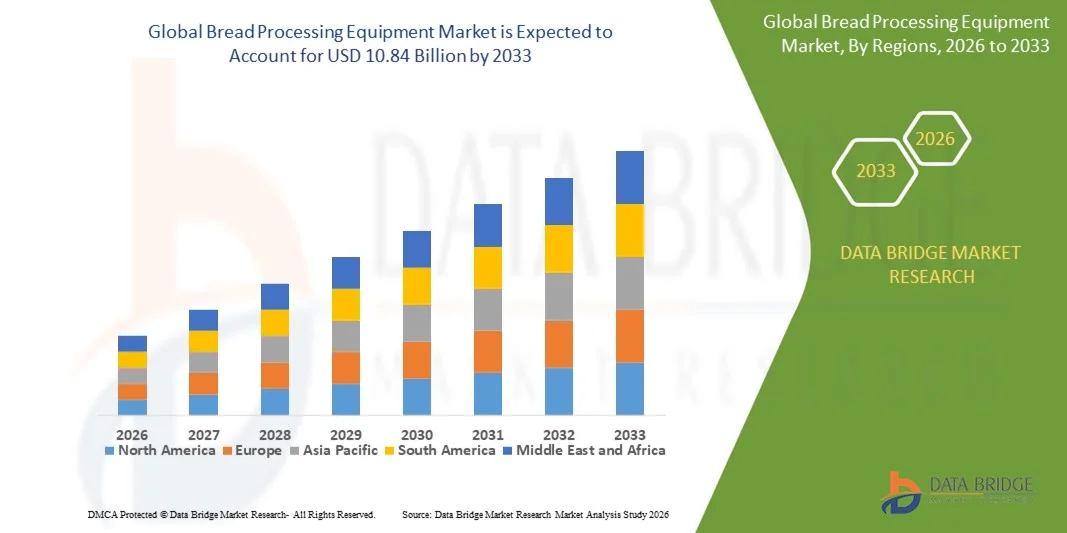
- De acordo com a Data Bridge Market Research Analysis, o tamanho global do mercado de equipamentos de processamento de pão foi avaliado em6,30 mil milhões de USD em 2025e espera-se alcançar10,84 mil milhões de USD até 2033, em umaCAGR de 7,00%durante o período de previsão
- O crescimento do mercado é amplamente alimentado pelo aumento do consumo de produtos de padaria, aumento da procura de alimentos embalados e de conveniência, e expansão das operações de padaria comercial em todo o mundo
- A urbanização crescente, a mudança de hábitos alimentares e a preferência por produtos de padaria prontos para comer e frescos apoiam ainda mais a expansão do mercado
Tamanho e previsão do mercado
- Valor de mercado global (2025):6,30 mil milhões de USD
- Valor de mercado previsto (2033):10,84 mil milhões de USD
- Previsões CAGR (2026-2033):7.00%
Quais são as principais takeaways do mercado de equipamentos de processamento de pão
- O mercado caracteriza-se pelo aumento da automatização e dos avanços tecnológicos destinados a melhorar a eficiência da produção, a consistência dos produtos e a redução dos custos operacionais
- Aumentar os investimentos das padarias industriais e artesanais em equipamentos avançados de processamento, bem como o foco na higiene, segurança alimentar e máquinas eficientes em termos energéticos, continuam a impulsionar o crescimento do mercado a longo prazo
- A América do Norte dominou o mercado de equipamentos de processamento de pão com a maior participação de receita em 2025, impulsionada pela forte presença de padarias industriais, alto consumo de produtos de panificação embalados e adoção precoce de tecnologias automatizadas de processamento de alimentos
- A região Ásia-Pacífico deverá testemunhar a maior taxa de crescimento no mundoequipamento de processamento de pãomercado, impulsionado pelo aumento dos investimentos no processamento de alimentos, crescente população, e crescente demanda por produção de panificação industrial
- O segmento de equipamentos de mistura teve a maior quota de receita de mercado em 2025 impulsionada pelo seu papel essencial na garantia da consistência da massa, mistura uniforme de ingredientes e eficiência de produção em larga escala. O equipamento de mistura é amplamente adotado em padarias industriais e comerciais devido à sua confiabilidade, compatibilidade com automação e capacidade de suportar operações de alto volume
Segmentação do Mercado de Equipamentos de Processamento de Pão
|
Atributos |
Equipamento de processamento de pão Principais perspectivas do mercado |
|
Segmentos Cobertos |
|
|
Países abrangidos |
América do Norte
Europa
Ásia- Pacífico
Médio Oriente e África
América do Sul
|
|
Jogadores do mercado chave |
|
|
Oportunidades de Mercado |
|
|
Informações sobre o Valor Adicionado |
Além dos insights sobre cenários de mercado, como valor de mercado, taxa de crescimento, segmentação, cobertura geográfica e principais atores, os relatórios de mercado curados pela Data Bridge Market Research também incluem análise de especialistas em profundidade, análise de preços, análise de compartilhamento de marca, inquérito ao consumidor, análise demografia, análise da cadeia de suprimentos, análise da cadeia de valor, visão geral da matéria-prima/consumíveis, critérios de seleção de fornecedores, Análise de PESTLE, Análise de Porter e marco regulatório. |
Qual é a tendência chave no mercado de equipamentos de processamento de pão
Aumento da automação e da demanda para operações de padaria de alta eficiência
- A crescente ênfase na automação e eficiência está moldando significativamente o mercado global de equipamentos de processamento de pão, pois as padarias buscam cada vez mais soluções que melhorem a produtividade, consistência e qualidade de produção. O equipamento avançado está ganhando tração devido à sua capacidade de agilizar os processos de mistura, prova, cozimento, corte e embalagem, reduzindo a intervenção manual. Esta tendência está a reforçar a adopção nas padarias industriais e comerciais, incentivando os fabricantes a desenvolver soluções de processamento integradas e inteligentes
- O aumento do consumo de produtos de panificação embalados, congelados e prontos para comer acelerou a demanda por modernos equipamentos de processamento de pão. As padarias de grande e média dimensão investem em máquinas de alta capacidade para satisfazer a crescente procura dos consumidores, mantendo simultaneamente as normas de uniformidade e higiene dos produtos. Esta mudança também está apoiando a expansão de linhas de produção automatizadas e sistemas de cozimento contínuo
- Avanços tecnológicos como equipamentos habilitados para IoT, fornos eficientes em energia e sistemas de controle de precisão estão influenciando as decisões de compra. As padarias estão priorizando equipamentos que oferecem monitoramento em tempo real, redução do consumo de energia e menores custos operacionais. Estes factores estão a ajudar os fabricantes de equipamentos a diferenciar as ofertas num mercado competitivo, apoiando simultaneamente a eficiência operacional a longo prazo para os utilizadores finais
- Por exemplo, em 2024, as principais padarias comerciais na Europa e América do Norte atualizaram suas linhas de produção com misturadores automatizados, fornos de túnel e sistemas de manuseio robótico para melhorar a produtividade e reduzir a dependência laboral. Estes investimentos destinavam-se a melhorar a escalabilidade, a satisfazer as normas de segurança alimentar e a apoiar a crescente procura de produtos embalados de pão nos canais retalhista e de serviços alimentares.
- Enquanto a demanda por equipamentos de processamento de pão continua crescendo, a expansão sustentada do mercado depende de inovação contínua, personalização de equipamentos e soluções econômicas. Os fabricantes estão focados em projetos modulares, suporte pós-venda e tecnologias eficientes em termos energéticos para equilibrar desempenho, custo e sustentabilidade para adoção generalizada
Dinâmica do mercado de equipamentos de processamento de pão
Controlador
Aumento da demanda por produtos de padaria embalados e conveniência
- Aumentar a preferência dos consumidores pelos produtos de padaria embalados, congelados e de conveniência é um dos principais motores do mercado de equipamentos de processamento de pão. Urbanização, estilo de vida movimentado e mudança de hábitos alimentares estão empurrando padarias para escalar a produção e investir em equipamentos avançados que suporta produção de alto volume e qualidade consistente
- Expandir aplicações em padarias industriais, restaurantes de serviço rápido e formatos de padaria na loja estão influenciando o crescimento do mercado. Equipamentos de processamento de pão permitem uma produção eficiente de diversos tipos de pão, mantendo textura, frescura e vida útil, ajudando os fabricantes a atender as expectativas dos consumidores em evolução
- Os fabricantes de padaria estão investindo ativamente em equipamentos automatizados e eficientes em energia através de expansões de capacidade e upgrades de produção. Esses esforços são apoiados pela necessidade de cumprir as normas de segurança alimentar e reduzir os custos trabalhistas, incentivando parcerias entre fornecedores de equipamentos e operadores de padaria.
- Por exemplo, em 2023, as principais marcas de padaria nos EUA e Ásia-Pacífico aumentaram os investimentos em linhas automatizadas de processamento de pão para apoiar a crescente demanda dos setores de varejo e de serviços alimentares. Estas melhorias melhoraram a eficiência da produção, reduziram os resíduos e reforçaram as capacidades de abastecimento de produtos de pão embalado
- Embora a forte demanda por alimentos de conveniência suporte o crescimento do mercado, a manutenção do momento exigirá inovação contínua de equipamentos, soluções de produção flexíveis e otimização de custos. O investimento em tecnologias inteligentes, sistemas modulares e serviços de manutenção eficientes será fundamental para a competitividade a longo prazo
Restrição/Desafio
Altos custos de investimento inicial e manutenção
- O alto custo inicial do equipamento de processamento de pão continua a ser um desafio fundamental, particularmente para as padarias pequenas e artesanais. Sistemas automatizados avançados requerem investimento de capital significativo, o que pode limitar a adoção entre operadores sensíveis aos custos. Além disso, os custos de instalação e personalização aumentam ainda mais a pressão financeira
- Manutenção, reparação e requisitos de trabalho qualificados também representam desafios para o crescimento do mercado. As máquinas complexas requerem pessoal treinado e manutenção regular, aumentando os custos operacionais para os operadores de padaria. Os conhecimentos técnicos limitados nas regiões em desenvolvimento podem atrasar ainda mais a adopção de equipamentos
- As perturbações da cadeia de abastecimento e os preços flutuantes das matérias-primas utilizadas na fabricação de equipamentos podem ter impacto nos prazos de produção e nos preços. Esses fatores podem afetar a disponibilidade de equipamentos e retardar os planos de expansão das padarias
- Por exemplo, em 2024, pequenas e médias padarias na América Latina e Sudeste Asiático relataram a adoção mais lenta de equipamentos automatizados de processamento de pão devido a altos custos iniciais e acesso limitado ao suporte técnico. Esses desafios restringem esforços de expansão de capacidade e modernização
- A superação destes desafios exigirá opções de financiamento flexíveis, soluções de equipamentos escaláveis e serviços pós-venda melhorados. Os fabricantes com foco em projetos econômicos, programas de treinamento e redes regionais de serviços estarão melhor posicionados para desbloquear o crescimento a longo prazo no mercado global de equipamentos de processamento de pão
Como é o equipamento de processamento de pão segmentado mercado
O mercado é segmentado com base no tipo, produto e aplicação.
- Por Tipo
Com base no tipo, o mercado global de equipamentos de processamento de pão é segmentado em equipamentos de mistura, equipamentos de divisão, equipamentos de arredondamento, equipamentos de preparação de massa e outros. O segmento de equipamentos de mistura teve a maior quota de receita de mercado em 2025 impulsionada pelo seu papel essencial na garantia da consistência da massa, mistura uniforme de ingredientes e eficiência de produção em larga escala. O equipamento de mistura é amplamente adotado em padarias industriais e comerciais devido à sua confiabilidade, compatibilidade com automação e capacidade de suportar operações de alto volume.
Espera-se que o segmento de equipamentos de preparação de massa testemunhe a taxa de crescimento mais rápida de 2026 a 2033, impulsionada pela crescente demanda por sistemas automatizados e integrados que reduzam o trabalho manual e melhorem a eficiência do processo. Soluções avançadas de preparação de massa são cada vez mais preferidas por sua capacidade de aumentar a produtividade, manter padrões de higiene e apoiar variedades diversificadas de pão.
- Por Produto
Com base no produto, o mercado é segmentado em máquina formadora de pão, cortador de pão, máquina de cozimento de pão e outros. O segmento da máquina de panificação representou a maior parte da receita em 2025, apoiada pela crescente demanda por fornos eficientes em termos energéticos e sistemas contínuos de panificação em padarias de grande escala. Essas máquinas permitem qualidade consistente de cozimento, consumo de energia reduzido e maior rendimento.
Espera-se que o segmento da máquina formadora de pão testemunhe a taxa de crescimento mais rápida de 2026 a 2033, impulsionada pelo aumento da automação nos processos de moldagem e moldagem. A crescente procura de uma aparência uniforme dos produtos e de uma produção escalável está a incentivar as padarias a investir em tecnologias de formação avançadas.
- Por Aplicação
Com base na aplicação, o mercado global de equipamentos de processamento de pão é segmentado em Padaria, Fábrica de Pão e Outros. O segmento da fábrica de pão dominou o mercado em 2025 devido a grandes capacidades de produção, altos níveis de automação e forte demanda por produtos de pão embalados e de marca. Fábricas de pão dependem fortemente de equipamentos avançados para manter a eficiência, qualidade e conformidade regulatória.
Espera-se que o segmento da padaria testemunhe crescimento constante de 2026 para 2033, impulsionado pela expansão das padarias comerciais e in-store e pela crescente preferência do consumidor por produtos de pão frescos e especiais. Os investimentos crescentes em equipamentos modernos de pequenas e médias padarias apoiam ainda mais o crescimento deste segmento.
Qual região detém a maior parte do mercado de equipamentos de processamento de pão
- A América do Norte dominou o mercado de equipamentos de processamento de pão com a maior participação de receita em 2025, impulsionada pela forte presença de padarias industriais, alto consumo de produtos de panificação embalados e adoção precoce de tecnologias automatizadas de processamento de alimentos
- Os fabricantes da região priorizam a eficiência, consistência e higiene, levando ao aumento da demanda por equipamentos avançados de mistura, cozimento e corte em padarias comerciais e industriais
- Esta posição dominante é ainda apoiada por elevados rendimentos disponíveis, uma indústria de transformação de alimentos madura e investimentos contínuos na modernização da infra-estrutura de padaria existente, posicionando o equipamento de processamento de pão como um componente crítico da produção em larga escala
U.S. Bread Processing Equipment Market Insight
O mercado de equipamentos de processamento de pão dos EUA captou a maior parte de receita em 2025 na América do Norte, alimentada pela alta demanda de produtos de padaria embalados e prontos para comer. A grande rede de padarias comerciais e fábricas de pão do país está adotando cada vez mais equipamentos automatizados e eficientes em termos energéticos para aumentar a produtividade e reduzir os custos de trabalho. A crescente preferência por produtos de marca limpa e pão especial, combinada com avanços tecnológicos em panificação e formação de máquinas, continua a impulsionar o crescimento do mercado.
Visão do mercado de equipamentos de processamento de pão na Europa
Espera-se que o mercado europeu de equipamentos de processamento de pão testemunhe a taxa de crescimento mais rápida entre 2026 e 2033, impulsionada principalmente pela forte cultura de padaria da região e pela procura de produtos artesanais e especiais de pão. A regulamentação rigorosa em matéria de segurança alimentar e o crescente enfoque nos processos de produção eficientes em termos energéticos estão a incentivar as padarias a investir em equipamentos modernos. O mercado beneficia igualmente da expansão das padarias industriais e da modernização das instalações de panificação tradicionais em toda a região.
U.K. Bread Processing Equipment Market Insight
Espera-se que o mercado de equipamentos de processamento de pão do Reino Unido testemunhe um crescimento constante de 2026 para 2033, impulsionado pelo aumento do consumo de pão embalado e de produtos assados. A presença crescente de padarias de grande escala e a crescente demanda por alimentos de conveniência estão forçando os fabricantes a adotar soluções de processamento automatizado. Além disso, a inovação em tecnologias de panificação e uma forte rede de distribuição de varejo estão apoiando a expansão do mercado.
Alemanha Bread Processing Equipment Market Insight
Espera-se que o mercado de equipamentos de processamento de pão da Alemanha testemunhe um crescimento significativo de 2026 para 2033, apoiado pela indústria de processamento avançado de alimentos do país e com forte ênfase na qualidade e eficiência. A liderança da Alemanha na fabricação de máquinas industriais incentiva a adoção de equipamentos de panificação e processamento tecnologicamente avançados. A crescente procura de produtos de panificação consistentes e de alta qualidade nos mercados interno e de exportação reforça ainda mais a adopção de equipamentos.
Visão de mercado de equipamentos de processamento de pão Ásia-Pacífico
Espera-se que o mercado de equipamentos de processamento de pão Ásia-Pacífico testemunhe a taxa de crescimento mais rápida entre 2026 e 2033, impulsionada pela urbanização rápida, mudanças nas preferências alimentares e aumento do consumo de produtos de padaria. Países como China, Japão e Índia estão experimentando um aumento na demanda por produtos de pão embalados e de estilo ocidental. A expansão das cadeias de padaria e os investimentos em instalações modernas de processamento de alimentos estão acelerando significativamente o crescimento do mercado na região.
Japão Bread Processing Equipment Market Insight
Espera-se que o mercado de equipamentos de processamento de pão do Japão testemunhe um crescimento notável entre 2026 e 2033, devido às capacidades de fabricação avançadas do país e aos elevados padrões de qualidade e segurança dos alimentos. A crescente popularidade dos produtos de pão premium e especiais está incentivando as padarias a adotar equipamentos de processamento preciso e automatizado. A integração de tecnologias inteligentes para garantir consistência e eficiência também está contribuindo para a expansão do mercado.
China Bread Processing Equipamento Introdução ao Mercado
O mercado de equipamentos de processamento de pão da China representou a maior parte de receita de mercado na Ásia Pacífico em 2025, atribuída à urbanização rápida, aumento do rendimento disponível e adoção crescente de dietas de estilo ocidental. A expansão de grandes fábricas de pão e padarias comerciais, juntamente com forte apoio do governo para a modernização do processamento de alimentos, está impulsionando a demanda por equipamentos avançados de processamento de pão. A presença de fabricantes nacionais que oferecem soluções rentáveis reforça ainda mais o crescimento do mercado na China.
Quais são as principais empresas no mercado de equipamentos de processamento de pão
A indústria de equipamentos de processamento de pão é liderada principalmente por empresas bem estabelecidas, incluindo:
- Grupo ALI S.r.l. (Itália)
- ANKO FOOD MACHINE CO. LTD (Taiwan)
- Baker Perkins (U.K.)
- Buhlergroup (Suíça)
- Colbake (U.K.)
- Erika Record LLC (EUA)
- Grupo GEA Aktiengesellschaft (Alemanha)
- JBT (EUA)
- Koenig-rex (EUA)
- Calor e Controle, Inc. (EUA)
- Markel Food Group (EUA)
- RHEON Automatic Machinery Co. Ltd (Japão)
- Equipamento Sinmag (China) Co. Ltd (China)
- Máquinas APPLE (Índia)
- Equipamento de padaria Thermodyne (Índia)
- CS Aerotherm Pvt Ltd (Índia)
- Equipamento de elevação Índia (Índia)
- Baker Enterprises (EUA)
SKU-
Obtenha acesso online ao relatório sobre a primeira nuvem de inteligência de mercado do mundo

- Painel interativo de análise de dados
- Painel de análise da empresa para oportunidades de elevado potencial de crescimento
- Acesso de analista de pesquisa para personalização e customização. consultas
- Análise da concorrência com painel interativo
- Últimas notícias, atualizações e atualizações Análise de tendências
- Aproveite o poder da análise de benchmark para um rastreio abrangente da concorrência
Metodologia de Investigação
A recolha de dados e a análise do ano base são feitas através de módulos de recolha de dados com amostras grandes. A etapa inclui a obtenção de informações de mercado ou dados relacionados através de diversas fontes e estratégias. Inclui examinar e planear antecipadamente todos os dados adquiridos no passado. Da mesma forma, envolve o exame de inconsistências de informação observadas em diferentes fontes de informação. Os dados de mercado são analisados e estimados utilizando modelos estatísticos e coerentes de mercado. Além disso, a análise da quota de mercado e a análise das principais tendências são os principais fatores de sucesso no relatório de mercado. Para saber mais, solicite uma chamada de analista ou abra a sua consulta.
A principal metodologia de investigação utilizada pela equipa de investigação do DBMR é a triangulação de dados que envolve a mineração de dados, a análise do impacto das variáveis de dados no mercado e a validação primária (especialista do setor). Os modelos de dados incluem grelha de posicionamento de fornecedores, análise da linha de tempo do mercado, visão geral e guia de mercado, grelha de posicionamento da empresa, análise de patentes, análise de preços, análise da quota de mercado da empresa, normas de medição, análise global versus regional e de participação dos fornecedores. Para saber mais sobre a metodologia de investigação, faça uma consulta para falar com os nossos especialistas do setor.
Personalização disponível
A Data Bridge Market Research é líder em investigação formativa avançada. Orgulhamo-nos de servir os nossos clientes novos e existentes com dados e análises que correspondem e atendem aos seus objetivos. O relatório pode ser personalizado para incluir análise de tendências de preços de marcas-alvo, compreensão do mercado para países adicionais (solicite a lista de países), dados de resultados de ensaios clínicos, revisão de literatura, mercado remodelado e análise de base de produtos . A análise de mercado dos concorrentes-alvo pode ser analisada desde análises baseadas em tecnologia até estratégias de carteira de mercado. Podemos adicionar quantos concorrentes necessitar de dados no formato e estilo de dados que procura. A nossa equipa de analistas também pode fornecer dados em tabelas dinâmicas de ficheiros Excel em bruto (livro de factos) ou pode ajudá-lo a criar apresentações a partir dos conjuntos de dados disponíveis no relatório.











