



Segmentação do Mercado Global de Proteína de Canola por Natureza (Orgânica e Convencional), Forma (Isolados de Proteína de Canola, Concentrados de Proteína de Canola e Hidrolisados de Proteína de Canola), Uso Final (Processamento de Alimentos, Panificação e Confeitaria, Alternativas à Carne, Alimentos Funcionais, Substitutos Lácteos, Outras Aplicações Alimentares, Ração Animal, Pecuária, Bovinos, Suínos, Aves, Alimentos para Animais de Estimação, Aquicultura, Indústria Farmacêutica e Indústria Nutracêutica) - Tendências e Previsões do Setor até 2033
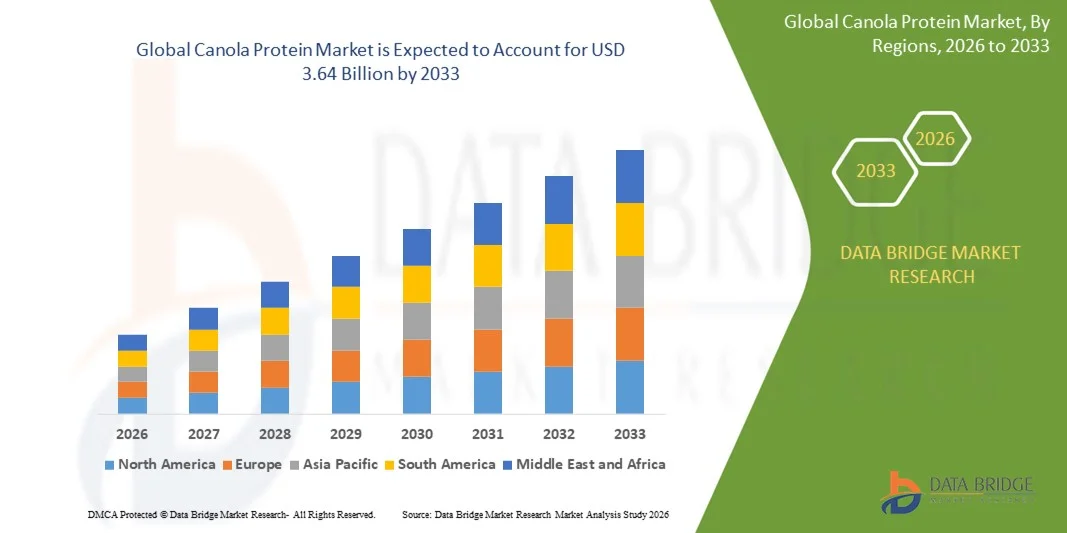
Tamanho do mercado de proteína de canola
- O mercado global de proteína de canola foi avaliado em US$ 2,62 bilhões em 2025 e deverá atingir US$ 3,64 bilhões em 2033 , com uma taxa de crescimento anual composta (CAGR) de 4,20% durante o período de previsão.
- O crescimento do mercado é impulsionado principalmente pela crescente demanda por proteínas vegetais em aplicações de alimentos e bebidas, motivada pela crescente conscientização sobre saúde e pela preferência do consumidor por fontes de proteína sustentáveis.
- O aumento da utilização da proteína de canola em nutracêuticos, nutrição esportiva e alimentos funcionais está impulsionando ainda mais a expansão do mercado, à medida que os fabricantes se concentram em ingredientes ricos em proteínas, com baixo teor de gordura e hipoalergênicos.
Análise do mercado de proteína de canola
- A crescente adoção de dietas à base de plantas e produtos enriquecidos com proteínas está impulsionando a demanda por proteína de canola, com consumidores buscando ingredientes naturais, não transgênicos e com rótulo limpo.
- O aumento das atividades de pesquisa e desenvolvimento voltadas para a melhoria das propriedades funcionais, solubilidade e sabor da proteína de canola está impulsionando ainda mais o crescimento do mercado, permitindo seu uso em uma gama mais ampla de formulações de alimentos e bebidas.
- A América do Norte dominou o mercado de proteína de canola com a maior participação na receita em 2025, impulsionada pela crescente demanda por fontes de proteína vegetal, pela maior conscientização sobre saúde e pela forte adoção em aplicações de alimentos e bebidas.
- A região Ásia-Pacífico deverá apresentar a maior taxa de crescimento no mercado global de proteína de canola , impulsionada pela crescente adoção de proteínas vegetais, pelo aumento da renda disponível e pela rápida expansão do setor de alimentos e bebidas funcionais.
- O segmento de produtos orgânicos detinha a maior participação na receita de mercado em 2025, impulsionado pela crescente preferência do consumidor por ingredientes naturais e com rótulo limpo. A proteína de canola orgânica é cada vez mais utilizada em formulações de alimentos sustentáveis e focados na saúde, atraindo consumidores com consciência ambiental e fabricantes de alimentos premium.
Escopo do relatório e segmentação do mercado de proteína de canola
|
Atributos |
Principais informações de mercado sobre proteína de canola |
|
Segmentos abrangidos |
|
|
Países abrangidos |
América do Norte
Europa
Ásia-Pacífico
Oriente Médio e África
Ámérica do Sul
|
|
Principais participantes do mercado |
• Tate & Lyle (Reino Unido) |
|
Oportunidades de mercado |
|
|
Conjuntos de informações de dados de valor agregado |
Além das informações sobre cenários de mercado, como valor de mercado, taxa de crescimento, segmentação, cobertura geográfica e principais participantes, os relatórios de mercado elaborados pela Data Bridge Market Research também incluem análises aprofundadas de especialistas, análises de preços, análises de participação de marcas, pesquisas com consumidores, análises demográficas, análises da cadeia de suprimentos, análises da cadeia de valor, visão geral de matérias-primas/insumos, critérios de seleção de fornecedores, análise PESTLE, análise de Porter e estrutura regulatória. |
Tendências do mercado de proteína de canola
Aumento da adoção de proteínas vegetais em alimentos e bebidas.
- A crescente preferência por fontes de proteína vegetal está transformando o cenário de alimentos e bebidas, possibilitando formulações ricas em proteínas, livres de alérgenos e sustentáveis. As propriedades funcionais da proteína de canola permitem que os fabricantes criem produtos nutricionalmente enriquecidos, aumentando a aceitação do consumidor e impulsionando a adoção no mercado. Essa tendência também é impulsionada pela crescente demanda por soluções alimentares com rótulo limpo, não transgênicas e ambientalmente sustentáveis em mercados globais.
- A crescente demanda por proteínas de origem vegetal em barras de proteína, alternativas lácteas e análogos de carne está acelerando a incorporação da proteína de canola. Esses ingredientes são particularmente eficazes em formulações com rótulo limpo e atraem consumidores preocupados com a saúde que buscam opções de nutrição sustentáveis. O aumento do investimento em pesquisa e desenvolvimento de produtos está expandindo as possibilidades de aplicação, de snacks a bebidas funcionais, impulsionando ainda mais a adoção.
- A versatilidade e os benefícios funcionais da proteína de canola, incluindo solubilidade, emulsificação e capacidade de formação de espuma, tornam-na atraente para diversas aplicações em produtos. Os fabricantes se beneficiam da qualidade consistente e da facilidade de formulação, o que aprimora a inovação de produtos e a penetração no mercado. As vantagens funcionais também contribuem para maior vida útil, melhor textura e maior valor nutricional em alimentos processados.
- Por exemplo, em 2023, diversas empresas de processamento de alimentos da América do Norte e da Europa relataram um aumento no lançamento de bebidas e produtos de panificação enriquecidos com proteína de canola, atendendo à crescente demanda por nutrição à base de plantas e, ao mesmo tempo, apoiando o fornecimento sustentável de ingredientes. Esses lançamentos de produtos contribuíram para o crescimento do mercado, atraindo consumidores flexitarianos e veganos que buscam fontes de proteína de alta qualidade.
- Embora a adoção de proteínas vegetais esteja se acelerando, o crescimento sustentado depende de pesquisa contínua, otimização funcional e confiabilidade da cadeia de suprimentos. As empresas devem se concentrar na produção em escala, na diversificação de produtos e na conformidade com as normas regulatórias para capitalizar plenamente essa demanda crescente e fortalecer sua presença no mercado.
Dinâmica do Mercado de Proteína de Canola
Motorista
Crescente demanda por proteínas vegetais nutricionais e funcionais
- A crescente conscientização do consumidor sobre saúde, bem-estar e dietas sustentáveis está impulsionando os fabricantes de alimentos a priorizarem fontes de proteína vegetal. A proteína de canola, rica em aminoácidos essenciais e com baixo teor de alérgenos, está sendo cada vez mais integrada a diversas aplicações alimentícias. A crescente preocupação com a saúde, combinada com mudanças alimentares em direção a estilos de vida flexitarianos e veganos, impulsiona ainda mais a expansão do mercado.
- As marcas de alimentos e bebidas estão focando em produtos fortificados com proteína para atender às demandas de consumidores preocupados com a saúde e flexitarianos. A versatilidade da proteína de canola em panificação, alternativas lácteas e bebidas nutricionais está impulsionando a inovação em formulações e a diferenciação de produtos. Essa tendência é reforçada pela rotulagem de produtos, campanhas de marketing e endossos que promovem soluções ricas em proteína e à base de plantas.
- Iniciativas de saúde pública e diretrizes nutricionais que promovem dietas à base de plantas impulsionam ainda mais a sua adoção. A ênfase na saúde cardiovascular, no controle de peso e na redução do consumo de proteína animal está aumentando a demanda do mercado. Além disso, as crescentes preocupações ambientais com a pecuária estão fortalecendo a preferência por fontes sustentáveis de proteína vegetal.
- Por exemplo, em 2022, diversas marcas europeias e norte-americanas lançaram leite vegetal e barras de cereais enriquecidas com proteína de canola, respondendo ao crescente interesse dos consumidores por proteínas vegetais funcionais. Esses lançamentos não apenas atenderam às necessidades proteicas, mas também aumentaram a visibilidade da marca e a confiança do consumidor em alternativas sustentáveis.
- Embora a conscientização e os benefícios funcionais estejam impulsionando o mercado, é necessário otimizar a relação custo-benefício, a estabilidade do fornecimento e a inovação de produtos para garantir a adoção sustentada. Os fabricantes também devem investir em marketing, educação do consumidor e P&D para manter a vantagem competitiva e expandir a participação de mercado.
Restrição/Desafio
Flutuação dos preços das matérias-primas e oferta limitada.
- A variabilidade na produtividade da canola e as flutuações sazonais impactam a disponibilidade e o custo da proteína de canola de alta qualidade, representando desafios para a produção e precificação consistentes. Isso pode restringir a adoção por pequenos e médios fabricantes, enquanto os grandes players podem enfrentar custos de insumos mais elevados, afetando as margens de lucro. Os participantes do mercado estão explorando cada vez mais o fornecimento estratégico e contratos para mitigar os riscos de abastecimento.
- A infraestrutura de processamento limitada em certas regiões restringe a extração de proteínas em larga escala, aumentando os custos operacionais e limitando a expansão do mercado. As empresas enfrentam desafios logísticos no fornecimento consistente de matéria-prima, o que impacta os prazos de produção e a escalabilidade. Investimentos em tecnologia de processamento e polos de produção regionais são necessários para superar esses gargalos.
- O crescimento do mercado também é dificultado pela concorrência de outras proteínas vegetais, como soja, ervilha e arroz, que são mais consolidadas e amplamente disponíveis. Os fabricantes precisam equilibrar os benefícios funcionais com o custo e a acessibilidade, diferenciando seus produtos por meio de inovação e estratégias de marca. A familiaridade do consumidor com as proteínas existentes pode retardar a adoção de novas alternativas, como a proteína de canola.
- Por exemplo, em 2023, diversas processadoras norte-americanas e europeias relataram interrupções no fornecimento devido a condições climáticas adversas que afetaram as colheitas de canola, levando à volatilidade de preços e a reduções temporárias na produção. Essas interrupções destacaram a necessidade de gestão de riscos, fontes alternativas de fornecimento e otimização da cadeia de suprimentos para manter um crescimento constante do mercado.
- Embora os avanços tecnológicos na extração e no processamento de proteínas estejam melhorando a eficiência, a estabilidade da cadeia de suprimentos, a disponibilidade de matéria-prima e as restrições de custos continuam sendo cruciais para a escalabilidade do mercado a longo prazo. As empresas também devem se concentrar em práticas agrícolas sustentáveis e em parcerias com os produtores para garantir o fornecimento contínuo e manter preços competitivos.
Escopo do mercado de proteína de canola
O mercado é segmentado com base na natureza, forma e uso final.
- Por natureza
Com base na natureza, o mercado de proteína de canola é segmentado em orgânico e convencional. O segmento orgânico detinha a maior participação na receita de mercado em 2025, impulsionado pela crescente preferência do consumidor por ingredientes naturais e com rótulo limpo. A proteína de canola orgânica é cada vez mais utilizada em formulações de alimentos sustentáveis e focados na saúde, atraindo consumidores com consciência ambiental e fabricantes de alimentos premium.
Espera-se que o segmento convencional apresente a taxa de crescimento mais rápida de 2026 a 2033, impulsionado por sua ampla disponibilidade, custo-benefício e fornecimento consistente. A proteína de canola convencional é particularmente popular entre processadores de alimentos para o mercado de massa e produtores de alimentos funcionais, oferecendo versatilidade e benefícios funcionais para diversas aplicações, incluindo panificação, alternativas à carne e bebidas nutricionais.
- Por formulário
Com base na forma, o mercado é segmentado em Isolados de Proteína de Canola, Concentrados de Proteína de Canola e Hidrolisados de Proteína de Canola. O segmento de Isolados de Proteína de Canola detinha a maior participação na receita em 2025, impulsionado pelo seu alto teor proteico e propriedades funcionais adequadas para bebidas nutricionais e produtos alimentícios fortificados.
O segmento de hidrolisados de proteína de canola deverá apresentar o crescimento mais rápido durante o período de previsão, impulsionado pelo aumento do uso em nutrição especializada, alimentos funcionais e produtos de nutrição esportiva. Sua digestibilidade, biodisponibilidade e atributos funcionais aprimorados o tornam atraente para aplicações premium e voltadas para a saúde.
- Por uso final
Com base no uso final, o mercado de proteína de canola é segmentado em Processamento de Alimentos, Panificação e Confeitaria, Alternativas à Carne, Alimentos Funcionais, Substitutos Lácteos, Outras Aplicações Alimentares, Ração Animal, Pecuária, Bovinos, Suínos, Aves, Alimentos para Animais de Estimação, Aquicultura, Indústria Farmacêutica e Indústria Nutracêutica. O segmento de Processamento de Alimentos detinha a maior participação na receita em 2025, impulsionado pela crescente incorporação de proteína de canola em produtos fortificados com proteína e produtos à base de plantas.
O segmento de Alternativas à Carne deverá apresentar o crescimento mais rápido entre 2026 e 2033, impulsionado pela crescente demanda por proteínas vegetais e ingredientes com rótulo limpo em dietas veganas e flexitarianas. A versatilidade funcional e o alto valor nutricional da proteína de canola fomentam a inovação de produtos em diversas aplicações na alimentação humana e animal, ampliando a penetração no mercado global.
Análise Regional do Mercado de Proteína de Canola
- A América do Norte dominou o mercado de proteína de canola com a maior participação na receita em 2025, impulsionada pela crescente demanda por fontes de proteína vegetal, pela maior conscientização sobre saúde e pela forte adoção em aplicações de alimentos e bebidas.
- Os consumidores da região valorizam muito as propriedades nutricionais, funcionais e amenas alergênicas da proteína de canola, o que permite aos fabricantes criar produtos fortificados, com rótulo limpo e sustentáveis.
- Essa ampla adoção é ainda mais impulsionada pela alta renda disponível, pela infraestrutura de processamento de alimentos bem estabelecida e pelo crescente interesse em dietas à base de plantas, posicionando a proteína de canola como um ingrediente preferencial em diversas aplicações.
Análise do Mercado de Proteína de Canola nos EUA
O mercado de proteína de canola dos EUA detinha a maior participação de receita na América do Norte em 2025, impulsionado pela crescente demanda por proteínas vegetais nutricionais e funcionais em panificação, alternativas lácteas e análogos de carne. Os fabricantes estão cada vez mais focados na versatilidade, solubilidade e propriedades emulsificantes da proteína de canola para desenvolver formulações inovadoras e com rótulo limpo. Além disso, iniciativas de saúde pública que promovem dietas à base de plantas, combinadas com a crescente conscientização do consumidor sobre nutrição sustentável, estão impulsionando significativamente a expansão do mercado.
Análise do Mercado Europeu de Proteína de Canola
O mercado europeu de proteína de canola deverá apresentar o crescimento mais rápido entre 2026 e 2033, impulsionado principalmente pela crescente preferência dos consumidores por dietas à base de plantas, pelas rigorosas regulamentações de rotulagem nutricional e pelo aumento dos investimentos em alimentos funcionais. A ênfase da região na sustentabilidade e em soluções de rótulo limpo incentiva a adoção da proteína de canola em aplicações de panificação, bebidas e alternativas à carne. Os fabricantes europeus estão integrando cada vez mais a proteína de canola em novos lançamentos de produtos para atender à demanda por fontes de proteína saudáveis e ecologicamente corretas.
Análise do Mercado de Proteína de Canola no Reino Unido
O mercado de proteína de canola no Reino Unido deverá apresentar um crescimento acelerado entre 2026 e 2033, impulsionado pelo crescente interesse dos consumidores em nutrição à base de plantas, alimentos funcionais e alternativas sem alérgenos. Consumidores preocupados com a saúde estão incentivando os fabricantes de alimentos a desenvolverem produtos fortificados com proteína de canola. A indústria de processamento de alimentos bem estabelecida do país e a forte infraestrutura de varejo e comércio eletrônico devem estimular ainda mais a expansão do mercado.
Análise do Mercado de Proteína de Canola na Alemanha
O mercado alemão de proteína de canola deverá apresentar um crescimento significativo entre 2026 e 2033, impulsionado pela crescente conscientização sobre bem-estar nutricional, tendências de enriquecimento proteico e práticas sustentáveis de produção de alimentos. O foco da Alemanha em inovação, qualidade e fabricação de alimentos ecologicamente consciente está promovendo a adoção da proteína de canola em produtos de panificação, bebidas e alternativas lácteas. Os fabricantes também estão aproveitando as propriedades funcionais da proteína de canola para desenvolver novos produtos com alto teor proteico e rótulos limpos, que atendam às preferências dos consumidores locais.
Análise do Mercado de Proteína de Canola na Região Ásia-Pacífico
O mercado de proteína de canola na região Ásia-Pacífico deverá apresentar o crescimento mais rápido entre 2026 e 2033, impulsionado pela crescente conscientização sobre saúde, urbanização e demanda por alimentos à base de plantas e enriquecidos com proteínas em países como China, Índia e Japão. A crescente inclinação da região por alimentos funcionais e sustentáveis, apoiada por iniciativas governamentais que promovem o bem-estar nutricional, está acelerando a adoção. Além disso, a expansão da indústria de processamento de alimentos na região Ásia-Pacífico e o aumento da capacidade de produção de proteínas vegetais estão tornando a proteína de canola mais acessível e economicamente viável para os mercados locais e de exportação.
Análise do Mercado de Proteína de Canola na China
O mercado de proteína de canola na China representou a maior fatia de receita do mercado na região Ásia-Pacífico em 2025, devido à expansão da classe média do país, à crescente preocupação com a saúde e à demanda cada vez maior por alimentos e bebidas enriquecidos com proteína. A proteína de canola está sendo cada vez mais incorporada em produtos de panificação, alimentos funcionais e alternativas à carne devido aos seus benefícios nutricionais e funcionais. O desenvolvimento contínuo de produtos alimentícios com rótulo limpo e à base de plantas, juntamente com a forte capacidade de produção nacional, está impulsionando ainda mais o crescimento do mercado.
Análise do Mercado Japonês de Proteína de Canola
O mercado japonês de proteína de canola deverá apresentar um crescimento robusto entre 2026 e 2033, devido ao grande interesse dos consumidores por nutrição funcional, dietas à base de plantas e ingredientes com baixo teor de alérgenos. Os fabricantes de alimentos japoneses estão adotando a proteína de canola para desenvolver bebidas fortificadas, snacks e produtos proteicos alternativos. Além disso, iniciativas governamentais que promovem dietas saudáveis, aliadas à preferência por ingredientes alimentares sustentáveis e de alta qualidade, estão impulsionando o aumento da demanda tanto no varejo quanto no setor alimentício comercial.
Participação de mercado da proteína de canola
A indústria de proteína de canola é liderada principalmente por empresas consolidadas, incluindo:
• Tate & Lyle (Reino Unido)
• ADM (EUA)
• DSM (Países Baixos)
• Bunge Limited (EUA)
• Burcon (Canadá)
• Roquette Frères (França)
• Mead Johnson & Company, LLC (EUA)
• MGP (EUA)
• Omega Protein Corporation (EUA)
• Batory Foods (EUA)
• Foodrich Soya Co., LTD (China)
• Aminola (Alemanha)
• Aminola BV (Países Baixos)
• Nordic Soya Oy (Finlândia)
• Solbar Ningbo Protein Technology Co., Ltd (China)
• Shandong Yuwang Industrial Co. Ltd (China)
• A. Costantino & C. spa (Itália)
• NOW Foods (EUA)
• Euroduna Food Ingredients GmbH (Alemanha)
• Royal Ingredients Group (Reino Unido)
• Farbest Brands (EUA)
SKU-
Obtenha acesso online ao relatório sobre a primeira nuvem de inteligência de mercado do mundo

- Painel interativo de análise de dados
- Painel de análise da empresa para oportunidades de elevado potencial de crescimento
- Acesso de analista de pesquisa para personalização e customização. consultas
- Análise da concorrência com painel interativo
- Últimas notícias, atualizações e atualizações Análise de tendências
- Aproveite o poder da análise de benchmark para um rastreio abrangente da concorrência
Metodologia de Investigação
A recolha de dados e a análise do ano base são feitas através de módulos de recolha de dados com amostras grandes. A etapa inclui a obtenção de informações de mercado ou dados relacionados através de diversas fontes e estratégias. Inclui examinar e planear antecipadamente todos os dados adquiridos no passado. Da mesma forma, envolve o exame de inconsistências de informação observadas em diferentes fontes de informação. Os dados de mercado são analisados e estimados utilizando modelos estatísticos e coerentes de mercado. Além disso, a análise da quota de mercado e a análise das principais tendências são os principais fatores de sucesso no relatório de mercado. Para saber mais, solicite uma chamada de analista ou abra a sua consulta.
A principal metodologia de investigação utilizada pela equipa de investigação do DBMR é a triangulação de dados que envolve a mineração de dados, a análise do impacto das variáveis de dados no mercado e a validação primária (especialista do setor). Os modelos de dados incluem grelha de posicionamento de fornecedores, análise da linha de tempo do mercado, visão geral e guia de mercado, grelha de posicionamento da empresa, análise de patentes, análise de preços, análise da quota de mercado da empresa, normas de medição, análise global versus regional e de participação dos fornecedores. Para saber mais sobre a metodologia de investigação, faça uma consulta para falar com os nossos especialistas do setor.
Personalização disponível
A Data Bridge Market Research é líder em investigação formativa avançada. Orgulhamo-nos de servir os nossos clientes novos e existentes com dados e análises que correspondem e atendem aos seus objetivos. O relatório pode ser personalizado para incluir análise de tendências de preços de marcas-alvo, compreensão do mercado para países adicionais (solicite a lista de países), dados de resultados de ensaios clínicos, revisão de literatura, mercado remodelado e análise de base de produtos . A análise de mercado dos concorrentes-alvo pode ser analisada desde análises baseadas em tecnologia até estratégias de carteira de mercado. Podemos adicionar quantos concorrentes necessitar de dados no formato e estilo de dados que procura. A nossa equipa de analistas também pode fornecer dados em tabelas dinâmicas de ficheiros Excel em bruto (livro de factos) ou pode ajudá-lo a criar apresentações a partir dos conjuntos de dados disponíveis no relatório.











