



Global Cell & Tissue Culture Media Reagentes & Buffers Mercado Segmentação, Por Tipo de Produto (Cell Culture Media, Reagentes & Suplementos, Buffers, Serum & Serum Alternatives), Aplicação (Produção Biofarmacêutico, Descoberta e Desenvolvimento de Drogas, Institutos Acadêmicos & de Pesquisa, Diagnóstico Clínico e Medicina Regenerativa )- Tendências e Previsão da Indústria para 2033
Qual é a dimensão e a taxa de crescimento do mercado de reagentes e tampões de mídia de cultura de células e tecidos
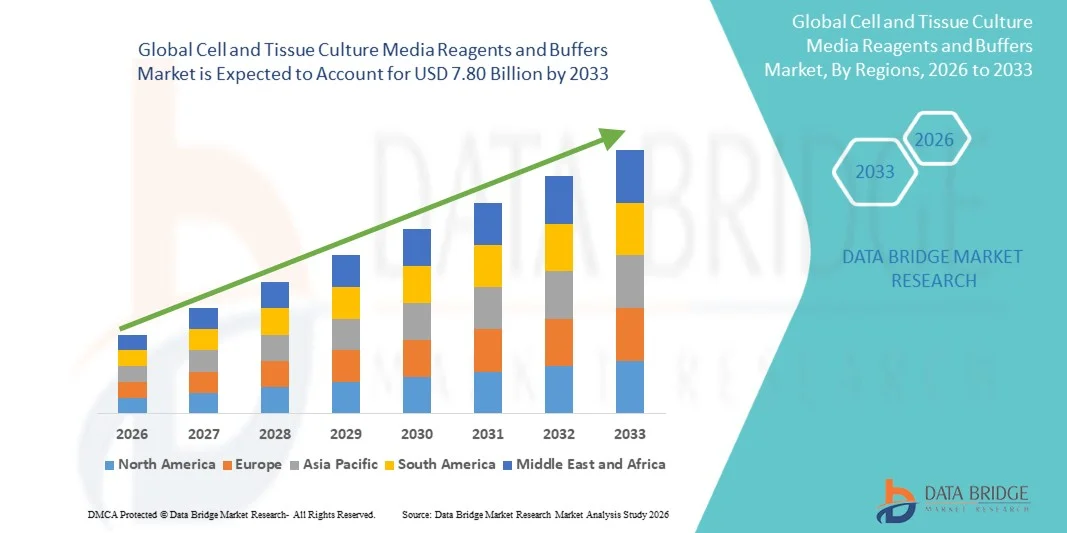
- A dimensão do mercado dos reagentes e dos buffers foi avaliada emUSD 3,72 mil milhões em 2025e espera-se alcançarUSD 7,80 mil milhões até 2033, em umaCAGR de 9,70%durante o período de previsão
- O crescimento do mercado é amplamente impulsionado pela crescente adoção de manufatura biofarmacêutico avançado e pela rápida expansão da pesquisa baseada em células em laboratórios acadêmicos e industriais
- Além disso, a crescente demanda por meios de cultura de alta qualidade, padronizados, reagentes e tampões para apoiar o desenvolvimento complexo de terapia celular, medicina regenerativa e produção biológica está impulsionando a expansão do mercado
Análise de Mercado de Reagentes e Buffers para a Cultura de Células e Tecidos
- Meios de cultura celular, reagentes e tampões são componentes essenciais nos fluxos de trabalho de cultura celular e tecidual, permitindo o crescimento, manutenção e análise de células em aplicações de pesquisa e biomanufatura
- A crescente demanda por reagentes e tampões de meios de cultura celular e tecidual é alimentada principalmente pelo rápido crescimento da produção biológica, pelo aumento da adoção de terapias celulares e genéticas e pela expansão das atividades de pesquisa em medicina regenerativa e oncologia
- A América do Norte dominou o mercado de reagentes e tampões de mídia de cultura celular e tecidual com a maior participação de receita de 38,5% em 2025, impulsionada pela forte presença de grandes empresas biofarmacêuticos, infraestrutura avançada de pesquisa, alto gasto em P&D e adoção extensiva de tecnologias inovadoras de cultura celular
- Espera-se que a Ásia-Pacífico seja a região de crescimento mais rápido no mercado de reagentes e tampões de cultura celular e tecidual durante o período de previsão, com um CAGR projetado de 12,8%, devido ao aumento dos investimentos embiotecnologia, expansão dos serviços CRO/CDMO e adoção crescente de pesquisas em terapia celular avançada em países como China e Índia
- O segmento de mídia de cultura celular dominou o mercado com a maior parcela de receita de 42,5% em 2025, apoiada pelo aumento da adoção de pesquisas de base celular e crescente demanda por mídias de alta qualidade para crescimento e proliferação celular
Relatar Âmbito e Cultura de Células e Tecidos Reagentes de Mídia e Segmentação do Mercado de Tampões
|
Atributos |
Reagentes e buffers de mídia de cultura de células e tecidos |
|
Segmentos Cobertos |
|
|
Países abrangidos |
América do Norte
Europa
Ásia- Pacífico
Médio Oriente e África
América do Sul
|
|
Jogadores do mercado chave |
|
|
Oportunidades de Mercado |
|
|
Informações sobre o Valor Adicionado |
Além dos insights sobre cenários de mercado, como valor de mercado, taxa de crescimento, segmentação, cobertura geográfica e grandes atores, os relatórios de mercado curados pela Data Bridge Market Research também incluem análise de especialistas em profundidade, epidemiologia de pacientes, análise de pipelines, análise de preços e marco regulatório. |
Qual é a tendência chave na cultura de células e tecidos Media Reagentes e mercados de buffers
“Foco aprimorado nas formulações avançadas de mídia de cultura de células e tecidos“
- Uma tendência importante e acelerada no Mercado de Reagentes e Buffers de Mídia de Cultura de Células e Tecidos é o foco crescente em formulações avançadas e personalizadas de mídia projetadas para tipos específicos de células, como células-tronco, células primárias e linhagens de células produtoras de biológicos. Esta tendência é impulsionada pela necessidade de aumento do crescimento celular, aumento da produtividade e resultados experimentais consistentes
- Por exemplo, muitos fabricantes líderes agora estão oferecendo mídia definida quimicamente, sem soro, especificamente otimizada para expansão de células tronco, bem como formulações de mídia adaptadas para a fabricação de terapia de células CAR-T, garantindo maior reprodutibilidade e conformidade regulatória
- A mudança para meios sem soro e sem xeno é impulsionada por preocupações de segurança e expectativas regulatórias, especialmente na produção biofarmacêutico. Estas formulações reduzem o risco de contaminação e variabilidade, suportando um desempenho de cultura celular mais previsível
- Além disso, a demanda por mídia com maior estabilidade, maior prazo de validade e menor variabilidade de lote para lote está aumentando à medida que os fabricantes buscam melhorar a eficiência de fabricação e a qualidade do produto
- Essa tendência também é suportada pelo aumento da adoção de sistemas avançados de cultura celular, como cultura de células 3D, organoides e biorreatores, que requerem meios especializados e tampões para suportar condições complexas de crescimento celular
- À medida que as organizações biofarmacológicas e de investigação continuam a procurar terapias mais sofisticadas, espera-se que os meios de cultura adaptados e de alto desempenho acelerem ainda mais o crescimento do mercado
Células e Cultura de Tecido Media Reagentes e Buffers Mercado Dinâmico
Controlador
“Demanda crescente da produção de terapia biológica e celular”
- O crescente desenvolvimento e comercialização de terapias celulares e genéticas, incluindo CAR-T, terapias com células estaminais e produtos de medicina regenerativa, são os principais motores para o mercado de Reagentes de Mídia de Cultura de Células e Tecidos e Buffers
- Por exemplo, Lonza expandiu sua capacidade de produção de mídias de terapia celular para suportar a crescente demanda de desenvolvedores de terapia celular, especialmente para mídias de grau GMP usadas na fabricação clínica
- À medida que essas terapias progridem através de estágios clínicos e comerciais, há forte demanda por meios de alta qualidade, escaláveis e soluções tampão que suportem a fabricação em larga escala
- Além disso, a expansão do pipeline biofarmacêutico e o aumento dos investimentos na produção biológica estão impulsionando maior demanda por meios que suportem alta densidade celular e produtividade, garantindo uma fabricação econômica
- Além disso, o aumento das atividades de pesquisa e ensaios clínicos com foco em biológicos complexos e medicina personalizada está impulsionando ainda mais a demanda por meios de cultura especializados
- A necessidade de soluções de mídia reprodutíveis e conformes à regulamentação está aumentando à medida que os fabricantes buscam resultados consistentes entre os lotes, impulsionando o crescimento do mercado
Restrição/Desafio
“Altos Custos e Conformidade Regulatória Stringent“
- O alto custo dos meios avançados de cultura celular, especialmente formulações definidas quimicamente e livres de soro, pode limitar a adoção em ambientes de pesquisa sensíveis aos custos e em laboratórios de pequena escala
- Por exemplo, o alto preço dos meios de GMP usados na fabricação clínica muitas vezes restringe seu uso a jogadores de biofármacos em larga escala, limitando a acessibilidade para startups de biotecnologia menores
- Muitos produtos especializados de mídia e buffer exigem matérias-primas de alta qualidade e processos de fabricação complexos, aumentando os custos globais de produção e preços
- Requisitos regulatórios rigorosos para os meios utilizados na fabricação clínica e produção biológica colocam desafios para os fabricantes, que devem manter rigoroso controle de qualidade e documentação para atender aos padrões de conformidade
- Além disso, o alto custo de desenvolvimento e validação para novas formulações de mídia pode atrasar o lançamento do produto e restringir a entrada no mercado para jogadores menores
- Garantir um desempenho consistente entre diferentes lotes continua a ser um desafio, particularmente em sistemas de mídia complexos, que podem impactar a reprodutibilidade e a confiança entre os usuários finais
- Superar essas barreiras de custo e conformidade será fundamental para uma adoção mais ampla do mercado e crescimento sustentado
Células e Cultura de Tecido Media Reagentes e Buffers Âmbito de Mercado
O mercado é segmentado com base no tipo de produto e na aplicação.
• Por tipo de produto
Com base no tipo de produto, o mercado de Reagentes e Buffers de Mídias de Cultura de Células e Tecidos é segmentado em Mídias de Cultura de Células, Reagentes e Suplementos, Buffers, Alternativas de Soro e Soro. O segmento de mídia de cultura celular dominou o mercado com a maior parcela de receita de 42,5% em 2025, apoiada pelo aumento da adoção de pesquisas de base celular e crescente demanda por mídias de alta qualidade para crescimento e proliferação celular. O segmento se beneficia de avanços contínuos em formulações de mídia para células de mamíferos, células-tronco e linhagens celulares especializadas. A forte demanda por parte das instituições de produção biofarmacêutico e pesquisa acadêmica reforça ainda mais sua liderança. Além disso, a tendência crescente de produção biológica e desenvolvimento de terapia celular está impulsionando maior consumo de meios de cultura celular. O segmento permanece dominante devido ao seu papel essencial em todos os fluxos de trabalho de cultura celular e alta utilização em várias aplicações.
Espera-se que o segmento de Reagentes e Suplementos testemunhe o CAGR mais rápido de 22,1% de 2026 a 2033, impulsionado pela crescente demanda por reagentes especializados, como fatores de crescimento, citocinas e suplementos necessários para cultura celular avançada e bioprocessamento. Aumento da adoção de cultura de células 3D, organoides e pesquisa de células tronco está acelerando a necessidade de suplementos avançados. O crescimento das actividades de descoberta e desenvolvimento de drogas está também a aumentar a procura de reagentes de alta qualidade. O rápido crescimento do segmento é apoiado pela inovação contínua e pelo aumento do financiamento para a pesquisa baseada em células.
• Por Aplicação
Com base na aplicação, o mercado de Reagentes e Buffers de Mídias de Cultura de Células e Tecidos é segmentado em Produção Biofarmacêutico, Descoberta e Desenvolvimento de Medicamentos, Institutos Acadêmicos e de Pesquisa, Diagnósticos Clínicos e Medicina Regenerativa. O segmento de Produção Biofarmacêutica representou a maior parcela de receita de mercado de 39,8% em 2025, impulsionada pelo aumento da produção de anticorpos monoclonais, vacinas e terapias de base celular. A crescente produção biológica e expansão de organizações de manufatura de contratos (OMC) estão aumentando significativamente a demanda. Normas regulatórias rigorosas e necessidade de mídias e buffers de alta qualidade na produção em larga escala suportam ainda mais o domínio do segmento. O aumento dos investimentos em biologics e a expansão contínua das capacidades de produção globalmente continuam a impulsionar o crescimento.
Espera-se que o segmento Medicina Regenerativa testemunhe o CAGR mais rápido de 23,5% de 2026 a 2033, devido ao aumento da pesquisa e comercialização da terapia celular e engenharia tecidual. O aumento da prevalência de doenças crônicas e a demanda por tratamentos personalizados está acelerando a adoção da medicina regenerativa. O aumento do número de ensaios clínicos e o financiamento da investigação em células estaminais estão também a impulsionar a procura de meios de comunicação especializados e de suplementos. O crescimento do segmento é suportado pela expansão de aplicações em regeneração tecidual e terapias baseadas em células.
Células e Cultura de Tecido Media Reagentes e Buffers Mercado Análise Regional
- A América do Norte dominou o mercado de reagentes e tampões de mídia de cultura celular e tecidual com a maior participação de receita de 38,5% em 2025, impulsionada pela forte presença de grandes empresas biofarmacêuticos, infraestrutura avançada de pesquisa, alto gasto em I&D e adoção extensiva de tecnologias inovadoras de cultura celular
- A liderança da região é apoiada por um elevado número de ensaios clínicos, aumento da demanda por terapias biológicas e celulares, e forte financiamento do governo e privado para pesquisa em biotecnologia
- Os EUA são os principais contribuintes, devido ao seu ecossistema biotecnológico bem estabelecido, capacidades de fabricação robustas e alta adoção de mídia sem soro e quimicamente definida para a produção em larga escala
U.S. Cell and Tissue Culture Media Reagents and Buffers Market Insight
O mercado de reagentes e tampões de mídia de cultura de células e tecidos dos EUA capturou a maior parte de receita em 2025, impulsionada pelo rápido crescimento na produção biofarmacêutico, pelo aumento dos investimentos em pesquisas de terapia celular e genética e pela alta adoção de meios avançados de cultura e reagentes. O mercado dos EUA beneficia-se de forte infraestrutura de biotecnologia, instituições acadêmicas líderes e principais serviços CRO/CDMO. Inovações contínuas em mídia sem soro, reagentes sem xeno e sistemas automatizados de cultura de células aumentam ainda mais a demanda nos setores de pesquisa e fabricação.
Europe Cell and Tissue Culture Media Reagents and Buffers Market Insight
Espera-se que o mercado europeu de reagentes e tampões para os meios de cultura de células e tecidos cresça de forma constante devido ao aumento do investimento em pesquisas biofarmacêuticos, ao aumento da procura de produtos biológicos e à forte presença de empresas de biotecnologia líderes na Alemanha, Reino Unido e França. O crescimento também é apoiado por políticas regulatórias favoráveis, aumento do financiamento governamental para a pesquisa em terapia celular e adoção crescente de tecnologias avançadas de mídia cultural em pesquisa acadêmica e industrial.
U.K. Células e Cultura de Tecido Media Reagentes e Buffers Market Insight
O mercado de reagentes e tampões de mídia de cultura de células e tecidos do Reino Unido está previsto para crescer em um CAGR significativo devido ao aumento da pesquisa em terapia celular, expansão da fabricação biofarmacêutico e fortes colaborações de pesquisa acadêmica. O Reino Unido beneficia de forte apoio do governo, alto número de startups de biotecnologia e crescente demanda por meios de cultura especializados e reagentes na descoberta de drogas e pesquisa clínica.
Alemanha Telemóvel e Cultura de Tecido Media Reagentes e Buffers Market Insight
Espera-se que o mercado alemão de reagentes e tampões para a cultura de células e tecidos se expanda significativamente devido aos crescentes investimentos em biotecnologia e terapia celular, altas capacidades de fabricação e forte demanda por meios avançados de cultura de células. A Alemanha está assistindo ao aumento da adoção de meios sem soro, reagentes GMP e automação na produção e pesquisa de biofármacos.
Asia-Pacific Cell and Tissue Culture Media Reagents and Buffers Market Insight
O mercado de reagentes e tampões de mídias de cultura de células e tecidos Ásia-Pacífico está pronto para crescer no CAGR mais rápido de 12,8% durante 2026-2033, impulsionado pelo aumento dos investimentos em biotecnologia, expansão dos serviços CRO/CDMO e adoção crescente de pesquisas de terapia celular avançada em países como China e Índia. O aumento do apoio do governo, a crescente produção de biofármacos e a rápida expansão dos institutos de pesquisa aceleram o crescimento do mercado.
Japão Célula e Cultura de Tecido Media Reagentes e Buffers Market Insight
O mercado de reagentes e tampões de mídia de cultura celular e tecidual do Japão está crescendo devido a altos investimentos em medicina regenerativa e terapia celular, fortes colaborações de pesquisa e crescente demanda por mídia especializada para pesquisa de células estaminais e aplicações clínicas.
China Cell and Tissue Culture Media Reagents and Buffers Market Insight
Os reagentes e tampões de mídia de cultura de células e tecidos da China representaram a maior participação de receita de mercado na Ásia-Pacífico em 2025, impulsionada pelo rápido crescimento na fabricação de biofármacos, expansão da pesquisa em terapia celular e forte produção doméstica de meios de cultura e reagentes. O crescente foco da China na inovação biotecnológica e na produção de terapia celular em larga escala apoia o forte crescimento do mercado.
Células e Cultura de Tecido Media Reagentes e Buffers Market Share
A indústria de Reagentes e Buffers para a Cultura de Células e Tecidos é liderada principalmente por empresas bem estabelecidas, incluindo:
- Thermo Fisher Scientific (EUA)
- Merck KGaA (Alemanha)
- Corning Incorporated (EUA)
- Grupo Lonza AG (Suíça)
- Sartorius AG (Alemanha)
- GE Healthcare Life Sciences (EUA)
- Danaher Corporation (EUA)
- Bio-Techne Corporation (EUA)
- Tecnologias STEMCELL (Canadá)
- Avantor, Inc. (EUA)
- Fujifilm Wako Pure Chemical Corporation (Japão)
- Takara Bio Inc. (Japão)
- HiMedia Laboratories (Índia)
- Promocell GmbH (Alemanha)
- PanReac Applichem (Espanha)
- Citiva (EUA)
- Miltenyi Biotec (Alemanha)
- Promocell GmbH (Alemanha)
- Axygen Scientific (EUA)
- Biocono (Índia)
Reagentes e mercados de buffers
- Em abril de 2022, a Captivate Bio expandiu seu portfólio de soluções de cultura celular, introduzindo novos produtos de mídia clássica e serviços de fabricação de mídia customizada, incluindo o kit CET Cocktail destinado a melhorar os fluxos de trabalho para células-tronco pluripotentes humanas (hPSC), abordando a demanda do pesquisador por opções de mídia definidas confiáveis
- Em julho de 2023, a Sartorius AG abriu oficialmente uma nova fábrica de mídia de cultura de células de 21 500 pés quadrados em seu site em Yauco, Porto Rico, aumentando a capacidade de produção de mídia e reagentes críticos para o desenvolvimento biofarmacêutico e vacinal
- Em julho de 2023, Lonza lançou o TheraPRO CHO Media System, uma nova plataforma de mídia de cultura de células projetada para simplificar processos e otimizar a produção de proteínas em linhas de células GS-CHO, apoiando fluxos de produção de proteínas terapêuticas
- Em setembro de 2024, a Merck KGaA (que atua como MilliporeSigma nos EUA) obteve a certificação EXCiPACT cGMP para seus processos de fabricação de mídias de cultura celular em vários locais globais, reforçando os padrões de qualidade e segurança dos meios utilizados na produção biofarmacêuticos.
- Em novembro de 2024, a Fujifilm Irvine Scientific abriu um novo centro de inovação nos Países Baixos focado na personalização de formulações de mídia cultural para clientes europeus de terapia celular, ampliando as capacidades globais de desenvolvimento e fornecimento de mídia da empresa
- Em janeiro de 2025, a PromoCell celebrou um acordo de distribuição plurianual com a VWR International para ampliar o acesso a células humanas primárias e reagentes de cultura em toda a Europa, aumentando a disponibilidade de reagentes e o apoio aos laboratórios de pesquisa
- Em março de 2025, Thermo Fisher Scientific anunciou uma colaboração estratégica com Lonza para co-desenvolver meios de cultura de células e alimentos para produção biofarmacêuticos em larga escala, visando melhorar a disponibilidade de mídia e escalabilidade de processos para fabricantes de biologics globais
- Em maio de 2025, a Fujifilm Irvine Scientific lançou um novo meio de cultura sem soro, definido quimicamente, especificamente formulado para manutenção e diferenciação de células estaminais pluripotentes, abordando a crescente demanda em fluxos de trabalho de terapia celular
SKU-
Obtenha acesso online ao relatório sobre a primeira nuvem de inteligência de mercado do mundo

- Painel interativo de análise de dados
- Painel de análise da empresa para oportunidades de elevado potencial de crescimento
- Acesso de analista de pesquisa para personalização e customização. consultas
- Análise da concorrência com painel interativo
- Últimas notícias, atualizações e atualizações Análise de tendências
- Aproveite o poder da análise de benchmark para um rastreio abrangente da concorrência
Metodologia de Investigação
A recolha de dados e a análise do ano base são feitas através de módulos de recolha de dados com amostras grandes. A etapa inclui a obtenção de informações de mercado ou dados relacionados através de diversas fontes e estratégias. Inclui examinar e planear antecipadamente todos os dados adquiridos no passado. Da mesma forma, envolve o exame de inconsistências de informação observadas em diferentes fontes de informação. Os dados de mercado são analisados e estimados utilizando modelos estatísticos e coerentes de mercado. Além disso, a análise da quota de mercado e a análise das principais tendências são os principais fatores de sucesso no relatório de mercado. Para saber mais, solicite uma chamada de analista ou abra a sua consulta.
A principal metodologia de investigação utilizada pela equipa de investigação do DBMR é a triangulação de dados que envolve a mineração de dados, a análise do impacto das variáveis de dados no mercado e a validação primária (especialista do setor). Os modelos de dados incluem grelha de posicionamento de fornecedores, análise da linha de tempo do mercado, visão geral e guia de mercado, grelha de posicionamento da empresa, análise de patentes, análise de preços, análise da quota de mercado da empresa, normas de medição, análise global versus regional e de participação dos fornecedores. Para saber mais sobre a metodologia de investigação, faça uma consulta para falar com os nossos especialistas do setor.
Personalização disponível
A Data Bridge Market Research é líder em investigação formativa avançada. Orgulhamo-nos de servir os nossos clientes novos e existentes com dados e análises que correspondem e atendem aos seus objetivos. O relatório pode ser personalizado para incluir análise de tendências de preços de marcas-alvo, compreensão do mercado para países adicionais (solicite a lista de países), dados de resultados de ensaios clínicos, revisão de literatura, mercado remodelado e análise de base de produtos . A análise de mercado dos concorrentes-alvo pode ser analisada desde análises baseadas em tecnologia até estratégias de carteira de mercado. Podemos adicionar quantos concorrentes necessitar de dados no formato e estilo de dados que procura. A nossa equipa de analistas também pode fornecer dados em tabelas dinâmicas de ficheiros Excel em bruto (livro de factos) ou pode ajudá-lo a criar apresentações a partir dos conjuntos de dados disponíveis no relatório.











