


Global Digital Oilfield Solutions Mercado de Segmentação, Por Processo (Otimização de Produção, Otimização de Perfuração, Otimização de Reservatório, Gestão de Segurança e Gestão de Activos), Por Componente (Hardware e Software), Por Aplicação (Onshore e Offshore)- Tendências e Previsão da Indústria para 2033
O que é o Tamanho e Visão Geral do Mercado Digital Oilfield Solutions
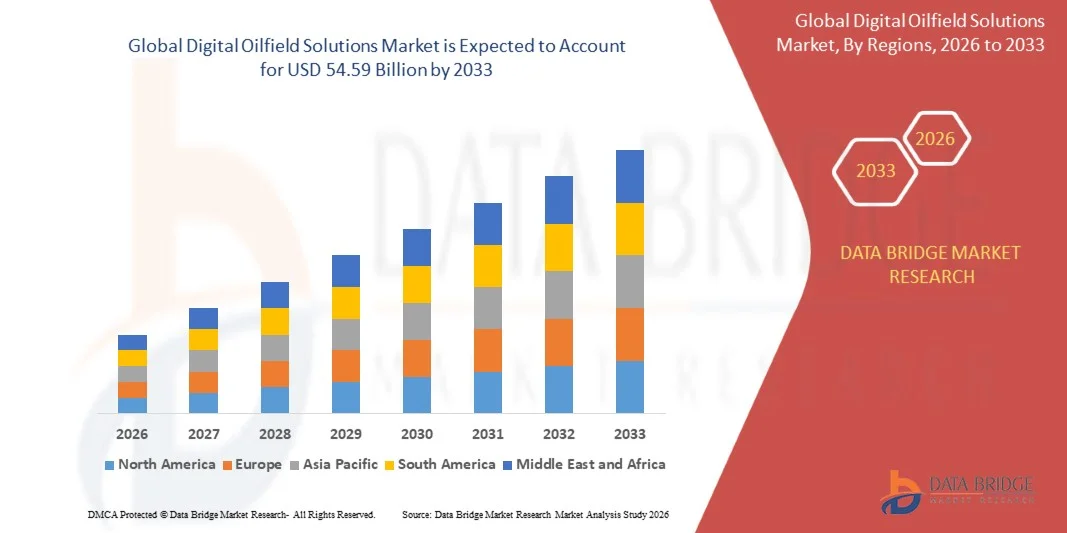
- Conforme a Análise de Pesquisa de Mercado Data Bridge A dimensão global do mercado de soluções digitais de campos petrolíferos foi avaliada emUSD 27,00 mil milhões em 2025e espera-se alcançar54,59 mil milhões de USD até 2033, em umaCAGR de 9,20%durante o período de previsão
- O crescimento do mercado é largamente impulsionado pela adoção crescente de análises avançadas de dados,inteligência artificialSistemas de monitorização baseados em IoT em operações a montante de petróleo e gás
- Além disso, a crescente demanda por eficiência operacional, gerenciamento de reservatórios em tempo real e otimização de custos em atividades de exploração e produção está apoiando ainda mais a expansão do mercado
Tamanho e previsão do mercado
- Valor de Mercado Global (2025): USD 27,00 mil milhões
- Valor de mercado previsto (2033): 54,59 mil milhões de USD
- Previsões CAGR (2026-2033): 9,20%
Quais são as principais takeaways do mercado digital de soluções Oilfield
- O mercado digital de soluções de campos petrolíferos está testemunhando forte crescimento devido atransformação digital rápidana indústria do petróleo e do gás e na integração crescente de tecnologias inteligentes em operações de campo
- A ênfase crescente em aumentar a eficiência da produção, reduzir o tempo de inatividade e melhorar a tomada de decisões através de insights de dados em tempo real está impulsionando significativamente a adoção do mercado
- A América do Norte dominou o mercado digital de soluções de campos petrolíferos com a maior participação de receita em 2025, impulsionada pela adoção forte de tecnologias avançadas a montante, aumento do foco na eficiência operacional e aumento dos investimentos em transformação digital de petróleo e gás
- Espera-se que a região Ásia-Pacífico testemunhe a maior taxa de crescimento no mercado global de soluções digitais de petróleo, impulsionada pela rápida industrialização, expansão das atividades de exploração de petróleo e gás, aumento da adoção de tecnologias digitais e forte apoio do governo à modernização do setor energético
- O segmento de otimização da produção teve a maior participação de receita de mercado em 2025 impulsionada pelo aumento da demanda por recuperação de petróleo, monitoramento da produção em tempo real e melhoria da eficiência operacional em atividades a montante. Ferramentas digitais neste segmento permitem que os operadores maximizem a saída, minimizando o tempo de inatividade e os custos operacionais, tornando-se uma área de foco fundamental para as empresas de petróleo e gás
Alcance do relatório e soluções digitais de campo de petróleo Segmentação do mercado
Atributos |
Soluções Digitais de Campo de Petróleo Principais Insights do Mercado |
|
Segmentos Cobertos |
|
|
Países abrangidos |
América do Norte
Europa
Ásia- Pacífico
Médio Oriente e África
América do Sul
|
|
Jogadores do mercado chave |
•SLB(EUA) |
|
Oportunidades de Mercado |
• Expansão de IA e IoT em operações em campos de petróleo |
|
Informações sobre o Valor Adicionado |
Além dos insights sobre cenários de mercado, como valor de mercado, taxa de crescimento, segmentação, cobertura geográfica e principais atores, os relatórios de mercado curados pela Data Bridge Market Research também incluem análise de importação, visão geral da capacidade de produção, análise do consumo de produção, análise de tendências de preços, cenário de mudança climática, análise da cadeia de suprimentos, análise da cadeia de valor, visão geral da matéria-prima/consumíveis, critérios de seleção de fornecedores, Análise de PESTLE, Análise de Porter e quadro regulatório. |
Qual é a tendência chave no mercado digital de soluções de campo de petróleo
“Adoção crescente de IA, IoT e tecnologias baseadas em nuvem”
• O crescente foco na transformação digital na indústria de petróleo e gás está moldando significativamente o mercado de soluções de campo de petróleo digital, à medida que os operadores adotam cada vez mais plataformas baseadas em IA, IoT e nuvem para melhorar a eficiência operacional. Essas tecnologias estão melhorando o monitoramento em tempo real, a manutenção preditiva e as capacidades de gerenciamento de reservatórios em operações a montante. Esta tendência está a reforçar a integração de soluções inteligentes nas actividades de exploração e produção, permitindo a tomada de decisões orientadas por dados e um melhor desempenho dos activos
• A crescente ênfase na maximização da eficiência de produção e redução do tempo de inatividade operacional acelerou a implantação de ferramentas avançadas de análise e automação em campos de petróleo. Empresas de energia estão ativamente alavancando insights de dados em tempo real para otimizar operações de perfuração e melhorar as taxas de recuperação. Isso está estimulando o aumento do investimento em infraestrutura digital e soluções de software integradas para aumentar a produtividade do campo e a eficiência de custos
• A mudança para operações remotas e campos de petróleo conectados está influenciando as decisões de compra, com empresas priorizando plataformas digitais escaláveis, seguras e interoperáveis. Estas soluções ajudam a reduzir a dependência da mão-de-obra no local, melhorando simultaneamente a segurança e o controlo operacional. Como resultado, os operadores de petróleo e gás estão cada vez mais em parceria com fornecedores de tecnologia para implementar ecossistemas de campos de petróleo digitais de ponta a ponta
• Por exemplo, em 2024, Schlumberger na França e Halliburton nos EUA expandiram seus portfólios de campos de petróleo digitais integrando análises de IA e sistemas de monitoramento baseados em nuvem para operações a montante. Essas soluções foram implantadas para melhorar a eficiência de perfuração e otimizar o desempenho do reservatório em projetos globais. As iniciativas também melhoraram a tomada de decisões em tempo real e reduziram os custos operacionais para os clientes nos campos offshore e onshore
• Embora a adoção digital de campos petrolíferos esteja crescendo, a expansão sustentada do mercado depende de altos custos iniciais de investimento, prontidão para cibersegurança e integração perfeita com sistemas legados. As empresas também estão focadas em melhorar a interoperabilidade dos dados, a confiabilidade do sistema e as habilidades digitais da força de trabalho para alavancar plenamente as tecnologias avançadas
Soluções digitais de campo de petróleo Dinâmica de mercado
Controlador
“Aumentando a demanda por eficiência operacional e informações em tempo real”
• Aumentar a necessidade de melhorar a eficiência operacional nas actividades a montante de petróleo e gás é um dos principais motores do mercado digital de soluções de campos petrolíferos. Os operadores estão adotando cada vez mais tecnologias digitais para melhorar a otimização da produção, reduzir o tempo de inatividade e melhorar a utilização de ativos. Esta mudança está permitindo um melhor controle sobre operações complexas de campos petrolíferos e melhorar a rentabilidade global
• A expansão do uso de sistemas de análise preditiva e automação está apoiando ainda mais o crescimento do mercado. Soluções digitais ajudam a identificar falhas de equipamentos com antecedência, otimizar o desempenho de perfuração e melhorar o gerenciamento do reservatório. Isto está a levar a uma redução significativa dos custos e a uma melhoria da tomada de decisões nos processos de exploração e produção
• As empresas de petróleo e gás estão cada vez mais investindo em plataformas digitais integradas para melhorar a conectividade de campo e simplificar as operações. Esses sistemas permitem o monitoramento em tempo real dos ativos, melhorando a segurança, produtividade e transparência operacional. O foco crescente na modernização digital do campo petrolífero está incentivando a colaboração entre empresas de energia e fornecedores de tecnologia
• Por exemplo, em 2023, Baker Hughes, nos EUA e SLB, na França, relatou o aumento da implantação de tecnologias digitais de campos petrolíferos incorporando monitoramento baseado em IA e análise de nuvem. Essas implementações melhoraram a eficiência de perfuração, reduziram o tempo não produtivo e melhoraram a precisão de previsão de produção. Ambas as empresas também destacaram melhor confiabilidade operacional e otimização de custos em projetos em grande escala de petróleo
• Embora a forte procura apoie o crescimento, a adopção generalizada depende da modernização das infra-estruturas, das medidas de cibersegurança e da complexidade da integração com os sistemas existentes. O investimento contínuo no desenvolvimento de competências digitais e na gestão segura dos dados será fundamental para a expansão do mercado a longo prazo
Restrição/Desafio
“Altos custos de implementação e preocupações de segurança cibernética”
• O elevado investimento inicial necessário para a implantação de soluções digitais de campos petrolíferos continua a ser um desafio fundamental, limitando a adopção pelos pequenos e médios operadores. Os custos associados com software avançado, sensores e atualizações de infraestrutura podem ser substanciais. Além disso, as despesas de manutenção em curso e de integração do sistema aumentam ainda mais os custos operacionais globais
• Os riscos de cibersegurança e as preocupações em matéria de protecção de dados também representam desafios significativos para o crescimento do mercado. À medida que os campos de petróleo se tornam cada vez mais conectados, aumenta o risco de ataques cibernéticos e violações de dados. Isso cria hesitação entre os operadores em adotar totalmente sistemas baseados em nuvem e habilitados para IoT sem quadros de segurança robustos
• A integração com sistemas históricos de campos petrolíferos apresenta desafios operacionais adicionais, uma vez que muitas infra-estruturas existentes não são concebidas para tecnologias digitais avançadas. Isso leva a problemas de compatibilidade, aumento do tempo de implantação e maior complexidade de implementação. As empresas devem investir em actualizações do sistema e em conhecimentos técnicos para assegurar uma integração harmoniosa
• Por exemplo, em 2024, vários operadores de petróleo no Oriente Médio e Sudeste Asiático relataram atrasos nas implantações digitais de jazigos petrolíferos devido às preocupações de segurança cibernética e aos elevados custos de integração com os sistemas de perfuração existentes. A disponibilidade limitada de infraestrutura digital abrandou ainda mais a adoção em operações offshore remotas, impactando prazos de projeto e ganhos de eficiência
• Superar esses desafios exigirá modelos de implantação otimizados em termos de custos, quadros de segurança cibernética mais fortes e melhores padrões de interoperabilidade. A colaboração entre fornecedores de tecnologia e empresas petrolíferas será essencial para desenvolver soluções escaláveis, seguras e eficientes em termos de custos para adoção global
Como é o mercado digital de soluções de campo de petróleo segmentado
O mercado digital de soluções de campos petrolíferos é segmentado em três segmentos notáveis baseados em processo, componente e aplicação.
• Por processo
Com base no processo, o mercado digital de soluções de campos petrolíferos é segmentado em otimização de produção, otimização de perfuração, otimização de reservatórios, gerenciamento de segurança e gerenciamento de ativos. O segmento de otimização da produção teve a maior participação de receita de mercado em 2025 impulsionada pelo aumento da demanda por recuperação de petróleo, monitoramento da produção em tempo real e melhoria da eficiência operacional em atividades a montante. As ferramentas digitais neste segmento permitem que os operadores maximizem a saída, minimizando o tempo de inatividade e os custos operacionais, tornando-se uma área de foco fundamental para as empresas de petróleo e gás.
Espera-se que o segmento de otimização de reservatórios testemunhe a taxa de crescimento mais rápida de 2026 a 2033, impulsionada pela adoção crescente de análises avançadas, modelagem baseada em IA e tecnologias preditivas para melhor gerenciamento de desempenho de reservatórios. Essas soluções ajudam a melhorar a precisão da estimativa de recursos, melhorar as taxas de recuperação e apoiar a tomada de decisões orientadas por dados em ambientes geológicos complexos, tornando-os cada vez mais importantes para maximizar a eficiência da produção a longo prazo.
• Por Componente
Com base no componente, o mercado é segmentado em hardware e software. O segmento de software teve a maior quota de receita de mercado em 2025 impulsionada pela forte demanda por plataformas de análise de dados, soluções baseadas em nuvem e sistemas de monitoramento com IA usados em operações de campo petrolífero a montante. As soluções de software permitem a tomada de decisões em tempo real, manutenção preditiva e otimização operacional, tornando-as um componente crítico dos ecossistemas de campos de petróleo digitais.
Espera-se que o segmento de hardware testemunhe a taxa de crescimento mais rápida de 2026 para 2033, impulsionada pelo aumento da implantação de sensores IoT, equipamentos inteligentes de perfuração e dispositivos avançados de monitoramento de campo. Esses componentes de hardware são essenciais para a coleta de dados operacionais em tempo real e permitem uma integração perfeita com plataformas digitais, melhorando assim a eficiência e automação em operações de campo petrolífero.
• Por Aplicação
Com base na aplicação, o mercado é segmentado em onshore e offshore. O segmento onshore detinha a maior quota de receita de mercado em 2025 impulsionada por extensas atividades de campo petrolífero, menor complexidade operacional e maior adoção de sistemas de monitoramento digital em locais de exploração e produção terrestres. As operações onshore dependem cada vez mais de soluções digitais para otimização da produção, gerenciamento de segurança e redução de custos.
Espera-se que o segmento offshore testemunhe a taxa de crescimento mais rápida de 2026 a 2033, impulsionada pelo aumento dos investimentos em projetos de exploração de águas profundas e ultra-deepwater e pela necessidade de monitoramento e automação avançados em ambientes de alto risco. As soluções digitais de campos petrolíferos estão sendo amplamente adotadas offshore para melhorar a segurança operacional, melhorar o desempenho dos ativos e permitir gerenciamento remoto em tempo real de sistemas complexos de produção.
Digital Oilfield Solutions Análise Regional do Mercado
• A América do Norte dominou o mercado digital de soluções de campos petrolíferos com a maior quota de receita em 2025, impulsionada pela adoção forte de tecnologias avançadas a montante, aumento do foco na eficiência operacional e aumento dos investimentos em transformação digital de petróleo e gás
• Os operadores da região valorizam muito os sistemas de análise de dados em tempo real, manutenção preditiva e monitoramento automatizado que melhoram a precisão de perfuração, otimização da produção e desempenho de ativos em operações em campos de petróleo
• Esta adopção generalizada é ainda apoiada pela presença de grandes prestadores de serviços de campos petrolíferos, elevada disponibilidade tecnológica e forte integração de plataformas baseadas em IA, IoT e nuvem, estabelecendo soluções digitais de campos petrolíferos como um facilitador essencial das operações energéticas modernas
U.S. Digital Oilfield Solutions Market Insight
O mercado de soluções de campo de petróleo digital dos EUA capturou a maior participação de receita na América do Norte em 2025, alimentada pela rápida adoção de tecnologias inteligentes de perfuração e expansão do uso de plataformas analíticas baseadas em nuvem em operações a montante. As empresas de energia estão cada vez mais focadas em melhorar a eficiência da produção através do monitoramento e automação em tempo real. A integração crescente de ferramentas de tomada de decisões orientadas por IA e equipamentos de campo habilitados para IoT está a melhorar ainda mais o desempenho operacional. Além disso, os fortes investimentos na exploração de xisto e na infra-estrutura digital contribuem significativamente para a expansão do mercado.
Europe Digital Oilfield Solutions Market Insight
Espera-se que o mercado europeu de soluções digitais de campos petrolíferos testemunhe um crescimento constante entre 2026 e 2033, impulsionado principalmente pelo aumento da concentração na eficiência energética, regulamentação ambiental rigorosa e pela adopção crescente de tecnologias avançadas de automação em operações de petróleo e gás. A região está testemunhando crescente implantação de plataformas digitais para gerenciamento de reservatórios e otimização da produção. A forte ênfase na redução das emissões de carbono e na melhoria da segurança operacional está a incentivar ainda mais a transformação digital nas actividades a montante.
U.K. Digital Oilfield Solutions Market Insight
Espera-se que o mercado de soluções de campo de petróleo digital do Reino Unido cresça constantemente de 2026 para 2033, impulsionado pelo aumento da digitalização em operações offshore de petróleo e gás e pela crescente demanda por sistemas de produção eficientes em termos de custos. As empresas estão adotando cada vez mais monitoramento em tempo real e análises preditivas para melhorar o desempenho dos ativos e reduzir o tempo de inatividade. O forte setor de energia offshore do país e o crescente foco na automação estão apoiando ainda mais o crescimento do mercado.
Alemanha Digital Oilfield Solutions Market Insight
Espera-se que o mercado de soluções digitais de campos petrolíferos da Alemanha cresça de forma constante de 2026 para 2033, alimentado pela crescente ênfase na digitalização industrial, eficiência operacional e práticas energéticas sustentáveis. A adoção de análises avançadas, ferramentas de automação e sistemas inteligentes de monitoramento está aumentando em operações de energia. As fortes capacidades de engenharia da Alemanha e o enfoque na inovação tecnológica estão a apoiar ainda mais a integração de soluções digitais na gestão da energia.
Asia-Pacific Digital Oilfield Solutions Market Insight
Espera-se que o mercado de soluções de campos de petróleo digitais Ásia-Pacífico testemunhe a taxa de crescimento mais rápida de 2026 para 2033, impulsionada pela rápida industrialização, aumento da demanda energética e aumento dos investimentos em atividades de exploração de petróleo e gás em países como China, Índia e Sudeste Asiático. A adoção crescente de tecnologias inteligentes de campos petrolíferos, o apoio do governo à transformação digital e a expansão de projetos offshore estão acelerando ainda mais o crescimento do mercado.
Japão Digital Oilfield Solutions Market Insight
Espera-se que o mercado de soluções de campo de petróleo digital do Japão cresça constantemente de 2026 para 2033 devido ao forte avanço tecnológico, alto foco na segurança operacional e crescente adoção de automação em operações de energia. A integração de sistemas de IA, robótica e IoT no monitoramento de campos de petróleo está melhorando a eficiência e reduzindo os riscos operacionais. A ênfase do Japão na engenharia de precisão e infraestrutura inteligente está apoiando ainda mais o desenvolvimento do mercado.
China Digital Oilfield Solutions Market Insight
O mercado de soluções de campo de petróleo digital da China representou a maior quota de receita de mercado na Ásia-Pacífico em 2025, atribuída à rápida expansão das atividades de exploração de petróleo e gás, forte apoio do governo à digitalização industrial e adoção generalizada de tecnologias de campo de petróleo inteligentes. Aumentar os investimentos em análises orientadas por IA, sistemas de automação e plataformas baseadas em nuvem estão aumentando a eficiência de produção. O desenvolvimento de infra-estruturas energéticas inteligentes e de grandes projectos offshore está a impulsionar ainda mais o crescimento do mercado no país.
Digital Oilfield Solutions Market Share
A indústria Digital Oilfield Solutions é liderada principalmente por empresas bem estabelecidas, incluindo:
•SLB(EUA)
• Weatherford (EUA)
•Halliburton(EUA)
• Baker Hughes Company (EUA)
• NOV Inc. (EUA)
• Pason Systems Corp. (Canadá)
• KONGSBERG (Noruega)
• Emerson Electric Co. (EUA)
• Rockwell Automation Inc. (EUA)
•IBM Corporation(EUA)
• Oracle Corporation (EUA)
• Accenture (Irlanda)
• Petrolink (U.K.)
• Aspen Technology Inc. (EUA)
• Gestão de Dados Katalyst (EUA)
SKU-
Obtenha acesso online ao relatório sobre a primeira nuvem de inteligência de mercado do mundo

- Painel interativo de análise de dados
- Painel de análise da empresa para oportunidades de elevado potencial de crescimento
- Acesso de analista de pesquisa para personalização e customização. consultas
- Análise da concorrência com painel interativo
- Últimas notícias, atualizações e atualizações Análise de tendências
- Aproveite o poder da análise de benchmark para um rastreio abrangente da concorrência
Metodologia de Investigação
A recolha de dados e a análise do ano base são feitas através de módulos de recolha de dados com amostras grandes. A etapa inclui a obtenção de informações de mercado ou dados relacionados através de diversas fontes e estratégias. Inclui examinar e planear antecipadamente todos os dados adquiridos no passado. Da mesma forma, envolve o exame de inconsistências de informação observadas em diferentes fontes de informação. Os dados de mercado são analisados e estimados utilizando modelos estatísticos e coerentes de mercado. Além disso, a análise da quota de mercado e a análise das principais tendências são os principais fatores de sucesso no relatório de mercado. Para saber mais, solicite uma chamada de analista ou abra a sua consulta.
A principal metodologia de investigação utilizada pela equipa de investigação do DBMR é a triangulação de dados que envolve a mineração de dados, a análise do impacto das variáveis de dados no mercado e a validação primária (especialista do setor). Os modelos de dados incluem grelha de posicionamento de fornecedores, análise da linha de tempo do mercado, visão geral e guia de mercado, grelha de posicionamento da empresa, análise de patentes, análise de preços, análise da quota de mercado da empresa, normas de medição, análise global versus regional e de participação dos fornecedores. Para saber mais sobre a metodologia de investigação, faça uma consulta para falar com os nossos especialistas do setor.
Personalização disponível
A Data Bridge Market Research é líder em investigação formativa avançada. Orgulhamo-nos de servir os nossos clientes novos e existentes com dados e análises que correspondem e atendem aos seus objetivos. O relatório pode ser personalizado para incluir análise de tendências de preços de marcas-alvo, compreensão do mercado para países adicionais (solicite a lista de países), dados de resultados de ensaios clínicos, revisão de literatura, mercado remodelado e análise de base de produtos . A análise de mercado dos concorrentes-alvo pode ser analisada desde análises baseadas em tecnologia até estratégias de carteira de mercado. Podemos adicionar quantos concorrentes necessitar de dados no formato e estilo de dados que procura. A nossa equipa de analistas também pode fornecer dados em tabelas dinâmicas de ficheiros Excel em bruto (livro de factos) ou pode ajudá-lo a criar apresentações a partir dos conjuntos de dados disponíveis no relatório.











