


Segmentação do mercado de grades elétricas globais, por tipo de grade (Grelha Tradicional, Grelha Inteligente, Microgrid), Fonte de energia (gás natural, carvão, hidro, renováveis, outros), Componente (Hardware, Software, Serviços), Aplicação (Geração, Transmissão, Distribuição), Usuário final (Utilities, Usuários Residenciais, Setor Comercial, Setor Industrial) – Tendências e Previsão da Indústria para 2033
Grade elétricaTamanho do Mercado
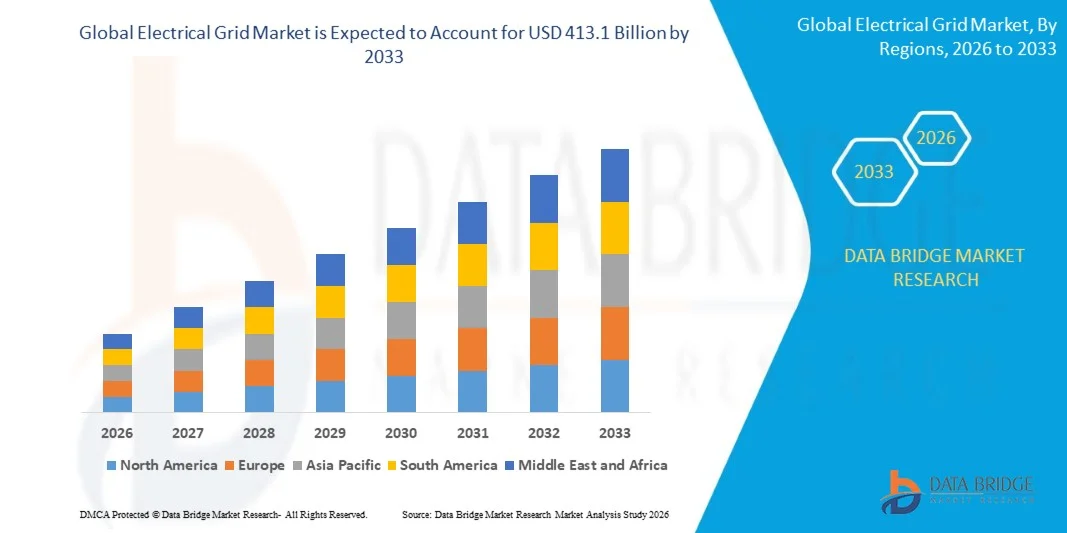
- A dimensão global do mercado da rede eléctrica foi avaliada em268,3 mil milhões de USD em 2025e espera-se alcançarUSD 413.1 mil milhões até 2033, emCAGR de 5,6%durante o período de previsão
- O crescimento do mercado é impulsionado principalmente por iniciativas de modernização rápida da rede, aumento da demanda de eletricidade, integração de fontes de energia renováveis e aumento dos investimentos em infraestrutura de rede inteligente em todo o mundo.
- Além disso, o crescente foco na descarbonização, eficiência energética e transformação digital de redes de energia está acelerando significativamente a adoção de tecnologias avançadas de rede, incluindo automação, sistemas de monitoramento em tempo real e soluções de gerenciamento de redes habilitadas para IA.
Grade elétricaAnálise de mercado
- Os sistemas de rede elétrica, que permitem a geração, transmissão e distribuição de eletricidade, formam a espinha dorsal da infraestrutura energética moderna e estão passando por uma grande transformação para redes de energia digitalizadas e inteligentes.
- A crescente penetração de fontes de energia renováveis, como o solar e o vento, juntamente com a descentralização da geração de energia, está a remodelar as arquitecturas tradicionais da rede em sistemas mais flexíveis e resilientes.
- A América do Norte dominou o mercado da rede elétrica com uma parcela de receita significativa de cerca de 37% em 2025, apoiada por fortes investimentos na modernização da rede elétrica, melhorias na infraestrutura de envelhecimento e iniciativas de implantação de redes inteligentes, particularmente nos EUA.
- Espera-se que a Ásia-Pacífico seja a região de crescimento mais rápido durante o período de previsão, registrando o maior CAGR de 7%, impulsionado pela urbanização rápida, aumento do consumo de eletricidade, expansão industrial e investimentos em larga escala em infraestrutura de transmissão e distribuição em toda a China e Índia.
- O segmento smart grid possuía uma participação dominante e em rápida expansão em 2025, impulsionada pelo aumento da adoção de sistemas de monitoramento digital, tecnologias de controle automatizado e soluções de gerenciamento de energia habilitadas para IoT.
Âmbito do relatório eEléctricoGrelhaSegmentação do mercado
|
Atributos |
EléctricoGrelhaChavePerspectivas de mercado |
|
Segmentos Cobertos |
|
|
Países abrangidos |
América do Norte · U.S. · Canadá · México Europa · Alemanha · França · U.K. · Países Baixos · Suíça · Bélgica · Rússia · Itália · Espanha · Turquia · Resto da Europa Ásia- Pacífico · China · Japão · Índia · Coreia do Sul · Singapura · Malásia · Austrália · Tailândia · Indonésia · Filipinas · Resto da Ásia-Pacífico Médio Oriente e África · Arábia Saudita · U.A.E. · África do Sul · Egito · Israel · Resto do Oriente Médio e África América do Sul · Brasil · Argentina · Resto da América do Sul |
|
Jogadores do mercado chave |
|
|
Oportunidades de Mercado |
· Expansão de redes inteligentes e infraestrutura de energia digital · Aumentar o investimento na integração das energias renováveis e na flexibilidade da rede · Crescimento em microrredes para sistemas de energia descentralizada e resistente |
|
Informações sobre o Valor Adicionado |
Além dos insights sobre cenários de mercado, como valor de mercado, taxa de crescimento, segmentação, cobertura geográfica e principais atores, os relatórios de mercado curados pela Data Bridge Market Research também incluem análise de especialistas em profundidade, produção e capacidade em termos geográficos representadas pela empresa, layouts de redes de distribuidores e parceiros, análise detalhada e atualizada da tendência de preços e análise de déficit da cadeia de suprimentos e demanda. |
EléctricoGrelhaTendências do mercado
“Transição para redes de energia inteligentes, digitais e descentralizadas”
- Os utilitários estão adotando cada vez mais sensores inteligentes, sistemas de monitoramento habilitados para IoT, subestações digitais e análises de grade baseadas em IA para melhorar a eficiência operacional, reduzir a duração da falha e permitir a manutenção preditiva.
- O aumento de microtrilhas e de recursos energéticos distribuídos (DERs), tais como telhado solar, armazenamento de bateria e sistemas eólicos localizados, está permitindo o fluxo de energia peer-to-peer e a geração de energia localizada, aumentando significativamente a resiliência da rede durante o pico de demanda e interrupções.
- A integração de fontes de energia renováveis intermitentes (solar e eólica) está acelerando a necessidade de infraestrutura de fluxo de energia flexível, adaptativa e bidirecional, substituindo modelos tradicionais de grade unidirecional.
- Governos em todas as principais economias estão investindo fortemente em programas de digitalização de grades, implantação de medidores inteligentes e atualizações de rede de transmissão, com iniciativas de modernização de redes nacionais multibilionárias nos EUA, Europa, China e Índia.
- Aumentar a adoção de tecnologias avançadas de borda de grade, como computação de bordas, previsão de carga em tempo real e sistemas de resposta à demanda automatizada está transformando operações de grade em ecossistemas altamente inteligentes.
- Os utilitários também estão mudando para redes auto-curantes, capazes de detectar, isolar e restaurar automaticamente falhas sem intervenção humana, reduzindo significativamente os tempos de interrupção.
EléctricoGrelhaDinâmica do Mercado
Controlador
“Demanda crescente de eletricidade e integração de energia renovável”
- O aumento do consumo global de eletricidade impulsionado pela urbanização, expansão industrial e eletrificação dos transportes (adoção EV) é um importante motor de crescimento estrutural.
- A expansão da capacidade de energias renováveis (sistemas solar, eólico, hidroeléctrico e híbrido) requer melhorias em larga escala na infraestrutura de transmissão e distribuição.
- Os governos estão investindo fortemente na modernização da rede, interconexões transfronteiriças e programas de implantação de redes inteligentes para melhorar a confiabilidade, eficiência e sustentabilidade.
- A ênfase crescente na segurança energética, estabilidade da rede e redução das perdas de transmissão e distribuição está acelerando a adoção de tecnologias avançadas de rede.
- A elevação da implantação de veículos elétricos (VE) e da infraestrutura de carregamento está criando pressão de carga adicional, exigindo equilíbrio inteligente de carga e expansão da rede.
- O aumento da adoção de sistemas de armazenamento de energia de bateria (BESS) está ajudando a estabilizar as flutuações de energia renovável e apoiar o gerenciamento de pico de carga.
- A expansão da electrificação industrial e dos centros de dados está a aumentar significativamente a procura de electricidade de base nas economias desenvolvidas e emergentes.
Restrição/Desafio
“Custos de alta infraestrutura e complexidade de integração da grade”
- O desenvolvimento de redes inteligentes, linhas de transmissão HVDC e subestações digitais requer investimentos de capital extremamente elevados e prazos de implementação longos, limitando a rápida implantação em regiões sensíveis aos custos.
- A integração de fontes de energia renováveis introduz desafios de instabilidade da rede devido à intermitência, flutuações de tensão e desequilíbrio de frequência, exigindo mecanismos avançados de equilíbrio.
- Muitas regiões ainda operam no envelhecimento e na infraestrutura de transmissão ineficiente, levando a elevadas perdas técnicas e aumento das despesas de manutenção.
- Os riscos de cibersegurança associados a sistemas de grade digitalizados, incluindo ataques de ransomware e violações de dados, estão surgindo como preocupações críticas para utilitários e governos.
- Complexidade regulatória e processos de aprovação lentos para projetos de transmissão muitas vezes atrasam os esforços de expansão e modernização da infraestrutura.
- A falta de padronização nos protocolos de comunicação em rede e a interoperabilidade entre sistemas legados e modernos criam desafios de integração.
- A escassez de mão-de-obra qualificada em engenharia de sistemas de energia, tecnologias de rede digital e cibersegurança restringem ainda mais a escalabilidade do mercado.
- A elevada dependência do financiamento público e os investimentos orientados para as políticas tornam o sector vulnerável às flutuações orçamentais e às mudanças políticas.
EléctricoGrelhaÂmbito de aplicação do mercado
O mercado é segmentado com base no tipo de rede, fonte de energia, componente, aplicação e usuário final.
- Por Tipo de Grade
Com base no tipo de rede, o mercado global de rede elétrica é segmentado em rede tradicional, rede inteligente e microrrede. O segmento tradicional da rede continua a deter uma parte significativa do mercado em 2025, representando 54% da quota total de mercado, impulsionada pela sua extensa base instalada e pela sua dependência de longa data nas economias desenvolvidas e em desenvolvimento. As redes tradicionais continuam a ser a espinha dorsal da transmissão e distribuição de eletricidade devido à sua infraestrutura estabelecida, familiaridade operacional e menor complexidade inicial de implantação. No entanto, o envelhecimento da infraestrutura em muitas regiões está impulsionando esforços de modernização gradual.
Espera-se que o segmento de redes inteligentes testemunhe o crescimento mais rápido durante o período de previsão, alimentado pelo aumento dos investimentos em transformação digital de sistemas de energia. As redes inteligentes permitem monitoramento em tempo real, detecção automatizada de falhas e melhor equilíbrio de carga através da integração de sensores IoT, análise de IA e infraestrutura de medição avançada (AMI). Os serviços públicos estão cada vez mais adotando tecnologias de redes inteligentes para melhorar a eficiência, reduzir as perdas de transmissão e aumentar a confiabilidade da rede em meio à crescente demanda de eletricidade e integração renovável.
- Por Fonte de Energia
Com base na fonte de energia, o mercado é segmentado em gás natural, carvão, hidro, renováveis, entre outros. O segmento do carvão continua a deter uma parte substancial em 2025, especialmente nas economias emergentes, em que a produção de carvão continua a ser uma fonte chave de electricidade de base devido às vantagens de custos e às infra-estruturas estabelecidas. No entanto, sua participação está gradativamente diminuindo devido à regulamentação ambiental e iniciativas de descarbonização.
Espera-se que o segmento de energias renováveis testemunhe o crescimento mais rápido durante o período de previsão, impulsionado pela rápida expansão das fontes de energia solar, eólica e outras fontes limpas. Aumentar o foco global na neutralidade do carbono, políticas de transição energética e redução dos custos das energias renováveis está acelerando significativamente a integração da rede de energia renovável. Esta transição está também a impulsionar a necessidade de soluções avançadas de infra-estruturas de transmissão e de flexibilidade da rede.
- Por Componente
Com base no componente, o mercado é segmentado em hardware, software e serviços. O segmento de hardware dominou o mercado em 2025, impulsionado por investimentos contínuos em infraestrutura de transmissão, como transformadores, switchgear, disjuntores e cabos de energia. A expansão e a substituição da infra-estrutura da rede de envelhecimento em todas as economias desenvolvidas são os principais factores de crescimento.
Espera-se que o segmento de software testemunhe o crescimento mais rápido durante o período de previsão, alimentado pelo aumento da adoção de plataformas de gerenciamento de grades, análise de energia, sistemas SCADA e ferramentas de otimização baseadas em IA. Digitalização de operações de grade está permitindo manutenção preditiva, previsão de demanda e tomada de decisão em tempo real.
- Por Aplicação
Com base na aplicação, o mercado é segmentado em geração, transmissão e distribuição. O segmento de transmissão teve uma participação significativa em 2025, impulsionado por investimentos em larga escala em redes de transmissão de alta tensão para apoiar a transferência de energia inter-regional e integração de energia renovável.
Espera-se que o segmento de distribuição testemunhe forte crescimento devido ao aumento da urbanização, à eletrificação das áreas rurais e à crescente demanda por fornecimento confiável de eletricidade de última milha. Utilitários estão focados em reduzir as perdas de distribuição e melhorar a confiabilidade da rede através de redes de distribuição inteligentes.
- Por Usuário Final
Com base no usuário final, o mercado é segmentado em utilitários, usuários residenciais, setor comercial e setor industrial. O segmento de serviços públicos dominou o mercado em 2025, uma vez que as empresas de serviços públicos são operadores primários e investidores em infraestrutura de transmissão e distribuição em larga escala.
Espera-se que o setor industrial testemunhe forte crescimento devido à alta e contínua demanda de eletricidade das indústrias de manufatura, mineração e pesados, juntamente com a adoção crescente de sistemas de energia e rede de backup cativos.
EléctricoGrelhaAnálise regional de mercado
- A América do Norte dominou o mercado da rede elétrica com a maior parcela de receita de cerca de 37% em 2025, apoiada por infraestrutura de energia avançada, fortes investimentos na modernização da rede, envelhecimento das redes de transmissão e distribuição, e iniciativas de implantação de redes inteligentes em larga escala, particularmente nos EUA.
- Utilitários e governos da região dão ênfase significativa à confiabilidade da rede, segurança energética e integração de energia renovável, levando à adoção generalizada de tecnologias avançadas de rede elétrica, incluindo sensores inteligentes, subestações digitais e sistemas de gerenciamento de rede baseados em IA em redes de transmissão e distribuição.
- Esta forte posição do mercado é ainda apoiada por elevados gastos em infraestrutura energética, forte presença de empresas de serviços públicos líderes e fornecedores de tecnologia de rede, e rápida adoção de soluções de rede digital e inteligente, estabelecendo a modernização da rede elétrica como um componente crítico da estratégia de transição energética de longo prazo da região em setores residenciais, comerciais e industriais.
U.S. ElectricalGrelhaPor Dentro do Mercado
O mercado de rede elétrica dos EUA é impulsionado por investimentos em larga escala na modernização da rede, substituição da infraestrutura de transmissão de envelhecimento e rápida adoção de tecnologias de rede inteligente. Aumentar a demanda de eletricidade de data centers, veículos elétricos e eletrificação industrial está fortalecendo ainda mais as atividades de expansão e atualização da rede. Além disso, um forte apoio político à integração e resiliência das energias renováveis contra eventos climáticos extremos está acelerando a implantação de sistemas avançados de automação de grades, monitoramento digital e soluções de armazenamento de energia em todo o país.
Europe Electrical Grid Market Insight
O mercado europeu da rede elétrica está testemunhando um crescimento constante impulsionado por fortes metas de descarbonização, expansão da capacidade de energia renovável e investimentos em grande escala na modernização da rede em grandes economias, como Alemanha, Reino Unido, França e Itália. A região está cada vez mais focada em aumentar a flexibilidade da rede para gerir a energia solar e eólica intermitente, levando a uma maior adoção de tecnologias de rede inteligente, interligações transfronteiriças e sistemas digitais de gestão da energia. Além disso, as políticas climáticas da UE de apoio, o envelhecimento das infra-estruturas e a crescente procura de eficiência energética estão a acelerar ainda mais a transição para uma rede eléctrica mais integrada e resistente.
U.K. Electrical Grid Market Insight
O mercado de rede elétrica do Reino Unido está crescendo constantemente, apoiado por fortes compromissos do governo em relação às emissões líquidas zero, aumentando a integração de energias renováveis e a modernização contínua da infraestrutura de transmissão e distribuição de envelhecimento. O país está expandindo rapidamente a capacidade eólica offshore, o que está impulsionando a necessidade de conectividade atualizada da rede e soluções flexíveis de balanceamento de energia. Além disso, os investimentos em tecnologias de redes inteligentes, subestações digitais e sistemas de armazenamento de energia estão aumentando a confiabilidade e eficiência da rede. O aumento da electrificação dos transportes e do aquecimento aumenta ainda mais a procura de electricidade, incentivando os serviços públicos a reforçar a resiliência da rede e a expandir a capacidade da rede.
Alemanha Electrical Grid Market Insight
O mercado da rede elétrica da Alemanha está em constante expansão, impulsionado pela forte estratégia Energiewende (transição energética) do país focada na descarbonização e integração de energia renovável em larga escala. O rápido crescimento da energia eólica e solar está aumentando a necessidade de soluções avançadas de flexibilidade da rede, upgrades de transmissão inter-regionais e implantação de redes inteligentes. A Alemanha também está investindo fortemente em subestações digitais, automação de grades e sistemas de armazenamento de energia para gerenciar a intermitência e garantir a estabilidade da rede. Além disso, a modernização da infra-estrutura de transmissão de envelhecimento e o aumento da electrificação nos sectores industrial e da mobilidade estão a apoiar ainda mais o crescimento do mercado a longo prazo.
Visão do mercado de grade elétrica Ásia-Pacífico
O mercado da rede elétrica Ásia-Pacífico está presenciando o crescimento mais rápido em todo o mundo, impulsionado pela urbanização rápida, pela industrialização em expansão e pela demanda crescente de eletricidade em países como China, Índia e países do Sudeste Asiático. Investimentos em larga escala na infraestrutura de transmissão e distribuição, juntamente com o aumento da integração de fontes de energia renováveis, como solar e eólica, estão acelerando os esforços de modernização da rede na região. Os governos apoiam activamente a implantação de redes inteligentes, a electrificação rural e os projectos de interconexão transfronteiriça para melhorar o acesso à energia e a fiabilidade. Além disso, a adoção crescente de tecnologias de rede digital, sistemas de armazenamento de energia e microrredes está fortalecendo ainda mais a transição da região para uma infraestrutura de energia mais eficiente e resiliente.
Japão Electrical Grid Market Insight
O mercado da rede elétrica do Japão está crescendo constantemente, apoiado por fortes investimentos na resiliência da rede, modernização da infraestrutura de envelhecimento e crescente integração de fontes de energia renováveis, como energia solar e eólica offshore. Após desastres naturais passados, o Japão se concentrou significativamente na construção de um sistema de rede mais confiável e resistente a desastres através de tecnologias de rede inteligente, detecção automatizada de falhas e soluções avançadas de armazenamento de energia. Além disso, a mudança do país para sistemas de energia descentralizados e a adoção crescente de microrredes para energia de backup e aplicações industriais estão fortalecendo ainda mais o crescimento do mercado. Aumentar a electrificação e a digitalização das redes de energia também estão a aumentar a eficiência e a estabilidade da rede global.
Índia Electrical Grid Market Insight
O mercado da rede elétrica da Índia está passando por um forte crescimento impulsionado pela rápida urbanização, aumento da demanda de eletricidade e expansão em larga escala da infraestrutura de transmissão e distribuição. Iniciativas governamentais como “Power for All”, metas de integração de energias renováveis e programas de modernização de redes inteligentes estão acelerando significativamente o desenvolvimento de redes em todo o país. O aumento da adoção de energia solar e eólica também está impulsionando os investimentos em sistemas de rede flexíveis e atualizados para gerenciar a variabilidade e garantir a estabilidade. Além disso, a crescente eletrificação das áreas rurais, a expansão industrial e o crescente uso de tecnologias de rede digital e medidores inteligentes estão fortalecendo ainda mais a transição do país para uma rede de energia mais eficiente e resiliente.
Parte de mercado de grade elétrica
A indústria da rede eléctrica é liderada principalmente por empresas bem estabelecidas, incluindo:
- Siemens AG (Alemanha)
- General Electric Company (EUA)
- Schneider Electric SE (França)
- ABB Ltd (Suíça)
- Eaton Corporation (Irlanda)
- Energia Hitachi (Japão)
- Sistemas e soluções de energia Toshiba (Japão)
- Mitsubishi Electric Corporation (Japão)
- Honeywell International Inc. (EUA)
- Cisco Systems Inc. (EUA)
- Schneider Electric (França)
- IBM Corporation (EUA)
- Oracle Corporation (EUA)
- Cisco Systems (EUA)
- WEG S.A. (Brasil)
- Larsen & Toubro (Índia)
- Empresa estatal Grid Corporation da China (China)
- National Grid plc (U.K.)
Quais são os recentes desenvolvimentos no mercado global de grades elétricas
- Em dezembro de 2025, a Siemens Energy anunciou um investimento de US$ 1 bilhão para expandir a capacidade de fabricação de equipamentos de rede elétrica nos EUA, incluindo transformadores e sistemas de transmissão de alta tensão, para atender à crescente demanda de eletrificação, centros de dados de IA e integração de energia renovável.
- Em outubro de 2025, a Hitachi Energy expandiu seu portfólio de serviços de rede na América do Norte através de aquisições estratégicas e parcerias, fortalecendo suas capacidades em manutenção de transmissão, modernização de rede e operações de serviços em escala de utilidade para apoiar a crescente demanda de eletricidade.
- Em setembro de 2025, a Schneider Electric aprimorou sua plataforma EcoStruxure Grid com recursos avançados de gerenciamento de grade baseados em IA, permitindo aos utilitários melhorar o monitoramento em tempo real, manutenção preditiva e integração de recursos de energia distribuída (DER) em redes de rede inteligente.
- Em julho de 2025, a GE Vernova lançou soluções de transmissão HVDC de última geração com o objetivo de melhorar a transferência de energia renovável de longa distância e a conectividade da rede transfronteiriça, apoiando projetos de descarbonização em larga escala globalmente.
SKU-
Obtenha acesso online ao relatório sobre a primeira nuvem de inteligência de mercado do mundo

- Painel interativo de análise de dados
- Painel de análise da empresa para oportunidades de elevado potencial de crescimento
- Acesso de analista de pesquisa para personalização e customização. consultas
- Análise da concorrência com painel interativo
- Últimas notícias, atualizações e atualizações Análise de tendências
- Aproveite o poder da análise de benchmark para um rastreio abrangente da concorrência
Metodologia de Investigação
A recolha de dados e a análise do ano base são feitas através de módulos de recolha de dados com amostras grandes. A etapa inclui a obtenção de informações de mercado ou dados relacionados através de diversas fontes e estratégias. Inclui examinar e planear antecipadamente todos os dados adquiridos no passado. Da mesma forma, envolve o exame de inconsistências de informação observadas em diferentes fontes de informação. Os dados de mercado são analisados e estimados utilizando modelos estatísticos e coerentes de mercado. Além disso, a análise da quota de mercado e a análise das principais tendências são os principais fatores de sucesso no relatório de mercado. Para saber mais, solicite uma chamada de analista ou abra a sua consulta.
A principal metodologia de investigação utilizada pela equipa de investigação do DBMR é a triangulação de dados que envolve a mineração de dados, a análise do impacto das variáveis de dados no mercado e a validação primária (especialista do setor). Os modelos de dados incluem grelha de posicionamento de fornecedores, análise da linha de tempo do mercado, visão geral e guia de mercado, grelha de posicionamento da empresa, análise de patentes, análise de preços, análise da quota de mercado da empresa, normas de medição, análise global versus regional e de participação dos fornecedores. Para saber mais sobre a metodologia de investigação, faça uma consulta para falar com os nossos especialistas do setor.
Personalização disponível
A Data Bridge Market Research é líder em investigação formativa avançada. Orgulhamo-nos de servir os nossos clientes novos e existentes com dados e análises que correspondem e atendem aos seus objetivos. O relatório pode ser personalizado para incluir análise de tendências de preços de marcas-alvo, compreensão do mercado para países adicionais (solicite a lista de países), dados de resultados de ensaios clínicos, revisão de literatura, mercado remodelado e análise de base de produtos . A análise de mercado dos concorrentes-alvo pode ser analisada desde análises baseadas em tecnologia até estratégias de carteira de mercado. Podemos adicionar quantos concorrentes necessitar de dados no formato e estilo de dados que procura. A nossa equipa de analistas também pode fornecer dados em tabelas dinâmicas de ficheiros Excel em bruto (livro de factos) ou pode ajudá-lo a criar apresentações a partir dos conjuntos de dados disponíveis no relatório.











