



Global Energy Based Devices Market Segmentation, By Technology (Electrical, Radiation, Laser-Based, Light-Based, Electromagnetic, Ultrasound-Based, Cryolipolysis/Cryotherapy, Thermal, Microwave, Hydromechanical, Suction-Based, RF-Based, Plasma Energy-Based, UV, Infrared, and Low Temperature-Based), By Application (Aesthetics, Cardiovascular, Gynaecology, Orthopaedics, Urology, and Ophthalmology), Sales Channel (Indirect and Direct), End-User (Dermatology & Cosmetic Clinics, Hospitals, Home-Care, Multi-Speciality Centers, and Stand-Alone Centers) – Industry Trends and Forecast to 2032
Energy Based Devices Market Analysis
The energy-based devices market is experiencing significant growth, driven by advancements in technology and increasing demand for minimally invasive procedures in aesthetic and therapeutic applications. Energy-based devices, which use technologies such as laser, ultrasound, cryotherapy, and radiofrequency, are applied in diverse medical fields, including dermatology, gynecology, orthopedics, and cardiovascular treatments. Rising disposable incomes, particularly in Asia-Pacific, and increased awareness of aesthetic treatments are further propelling market growth. Regulatory approvals, such as Venus Concept’s TGA clearance for Venus Versa Pro in Australia, enhance the global availability of these innovative devices. Additionally, developments such as the introduction of Lumenis' FoLix for hair loss treatment and Cynosure's merger with Lutronic to strengthen their energy-based aesthetic portfolio, highlight the industry's shift toward more targeted, effective, and patient-friendly solutions. As the market continues to expand, companies are focusing on R&D investments to innovate safer and more efficient devices, addressing both aesthetic and medical needs, thus solidifying their positions in a highly competitive and rapidly evolving market.
Energy Based Devices Market Size
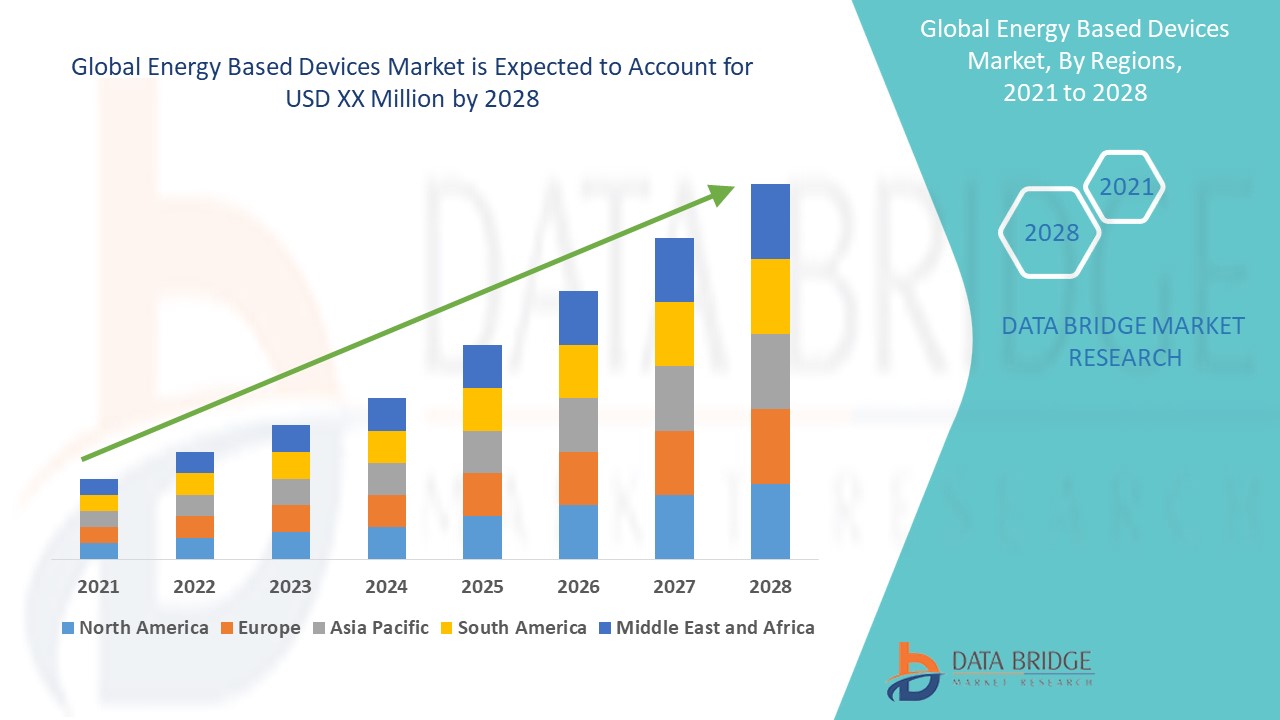
The global energy based devices market size was valued at USD 5.47 billion in 2024 and is projected to reach USD 10.43 billion by 2032, with a CAGR of 8.40% during the forecast period of 2025–2032. In addition to the insights on market scenarios such as market value, growth rate, segmentation, geographical coverage, and major players, the market reports curated by the Data Bridge Market Research also include depth expert analysis, patient epidemiology, pipeline analysis, pricing analysis, and regulatory framework.
Energy Based Devices Market Trends
“Increasing Integration of Artificial Intelligence (AI) and Machine Learning (ML)”
A notable trend in the energy-based devices market is the increasing integration of artificial intelligence (AI) and machine learning (ML) to enhance treatment precision and patient outcomes. AI-driven technologies are revolutionizing how energy-based devices, such as laser and ultrasound devices, analyze patient data, allowing for personalized treatment plans that improve effectiveness and safety. For instance, Cynosure’s recent merger with Lutronic aims to combine their expertise in energy-based medical aesthetic systems with advanced AI capabilities, creating smarter devices that adapt to individual patient needs. This trend streamlines the treatment process and enhances the overall patient experience, as clinicians can make data-driven decisions in real time. As healthcare continues to prioritize patient-centric approaches, the incorporation of AI and ML in energy-based devices will likely play a crucial role in advancing the market, driving innovation, and meeting the rising demand for efficient and effective aesthetic and therapeutic solutions.
Report Scope and Energy Based Devices Market Segmentation
|
Attributes |
Energy Based Devices Key Market Insights |
|
Segments Covered |
|
|
Countries Covered |
U.S., Canada and Mexico in North America, Germany, France, U.K., Netherlands, Switzerland, Belgium, Russia, Italy, Spain, Turkey, Rest of Europe in Europe, China, Japan, India, South Korea, Singapore, Malaysia, Australia, Thailand, Indonesia, Philippines, Rest of Asia-Pacific (APAC) in the Asia-Pacific (APAC), Saudi Arabia, U.A.E., South Africa, Egypt, Israel, Rest of Middle East and Africa (MEA) as a part of Middle East and Africa (MEA), Brazil, Argentina and Rest of South America as part of South America |
|
Key Market Players |
Candela Corporation (U.S.), IRIDEX Corporation (U.S.), Merz Pharma (Germany), Alma Lasers (Israel), Lumenis Be Ltd (Israel), Tria Beauty (U.S.), Hologic, Inc. (U.S.), Cutera, Inc. (U.S.), Sciton (U.S.), Venus Concept (Canada), Bausch Health Companies Inc. (Canada), Genesis Biosystems, Inc. (U.S.), LASEROPTEK (South Korea), Deka M.E.L.A. S.r.l. (Italy), Erchonia Corporation (U.S.), ENDYMED Medical Inc. (Israel), Fotona (Slovenia), LUTRONIC (South Korea), Quanta System (Italy), SharpLight Technologies Inc. (Canada), AbbVie Inc. (U.S.), and Energist Ltd (U.K.) |
|
Market Opportunities |
|
|
Value Added Data Infosets |
In addition to the insights on market scenarios such as market value, growth rate, segmentation, geographical coverage, and major players, the market reports curated by the Data Bridge Market Research also include depth expert analysis, patient epidemiology, pipeline analysis, pricing analysis, and regulatory framework. |
Energy Based Devices Market Definition
Energy-based devices refer to medical technologies that utilize various forms of energy such as laser, radiofrequency (RF), ultrasound, light, and electromagnetic energy to perform diagnostic and therapeutic procedures. These devices are commonly used in aesthetic treatments, surgical interventions, and medical therapies across various specialties, including dermatology, cardiology, gynecology, and orthopedics. They operate by targeting specific tissues, either to ablate, coagulate, or stimulate them, thus enabling a range of applications from hair removal and skin rejuvenation to tissue repair and cancer treatment. The development of these devices continues to evolve, with advancements in technology enhancing their effectiveness, safety, and versatility in clinical settings.
Energy Based Devices Market Dynamics
Drivers
- Increasing Incidence of Skin Conditions
The rising incidence of skin conditions significantly drives the demand for energy-based devices, as healthcare providers seek advanced treatment solutions to address these prevalent issues. According to the World Health Organization, skin cancer cases have been steadily increasing, with an estimated 13 million new cases of non-melanoma skin cancer diagnosed globally each year, alongside the growing prevalence of acne affecting approximately 85% of adolescents and young adults. This alarming rise in skin diseases has created a pressing need for effective therapeutic options, such as laser treatments and radiofrequency devices, which can deliver targeted interventions with minimal invasiveness. For instance, laser therapy has emerged as a preferred option for treating acne scars, offering patient’s quicker recovery times and enhanced results compared to traditional methods. As the demand for such advanced treatments continues to grow, energy-based devices are increasingly recognized as vital tools in dermatology, thereby propelling market growth and innovation in this sector.
- Increasing Demand for Aesthetic Procedures
The increasing demand for aesthetic procedures is a key driver of growth in the energy-based devices market, as consumers increasingly seek non-invasive and minimally invasive treatments to enhance their appearance. According to the American Society of Plastic Surgeons, there were over 18 million cosmetic minimally invasive procedures performed in the U.S. in 2020, marking a significant increase of 124% since 2000. Treatments such as laser hair removal, skin resurfacing, and body contouring have gained immense popularity due to their ability to deliver effective results with less downtime compared to traditional surgical options. For instance, laser-based technologies are widely used for procedures such as tattoo removal and photorejuvenation, allowing patients to achieve smoother skin with minimal discomfort. This growing trend is further supported by a rise in consumer awareness and acceptance of aesthetic treatments, driving healthcare providers to invest in energy-based devices to meet the escalating demand. As a result, the energy-based devices market continues to expand, fueled by the desire for safer, less invasive cosmetic solutions.
Opportunities
- Increasing Technological Advancements in Energy-Based Devices
Technological advancements in energy-based devices represent a key market opportunity, as continuous innovations enhance treatment efficacy and safety, thereby attracting a growing number of healthcare providers and patients. For instance, recent developments in laser systems, such as fractional CO2 lasers, have significantly improved the precision and effectiveness of treatments for skin resurfacing and scar reduction, resulting in faster recovery times and better patient outcomes. Additionally, advancements in radiofrequency (RF) technologies, such as non-invasive skin tightening procedures, have become increasingly popular due to their ability to stimulate collagen production with minimal discomfort and downtime. The introduction of smart devices equipped with AI for personalized treatment plans further enhances patient safety and satisfaction, making these technologies more appealing to both practitioners and patients. As healthcare providers increasingly adopt these advanced energy-based technologies, the market is expected to expand rapidly, driven by improved treatment options and rising patient demand for effective, non-invasive procedures.
- Expansion of Healthcare Facilities
The expansion of healthcare facilities, including dermatology clinics, aesthetic centers, and hospitals, presents a significant opportunity for the energy-based devices market. As more specialized clinics and centers open, the accessibility of advanced treatment options increases, leading to higher adoption rates of energy-based devices among practitioners. For instance, a report by National Institute of Health, indicated that the number of dermatology clinics in urban areas has grown by over 25% in the past five years, creating a surge in demand for innovative technologies such as laser systems and radiofrequency devices. Additionally, many new aesthetic centers are integrating energy-based technologies into their offerings to attract patients seeking non-invasive solutions for skin rejuvenation, hair removal, and body contouring. This influx of facilities improves patient access to cutting-edge treatments and encourages healthy competition among providers, driving further innovation and adoption of energy-based devices. As healthcare facilities continue to expand, they will play a crucial role in shaping the growth trajectory of the energy-based devices market.
Restraints/Challenges
- High Development Costs
The development of energy-based devices entails substantial investment in research and development, along with rigorous clinical trials to ensure their safety and efficacy. This financial burden can pose a significant barrier for new entrants seeking to innovate in a competitive landscape. For instance, a company developing a new laser therapy device may need to allocate considerable resources to meet regulatory standards and conduct extensive testing before bringing the product to market. Such high costs can limit opportunities for innovation, particularly in price-sensitive regions where healthcare providers may prioritize cost-effective solutions over cutting-edge technologies. Consequently, the challenge of high development costs can hinder market growth and restrict the introduction of novel energy-based devices.
- Stringent Regulatory Requirements
Energy-based devices face significant regulatory hurdles due to stringent requirements that vary across different regions. Navigating this complex landscape can be challenging for manufacturers, as they must ensure compliance with various safety and efficacy standards before gaining approval for new devices. For instance, a manufacturer seeking to introduce a novel ultrasound device may encounter lengthy review processes and stringent testing requirements from regulatory bodies such as the FDA in the U.S. or the European Medicines Agency in Europe. These challenges can lead to delays in product launches, ultimately hindering market entry and impacting a company's competitive position. Smaller companies, in particular, may struggle to allocate the necessary resources to meet these regulatory demands, limiting their ability to innovate and expand in the energy-based devices market.
This market report provides details of new recent developments, trade regulations, import-export analysis, production analysis, value chain optimization, market share, impact of domestic and localized market players, analyses opportunities in terms of emerging revenue pockets, changes in market regulations, strategic market growth analysis, market size, category market growths, application niches and dominance, product approvals, product launches, geographic expansions, technological innovations in the market. To gain more info on the market contact Data Bridge Market Research for an Analyst Brief, our team will help you take an informed market decision to achieve market growth.
Energy Based Devices Market Scope
The market is segmented on the basis of technology, application, sales channel, and end user. The growth amongst these segments will help you analyse meagre growth segments in the industries and provide the users with a valuable market overview and market insights to help them make strategic decisions for identifying core market applications.
Technology
- Electrical
- Radiation
- Laser-Based
- Light-Based
- Electromagnetic
- Ultrasound-Based
- Cryolipolysis/Cryotherapy
- Thermal
- Microwave
- Hydromechanical
- Suction-Based
- RF-Based
- Plasma Energy-Based
- UV
- Infrared
- Low Temperature-Based
Application
- Aesthetics
- Cardiovascular
- Gynaecology
- Orthopaedics
- Urology
- Ophthalmology
Sales Channel
- Indirect
- Direct
End-User
- Dermatology & Cosmetic Clinics
- Hospitals
- Home-Care
- Multi-Speciality Centers
- Stand-Alone Centers
Energy Based Devices Market Regional Analysis
The market is analysed and market size insights and trends are provided by country, technology, application, sales channel, and end user as referenced above.
The countries covered in the market report are U.S., Canada and Mexico in North America, Germany, France, U.K., Netherlands, Switzerland, Belgium, Russia, Italy, Spain, Turkey, Rest of Europe in Europe, China, Japan, India, South Korea, Singapore, Malaysia, Australia, Thailand, Indonesia, Philippines, Rest of Asia-Pacific (APAC) in the Asia-Pacific (APAC), Saudi Arabia, U.A.E., South Africa, Egypt, Israel, Rest of Middle East and Africa (MEA) as a part of Middle East and Africa (MEA), Brazil, Argentina and Rest of South America as part of South America.
North America holds a leading position in the energy-based devices market, primarily due to the increased use of energy-based aesthetic devices across various applications. Additionally, the region's rising demand for minimally invasive and surgical procedures is expected to drive further growth in this market. The advancements in technology and strong presence of key industry players also contribute to North America's dominance, and this trend is anticipated to continue through the forecast period.
Asia-Pacific is set to experience substantial growth in the energy-based devices market, largely driven by the rising incidence of skin cancer cases across the region. Additionally, an increasing focus from manufacturers on expanding energy-based aesthetic devices in Asia-Pacific is expected to accelerate market growth. This interest is further supported by the region's growing healthcare infrastructure and demand for innovative treatments, positioning Asia-Pacific as a key area for energy-based device expansion in the years ahead.
The country section of the report also provides individual market impacting factors and changes in regulation in the market domestically that impacts the current and future trends of the market. Data points such as down-stream and upstream value chain analysis, technical trends and porter's five forces analysis, case studies are some of the pointers used to forecast the market scenario for individual countries. Also, the presence and availability of global brands and their challenges faced due to large or scarce competition from local and domestic brands, impact of domestic tariffs and trade routes are considered while providing forecast analysis of the country data.
Energy Based Devices Market Share
The market competitive landscape provides details by competitor. Details included are company overview, company financials, revenue generated, market potential, investment in research and development, new market initiatives, global presence, production sites and facilities, production capacities, company strengths and weaknesses, product launch, product width and breadth, application dominance. The above data points provided are only related to the companies' focus related to market.
Energy Based Devices Market Leaders Operating in the Market Are:
- Candela Corporation (U.S.)
- IRIDEX Corporation (U.S.)
- Merz Pharma (Germany)
- Alma Lasers (Israel)
- Lumenis Be Ltd (Israel)
- Tria Beauty (U.S.)
- Hologic, Inc. (U.S.)
- Cutera, Inc. (U.S.)
- Sciton (U.S.)
- Venus Concept (Canada)
- Bausch Health Companies Inc. (Canada)
- Genesis Biosystems, Inc. (U.S.)
- LASEROPTEK (South Korea)
- Deka M.E.L.A. S.r.l. (Italy)
- Erchonia Corporation (U.S.)
- ENDYMED Medical Inc. (Israel)
- Fotona (Slovenia)
- LUTRONIC (South Korea)
- Quanta System (Italy)
- SharpLight Technologies Inc. (Canada)
- AbbVie Inc. (U.S.)
- Energist Ltd (U.K.)
Latest Developments in Energy Based Devices Market
- In June 2024, Lumenis Be. Ltd. launched FoLix, an FDA-approved laser system designed to treat hair loss. As the first fractional laser system of its kind available in the U.S., FoLix offers an effective and natural solution for hair restoration for both men and women
- In May 2024, Sinclair introduced Sculpt & Shape, a new energy-based device (EBD) technology focused on body contouring and facial rejuvenation, showcasing Sinclair's commitment to advancing aesthetic treatment options
- In April 2024, Venus Concept Inc. received approval from Australia's Therapeutic Goods Administration (TGA) for its Venus Versa Pro system. The device combines features from the Venus Viva MD applicator and Venus Versa system, reinforcing Venus Concept’s role as a leader in medical aesthetic innovation
- In February 2024, Cynosure and Hahn & Company, the acquirer of Lutronic, finalized a merger agreement to strategically combine the two companies. This union brings together two leading providers of energy-based medical aesthetic treatment systems, expanding their global reach
- In January 2024, following its acquisition of Lutronic, Cynosure and Hahn & Company announced a definitive merger agreement to strategically merge Cynosure and Lutronic. This merger is expected to create a prominent player in medical aesthetics, with a diverse and innovative product line-up available across over 130 countries
SKU-
Obtenha acesso online ao relatório sobre a primeira nuvem de inteligência de mercado do mundo

- Painel interativo de análise de dados
- Painel de análise da empresa para oportunidades de elevado potencial de crescimento
- Acesso de analista de pesquisa para personalização e customização. consultas
- Análise da concorrência com painel interativo
- Últimas notícias, atualizações e atualizações Análise de tendências
- Aproveite o poder da análise de benchmark para um rastreio abrangente da concorrência
Metodologia de Investigação
A recolha de dados e a análise do ano base são feitas através de módulos de recolha de dados com amostras grandes. A etapa inclui a obtenção de informações de mercado ou dados relacionados através de diversas fontes e estratégias. Inclui examinar e planear antecipadamente todos os dados adquiridos no passado. Da mesma forma, envolve o exame de inconsistências de informação observadas em diferentes fontes de informação. Os dados de mercado são analisados e estimados utilizando modelos estatísticos e coerentes de mercado. Além disso, a análise da quota de mercado e a análise das principais tendências são os principais fatores de sucesso no relatório de mercado. Para saber mais, solicite uma chamada de analista ou abra a sua consulta.
A principal metodologia de investigação utilizada pela equipa de investigação do DBMR é a triangulação de dados que envolve a mineração de dados, a análise do impacto das variáveis de dados no mercado e a validação primária (especialista do setor). Os modelos de dados incluem grelha de posicionamento de fornecedores, análise da linha de tempo do mercado, visão geral e guia de mercado, grelha de posicionamento da empresa, análise de patentes, análise de preços, análise da quota de mercado da empresa, normas de medição, análise global versus regional e de participação dos fornecedores. Para saber mais sobre a metodologia de investigação, faça uma consulta para falar com os nossos especialistas do setor.
Personalização disponível
A Data Bridge Market Research é líder em investigação formativa avançada. Orgulhamo-nos de servir os nossos clientes novos e existentes com dados e análises que correspondem e atendem aos seus objetivos. O relatório pode ser personalizado para incluir análise de tendências de preços de marcas-alvo, compreensão do mercado para países adicionais (solicite a lista de países), dados de resultados de ensaios clínicos, revisão de literatura, mercado remodelado e análise de base de produtos . A análise de mercado dos concorrentes-alvo pode ser analisada desde análises baseadas em tecnologia até estratégias de carteira de mercado. Podemos adicionar quantos concorrentes necessitar de dados no formato e estilo de dados que procura. A nossa equipa de analistas também pode fornecer dados em tabelas dinâmicas de ficheiros Excel em bruto (livro de factos) ou pode ajudá-lo a criar apresentações a partir dos conjuntos de dados disponíveis no relatório.











