



Segmentação do mercado global de testes bacteriológicos para alimentos e bebidas, por componente (instrumentos, kits de teste, reagentes e consumíveis), bactérias (coliformes, Salmonella, Campylobacter, Listeria, Legionella e outras), tecnologia (tecnologia tradicional e tecnologia rápida) - Tendências e previsões do setor até 2033.
Tamanho do mercado de testes bacteriológicos para alimentos e bebidas
- O mercado global de testes bacteriológicos para alimentos e bebidas foi avaliado em US$ 25,80 bilhões em 2025 e deverá atingir US$ 44,16 bilhões até 2033 , com uma taxa de crescimento anual composta (CAGR) de 6,95% durante o período de previsão.
- O crescimento do mercado é impulsionado principalmente pela crescente demanda por segurança e garantia de qualidade dos alimentos, pelo aumento da incidência de doenças transmitidas por alimentos e pelas rigorosas regulamentações governamentais sobre higiene alimentar.
- Além disso, a crescente conscientização do consumidor em relação à contaminação e a necessidade de soluções de teste confiáveis na indústria de alimentos e bebidas estão impulsionando a adoção de tecnologias avançadas de testes bacteriológicos.
Análise do mercado de testes bacteriológicos para alimentos e bebidas
- O mercado é caracterizado por avanços tecnológicos em métodos de teste rápidos e automatizados, incluindo ensaios baseados em PCR, imunoensaios e biossensores, que aumentam a precisão da detecção e reduzem o tempo de teste.
- A crescente adoção de medidas preventivas de segurança alimentar pelos fabricantes e a expansão da indústria global de alimentos e bebidas estão impulsionando ainda mais o crescimento do mercado, com oportunidades significativas em regiões emergentes como a Ásia-Pacífico.
- A América do Norte dominou o mercado de testes bacteriológicos para alimentos e bebidas, com a maior participação de receita, de 38,50% em 2025, impulsionada por regulamentações rigorosas de segurança alimentar, alta demanda por garantia de qualidade e ampla adoção de soluções avançadas de teste.
- A região Ásia-Pacífico deverá apresentar a maior taxa de crescimento no mercado global de testes bacteriológicos para alimentos e bebidas , impulsionada pela crescente urbanização, aumento da renda disponível, expansão das indústrias de processamento de alimentos e maior conscientização sobre os padrões de segurança alimentar.
- O segmento de instrumentos detinha a maior participação na receita de mercado em 2025, impulsionado pela crescente adoção de equipamentos de laboratório avançados para a detecção precisa e eficiente de patógenos. Instrumentos como analisadores automatizados e incubadoras permitem testes de alto rendimento e são amplamente utilizados em laboratórios de processamento de alimentos e controle de qualidade.
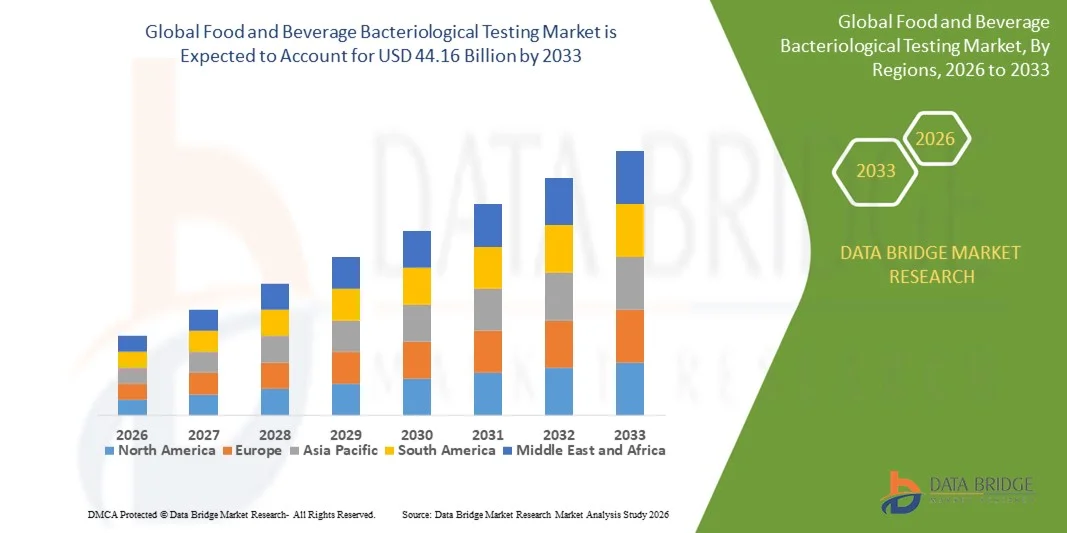
Escopo do relatório e segmentação do mercado de testes bacteriológicos para alimentos e bebidas.
|
Atributos |
Análises Bacteriológicas de Alimentos e Bebidas: Principais Insights do Mercado |
|
Segmentos abrangidos |
|
|
Países abrangidos |
América do Norte
Europa
Ásia-Pacífico
Oriente Médio e África
Ámérica do Sul
|
|
Principais participantes do mercado |
|
|
Oportunidades de mercado |
|
|
Conjuntos de informações de dados de valor agregado |
Além das informações sobre cenários de mercado, como valor de mercado, taxa de crescimento, segmentação, cobertura geográfica e principais participantes, os relatórios de mercado elaborados pela Data Bridge Market Research também incluem análises aprofundadas de especialistas, análises de preços, análises de participação de marcas, pesquisas com consumidores, análises demográficas, análises da cadeia de suprimentos, análises da cadeia de valor, visão geral de matérias-primas/insumos, critérios de seleção de fornecedores, análise PESTLE, análise de Porter e estrutura regulatória. |
Tendências do mercado de testes bacteriológicos de alimentos e bebidas
Crescente demanda por segurança alimentar e garantia de qualidade
- A crescente ênfase na garantia de produtos alimentícios e bebidas seguros e de alta qualidade está moldando significativamente o mercado de testes bacteriológicos, à medida que fabricantes e órgãos reguladores priorizam cada vez mais a detecção de patógenos e contaminantes. Métodos de teste avançados estão ganhando força devido à sua capacidade de fornecer resultados rápidos e precisos, permitindo o controle de qualidade proativo e a conformidade com os padrões de segurança. Essa tendência fortalece a adoção nos setores de processamento de alimentos, laticínios, carnes e bebidas, incentivando laboratórios e fabricantes a investir em soluções de teste inovadoras.
- A crescente conscientização sobre doenças transmitidas por alimentos e as rigorosas regulamentações governamentais aceleraram a demanda por testes bacteriológicos em toda a cadeia de suprimentos. Consumidores preocupados com a saúde e órgãos reguladores defendem ativamente protocolos de teste confiáveis, o que impulsiona a colaboração entre fornecedores de soluções de teste e fabricantes de alimentos para aprimorar a segurança e a rastreabilidade.
- As tendências em segurança alimentar estão influenciando as decisões de compra e operacionais, com os fabricantes enfatizando certificações de laboratório, métodos de teste validados e conformidade com padrões internacionais. Esses fatores ajudam as marcas a mitigar riscos de contaminação, proteger a saúde pública e construir a confiança do consumidor, além de impulsionar a adoção de tecnologias de teste rápidas e automatizadas.
- Por exemplo, em 2024, a Nestlé, na Suíça, e a PepsiCo, nos EUA, expandiram seus programas de garantia de qualidade, incorporando protocolos avançados de testes bacteriológicos no monitoramento da produção e da cadeia de suprimentos. Essas implementações foram introduzidas em resposta às pressões regulatórias e à crescente conscientização do consumidor, com testes aplicados em instalações de produção, centros de distribuição e operações de varejo.
- Embora a demanda por testes bacteriológicos esteja crescendo, a expansão sustentada do mercado depende de inovação contínua, soluções de teste com boa relação custo-benefício e integração com sistemas de gestão da qualidade. Os fabricantes também estão se concentrando em melhorar a escalabilidade, a eficiência laboratorial e desenvolver kits de teste rápidos e fáceis de usar para uma adoção mais ampla.
Dinâmica do mercado de testes bacteriológicos para alimentos e bebidas
Motorista
Crescente ênfase na segurança alimentar e no cumprimento das normas regulamentares.
- O aumento das exigências regulatórias para testes de segurança alimentar é um dos principais impulsionadores do mercado de testes bacteriológicos. Os fabricantes de alimentos e bebidas estão adotando cada vez mais protocolos de teste padronizados para garantir a conformidade com as regulamentações nacionais e internacionais de segurança alimentar, reduzir o risco de recalls e manter a reputação da marca.
- A expansão das aplicações em laticínios, carnes, panificação, bebidas e produtos prontos para consumo está influenciando o crescimento do mercado. Os testes bacteriológicos ajudam a detectar patógenos como Salmonella, E. coli e Listeria, garantindo a segurança e a qualidade do produto, o que é cada vez mais importante para atender às expectativas do consumidor.
- As empresas de alimentos e bebidas estão promovendo ativamente testes laboratoriais e no local por meio de parcerias com fornecedores de soluções de teste e tecnologia. Esses esforços são apoiados pela crescente demanda do consumidor por alimentos seguros e de alta qualidade e também incentivam investimentos em detecção rápida, sistemas automatizados e certificações de laboratório.
- Por exemplo, em 2023, a Danone, na França, e a Coca-Cola, nos EUA, relataram um aumento na incorporação de testes bacteriológicos rápidos em suas linhas de produção e canais de distribuição. Essa expansão ocorreu após maior rigor regulatório e crescente preocupação dos consumidores com a segurança alimentar, impulsionando a adoção de tecnologias avançadas de detecção e fortalecendo os processos de garantia da qualidade.
- Embora a crescente demanda impulsione o crescimento do mercado, a adoção em larga escala depende da relação custo-benefício, da acessibilidade a soluções de teste avançadas e da disponibilidade de mão de obra qualificada. O investimento em automação, kits de teste portáteis e programas de treinamento será fundamental para atender à demanda global e garantir padrões consistentes de segurança alimentar.
Restrição/Desafio
Alto custo e complexidade técnica em comparação com os métodos de teste convencionais.
- O custo relativamente mais elevado dos testes bacteriológicos avançados em comparação com os métodos microbiológicos tradicionais continua sendo um desafio crucial, limitando sua adoção entre os pequenos e médios fabricantes. Equipamentos, reagentes e manutenção contribuem para os altos custos operacionais, enquanto os requisitos de treinamento representam barreiras adicionais.
- O conhecimento e a especialização ainda são desiguais, principalmente em regiões em desenvolvimento, onde a fiscalização regulatória e a cultura de segurança alimentar ainda estão surgindo. O conhecimento limitado sobre tecnologias de testes rápidos restringe a adoção em certos segmentos de produção e regiões.
- Os desafios na cadeia de suprimentos e na infraestrutura laboratorial também impactam o crescimento do mercado, uma vez que os testes bacteriológicos avançados exigem instalações especializadas, armazenamento refrigerado e pessoal qualificado. As complexidades logísticas e os requisitos de manutenção aumentam os custos operacionais.
- Por exemplo, em 2024, pequenas unidades de processamento de alimentos no Sudeste Asiático relataram uma adoção mais lenta de testes bacteriológicos rápidos devido aos altos custos e à limitada expertise técnica. Em alguns casos, os testes foram terceirizados ou realizados em laboratórios centralizados, atrasando os resultados e aumentando o tempo de espera.
- Superar esses desafios exigirá soluções de teste com boa relação custo-benefício, maior acessibilidade e iniciativas de treinamento direcionadas para fabricantes e pessoal de laboratório. A colaboração com órgãos reguladores, fornecedores de tecnologia e associações do setor pode ajudar a desbloquear o potencial de crescimento a longo prazo do mercado global de testes bacteriológicos para alimentos e bebidas, enquanto inovações em kits de teste rápidos, automatizados e portáteis apoiarão uma adoção mais ampla.
Escopo do mercado de testes bacteriológicos para alimentos e bebidas
O mercado é segmentado com base em componentes, bactérias e tecnologia.
- Por componente
Com base nos componentes, o mercado de testes bacteriológicos para alimentos e bebidas é segmentado em instrumentos, kits de teste e reagentes e consumíveis. O segmento de instrumentos detinha a maior participação na receita de mercado em 2025, impulsionado pela crescente adoção de equipamentos de laboratório avançados para a detecção precisa e eficiente de patógenos. Instrumentos como analisadores automatizados e incubadoras permitem testes de alto rendimento e são amplamente utilizados em laboratórios de processamento de alimentos e controle de qualidade.
O segmento de kits de teste deverá apresentar o crescimento mais rápido entre 2026 e 2033, impulsionado pela crescente demanda por soluções portáteis, fáceis de usar e de detecção rápida. Os kits de teste permitem a realização de testes no local, reduzem o tempo de análise e são cada vez mais utilizados por pequenas e médias empresas do setor de alimentos e bebidas para o monitoramento rotineiro da segurança alimentar.
- Por bactérias
Com base nas bactérias, o mercado é segmentado em coliformes, Salmonella, Campylobacter, Listeria, Legionella e outras. O segmento de Salmonella detinha a maior participação na receita de mercado em 2025 devido à sua alta prevalência em doenças transmitidas por alimentos e à necessidade crítica de detecção em carnes, aves e laticínios.
O segmento de Listeria deverá apresentar o crescimento mais rápido entre 2026 e 2033, impulsionado por exigências regulatórias rigorosas e pelo aumento do consumo de alimentos prontos para consumo e refrigerados. A detecção rápida de Listeria é crucial para prevenir a contaminação e garantir a conformidade com os padrões de segurança alimentar.
- Por meio da tecnologia
Com base na tecnologia, o mercado é segmentado em tecnologia tradicional e tecnologia de ponta. O segmento de tecnologia tradicional detinha a maior participação de mercado em 2025, devido à sua presença consolidada, confiabilidade e amplo uso em laboratórios convencionais para testes microbiológicos.
O segmento de tecnologias rápidas deverá apresentar o crescimento mais acelerado entre 2026 e 2033, impulsionado pela demanda por métodos de teste mais rápidos, altamente sensíveis e automatizados, como PCR, imunoensaios e biossensores. As tecnologias rápidas permitem uma tomada de decisão mais ágil, reduzem o tempo de resposta e oferecem suporte ao monitoramento em tempo real em ambientes de produção de alimentos e bebidas.
Análise Regional do Mercado de Testes Bacteriológicos para Alimentos e Bebidas
- A América do Norte dominou o mercado de testes bacteriológicos para alimentos e bebidas, com a maior participação de receita, de 38,50% em 2025, impulsionada por regulamentações rigorosas de segurança alimentar, alta demanda por garantia de qualidade e ampla adoção de soluções avançadas de teste.
- Consumidores e autoridades reguladoras da região valorizam muito a detecção precisa, rápida e confiável de patógenos transmitidos por alimentos para garantir a saúde pública e a conformidade com os padrões internacionais.
- Essa ampla adoção é ainda mais sustentada por infraestrutura laboratorial avançada, alto investimento em tecnologias de segurança alimentar e foco crescente no controle preventivo de qualidade, estabelecendo os testes bacteriológicos como um componente crítico em toda a produção e processamento de alimentos e bebidas.
Análise do Mercado de Testes Bacteriológicos para Alimentos e Bebidas nos EUA
O mercado de testes bacteriológicos para alimentos e bebidas nos EUA detinha a maior participação de receita na América do Norte em 2025, impulsionado por normas regulatórias rigorosas, crescente conscientização sobre segurança alimentar e a adoção cada vez maior de tecnologias de testes rápidos e automatizados. Os fabricantes de alimentos estão priorizando a detecção de patógenos, a rastreabilidade e a conformidade com as regulamentações da FDA e do USDA. Além disso, a integração de soluções avançadas de testes, incluindo ensaios baseados em PCR e imunoensaios, está contribuindo significativamente para a expansão do mercado.
Análise do Mercado Europeu de Testes Bacteriológicos para Alimentos e Bebidas
O mercado europeu de testes bacteriológicos para alimentos e bebidas deverá apresentar o crescimento mais rápido entre 2026 e 2033, impulsionado principalmente pelas rigorosas regulamentações de segurança alimentar da União Europeia e pela crescente demanda por produtos alimentícios seguros e de alta qualidade. A urbanização, o crescimento do consumo de alimentos prontos para consumo e processados, e a maior conscientização do consumidor estão fomentando a adoção de testes bacteriológicos. A região está experimentando um crescimento significativo em aplicações nos setores de laticínios, carnes, panificação e bebidas, com grandes fabricantes e pequenos produtores implementando protocolos de teste padronizados.
Análise do Mercado de Testes Bacteriológicos para Alimentos e Bebidas no Reino Unido
O mercado de testes bacteriológicos para alimentos e bebidas no Reino Unido deverá apresentar o crescimento mais rápido entre 2026 e 2033, impulsionado pelo aumento da fiscalização regulatória, pela maior preocupação dos consumidores com a segurança alimentar e pela crescente tendência de alimentos processados e embalados. A preocupação com doenças transmitidas por alimentos está incentivando os fabricantes a adotarem soluções avançadas de detecção de patógenos. A sólida infraestrutura da indústria alimentícia do Reino Unido e a forte rede de laboratórios deverão continuar a impulsionar o crescimento do mercado.
Análise do Mercado de Testes Bacteriológicos para Alimentos e Bebidas na Alemanha
O mercado alemão de testes bacteriológicos para alimentos e bebidas deverá apresentar o crescimento mais rápido entre 2026 e 2033, impulsionado por padrões de segurança alimentar mais rigorosos, recursos laboratoriais avançados e crescente conscientização sobre o controle de patógenos na produção de alimentos. O foco da Alemanha em inovação e qualidade no processamento de alimentos promove a adoção de soluções de teste rápidas, automatizadas e tradicionais. A integração com sistemas de gestão da qualidade e iniciativas de rastreabilidade também está se tornando cada vez mais comum.
Análise do Mercado de Testes Bacteriológicos para Alimentos e Bebidas na Região Ásia-Pacífico
O mercado de testes bacteriológicos para alimentos e bebidas na região Ásia-Pacífico deverá apresentar o crescimento mais rápido entre 2026 e 2033, impulsionado pela rápida industrialização, crescente urbanização, aumento da renda disponível e avanços tecnológicos em países como China, Japão e Índia. A crescente conscientização do consumidor, as iniciativas governamentais para aprimorar a segurança alimentar e a expansão das indústrias de processamento de alimentos estão impulsionando a adoção de soluções de teste avançadas. Além disso, a região está se consolidando como um polo de fabricação de instrumentos de laboratório e kits de teste, tornando as soluções de teste mais acessíveis e econômicas.
Análise do Mercado de Testes Bacteriológicos para Alimentos e Bebidas no Japão
O mercado japonês de testes bacteriológicos para alimentos e bebidas deverá apresentar o crescimento mais rápido entre 2026 e 2033, devido aos altos padrões de segurança alimentar do país, laboratórios tecnologicamente avançados e forte foco em alimentos processados e embalados. A adoção de testes bacteriológicos é impulsionada pela crescente demanda do consumidor por alimentos seguros e de alta qualidade, bem como pela integração com sistemas inteligentes de monitoramento de alimentos. O envelhecimento da população e os padrões de consumo voltados para a conveniência também estão estimulando a demanda por soluções de teste confiáveis e rápidas.
Análise do Mercado de Testes Bacteriológicos de Alimentos e Bebidas na China
O mercado chinês de testes bacteriológicos para alimentos e bebidas representou a maior fatia de receita na região Ásia-Pacífico em 2025, impulsionado pelo rápido crescimento industrial, pela expansão da classe média e pelo aumento do foco regulatório na segurança alimentar. A China constitui um dos maiores mercados para testes de alimentos e bebidas, com forte adoção nos setores de laticínios, carnes, aves e alimentos processados. Iniciativas governamentais que promovem a segurança alimentar, aliadas à disponibilidade de soluções de teste acessíveis e à fabricação nacional de instrumentos e kits, são fatores-chave que impulsionam o mercado na China.
Participação de mercado em testes bacteriológicos de alimentos e bebidas
O setor de testes bacteriológicos para alimentos e bebidas é liderado principalmente por empresas consolidadas, incluindo:
- SGS SA (Suíça)
- Eurofins Scientific (Luxemburgo)
- Intertek Group plc (Reino Unido)
- ALS Limitada (Austrália)
- Mérieux NutriSciences (França)
- TÜV SÜD (Alemanha)
- Bureau Veritas (França)
- AsureQuality (Nova Zelândia)
- Microbac Laboratories, Inc. (EUA)
- Thermo Fisher Scientific Inc. (EUA)
- FoodChain ID Group Inc. (EUA)
- Divisão Romer Labs Holding GmbH (Áustria)
- LGC Limitada (Reino Unido)
- Symbio Laboratories (Austrália)
- Laboratórios Certificados (EUA)
- QIMA (Hong Kong)
- AB Sciex Pte. Ltd. (Singapura)
- Corporação NEOGEN (EUA)
- Bio-Check (Reino Unido) Ltda. (Reino Unido)
- SYNLAB (Alemanha)
SKU-
Obtenha acesso online ao relatório sobre a primeira nuvem de inteligência de mercado do mundo

- Painel interativo de análise de dados
- Painel de análise da empresa para oportunidades de elevado potencial de crescimento
- Acesso de analista de pesquisa para personalização e customização. consultas
- Análise da concorrência com painel interativo
- Últimas notícias, atualizações e atualizações Análise de tendências
- Aproveite o poder da análise de benchmark para um rastreio abrangente da concorrência
Metodologia de Investigação
A recolha de dados e a análise do ano base são feitas através de módulos de recolha de dados com amostras grandes. A etapa inclui a obtenção de informações de mercado ou dados relacionados através de diversas fontes e estratégias. Inclui examinar e planear antecipadamente todos os dados adquiridos no passado. Da mesma forma, envolve o exame de inconsistências de informação observadas em diferentes fontes de informação. Os dados de mercado são analisados e estimados utilizando modelos estatísticos e coerentes de mercado. Além disso, a análise da quota de mercado e a análise das principais tendências são os principais fatores de sucesso no relatório de mercado. Para saber mais, solicite uma chamada de analista ou abra a sua consulta.
A principal metodologia de investigação utilizada pela equipa de investigação do DBMR é a triangulação de dados que envolve a mineração de dados, a análise do impacto das variáveis de dados no mercado e a validação primária (especialista do setor). Os modelos de dados incluem grelha de posicionamento de fornecedores, análise da linha de tempo do mercado, visão geral e guia de mercado, grelha de posicionamento da empresa, análise de patentes, análise de preços, análise da quota de mercado da empresa, normas de medição, análise global versus regional e de participação dos fornecedores. Para saber mais sobre a metodologia de investigação, faça uma consulta para falar com os nossos especialistas do setor.
Personalização disponível
A Data Bridge Market Research é líder em investigação formativa avançada. Orgulhamo-nos de servir os nossos clientes novos e existentes com dados e análises que correspondem e atendem aos seus objetivos. O relatório pode ser personalizado para incluir análise de tendências de preços de marcas-alvo, compreensão do mercado para países adicionais (solicite a lista de países), dados de resultados de ensaios clínicos, revisão de literatura, mercado remodelado e análise de base de produtos . A análise de mercado dos concorrentes-alvo pode ser analisada desde análises baseadas em tecnologia até estratégias de carteira de mercado. Podemos adicionar quantos concorrentes necessitar de dados no formato e estilo de dados que procura. A nossa equipa de analistas também pode fornecer dados em tabelas dinâmicas de ficheiros Excel em bruto (livro de factos) ou pode ajudá-lo a criar apresentações a partir dos conjuntos de dados disponíveis no relatório.











